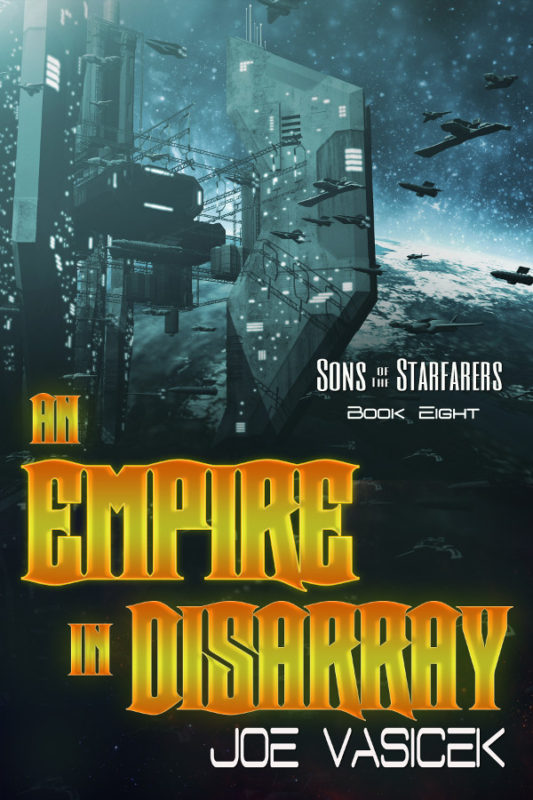
Is An Empire in Disarray for You?

An Empire in Disarray is late-series space opera at full intensity: shifting alliances, desperate diplomacy, covert raids, and the personal cost of holding a fragile coalition together when everything starts to crack. This is book eight in the nine-book Sons of the Starfarers series, which means the story is driving hard toward endgame—without losing sight of the characters who’ve carried you across the war.

If you want a sci-fi series where battles and politics matter because they press people to their moral limits, this is the kind of reading experience you’re in for.

What Kind of Reader Will Love An Empire in Disarray?

If you love …

  • character-driven military science fiction and space opera with long-running arcs and real consequences
  • rebellion-vs-empire stories that evolve into messy “what now?” politics after the turning point
  • tense alliances, betrayals, secret negotiations, and behind-enemy-lines missions
  • found family (and actual family) dynamics under extreme pressure—duty vs. loyalty vs. love
  • big stakes told through a close, emotional lens (you feel the cost, not just the spectacle)

…then An Empire in Disarray is probably your kind of story.

What You’ll Find Inside

An Empire in Disarray follows Mara Soladze and the people bound to her as the Outworld war effort enters its most unstable phase: victories don’t settle anything, power reshuffles, and old enemies become uneasy necessities. The book mixes fleet-and-station scale strategy with intimate, character-level tension, especially as trust becomes both the most valuable currency—and the easiest thing to weaponize. The result is a fast-moving, high-stakes installment that feels like the calm-before-the-storm is finally over.

What Makes An Empire in Disarray Different

Fans of authors like Lois McMaster Bujold (character-first military sci-fi), Elizabeth Moon (duty, leadership, and hard choices), or James S. A. Corey (factional politics in space) will recognize the blend of strategy, relationships, and shifting loyalties—but this series leans especially hard into consequences that accumulate across many books.

Where many space operas keep escalating external threats, Sons of the Starfarers also asks what happens when the “good side” starts fracturing under its own compromises. And in this installment, the story’s distinctive edge is how it forces characters to navigate collective survival while still fighting to remain fully themselves.

What You Won’t Find

You won’t find a cozy, standalone entry point here—this is the eighth book in a nine-book arc, and it’s written to pay off (and complicate) what came before. You also won’t find grimdark nihilism for its own sake: things get intense, but the series is ultimately driven by the question of whether people can become better under pressure, not merely harder.

Why I Think You Might Love An Empire in Disarray

In the author’s note, I half-joke that nobody should write a nine-book series—and then I admit why I did it anyway: because I’ve cared about these characters from the beginning, and I wanted to see where war would take them when it stopped being abstract and became personal. When I was drafting this book, I’d just moved back to Utah after a long stretch in Iowa, driving that lonely road through Wyoming and down past Evanston into the mountains—thinking about pioneers, endurance, and the strange mixture of hardship and beauty that comes with trying to build something that lasts.

That’s the heart of this installment, too. The ending I’d imagined for this series was never going to be neat or permanent—politics rarely is, especially after revolution—and my background in political science (and the places I’ve lived and traveled) shaped that. But the real reason I think you might love this book is simpler: An Empire in Disarray is where you get to see how far Mara has come, and what kind of person she chooses to become when all the easy choices are gone.

Where to Get the Book

Related Posts and Pages

Explore the series index for Sons of the Starfarers.

Return to the book page for An Empire in Disarray.
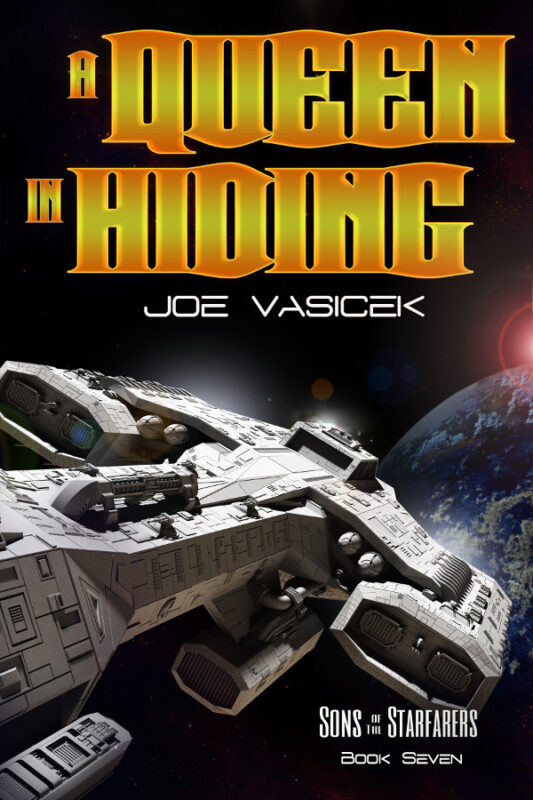
The Cost of Forced Redemption in A Queen in Hiding

What if you had the power to change someone from the inside out—to erase their worst impulses, soften their rage, rewrite their guilt? Would that be mercy… or violation?

In A Queen in Hiding, the seventh book of the Sons of the Starfarers space opera series, the question isn’t whether people need redemption. It’s whether redemption still counts if it isn’t chosen.

Where the Idea Came From

Across the Sons of the Starfarers series, I’ve explored war, exile, occupation, resistance, loyalty, and moral courage under pressure. But as the story world expanded—and as certain characters gained the ability to influence minds directly—I kept coming back to a troubling “what if”:

If you could fix what is broken in someone, why wouldn’t you?

History is full of movements, regimes, and even well-meaning reformers who believed they were improving humanity. Philosophically, it’s an old debate about free will and the “greater good.” Personally, it grew out of my fascination with the thin line between protection and control—the same tension that runs through this entire military science fiction series. In a universe shaped by authoritarian powers and fragile freedom, the temptation to force goodness is always lurking.

How The Cost of Forced Redemption Shapes the Story

In A Queen in Hiding, redemption becomes more than a character arc—it becomes a weapon, a responsibility, and a moral fault line.

As the collective grows and new abilities emerge, the characters are confronted with a frightening possibility: they could intervene directly in someone’s inner life. They could remove trauma. Suppress destructive impulses. Even erase memories that cause pain or danger. From a distance, that sounds compassionate. Up close, it raises a chilling question: who decides what a person is allowed to remain?

This tension threads through Reva’s choices in particular. Her desire to protect, heal, and rebuild is sincere. But good intentions do not erase consequences. The story keeps pressing on a single point: healing that bypasses consent becomes indistinguishable from domination. And domination—no matter how kindly framed—is the very evil the series has been resisting from the beginning.

Other characters push back, arguing that redemption must be chosen. Growth without agency is not growth at all; it’s replacement. That debate doesn’t just create personal conflict—it drives strategic decisions, shapes alliances, and forces the collective to define what kind of future they’re actually building.

In that way, this theme doesn’t stand alone. It reinforces one of the central through-lines of Sons of the Starfarers: freedom is fragile, and you can lose it even while trying to save others.

What The Cost of Forced Redemption Says About Us

Modern readers live in a world full of systems that promise improvement—political movements, therapeutic models, technological algorithms, ideological crusades. We all feel the pull to correct, reform, and “fix” what’s wrong.

But A Queen in Hiding asks a deeper question:
Is a person still themselves if their moral growth was imposed?

The novel suggests that redemption without consent erases the very dignity it claims to restore. True change must involve choice—even when that choice is slow, painful, and uncertain. Hope, in this view, isn’t about control. It’s about trusting that people can become better without being rewritten.

Why This Theme Matters to Me

I’ve always been drawn to stories about loyalty, sacrifice, and protecting the people you love. But the older I get, the more I’m convinced that protection can turn into control if we’re not careful. In writing A Queen in Hiding, I felt that tension deeply. It’s tempting to imagine a world where brokenness could simply be edited out. Yet I’ve come to believe that freedom—including the freedom to fail—is part of what makes redemption meaningful at all.

If the Sons of the Starfarers series is about anything, it’s about preserving human dignity in the face of overwhelming power. And dignity cannot survive without consent.

Where to Get the Book

Related Posts and Pages

Explore the series index for Sons of the Starfarers.

Return to the book page for A Queen in Hiding.

Is A Queen in Hiding for You?

A Queen in Hiding is a character-driven epic space opera about loyalty under pressure, identity under strain, and survival when there is nowhere left to run. Set deep within the long-running Sons of the Starfarers series, it delivers high-stakes interstellar tension blended with intimate moral conflict. This is science fiction that combines fugitives-on-the-run suspense with serious questions about responsibility, leadership, and what it means to remain human in a fractured galaxy.

What Kind of Reader Will Love This Book?

If you love…

  • character-driven space opera in the vein of The Expanse or Firefly
  • epic science fiction series where relationships evolve across multiple books
  • found family in space shaped by loyalty, sacrifice, and hard-earned trust
  • moral, thoughtful sci-fi that explores identity, unity, and individual freedom
  • clean space opera adventure without grimdark nihilism

…then A Queen in Hiding — and the broader Sons of the Starfarers series — is probably your kind of story.

This book is best experienced as part of the full series arc, beginning with Book 1.

What You’ll Find Inside

A Queen in Hiding follows central characters who have already survived war, betrayal, and political upheaval — only to discover that survival brings new and subtler challenges. As they navigate isolation, shifting alliances, and the consequences of earlier choices, the story explores themes of loyalty, identity, conscience, unity versus individuality, and the burden of leadership. The tone is tense yet reflective, blending space opera action with psychological depth and long-arc character development.

What Makes A Queen in Hiding Different

Fans of The Expanse-style pressure-cooker space opera or military SF will recognize the hard choices, the chase, and the tactical survival problem-solving—but A Queen in Hiding takes those familiar tensions in a more intimate, morally invasive direction. Where many space operas keep minds private and conflict external, this book leans hard into the horror (and strange tenderness) of shared consciousness, where love, fear, lust, shame, and loyalty echo through more than one head.

This series stands apart for its sustained focus on family bonds, cultural tension, and moral accountability across generations. The scale is galactic, but the heartbeat of the story is deeply personal. Instead of resetting after each crisis, the consequences carry forward — shaping who these characters become over time.

What You Won’t Find

You won’t find a light, standalone adventure that resets at the end. This is a deep-series installment that builds on long-running character arcs. You also won’t find nihilistic grimdark or shock-for-shock’s-sake storytelling—the stakes are serious, but the series remains grounded in hope and moral seriousness rather than cynicism.

Why I Think You Might Love A Queen in Hiding

This book represents a turning point in the series—where long-standing tensions finally demand honest reckoning. I wrote it because I wanted to explore what leadership, love, and responsibility look like when they’re tested beyond comfort. Every time I revisit it, I’m reminded that growth rarely happens in safety; it happens in exile, in uncertainty, and in the quiet decisions no one applauds.

If you crave space opera that treats character transformation as seriously as interstellar politics, this story was written for you.

Where to Get the Book

Related Posts and Pages

Explore the series index for Sons of the Starfarers.

Return to the book page for A Queen In Hiding.

The Price of Freedom in Patriots in Retreat

Freedom is one of those words that sounds simple—until you’re the one paying for it. Patriots in Retreat (Book 6 of Sons of the Starfarers) asks a harder question than “Is freedom worth fighting for?” It asks: what does freedom cost when you’re losing, exhausted, and running out of options—and what are you willing to become in order to keep it?

Where the Idea Came From

This theme took shape during a season when I was confronting limits—creative, financial, and personal. The indie publishing landscape was shifting. Advertising costs were rising. Series momentum doesn’t maintain itself. I realized that “creative freedom” wasn’t something I possessed automatically just because I was independent. It had to be defended—through discipline, consistency, and sometimes uncomfortable adaptation.

At the same time, I was thinking about historical moments when nations or movements had to retreat in order to survive: the American Revolution’s early setbacks, the long withdrawals that preserved armies so they could fight another day. Victory stories are inspiring—but retreat stories are revealing. They expose what a cause is really built on. Patriots in Retreat grew from that intersection: the realization that freedom isn’t won easily. It’s proven in endurance.

How The Price of Freedom Shapes the Story

In Patriots in Retreat, freedom isn’t framed as a triumphant banner—it’s framed as a burden that forces decisions. The Outworld cause is under pressure, and the characters are repeatedly pushed into situations where every path forward has a price: lives, resources, trust, reputation, and sometimes the comfort of clear moral choices. The book’s tension comes less from grand speeches and more from what freedom demands in the quiet moments—when leaders have to decide what to sacrifice, what lines not to cross, and what kind of future they’re still trying to preserve.

That’s why this is a retreat story: not because the characters stop fighting, but because retreat exposes what you truly value. When you don’t have enough strength to do everything, you find out what you’re willing to protect first—and what you’re willing to lose. Patriots in Retreat keeps returning to the same underlying question: if you pay any price to stay free, do you still end up with freedom… or only survival?

What The Price of Freedom Says About Us

We like to imagine freedom as a clean moral good—something obviously worth having and obviously worth defending. But in reality, freedom competes with comfort, safety, convenience, and the desire for control. When circumstances grow unstable, it becomes tempting to trade liberty for certainty, or to justify harsh measures in the name of survival.

Patriots in Retreat suggests that the true test of freedom isn’t how loudly we celebrate it, but how carefully we protect its character under pressure. Do we still believe in human dignity when resources are scarce? Do we preserve moral limits when fear rises? The story reflects a sobering truth about human nature: the greatest threat to freedom often comes not from an external empire, but from our willingness to abandon our own principles when things get hard.

Why This Theme Matters to Me

I’m drawn to stories where freedom is more than a slogan—where it has weight. I’ve learned (often the hard way) that independence isn’t something you achieve once and then coast on. You keep it by paying attention, doing the work, and making the hard choices before the crisis makes them for you. That’s what I wanted this book to feel like: not just the thrill of fighting an empire, but the sobering, hopeful truth that freedom is a cost you keep paying—because the alternative costs more.

Where to Get the Book

Related Posts and Pages

Explore the series index for Sons of the Starfarers.

Return to the book page for Patriots in Retreat.

Is Patriots in Retreat for You?

Patriots in Retreat is military space opera with a character-driven heart—the kind of book where starship tactics, political pressure, and personal loyalty all collide at once. As the war escalates and options narrow, this installment delivers the experience of trying to stay human while everything forces you into harder choices.

What Kind of Reader Will Love This Book?

If you love…

  • military sci-fi space opera with starships, fleet movement, and battlefield decision-making
  • high-stakes “on the run” tension—withdrawals, evacuations, and desperate gambits
  • character-driven leadership under pressure, where command is a burden, not a power fantasy
  • spycraft, uneasy alliances, and moral gray zones inside a larger war
  • stories that stay serious and tense, but still leave room for loyalty, decency, and hope

…then Patriots in Retreat is probably your kind of story.

What You’ll Find Inside

Patriots in Retreat follows Captain Mara Soladze and the crew under her command as a widening conflict forces them to make decisions that are tactical on the surface—but personal underneath. Along the way, the book leans into duty vs. conscience, trust under strain, and the cost of keeping people alive when the “right” move is never clean. The result is a fast-moving, pressure-cooker war story that still makes time for character bonds, loyalty, and the psychological weight of command.

What Makes Patriots in Retreat Different

Fans of David Weber or Jack Campbell will recognize the pleasure of fleet-level stakes and competent command decisions, but Patriots in Retreat keeps its focus tight on how those decisions land on real people. Where many military sci-fi books lean into victory arcs, this one leans into survival arcs—what it feels like to regroup, retreat, and keep choosing the least-bad option. And because this is Book 6 in Sons of the Starfarers, it also carries the satisfying momentum of a long campaign—without turning into a recap-heavy “maintenance” volume.

What You Won’t Find

You won’t find a jokey, snark-driven tone or a story that treats war like an excuse for spectacle. And while the series has big stakes, this book isn’t built around a standalone “everything resets at the end” structure—it’s part of a continuing war narrative, designed to pull you deeper into the series rather than wrap everything up neatly.

Why I Think You Might Love Patriots in Retreat

I wrote Patriots in Retreat during a stretch of hard-earned lessons—about patience, about process, and about what it really takes to finish a long series without burning out. That’s part of why this book is so centered on endurance: the kind of courage that isn’t flashy, but keeps showing up anyway. If you’ve ever had to keep moving forward when the plan fell apart—and you still wanted to do it with integrity—I think you’ll recognize something true in this story.

Where to Get the Book

Related Posts and Pages

Explore the series index for Sons of the Starfarers.

Return to the book page for Patriots in Retreat.

The Cost of Violated Trust in Captives in Obscurity

Trust is one of the few things that can’t be taken by force—and one of the easiest things to destroy. Captives in Obscurity, the fifth book in the Sons of the Starfarers series, asks a difficult question: what happens when survival demands obedience, but obedience comes at the cost of trust? This novel explores how quickly trust can be violated under pressure—and how hard it is to rebuild once that line has been crossed.

Where the Idea Came From

The idea for this theme grew out of thinking about captivity that isn’t just physical. History is full of situations where people were “protected,” “unified,” or “kept safe” through fear and coercion—and where trust was replaced with enforced loyalty. I was interested in exploring what happens after that line is crossed: when characters realize that something essential has been taken from them, and that getting it back may cost more than they expect.

How The Cost of Violated Trust Shapes the Story

At the heart of Captives in Obscurity is a fragile community forced to survive under constant threat. Characters must decide who they can rely on, what information to share, and how much control is too much—even when the stakes are life and death. Again and again, the story presents situations where violating trust seems expedient, even necessary, but leaves lasting damage in its wake.

Rather than treating betrayal as a single dramatic moment, the novel shows trust eroding through small compromises, rationalizations, and “temporary” measures. The real danger isn’t just external enemies—it’s what happens inside a group when fear teaches people to hide, manipulate, or control one another. Survival becomes possible, but unity becomes fragile.

What The Cost of Violated Trust Says About Us

This theme reflects a truth many readers recognize: trust is slow to build and fast to break. When it’s violated—by institutions, leaders, or even people we love—the damage isn’t just emotional. It reshapes how we see the world, how we relate to others, and how much of ourselves we’re willing to risk again. Captives in Obscurity suggests that safety without trust may keep people alive, but it can’t make them whole.

Why This Theme Matters to Me

While writing this book, I kept returning to the idea that good intentions don’t erase harm. Trust, once violated, can’t be restored through force or guilt—it requires humility, restraint, and a willingness to accept limits on power. That idea mattered to me personally, because it’s easy to justify crossing ethical lines when the pressure is high. This story is my attempt to wrestle honestly with where those lines should be, and what it costs when we ignore them.

Where to Get the Book

Related Posts and Pages

Explore the series index for Sons of the Starfarers.

Return to the book page for Captives in Obscurity.

Is Captives in Obscurity for You?

Captives in Obscurity (Sons of the Starfarers, Book 5) is a character-driven military space opera about survival under captivity, moral courage under pressure, and the terrifying intimacy of minds that can’t fully hide from each other. It delivers a tense, emotionally charged “trapped behind enemy lines” experience—part escape thriller, part relationship-and-conscience drama, with big series-arc implications kept mostly in the background.

What Kind of Reader Will Love Captives in Obscurity?

If you love …

  • military sci-fi / space opera that puts characters first and treats survival as a moral problem, not just an action set piece
  • captivity, escape, and resistance stories where hope is stubborn and hard-won
  • high-stakes relationship tension shaped by trust, betrayal, and incompatible cultures
  • psychological sci-fi elements (telepathy / shared consciousness) that intensify both danger and intimacy
  • stories that wrestle honestly with hard topics instead of sanding them down

…then Captives in Obscurity is probably your kind of story.

What You’ll Find Inside

Captives in Obscurity follows Isaac—isolated, exhausted, and stripped of control—while he and Reva navigate life as prisoners aboard a pirate ship ruled by a charismatic, terrifying captain. As escape becomes less a single decision and more a long grind of endurance and strategy, the story digs into trauma, agency, guilt, and the cost of survival—especially when a strange telepathic connection (and something bigger behind it) makes privacy, consent, and trust painfully complicated. The result is a tense, gritty, emotional installment that feels intimate even when the stakes are cosmic.

What Makes Captives in Obscurity Different

Fans of loyalty-and-duty military SF will recognize the chain-of-command pressure and the “hold the line” mindset—but this book pushes the conflict inward, into the places where survival and conscience collide. Where many space opera captivity arcs focus mainly on tactics and jailbreak mechanics, Captives in Obscurity leans into the psychological and relational consequences: what it does to a person to be used, controlled, and forced to keep going anyway. And the telepathic / collective-consciousness element doesn’t just add cool sci-fi flavor—it turns trust into a battlefield and makes “escape” as emotional as it is physical.

What You Won’t Find

This isn’t a light, quippy adventure, and it doesn’t treat trauma like set dressing. Content note: the book includes fallout from a prior sexual assault between major characters and engages directly with themes of consent and coercion (including the author’s note discussing why that was essential to the story). If you want space opera that stays far away from those topics, this one may not be a good fit.

Why I Think You Might Love Captives in Obscurity

This was one of the hardest books in the series for me to write—not because the plot wouldn’t cooperate, but because the emotional consequences had to be faced honestly. I wanted to tell a story where survival doesn’t erase harm, where “good guys vs. bad guys” isn’t always clean, and where people from radically different cultures can hurt each other even without intending to be monsters. If you like science fiction that uses its big ideas to put human conscience under a microscope—and still fights to earn hope on the other side—I think this book will stick with you.

Where to Get the Book

Related Posts and Pages

Explore the series index for Sons of the Starfarers.

Return to the book page for Captives in Obscurity.

Leadership as Burden in Friends in Command

Leadership stories often celebrate the moment someone takes command—but they rarely linger on what command actually costs. Friends in Command, a military science fiction novel and a later entry in the Sons of the Starfarers space opera series, is built around a harder question: What happens when you’re responsible for other people’s lives—and every available choice is expensive? In this book, leadership isn’t a badge. It’s a burden you carry while everything around you is breaking.

Where the Idea Came From

Friends in Command is a “bridge story”—the kind of middle book in a military science fiction series that has to pay off enough to feel satisfying, but not so much that it steals thunder from what’s coming next. I was especially inspired by The Empire Strikes Back as a model: a story that stands on its own, deepens the characters, and ends at a low point that changes them. While drafting, real life was also turbulent—moving, a painful breakup, and the mental fatigue that comes from trying to “power through” when you’re not at your best. In the end, I delayed publication and rebuilt parts of the book to make it stronger, including adding a missing viewpoint character—because sometimes the responsible choice is the slower one. Looking back, that process mirrored the book’s central theme: leadership isn’t about moving fast or looking strong—it’s about carrying responsibility well, even when that means slowing down and rebuilding.

How the Burden of Leadership Shapes the Story

In Friends in Command, leadership pressure doesn’t sit in the background—it drives the conflicts. As the interstellar war escalates across the Sons of the Starfarers series, this book zeroes in on what command looks like when systems are fraying and no choice is clean. The war has moved into a new phase, command structures are strained, and the people in charge keep getting handed problems that aren’t fair and aren’t clean. That’s where Mara’s story hits hardest. She’s competent, disciplined, and loyal, but she keeps being forced into situations where “doing your duty” isn’t a simple rule—it’s a living weight. She can’t make everyone happy. She can’t protect everyone. And she can’t escape the fact that her decisions ripple outward into other people’s futures.

The book also sharpens the theme by putting different kinds of leaders side by side. Some characters lead by instinct, some by procedure, some by sheer force of will—but all of them are faced with the same truth: command means owning consequences you didn’t ask for. Sometimes leadership looks like restraint—holding the line when chasing something personal would cost other people their lives. Sometimes it looks like bending rules because the “field” has changed and waiting for permission will get people killed. And sometimes it looks like choosing which loss you can live with, because the story refuses to pretend that victory comes without debt.

What the Burden of Leadership Says About Us

We live in a world where responsibility often arrives before we feel ready—parenting, marriage, work leadership, caregiving, community duty, even the quiet obligation to keep going when people depend on us. Stories like Friends in Command remind us that leadership isn’t proven by confidence or charisma; it’s proven by endurance, moral courage, and the willingness to carry weight without being applauded for it—even in the middle of a war that won’t pause for our doubts. The people we trust most aren’t always the ones who want power—they’re the ones who feel the cost, and lead anyway.

Why This Theme Matters to Me

I care about this theme because I don’t believe leadership is mainly about authority—I think it’s about love expressed as responsibility. The older I get, the more I notice that the “right” choice is often the one that costs you something: time, pride, comfort, certainty. Writing Friends in Command taught me that you can’t always fix a situation, but you can choose to carry it honestly—and that kind of burden, carried with integrity, is one of the most human things we do.

Where to Get the Book

Related Posts and Pages

Explore the series index for Sons of the Starfarers.

Return to the book page for Friends in Command.

Is Friends in Command for You?

Friends in Command is a character-driven military science fiction novel and space opera series installment about leadership, loyalty, and the quiet terror of being responsible for other people’s lives. Set during an escalating interstellar war, it follows a small starship crew forced to grow up fast—personally, morally, and professionally—when command stops being theoretical and starts being real.

This is the fourth book in the Sons of the Starfarers military science fiction series and builds directly on the events, relationships, and character arcs established in the earlier novels.

What Kind of Reader Will Love Friends in Command?

If you love…

  • military science fiction that focuses on people, leadership, and consequences, not just tactics
  • character-driven space opera about friends becoming leaders under pressure
  • stories where command is a burden, not a reward
  • long-running series with deepening relationships and evolving roles across multiple books
  • emotional arcs about loyalty, responsibility, and hard-earned maturity in wartime

…then Friends in Command is probably your kind of story.

What You’ll Find Inside

The story centers on a young crew—many of them longtime comrades—now thrust into positions of real authority aboard a frontline warship in a character-driven military space opera. As the war grows more complex and dangerous, friendships are tested, mistakes carry higher costs, and leadership becomes a daily moral trial. The tone is thoughtful and tense, balancing moments of action with introspective, character-focused scenes, and the pacing reflects the pressure of command: urgent when it must be, deliberate when it matters most.

What Makes Friends in Command Different

Unlike many military SF novels that focus on ascension and glory, Friends in Command is about the awkward, painful middle stage of leadership—when characters are no longer protected by inexperience but not yet confident masters of their roles. It functions as a bridge book within the series, deepening character arcs and setting the emotional stakes for what comes next. Readers who enjoy ensemble casts and long-form character growth—rather than clean standalone victories—will find this installment especially rewarding.

What You Won’t Find

This is not a standalone novel, and it’s not designed for readers who want a reset with each book. You also won’t find nihilism or shock-for-shock’s-sake violence; while the story is intense and serious, it remains grounded in loyalty, conscience, and earned hope rather than cynicism.

Why I Think You Might Love It

I think Friends in Command resonates because it captures a moment many stories skip over: when people are promoted before they feel ready, and the cost of getting things wrong suddenly includes the people they care about most—a moment many readers recognize from real life as much as from fiction. This book mattered to me because it let the characters stop reacting and start choosing—sometimes badly, sometimes bravely—and those choices ripple forward through the rest of the series.

Where to Get the Book

Related Posts and Pages

Explore the series index for Sons of the Starfarers.

Return to the book page for Friends in Command.

The Search for Belonging in Strangers in Flight

What does it mean to belong when everything familiar has been stripped away? Strangers in Flight is a character-driven science fiction and space opera novel about people who survive catastrophe, only to discover that survival alone isn’t enough. Set amid war, displacement, and life on the interstellar frontier, and against the backdrop of an ongoing interstellar conflict in the Sons of the Starfarers series, the novel asks a simple but painful question: how do you build a sense of home when you wake up alone in a universe that no longer knows who you are?

Where the Idea Came From

The idea for this theme grew out of thinking about what it would be like to lose not just your home, but your entire cultural and social world overnight. In the author’s note, I talk about wanting to explore loneliness at an extreme scale: being the sole survivor of a people, waking into a future where everyone who shaped your identity is gone. Science fiction gave me the space to externalize that loneliness—to turn it into a literal universe of strangers. I was especially interested in what happens after the escape—when the danger passes, but the isolation remains—and how belonging has to be rebuilt from nothing.

How The Search for Belonging Shapes the Story

Belonging is the emotional engine that drives Strangers in Flight. Reva’s struggle is not just physical survival or escape from enemies, but the deeper shock of cultural and personal dislocation. She wakes into a galaxy that doesn’t share her language, her customs, or her assumptions about the body, privacy, and trust. Her choices throughout the story are shaped by the question of whether belonging is even possible—or whether survival requires emotional withdrawal. That tension—between isolation and connection—echoes throughout the wider conflict of the series, where entire peoples are being displaced by war.

Isaac’s journey mirrors this from the opposite direction. Though he has a ship, a profession, and a place in the wider conflict of the Sons of the Starfarers series, he is also profoundly isolated—adrift on the frontier, defined more by what he avoids than what he commits to. When these two characters come together, the story treats belonging not as instant comfort, but as something forged through mutual risk, responsibility, and choice. These decisions ripple outward, shaping the story’s conflicts and setting the tone for the relationships that continue across the series.

What The Search for Belonging Says About Us

At a time when many people feel disconnected even while surrounded by others, Strangers in Flight frames belonging as a fundamental human need rather than a luxury. The novel suggests that loneliness is not just emotional pain, but a condition that makes us vulnerable—to despair, exploitation, and moral compromise. If you’ve ever felt out of place, unseen, or unmoored after loss or change, this story treats that experience with seriousness and empathy. At the same time, it offers a quiet hope: belonging doesn’t require shared origins or perfect understanding. It begins when people choose to care for one another, even when doing so is inconvenient, risky, or costly.

Why This Theme Matters to Me

This theme matters to me because I’ve always been drawn to stories about people on the margins—exiles, refugees, wanderers, and survivors—who have to decide whether connection is still worth the risk after loss. I wanted to write a story that takes loneliness seriously without becoming cynical, and that treats belonging not as something we passively receive, but something we actively build. That question—how people find one another in the aftermath of upheaval—runs throughout the Sons of the Starfarers series. For me, Strangers in Flight is ultimately about the hope that even in a vast and lonely universe, belonging can still be found—sometimes in the most unexpected places.

Where to Get the Book

Related Posts and Pages

Explore the series index for Sons of the Starfarers.

Return to the book page for Strangers in Flight.