NaNoWriMo 2021: Day Four

  • Words Written Today: 2,206
  • Children of the Starry Sea: 0
  • “In the Wake of Zedekiah Wight”: 2,206
  • Science Fiction from A to Z: 0
  • Total Words Written: 8,595
  • Total Words Remaining: 41,405
  • Total Words Ahead: 1,927

Really fun scene today in my short story “In the Wake of Zedekiah Wight,” which is quickly turning into a novelette or possibly a novella. Doesn’t really matter: I still plan to self-publish it in January, and I’ll call it a short story if it falls under 20,000 words. Most readers have no clue what a novelette is anyway.
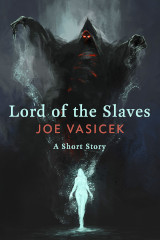
Besides writing 2k words (which is now my standing daily word count goal), I finally published the short story “Lord of the Slaves.” I call it a short story, but technically it’s a 13,200 word novelette—but again, to most readers, it’s still a short story. It’s free everywhere but Amazon, which still requires you to go through a ton of ridiculous hoops to get it price matched, and now to get it in all the proper categories too. So that’s a pain. With luck, they’ll actually price match it in time for my newsletter next week, but either way, you can pick it up on my online store right now.

Four consecutive days of hitting my daily word count. It’s starting to get easier, though that may just have been this particular scene. With luck, though, I’ll be able to keep it up through at least the next week and build up a sizable buffer for when we visit family for the Thanksgiving holiday. We’ll be gone for almost the entire second half of November, so hitting word count is going to be a real challenge.

NaNoWriMo 2021: Day One

  • Words Written Today: 2,022
  • Children of the Starry Sea: 1,010
  • “Lord of the Slaves” author’s note: 1,012
  • Total Words Written: 2,022
  • Total Words Remaining: 47,978
  • Total Words Ahead: 335

I was going to do the same thing with nanowrimo this year that I did last year, and turn out 50k words of short stories, but at the last minute I decided to keep working on the same projects that I’ve been working on, and just write 50k new words in all of those.

The main reason for this is that I changed my own personal writing goals in October, to write 2k new words every day, and I’ve been struggling to hit that consistently. So I think that nanowrimo will serve me better if I use it to get better about hitting that goal (and the daily average for nano comes to about 2k words per day if you take Sundays off), rather than starting a new project.

Besides, I’m still quite excited about my current WIP, so there really is no need to prime or refill the creative well by starting a new project or working on a different project. That was the main reason I did the short story thing again for Camp NaNoWriMo earlier this year, and it worked out very well.

So anyways, today I wrote about 1k words in my current WIP, and another 1k words for the author’s note and acknowledgments of the short story I plan to release in the next week: “Lord of the Slaves.” This is one of the stories that I wrote for NaNoWriMo 2020, and even though it took me a while to fix it, I’m really happy with how it turned out.
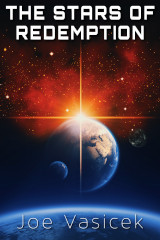
I’ll also be releasing book 3 of the Genesis Earth Trilogy, The Stars of Redemption, but I’ve already done all the writing and other production work for that one. In fact, it’s already available for sale on my oneline author bookstore, and I’m currently running a free & $2.99 sale on the first two books in the trilogy: Genesis Earth and Edenfall!

All right, that’s enough self-promotion for now. Point is, I’m running a very agressive publishing schedule right now, which means I have multiple projects to juggle, not just my current novel WIP. That’s another reason I’ve decided not to complicate things by starting any new nanowrimo projects.

First day is off to a good start! Between Children of the Starry Sea and “Lord of the Slaves,” I managed to hit my 2k daily word count goal, which puts me about 300 words ahead of where I need to be. If I can keep this up, nanowrimo should be a cinch—but of course, that’s where things get tricky.

As with the other nanowrimos that I’ve done, I’ll post a daily update at the end of each day (except Sundays). Most of them will probably be shorter than this one. I also have plans to revive this blog and maybe start posting on other social media, but I’ll save that for another post, since this one is long enough.

Navigating Woke SF, Part 4: Götterdämmerung

Governor Andrew Cuomo announced his resignation today, after his sexual harrassment scandal that has seen an overwhelming number of women come forward. As tempted as I am to dive into the politics of this story, I bring it up only to provide context for this:

Yeah, I’m cringing too.

For the last several years—arguably, since the Ferguson riots and President Obama’s pivot toward intersectionality, this country has been progressing steadily toward the woke moral panic that we now find ourselves living through. Unlike the Red Scare, to which it is comparable in both scope and severity, the threat posed by “white supremacists” and other villains of the intersectional left is as laughable and contrived as the term “Cuomo-sexual,” and will age just as badly.

To anyone who studies history, it is obvious that there’s going to be backlash against all the gaslighting and hypocrisy of the woke moral panic that is currently gripping our nation. All around us are signs that the tide is beginning to turn.

The first indication that caught my attention was the “woka-cola” scandal over critical race theory (CRT) in Coca Cola’s employee training. Instead of giving a token response, Coca Cola reversed the policy and fired the executive responsible for implementing the policy. The only reason a major coproration would do something like that is because the scandal was hitting their bottom line in a way that they could not ignore—and yet, there were no organized boycotts on the part of the conservative right. Just a lot of disenchanted consumers quietly saying to themselves: “I think I’ll get a Pepsi instead.”

There are other indications of a growing cultural backlash all throughout our society, from the Marvel Cinematic Universe to viral videos of parents standing up to CRT in their kids’ schools. All of the organizations pushing the woke moral panic are little more than establishment astro-turf backed by corporate money, while the organizations pushing back are genuine grassroots movements—and they’re winning. All of the ground gained by the left during their “long march through the institutions” is about to be lost in a single generation, perhaps even a single decade. Public trust of established institutions is plummeting, and with every glaring instance of “sophisticated” woke hypocrisy, people are rejecting the establishment narrative, just like in V for Vendetta. Bollocks!

So what does this have to do with science fiction? In the second part of this blog series, I pointed out the following:

Traditional sci-fi publishing has trended to the political left (sometimes to the extreme political left) of mainstream American culture since the New Wave era back in the 60s and 70s. It seems that the campus radicals took over much of the field, not to mention the fact that American traditional publishing has always been centered in New York. But until just the last few years, it was still possible for left and right to coexist in our pluralistic society. People of different political persuasions could agree to disagree amicably, and while there may have still been whisper campaigns and secret author blacklists, you could still expect to see a healthy mix of opinions and perspectives in most places that published short stories.

That is not true today. Certain subjects and opinions have been deemed verboten, while others have been exalted to the status of eternal truth, and any story that questions or challenges the politically correct narrative doesn’t have a chance in most of these markets. In other words, science fiction has gone woke.

If I’m right and a major backlash against the woke intersectional left is brewing, then many of today’s most recognized and award-winning publications and editors are going to fall, or at least become relegated to a position of cultural insignificance. Indeed, we had an indication back in 2017 that this was already starting to happen, when it came out that China Mike Glyer buys traffic from Chinese bots to artificially boost the stats for his Hugo award winning site, File 770.

I suspect that these woke institutions within the SF field will try to maintain the illusion of cultural relevance for as long as they possibly can, much as ex-Governor Cuomo did everything he could to maintain the illusion of his fitness to hold office (even publishing a book about his leadership during the pandemic—talk about gaslighting!) until his inner circle had abandoned him, the Biden administration had called on him to resign, calls had come for his arrest, and the New York state congress had a deadline in place to begin the impeachment proceedings.

When the illusions fade and the gaslighting can no longer be maintained, there is going to be a cultural götterdämmerung—a “turbulent ending of a regime or institution.” Or perhaps the götterdämmerung has already arrived, and it ends when the illusions can no longer be maintained. Either way, it seems that the smart move is to reject these woke SF markets—or, as they so arrogantly put it, to “self-reject”—in favor of going indie, going with the semi-pro markets, and otherwise building an audience that isn’t caught up in all this woke madness.

Camp NaNoWriMo: Day Thirty One
  • Words written today: 2,521
  • Total stories written: 5
  • Total SF-AZ chapters written: 1
  • Total words written: 30,461

It’s done! I finished Camp NaNoWriMo strong, achieving my goal of 30,000 words. Didn’t finish the last story, but it’s going quite strong, and probably past the halfway point. I’ll probably finish the rough draft next month and send it to my writing group.

Good stuff! I’ve definitely broken out of whatever creative block was holding me back before, and hopefully can use this momentum to press forward and finish The Stars of Redemption next month. When I’m not doing that, I’ll be revising and polishing these stories, and probably sending them out on submission. No idea if any of the traditional markets will pick them up, but either way, I’ll be putting them out myself before too long. After all, that was my secondary goal: to produce enough short stories to be able to self-publish something new every month for the forseeable future.

Thanks for reading!

Camp NaNoWriMo: Day Twenty Six

  • Words written: 1,569
  • Total stories written: 4
  • Total words written: 21,280
  • Total words remaining: 8,720
  • Total words behind: 3,888

It’s been a while since the last nanowrimo update, hasn’t it? Don’t worry, I’m not ghosting it like I did for Camp NaNoWriMo in April! In fact, I’ve been catching up this whole time—just haven’t been able to get to the update posts. When life is perpetually crazy, you really do have to pick and choose which things you’re going to drop and pick up later. I thought I was overwhelmed when I was single, but it wasn’t until now that I’m a husband and a parent that it’s just been physically and temporally impossible to do everything.

Still, things are going well. The “Tolerant and Fair” story (which I’ve renamed to “Welcome to our Crazy Family,” since it does end on an upbeat, conciliatory note) took a lot longer than I was expecting, and probably needs at least one severe rewrite, but it’s done, and I’m actually quite satisfied with it—with the caveat, of course, that it’s a very rough draft. The story I’m writing now (working title: “Bloody Justice”) has been bouncing around in my head for a few days, so the first scene came rather easily, probably because I’m so eager to reach the climax. With a title like “Bloody Justice,” you know it’s going to be fun.

So yeah, I’ll hopefully finish up this Zedekiah Wight story (it is another Zedekiah Wight story, by the way) tomorrow, provided things go well. After that, I have no idea. Some poetry would be nice, but I probably won’t have that luxury, seeing as I’ve fallen so far behind in the word count. Maybe I’ll consult the Mythulu cards again.

Camp NaNoWriMo: Day Nineteen

  • Words written: 957
  • Total stories written: 2
  • Total words written: 13,223
  • Total words remaining: 16,777
  • Total words behind: 5,169

Finished that story, finally! It’s actually not that bad. Working title is “In the Wake of Zedekiah Wight.” It’s 8.5k words, which is about 3k-4k more words than it should be, but with a bit of work I think I can cut it down. Will probably do that as a side project sometime in the next few months.

Not a super huge writing day today because I helped my sister pick up some stuff from her storage unit down in Manti, and also had to make a Costco run. That took up the whole afternoon, but I did get a good start on the next story, with the working title “Tolerant and Fair.” It is just about the most politically incorrect story I could possibly write, and may actually get banned (or get me banned) from Amazon if I publish it. No joke.

The main character is a twenty-something girl who grew up with three lesbian / gender-nonbinary parents, and she rebelled by dating a straight-edge Christian boy and becoming a Christian herself. They are now about to elope together after joining a colony mission to Mars, but he wants her to introduce him to her parents over a family dinner, so that she won’t regret it later after they’ve eloped.

Basically, it’s the whole “Mom, Dad, meet my rebel boyfriend” sort of meeting with the disapproving parents, except that the religious conservative is the rebel boyfriend and the ultra-liberal types are the disapproving American Gothic parents. It is going to be so much fun to write, and even more fun to submit. I really might submit it to Clarkesworld, Uncanny, and Escape Pod, just to get a rejection that says “please do not submit anything to us ever again.”

But in all seriousness, I know that this story will be on thin ice with Amazon, especially with how they’ve banned When Harry Became Sally (which I own now, by the way. It’s on the TBR). And in all seriousness, I intend to approach the transgender issue with some sensitivity to those who take the other side—but I’m not going to shy away from the fact that I really do think a lot of these girls are being deliberately misdiagnosed and permanently mutilated by a healthcare system that has been totally taken over by radical activists promoting an ideological agenda at their expense. Glenn Beck recently did an interview with Abigail Shrier where they discussed that very topic. Excellent podcast.

So yeah, I’m super excited about that story. With luck, it should be finished in the next couple of days. I know that I’m running behind on my word count for camp nanowrimo, but I really do think I can get it back up before the end, especially with a couple of these projects that I’m really driven to write. Just need a couple of days to really ramp it up.

Camp NaNoWriMo: Day Five

  • Words written: 1,105
  • Total stories written: 1
  • Total words written: 3,880
  • Total words remaining: 26,120
  • Total words behind: 960

Way, way, way too busy today. So many chores, so much time doing babycare, so much other insanity. I have no idea how people play video games and get anything done. They must not have children.

Anyway, started a new story today. The character is a bit of my own take on Solomon Kane from Robert E. Howard. I thought there was a bunch of untapped potential in that character, so I’m drawing on that for inspiration for my own character. Except he’s not the viewpoint character in this story either, so really I guess the purpose of this story is to draw up a portrait of him from the point of view of someone else. Oh, and this story is a direct sequel to “When She Awakes,” which I just published.

Can’t say much more than that, and it’s already super late and the baby just woke up again, so gotta go.

Camp NaNoWriMo: Day Three

  • Words written: 1,778
  • Total stories written: 1
  • Total words written: 2,775
  • Total words remaining: 27,225
  • Total words behind: 129

Made good progress today. I’m still a bit behind where I should be, but not by very much. It’s a lot easier to write 30k words in a month than 50k words. Maybe I’ll make the full 50k nano word count my stretch goal.

Anyways, one short story down, and it’s a dark one. For that reason, I’m not too keen on it, but it was a story that needed to be written, to get it off of my chest if nothing else. The rough draft comes to about 4.1k words, but I think I can cut a solid 600 words out of it, or more, and it would probably be an improvement. But that’s going to wait until next month, at the earliest.

Also, I’m reasonably confident that this story will get me blacklisted at most of the pro-paying science fiction markets, or at least the ones that keep a blacklist. But I care less about that than the fact that most of them will flat-out reject it, on political grounds if not for the quality of the writing or the story, and I’m certain that most of them will. But whatever. I think my readers will like enough to make a splash when I self-publish it, and I care more about that at this point than about making a professional sale.

Navigating Woke SF, Part 3: Toward a New Short Story Strategy

So I really love how China Mike Glyer cherry-picked the excerpts that he quoted from my last blog post, leaving out how I said that it’s important to give people the benefit of the doubt, or how you can’t take diversity statements at face value because of all the elitist signalling language. But the thing that I especially love is the way he characterized all of what I said as an “opportunity to learn from a professional why he’s self-rejecting from these short fiction markets.”

No, That’s Not Self-Rejection

There are so many things wrong with the phrase “self-rejection.” On its face, it sounds empowering, but the underlying assumption is that submitting your short stories to the traditional markets is your best/only option, and therefore you’d be a fool not to follow that path. Is that really an empowering message? Or is it actually more empowering—not to mention, straightforward—to say that it’s not you rejecting yourself, but you rejecting them?

For a long time, though, I really did believe that choosing not to submit a story to a high-paying market was tantamount to rejecting my own story. Even as an indie author, I still believed that for a short story to be successful, it had to be traditionally published first.

That was the thinking that informed my old short story strategy. Submit to the traditional markets first, and don’t self-publish until all of the high-paying professional markets have been exhausted, or (hopefully) until the exclusivity period of your contract wears off. You might spend years sending your story out to the markets, only to find that self-publishing is the only way to get it out into the world, but at least you have the moral victory of knowing you didn’t “self-reject.” Except, in a world where it’s possible to be your own publisher, you did reject your own story all those years, simply by choosing to keep it on submission instead of publishing it yourself!

To be fair, when it comes to short stories, self-publishing and traditional publishing are not mutually exclusive. And years of experience with self-publishing short stories has taught me that it’s very difficult to earn significant money with them. As I put it a couple of months ago:

…short stories can be useful to do just about every other thing except make money selling them directly. If you price the singles at $2.99, you might sell as many as one or two per year, making less than $5. If you price them at 99¢, you may sell as many as a dozen per year, if you’re lucky—again, making less than $5. I didn’t have much luck getting bundles of 3-5 to sell, but larger collections of 10 to 12 stories do occasionally sell, and at a decent enough rate that I’m earning more on those stories than I would if I’d sold them individually as singles. But short story collections don’t sell anywhere near as well as novels.

So if you can expect to sell a short story to a high-paying market in a reasonable period of time, it certainly makes sense to put it out on submission instead of self-publishing it first. But as I’ve established in the last two posts, when most of the high-paying markets have gone totally woke, that changes the equation—especially if you are a straight white male who refuses to bend the knee.

To review, here are the potential benefits of submitting to the traditional short story markets first:

  • The pay.
  • Marketing.
  • Prestige and reputation.
  • Networking.
  • Awards and SFWA membership, if you care about that. I don’t.

And here are the potential drawbacks:

  • Lost time.
  • Lost time in exclusivity.
  • Lost time in submission.
  • Lost time not submitting simultaneously.
  • Lost time running out of open markets.

In short, the biggest potential drawback is all of that lost time where you could have self-published that story, but didn’t. Tell me again how that isn’t self-rejection?

Costs and Benefits of Self-Publishing (and How Wokeness Changes the Equation)

So if you can’t really expect to make any money self-publishing short stories, what good are they anyway?

In my previous post, I compared short stories to pawns in the game of chess. The pawn is the weakest piece in the game, but many chess masters still consider it the “soul of the game,” not because of what each piece individually can do, but what they can accomplish when taken together. A strong pawn structure is key to both openings and midgame strategy, and in the endgame, pawns become critically important as they threaten to advance to the final rank, where they can be queened.

Short stories are similar to pawns in this way. Taken individually, they’re not particularly significant, and if you’ve only written or published one or two of them, they’re probably not going to have a huge impact on your career. But when you have a bunch of them and get them to work together, they can build your career (not to mention, help you develop your craft) quite effectively. And there’s always the chance that you can get one optioned for film, just like advancing a pawn to the back rank.

About a year ago, I did something very unconventional and made all of my short story singles free. Here was my thinking behind that decision:

As a short story reader, I’m already used to paying for anthologies—and I’m more likely than other readers to buy them, since I’m the kind of reader who seeks out short stories. So if I pick up a handful of free short stories from an author and come to really enjoy her work, I’m already primed to buy her collections when I finish each story—and that makes the backmatter of each free single the best place for her to advertise her collections.

It’s a bit like first-in-series free, except instead of the one free book pointing to the rest of the series, there’s a bunch of free short stories all pointing to the same one (or two or three) collections. The typical reader is probably going to need to read a few of an author’s short stories anyways to really become a fan, so making all of the stories free could really be the way to go.

Of course, the big downside to this as an author is that you probably can’t sell reprint rights to the stories that are available as free singles. Why would an editor buy your story for their publication if it’s already available for free? So you would have to make the singles free for a limited time, if selling the stories to the reprint markets is part of your strategy.

But if you’re going to eventually bundle those stories into a collection, that’s not really a problem. Publish them as free singles as soon as the rights revert back to you, and then take down the singles when you have enough of them to put into a collection.

In the past several months since embarking on this experiment, I’m happy to report that it’s been a success! Not only have these free short story singles brought in new readers by giving them a wider sample of my work, but they’ve also been quite effective at building engagement among my newsletter subscribers and driving sales of my other works.

So here are the benefits I’ve seen by publishing free short story singles:

  • Marketing. The free short story singles are great marketing tools because the cost to try them out is minimal, not only in terms of price but in terms of time.
  • Discoverability. Nothing is quite as good at getting your name out there as a free story.
  • Name recognition. They say the average person has to see your brand at least seven times before it starts to stick. By putting a bunch of short stories out there that readers can pick up for free, it helps my name to stick with them.
  • Engagement. My short story singles are some of my most—and best—reviewed ebooks. This is something I genuinely didn’t expect, but it’s helped to boost the effectiveness of everything else.
  • Converting casual readers into fans. This has also been a pleasant surprise. Every time I send out a newsletter plugging one of my free short story singles—even one that’s been out for a while—I see an uptick in sales of my other books, as well as an uptick in fanmail from readers who credit the short stories for really turning them onto my work.
  • Regularly putting out new work. This is potentially huge. At the end of the day, nothing else is as good at selling your books as publishing the next book. Ideally, all those books would be novels, but since I’m not the kind of writer who can put out a new novel every month, short stories can pick up the slack—especially if they’re free.

There are still a lot of things that I still want to tweak, both to drive organic newsletter subscribers and to drive sales of my short story collections, but in terms of overall strategy I think I’ve got the self-publishing end down pretty good. So what are the drawbacks?

Because most of the high-paying short story markets only purchase first publication rights, the cost is that you give up what you could have gotten by going with the traditional markets first. But if all of those markets have gone too far woke, that changes the equation considerably:

  • The Pay. If all but a handful of the higher paying markets have gone woke and are therefore off the table, it doesn’t make sense to hold out for the money—nor does it make sense to make pay rates the deciding factor in whether or not to submit. If you have the time on your publishing schedule to send it out, great! Go for it! But don’t let the hope of a couple hundred bucks keep you from putting it out yourself.
  • Marketing. If a market has gone woke, then it’s reasonable to assume that its readers and supporters have also gone woke. Since that’s not my target audience, it doesn’t make sense to hold out for getting published, no matter how large their readership or subscriber base. In fact, publication with a woke market may actually hurt me by turning off the very non-woke readers that I’m hoping to reach.
  • Prestige and reputation. Same as above. If a market has gone woke, their reputation precedes them for both good and ill. Better to know my target audience and stay true to them than to seek honors from those who insist I bend the knee.
  • Networking. If my predictions are correct and the culture is starting to shift decisively against everything woke, then the writers and editors I ought to be networking with are largely working on passion projects and semi-pro startups, not the established markets.

Revised Short Story Strategy

With all of that in mind, here is my new short story strategy:

Stage Zero: Put the Story on the Self-Publishing Schedule

The goal here is to publish something new consistently every month. Every time I write a short story, I immediately put it on the publishing schedule for a month where I don’t have a novel or a bundle already scheduled.

At a minimum, I should have enough stories to fill out the publishing schedule for at least the next six months. That way, if one of them sells to a traditional market, I can bump all the other ones forward, or have time to write something new. And ideally, I should fill out the schedule for the next 12 to 18 months, in order to have more time to put new stories on submission.

But unlike before, I’m not going to wait until a story exhausts all the potential markets before I self-publish it. If the story hasn’t sold yet to a traditional market and it’s slotted to be self-published next month, self-publishing takes precedence.

Stage One: Submit to the Traditional Markets

Before, my plan was to submit to all of the available markets that paid at least 5¢ per word, starting at the highest paying ones and working my way down until all of them were exhausted. But since most of those markets have gone incurably woke and it no longer makes sense to hold out for the pay, I’m now willing to submit to any market that pays at least 1¢ per word.

Since time is the key factor here—and the most relevant cost—instead of starting with the highest paying markets and working my way down, I’ll prioritize markets that allow simultaneous submissions and hit them all up at about the same time. Of course, if the story sells, I’ll promptly inform all of the other markets and withdraw my story. The same holds true if the story is still out for submission when I self-publish it.

For markets that allow simultaneous submissions, I’ll submit to any market that has an average wait time of 90 days or less, but for markets that do not allow simultaneous submissions, I’ll only send my story to them if their average wait time is 45 days or less. Again, time is the key factor here, and the most relevant cost. If a market can’t turn around my submission in less than six weeks, and still demands that I give them the exclusive right to consider my story, free of charge, I’m probably better off submitting elsewhere.

Stage Two: Self-Publish as a Free Short Story Single

This part of the plan remains exactly the same as before. But since ideally I’m turning around stories faster, that means I can put out short story collections faster as well. I’m not sure when I should decide to keep the short story single up while it’s also bundled in a collection, but that’s a publishing decision that has little to do with navigating the woke SF markets, so I’ll mull it over for now.

Stage Three: Bundle in Collections and Submit to the Reprint Markets

Again, this part of the plan is largely unchanged, with the caveat that I won’t be submitting my stories to any market that’s gone totally woke. Because of this, there may be times when my previously published stories aren’t on submission at all, but since that’s already the case, I’m not too worried about it. Besides, submitting to the reprint markets isn’t a high priority.

Conclusions

Thank goodness we live in a time when independent publishing is a viable option! If not, there’s a very good chance that none of my stories would have an avenue for getting out into the world, simply because I’m a straight white male who refuses to bend the knee to the woke establishment’s lies. In spite of all the insanity—and in spite of the fact that most of the major SF&F short story markets have gone completely woke—this is still the best time in history to be a writer and a reader.

Navigating Woke SF, Part 2: When Is It Not Worth Submitting?

So a couple of hours after I published my last blog post, China Mike Glyer of File 770 infamy picked it up for his daily pixel scroll. Hi, China Mike! I thought you might be looking for some red meat to feed your readers—aside from the Chinese clickfarms, of course—but I was especially pleased that you included my affiliate links with the excerpt you copy-pasted! Not only does this bring in some extra cash (thanks, China Mike!), but it also gives me some metrics to compare File 770 with, say, some of the other indie authors that I do newsletter swaps with. And wow… let’s just say there’s a reason why they call you China Mike Glyer and leave it at that.

So in today’s episode of red meat for China Mike, I’d like to pick up where I left off with the last post and pose the question: when is a science fiction market too woke to be worth submitting to? But to answer that question, we first need to answer: why bother submitting short stories to traditional markets at all, when self-publishing is an option?

It’s a good question, because there are a lot of good reasons to self-publish short stories. In my experience, they don’t earn particularly well on their own, but they are quite useful as newsletter magnets to gain new email subscribers, free ebook giveaways to let readers sample your work, and giveaways for newsletter subscribers to remind them that you exist and keep your books in the forefront of your mind. I make all my short story singles free on all the ebookstores, and keep them up until I have enough to bundle them into a collection, at which point I take them down and submit to the reprint markets. It’s a system that’s worked pretty well for me so far.

Potential Benefits of Submitting to Traditional Markets

So why submit to traditional markets first? Why hold off self-publishing in the hopes that you can sell first publication rights? Here are a few of the reasons:

  • The pay. A professional short story sale will bring in several hundred dollars, and even a semi-professional sale (1¢ per word or more) will typically earn more than pizza money. Over the lifetime of a typical story, that’s a good chunk of the income you can expect to earn from it (unless it’s optioned for a movie, of course).
  • Advertising. A short story sale, especially to a higher-paying market, will get your work—and your name—out to many readers who may have never heard of you before. Making your self-published short stories free accomplishes a similar thing, but with a different audience. Lots of readers who follow the magazines don’t typically look up free short stories on Amazon, though I’m sure that some of them do.
  • Prestige and reputation. Whenever you make a professional or semi-pro sale, that’s another human being proclaiming that your story is good enough to pay you for the privilege of publishing it. The SF&F short story markets are incredibly competitive, especially the higher-paying ones. Not all readers care about this, but being able to say that your stories have been published in Analog, or Asimov’s, or F&SF helps to set you apart from other authors—and many readers do sit up and notice. I certainly do.
  • Networking. Breaking into a short story market can be a great way to make connections with other writers and editors in the field, which can open up some really great opportunities later. I’ve had some really great experiences with this, and I look forward to having more in the future. You never know how things will turn out when you put yourself out there!

I suppose you could also include “awards” and “SFWA membership” on that list, but frankly I don’t care much about either of those. Contrary to the impression that China Mike wants to give you, I’m really not much of a drama llama, and as for awards… we’ll get there.

Potential Drawbacks of Submitting to Traditional Markets

Importantly, there are several potential drawbacks to putting your stories out on submission, especially if you have a viable self-publishing strategy. Some of those reasons include:

  • Lost time. It takes a lot of time to submit your stories to all the traditional markets, even just the professional ones. I used public data on The Submission Grinder to discover that the average wait time for professional SF&F markets is about 30 days, which means that if you want to submit to all of them, you won’t be able to self-publish that story for years.
  • Exclusivity. A lot of markets include an exclusivity period in their contracts, which can run upwards of a year or longer. Again, that’s a lot of lost time where you can’t self-publish that story, even if it does sell.
  • A very competitive market. You can keep a story out on submission for years, only to exhaust all but the token-paying markets. This isn’t necessarily a judgment of the story’s quality, either—I have stories that I’ve sent out 30+ times that have received more than 25% personalized rejections, that have never been picked up by a traditional publisher. There are just too many really good stories out there for the higher-paying markets to publish them all.
  • No simultaneous submissions. This one really bugs me. For some reason, most of the higher-paying SF&F markets don’t allow simultaneous submissions—that is, they demand the exclusive right to consider your story before they pay you a dime. What’s worse, the wait times for many of them can stretch on for months. This is how stories end up on submission for years—and all of that is time where you can’t self-publish.
  • Submissions bandwidth. At any given time, there are only between 10-20 SF&F markets open to submissions that pay more than 5¢ per word (for flash fiction, it can get up to 30). The average wait time for these markets is about 30 days, and most of them do not allow multiple submissions. Therefore, if you write more than one short story per month for an extended period of time, you will very quickly run into a bandwidth problem, where there aren’t any available markets to submit to.

So those are the potential costs and benefits that you have to contend with when writing and publishing short stories.

How Wokeness Changes the Equation

Now, let’s get to the first question: when is a short story market so woke that it isn’t worth submitting anything to them? This is something I’ve been thinking about a lot in the past few days, and while I don’t think it’s possible to come up with an objective, impartial standard, I do think that it’s important to draw the distinction, because wokeness changes the cost/benefit analysis substantially.

It wasn’t always this way. Traditional sci-fi publishing has trended to the political left (sometimes to the extreme political left) of mainstream American culture since the New Wave era back in the 60s and 70s. It seems that the campus radicals took over much of the field, not to mention the fact that American traditional publishing has always been centered in New York. But until just the last few years, it was still possible for left and right to coexist in our pluralistic society. People of different political persuasions could agree to disagree amicably, and while there may have still been whisper campaigns and secret author blacklists, you could still expect to see a healthy mix of opinions and perspectives in most places that published short stories.

That is not true today. Certain subjects and opinions have been deemed verboten, while others have been exalted to the status of eternal truth, and any story that questions or challenges the politically correct narrative doesn’t have a chance in most of these markets. In other words, science fiction has gone woke.

(As a side note, this reminds me of a review that I received for my short story “Payday,” in which the universal basic income leads to runaway hyperinflation, causing society to unravel and forcing the protagonist and his family to flee. Sound familiar? In the author’s note, I mentioned how the story had been rejected by all of the pro-paying science fiction markets, and the reader found that even more disturbing than the story itself.)

“Woke” is a slang term describing a basket of socioeconomic and political ideologies that are incompatible with and antithetical to individual rights and liberties. Taken to their logical conclusion, they end in the sort of totalitarian horrors the world saw in the 20th century (and continues to see today in communist China).

I recently listened to an episode of the Jordan B. Peterson podcast where he interviewed Yeonmi Park, a North Korean defector and human rights activist. It was an incredibly powerful interview—well worth listening to in its entirety. One of the things that really struck me was the fact that nightmare dystopian societies can only endure so long as everyone, in their own little way, tacitly supports the lie. In such a society, declaring the truth is itself a supreme act of insurrection, because (in the words of Solzhenitsyn) “one word of truth outweighs the whole world.”

In the science fiction markets that have been taken over by wokeness, the truth is silenced by vicious accusations of white supremacy, transphobia, post-colonialism, and a hundred other virtue-signalling examples of doublethink. If George Orwell published 1984 today, they would probably pan it as anti-Asian and push to get it cancelled or banned. There can be no compromise with these people, as there is no room for discussion or debate. These woke ideologies possess people, who cling to it like the worst possible kind of religion.

I used to think that a story from someone like me would still be able to slip through, if it was good enough. But then I spent a year subscribed to every science fiction and fantasy market that had a free podcast. Most of the stories were poor to mediocre, but the authors hit all the woke intersectional checkboxes—and made sure to tell you that in their author bios. There were some exceptions, of course, but that was the general rule. Whenever there was an exceptionally good story, it was usually from an author who only checked one or two of the boxes—but their story would usually check off a couple more, such as having an LGBTQ+ romantic subplot, or having mostly POC characters. And in the wokest sci-fi podcasts, the editors always made sure to pound you over the head with an explicit political message, sometimes even before the story itself.

Of course, there are still some short fiction markets that care more about the strength of your story than upholding the woke establishment narrative, or making sure all their authors hit all the right intersectional checkboxes. But not generally among the professional-paying markets.

So how woke is too woke?

The events of the past year have convinced me that wokeness is like a cancer: no matter how small or innocuous it is when it starts, if left untreated it will metastatize and grow. The only way to treat it is to remove it from your life. No compromise. No discussion or debate. The woke care nothing for right or wrong, truth or falsehood: only narrative and power. When they look at me, they do not see a person: they see a heirarchy of identities. And if my stories are any good—that is, if they serve the truth—then they see those stories as a threat. After all, “one word of truth outweighs the whole world.”

Therefore, it cannot be a question of degree. If a market has gone even slightly woke, then submitting your stories is an exercise in futility if you don’t hit the right checkboxes or will not bend the knee. And I will never bend the knee.

How To Tell If a Market Is Woke

So now, with a working definition of “woke” (promoting ideologies incompatible with and antithetical to individual rights and liberties) and the determination that wokeness is toxic in any degree, how can I tell if a market has gone truly woke?

First of all, I think it’s important to give everyone—and every market—the benefit of the doubt. There are still people on the political left who can break bread with and hold reasonable conversations with those on the other side of the aisle. Likewise, there are still short story markets that tend to lean left, but will still publish good stories by authors across the political spectrum.

Second, it’s also important to point out that just because an editor hits one or two—or most—of the woke intersectional checkboxes, that doesn’t necessarily mean that the market itself is woke. This isn’t a matter of balancing transgender people of color with straight white males—that’s merely wokeism in reverse! People are people are people, no matter how they identify. Anyone can become ideologically possessed, just as anyone can choose not to be.

So with that in mind, what are the red flags?

1) Has the market won any awards that have gone completely woke?

Specifically, I’m thinking here of the Hugo Awards. They were trending to the left for a very long time, but 2015 was the year that they specifically went woke by voting “no award” over several deserving authors and editors. The transformation was completed in 2017, when the new rules shut out the Sad and Rabid Puppies, and both of those movements died out.

Therefore, if a short story market has won a Hugo since 2015 or been nominated for a Hugo since 2017, I’m not going to bother submitting to them. And if a market has had stories that have won or been nominated for a Hugo in those years, I’m going to ignore the market as well, unless it appears to be a fluke or a one-off.

2) Does the market have an explicit diversity statement in their submission guidelines?

Diversity statements are not actually about reassuring minority authors that they are welcome to submit their stories. Instead, diversity statements are all about signalling. You can see this with the term “latinx.” The vast, vast majority of actual latinas and latinos have either never heard of the term or absolutely hate it, but because it’s a gender non-binary term, the woke absolutely love it—and use it primarily as a signal to other woke people just like them.

Therefore, if a market has an explicit diversity statement that contains woke signaling language, it’s going on the blacklist. Even if the market only put out a diversity statement to keep the woke mob from descending upon them, that’s still a sure sign that they’ve bent the knee.

Occasionally, a market won’t have a separate diversity statement, but will include language like “we welcome submissions from authors of all races, genders, and backgrounds.” In that case, it’s probably best to give them the benefit of the doubt. But if they use the word “latinx,” even once (or “folx,” or “black bodies,” or “indigenous,” or…), then that’s a clear signal that they’re woke.

3) Does the market publish content that is explicitly woke?

Editors always say that the best way to know what they’re looking for is to read a couple of issues or listen to a couple of episodes or stories. That seems like a reasonable standard, so I see no reason why I shouldn’t hold them to it.

Do the editors ever go off on explicitly woke political rants, or try to explain the message of the story in woke ideological terms? Do the author bios read like a checklist of woke intersectional identities? Are the stories themselves often thinly veiled rants about woke issues? Again, it’s important to apply the benefit of the doubt here, but you can tell a lot about a market by what they choose to publish. I won’t be wasting my time with the markets that regularly publish any of those things.

Conclusion

I believe that the culture is changing, and an anti-woke backlash is forming that will shock the people who are too deeply esconsed in their echo chambers (here’s to you, File 770) to see it coming. If I had to guess, I’d say that we hit peak woke in our culture about a year ago, and now that the pendulum is swinging the other way, nothing will stop it until it goes as far to the anti-woke side as it did to the woke side.

I’m not yet sure if this is good or bad. If we reject the lies that wokeism is built upon and embrace the individual rights and liberties that informed our founding documents, it could be very good indeed. But a lot of damage has already been done, and if we merely exchange leftist-flavored collectivism for rightist-flavored collectivism, it could be very, very bad.

That’s why writers and creators like me have a very important role to play—that is, those of us who aren’t afraid to speak one word of truth. That alone is reason enough not to waste one moment of time on these woke science fiction markets whose great day of power is swiftly coming to an end.

My short story strategy has changed a lot in the last year, much like our country. I still need to work through all of the implications of this change in order to formulate a new publishing strategy. But I’ll leave that for another post. This is sufficient for now.