Last week, Brandon Sanderson posted a video from a conference where he gave a talk titled “The Hidden Cost of AI Art.” In it, he argues that writers who use AI are not true artists, because the act of creating true art is something that changes the artist. This is true even if AI becomes good enough to write books that are technically better than human-written books. Therefore, aspiring authors should not use AI, because it’s not going to turn them into true artists. Journey before destination. You are the art.
Obviously, I disagree very strongly with Brandon on this point. For the past several years, I’ve been reworking my creative process from the ground up, in an effort to figure out how best to use AI to not only write faster, but to write better books. I’ve experimented with a lot of different things, some of which have worked, most of which haven’t. And I’ve published several AI-assisted books, many of which have a higher star rating than most of my human-written books. So I think it’s safe to say that I have some experience on this subject, at least as much as Brandon himself, if not more.
Brandon compares the rise of generative AI with the story of John Henry and the steam-powered rock drill, where John Henry beat the machine but died from overexertion. So he showed that man can still beat the machine, but the machine still went on to change the world.
But I don’t think that’s the right story when it comes to AI. It’s far too simplistic, pitting the AI against the artist. Instead, I think it’s better to look at how AI has changed the world of chess. For a long time, people thought that a computer would never be able to beat a human at chess. Then, in the 80s, an artificial intelligence dubbed “Deep Blue” beat Garry Kasparov at chess, proving that computers can beat even the best humans at the game. So now, all of our chess tournaments are played by AI, and humans don’t play chess at all. Right?
Of course not. Because here’s the thing: even though a strong AI can always beat a human at chess, a human who uses AI can consistently beat even the strongest AI chess engines. In fact, there are tournaments where teams of humans and AIs play against each other. They aren’t as popular as the human-only tournaments, since we prefer to watch humans play other humans, and the best human chess players prefer to play the game traditionally. But when they train, all of the top grandmasters rely on AI to hone their craft and sharpen their skills.
Chess is a great example of a field that has incorporated AI. And even though AI can play chess better than a human, AI chess players have not and never will replace human chess players. Because ultimately, asking whether humans or AI are better at chess is the wrong way of looking at it. AI is better at some things, and humans are better at other things. The best results happen when humans use AI as a tool, either in training or in actual play. And because of how they’ve incorporated AI, the game of chess is more popular now than ever.
Brandon spends a lot of time angsting about whether AI writing can be considered art. Perhaps when I’m also the #1 writer in my genre, and have amassed enough wealth through my book sales that I never have to work another day in my life, I can also spend my days philosophizing about what is and is not art. But right now, I prefer a more practical approach. I’m much less concerned about what art is than I am about what it does. And the best art, in my opinion, should point us to the good, the true, and the beautiful.
Can AI do that? Can it point us to the good, the true, and the beautiful? Yes, it can, just like a photograph or a video game can—both examples of counterpoints that Brandon brings up. But as with the game of chess, a human + AI can create better art than a pure AI left to its own devices. I suspect this will remain true, even if we reach the point where AI art surpasses pure human-made art. Because at the end of the day, AI is just a tool.
But what about Brandon’s point that “we are the art”? Isn’t it “cheating” to write a book with AI? Doesn’t that demean both the artist and the creative act?
It can, if all you do is ask ChatGPT to write you a fantasy story. Just like duct-taping a banana to a wall and calling it “art” is pretty demeaning (though you’ll still get plenty of armchair philosophers debating about whether or not it counts, highlighting again how useless the question is). But if you spend enough time with AI to really dig into what it can do, you’ll find that it’s no less “cheating” than pointing a camera and pushing a button.
One of the first AI-written fantasy stories I generated was a story about a half-orc. I wrote it using ChatGPT while my wife was in labor with our second child. We were both at the hospital, and I had a lot of down time before the action really began, so I used those few hours to write a 15k word novelette. It was fun, but the story itself was pretty generic, which is why I’ve never published it.
Basically, it read like an average D&D fanfic—which is exactly what every AI-generated fantasy story turns into if you don’t give it the proper constraints. If all you do is ask ChatGPT to tell you a story, it will give you a very average-feeling story. Every fantasy turns into a Tolkien clone or a D&D fanfic. Every science fiction turns into Star Trek. It may be fun, but it’s not very good. Just average.
My first AI novel was The Riches of Xulthar, and I wrote it quite differently. Instead of just running with whatever the AI gave me, I picked and chose what I wanted to keep, discarding the stuff that didn’t work very well. But I still didn’t constrain the AI very much, so it went off in some pretty wild directions, which made it a challenge to decide what was good. As a result, it went in some very different directions than I would have taken it, but the end result was something that I could still feel good about putting my name on. And of course, after generating the AI draft, I rewrote the whole book to make sure it was in my own words. That also helped to smooth out the story and make it my own.
Since writing The Riches of Xulthar, I’ve written (or attempted to write) some two dozen AI written novels and novellas. Most of them are unfinished. Some of them are spectacular failures. I’ve published another half-dozen of them, most in the Sea Mage Cycle.
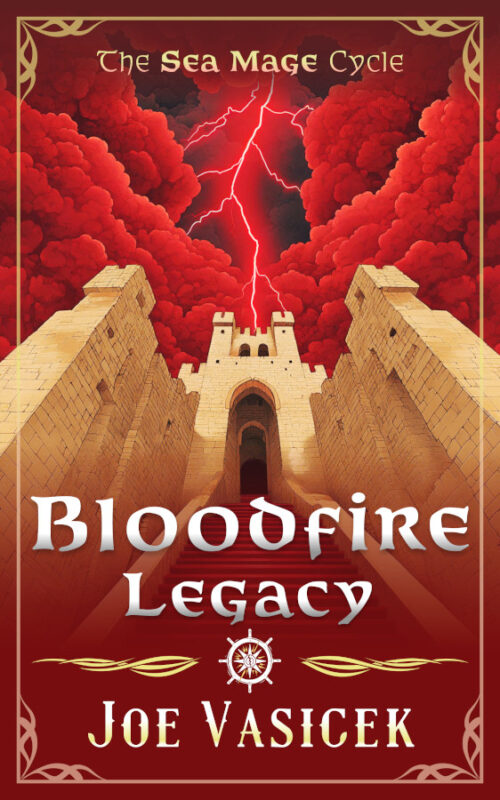
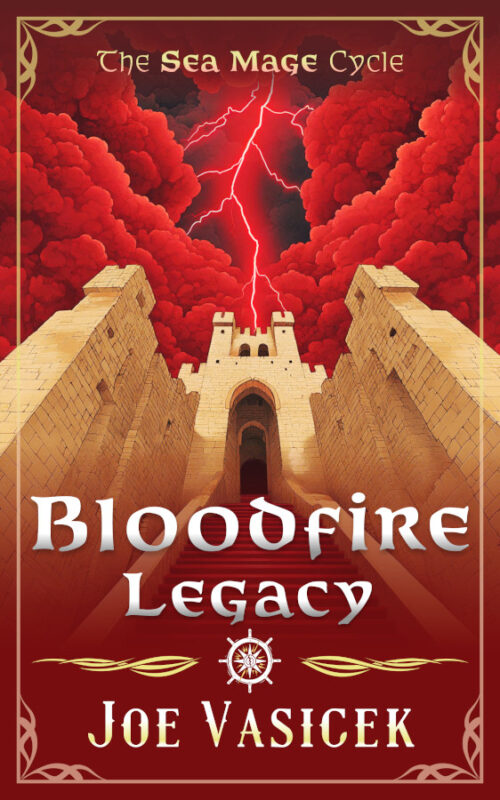
It was while I was working on the latest Sea Mage Cycle book, Bloodfire Legacy, that I finally felt I was getting a handle on how to write something really great with AI. The key is constraints. AI does best when you give it constraints that are clear and specific. The more you constrain it, the more likely you are to get something that rises above the average and approaches something great.
But to do that, you have to have a very clear and specific idea of what you want your story to look like. Which means you have to have a solid outline (or at least some really solid prewriting), and a deep understanding of story structure.
I think the real reason Brandon is so opposed to AI writing is that it negates his competitive advantage—the thing that has made him the #1 fantasy writer. Without AI, the biggest bottleneck for new and established writers is putting words on a page. Brandon made a name for himself with his ability to write a lot of words relatively quickly. Where other fantasy writers like Martin and Rothfuss have utterly failed to finish what they start, Brandon finishes everything that he starts, and he starts more series than most other writers finish. This is why he’s known as Brandon Sanderson, and not just “the guy who finished Wheel of Time.”
But generative AI removes this bottleneck. Suddenly, putting words on the page is quite easy. They might not be good words, but they might be as good as Brandon Sanderson’s words. After all, his prose isn’t exactly the most brilliant of our time. Deep down, I think Brandon feels this, which is why he sees AI as such a threat.
Will writing with AI make you lose some of your writing skills? Probably. I suspect it’s much like how using AI to code will make you weaker at coding, at least on a line-by-line level. But coding with AI will make you a much better programming architect and designer, since it frees you up to focus on the higher-level stuff.
In a similar way, I expect that the new bottleneck for writing will have to do with the higher level stuff: things like story structure and archetypes. The writers who will stand out in an AI-dominated writing field will be the ones with a deep and intuitive understanding of story structure, who can use that understanding to get the AI to produce something truly great. Because if you understand story structure, you can write better constraints for the AI. Pair that with a good sense of taste, and you’ve got an artist who can make some really great stuff with AI.
This is why I think Brandon’s views on AI art are not only misguided, but actually toxic. Love it or hate it, AI is just a tool. Using it doesn’t make you any less of an artist, just like using a camera vs. using a paintbrush doesn’t make you any less of an artist.
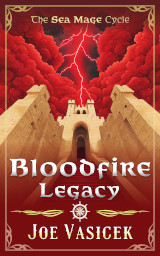
I published a new Sea Mage novel last week! Check it out!
Bloodfire Legacy
A murdered wizard. A desperate thief. A daughter on the brink of damnation.
Corin has never been more than a streetwise nobody and a petty thief. He can also hear the voices of the dead, whether or not he wants to. So when the ghost of the royal court magician begs him to help save his wayward daughter, Corin reluctantly accepts, even though it means he must become something he's never been: a hero.
A murdered wizard. A desperate thief. A daughter on the brink of damnation.
Corin has never been a hero. A streetwise nobody and petty thief, he’s survived this long by keeping his head down and his fingers quick. He can also hear the voices of the dead—whether or not he wants to.
But when the ghost of the royal court magician begins to haunt him, all of that begins to change. His daughter has been dabbling in the dark arts, seeking to avenge his death. In doing so, she has fallen in with the very people who killed him.
Corin is the only one who can help him save his daughter. But to do that, Corin must turn from everything he knows and become something he’s never been: a hero.
Joe Vasicek fell in love with science fiction and fantasy when he read The Neverending Story as a child. He is the author of more than twenty books, including Genesis Earth, Gunslinger to the Stars, The Sword Keeper, and the Sons of the Starfarers series. As a young man, he studied Arabic at Brigham Young University and traveled across the Middle East and the Caucasus Mountains. He lives in Utah with his wife and two apple trees.
Some of the links in the page above are "affiliate links." This means if you click on the link and purchase the item, I will receive an affiliate commission. You will not receive any additional charge.
As an Amazon Associate I earn from qualifying purchases.
Happy 4th of July, everyone! It’s Independence Day here in America, when we celebrate our nation’s birthday by doing all of the most American things possible: fly our flags, eat lots of meat, and blow things up. God bless America!
It’s been a busy month so far, with family visiting from out of town all last week, and lots of kids all over the place. Great for our kids, who got to play with their cousins, but not the best for writing. Oh well. It looks like things are going to settle down for the rest of the month, which is really good, especially for my wife, who is racing to finish her PhD before she starts her new teaching job. So I will definitely be helping her with that.
On the writing and publishing side of things, I am actually going to take advantage of this time to catch up on all of the non-writing things, like publishing tasks, that I’ve fallen behind on. When August rolls around, things are going to get really crazy, with our move back to Orem as my wife starts her new job, so I want things to be set up really well for that.
I will continue writing, though: just at a slower pace. If I plan to do about an hour a day, and make that a consistent thing, I think I can keep that up through the crazy times that are coming. Not only are we moving and starting a new job, but we also have a new baby due to be born very shortly after all of that. So I fully anticipate that it’s going to be a crazy year.
(still not the final cover)
My plan right now is to keep plugging away at The Soulbond and the Sling, slowly but surely, until the AI draft is complete. At the rate that I plan to go, however, it probably won’t be finished until August or September.
I’ll also be working on the human draft of The Road to New Jerusalem, but since my plan is to submit that to the Ark Press contest in October, I’m not too worried about rushing that one. Besides, it’s a much shorter novel, so it shouldn’t be that hard. A part of me wonders if I’ll finish that one before The Soulbond and the Sling.
In the meantime, I plan to publish Bloodfire Legacy in paperback, ebook, and audiobook as soon as I go through the edits and get it formatted! In fact, that’s the next big thing I plan to work on in the next two weeks. With luck, it should be out very soon.
So those are the big things that I’m working on right now. I’m also going to try and finish all the blog posts for Fantasy from A to Z before the end of the month, though they will probably run through the first half of August or so. And once Fantasy from A to Z is done, I will turn that into an ebook exclusive for my newsletter list, and make my current newsletter exclusive, Science Fiction from A to Z, available as a regular ebook (and maybe audiobook and paperback as well).
All of this is part of my plan to pivot toward being more of a fantasy author. Right now, I’m a science fiction author who occasionally writes fantasy. In the future, I want to be known as a fantasy author who occasionally writes science fiction. Most of my science fiction leans heavily into fantasy tropes anyway, so it shouldn’t be too difficult to make the change. Hopefully most of my readers follow me over as I make the transition.
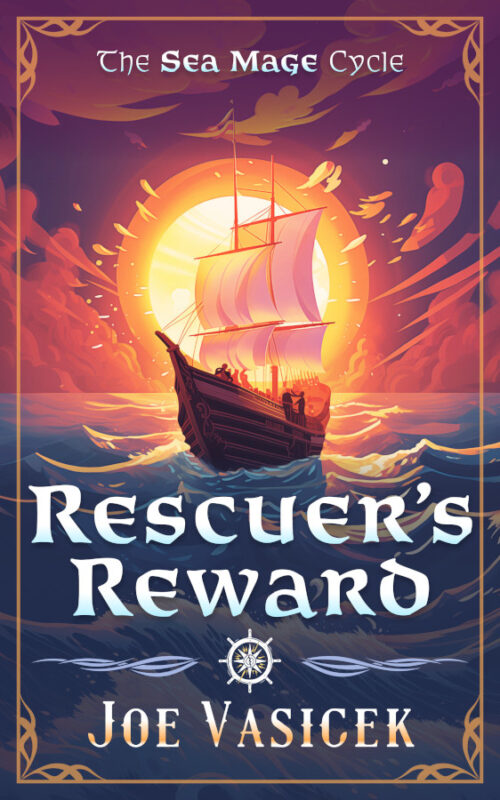
Toward that end, I’m happy to report that Rescuer’s Reward, the first novel in the Sea Mage Cycle, is now available as a permafree book! If you like fun quick fantasy adventures with a touch of romance, I think this will be right up your alley. All of the Sea Mage Cycle books are pretty short, and they all stand alone, though they often have recurring characters. Check it out and give it a read!
Fantasy, for all its dragons and destiny, is often a very serious genre. Life and death, good and evil, wars and rumors of wars—these are just a few of the more serious subjects we often find in fantasy. But a good story needs to strike a variety of notes beside the somber ones. The darker the tale, the more important the laughter becomes.
Soldiers have known this for ages. Marines are famous for their gallows humor—twisted, irreverent, often completely inappropriate jokes that somehow manage to be hilarious precisely because of how bleak the surrounding circumstances are. In war, laughter can be a survival mechanism, a pressure valve, and a glue that bonds brothers together. If you can laugh with someone in the trenches, you’re probably going to trust them when the bullets start flying.
Fantasy, like war, often deals with high stakes and harsh realities. Armies march. Cities burn. Heroes fall. The world trembles on the edge of the abyss. But if the characters never laugh—if they can’t crack a smile even once—then something essential has been lost. Without humor, darkness becomes unbearable. With it, we can find the strength to endure.
Terry Pratchett understood this. His Discworld novels are farcical, yes, but they are also deeply wise. He made fun of everything—kings, wizards, police, journalists, Death himself—but always with a nod to the things that make us human. As a result, his stories are full of heart, even when they deal with some surprisingly dark and existential subjects—such as Death himself.
In fantasy, humor can take many forms. Sometimes it’s wordplay or irony. Sometimes it’s a running gag or a sarcastic sidekick. Sometimes, it’s directed primarily at the reader, such as William Goldman’s masterful narration of The Princess Bride. Other times, it flows from the characters in their interactions with each other. With Terry Pratchett, it often was both.
It can be done poorly, of course. In fact, humor is often one of the hardest things to pull off well. Few people take their craft more seriously than comedians (which itself is kind of hilarious, if you stop to think about it). To further complicate matters, the humorous elements in a good fantasy novel are often subtle and invisible, burning off just enough tension to let the story breathe. Anything more than that is liable to pull the reader out of the story, by drawing too much attention to the joke.
It can be a difficult thing to balance. But when it’s done well, it can make for a very entertaining tale. And when balanced with all the other elements of a good story, humor can make the emotional highs higher and the emotional lows lower. Which makes it a very powerful thing.
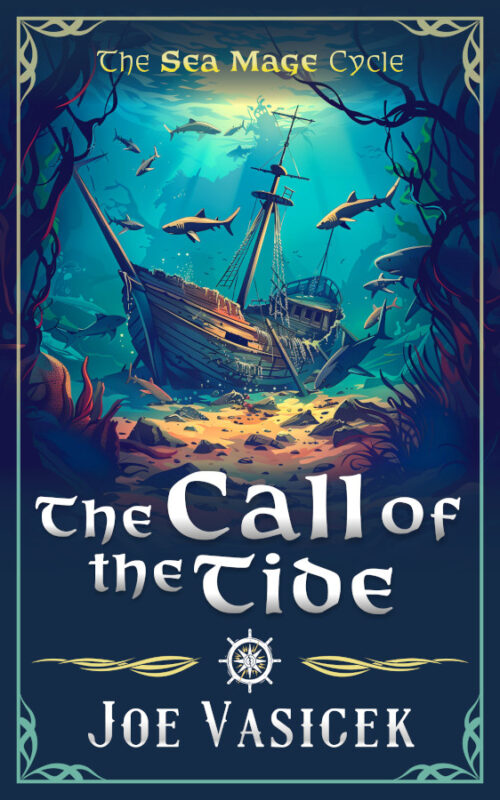
I don’t know how good I am at writing humor, but I try to sprinkle in enough of it to make my stories entertaining. My humor is often situational: for example, in The Call of the Tide, Samuel is a mage who can only exercise magic by never cutting his hair. That led to some mildly hilarious situations, such as birds trying to nest on his head at the most awkward of times. I also try to let it flow from the characters themselves. In Bloodfire Legacy, Corin often speaks with a sarcastic edge that flows from his experience growing up on the streets. This makes him a good foil for the somber ghost of Lord Arion, who was murdered in the first chapter of the book and now haunts him.
There’s a time to take things seriously, but there’s also a time to laugh and lighten up. And ultimately, if a story doesn’t entertain you, it’s not going to do much else. The best fantasy books have an element of humor, even if it’s subtle. After all, laughter is one of the most essential things that makes us human.
Immortality is one of those fantasy tropes that shows up everywhere once you start looking for it. Vampires, elves, gods, liches, ancient dragons hoarding gold through the centuries—we’re fascinated by the idea of beings that can’t die. Sometimes they’re terrifying, sometimes noble, sometimes weary and wise. But always, they strike a chord.
Why? Because they brush up against one of our deepest human anxieties: death.
Death is one of those universal aspects of the human experience. Everybody dies. And compared to the lifespan of things like mountains, or forests, or stars, the human lifespan is remarkably short and fleeting. Some of us live a long and a full life, and are ready to go when the time comes, but many of us are not. Tragedy can strike us at any time. No one knows when the reaper will come for them.
This is why, in fantasy fiction, immortality often comes wrapped in awe and mystery. It’s a mark of otherworldliness, a symbol of something beyond the ordinary cycles of birth and death. Sometimes it’s a gift. Sometimes it’s a curse. Often, it’s a little bit of both.
Personally, my favorite fantasy author who captured this complexity is J.R.R. Tolkien. His elves are perhaps the most iconic immortal race in all of fantasy. They don’t age or grow frail. They don’t die of disease. They are not eternal in the divine sense, but their lives are bound to the life of the world. When they are slain, their spirits travel to the Halls of Mandos, where they can eventually be re-embodied. But they are still bound to the world. They don’t pass beyond it. They don’t get to move on.
That’s the heart of their tragedy.
Elves in Tolkien’s legendarium aren’t happy fairytale creatures dancing in the moonlight. They are ancient beings with long memories, deep sorrows, and wounds that don’t always heal. They remember battles and betrayals that happened millennia ago. They carry the weight of history like a cloak that can never be removed. And for all their beauty and wisdom, they are fading. Slowly, subtly, inevitably. Their time is passing, and they know it.
In contrast, humans are mortal and thus are not subject to this curse. As Tolkien writes in The Silmarillion:
“And the Doom of Men, that they should depart, was at first a gift of Ilúvatar. It became a grief to them only because coming under the shadow of Morgoth it seemed to them that they were surrounded by a great darkness, of which they grew afraid.”
That’s a remarkable insight. Mortality, which we so often view as a curse, was originally a gift. The elves envy us not because we die, but because we get to leave. To move beyond the world. To have an end.
And yet, we don’t often treat it like a gift. In fact, we go to absurd lengths to avoid it.
You don’t have to look far to see that our obsession with immortality isn’t limited to fantasy stories. In Silicon Valley and other corners of the tech world, there’s a growing movement of wealthy futurists who are pouring money into the dream of defeating death. Some want to reverse aging at the cellular level. Some are working on brain-uploading technology, convinced they can digitize the human soul. Others are experimenting with biological “enhancements,” anti-aging therapies, or even transfusions from younger people in an effort to extend their lifespans.
This hunger for immortality is as old as the Epic of Gilgamesh, but today it wears a lab coat and calls itself “biohacking.” The names have changed, but the impulse remains the same. We want to stay. To cling to life. To hold onto what we have, no matter the cost.
But is that really such a noble goal?
Fantasy offers us a counterpoint. Again and again, stories show that immortality comes at a price. Vampires lose their humanity. Liches surrender their souls. Gods become detached from the world of mortals. Even the elves, for all their grace, are caught in a long decline.
Immortality often brings with it a kind of existential exhaustion. Without death, there is no closure. Without loss, there is no growth. Without time running out, nothing truly matters.
Mortality, by contrast, sharpens everything. Because we are mortal, our choices matter. Because time is a scarce resource—indeed, perhaps the only resource in our world that is truly scarce—our relationships carry weight. Because we will one day die, every act of love, courage, sacrifice, or faith becomes immeasurably precious.
And that’s something that fantasy, at its best, understands better than any philosophical treatise or TED Talk ever could. Again, Tolkien writes:
“But the sons of Men die indeed, and leave the world; wherefore they are called the Guests, or the Strangers. Death is their fate, the gift of Ilúvatar, which as Time wears even the Powers shall envy.”
The elves call us guests. Strangers. Not because we are lesser, but because we do not belong to the world in the same way they do. We are pilgrims passing through this world—strangers in a strange land. Our road leads elsewhere, and that elsewhere—whatever lies beyond the circles of the world—is part of the hope that makes us human.
In my own fantasy, I like to play with this idea. My characters all live in the Mortal Realm, but there is an Immortal Realm that lies beyond the bounds of their current existence, and the veil that separates the two can sometimes grow quite thin. In The Sword Keeper, there is a Void between the two realms that Tamuna must cross in order to confront the evil that afflicts her world, and to find the lost spirit of her father. In Bloodfire Legacy, when Lord Arion is assassinated in the first chapter, he temporarily gives up the indescribable glory of the Immortal Realm in order to linger as a ghost and help guide his orphaned daughter.
All of these characters are bound, in time, to pass from this Mortal Realm, but that isn’t a curse—it’s a gift. There is far more to this life than the bounds of our material existence. There are more things in heaven and in earth than we can comprehend with our mortal understanding.
In the end, fantasy doesn’t just explore our fear of death. It teaches us how to find meaning in the brief time we’re given. So the next time you read about some deathless sorcerer or ageless elf queen, remember: you have something they never will. An ending, and a beginning. A home beyond this world. A story that can reach its conclusion.
Lord Arion passed silently through the stone walls of Castle Caravelia. He yearned to feel the floor beneath his feet, to brush his fingers across the rough stone and feel their rough texture. But he was merely a wraith, disembodied and immaterial.
He rose and emerged through the floor above, stopping at the door to his daughter’s apartment. For a moment, he considered passing inside, but then he remembered the last time he had passed into that space. Sorrow pierced his ghostly heart as he recalled how she’d pored over the ancient tome of magic, the hideous black evil of the Serpent’s Eye desecrating her desk.
“Lyra, my child,” he whispered softly. “If only I could reach you.”
Of course, the awful truth was that she wasn’t beyond his reach. At any time, he could pierce the veil and speak to her one last time. In her current state, was he sure that she would listen? Would her father’s last words be enough to bring her back from the darkness? Or would she ignore him and continue on her chosen course?
He drifted down into the great hall, where courtiers mingled. Their idle chatter and vapid laughter hardly improved his mood. How many of them were secret allies of the Dark Brotherhood? How could they all carry on so blithely while darkness festered in their midst?
His gaze fell upon Lord Blackwood, deep in conversation with one of the king’s advisors. At the very sight of him, rage and despair warred within Arion’s heart.
“You monster,” he hissed. “You slew me in cold blood, and now you seek to ensnare my daughter? By all that is good and holy in this world, I swear that I will find a way to stop you!”
He paused, his gaze falling upon a cluster of mages engaged in hushed conversation near the hearth. One of them cast a sidelong glance at him, subtle enough that no one else noticed.
A clairvoyant, Lord Arion thought to himself. One with the magical gift to see and speak with the dead. Clairvoyance was rare, but not unheard of. Many of those who possessed the gift preferred to keep it secret, developing their other talents instead.
For a fleeting moment, Lord Arion considered approaching the mage. Yet a nagging suspicion stayed his hand. From observing Lord Blackwood, he knew that the Dark Brotherhood had already infiltrated the ranks of the kingdom’s magical elite. And of course, everyone else had their own devious schemes. Could he trust any of the clairvoyants at the court? No—the risk of exposing himself to his enemies was simply too great.
Dismayed, he drifted up from the hall, passing through the rafters and rough stone walls. So deeply did he brood over his troubled thoughts that he hardly noticed where he was going until he emerged in his daughter’s chamber, illuminated in the flickering light of a single candle. Lyra sat hunched over her desk, her midnight-black hair spilling over her shoulders. With one hand, she idly stroked the Serpent’s Eye.
“I will bring you justice, father,” she murmured. “I swear it.”
Arion’s heart clenched. “No!” he screamed. “My killer is Lord Blackwood, child! The very man you’ve chosen to make your mentor!”
Lyra shivered suddenly, wrapping her arms around her chest. “Are you here, Father?” she asked softly. “Sometimes, it almost seems like I can feel you.”
Lord Arion reached out to her, his ghostly fingers passing through her cheek. “I’m here, child,” he whispered.
For a fleeting moment, he wondered if she could feel his ethereal touch. But then, she shook her head and returned to her studies.
Unable to bear his helplessness any longer, Arion soared through the castle walls and up into the night sky. The city sprawled beneath him, the light of countless torches flickering in the shadowed streets.
There had to be someone down there who could help him reach out to his wayward daughter. But where?
Corin
Corin darted across the dark alley, leaping between the crates and barrels in his way. He slowed as he rounded the corner, careful to watch for any dangerous figures lurking in the shadows. But once he knew they were clear, he wore the shadows like an old familiar cloak over his threadbare rags.
“I told you,” he hissed under his breath. “I don’t do this anymore. Find someone else to help.”
The ghost of a middle-aged man followed him, his pudgy face creased with worry. “Please, young man. My daughter is in danger—you’re the only one who can help!”
Corin quickly scanned his surroundings, and not just for the usual threats. Anyone who saw him would think him mad—his ghostly companion was invisible to everyone else.
“Look,” he whispered harshly, “I’m sorry about Mariah. Truly, I am. But from what you’ve told me, I’m liable to end up floating face-down in the river if I go after her. And I rather like breathing.”
“But if you do nothing, she’ll die!”
Corin winced, though he did his best to hide it. “Yeah, well, we all go sooner or later. I’m not a hero. Why don’t you go ask someone respectable, with one of those big, fancy swords?”
“Do you think I haven’t tried? None of them can see or hear me. Only you have the gift!”
“Some gift,” Corin snorted, leaping over a putrid rivulet of freshly-dumped sewage. “All it’s ever brought me is trouble.”
His stomach growled. The only food he’d managed to scrounge up that day were some meager scraps from a refuse pile. Even when he managed to pinch a few silvers, the hunger always gnawed at him. It was his only constant companion in his hardscrabble existence—aside, of course, from the dead.
“Please,” the ghost moaned. “You are my daughter’s only hope.”
Corin clenched his jaw. Mariah was a friend, of a sort—at least, as much of a friend as one could have on the streets. He doubted she would come after him if their roles were reversed. But she might. Shouldn’t he… but no, every instinct screamed at him not to risk his neck. He hadn’t survived this long by always saying ‘yes’ to every ghost with a haunting sob story. Hadn’t he?
“Why do I always let myself get dragged into these things?” he muttered. The ghost’s face lit up immediately.
“Thank you, lad! You’ve no idea how much this means to—”
“Save it,” Corin growled. “Just guide me to her.”
The ghost nodded and led Corin deeper into the labyrinthine heart of the city’s slums. Worn and weathered buildings loomed over them, their once-grand facades now reduced to crumbling ruins. Shattered windows glinted in the moonlight, many boarded up with pinewood planks. The stench of mildew and raw sewage hung heavy in the air, so thick that it practically clung to Corin’s skin.
The ghost suddenly veered to the left, leading Corin towards a decrepit warehouse. A salty sea breeze from the harbor made its old, weathered boards groan ever so slightly.
“This is it,” the ghost whispered. “My daughter’s in there.”
Corin narrowed his eyes. “Your daughter got herself mixed up with Grim’s gang? Brilliant, that.”
“It wasn’t her fault! Times are hard, and—”
“Times are always hard,” Corin snapped. He ran a hand through his unkempt hair. “Look, if I do this—and that’s a big if—I’m gonna need more than just encouragement. You know the layout in there?”
“Aye, I’ll guide you. Just… please, save my little girl.”
Corin sighed. “I’ll do what I can. But don’t expect any miracles.”
The ghost’s lips curled into a faint smile. “Thank you, Corin. I knew I could count on you.”
Corin crept along the warehouse’s outer wall toward a rickety ladder. Pausing only to test if it would hold his weight, he nimbly scaled the rungs, slipping through a small hatch into a dark and dusty hayloft.
The pungent smell of moldy straw assaulted him as he crawled forward on his belly, peering through gaps in the floorboards. Mariah’s father hovered nearby, his ghostly form passing effortlessly through the wooden beams.
“There she is,” the ghost whispered, pointing downward.
Corin’s breath caught in his throat. Mariah sat bound and gagged in the center of the floor, her face a patchwork of ugly bruises. Corin recognized the hulking crime boss immediately, with his shaved head and a scar splitting his lip. Half a dozen thugs flanked the ugly man. He grabbed Mariah’s hair and yanked her head back, making Corin wince.
“Last chance, little seer,” Grim growled. “Tell me what I want to know, or I start to become unpleasant.”
Mariah’s eyes blazed with defiance. “Go to hell,” she spat.
“Wrong answer, little seer.”
“Hey boss,” said one of the thugs. “Want us to have some fun with her?”
“Yeah,” said another, puffing out his chest. “What about it, boss?”
Grim chuckled—a cold, mirthless sound that sent shivers down Corin’s spine. “Not yet,” he said, his eyes roving over Mariah’s battered body. “I want to hear her beg for mercy first.”
Corin felt a surge of anger in his gut. He knew he had to act fast. His eyes darted about the warehouse, falling on an oil lamp hanging from the rafters just below him. Below it lay a pile of oily rags.
“What are you thinking, lad?” the ghost asked.
“What I need is a distraction,” Corin muttered under his breath. “But what to do after—”
The sharp crack of a hand striking flesh cut him short. Mariah’s cry of pain echoed in the cavernous space below him.
“Blast it all,” Corin hissed. Right now, all that mattered was getting Mariah away. He’d figure out the rest as he went. With that decided, his hand slipped to the worn handle of his knife as he crept closer to the edge of the hayloft, his heart hammering.
Here goes nothing.
Corin sprang from his hiding spot and rolled as he hit the floor. The thugs whirled around at the sudden movement, but he was already in motion, running. His blade flashed as it sliced through the rope holding the lamp.
“What the—”
The lamp crashed and shattered. The flames licked hungrily at the oily rags, and the thugs hesitated, unsure whether to chase Corin or to put out the fire.
“Yah!” shouted Corin, lunging in a feint. The thugs instinctively moved to fight him, wasting the precious few seconds they had before the fire grew out of control.
“What are you doing?” Grim bellowed. “Smith, Carter—after that thief! The rest of you put out the fire!” But he was too late. The flames had already taken to the dry and weathered wood, filling the air with smoke.
“Dirty little waif,” one of the thugs snarled as he drew a wicked dagger. Corin took that as his cue to dance.
The thug lunged at him, moving much faster than his hulking form seemed to allow. But Corin was faster. He darted to the side, tripping up a man with a water pail and causing him to spill it on the floor. Another thug tried to catch him, but slipped on the water and barreled into someone else.
Corin ran toward a stack of crates, leading his attackers away from Mariah, who still sat bound to her chair. The thugs crashed after him, knocking some of them over, but he had already doubled around behind them.
“Get him!” Grim roared, his face contorted with rage.
Corin had just enough time to duck before another thug came after him, swinging his meaty fists. He felt the whoosh of the air as the man’s arm passed over his head. Without thinking, he lashed out with his foot, catching his attacker in the knee. The man grunted and took a step back.
“My daughter!” the ghost yelled. “We have to save her before the place burns down!”
The warehouse was fully on fire now, the acrid smoke stinging Corin’s eyes and throat. He caught a glimpse of Mariah staring wide-eyed at the flames as men scrambled in vain to put them out. She was far too close to them for comfort.
But before Corin could run after her, the thugs came after him. Since they were both taller than him, though, the smoke stung their eyes enough for him to slip between them. He darted toward the opposite wall, coughing.
“A little help here?” he asked the ghost. The smoke was already thick enough that he could barely see anything.
“This way!” Mariah’s father called, urging him into the fire.
Corin followed, dodging started thugs and burning debris. Mariah’s muffled cries for help urged him to move faster. The acrid stench burned his lungs, but he ducked his head and pushed on.
“There she is!” the ghost cried out.
Through the haze, Corin spotted her. She’d been knocked to the floor in the commotion and was now struggling for her life against her bonds. When she saw him, her eyes widened.
“Corin? What are you doing here?”
“That’s a very good question,” he muttered, sawing at the ropes that bound her feet. As soon as they were cut, he grunted and hauled her up.
“Can you run?”
She nodded, her arms still bound behind her back. The timbers above them groaned and cracked, showering them with sparks and embers. But before they could run, a rough hand grabbed Corin’s shoulder.
“You little street rat,” Grim snarled, his face contorted with rage. “I’ll gut you myself!”
His knife was almost as long as Corin’s forearm. But before he could use it, Mariah landed a kick in the crime lord’s groin. Grim howled and doubled over.
“Run!” said Corin, grabbing Mariah by the arm. She didn’t need to be told twice. Together, they stumbled through the thickening smoke.
The burst out into the cool night air, coughing and gasping for breath. Behind them, angry shouts and roaring flames filled the air. Mariah staggered, and for a moment, it seemed that she was about to collapse.
“Don’t stop,” Corin gasped, pulling her back to her feet. “We’ve got to get away from here.”
Mariah nodded. Together, they plunged into the winding alleys of Caravelia, leaving the inferno far behind.
Corin
The old wharf groaned under Corin’s weight. He stumbled to the edge, letting his feet dangle over the water as he sat. The putrid stench of the river wafted up to greet him, a nauseating blend of sewage and rotting fish. As if that weren’t enough, the acrid smoke of the warehouse fire still clung to his rags.
“Think we lost ‘em,” he muttered as Mariah sat beside him. The distant shouts of the city guard echoed behind them through the narrow streets.
Mariah nodded. “For now, at least.” She sagged against a moldering wooden post, wincing at her bonds. “Lend a hand?”
“Right, sorry.” Corin fumbled for his knife and carefully sawed through the ropes binding her wrists. The raw, red welts stirred his anger.
“How badly did they hurt you?”
Mariah grimaced as she rubbed her chafed skin. “Ain’t nothing I can’t handle. You learn to take your licks on the streets.” She glanced at him, her eyes glinting. “Speaking of which, what were you doing there? How’d you know where to find me?”
Mariah’s father hovered at the edge of Corin’s vision. “Tell her,” he urged. But Corin couldn’t afford to let word get out about his gift.
“I heard a rumor,” he lied. “Thought I’d check it out, see if you needed my help.”
Mariah snorted. “Since when do you play the hero, Corey?”
“Maybe I just wanted to buck the trend for once.”
She stared at him for a while, then shook her head. “You’re a strange one. But… thanks. I mean it.”
“What were you doing getting mixed up with Grim’s crew anyway?” Corin asked. Mariah looked away, her lips pressed into a thin line.
“It’s… complicated,” she said evasively. “I got mixed up in something I shouldn’t have.”
Corin’s frown deepened. He knew all too well the kinds of people who ruled Caravelia’s underworld. It often felt like the city’s prosperity was built on a foundation of corruption and greed. The fact that Mariah didn’t want to talk about it obviously meant she was in over her head.
“Must’ve been some job,” he pressed. “Grim doesn’t tie people up for fun.”
Mariah’s lips tightened. “Look, I appreciate you saving me and all, but it’s better if you don’t know all the details. For both our sakes.”
Corin opened his mouth to argue, then thought better of it. Why was he trying to get himself involved anyway? Everyone on the streets had their own dirty secrets.
“Fine,” he said. “Just… take care of yourself, alright? And if you need my help again—”
“Don’t worry, I’ll ask for it,” she said, turning away. But she couldn’t hide the gratitude in her eyes.
Maybe I just want to feel needed for a change, he thought, answering his own question. By someone who isn’t dead yet, he added quickly, turning away from the ghost.
“Tell her,” Mariah’s father pleaded. “Please, Corin. Tell her I’m here—that I love her.”
But Corin ignored the spectral being, fixing his gaze on the water instead. A small barge glided past them, its hull groaning as it made its way toward the harbor. Mariah noticed his sudden tension and frowned.
“What is it, Corey?” she asked. “You look like you’ve seen a ghost.”
“You have no idea.”
“What’s that supposed to mean?”
“Nothing. Now, let’s get out of here before those goons catch up to us.”
Corin felt the ghost’s disappointment like a cold wind at his back. But he shoved the feeling aside. Survival came first—everything else was a luxury he couldn’t afford.
Lord Arion
Lord Arion silently watched the two ragged figures below. Though unremarkable to mortal eyes, the boy stood out among the thousands of other inhabitants of the capital city.
“He has the gift,” Lord Arion whispered. “The power to see beyond the veil of the Mortal Realm.”
Hope began to surge within him, a feeling he hadn’t felt very often since his demise. He swooped lower, watching as Corin parted ways with Mariah before slipping into a gaggle of drunken sailors. He blended in surprisingly well.
“He is so different from my Lyra,” Arion mused as he followed the boy through the city’s squalid streets. Where Lyra walked with the grace and poise of nobility, Corin slunk through the shadows, always watching his back. Where Lyra had a position at court, Corin trusted no one and always kept a knife on his belt.
“The streets haven’t been kind to you, have they, lad?” Arion murmured. He focused his otherworldly senses to peer into Corin’s heart. Beneath the boy’s gritty cynicism, a flicker of something pure still burned.
“There’s goodness there,” Arion decided. “Buried, perhaps, but not extinguished. You’re a good man, Corin—or at least, you want to be.”
Arion’s mind turned to the peril his daughter now courted. His rage burned at the thought of Dorian indoctrinating her in the ways of the Dark Brotherhood. She needed her father now more than ever—before she made a mistake that would fix the course of her life.
“The boy has the gift,” he repeated, steeling his resolve. It would not be easy, persuading a street urchin to turn from a life of petty thievery. But for Lyra’s sake, he had to try.
Lyra Arion glided gracefully across the polished marble floor of Castle Caravelia’s great hall, her heart racing. It seemed as if the entire court had turned out for her debut. The sight of their resplendent dazzling uniforms and gorgeous gowns made her skin tingle with awe. And yet, even among them, she stood out like a vibrant gem. Her emerald green dress shimmered in the light of the chandeliers, her black hair adorned with a delicate silver circlet that made her feel like a queen. All eyes were drawn to her, and she knew it.
The musicians took up a song, and the floor filled with dancers. Lyra watched with unabashed delight, though inwardly, she felt conflicted. The ball had been thrown in her honor, celebrating her debut as a young lady of the court of King Leander. And yet, for all the wonder and joy at her coming of age, she still felt the loss of her father’s murder—a crime for which no one had yet been punished.
His killer was someone in this very court, she mused inwardly, even as she smiled and exchanged meaningless pleasantries. Perhaps even someone in this very room.
A portly merchant approached her with a plump, rich woman on his arm. She didn’t know the man, but the woman was Lady Estelle, a lady-in-waiting of the late queen. She smiled as her husband spoke.
“Lady Arion—what a pleasure! We’ve been eagerly awaiting your debut for some time now.”
Lyra curtseyed politely. “Thank you, sir. I’m honored to join the court.”
“You look positively radiant this evening,” gushed Lady Estelle. “That dress brings out the lovely color in your eyes.”
“Thank you, milady.”
“Your father would have been so proud to see you here tonight. He truly must be smiling down upon you now.”
Lyra’s heart constricted at the mention of her father. She forced a tight smile, her voice betraying none of her inner turmoil.
“You are too kind, Lady Estelle. I only wish he could be here to share this moment.”
“Quite, quite,” said the portly merchant, eyeing the buffet table a little too eagerly. “Well, don’t let us keep you, Lady Arion. May you have a wonderful evening.”
“And you as well,” Lyra said, curtsying again as they parted ways. As soon as their backs were turned, she glared daggers at them. Could it be either of them? No—Lady Estelle’s head was far too empty to be able to hide the conspiracy for long, and as for her husband, she doubted he was of any consequence. Though if Lady Estelle had meant that comment as some sort of barb…
The arrogant Lord Haversmith simpered toward her, interrupting her thoughts. “Lady Arion,” he purred as he bowed, “you look absolutely radiant this evening.”
“Milord,” she answered curtly. But the young man didn’t take the hint. His gaze slid over her body, taking in every inch of her.
“Might I have the honor of a dance?”
Lyra covered her mouth, ostensibly in a coy laugh, but truthfully to hide a scowl. Even as a debutante, she knew how to play the game.
“You are too kind, my lord. Perhaps later this evening? I simply must rest my feet for a moment.”
He hesitated a moment before bowing stiffly again. “Of course,” he muttered, clearly annoyed. But Lyra didn’t care. She turned away, revealing her true emotions only in the subtle twitch of her eyebrow.
Her thoughts turned inward as she observed the whispered conversations along the edges of the great hall. There were many factions in King Leander’s court, all of them vying against each other in a hundred subtle ways. Which of them was responsible for the murder of her father? Was it Lord Aldric, with his too-bright smile and overly familiar manner? Or or perhaps the stern-faced Duke Bardolf, watching from an alcove with an inscrutable expression on his face? Now that she was one of them, Lyra finally had an opportunity to investigate the murder for herself. She could hardly wait to get started.
“Lady Lyra!” exclaimed Lady Forsythe. “How marvelous to see you.” Her voice was like a songbird’s trill, high-pitched and overly sweet. “Your debut has become quite the occasion for the court. That gown is simply divine.”
Lyra nodded. “Your dress is lovely as well,” she responded superficially. “And how fares your husband?”
At the mention of her spouse, Lady Forsythe launched into a seemingly endless monologue about his recent struggles with gout and the various remedies he had tried to cure it. As she prattled on, Lyra’s mind wondered. Could it be her? Or perhaps her foppish son?”
“…and of course, we simply must have you over for tea next week,” Lady Forsythe concluded.
Lyra inclined her head. “You’re too kind,” she replied noncommittally.
“Very well. Have a lovely evening, Lady Arion.”
As they parted, Lyra decided it couldn’t be her. Lady Forsythe was far too absorbed with her own husband. Or was that just a clever ruse?
Patience, Lyra chided herself, though inwardly she wanted to scream. She would find her father’s killer. She would see him brought to justice.
A hand touched Lyra’s elbow, startling her from her brooding thoughts. She turned to find herself face-to-face with a tall, gaunt man whose deep blue eyes seemed to pierce right through her.
“Lady Arion,” he said, his voice as smooth as silk. “I don’t believe we’ve had the pleasure. Lord Blackwood, at your service.”
Lyra curtseyed, her eyes never leaving his face. “Lord Blackwood. A pleasure.”
“Would you honor me with a dance?”
Lyra hesitated. Something about the man seemed off to her, but she could not refuse a second invitation without drawing unwanted attention. She forced a smile and placed her hand in his.
“Of course, Lord Blackwood.”
They glided across the marble floor, joining the other dancers. Dorian moved with surprising skill, stepping smoothly as he led her with a firm and confident hand.
“I must say, Lady Lyra, you look positively radiant tonight. The court is truly enriched by your presence.”
“Thank you, Milord,” Lyra replied uneasily. She had heard of Lord Blackwood, of course. He was a minor noble with a reputation for charm and wit. His flattery seemed a little too thick, though. She searched his face for sarcasm or malice, but found only a pleasant smile.
Just what was it about this man that put her on edge?
“You seem distracted,” Dorian observed as he guided her through a turn. “Is the ball not to your liking?”
“Not at all, Lord Blackwood. I’m simply… overwhelmed by the grandeur of it all.”
“Ah, yes. Though this isn’t your first time at court, isn’t it?” His grip on her waist tightened. “I seem to remember you accompanying your father, before his… unfortunate passing.”
The words hit Lyra like a physical blow. Memories flooded her mind: the pounding on the door, her grandmother’s ashen face, the terrible news that had shattered her world forever. She swallowed hard, struggling to keep her composure.
“Yes,” she managed. “His loss has been… difficult.”
“My deepest condolences, Lady Arion. We have all keenly felt his absence from court these past five years.”
The music swelled, relieving her from having to respond.
As they continued to dance, Lyra found herself studying Dorian more closely. His charm seemed practiced and stale, his words too carefully chosen. Could he have been involved?
“Tell me, Lord Blackwood: did you know my father?”
“Not as well as I would have liked,” he replied smoothly. “But his reputation preceded him. Your father’s skill in the arcane arts was legendary. Did you inherit any of his… talents?”
The question sent a strange chill down her spine. “I’m afraid I don’t know what you mean, Lord Blackwood.”
“Oh, come now, Lady Arion. Surely you’ve felt the call of magic in your blood?”
“I have,” she answered carefully. “But I’m not sure what you’re implying, my lord. My training in the arcane arts is a matter of public record.”
To her relief, Lord Arion dropped the question. “My apologies if I’ve overstepped. I simply find you fascinating, Lady Arion.”
Yes, Lyra thought silently as she turned her gaze from his piercing blue eyes. Just like Lord Haversmith.
The final notes of the waltz faded away, and Lord Blackwood released her from his grasp. She stifled a sigh of relief, ignoring how his eyes seemed to linger. His grip on her waist had been far too possessive.
“Thank you for the dance,” she said, offering a curtsy.
Dorian bowed. “The pleasure was all mine, Lady Arion. I look forward to seeing more of you.”
The feeling is not mutual, Lyra thought but did not say.
As she turned her back to him, she decided that Dorian Blackwood was little more than a petty womanizer. Obviously, that was the only thing that had set her on edge, for what could he have possibly gained from the murder of her father? She would have to avoid him in the future.
She suddenly noticed the eyes of the nearby courtiers drawn to an approaching figure. Lyra turned to see Lady Seraphine, the court magician, gliding toward her with mesmerizing grace. Her long silver hair cascaded down her back, accentuating the purple lace of her gown. Her smile could have belonged equally to a face as young as five or as old as five hundred.
“My dear Lady Arion,” Lady Seraphine greeted her with a melodious voice. “How lovely to see you this evening. You’ve blossomed into such a beautiful young woman.”
Lyra’s spine stiffened. Could Lady Seraphine have been involved in her father’s murder? After all, she had succeeded him as court magician. Few others had gained so much from his untimely passing.
“Thank you, Lady Seraphine,” Lyra carefully chose her words. “The pleasure is mine, though I wish my father were here to see it.”
“His passing still looms like a shadow over this court. These are trying times, Lady Lyra. The kingdom faces many challenges, both from within and without.”
What’s that supposed to mean? Lyra wondered.
“But enough about politics,” the older lady purred. “I suppose a young woman such as yourself must be bored half to death by matters of the court.”
“On the contrary, I find such matters invigorating. There’s so much to consider.”
Lyra’s gaze met Lady Seraphine’s, and for a moment both women took stock of each other. The older sorceress’s violet eyes seemed to miss nothing.
“Your father spoke of you often, you know. He had high hopes for your future.”
Lyra’s throat tightened. “Did he?”
“Yes,” Lady Seraphine said softly. “Tell me, child, have you given any thought to following in his footsteps? The gift of magic often runs in families, after all. And your father’s talents were quite exceptional.”
The way Lady Seraphine called her a “child” made Lyra bristle ever so slightly. But she did her best to hide it, keeping her voice low and controlled.
“You flatter me, my lady. But I don’t think I could ever hope to match my father.”
The sorceress’s laugh was like the tinkling of crystal. “Oh, you underestimate yourself, child. I can see the spark in your eyes—the same fire that burned in your father’s.”
“And what became of that fire, Lady Seraphine? Did someone seek to extinguish it?”
For a fleeting moment, something flickered in the ageless woman’s eyes. But it disappeared just as quickly, replaced by her mask of serene elegance.
“Careful, child. The line between justice and vengeance is often thinner than we’d like to admit.”
“I’m not a child, anymore, Lady Seraphine. This very ball is meant to celebrate that fact. But tell me, how does it feel to wear the mantle of a dead man?”
Seraphine’s eyes flashed. “Your father was a great man, young child, but your grief at his passing does not give you license to lash out blindly.”
“And allow his killer to go unpunished?”
“Such talk is unbecoming of a lady. And dangerous, in these troubled times.” Lady Seraphine’s face smoothed into a placid smile. “Now, if you’ll excuse me, I believe King Leander requires my company. Do enjoy the rest of the ball, my dear.”
With a swirl of shimmering robes, the sorceress glided away. Lyra trembled with fury, her cheeks hot and her heart pounding.
“By the seven seas,” Lyra muttered, “I need some air.”
Lyra
The pale light of the moon illuminated the castle with a soft, glowing light. A salt-tinged breeze blew gently from the sea, tossing Lyra’ hair and cooling her flushed cheeks. She paused to admire the view of the royal gardens below.
“I will find the truth, Father,” she whispered. “I will not rest until I’ve found them.”
A flicker of movement caught her eye. She turned and found herself face to face with a cloaked figure, his face concealed by an ornate mask. The suddenness of his appearance made her gasp.
“Who are you?” Lyra demanded.
The figure tilted his head inquisitively “A friend, perhaps. That depends entirely on you, Lady Arion.”
A shiver ran down Lyra’s spine. Should she call for the guards? But if he wanted to harm her, he could have already done so.
She narrowed her eyes at him. “I wasn’t aware that I needed one.”
The man chuckled. “And yet, here you are, alone at the grand ball in your honor. Clearly, something else is on your mind. Are you searching for something? Or perhaps for someone?”
Lyra’s cheeks flushed. Did he overhear my vow? she wondered silently.
“What do you know of my search?”
The figure leaned in closer, his voice dropping. “The man who killed your father is in this very castle.”
Her heart surged. “What do you know of him?”
“Only vagaries. The killer’s identity is a closely guarded secret, even from me.” He paused. “But your father’s murder casts a long shadow.”
Something in the way he spoke of her father made the words spill out of Lyra’s mouth. “He—he didn’t deserve to die like that,” she heard herself stammer. “He was a great man. Whoever killed him… I want them to suffer as I have suffered. As my father suffered in his final moments.”
“Is it justice you seek, or vengeance?”
“Both,” Lyra answered.
“Be careful, Lady Arion. Such desires can lead down dark paths.”
“Then so be it,” she said, lifting her chin. “I’ll walk any path if it leads me to my father’s killer.”
The masked figure nodded, as if coming to a decision. Without warning, he took Lyra’s hand. Her body tensed, but before she could pull away, she felt him press something smooth into her palm.
“Then perhaps this will aid you on your quest. It will guide you, if you have the will to use it.”
Lyra looked down at the object. It was a small obsidian artifact, like a stone worn smooth from the ocean waves. Its surface was as smooth as polished glass. At its center, a faint light pulsed. She could sense its deep magical power, dark and rich and alluring. Its weight filled her with a sense of pure, untapped possibility, as if she held a small world in her hands.
“But how do I—”
Her words trailed off. The battlements were empty. The masked figure had vanished as if he’d never been there at all.
Lyra
Lyra’s footsteps echoed through the castle as she hurried to her apartment in the east wing. She barely managed to resist the urge to reach for the magical orb, hidden within the folds of her elegant gown. Its powers seemed to course through her, urging her to call upon its dark power.
Not yet, she thought, stumbling a little as she climbed the stairs. She caught herself and reached her apartment without further incident.
Once inside, she bolted the door and hurried over to her writing desk. With trembling hands, she retrieved the enchanted obsidian sphere, placing it ever so carefully upon the polished wood. In the soft glow of the candlelight, it shimmered with an otherworldly allure. She sank into her chair, eyes fixed on the artifact.
“What are you?” she whispered, tracing a finger along its cool surface. She thought of the words of the masked figure who’d given it to her. Could this orb truly help her find her father’s killer? Lyra leaned closer, captivated by the swirling depths beneath its glassy surface. A faint, pulsing light emanated softly from its core.
“How do I use you?” she murmured.
“My lady,” a silky smooth voice purred behind her. “I believe I can assist you with that.”
Lyra whirled, her heart leaping into her throat. Dorian Blackwood stood in the corner of her chamber, appearing from the shadows almost like a ghost. His blue eyes gleamed in the candlelight.
“Lord Blackwood!” Lyra exclaimed, rising awkwardly. “How did you…”
“My apologies for the intrusion, Lady Arion. It was necessary to come in secret, for reasons that will soon be clear.” He glanced meaningfully at the orb. “You’ve made quite the acquisition. Such a fascinating artifact, wouldn’t you agree?”
Lyra’s eyes narrowed. “What do you know of it?”
“More than you might think,” Dorian answered, his eyes glinting in the candlelight. “If you wish to use it, I can give you the guidance you seek.”
Curiosity warred with suspicion in Lyra’s heart. She was half-minded to call the guards and throw him out, but his answer made her hesitate.
“Guidance? What do you mean?”
With a fluid motion, Dorian reached into the folds of his cloak. His long fingers emerged clutching a second magical orb, identical to the one on the table.
“Stars above,” Lyra gasped. “There are two of them?”
Dorian nodded. “The Serpent’s Eyes. Their true powers are only unlocked when they are held by a master and an apprentice. That is why every initiate into the dark arts receives one.”
“The—the dark arts?” Lyra asked, her eyes widening.
“Yes. You do wish to find your father’s killer, don’t you? This orb will help you unlock the gates of shadow. With proper training, you will be able to peer into the darkest corners of men’s souls and bend the very fabric of reality to your will.”
“But… aren’t the dark arts forbidden?”
“Yes,” said Dorian, his smile quickly turning to a scowl. “Those who cannot wield the power hate and fear those of us who can. That is why we must keep to the shadows… for now.”
She frowned. “Who do you mean by ‘we’? Are you speaking about—”
“The Dark Brotherhood? Yes. By taking the Eye, you have joined us, Lady Arion. Though as one of our acolytes, you need not fear our power.”
Now Lyra’s heart truly began to race. She had heard many things about the awful calamities the Brotherhood had wrought upon the world during the Time of Troubles long ago. Most people believed that they had been destroyed by their own power. But she’d also heard rumors that they’d merely been forced underground, biding their time until they could rise again.
“Most of what you’ve heard about us is false, of course,” Dorian continued. “We do not seek to enslave all men, but to liberate them. We seek power to build a better world—much as you seek justice for your father.”
Lyra took a deep breath, her mind spinning. Part of her screamed caution, but her raw, aching need for justice drowned it out.
“Could the dark arts really help me to find my father’s killer?”
“My dear girl, the dark arts could give you far more than that. With this power, you could make your own justice.”
A heady mix of emotions began to well up inside of her. “I’ve tried everything,” she confessed, her voice cracking. “But the investigation into his death has gone nowhere. Everyone at the court speaks so highly of him, but they won’t actually do anything about his death.”
“The foppish, preening peacocks are worse than useless,” Dorian agreed. “The court of King Leander is beyond saving. Your father’s untimely death is proof enough of that.”
“Do you know who killed him?”
He shook his head sadly. “Our influence in the court is far too tenuous, though hopefully that will soon change. But be assured, Lady Lyra—your father’s killer still walks these halls.”
Lyra clenched her fists, her emotions rising. Something in his words—in the quiet intensity of his voice—broke through the wall around Lyra’s heart.
“It’s been five years,” she murmured, her eyes beginning to sting. “Five awful, horrible years. I see his face in my dreams, Lord Blackwood. I hear him calling out to me. It makes me feel so—so powerless.”
Dorian placed a hand on her shoulder. “I understand your pain all too well, child. With my help, you can turn that pain into power.”
“Why would you help me?”
“Because we need you, Lady Arion. If we are to reshape the kingdom—to purge it of all corruption and injustice—we will need every mage who is willing to join our cause. If we had risen to power sooner, perhaps your father would still be alive.”
She sniffed and wiped her eyes. All her life, she’d been taught that the dark arts were evil. Had that all been a lie? I’ve tried everything else, she thought inwardly as her resolve began to harden. But no one else seems to care.
She lifted her chin to meet Dorian’s gaze. “When do we begin?”
“Soon,” Dorian promised. “But remember, secrecy is paramount. The penalty for practicing dark magic is death.”
“I’ll do whatever it takes to avenge my father’s death.”
Dorian’s eyes glittered with a look of… gratification? Or was that triumph? In the dim light of the candle, it was difficult to tell.
“You have an unquenchable spirit, Lady Lyra. But you must exercise patience. Soon, the day is coming when we will be able to practice openly. But until that day, we must exercise prudence.”
He reached into his cloak and withdrew a small leather bound volume. Its cover and spine were non-descript, bearing no lettering at all. Muttering an incantation, he handed it carefully to her.
“Open it.”
Lyra undid the clasp, feeling a shiver of energy run down her spine. She saw at once that it was a manual of the forbidden arts, its pages deeply yellowed with age.
“The spell will cause the book to burst into flames if anyone opens it other than you,” Dorian explained. “Keep it clasped, and show it to no one.”
“I understand,” she said, flipping through the pages. Her heart leaped—even at a glance, she could tell that the volume contained a wealth of knowledge.
“I must go now,” Dorian told her. “It will be at least a fortnight until I return. Until then, study the book, and learn to draw on the power of the Serpent’s Eye. Let it be your teacher for now. Show it to no one, except those who belong to our Brotherhood.”
“How will I know who they are?”
“They will make themselves known to you by this sign,” he said, holding up his hand. Pressing his fingers together in the shape of a snake’s head, he curved two of them down to make the fangs. “You must keep the Serpent’s Eye on your person at all times. But show it to no one else. Do you understand?”
Lyra nodded. “I understand.”
“Good. Now, I must go. Do not attempt to contact me. When the time is right, I will contact you.”
He stepped back into the shadows, crossing his hands over his chest. His figure shimmered before dissipating like smoke in the air. Lyra slowly walked over to where he had been standing, carefully checking for any sign of him. But he was gone.
With a heavy sigh, she collapsed onto her bed, still holding the obsidian orb. As she gazed into its depths, she shivered in anticipation of the power that would soon be hers.
“Soon,” she whispered, smiling fiercely. “Soon, Father, I’ll have the power to make things right.”
I am happy to report that I finished the final draft of Bloodfire Legacy earlier this month. It is now in the capable hands of my editor, Josh Leavitt, and if all goes well, it should be out in ebook, print, and audio sometime in July.
In the meantime, I thought I would share the first three chapters here on my blog. While I used AI to write the rough draft, everything you will read has been totally rewritten to be in my own voice. This is not the AI draft; it is the final draft I sent to my editor. If you find any typos or errors, they are entirely my own, and will (hopefully) be caught before the book is published.
A Dagger in the Dark
Lord Arion
Lord Vaughn Arion hurried down the long, dark corridors of Castle Caravelia. The dim torchlight flickered behind him, casting a long shadow as he turned the next corner. His court magician’s robes rustled and swayed, but he made no effort to muffle his steps, even as he plunged into the shadows. Speed was of the essence now.
He ran his hand along the wall as his eyes adjusted to the darkness. The wall stones were rough, unlike the smooth marble floors and towering granite pillars of the throne room. He passed a narrow window, little more than an arrow slit, and heard the distant rumble of thunder rolling over the city below. Outside, the wind began to howl.
Not since the Time of Troubles nearly a century ago had the kingdom faced so great a threat to its very existence. The wise understood that the Dark Brotherhood had not been totally rooted out of the lands beyond the Azure Sea, but if Lord Arion’s divinations were correct, the true threat lay much closer to home.
The king must know, he told himself, the thought lending wings to his feet. It was not a coincidence that he’d learned this just as the threat of war loomed over the kingdom. Tensions had long been mounting on Caravelia’s eastern frontier, but if the Valmarian Empire was truly in the thrall of the Brotherhood itself…
Lightning flashed as he rounded a corner, briefly illuminating the passageway. He stopped suddenly, his skin prickling. He was not alone.
“Who goes there?” he demanded. “Show yourself!”
Thunder rolled as a tall figure emerged from the inky blackness. Lord Arion recognized the gaunt face and piercing blue eyes of Dorian Blackwood, a minor lord in King Leander’s court. His midnight-blue robes whispered across the floor.
“Lord Arion,” Dorian greeted him, his thin lips curving into a smile that didn’t quite reach his eyes. “I did not expect to encounter you here at this late hour.”
“I could say the same thing of you, Lord Blackwood,” Lord Arion replied. “What brings you to this part of the castle?” Though he occasionally saw Dorian in court, he knew little of the man. He now regretted that oversight.
Dorian chuckled mirthlessly. “The business of the court never sleeps, my lord.” He took a step closer, making Lord Arion step back. Something deep within him screamed of danger.
“Indeed,” Lord Arion replied carefully. “Now, if you’ll excuse me—”
Blackwood’s hand suddenly shot out. The gleam of a blade caught Lord Arion’s eye, and he jerked back just in time. The dagger slashed the fabric of his sleeve.
“What treachery is this?” Arion shouted.
“The kind that ends in your death,” Dorian answered.
With lightning speed, he lunged again—but this time, Lord Arion was ready. He thrust out a hand and uttered a word of power, unleashing a torrent of swirling energy as he dodged the would-be assassin’s blow.
Dorian stumbled back, his hands moving in a series of quick, sharp gestures. Inky tendrils of darkness coalesced around him. To Lord Arion’s utter astonishment, his magic parted harmlessly around Dorian, who stood untouched.
“You always were too predictable,” Dorian sneered. “Did you truly think I wouldn’t come prepared to face you?”
Arion’s mind reeled with the implications of what he had just seen. Only an acolyte of the Dark Brotherhood would dare to practice such forbidden magic in Caravelia.
“You—you’re a practitioner of the dark arts?”
“Oh, I’m so much more than that,” Dorian laughed. “But you’ll die before you learn the full truth of what I am.”
The two opponents circled each other warily, Arion’s wards pulsing as his opponent probed them. He drew a sharp breath, his mind racing. How could he have been so blind? Dorian had seemed nothing more than just another silver-tongued courtier—a favorite of the ladies and an obnoxious fixture at the king’s banquets. But this spoke of a far deeper treachery.
“Why, Dorian?” Arion demanded as lightning flashed outside. “What has driven you to betray your king?”
A sneer of contempt twisted Dorian’s lip. “Leander is no more fit to be king than you are fit to be his court magician.”
Thunder rolled as he launched his attack, unleashing a maelstrom of dark magic. Arion deflected it and countered with a powerful riposte, the clash of their energies illuminating the corridor with a burst of blinding light.
“Your power is formidable,” Arion growled through gritted teeth, “but your soul is corrupted. I cannot permit you to live.”
Dorian laughed. “You will never know the full extent of my powers.”
Before Arion could gather his energy, Blackwood surged forward, his dagger a blur of silver that sliced through Arion’s wards like feeble threads. A searing pain erupted in his chest as the dagger plunged deep into his heart.
Lord Arion stumbled to his knees, the metallic taste of blood filling his mouth. “How?” he gasped.
“Silver, my lord,” Blackwood answered coolly. He twisted the dagger and wrenched it free. “The bane of all magic—even yours.”
Lord Arion’s legs buckled, and he collapsed. Blood gushed from his wound as the edges of his vision began to haze over. He fought in vain to maintain consciousness against the looming darkness. Dorian crouched over him.
“Hush now,” he whispered, his voice a sibilant caress. “It will all be over soon.”
With the last of his strength, Arion tried desperately to rise and fight. But his limbs simply refused to obey. He watched as Dorian Blackwood carefully wiped the blood from his dagger before he melted back into the shadows.
“No!” Lord Arion groaned, thinking of the message he had failed to deliver. If only he hadn’t been so blind!
The world titled and spun all around him. The pain faded, and a numbing cold spread throughout his entire body. Then darkness claimed him, and Lord Arion knew no more.
Lord Arion
A strange, all-encompassing lightness filled Lord Arion’s being. He suddenly felt liberated from all the aches and pains that he had come to take for granted over the years. It almost felt invigorating at first. But then, he looked down at his lifeless body, eyes glazed and mouth still open in shock.
“No,” he muttered, his voice echoing strangely. “This… this can’t be real.”
He reached out, but his hand passed through the corpse without any physical sensation. Slowly, confusion gave way to awful certainty. He was dead. Murdered. His spirit had been violently sundered from his body. His life’s work, the kingdom, his family—
Lyra.
“Oh no,” he groaned, his heart sinking at the thought of his now-orphaned daughter. “Lyra—I can’t leave her. Not now—not like this!”
But the dim corridor was now tinged with an otherworldly glow, its edges blurred and its colors muted. He took a hesitant step forward, expecting to feel the stone beneath his feet, but felt no sensation at all.
He drew himself up and set his jaw, willing himself forward. Slowly, he glided down the hallway, tensing as he passed through the wall at the end of it. He came out into the corridor on the other side, near a tapestry and a suit of armor. The only sensation he felt though all of this was a slight tingle.
A pair of guards were walking toward him. Eagerly, he waved his hands.
“Hello?” he called out. “Can you hear me?”
But the sleepy guards were oblivious to his presence. As they passed him, Lord Arion reached out, his finger passing through the nearest man’s arm.
“Please,” he begged. But he was merely a shade. If the guard felt anything, he made no sign of it.
Lord Arion’s thoughts turned again to his daughter. What would become of her? Would his murderer try to take her life as well? The thought filled him with a fear that propelled him upward, into her bedchamber. Thankfully, she was safe.
“My darling girl,” he whispered as he gazed upon her sleeping form. She was only eleven years old—little more than a child. Her raven hair spread across the pillow, her features serene.
Lord Arion’s ghostly fingers hovered over her cheek. How he longed to hold her one last time! Next to this, all else seemed utterly trivial to him now. But of course, he could not—and in the morning, her heart would be shattered as she learned of her father’s awful fate.
“Oh, Lyra,” he moaned, wishing that he could brush away the tears that would surely come. “I’m sorry, my child. So sorry.”
Arion closed his eyes, reaching out with his magic to touch the very fabric of the world around him. This, at least, had not been denied him. He could still sense the ebb and flow of magic, the pulsing ley lines that crisscrossed land and sea. Yet without a corporeal body, he could not tap into that power.
One shimmering thread stood out above the others. His daughter’s own nascent abilities, the untapped potential that lay dormant with her. He opened his eyes to gaze upon her again.
“You have a gift,” he murmured, though he knew she could not hear him. “How will you use it, now that I am gone?”
In that moment, a soft, melodious voice filled the air.
“Vaughn.”
He looked up at once, searching for the source of the voice. It seemed to come from everywhere and nowhere at once.
“Who’s there?” he called. “Show yourself!”
“Peace, noble spirit,” the angelic voice answered. “Your time in the mortal realm has come to an end, but your journey beyond the veil is only now beginning.”
A shimmering curtain of light appeared before him. As he watched, the gossamer curtain parted, revealing a realm of unimaginable beauty. Lush fields stretched to the horizon, dotted with ancient trees. The scene was bathed in a beautiful golden light that cast no shadows.
“Stars above,” he whispered, his voice barely louder than a breath. “Is this… the Immortal Realm?”
An overwhelming sense of peace washed over him, dulling the violence of his death. As his eyes adjusted, he began to see familiar faces. His grandparents, long since passed, smiled and beckoned at him to come. Childhood friends and comrades-in-arms appeared next—many of whom he had only recently mourned. They stood before him now, whole and radiant. And then…
“Elara,” he breathed, his eyes widening at the sight of his beloved wife. She stood radiantly before him, appearing exactly as she had on the day they had both been wed. Her emerald eyes looked so much like their daughter’s.
“My love,” Elara answered. “How I’ve missed you.”
“And I you,” Arion said, longing to embrace her. “But Lyra—”
The angelic voice sounded again, gentle yet firm. “Your journey through the mortal realm is over, Vaughn. It is time to rest in eternal peace.”
Lord Arion hesitated, his heart torn as he met his wife’s gaze.
“I can’t,” he answered. “My daughter—our daughter—needs me. Without me, she’ll be alone.”
“She has to walk her own path,” the voice told him. “You cannot walk it for her.”
“I know,” he said, his eyes never leaving Elara’s. “But I can’t abandon our daughter.”
“You choose a difficult road,” the angelic voice warned. “As a ghost, you will have no effect upon the Mortal Realm. Your unseen presence may give her some small degree of comfort, but she will never know for certain that you are there.”
“I know,” he said, his voice ragged. “Forgive me, my love. Our reunion must wait a little longer.”
Elara nodded sadly. “I understand. Watch over her, my darling. Until we meet again.”
The angelic voice spoke again, its tone solemn. “Your love for your daughter is a testament to your noble spirit. For this, you shall have one gift. At a time of your choosing, you will be granted the power to part the veil and speak to her directly. Choose wisely, for you will only have one chance.”
“Thank you for this boon. I shall use it when Lyra needs me most.”
“Then go, Vaughn. Watch over your daughter, but remember that her choices must be her own.”
The curtain of light began to close, veiling the glory of the Immortal Realm. When the light had dissipated, Lord Arion found himself drifting in the air above his own lifeless body. His eyes lingered upon his mortal shell, now lying in a pool of blood.
“Oh, Lyra,” he whispered. “I’m so sorry, my darling girl. I never meant to leave you like this.”
Last week was kind of crazy. My in-laws were gone for half of it, and we did a deep clean on the house before they came back. We also did a whole lot of Easter stuff as a family, which was fun, but it kept us very busy (hence the near total lack of blogging). And finally, our two year-old son who has zero pain tolerance came down with hayfever and barely slept at all, which was much less fun. But in between all that, I managed to:
write about 17k human words in Bloodfire Legacy, passing the 60% mark on that WIP,
touch up the prologue and chapter one of The Soulbond and the Sling, about 10k words or 5% of that WIP,
generate a cover for Return of the Starborn Son,
plan out the chapters (ie blog posts) for Fantasy from A to Z, and