Summer To Do list

They say that the three main perks to being a teacher are June, July, and August, and that’s as true for TEFL teachers as it is for any other kind.  I’m spending June in Georgia, but for July and August, I’ll be back in the States.  Instead of vacationing, though, I plan to be working hard at my main career, which is writing.

Here’s what I hope to accomplish:

  • Set up a separate business checking account.
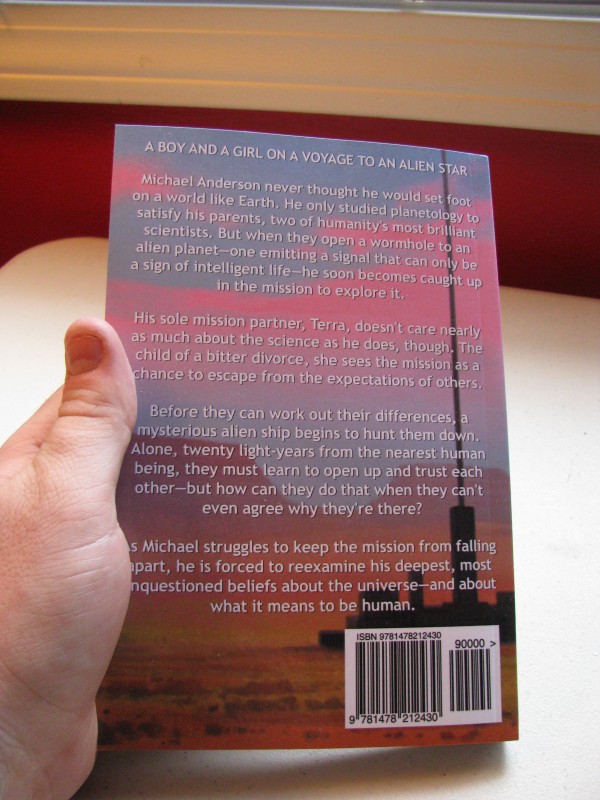
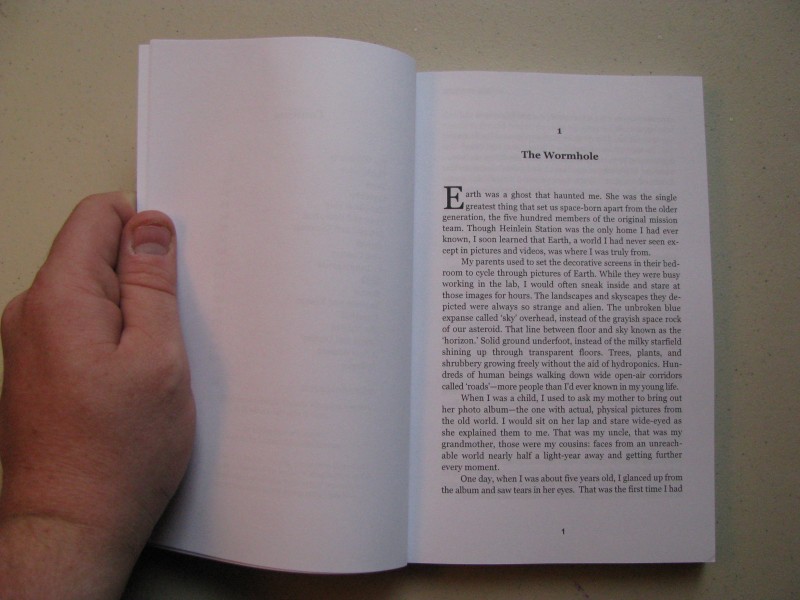
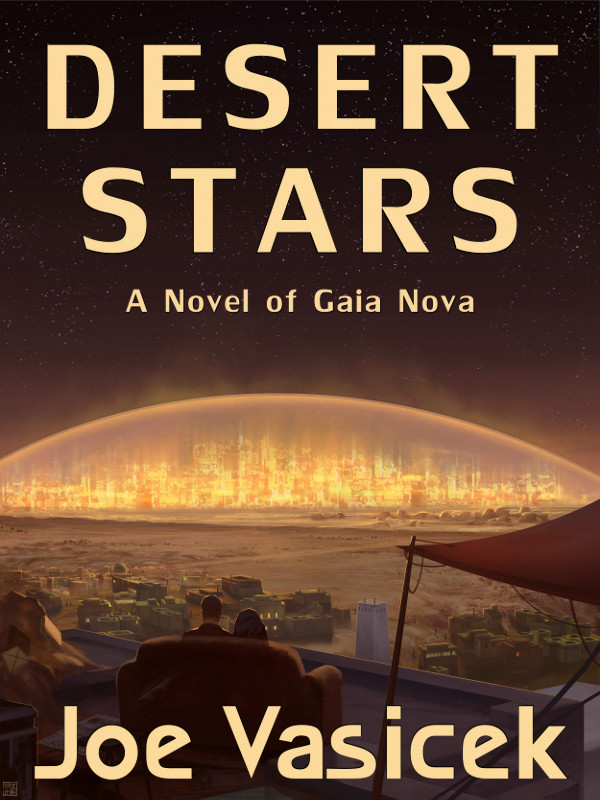
  • Release POD editions of Genesis Earth, Bringing Stella Home, and Desert Stars.
  • Set up an online bookstore to sell direct.
  • Redo cover art for Bringing Stella Home. Completed 2 June 2012.
  • Redo blurbs for all titles.
  • Identify and submit Genesis Earth, Bringing Stella Home, and Desert Stars to prominent sf&f book bloggers.
  • Organize a summer blog tour.
  • Research translation options for all titles.
  • Put proper copyright pages in all titles.
  • Track down all invoices and royalty statements.
  • Switch to the new Kobo publishing platform.
  • Fill out all sections in business plan.

The list might seem a little daunting, but two months should be enough to do most of it, especially considering that I don’t really have any other obligations.  Basically, I want to get everything done that needs to be done in the States, then get back out and spend the rest of the year abroad.

As for writing, don’t worry!  I plan to do that too, as always.  Here’s what my project list currently looks like:

  • Finish the unnamed WOTF project and start publishing it serially.
  • Finish the 3.0 draft of Heart of the Nebula.
  • Send out Stars of Blood and Glory to first readers.
  • Get ready to start Edenfall in the fall.

That last one might be of interest to fans of Genesis Earth.  The reason I haven’t finished Edenfall yet is because…well, this might sound kind of wishy-washy, but it’s because the story hasn’t really called out to me.  For that reason, I decided to put it off and work on other projects that have.

Recently, however, I’ve started to feel the whispering of an intimation that it’s time–that the story is almost ready to come onto the page.  Once it does, I have a feeling that it’s going to be quick–much like the first draft of Genesis Earth.

It’s hard to tell, though, and it may still be too early to know for sure.  The unnamed WOTF project has something to do with it, as well as living here in Georgia.  I have a feeling that rereading Genesis Earth is going to make everything fall into place, but it’s impossible to say. I’ll try doing it at the end of the summer, after I’ve cleaned up my plate a bit, and see what happens from there.

Gah, this sounds so wishy-washy!  I’m a professional writer, after all–why can’t I just pound words out on demand?  But as a creative-type, I’ve learned that that just isn’t the way I work.  There’s such a thing as starting a book too early, and for Edenfall to really shine, I feel like I need to give it a little more time–just a little.

I’m sorry for those of you who have been waiting, but don’t worry!  I definitely haven’t forgotten about it.  And once Edenfall comes to me, I have a feeling that the final book in the trilogy, The Stars of Redemption, won’t be far behind.

That’s the plan for now, anyway.  It’s definitely going to be a busy  summer!

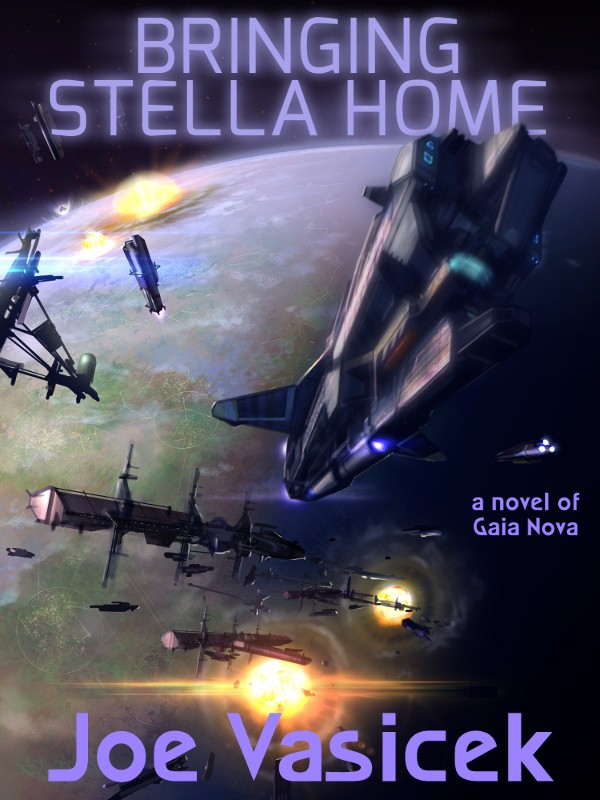
New cover for Bringing Stella Home!

Yep, it’s in!  Here it is:

I decided to redo the cover in preparation for a print-on-demand edition which I hope to release at some point this summer.  The artist is Hideyoshi, who also did the cover art for Genesis Earth and Desert Stars.  He’s great to work with and does some seriously awesome work, so I’m glad he was up for the project!

The other version was okay, but based on the feedback I was getting, I didn’t think it did a good job capturing the real essence of the story.  Oh well–live and learn, I guess. And when it comes to cover art, I still have a lot to learn.

I just uploaded the new ebook version to Amazon, B&N, and Smashwords.  Those sites should update in the next 24 to 72 hours (Smashwords is updated already), while the Kobo, Sony, iTunes, and other versions should update in the next couple of weeks.

I’m not sure if I’ll do desktop backgrounds for this one, but if there’s demand, I’d be willing to do it.  Just shoot me an email and let me know.  My netbook is starting to go, so I probably won’t get to it until July when I’m back in the States, but if/when I do, I’ll release it through the email newsletter, same as the Desert Stars backgrounds.

That’s just about it.  I think I’ve spent more time today staring at this cover than actually writing, so I’d better get back to that.  More good stuff to come–stay tuned!

Trope Tuesday: True Neutral

The True Neutral is something of an enigma.  They generally take no side, either because they have moved beyond good and evil, or because they simply don’t see good and evil the way we do.  Or because this isn’t their war and they just want to be left alone.  Or…well, let’s get to it.

From the easydamus character alignment page:

A neutral character does what seems to be a good idea. She doesn’t feel strongly one way or the other when it comes to good vs. evil or law vs. chaos. Most neutral characters exhibit a lack of conviction or bias rather than a commitment to neutrality.

Some neutral characters, on the other hand, commit themselves philosophically to neutrality. They see good, evil, law, and chaos as prejudices and dangerous extremes. They advocate the middle way of neutrality as the best, most balanced road in the long run.

As you might expect, this alignment doesn’t describe just one type of character.  In fact, there are many different archetypes that fall under True Neutral.  They include:

That’s quite a spread, isn’t it?  The main thing to keep in mind is that these are the characters who refuse to take sides–not just in whatever overworld conflict is driving the story, but in the ethical questions that the story raises (unless neutrality itself is their answer).

My favorite example of this trope is the Childlike Empress from The Neverending Story.  As the very embodiment of Fantasia, she transcends good and evil so completely that her power, the Auryn, cannot be used to forbid a monster from acting on its own evil nature.  Truth from Fullmetal Alchemist is another good example of a transcendent True Neutral.

With everyday, down-to-earth characters, though, this alignment tends to tick me off.  The Ents, for example, very much fall under this trope (as does Tom Bombadil…unless you subscribe to this theory).  Most others examples either come across as weak, selfish, or cowardly to me, so I don’t really care much for this alignment–unless it’s the starting point of a well-constructed character arc.

For that reason, in my own work, most True Neutrals are either straight-up antagonists or gradually shift in alignment as the story progresses.  In Genesis Earth, Michael Anderson starts out as one of the weaker True Neutral types, but changes as events in the story make him grow.  In Desert Stars, Sathi probably falls into this type, though I’m not so sure; either way, he’s very easily manipulated by his Neutral Evil wife.  In Bringing Stella Home, Ilya falls under this alignment due to his moral cowardice, and Anya might as well, though more as a Selfish Good than anything else.  Roman probably does too, but more because he’s old and wants to give up the fight; that’s something I’m currently working on in Stars of Blood and Glory.

I haven’t done a transcendent True Neutral yet, but if I ever write a heroic fantasy tale with gods and demons, I probably will.  After all, if Michael Ende did it in my favorite novel of all time, how can I resist?

Finding the right price

One of the most controversial parts of indie publishing is deciding what price to set for your books.  Epublishing is so new that there isn’t any good data to base pricing decisions off of, and everyone seems to have a different feeling as to what is “fair.” Most readers (including me) agree that $12.99 is a little outrageous for an ebook, but beyond that, the opinions are all over the map.

When I published Genesis Earth, I priced it at $2.99 and haven’t changed it since.  It remains my best selling novel, but at maybe 5 to 10 sales per month, that really doesn’t mean much.  Besides, it’s impossible to know whether price has been the main factor in that.  I briefly dropped my other novels to $2.99, and it had absolutely no effect.

My ultimate goal is to make a living off of my writing, so if my books aren’t going to sell much better at $2.99 as they are at $4.95, from a business perspective I’d rather go with the higher price.  However, as a reader, I’m opposed to paying more than about $5 for an ebook, even from an author I love.  Others might be willing to pay more, but if I can build a readership large enough to support myself at the $4.95 price point, I’d much rather do that.

So, after experimenting with price points and thinking things through, here’s the scheme that I think I’m going to follow:

  • Short stories: $.99
  • Novellas and novel installments: $1.49
  • Short novels (under 90k words): $2.99
  • Longer novels (over 90k words): $4.95

The important thing, of course, is to build a readership that is willing to pay for my work.  I have no idea how to go about doing that, but as far as pricing goes it’s probably important to pick a scheme and be consistent.  Some of my friends are doing quite well at $2.99, while Dean Wesley Smith advises charging much more, but this is the scheme that makes the most sense to me–which honestly isn’t saying much.

About the only thing I can say is that the best way to push a title is to make it free.  All of my short stories were free at one point or another, and even after the initial rush was over, I was still getting around 80 to 100 downloads per week, sometimes more.  I have no idea how many of those people actually read the stories, or how many of those people went on to buy my other titles, but sales did seem to be slightly better across the board when I had at least something out for free.

Now that I’ve got eight titles out, I think it may be a good idea to drop the price of at least one of them for free and keep it there permanently.  David Gaughran recently featured a guest blogger who used this strategy to push her other titles at places like Barnes & Noble, which isn’t as indie friendly/agnostic as Amazon or Smashwords.

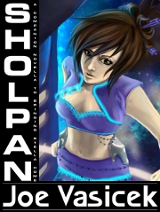
For that reason, I’ve decided to make Sholpan free again and to keep it there for the foreseeable future.  It’s already available for free at Barnes & Noble, KoboSmashwords, and Diesel, but Amazon hasn’t matched the price yet–and that’s where you can help me.

If you go to Sholpan’s Amazon page and scroll down to the Product Details, there’s a link that says “tell us about a lower price.” If you click on that, it asks for a link to the site that’s selling the ebook at a reduced price.  If enough people fill that out, I’m hoping that Amazon’s algorithms will take notice and match the price–so if you could take a moment and do that for me, I’d greatly appreciate it!

Also, if you’ve read the novella and enjoyed it, I’d appreciate it greatly if you’d take the time to post a favorable review.  Amazon has some weird thing where they copyright reviews written on their site, but for everywhere else you can just copy and paste the same review across multiple sites.  And a lot of them allow you to just leave a rating without writing a review, including Goodreads (Sholpan’s page is here).  I don’t want anyone to be disingenuous, of course, but if you enjoyed the book and took the time to rate it or leave an honest review, I would greatly appreciate it.

Thanks so much!  Until next time, I’ll see you around.

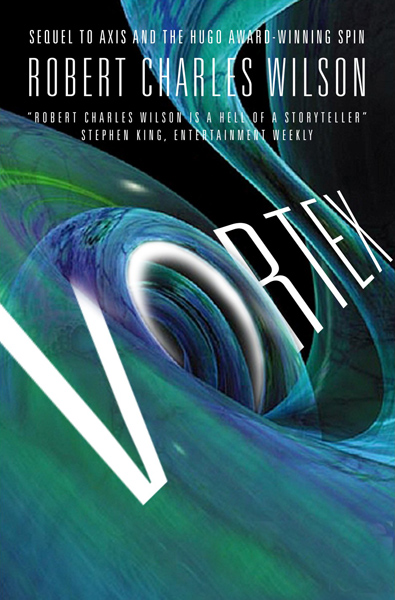
Vortex by Robert Charles Wilson

Almost seventy years ago, the mysterious alien beings known as the Hypotheticals encased Earth in a force field and built a network of giant arches facilitating overland travel to other habitable planets.  With access to the fossil fuel resources of half a dozen worlds, humanity is slowly killing its homeworld, even as it expands to other stars.

All of this matters little to Sandra Cole, however.  A psychologist at the State Care facility in Texas, it’s all she can do to endure another day.  But all of that starts to change when a police officer brings in a mysterious boy–a boy with a message from the future.

This is the third and final book in Robert Charles Wilson’s Spin trilogy, and it brings the series to a thoroughly satisfying conclusion.  The first book introduced the Hypotheticals and hinted at some greater scheme that they were involved in, the second book further explored the universe while raising more questions about the Hypotheticals, and the last book follows the Hypotheticals to the end of time, answering these questions while taking nothing from the truly alien grandeur of it all.

However, like the other books, the story itself is not about the aliens, but the people who make contact with them.  The high-concept science fiction goodness is all in there, but it’s framed by characters who are both human and relatable.  I wasn’t as invested in these characters as the ones in Spin, but I was still very interested in seeing what happened with them.

The structure of the book is a lot like Ursula K. Le Guin’s The Dispossessed, with alternating chapters telling two stories that don’t connect until the very end.  I finished the last half of it in practically one sitting, and the last chapter in a breathless sprint–much like Spin and Axis.  The way everything came together, not only for this book but the entire series, was awesome.

I was really happy to see this series finish well, because the first book was a major influence for me in writing Genesis Earth.  As I said in an earlier post, I don’t think anymore that this is the kind of science fiction I’ll write very often, but I sure love reading it.  I wouldn’t recommend starting with this book, but if you like science fiction that makes you stand back and blink at the sheer magnificence of the universe, this is a series you should definitely check out.

Trope Tuesday: Neutral Evil

Have you ever encountered a villain who you just hated? One who only cares about himself (or herself), who has no real loyalties and will sell out his friends, or even his master?  One who treats people as means to an end, and will use whatever means necessary to achieve those ends?  Chances are, that villain is a Neutral Evil.

From magnificent bastards to dirty cowards, from card carrying villains to seductresses and bounty hunters, this character alignment can take many different shapes and forms.  The one thing they have in common, however, is that they’ll do just about anything to further their own evil ends–including pitting the other villains against themselves.  Like the Chaotic Neutral, the Neutral Evil always looks out for #1–though entirely out of pure selfishness, as opposed to a love for free will and individuality.

From the easydamus character alignment page:

A neutral evil villain does whatever she can get away with. She is out for herself, pure and simple. She sheds no tears for those she kills, whether for profit, sport, or convenience. She has no love of order and holds no illusion that following laws, traditions, or codes would make her any better or more noble. On the other hand, she doesn’t have the restless nature or love of conflict that a chaotic evil villain has.

Of all the alignments, Neutral Evil can be the most dangerous because characters with this alignment have no qualms about doing whatever needs to be done to achieve their evil goals.  However, characters with this alignment also tend not to become evil overlords, because they backstab each other too much and don’t have what it takes to run a large organization.  Within their limited spheres of influence, however, they can be deadly.

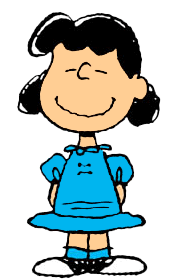
There are a lot of Neutral Evils who I love to hate, but Lucy van Pelt from Peanuts is definitely near the top of the list.  Saruman is another one, though he’s less of a magnificent bastard than Sephiroth (Why did you have to kill Aeris?  WHY???).  And of all the Neutral Evils, Voldemort is probably the most ambitious.

In my own works, my favorite Neutral Evil would have to be Shira from Desert Stars.  Man, I hated her so much…once I got her character down, it was a real joy to write. 🙂 From Bringing Stella Home / Sholpan, Borta is definitely a Neutral Evil.  Qasar leans more to the lawful side, while Gazan leans to the chaotic, but Borta is squarely neutral–and she’s vicious.  Genesis Earth and Star Wanderers, however, are generally feel-good stories, so they don’t really have anyone with this character alignment.

Trope Tuesday: Chaotic Neutral

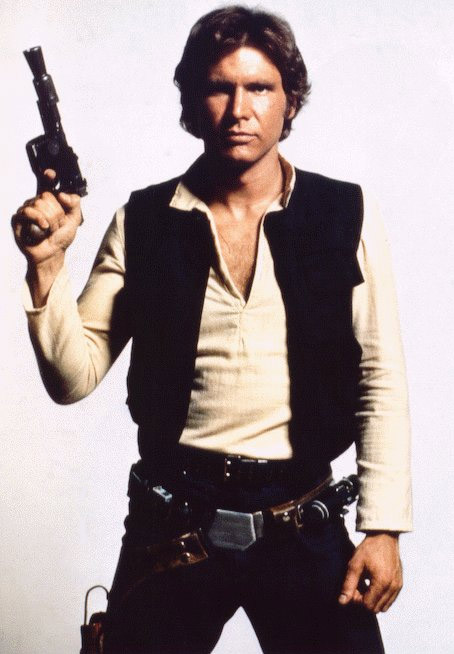
Look, I ain't in this for your revolution, and I'm not in it for you, Princess. I expect to be well paid--I'm in it for the money.

If you’ve ever read a space adventure with smugglers and pirates, or a sword & sorcery with rogue thieves and master-less swordsmen, or a western with gritty outlaws and mountain men, you know this character alignment.  If you’re a fan of any of these genres, chances are you love him, too.

The Chaotic Neutral‘s one consistent rule is to always look out for #1.  Beyond that, he’s a free spirit who believes in individuality and resists anyone or anything that tries to control him.  Rebellious spirits and lovable rogues tend to fall into this alignment, but so do tricksters and wild cards.  Their resistance to any form of personal restriction makes them unreliable allies, despite what Jack Sparrow says.

From the easydamus alignment page:

A chaotic neutral character follows his whims. He is an individualist first and last. He values his own liberty but doesn’t strive to protect others’ freedom. He avoids authority, resents restrictions, and challenges traditions.

A lot of characters start out as this but tend to shift as the story progresses.  Han Solo, for example, shifts from Chaotic Neutral to Chaotic Good as he becomes more and more involved with the Rebellion.  The Jägers from Girl Genius are Chaotic Neutral until they have a Heterodyne to lead them.  But in other stories, such as Pirates of the Caribbean and Schlock Mercenary, the Chaotic Neutral serves as an anchor.

My favorite Chaotic Neutral is probably Waylander from David Gemmell’s Drenai series.  The Jerusalem Man is another good one–in fact, just about every one of his books has a Chaotic Neutral that I love.  Haruhi Suzumiya is an excellent example of a female Chaotic Neutral–in fact, she’s probably the queen of this particular character alignment.

In my own work, the best example of a Chaotic Neutral would probably be Tamu from Bringing Stella Home / Sholpan.  Even though she’s technically a slave, she doesn’t really mind it because she has everything she wants and doesn’t have to be beholden to anybody (not even Qasar, really, since she’s his favorite).  Amina from Desert Stars is also Chaotic Neutral, in contrast with Surayya, who is more of a Lawful Neutral, though sometimes it’s hard to tell.  And in Genesis Earth, Terra is definitely a Chaotic Neutral at the beginning, though she shifts a little somewhere around the middle.

I’m hesitant to admit this, but when I took the character alignment test for myself, I tested out as a Chaotic Neutral.  As to what that means, exactly…I’m not going to say. o.0

Desert Stars is now published!

Desert Stars, my third novel (and second in the Gaia Nova series), is now available as an independently published ebook from Amazon, Barnes & Noble, and Smashwords.  Within the next couple of weeks, it’ll be available through Kobo, iTunes, Diesel, Sony, and Xinxii as well.

It’s been a long journey, and I’m thrilled to finally see it come through.  I started the first draft back in the fall of 2008, but had been working on ideas for the world since 2005, when I returned from my LDS church mission in California.  Spending the summer of 2008 in Jordan was a major catalyst for my imagination, and I soon was bursting with ideas for a far-future story on a desert world.

I got stuck in the winter of 2009, however–right before taking Brandon Sanderson’s English 318 class.  Since he encourages all of his students to work on something new, I decided to write a book in the same universe in order to work through some of the world-building things that were holding me up.  That book became Bringing Stella Home, which was a thrill to write all of its own.

The strategy worked; by the time I’d finished that one, I had a much clearer idea where to go with Desert Stars, and an awesome ending that was nothing like anything I’d planned in the first draft.  And so, after graduating in April 2010, I soldiered through and finished the rough draft that summer.

It still had a lot of problems, though.  Fortunately, my first readers were extremely helpful both in pointing those out and in giving me fantastic ideas for other things I could do.  In the second draft that winter, I completely scrapped a major subplot in the second half of the book and focused on perfecting the character arcs for the two main characters: Jalil and Mira.

Around this time, I made the paradigm shift from traditional to indie publishing.  Other projects like Genesis Earth and Bringing Stella Home took my attention for a while, as I learned the basics of the new world and prepared those books for publication.  However, I always kept coming back to Desert Stars: I knew I had a good story there, and I was just itching to bring it to its full potential.

In the fall of 2011, I finally had that opportunity.  The last draft flew by in three weeks, and was one of the funnest writing experiences I’ve had since I started writing seriously in 2007.  By the end, I knew it was ready.  I sent it out to my editor, Josh Leavitt, and started to prepare it for publication.

In writing any book, there are always moments that stand out; experiences where things come together in an unexpected yet memorable way.  One of those came to me in Jordan, while I was walking down Queen Rania street from the University of Jordan to Al-Dustour, and the phrase “Temple of a Thousand Suns” flashed into my mind and sparked the whole novel.  Another of those moments happened while I was driving from Salt Lake to Provo, and Mira’s final words in the last chapter came to me; I literally could not stop screaming for two or three minutes.

I could share more, but if I did, I’d find it difficult to maintain the illusion that I’m not a loony psychopath. 🙂

In any case, it’s just awesome to see the story come to maturity and embark out into the world.  I’m sure this isn’t the end of the journey, but it’s definitely entering a new and exciting phase.  I sincerely believe that this is my best book yet, and I hope you find it as worthwhile to read as I have found it worthwhile to write.  If you do, I would appreciate it greatly if you took the time to post a review, or share it with a friend.  Every little bit helps, and I’m grateful for whatever support you can give!

In the next couple of days, I’m going to send out a newsletter with some freebies including desktop backgrounds of the cover art.  If you’d like to get in on that, be sure to sign up for the email newsletter via the form on the sidebar; you’ll also receive notices for other giveaways, as well as new releases.  It costs nothing and you can always unsubscribe, so there’s no pressure or obligation.

And that just about wraps it up.  Now: on to the next book!
Desert Stars cover art is in!

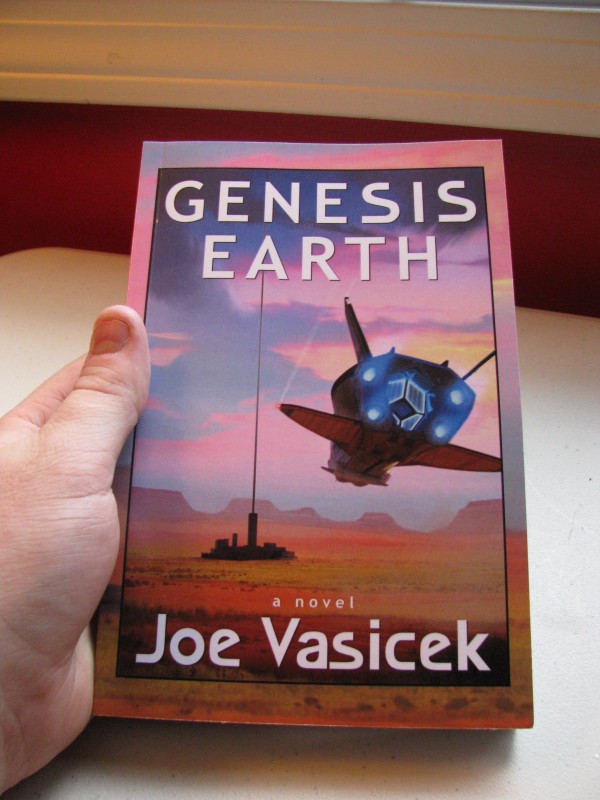
I just got the final version of the cover art for Desert Stars, and it looks great!  Here’s a preview:

Many thanks to Hideyoshi, who also did the art for Genesis Earth.

I’ll finish the cover and upload the ebook over the weekend.  By Monday or Tuesday, it should be up for sale across all sites.

Squee!  I’m so excited!

Climbing the 10k mountain

Many Bothans died to bring you this.

I recently read an amazing blog post by Rachel Aaron, in which she explains how she went from writing about 2k words per day (about what I’m doing) to routinely breaking 10k.

This is something I really want to do with my own writing.  As I noted a couple of weeks ago, I need to pick up the pace if I’m going to keep up with my professional goals.  If I could go from 2k to 10k, and make 10k the standard…holy cow, that’s a 500% jump in productivity.  Who wouldn’t want that?

From Rachel’s blog:

Drastically increasing your words per day is actually pretty easy, all it takes is a shift in perspective and the ability to be honest with yourself (which is the hardest part). Because I’m a giant nerd, I ended up creating a metric, a triangle with three core requirements: Knowledge, Time, and Enthusiasm. Any one of these can noticeably boost your daily output, but all three together can turn you into a word machine. I never start writing these days unless I can hit all three.

The point that I probably need to work on the most is time: I tend to start off the day slow, checking Facebook and blogs and other stuff before getting into the writing, then write for a little while before running off and doing some chore or allowing myself to get distracted again.  Sometimes, I don’t really buckle down until a couple of hours before I should go to bed, and that’s bad.

But really, I think the main obstacle is just thinking that writing is difficult.  If everything comes together in the right way, there really isn’t any reason why 5k or 6k or even 10k should be too difficult–and yet we naturally think that if 2k is hard, anything more should be that much harder.

I’m in a weird state of limbo right now between moving and preparing to go overseas, but I’m going to start a daily writing log so that I can figure out what time of day is most productive.  You can’t wait for life to settle down before you get to work; you have to roll with what you’re given.  Also, I’m going to put a lot more effort into outlining and planning, so that I don’t get hung up by research when I should be writing.  Even discovery writers need a little bit of time to ponder things before putting words to the page.

Also, after considerable thought and effort, I’ve decided to put Star Wanderers on the back burner again.  I finished the novelette last week and submitted it to Writers of the Future; I think it’s quite good, and stands a good chance of finding a home in one of the short markets.  But the full length novel, for various reasons, just isn’t coming to me.  I don’t know if it’s because I lack the life experience to write it, or because I’m too close to it to see what’s broken, but regardless of the reason, I need the break.

I’m not sure whether to do Edenfall or Stars of Blood and Glory next, but I’m leaning towards Stars of Blood and Glory.  This is a novel set in the Gaia Nova universe, with characters from Desert Stars, Bringing Stella Home, and Heart of the Nebula.  I’ve been itching to write it since this summer, but never got around to it because other projects got in the way.  Well, hopefully now that will change.

I know from emails and other correspondence that some of you are really looking forward to Edenfall, but don’t worry, I’ll get around to it soon.  In order to do it justice, I feel I need to reread Genesis Earth and immerse myself in some Carl Sagan, but right now I’m still running on a sci fi adventure trip.  If I can implement some of these metrics and push my daily word count upwards of 10k, it shouldn’t be long before Edenfall gets my attention again.  My goal is to finish it before the end of the year, so there’s a very good chance it’ll be published sometime in late 2012.

As for Star Wanderers, I’ll shop the novelette around after I hear back from Writers of the Future.  I think it has a good chance at winning the quarter, but of course I can’t count on it.  At this point in my career, I should probably be playing both the traditional markets as well as the indie field.

That’s just about it.  Now, if you’ll excuse me, I need to write…