J is for Jedi

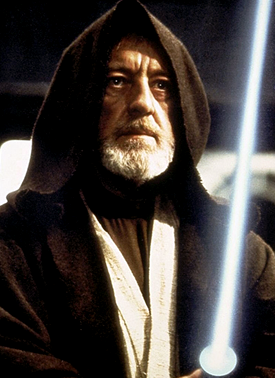
Ben_KenobiAs much as science fiction looks to the future, it also of necessity looks to the past.  And as much confidence as it places in the scientific method, it often turns to religion, simply because of the scope of the great cosmic questions that such stories inevitably pose.

For these reasons, it should come as no surprise that the best science fiction stories often include knights and shamans, priests and warrior monks.  Far from degrading our view of the future, they greatly enrich and humanize it, bringing a sense of meaning and destiny to an otherwise cold and lonely universe.

The best example of this is probably the Jedi from the original Star Wars trilogy.  I still get shivers when I hear Yoda explain the force:

Size matters not. Look at me. Judge me by my size, do you? Hmm? Hmm. And well you should not. For my ally is the Force, and a powerful ally it is. Life creates it, makes it grow. Its energy surrounds us and binds us. Luminous beings are we, not this crude matter. You must feel the Force around you; here, between you, me, the tree, the rock, everywhere, yes. Even between the land and the ship.

There are plenty of other examples too, of course–harsh ones like the creeds the Cylons follow in the re-imagined Battlestar Galactica, which they use to justify their genocidal war against the humans.  And then there are the quaint and simplistic ones that happen when a primitive race makes first contact with humanity … as well as the ones from a race so advanced that they make us look like barely evolved monkeys.

So why is religion so prominent in science fiction?  Probably because the best science fiction stories act as a mirror that allows us to see ourselves better.  Throughout history, religion has been one of the most important parts of any human civilization.  Even the modern secular cultures still grasp at the same cosmic questions, striving to find meaning beyond the animal drives of food, sleep, and sex.

At its core, every religion is about telling a cosmic story.  There’s a reason why the Bible starts with the words “in the beginning,” and why the first sura of the Qur’an names Allah “The Merciful and The Compassionate.” Since the best science fiction also tells a cosmic story, is it any surprise that there should be overlap between the two?

The best science fictional religions are the ones that make you want to believe.  The Force in Star Wars was definitely like that to me (the original trilogy, of course–before all that midi-chlorian nonsense).  Orson Scott Card’s philotic web also turned me into a believer, at least for the duration of those books.  Even Eywa from the movie Avatar had some deep undertones that made me wish I was a part of that world.

Religion plays a huge role in my own books, not just the stuff that I believe in real life (though I’m sure that influences my writing), but the stuff that I think the characters would believe.

In Star Wanderers, for example, most of the outworlders are pagans who pray to the stars.  In that universe, astrogation is an act of worship.  The Deltans subscribe to a fusion of pagan and Christian beliefs, which in turn affects how much they value families and children.  I won’t spoil it, since it comes as something of a reveal in Homeworld, but it definitely drives the series.  And of course there’s Jeremiah’s New Earther background, with its guilt complex that leaves him emotionally scarred.

My favorite religion to write so far was the faith of the desert tribesmen in Desert Stars.  I wrote that book just after spending a summer in the Middle East, and my experience of the Muslim culture definitely was a huge influence.  The tribesmen pray to the Temple of a Thousand Stars, the temple erected to the memory of Earth soon after the first colonists made planetfall.  The first half of the book follows Jalil’s pilgrimage to the ancient temple, through the domes filled with strange and decadent people.

When I started the Gaia Nova series, I wanted to create a science fictional universe where any of our real-world religions could still plausibly be true.  The way I got around all the conflicting prophecies of the end times was to have a human colony mission leave Earth soon after our time.  When the colonists woke up, they’d lost the location of Earth, so naturally all the religions developed around the idea that Earth had received its prophesied glorification and become a heavenly paradise.

That’s the short explanation, anyways.  But the books themselves aren’t so much about that as they are about the characters.  If religion is important to them, then that becomes an important part of their story.  And since religion is so important to us here on Earth, I can’t help but believe that it will follow us to the stars.

H is for Hologram

cortanaIn real life, the term “hologram” means something fairly specific.  But in science fiction, it can mean a number of different things.

For example, in Star Wars it’s basically a three dimensional video recording projected on a flat surface.  In Halo, it’s the visual form that the AI character Cortana takes when she wants to interact with the Master Chief.  And in Star Trek, the holograms actually have a degree of physical substance, so that in some episodes they go rogue and try to take over the ship.

The basic underlying idea, though, is the same: blurring the line between the virtual world and the real world through a virtual projection that we can interact with.  And in that sense, this is actually an area where science fact is fast catching up with science fiction.

Some sub-genres, such as cyberpunk, focus almost solely on the tension between the real and the virtual.  Often set in a near-future world, cyberpunk stories often feature a crapsack future, from which the only meaningful escape is a virtual reality.  But the thing about virtual realities is that they can be reprogrammed in such a way as to give the ones controlling it almost absolute power over the lives of the people inside.  For that reason, the main characters are often hackers, struggling against the corporate evil overlords.

But holograms aren’t restricted to cyberpunk.  They’re quite common in space opera, too, and not just because they’re cool.  For one thing, they can be really useful for training simulations (which often leads to holodeck malfunctions, courtesy of the rule of drama).  They can also be useful as disguises or decoys, especially in the Halo series.

But perhaps the most memorable holograms are the ones who develop a close relationship with their real-world human counterparts.  This may include romance, which, combined with the existential angst that typically surrounds androids, robots, and cyborgs, makes for some very interesting tension.  A good example of this is Cortana from the Halo series, an alien AI who took on a younger form of her human handler, Doctor Halsey, and then developed a very close relationship with her Spartan bodyguard, the Master Chief.  It never actually went anywhere (at least in the main series arc), but it certainly made for an interesting story.

Jane from the Ender’s Game series would probably be my favorite hologram, though she’s more of a shapeshifting AI who can take many different forms, depending on what suits her.  Cortana is definitely up there too.  I haven’t used this trope much in my own fiction yet, but I’m playing with it in Heart of the Nebula, a currently unpublished direct sequel to Bringing Stella Home.  Not sure exactly where I want to take it yet, but it should be interesting.

E is for Empire

terran_empireAlmost every far future science fiction story has a galactic empire of some kind.  From Dune to Foundation, from Star Wars to Firefly, there’s always someone trying to rule the galaxy, often in a way that makes life difficult for the protagonists.

Why?  Rule of drama, of course, but also because it gives the story a truly epic scope.  Just as the classics such as Homer’s Iliad and Tolstoy’s War and Peace are as much about entire civilizations as they are about the people characters within them, so it is with science fiction, especially space opera.  Combine that with science fiction’s forward-thinking nature, and you have the potential for some truly amazing stories about humanity’s destiny among the stars.

But why empire?  Because even if we make it out to the stars, we’ll probably still take with us all of the baggage that makes us human.  Science fiction may be forward looking, but history repeats itself, and you can’t have a clear view of the future without understanding and acknowledging the past.

Not all galactic empires are evil, but most of them are.  We shouldn’t have to look further than the real-world history of Imperialism to see why.  Oppression, exploitation, slavery, genocide–all of these have been done in the name of Empire, and many more evils besides.  Even benevolent hegemonic powers (such as, I would argue, the United States of America) often end up doing great harm, either through action or inaction.

Of course, all of this makes for some really great stories.  When Asimov wrote his Foundation series, he quite literally based it on The History of the Decline and Fall of the Roman Empire by Edward Gibbon.  When Frank Herbert wrote Dune, he drew extensively from his background as an orientalist and based the overworld story on the Muslim conquests of the 7th and 8th centuries.  Star Wars is based loosely on the collapse of the Roman Republic, and Firefly echoes many of the old Western tales of former Confederate soldiers heading west after the US Civil War.

It’s worth pointing out that the Galactic Empire is by no means the only form of political organization in space opera.  There are actually several, including:

  • The FederationA loose organization of stars and planets that usually exists to foster cooperation and mutual peace between galactic civilizations.  Rarely evil, but can be crippled by red tape.
  • The RepublicA more centralized version of the Federation, typically.  Exercises more control over its citizens, but not in an oppressive way.  Usually features some form of representative government.
  • The AllianceA team of political underdogs united to overthrow the Empire and establish a more just form of government in its place.  If they win, they usually become the Republic or the Federation.
  • The KingdomA smaller government within the larger political system, often struggling for survival against more powerful forces. Not always democratic, but is often good, at least to its own citizens.
  • The Hegemonic EmpireLike the Empire, but rules primarily through soft power, ie co-opting their enemies rather than crushing them.  May overlap with the Republic or the Federation.
  • The People’s Republic of TyrannyThe Empire pretending to be the Federation.
  • The Vestigial EmpireWhat the Empire becomes when it’s been defeated but not yet destroyed.  Still oppressive and evil, but rules a smaller territory and struggles for relevance and survival.
  • The RemnantAn element from the Alliance that’s gone rogue.  The war may be over, but these guys are still fighting it, even if they’ve lost sight of what they’re fighting for.
  • The HordeA highly aggressive and expansionist warlord state.  By far the most violent and brutal of any political organization, it seeks to conquer and subjugate the entire galaxy.

As a political science major, all these forms of government really fascinate me.  I’ve played with quite a few of them, especially the Horde (Bringing Stella Home), the Empire (Desert Stars), the Hegemonic Empire (Star Wanderers), the Kingdom (Stars of Blood and Glory), and the Remnant (also Stars of Blood and Glory).  You can definitely expect to see me play with them again in the future.

C is for Cryo

halo_cryochamber

I think every science fiction writer has a cryo (aka “human popsicle“) story sitting around somewhere, even if it’s just in the back of their head.  It’s one of those tropes that keeps coming back, just like the alien invasion, the robot apocalypse, and the Adam and Eve plot.

The basic concept is pretty simple, even if the technology is a bit more complex: a human or animal undergoes rapid freezing in order to put themselves into stasis for an extended period of time.  Months, years, or even centuries later, someone thaws and resuscitates them so that they wake up in a completely different time and place.

There are a lot of good reasons why going into cryo makes sense in a science fiction universe.  One of the more common ones is that the characters are colonists on a mission to an alien star, and their spaceship doesn’t have a faster-than-light drive.  Rather than go through all the trouble of building a generation ship, the designers instead built a series of cryo chambers to put the colonists into stasis for an extended period of time.  It might take centuries or millennia for the ship to reach its destination, but when it does, the colonists wake up as if it’s just been a long, dreamless night.

In The Worthing Saga, Orson Scott Card has a somewhat unusual rationale behind the prevalence of cryo in his universe (though they call it “hot sleep,” and it’s induced by a drug called soma).  Only the rich can afford the technology, and the imperial overlords very carefully regulate the use of it so that there’s a clear hierarchy based on who goes under for the longest amount at a time.  It’s a way for the citizens to achieve a simulated form of immortality, by skipping five or ten years every year or two of their lives.

In the Halo video game series, the UNSC uses cryo as a way to preserve their greatest military assets, the Spartans, for the times when they’re needed.  The first game in the series starts when John-117, aka the Master Chief, is awakened just as the starship Pillar of Autumn crash lands on a mysterious alien structure.  Like something from an old Norse legend, the third game ends when the Master Chief seals himself into the cryo chamber of a derelict starship, telling the AI Cortana “wake me when you need me.” (highlight to view spoilers).

So why are cryo stories so prevalent in science fiction?  For one thing, they’ve been floating around in our cultural subconscious a lot longer than the genre has been in existence–just think of Sleeping Beauty or Rip Van Winkle.  For another thing, the science is not that far-fetched.  Certain animals can be revived after extended periods of frozen stasis, and according to the New York Times, it’s happened at least once with a human being.  Science fiction has a long history of turning fiction into fact (for example, Arthur C. Clarke and communication satellites), so perhaps it’s only a matter of time before human cryotech becomes a reality.

I’m definitely a fan of this trope in my own writing.  Genesis Earth has a chapter with a rather horrific cryothaw scene, which I later spun off into a short piece titled “From the Ice Incarnate.” I haven’t played with it much in my latest books, but in Heart of the Nebula which I hope to publish later this year, the cryotech plays a very important role in the plot.  And if I ever write a prequel to my Gaia Nova series showing how that universe got started, it will feature a cryo colonization story.  The main premise of that series is that a group of human colonists fled 21st century Earth and went into cryo to colonize a distant corner of the galaxy, but when they woke up, they couldn’t find Earth anymore, so it became something of an ancient holy legend (which is a major driver for Desert Stars).

B is for Space Battles

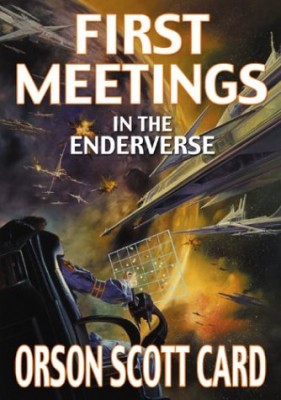
osc_first_meetingsIf you fell in love with science fiction when you were twelve, chances were it was because of the awesome space battles.  That was certainly the case with me.  When I saw Star Wars for the first time, I spent hours running around the house pretending I was flying my own starfighter.  In some ways, I’ve never really stopped. 😛
Ever since space opera became its own subgenre, space warfare has featured prominently in it, probably for the same reasons that Homer and Tolstoy framed their sprawling epics with a tale of war.  Where else are you going to find enough drama to fill volumes?  The fact that it’s set in space makes it so much cooler.

There are a lot of things about the space setting that make war stories different from those set here on Earth.  For one thing, there’s a huge element of exploration and unknown.  Even before we took the first photographs of Earth from space, there pretty much isn’t any corner on this planet that hasn’t been discovered by somebody.  In space, though, it’s still possible to stumble on a hidden planet, or find a mysterious alien artifact that can turn the tide of the war (Halo, anyone?).

For another thing, the dynamics of battle are completely different.  Sure, some stories treat space like an ocean, and there’s certainly a place for that kind of story, but the more interesting ones (at least to me) take into account all the profound differences.  For one thing, the zero gravity means that there is no “up” or “down,” which means that you have to deal with the possibility of attack coming from any direction, not just along a horizontal plane.  That concept alone drives the battles in Orson Scott Card’s Ender’s Game series, where “the enemy’s gate is down.”

One thing that really tickles me is when the story takes things a step further and incorporates things like orbital mechanics and delta-v.  I haven’t seen many books or games that do this, but the ones that do have really engrossed me by making the world feel that much more real.  Glen Cook did it in Passage At Arms, and the new Battlestar Galactica did it in the viper dogfights (though I’m not sure if they did it on the ship-to-ship scale).

The implications of real-world space physics on warfare are quite fascinating.  Rocketpunk Manifesto is an excellent blog that’s almost entirely dedicated to exploring them all, with all sorts of fascinating discussions on what the “plausible mid-future” may look like.  But even if all you’re looking for is an entertaining romp through space, the story telling possibilities are so much greater when you take the constraints of physics into account.

For example, if it takes months or even years to travel between planets, and orbital trajectories are fairly straightforward to figure out, how does it affect things if you can see the enemy fleet coming at your planet that long in advance?  If escape velocity from a gravity well like Earth is so difficult to achieve, what does that mean about the possibility of long-term planetary sieges?  And if starships are so far apart and moving so fast as to make full-on broadsides unlikely, how does that shape the battle tactics and strategy?  In spite of the physical constraints (or indeed, perhaps because of them), the possibilities are endless.

Man, I love me some good space battles.  One of my recent sci-fi favorites that features some epic battles is Wolfhound by my friend Kindal Debenham.  In my own work, you’ll find lots of them, especially in the Gaia Nova series (Bringing Stella Home, Stars of Blood and Glory, and to a lesser extent Desert Stars).  They say that the golden age for science fiction is about twelve years old, and that’s definitely true for me.  Expect to see lots more space battles from me in the future.

Trope Tuesday: It Has Been an Honor

If there ever was a phrase that invoked manly tears, it’s this one.

It has been an honor” is pretty much the go-to catch phrase for any Heroic Sacrifice or Bolivian Army Ending.  It’s often a precursor to a Crowning Moment of Awesome, and as far as last words go, it ranks right up there with “I die free,” “I die as myself,” and “I regret nothing.” Expect to hear it a lot from blood knights, members of the proud warrior race, or anyone who belongs to a martyrdom culture.

Occasionally, you’ll hear a villain say this when he acknowledges the hero as a worthy opponent.  In such cases, the villain may evolve into a friendly enemy or a fire-forged friend. Or, if the trope is played straight, they just die.

One time you won’t hear this phrase is when someone is trying to play More Hero than Thou.  In that case, two or more good guys in a friendly rivalry basically argue over who has to bite the bullet, so the honor becomes a point of competition between them.

In my opinion, the heart and soul of this trope is the idea that some things are worth dying for.  Obviously, a character facing death is not going to say this unless he values his honor more than his life.  What exactly constitutes “honor” may be up for debate (with the potential for some unfortunate implications, especially in real-life martyrdom cultures like Japan), but the core element here is that the hero is fully willing to give up his life for something greater than himself.  Bonus points if he starts out as a coward and this trope marks the conclusion of his growth arc.

While this phrase often leads to a death of some kind, that isn’t always the case.  The cavalry can still show up to save them, or one of the characters can ultimately survive (either the one who says this phrase, or the one to whom it is said).  The important thing, though, is that the characters face death in a meaningful way.  Without that, this phrase doesn’t have nearly as much power.

In my own work, this trope tends to pop up a lot, especially in the more military sci-fi books in the Gaia Nova series.  It shows up multiple times in Stars of Blood and Glory, and also in Bringing Stella Home, though more in a posthumous way than anything else.  I suppose you could also say it happens in Star Wanderers: Homeworld, if you use a broader interpretation.

But either way, I’m definitely a big fan of this trope.  Expect to see it many more times in my own work in the future.

As a final note, it’s worth pointing out that the bandmaster’s violin from the real-life Titanic has recently been recovered and confirmed genuine.  It’s now on display in Belfast, less than two miles from where the Titanic was built.

Trope Tuesday: Rebellious Princess

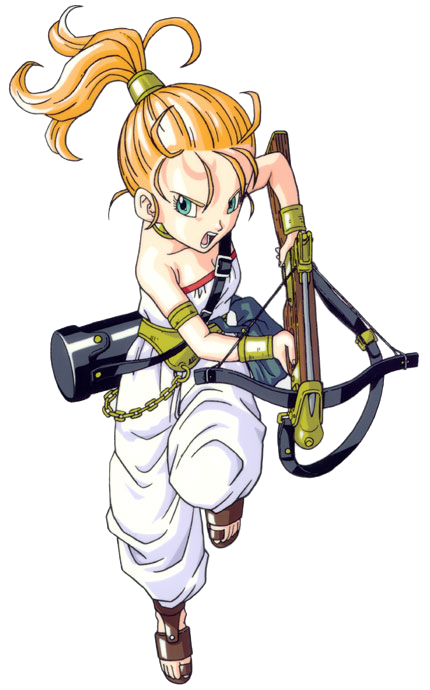
Marle2You know that innocent and beautiful fairy tale princess, with the tricked out dress and the power to summon woodland creatures?  The one with a tendency to get kidnapped, but who always ends up happily ever after with her prince charming?

Yeah, that’s not this princess.

A rebellious princess would just as soon puke if she were any of those things.  She hates being royalty–she’d rather be one of the common folk, or at least be out doing something (which is why she’s often involved in politics).  She hates all those frilly dresses and tends to wear her hair in a tomboyish ponytail.  Rather than wait for her white knight to save her, she’s much more likely to be an action girl in disguise, or at least something of a badass.  When she grows up, she may become a lady of war.  Invariably, she hates whatever marriage has been arranged for her and often scandalizes those of her class to marry for love (if she even marries at all).

As you might have already guessed, this trope is extremely common, not the least because the princess classic has largely been discredited (at least, outside of Disney).  There’s a lot of variation on it too, with some stories featuring the rebellious princess as the love interest, and others showcasing her as the hero.

George R.R. Martin (Song of Ice and Fire) deconstructs the trope with Arya, who eventually becomes something of a sociopath, and Brandon Sanderson (Elantris) subverts it with Sarene, who very much has the personality but uses her royal position to her advantage.  Frank Herbert (Dune) zigzags with Lady Jessica, who is undylingly loyal to the Atreides family but rebels against the Bene Gesserit.  As you might expect, J.R.R. Tolkien plays it straight, not once but twice: Éowyn in Lord of the Rings, and Lúthien in The Silmarillion.

It transcends cultures, too.  In Crouching Tiger, Hidden Dragon, Jen might not technically be royalty, but she is the governor’s daughter and she does reject an arranged marriage to run away and become a wandering warrior.  And in classic RPGs, especially the old Japanese ones from Square, this trope is everywhere.  The princess in the picture above is Marle from Chrono Trigger, who fits this trope to a T.

So why is this trope so prevalent nowadays?  Probably because the modern feminist movement led us to discard most of our old-fashioned feminine ideals, as well as the characters who were held up as shining examples of them.  That, and rule of drama.  Everything ultimately comes down to rule of drama.

In my own work, Hikaru from Stars of Blood and Glory is an example of this trope, though she’s more of a president’s daughter than a hero or a love interest.  She does have her own story arc, though, and I’ve got a sequel in the works with her as the main character.  Scientists aren’t exactly royalty, but they do consider themselves elites in Genesis Earth, which means that Terra has echoes of this trope.  And in Heart of the Nebula (as-yet unpublished), I’ve got a character who isn’t exactly rebellious, but she does qualify as a badass princess (though the society in question is a perfect techno-democracy and not a monarchy).

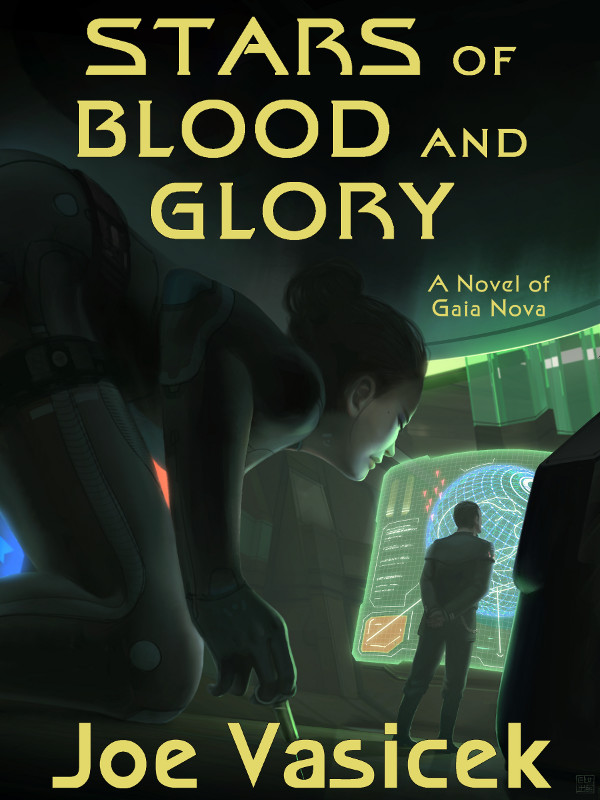
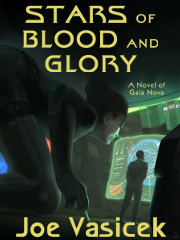
STARS OF BLOOD AND GLORY is now up on Amazon, B&N, and Smashwords!

thumb (Stars of Blood and Glory)

Hey guys!  My latest novel, Stars of Blood and Glory, is now up on Amazon, Barnes & Noble, and Smashwords!  Kobo, iTunes, Sony, and Diesel editions should be up shortly.  I’ll start typesetting the print version in the next few days, and it should be out through CreateSpace sometime next month.

Stars of Blood and Glory takes place fifteen years after the events of Bringing Stella Home, and includes many characters from that story (such as Danica, Roman, and the other mercenaries) as well as some characters from Desert Stars (especially Rina).  From the book description:

The only hope for the last free stars now lies on the path of blood and glory.

The princess of Shinihon could not have picked a worse time to run away. The largest Hameji battle fleet ever gathered threatens to overrun the last of the free stars. To make matters worse, a rogue assassin from an unknown faction has killed the high admiral of the Federation. Without clear leadership, the war may be lost before she can be found.

But Danica Nova and her band of Tajji mercenaries are no strangers to lost causes. They’ve fought the Hameji before, and they’ll fight them again—not for honor, or for glory, but simply for the pay. War has been their way of life ever since the diaspora from the homeworld.

Master Sergeant Roman Krikoryan is one of the few remaining mercenaries still old enough to remember the homeworld. But he’s an old cyborg, and his humanity is fading. Death is a mercy he doesn’t expect to find on this mission.

They aren’t the only ones after the princess, however. Hungry for glory and eager to make a name for himself, Sholpan’s son Abaqa seeks to make the girl his slave. Though only a boy, he’ll stop at nothing to prove himself to his Hameji brethren.

With the Federation in disarray, the bloody end of the war may come too soon for some of them. But one thing is certain—not all of them will live to see it.

If you’re on Goodreads and would like to add the book to your to-read list, you can find it here.  I’m not entirely sure if I listed it properly, but at least it’s up now.

Also, if you’re a blogger and want to have me on for an interview or guest post, feel free to shoot me an email!  I’m not doing a blog tour or anything fancy for this release, but I love blogging and would be happy to give you some content and link back to your site.

That’s just about it for now.  I’ll get the Trope Tuesday post up a little later this afternoon.  In the meantime, back to writing!

Projects, projects everywhere …

… and not a clue where to start.

Seriously, I feel like that guy in the Russian proverb who’s chasing two rabbits.  Except, in my case, it’s more like a dozen.  Here’s what I currently have to choose from:

Stars of Blood and Glory — This one is in publishing mode, and should be out in a week or two.  I’ve gone through all the line/copy edits from my editor, finalized the book teaser–all that’s left is the formatting and cover art.  The preliminary sketches look really good, so it shouldn’t be too much longer before it’s ready to go.  Of course, it’s more of a publishing thing than a writing thing, but still important.

Lifewalker — This is a rough draft that’s only about 15% to 20% finished.  It’s in a totally different genre than I’m used to writing (post-apocalyptic / weird western), but so far it seems to be coming along fairly well.  I hit a block a couple of weeks ago and put it on the back burner for a while, but I may be ready to pick it up again.

Star Wanderers: Benefactor — This is another rough draft, about 35% to 40% finished.  It’s a parallel novella to Star Wanderers: Fidelity, except from Jakob’s point of view.  Right now, I’m in the phase where everything sucks and I don’t know where to go with it.  It’ll probably turn out just fine, but I may have to put it on hold for a while.  However, if I could just push through and finish the damn thing, that would be preferable.  It’s only another 15,000 words …

Star Wanderers: Dreamweaver — This is a first draft that I need to revise.  Last night, I looked over it for the first time in eight months.  Opening the file was like pulling out an unopened bottle of wine that’s been sitting for years in the back corner of the wine cellar.  So far, it seems pretty good, but I’m going to wait until I hear back from one of my first readers before doing any serious revisions.  After that, maybe run the first chapter through Kindal’s writing group, and if everything seems good, I’ll probably publish it sometime in April/May.

Star Wanderers: The Jeremiah Chronicles — This is purely a publishing project.  Basically, I want to bundle the first four Star Wanderers stories and release them as an omnibus.  To do this right, though, I’d have to commission some cover art, which takes time and money.  Since it’s not a writing project, and I already have enough publishing projects on my plate, I’ll probably put this one off until Dreamweaver is out.

Mercenary Savior — Long term followers of this blog might recognize this as the old title for the novel that became Bringing Stella Home.  Well, I plan to recycle that title, as well as the original prologue, in a prequel novel that basically tells the origin story of Danica Nova and her band of mercenaries.  So far, I’ve got the prologue and the beginnings of the first chapter.  Haven’t looked at it in a few months, but if I get stuck on these other projects, I just might pick it up again.

Heart of the Nebula — A second or third draft that needs a deep revision.  This is probably going to consume all my writing time for six to eight weeks, and I’d rather do it all at once rather than in chunks.  It’s been on the back burner long enough that I can probably pick it up again, but I want to finish a rough draft first.

The Sword Keeper — I’ve still got this one on the current projects bar, but it’s been a while since I’ve worked on it, so it’s pretty much on the back burner.  I think it’s at about the 40% mark, though honestly I have no idea.  It’s an epic fantasy novel, a bit outside my usual scope, and it’s turning into a beast of a book.  The story is pretty solid, though, so I’ll probably finish it before the end of the year–that is, unless the muse drops an anvil on me (which has definitely happened before).

Empress of the Free Stars — An unwritten novel that’s been kicking around in my head ever since I finished Stars of Blood and Glory.  Basically, it’s a direct sequel from Hikaru’s point of view … except that I can’t really discuss it without giving away spoilers (TO A BOOK THAT ISN’T EVEN OUT YET).  In any case, the prologue has been beating on me to get written, and I finally caved and started it last night.  I’ve got a pretty good idea for what’s supposed to happen in this novel, but there’s still a whole lot of room for the story to surprise me.

Edenfall — Ah, Edenfall … this is probably my most neglected story.  I started it a little over a year ago, but hit a block, and then Star Wanderers happened.  I’ll pick it up eventually, but to really do it justice, I feel like I need to go backpacking in the wilderness for a week or two.  The weather isn’t good for that right now, so it will probably have to wait until spring.  Or maybe I’m just making things too complicated.  We’ll see.

Star Wanderers; Wanderlust — A Star Wanderers story from Samson’s point of view.  This one is going to be tricky, but I’ve actually got the whole thing plotted out already.  However, I don’t want to write it just yet, because there’s still a bunch of other Star Wanderers stories that need to come first.  Or maybe I will write it, and let it sit for a while until I write the others.  Maybe it’s better to finish it first and let it sit for a while, just to be safe …

Those are pretty much all the projects with titles that are floating around in my head right now.  There are a few others, like parts VII and VIII of Star Wanderers (from Mariya and Lucca’s points of view, respectively), but those aren’t quite ready to start.  With all of these, I’ve at least got some words on the page.

So now that I’m in that frustrating space between projects, I think I’m going to take a week or two to just let my creative mind do whatever the heck it wants.  Hopefully, I’ll get excited enough about one of them to see it all the way through.  I’m not going to stress about word counts so much as putting time in at my chair, doing something.

Man, I wish my creative side weren’t so scatterbrained.  Though as long as I’m still finishing stuff, I guess it’s all right.

And now that I’ve procrastinated long enough by writing this blog post, it’s time to go hang out with my friends and procrastinate some more.  Later!