Survival After Catastrophe in Heart of the Nebula

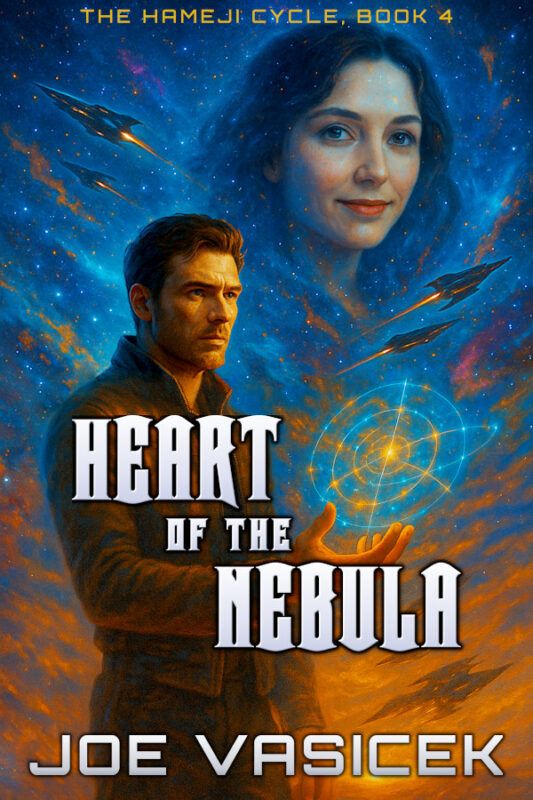
Most science fiction stories focus on the catastrophe itself—the war, the invasion, the moment everything breaks. Heart of the Nebula asks a harder question: what comes after? This novel explores survival not as escape or victory, but as the long, grinding work of holding a shattered people together once the worst has already happened.

Heart of the Nebula is a character-driven space opera about survival after a devastating interstellar war, focused on leadership, scarcity, and the fragile work of rebuilding when victory is no longer an option. This is a story about living in the aftermath—when supply lines are fragile, authority is contested, and every decision carries consequences that can’t be undone.

Where the Idea Came From

The theme of survival after catastrophe grew out of thinking about what happens between history’s big moments. Wars end, empires fall, and invasions retreat—but the survivors are left to deal with the damage. In the author’s note, I talk about being interested in the liminal space after disaster, when the adrenaline fades and people are forced to confront loss, responsibility, and the reality that survival itself can be exhausting. I wanted to write a science fiction story set squarely in that aftermath—a post-war space opera where the central tension isn’t winning the conflict, but preventing a fragile civilization from quietly collapsing afterward.

How Survival After Catastrophe Shapes the Story

In Heart of the Nebula, the Hameji invasion is already over—but its consequences dominate every aspect of the plot, shaping a post-war survival narrative where rebuilding, scarcity, and leadership under pressure matter more than battlefield victories, even for readers new to the series. The surviving colonies are isolated, under-resourced, and barely holding together. Medical supplies, food shipments, and functioning infrastructure matter more than heroic speeches or decisive battles. Survival is measured in convoys protected, hospitals kept running, and fragile alliances maintained under pressure.

This theme also shapes the novel’s political and moral conflicts. Leadership becomes a form of triage: deciding what can be saved, what must be sacrificed, and how much compromise is acceptable before survival loses its meaning. Characters aren’t choosing between good and evil so much as between bad options and worse ones, all while knowing that a single failure could push their society from instability into total collapse.

What Survival After Catastrophe Says About Us

At its core, survival after catastrophe asks what we owe each other when the world no longer offers easy answers. When institutions fail and certainty disappears, morality becomes less about ideals and more about responsibility. For readers drawn to science fiction that explores rebuilding, moral responsibility, and the cost of survival after war, this theme asks not how we endure catastrophe—but how we remain human afterward. That’s why in Heart of the Nebula, survival isn’t just about staying alive—it’s about preserving trust, dignity, and a sense of shared purpose even when fear and scarcity make that difficult. It’s a reminder that rebuilding is not a single act, but a daily choice.

Why This Theme Matters to Me

I’ve always been drawn to stories about aftermath rather than explosions. The moments that interest me most are the quiet ones—when people have to live with what’s already happened and decide who they’re going to be next. Writing Heart of the Nebula was my way of exploring survival after catastrophe—the exhaustion, the moral weight, and the stubborn hope that survival can still mean something more than endurance.

Where to Get the Book

Related Posts and Pages

Explore the series index for The Hameji Cycle.

Return to the book page for Heart of the Nebula.

Is Heart of the Nebula for You?

Heart of the Nebula is a character-driven space opera and political military science fiction novel about leadership, sacrifice, and the cost of protecting a people who are barely holding together. Set after a brutal alien occupation and a desperate refugee exodus into deep space, the story follows survivors of the Hameji War as they struggle to remain unified while haunted by past choices. This is a story about moral courage under pressure—when there are no clean victories, only necessary and costly decisions.

Heart of the Nebula is part of The Hameji Cycle, a character-driven science fiction series about occupation, resistance, exile, and the long aftermath of interstellar war. It continues The Hameji Cycle’s exploration of occupation, exile, resistance, and the moral cost of survival after interstellar war. It is the fourth book of the series, but can be read as a standalone book.

What Kind of Reader Will Love Heart of the Nebula?

If you love…

  • character-driven science fiction that treats leadership and responsibility as moral burdens, where decisions affect entire communities
  • space opera focused on refugees, displaced peoples, and survival after catastrophe
  • stories about sacrifice, loyalty, and the tension between individual conscience and communal good
  • thoughtful science fiction that explores politics, ethics, and power without cynicism

…then Heart of the Nebula is probably your kind of story.

What You’ll Find Inside

At the center of Heart of the Nebula is James McCoy, a reluctant leader trying to guide a fractured colony of refugees through the aftermath of war, betrayal, and long-term displacement. The story balances tense action—mutiny, political fracture, and survival in deep space—with quiet emotional reckoning, including moments where every available option carries moral cost, tracing the psychological cost of command and the lingering weight of past choices. The tone is serious and reflective, with moments of intensity and tenderness, and a steady pace that prioritizes character, consequence, and ethical decision-making over spectacle alone.

What Makes Heart of the Nebula Different

Unlike many space operas that celebrate charismatic heroes and clear-cut triumphs, Heart of the Nebula interrogates what happens after a hero becomes a legend—and that legend begins to divide the people it was meant to save. It blends military science fiction with political and ethical science fiction, focusing on how legends distort truth and fracture communities. The story also centers an exodus narrative—less about conquest or discovery, and more about survival, memory, and the fragile act of rebuilding a society in exile.

What You Won’t Find

This is not a lighthearted or quippy adventure, and it doesn’t offer easy moral answers or fast resolutions. You won’t find simplistic good-versus-evil framing, power fantasies, or violence treated as consequence-free. Romance exists, but it remains grounded and secondary, serving the emotional journey rather than driving the plot.

Why I Think You Might Love Heart of the Nebula

I wrote Heart of the Nebula because I couldn’t let go of a question that kept resurfacing: when people willingly sacrifice themselves for the greater good, is it right—or even moral—to intervene and undo that sacrifice as a leader responsible for others? This book is my attempt to wrestle honestly with leadership, responsibility, regret, and the cost of choosing “no one left behind” in a universe that punishes mercy. If you enjoy science fiction that treats ethical dilemmas seriously and allows characters—and societies—to live with the consequences, I think this story will stay with you.

Where to Get the Book

Related Posts and Pages

Explore the series index for The Hameji Cycle.

Return to the book page for Heart of the Nebula.

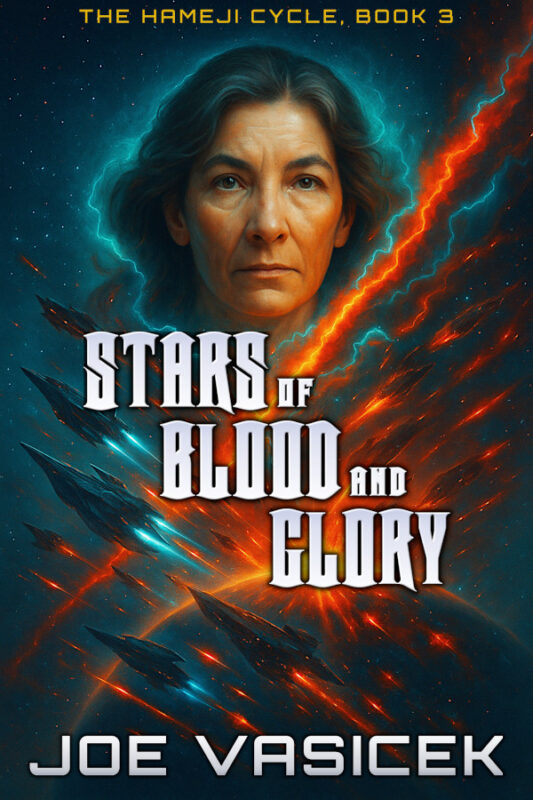
The Cost of Victory in Stars of Blood and Glory

War stories often promise a payoff: win the battle, save the people, earn the glory. But Stars of Blood and Glory is a military science fiction novel that keeps circling a harder question—what does victory actually cost, and who gets stuck paying the bill? In this character-drive space opera, “winning” is never free. It’s a debt—paid in lives, in conscience, and in the things you can’t unsee afterward.

Although this is the third book in The Hameji Cycle, Stars of Blood and Glory is written as a standalone military science fiction novel, with a complete character arc and a decisive turning point in the war. Readers can start here and experience a full story, then explore the wider series if they want more context and depth.

Where the Idea Came From

The seed of this novel came from history. After writing Bringing Stella Home with the Mongol conquest of Baghdad (1258) as a loose influence, I knew I wanted to follow it with the Battle of Ain Jalut—the moment when an apparently unstoppable force suffers its first decisive defeat. That became the backbone of this book’s premise: a war that turns, a juggernaut that finally bleeds, and the uneasy question of what it takes to make that happen. As I developed the cast and conflicts—especially the mercenaries and the Rigelan/Japanese culture thread—the theme of cost kept asserting itself, not as an “idea,” but as the emotional truth underneath every major decision. That historical moment helped crystallize the book’s central question: what does it cost to stop a conquering power, and what kind of victory is worth surviving?

How The Cost of Victory Shapes the Story

In Stars of Blood and Glory, victory is never framed as a clean scoreboard result. It’s framed as a choice with consequences that keep expanding outward—through fleets, through civilians, through relationships, through the survivors who have to live with what was done in their name. The war demands miracles, but miracles here look less like triumph and more like someone volunteering to be the price. You see this at the strategic level, where commanders and leaders make wartime command decisions, gambling with everything they have left because “not losing” is no longer an option. When the moment comes, the story doesn’t celebrate the win—it forces you to sit in the silence afterward and feel what it took.

That theme also plays out at the personal level, where sacrifice isn’t abstract. Sometimes the cost is paid in one decisive, irreversible act—someone choosing to stay behind so others can escape, buying a few minutes that matter more than a lifetime. Sometimes the cost is paid in guilt and moral injury, as characters realize too late that their mistakes don’t just endanger themselves, they drag everyone else into the blast radius. Even when the battle goes “right,” the human math never does. The book keeps asking: If your survival requires someone else’s destruction—what does that make you?

What The Cost of Victory Says About Us

I think this theme resonates because it’s true far beyond war fiction. In real life, we’re always tempted to treat outcomes as if they’re separate from the means: If it worked, it must have been worth it. But human beings don’t actually live that way. We carry the cost in our bodies and memories. We mourn what we had to trade away. We wonder whether the thing we saved was worth what we became in the saving. Stars of Blood and Glory leans into that uncomfortable moral realism: sometimes the “right” outcome still leaves blood on your hands, and the only way forward is to acknowledge it instead of pretending victory makes everything clean. For readers who want science fiction that treats war as a human and moral problem—not just a tactical one—this question sits at the heart of the story.

Why This Theme Matters to Me

I’ve always believed that character death—and sacrifice more broadly—should mean something. Not as shock, not as spectacle, but as a kind of honoring: the idea that people matter enough that their loss changes the shape of the story and the people left behind. That’s why I keep returning to this question of cost. It’s easy to write war as adrenaline and hero-posters. It’s harder—and more honest—to write it as a series of choices that leave scars, even when you win. And if this book has a heartbeat, it’s that: the stubborn belief that what we do matters, what it costs matters, and the people who pay that cost deserve to be remembered.

Where to Get the Book

Related Posts and Pages

Explore the series index for The Hameji Cycle.

Return to the book page for Stars of Blood and Glory.

Is Stars of Blood and Glory for You?

Stars of Blood and Glory is a character-driven military science fiction novel about war at its breaking point—when survival, honor, and loyalty are no longer abstract ideals but immediate, costly choices. Set during a decisive turning point in an interstellar war between the Hameji and the Federation, it follows soldiers, mercenaries, exiles, and captives forced to confront what victory actually costs. This is a story about sacrifice, identity, and whether a shattered people can reclaim a future without losing what made them human.

What Kind of Reader Will Love Stars of Blood and Glory?

If you love…

  • military science fiction that treats war as a moral and human problem, not just a tactical one
  • stories about exile, lost homelands, and the longing to return
  • character-driven space opera focused on loyalty, duty, and personal cost across a connected series narrative
  • gritty but meaningful narratives where hope survives through action, not speeches
  • ensembles of soldiers, mercenaries, and civilians bound together by shared loss in an ongoing interstellar war

…then Stars of Blood and Glory is probably your kind of story.

What You’ll Find Inside

The story follows multiple viewpoints—most notably veteran mercenary Roman, the haunted assassin Rina, and a captured Hameji prince—caught in the aftermath of catastrophic defeats and desperate counterstrikes. The emotional journey moves from grief, rage, and moral exhaustion toward hard-won resolve, as each character must decide what they are still willing to fight for—and what they can no longer justify. The pacing balances intense space combat, covert operations, and quiet character moments, with a grounded, serious tone that emphasizes consequence, responsibility, and survival over spectacle.

What Makes Stars of Blood and Glory Different

Unlike many military science fiction novels that focus on how wars are won, Stars of Blood and Glory focuses on what comes after—when victory is uncertain, morale is shattered, and survival alone feels hollow. Drawing inspiration from real historical turning points—such as the Battle of Ain Jalut, where a seemingly unstoppable empire suffered its first decisive defeat—the story blends space opera with themes of exile and cultural survival. Rather than glorifying conquest or domination, it examines how meaning is rebuilt when honor and glory have already failed.

What You Won’t Find

This is not a light or comedic military adventure, and it doesn’t shy away from the emotional and psychological toll of war. You won’t find invincible heroes, easy victories, or a cynical “nothing matters” worldview. The violence is purposeful and character-driven, serving the story’s moral weight rather than existing for shock value or spectacle alone.

Why I Think You Might Love It

Stars of Blood and Glory brings the mercenary characters from Bringing Stella Home to a turning point while telling a complete, emotionally self-contained story. It closes a major chapter in the Hameji conquests, and can be read as a standalone or in series order. At its heart, it’s about choosing dignity, responsibility, and meaning even when the universe refuses to offer clean answers—and trusting that those choices still matter. If you care about characters who endure, adapt, and choose meaning in the aftermath of loss, I think this story will stay with you.

Where to Get Stars of Blood and Glory

Related Posts and Pages

Explore the series index for The Hameji Cycle.

Return to the book page for Stars of Blood and Glory

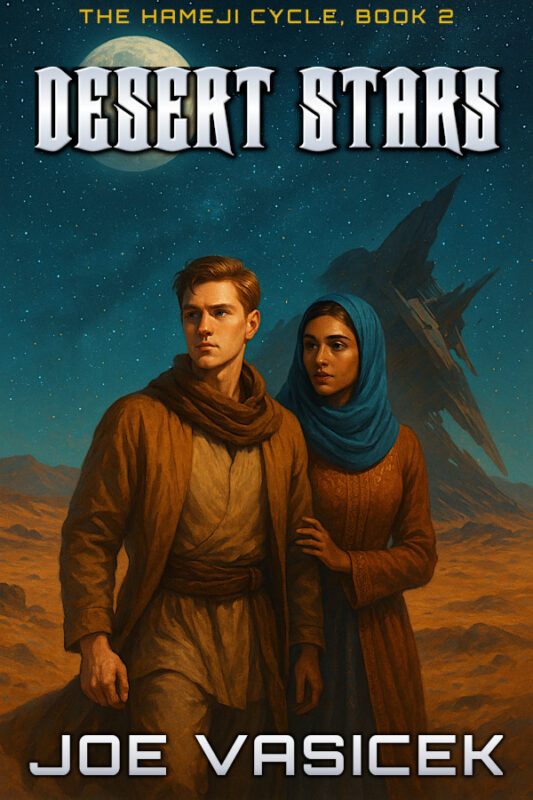
The Search for Home and Belonging in Desert Stars

At its heart, Desert Stars is a character-driven science fiction novel about the search for home in a universe defined by exile, migration, and loss under the shadow of war. The story asks a deceptively simple question: what makes a place—or a people—feel like home? Through pilgrimage, love, and loss, this character-driven space opera with religious themes explores how home is not something we recover from the past, but something we choose to build in the present.

Rather than treating home as a destination waiting to be found, Desert Stars presents belonging as a moral commitment—formed through responsibility, shared suffering, and the decision to stay when leaving would be easier.

Where the Idea Came From

The theme of home and belonging in Desert Stars grew out of a period of personal and spiritual transition in my own life. After returning home from full-time missionary service, I found myself re-entering a world that felt strangely unfamiliar, even though it was technically “home.” At the same time, I was studying Arabic and living in the Middle East, immersed in desert cultures shaped by pilgrimage, hospitality, exile, and sacred memory.

The spark for the novel came when the phrase “Temple of a Thousand Suns” entered my mind—an image of a holy place dedicated both to humanity’s future among the stars and to the memory of a lost Earth. That image opened a door to a deeper question: what happens to faith, identity, and belonging when sacred places are lost—not as a rejection of belief, but as a test of where meaning truly lives.

How the Search for Home and Belonging Shapes Desert Stars

Jalil’s journey is driven by displacement on multiple levels. Adopted into a desert tribe yet visibly marked as an outsider, he grows up knowing he does not fully belong—but also knowing that the desert is the only home he has ever known. His pilgrimage to the Temple of a Thousand Suns begins as a search for origins and answers, but it slowly becomes something deeper: a reckoning with the limits of bloodline, history, and inherited identity.

As the story unfolds, Jalil learns that finding his biological family does not resolve his longing. What brings peace is not reclaiming a lost past, but fulfilling his moral obligation to seek the truth—and then freely choosing where to stand afterward, even when no option offers safety or certainty. By the end of the novel, home is no longer a matter of citizenship or ancestry, but of responsibility, love, and the willingness to build something new in the aftermath of destruction.

Mira’s arc mirrors this theme from a different angle. Cast out from her community and forced into exile, she confronts the terrifying freedom of having no place to return to. Her growth lies in choosing agency over shame and hope over resentment, refusing to wait for restoration and instead claiming the right to shape her own future on her own terms. Together, Jalil and Mira embody the novel’s central claim: home is not found by going backward, but by committing forward—even when the future is uncertain and the cost is real.

What the Search for Home and Belonging Says About Us

At a human level, Desert Stars speaks to a universal anxiety: the fear that we don’t truly belong anywhere, or that the places we love might disappear. In a world marked by migration, war, cultural fracture, and rapid change—both real and imagined—many of us carry the quiet question of whether “home” is something that can ever be secure.

The novel suggests that belonging is not guaranteed by geography or heritage, but by moral choice. Home is created when people choose to care for one another, to stay when leaving would be easier, and to build meaning even when sacred structures fall. In that sense, Desert Stars is ultimately a hopeful book—one that insists home is still possible, even at the end of an age.

Why This Theme Matters to Me

I wrote Desert Stars while wrestling with my own questions about faith, identity, and belonging. I was stepping out of a highly structured, purpose-driven environment into a world where no one could tell me what came next, and where I had to decide for myself what kind of life—and what kind of home—I wanted to build. Writing this story became a way to explore that uncertainty honestly, without cynicism.

The idea that home is something we choose, protect, and build together—rather than something we simply inherit—still shapes the way I think about family, faith, and hope. It’s the conviction at the heart of this book, and one I continue to return to in my writing. Desert Stars is written for readers who love thoughtful, character-driven science fiction that treats faith, love, and moral responsibility seriously, even when the universe itself is coming apart.

Where to Get the Book

Related Posts and Pages

Explore the series index for The Hameji Cycle.

Return to the book page for Desert Stars.

Is Desert Stars for You?

Desert Stars is a character-driven science fiction novel—and the second book in The Hameji Cycle—about displacement, faith, and choosing home in a universe being torn apart by interstellar war. It blends intimate desert-scale storytelling with sweeping galactic stakes, following ordinary people who must decide who they are when their world—and their future—can no longer be taken for granted.

This is a story about pilgrimage and exile, love tested by catastrophe, and the quiet heroism of holding on to what matters when everything else is stripped away.

What Kind of Reader Will Love Desert Stars?

If you love…

  • character-driven science fiction that prioritizes relationships, moral choice, and inner conflict
  • stories of refugees, exile, and found family set against large-scale wars
  • science fiction that treats faith, tradition, and culture seriously rather than cynically
  • slow-burn romance grounded in shared hardship and mutual trust
  • frontier worlds, desert cultures, and “small people in big events” storytelling
  • science fiction that blends space opera scale with intimate, human-scale storytelling

…then Desert Stars is probably your kind of story.

What You’ll Find Inside

At the heart of Desert Stars is Jalil, a desert-raised young man caught between the life he knows and the wider galaxy he barely understands. As war spreads and entire worlds are destroyed, Jalil and Mira are forced into a refugee journey that is part pilgrimage, part flight for survival, and part reckoning with what “home” really means.

The tone is reflective and emotionally grounded, punctuated by moments of intense danger and loss. The pacing alternates between quiet, human-scale scenes—conversations under the stars, hard choices made in private—and sudden, devastating reminders of the larger war closing in. The style leans hopeful without being naïve, and tragic without becoming bleak.

What Makes Desert Stars Different

While Desert Stars shares DNA with classic space opera, it resists the usual power fantasies and chosen-one narratives. The focus isn’t on saving the galaxy, but on saving people—and sometimes not even that is possible. Readers who enjoy the reflective, culture-forward science fiction of authors like Ursula K. Le Guin or character-focused space opera in the vein of Lois McMaster Bujold may find a familiar rhythm here.

Unlike many military or political science fiction novels, this story centers cultural identity, spiritual longing, and the cost of leaving one world behind for another. It also treats faith as a lived, motivating force rather than a background detail or a flaw to be outgrown.

Readers who enjoy the quieter, more contemplative side of science fiction—where worldbuilding emerges naturally through character and culture—will find this book especially resonant.

What You Won’t Find

You won’t find grimdark cynicism, graphic cruelty for shock value, or characters who abandon their moral center for easy wins. This isn’t a nonstop action thriller, nor is it a satire of belief or tradition.

If you’re primarily looking for snarky antiheroes, relentless combat, or stories that dismiss faith as naïve or obsolete, this may not be the right fit.

Why I Think You Might Love It

I wrote Desert Stars at a time when I was wrestling with questions of identity, belief, and what it means to re-enter the world after a period of deep spiritual focus. That tension—between the sacred and the practical, between inherited tradition and an uncertain future—ended up at the heart of this story.

If you’ve ever felt caught between worlds, unsure whether the life you came from can survive the life you’re moving into, I think you’ll recognize something true here. This is a book about choosing to belong—even when belonging comes at a cost.

Where to Get the Book

Related Posts and Pages

Explore the series index for The Hameji Cycle.

Return to the book page for Desert Stars.

Agency Under Tyranny in Bringing Stella Home

Bringing Stella Home is a character-driven military science fiction novel that asks a deceptively simple question: what does it mean to have agency when freedom has already been taken away? In a universe shaped by conquest and domination, the novel explores whether choice still matters when the best options have been stripped away. Rather than framing agency as escape or rebellion, the story focuses on the quieter, harder work of choosing who you will be under tyranny. Rather than centering on battles or political intrigue, the story is driven by character choices and moral tension within a military science fiction setting.

Where the Idea Came From

This theme grew directly out of my fears as an older brother. Growing up, I was deeply protective of my younger sisters, and the idea of not being able to save the people I love has always terrified me. That pushed the story away from a simple rescue narrative and toward a deeper exploration of agency, responsibility, and moral choice under tyranny.

How Agency Under Tyranny Shapes the Story

Stella’s storyline is where this theme takes its clearest form. Captured by the Hameji and absorbed into a system built on hierarchy, conquest, and dehumanization, she loses nearly every form of conventional freedom. She cannot leave. She cannot reshape the system that controls her. And yet, the novel insists that her choices still matter. Her agency survives not through open defiance, but through the moral boundaries she maintains, even when compliance would make her life easier or safer.

James’s journey reflects a different facet of the same theme. His actions are driven by loyalty, love, and a desire to restore what has been lost, but the story steadily challenges the idea that agency means control or correction. As events unfold, he is forced to confront the reality that respecting another person’s agency—especially under tyranny—may require restraint, humility, and the willingness to accept choices he cannot fully understand or direct.

What Agency Under Tyranny Says About Us

The theme of agency under tyranny speaks to a difficult truth about human nature: we do not always choose our circumstances, but we remain responsible for who we become within them. Tyranny works by narrowing choices until obedience feels inevitable, offering safety or comfort in exchange for moral surrender. Bringing Stella Home suggests that agency persists even in constrained forms, and that the decisions people make under pressure—often unseen and uncelebrated—still shape their identity, integrity, and future. This is a story for readers who are less interested in easy victories than in moral resilience, responsibility, and the cost of choosing well.

Why This Theme Matters to Me

I care about this theme because it reflects how life often actually works. We don’t always get clean victories or heroic options. Sometimes we are forced to live inside broken systems, painful relationships, or irreversible losses. Writing Bringing Stella Home was my way of wrestling with the belief that dignity, responsibility, and moral choice still matter—even when the world refuses to be fair, and even when doing the right thing doesn’t lead to the outcome we might hope for.

Where to Get the Book

Related Posts and Pages

Explore the series index for The Hameji Cycle.

Return to the book page for Bringing Stella Home.

Is Bringing Stella Home for You?

Some science fiction dazzles with ideas. Some unsettles with spectacle. Bringing Stella Home is the kind that stays with you because it feels personal. It’s a character-driven science fiction novel about family loyalty, moral courage, and the consequences of refusing to abandon the people you love. It blends character-driven space opera with political science fiction and ethical war fiction, set during a brutal interstellar war fought by clashing human civilizations.

This is an emotionally grounded story where the biggest question isn’t how the war is won—but who the characters choose to be while it’s being fought.

What Kind of Reader Will Love Bringing Stella Home?

If you love…

  • Science fiction that treats war as a human and moral problem, not just a tactical one
  • Character-driven space opera focused on families, civilians, and reluctant heroes
  • Stories about siblings and loved ones who refuse to “move on” when someone is taken
  • Thoughtful, serious SF that explores captivity, occupation, and ethical resistance

…then Bringing Stella Home is probably your kind of story.

What You’ll Find Inside

Bringing Stella Home follows James McCoy after his sister Stella is captured during a catastrophic invasion that leaves entire worlds devastated. While governments negotiate and societies rebuild, others learn to live with loss. James refuses to accept that Stella is simply gone. His search forces him into political gray zones, moral compromises, and dangerous alliances—while Stella, trapped inside captivity, fights a quieter but no less difficult battle to preserve her dignity, identity, and sense of right and wrong.

The story is tense, intimate, and emotionally weighty, balancing suspense and danger with a steady focus on conscience, restraint, and the long-term cost of love.

What Makes Bringing Stella Home Different

Where many science fiction war stories focus on soldiers and commanders, Bringing Stella Home centers on civilians—families caught between invasion and indifference, and on the uncomfortable truth that compassion doesn’t end when the crisis fades from the headlines. Readers familiar with classic space opera will recognize the larger-scale setting, but this story consistently pulls inward, asking what responsibility looks like when walking away would be easier, safer, and socially acceptable.

What You Won’t Find

If you’re looking for grimdark cynicism, casual brutality, or a story where morality is treated as naïve, this isn’t that book. While the story does not shy away from darkness or injustice, it treats suffering seriously and never as entertainment. If you’re drawn to science fiction that wrestles honestly with evil while still affirming human dignity, you’ll feel at home here.

Why I Think You Might Love Bringing Stella Home

I wrote Bringing Stella Home early in my career, when finishing a novel still felt like climbing a cliff with your fingernails. The idea first took shape in a BYU history class, where studying the Mongol conquests made me wonder what a ruthless, sky-mandated expansionist culture would look like in space—and how it would collide with a radically democratic society built on shared civic responsibility. But the real heart of the story came from something more personal: my instincts as an older brother. The scariest thing I can imagine is not being able to save the people I love—and the even darker possibility of being able to save them, only to have them refuse rescue—and choosing to stay where they are.

I also wrote this book with a deliberate ethical aim: to take suffering seriously without exploiting it—to write about captivity, power, fear, and vulnerability in a way that insists the characters remain fully human and morally real. Some scenes were emotionally exhausting to write, but I didn’t want to soften them just to make the story easier. At its core, this novel reflects a belief that integrity matters most when it costs something.

If you’re drawn to science fiction that goes to dark places without becoming cynical—stories that still reach for the good, the true, and the beautiful—I think this one will stay with you.

Where to Get the Book

Related Posts and Pages

Explore the series index for The Hameji Cycle.

Return to the book page for Bringing Stella Home.