Trace the Stars edited by Joe Monson and Jaleta Clegg

I picked up my paperback copy of this anthology at LTUE this year, and immediately set about collecting all of the signatures from the authors that I could find. I’ve currently got everyone except for Nancy Fulda, Wulf Moon, Beth Buck, and Julia H. West. Once I have acquired these last four signatures, it will transform at last into a mighty book of power!

So I only gave this anthology three-stars on Goodreads, but that’s not because it’s a bad book. Rather, it’s because my Goodreads rating philosophy is different from my Amazon rating philosophy. A three-star on Goodreads is more like a four-star on Amazon: not terrible, but not super great either. I reserve my five-stars on Goodreads for the best of the best, the truly life-changing books that will forever leave their imprint upon me.

Anyways. Overall, I’d say that the anthology was pretty even-keel. There weren’t any amazing stories in it, but there weren’t any stinkers either. My favorite was “The Road Not Taken” by Sandra Tayler, about a starliner passenger who was subject to a freak anomaly that created a duplicate of the ship. One of them got the husband and the family, while the other got the career, and they meet up once a year to see how the other is doing. No matter what they say, you really can’t have it all.

I also really liked “Angles of Incidence” by Nancy Fulda. The aliens were really fascinating. Deep sea lava vent dwellers with knobby shells, but the really interesting part was the development of their language and how that factored into the story. Also, a slumbering god-queen who devours anyone who dares to wake her. Fun times.

Brad Torgerson’s and Kevin J. Anderson’s stories appealed to my inner twelve year-old, as did David Farland’s (though it had a rather slow start). “Cycle 335” by Beth Buck had a twist that I really enjoyed. The ending of “Neo Nihon” by Paul Genesse was also very satisfying, though wow—what a dark story!

Those were the ones that really stuck with me. The others weren’t bad—like I said, there weren’t any real stinkers. For a benefit anthology, it was pretty good. I’m looking forward to picking up the next one at LTUE 2020, as well as collecting the last four signatures and turning this into a book of power! Bwahahahaha!
2019-09-26 Newsletter Author’s Note

This author’s note originally appeared in the September 26th edition of my author newsletter. To subscribe to my newsletter, click here.

So for this newsletter’s author’s note, I thought I’d do a roundup of all the magazines that have published my short stories in the last six months. There’s a surprisingly large number of them. They’re all great publications, so if any of them look interesting, feel free to give them your support and pick up a copy or two.

(As a side note, I’ve found that some email clients break my hyperlinks if I have too many of them in one email. I’m going to put the links in anyway, but if they’re broken for you, please let me know.)

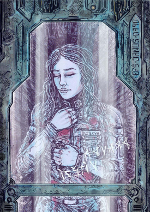
First, my story “The Janus Anomaly” appeared in Kasma Magazine in May. It’s still up on the website, if you want to read it. They did a great illustration for it too!

The story is about a science officer on a scout ship that encounters an alien anomaly, and she can’t tell if she’s losing her mind or if she’s the only sane one while everyone else is crazy. Also, the story takes place in the same universe as the Gunslinger Trilogy.

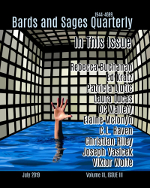
Second, my story “The Gettysburg Paradox” appeared in the July issue of Bards and Sages Quarterly. The ebook copy of the magazine is available on most ebookstores, and you can find the link here.

The story is about a time traveling tourist at the Battle of Gettysburg who learns that almost all of the combatants are (not so secretly) time travelers themselves. In their efforts to reshape the world, they’ve all converged on this one turning point in history, making it the largest battle ever fought on American soil.

Third, my story “The Curse of the Lifewalker” appeared on The New Accelerator just last month. This is my third story that the good folks at TNA have picked up, and they publish new stories weekly with a very reasonable subscription model to their site.

The story takes place in Utah Valley a couple of hundred years after the apocalypse. Humanity has been afflicted with a blight that shortens all of our lifespans to 25 years, but the main character is one of the few people who is immune. But because of how things have changed in the intervening centuries, his immunity turns out to be more of a curse than a blessing, as he gradually becomes an outsider in his own community.

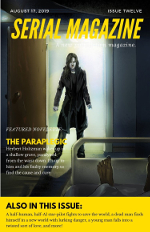
Fourth, my story “Lizzie-99XT” appeared in last month’s issue of Serial Magazine. The digital copy of the magazine is $2.99, and the print copy is $4.99. There are a bunch of other stories in this issue, and all of them are about life and death decisions.

Next month, I have a couple more stories coming out. “Starchild” will appear as a reprint in Bards and Sages Quarterly, and “The Infiltrator,” a never before published story, will appear in the anthology Not Far From Roswell. So be sure to keep an eye out for those!

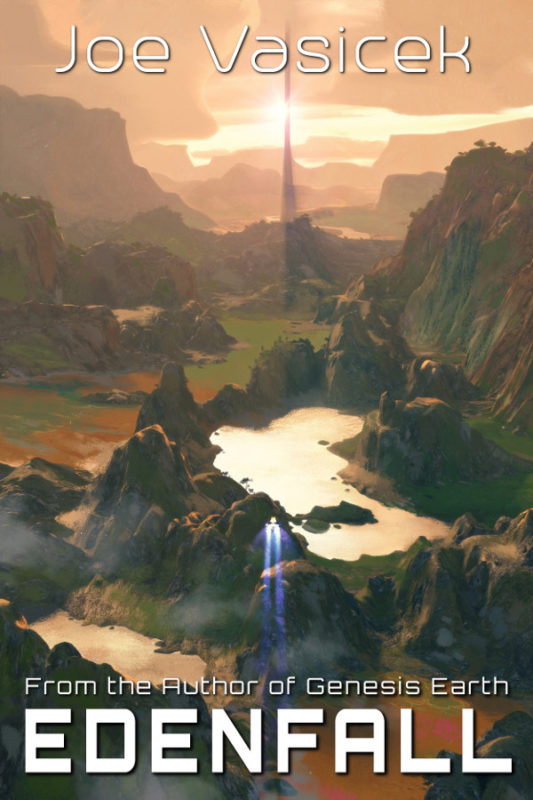
Finally, here is the cover art for Edenfall. Check it out!

I’m very happy with how it turned out. The illustration is by Hideyoshi, aka Lorenz Ruwwe, who did the cover art for Genesis Earth. I still have to go through the edits, but that shouldn’t take longer than a week, and the ebook will be up for preorder shortly after. The release date will be in December.

2019-09-19 Newsletter Author’s Note

This author’s note originally appeared in the September 19th edition of my author newsletter. To subscribe to my newsletter, click here.

It’s September, which means (among other things) that it’s time to revisit my business plan and update it for the next year. Every January 1st, I print out a new and revised copy of my business plan, which provides a great opportunity to evaluate my efforts and hone in on the things I need to do better.

For the last couple of weeks, I’ve been working on the section titled “What I Write.” In this year’s business plan, it was a pretty straightforward breakdown of all of the series in my catalog. But for next year, I took a few steps back to address things like what is a Joe Vasicek book? or what are some of my books’ recurring themes? or what kind of science fiction and fantasy do I write specifically, and how does my work contribute to the genre?

The exercise really got me to think about why I write. In the day to day life of a writer, it’s very easy to lose sight of the forest for the trees. Deadlines and daily word count goals keep the focus on the page right in front of you, and when you do think ahead it’s usually just to the next chapter. But without taking time to step back and look at the bigger picture, it’s easy to lose that creative drive, or settle for second-rate work.

So what is a Joe Vasicek book? I hope it’s a book that’s memorable and meaningful. It may be dark, but never dismal. It may push you out of your comfort zone, but it also leaves you feeling rejuvenated and inspired. It features interesting characters wrestling with complex ethical dilemmas and struggling to do the right thing as best as they know how.

What are some of my books’ recurring themes? The balance between liberty and responsibility is a huge one. Actions have consequences, and true liberty is taking ownership of those consequences as well as your actions. Another is the sanctity of sex, contrasting selfish gratification with the affirmation of commitment and love. The yearning for God is another recurring theme, with a great deal of religious diversity in the starfaring civilizations of my books. Another theme I keep coming back to is the call of the frontier.

I’m curious, though, to hear what you guys think. What do you think makes a Joe Vasicek book? What tropes or recurring themes have you enjoyed in my books? As a writer, I’m often too close to my own work to see what’s obvious to everyone else. What do you think is my biggest contribution to the genre?

Edenfall cover reveal!

Last week in my author newsletter, I revealed the cover art for my next big novel release, Edenfall. This is the sequel to Genesis Earth and the second book in that trilogy.

Without any further ado, here is the cover!

The art is by Lorenz Ruwwe, aka Hideyoshi. I’m really happy with how it turned out. He did the art for Genesis Earth, so I’m really glad I was able to get him for this one too.

Edenfall will be up for preorder soon. To keep up with all of my new releases, as well as writing updates, special offers, book recommendations, and other cool stuff, be sure to sign up for my author newsletter! I’ve scaled back my blogging, so that’s the best way to keep up with me now.

2019-09-05 Newsletter Author’s Note

This author’s note originally appeared in the September 5th edition of my author newsletter. To subscribe to my newsletter, click here.

Five years ago, I wrote a blog post titled “Reasons why September is my favorite month of the year.” Ever since then, whenever September rolls around, it becomes the most popular post on my blog. Since this is the first newsletter I’ve sent this September, I thought it would be fun to revisit all the reasons why September is the best month of the year.

First of all, fall is obviously the best season for a number of reasons. Summer is too hot and winter is too cold, but spring and fall are transitional seasons where, for at least a couple of weeks, the weather is exactly perfect. Spring is a close second to fall (and if you happen to live down under, September is a spring month, not an autumn month), but it’s ultimately not the best because the year hasn’t come full circle yet. Spring flowers are pretty, but fall vegetables are better.

Of all the fall months (September, October, November), September is the best because:

  • Chilly mornings — I love waking up to a nice, brisk chill! Must be my Viking blood.
  • Campfire smoke — Few scents are more invigorating than the good, clean wood smoke of a bonfire, especially in the brisk, chilly September air.
  • Farmer’s markets — If you haven’t experienced a proper farmer’s market with fresh, local produce and delicious free samples, you should. It’s a real treat!
  • Crisp Gala apples — Gala is my favorite, though Mrs. Vasicek and I have a running debate about which is the best kind of apple (she prefers Pink Lady). However, all apples are delicious when you pick them right off the tree.
  • Home-cooked chili — A classic staple of American cuisine. It’s too warm for summer and too heavy for spring, but for the colder months of fall and winter, it’s amazing.
  • Autumn leaves — Growing up in New England, this was a special treat. The American northeast has some of the most spectacular fall foliage I’ve ever seen.
  • Labor Day weekend — A very relaxing holiday, and the best way to bring the summer to a close.
  • My birthday — It only comes around once a year!
  • Start of the school calendar — New beginnings, and another reason why fall is superior to spring. In the fall, school is new and exciting, but when spring rolls around you can’t hardly wait for it to end.
  • Old friends coming and going — Related to the reasons listed above.
  • Last chance to go mountain climbing — And it’s much better to go hiking in the fall, because there isn’t any snow yet and it’s not as hot as summer.
  • First chance to take out winter clothes — You can always put on more clothes, but you can’t always take more off.
  • End of the summer slump — It’s always good when book sales are increasing.
  • Beginning of harvest season — So much delicious and healthy food!
  • Orion and the Pleiades — My favorite stars!
  • Clear blue skies — Chill air is great, but so are Indian summers.
  • Indian summers — What did I just say??
  • Long, chilly walks by moonlight — It’s good to get the blood pumping, but not so cold that it freezes your nose and beard.
  • The peace and quiet between summer vacation and the holidays — This is a big one. September is the last month before the stress of the holiday season, which seems to be creeping back earlier and earlier. But that’s a subject for another author’s note, which I’ll probably write as soon as they start to play Christmas music (hopefully not before Thanksgiving).
  • Getting back into writing after a long and eventful summer

Funny how that last one is just as true for me now as it was five years ago. It has been an extremely eventful summer, between getting married, spending time with Mrs. Vasicek’s family, and figuring out our new lives together. But now it’s September, the best month of the year, and things are coming together. Life is very, very good.

Stormrider by David Gemmell

I thoroughly enjoyed the Rigante series. It has everything that I’ve come to love about David Gemmell’s books: scarred but good-hearted people struggling to do the right thing in the face of great hardship and evil, some of which lies within. Every chapter is compelling and filled with conflict, and while you know that most of the characters are going to die, none of them is beyond redemption.

There were a lot of things in particular that I liked about this book. One of them was the early-modern feel and aesthetic to the world-building. A lot of fantasy worlds are locked in a perpetual state of medieval technology, with very little growth or development. In Stormrider, however, Gemmell advances the world of the Rigante a couple of steps up the tech tree, to a tech-level more on par with the 30 years war.

It’s not just window dressing, either, because the introduction of things like gunpowder has a direct effect on things like battle tactics and duels for honor, which directly affect the story. And yet, there’s still the same undercurrent of magic that made the other books in the series so great. The Sidh may have left the world, but their influence remains, and their magic has not yet faded completely.

My one big issue with the book had to do with the climactic battle leading up to the ending. It wasn’t exactly a deus ex machina, but in some ways it felt very much like it came out of left field and wrapped things up in a way that was just a bit too neat and tidy. That said, it wasn’t nearly as unsatisfying on a character-based level—on the contrary, it brought several of the character arcs full circle in a way that I thoroughly enjoyed. It just wasn’t as good as some of Gemmell’s other endings.

For that reason, I’m only giving this book four stars. However, a 4-star Gemmell book is like a 5-star book from anyone else. Stormrider may fall just short of the standard that Gemmell sets with his other books, but it still clears the bar for truly a truly great fantasy novel.

2019-08-29 Newsletter Author’s Note

This author’s note originally appeared in the August 29th edition of my author newsletter. To subscribe to my newsletter, click here.

I’ve recently been relistening to the History of Rome podcast by Mike Duncan. If you haven’t heard of it yet, you’re in for a treat. It’s about 180 episodes, each one about thirty minutes long, and it covers the legendary founding of Rome by Romulus and Remus to the dismantling of the western empire in 476. Great stuff.

Anyway, listening to the podcast again has given me all sorts of story ideas. 5th century Rome is basically a more interesting version of Game of Thrones, without the stupid ending (though I do have to admit, blasting the throne with dragon fire is much more awesome than sending the scepter and diadem to Constantinople). The schemes within schemes, plots within plots are rich with story potential, either for a grand fantasy epic or a sweeping space opera.

This isn’t a new thing, of course. Many sci-fi and fantasy authors have drawn inspiration from Roman history, including Asimov for his Foundation series and Frank Herbert for Dune. That’s partly because of how rich the history is, but it’s also because of how foundational Rome it is to our modern world. All of our institutions of government, law, and culture were built on the ashes of Rome, and the grand arc of Western Civilization traces an unbroken path from Augustus and Constantine to the present day.

I first became interested in Roman history by doing my own family history. My ancestry is a mixture of Czech, British, German, and Scandinavian origins, with lots of violent upheavals along the way (my British ancestors were basically the bad guys in The Last Kingdom). We know a lot about the Czech lines, where the records go back to the Battle of White Mountain after the protestants were expelled from the Czech lands. Beyond that, the records are scanty.

As I traced my lines back, I wanted to know how far it would be possible to trace them reliably. In the Czech lands, the cutoff is basically the Hussite wars. However, if you have royal ancestry (and most of us do, if you go back far enough—it was good to be the king), the records go back much further. Trouble is, most of the European genealogies get fantastical at some point, either connecting to ancient pagan gods or to the Bible.

Realistically, you can only trace European lines back to the 8th or 9th centuries with any reliability. Most of the royal families were founded by the descendants of the barbarian chieftains who had destroyed the Roman Empire, and to legitimize their rule, they traced all their bloodlines back to divinity. That was what I learned when I got into family history.

Of course, that answer led to even more questions. Why was there so much chaos after the fall of Rome? If the empire was so strong only a few centuries before, why did it fall? What caused all of the migrations, and why did the barbarians decide to invade the empire? Was the fall of Rome inevitable? Where were my ancestors when all of this was happening?

For the last three years, I’ve been on this personal journey of discovery, and it’s led to some very profound changes in my understanding of the world. It hasn’t ended yet, either. My big family history goal is to find all of my first generation American immigrant ancestors, which will probably take the rest of my lifetime to accomplish. In the meantime, it is fascinating to place my ancestors in the context of history and to think “when that big thing was happening, this is where my ancestors were.”

History is rich with stories, but it’s the personal connection that makes those stories relevant. That’s just as true for fiction as it is for history. Without the personal connection of characters just like us, or like we aspire to be, a book is just so many words on the page. It’s when we can see ourselves in the story that it begins to feel real and memorable.

I don’t know yet what kinds of stories I’ll write in the months and years ahead. It’ll take another year to finish the Genesis Earth Trilogy and the Twelfth Sword Trilogy, but after that, my writing schedule is wide open. Whatever I end up writing, however, I’m sure that the things I’m reading and learning about now will have an influence. So many ideas, so little time!

2019-08-15 Newsletter Author’s Note

This author’s note originally appeared in the August 15th edition of my author newsletter. To sign up for my newsletter, click here.

It was not an easy decision to enroll all of my Star Wanderers books into Kindle Unlimited. For years, this was my flagship series, not only on Amazon but on all platforms. Enrolling it in KU means that the ebooks are only available on Amazon now, and the first book is no longer free to non-KU subscribers.

In the indie author community, KU has always been a controversial program. It all boils down to one word: exclusivity. In order to enroll your books in KU, you cannot publish them anywhere else but Amazon. The upshot is that Amazon’s algorithms give your books a huge signal boost—about 2.5x, by my back-of-the-envelope calculations. Getting writers to do anything is a bit like herding cats, but with the right incentive structure you can do it. Amazon wants to be the dominant retailer for ebooks, and KU is their tool for doing it.

I don’t blame readers for subscribing to KU. It seems like a great program: $9.99 per month gives you an awesome selection of books to choose from. And certainly, Amazon can do what it wants on its own platform. If that means reducing the visiblity of books that aren’t exclusive to your platform, so be it. But as a matter of principle, I believe that exclusivity is bad for readers and writers, which is why I’ve stayed out of the program.

Until now. What changed? A few things. Earlier this year, I finally wrote out a complete business plan that describes everything I do (72 pages, 22.2k words). That made me rethink a lot of things, especially my marketing strategy. If Amazon gives books in KU such a huge signal boost, could I use that to bring more readers to my books that aren’t in KU? If none of my books are enrolled in KU, isn’t that just another way of making my books exclusive?

When Kindle Unlimited launched in 2014, I had finally reached a point where I could live off of my book royalties. A lot of that was because of Star Wanderers: with a permafree first-in-series, it got a lot of visiblity. But then, the Amazon algorithms changed to favor KU over permafree. I chose to stay out of KU, and lost more than 60% of my writing income over the next 18 months as a result.

I learned several things from that experience. First, I learned that I couldn’t rely on Amazon to do my marketing for me. I had to come up with a plan. Second, I learned that it was a bad idea to be dependent on just one platform. It was time to diversify.

Paradoxically, this meant doubling down on my decision to keep my books out of KU. But it paid off. In 2014, more than 90% of my writing income came from Amazon. Now, it’s more like 40%-60%, depending on the month. If I had panicked and put all my books in KU, I wouldn’t have those other income streams right now, and many of those readers never would have found me.

Over the years, I also became less dependent on Star Wanderers as well. I began to move toward writing trilogies of longer books instead of longer series of shorter books. And as I wrote and published more books, interest in my Star Wanderers books seemed to wane.

So now I’m in a place where enrolling Star Wanderers into KU actually makes sense. I have a plan and a marketing strategy, I’m not dependent on Amazon anymore, and the books themselves seem well-suited to the experiment. We’ll see how it turns out.

If you’re not an Amazon customer, don’t worry: I’m not going to enroll all of my books in KU, and still plan to release all of my new books wide. For now, it’s just Star Wanderers. And if you are a KU subscriber, I hope you enjoy! These books have a very special place in my heart, and I’m happy to share them with you.

2019-08-08 Newsletter Author’s Note

This author’s note originally appeared in the August 8th edition of my email newsletter. To subscribe to my newsletter, click here.

A couple of days ago, Mrs. Vasicek and I had an old friend of hers over for dinner. This friend was visiting from out of state, and Mrs. Vasicek made it clear that politics was a subject which we would have to avoid, or at least tread very lightly. Among other things, I’d have to drop my tailgate to make sure it didn’t make a bad first impression.

(One of these days, I’ll have to share a photo of my tailgate. I despise political correctness in all of its forms, so my tailgate has become something of a monument to the first amendment. Frequently at stop lights, people will take out their phones to snap a picture.)

The dinner went really well, and we had good conversations well into the evening. Surprisingly enough, this wasn’t because we outright avoided politics, but because when the issues came up, we were able to find common ground in spite of our obvious differences. In this way, we were able to connect in a much more genuine way than if we had avoided those difficult subjects entirely.

One of the things we talked about was the destructive influence of social media outrage. Our friend told us how the relationship between her father and her sister has been destroyed, because Facebook is the only way that they can connect with each other. Those interactions have become so politically toxic that they’ve lost all of the love that they once had for each other.

That’s sad, but it’s becoming an all-too-common occurance here in the United States. Some people believe that we’re on the verge of a second civil war. I don’t know what the future holds, but if it’s anything like the first civil war, I know that there will be honorable people on both sides. That’s the tragedy. I have ancestors who fought on both sides of the American civil war, and when people ask which side I think was right, I answer “the American side.”

I’m fascinated by Robert E. Lee and his decision to fight for the Confederacy, when Lincoln himself offered him command of the Army of the Potomac. He opposed both slavery and secession, yet his conscience couldn’t allow him to stand at the head of an invading army. Neither could it allow him to stand by idly while his friends and family were slaughtered—not when he was in a position to make a difference.

Did he make the right choice? I don’t know. However, I do believe that he tried his best to do so. I try to keep that in mind when I talk with people across the political divide. No matter how much we may disagree, it’s refreshing to meet people who are sincerely striving to do what’s right as best as they know how.

In these troubled times, when the public discourse is rapidly deteriorating and outrage is the social currency of the day, it’s important to recognize the good in people, no matter which side they line up on.

2019-08-01 Newsletter Author’s Note

This author’s note originally appeared in the August 1st edition of my author newsletter. To subscribe to my newsletter, click here.

So Mrs. Vasicek is currently in Florence, Italy for a work conference that’s been going on all week. Am I jealous? Yeah, a little. Do I miss her? Yes, of course. Does she miss me? That’s what she tells me, though she’s also having a really good time touring the city and eating delicious Italian pizza and gelato. Am I jealous? Am I?

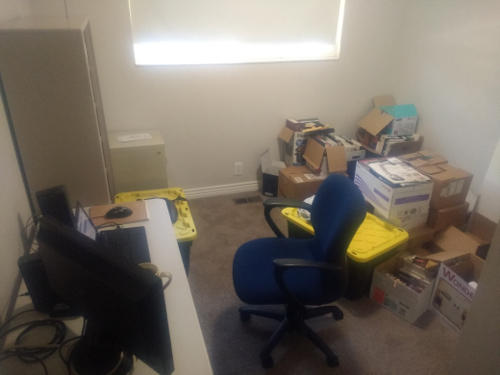
In any case, it’s been really quiet here in the Vasicek household with her gone. I’ve been taking advantage of that to get some household chores done. After we came back from the honeymoon, we went systematically through each room of the house to organize our stuff, and everything we didn’t have an immediate place for we dumped in the spare room until we could find a place for it to live. Just before she left, we finished going through all of it, so now I’ve turned the spare bedroom into my workplace:

2019-08-01 Joe's writing space

Here’s what it looks like right now. It’s not as messy as it seems. All of those cardboard boxes contain our books, which will have to remain in storage until we figure out where to shelve them. When two bookish people marry each other… you understand.

So yeah, it’s been quiet around here with Mrs. Vasicek gone. Quiet, and a little bit lonely. It reminds me of the time a few years ago when I was living alone without any roommates and got sick. I didn’t have any meaningful human contact for weeks on end, which was almost unbearable.

Writers tend to be introverts, but I’m actually an extrovert. Not the super bubbly kind who always greets everyone with a wide-eyed smile—I actually find it draining to meet new people, and prefer to keep to a small circle of close friends. But spending time with friends energizes me, while spending time alone drains me even more than being around people I don’t know.

Mrs. Vasicek is the opposite of me in that regard. She finds it draining to spend a lot of time with a close circle of friends, but gets energized when she’s in front of a large group, teaching or presenting or otherwise performing for them. She’s definitely an introvert, though, and tries to avoid unnecessary social interactions, especially when they might be awkward.

On our first date—which, incidentally, was at a bookstore (go figure)—I struck up a casual conversation with another person browsing the shelves. It’s the sort of thing that comes to me naturally, being an extrovert, but it really impressed her, enough to make her interested in a second date.

You don’t have to be alone to be lonely. That’s probably why I don’t do as well in large crowds of strangers. You also don’t have to be an extrovert: introverts can get lonely, too.

For extroverts, though, it’s either a virtuous or a vicious cycle. Spending time with people energizes you, which makes it easier to spend time with people, which energizes you, etc. On the flipside, spending time alone drains you, which makes it harder to have meaningful interactions with people, which drains you even more, etc.

All of this rambling probably makes me sound like I’m quietly losing my mind, but don’t worry: I’m actually just fine. My family was in town earlier this week, and I ran into an old college roommate just today and learned that he’s got a movie coming out in theaters next month. Awesome stuff!

So yeah, everything’s fine, but I do miss my wife a lot. She comes back in a couple of days, and I’m definitely looking forward to that.