WIP Excerpt: The End of Elysium, Chapter 1

I am really excited about this WIP. Ever since I wrote the short story “The End of Elysium,” I thought it would make a good novel—and now, with the help of AI, I’m able to make that a reality while juggling all of my other writing projects!

What follows is the AI-assisted draft of the first chapter of this novel. To get it to this point, I generated multiple iterations of the first chapter, combined the best parts, and used some AI revision tools to smooth over some of the rough edges. The next phase is the rough human draft, where I rewrite the whole thing in my own words (no copy-pasting). After that, I’ll make a thorough revision pass, and if there aren’t any story problems I’ll make a final polishing pass where I cut the word count by at least 10%. At that point, it’s ready to publish.

It might seem like this is a whole lot of extra work compared to writing without AI-assistance. However, I’ve found that using AI to write the “crappy first draft” actually helps out a ton to work out the major story issues that tend to cause writer’s block later in the project, thus saving potentially months of work. In fact, by using AI, I’ve been able to cut down my typical novel writing time from several years to just two or three months, thus making it possible to juggle multiple projects at once—and hopefully, once the production pipeline fills out and all these projects start to come to fruition, publish a novel-length work every other month or so.

But enough about the writing process. Here is the excerpt from the AI-assisted draft of this novel!

Abbey

Abbey woke up with a start, her heart throbbing rapidly and her breath coming in short, quick gasps. In her mind’s eye, she could still see the ancient lost city, with its crystalline spires shining in light of the morning sun. Gehenna, they called it—the last remaining citadel of the old world. Legend held that its streets were paved with gold and lined with technological marvels beyond imagining.

The dream was always the same. Abbey saw herself wandering the fabled metropolis, basking in its wonders: fountains of pure water with towering monuments of bronze, sleek crystalline structures reaching upward to the heavens. Though the city was conspicuously empty, it was largely still intact, as if only a few days had passed since its inhabitants had left—not the centuries of abandonment that had worn the outside world into ruin. Deep in her bones, she knew that the secrets that lay hidden here would usher in a golden age for the survivors of humanity. In her dream, those secrets called out to her, as if yearning to be unearthed. If only she could find them!

She squeezed her eyes tightly shut, trying desperately to hold onto the last fragmentary images of her dream. If only she could reach out and grasp it—make it tangible and real. She lay completely still, afraid that even the slightest movement might cause her to lose the last wisps of her beautiful vision.

“Gehenna,” she whispered, savoring the word.

She lay still for several moments, willing the dream of the lost city to come back into focus. But already the images had faded from her mind, dissipating like morning fog before the harsh, bright light of day.

Abbey sighed and sat up in bed, the threadbare blanket falling away. Pale light filtered through the cracks in the metal walls of her small dwelling. She stretched, working out the kinks from sleeping on the hard pallet, and swung her feet to the floor.

“One day,” she murmured, her mind wandering back to the lost city that had captured her imagination since childhood. “One day I’ll find you.”

Abbey moved through her tiny space, every action honed by years of routine. She splashed water on her face from a chipped basin, tied back her unruly hair, and walked over to the window on bare feet. With a swift motion, she opened the shutters and was greeted by a flood of warm sunlight pouring into the room. The fresh morning air filled her lungs as she leaned out, taking in the sights and sounds of nature awakening around her humble dwelling. In the distance, birds chirped and leaves rustled in the wind.

Filled with renewed determination, Abbey turned from the window and began gathering her gear – a tattered backpack, her trusty climbing axes, a coil of sturdy rope, ration packs, and her canteen. She paused at her workbench, fingers trailing over the map she’d laid out and the assortment of scavenged tech she’d collected. Each time she ventured out, she pushed a little further, mapped a little more of the collapsed highways and crumbling buildings. Patience and persistence would lead her to Gehenna eventually. It had to. Finding the lost city was more than a dream – it was her destiny.

As she tied her boots, Abbey couldn’t shake off the constant criticism from her fellow Valley Folk. They all seemed to have the same message: “Why do you keep chasing this impossible dream? It’s time to settle down and focus on the things that really matter.” But Abbey refused to listen. She knew she was onto something big, something that could change everything.

As Abbey stepped outside, the vibrant colors of the Valley greeted her, a vibrant tapestry of greens and golds. The morning sun bathed the landscape in a warm, golden glow, casting long shadows across the dewy grass. Birds trilled their melodic songs from the treetops, their voices intermingling with the gentle rustling of leaves in the breeze. The familiar sights and sounds of her home never failed to stir something within her – a mix of comfort and restlessness.

Abbey inhaled deeply, letting the fresh air fill her lungs and invigorate her senses. Despite the beauty surrounding her, her mind remained fixated on the legendary city that haunted her dreams. She set off down the well-worn path, her boots crunching against the gravel as she made her way towards the heart of the Valley.

She followed the familiar path that snaked through the village, her heavy boots leaving deep imprints in the damp earth. The sounds of daily life reverberated around her – the clanging and whirring of machinery from the machinist’s workshop, the bleats and snorts of livestock being led to pasture by farmers. Some tended to their gardens, coaxing vibrant vegetables from the rich earth, while others worked on their humble cottages. They greeted her with warm smiles and friendly waves, which she returned, her vibrant energy lifting their spirits.

“Good morning, Abbey!” called out the baker, waving from the doorway of his shop. “Off on another adventure today?”

Abbey grinned, her eyes sparkling with excitement. “You know me, Arlo. I can’t resist the call of the unknown.”

The baker chuckled, shaking his head with a mixture of amusement and admiration. “Well, be careful out there. And don’t forget to stop by for a fresh loaf when you get back. I’m trying out a new recipe today.”

“Wouldn’t miss it for the world,” Abbey promised, already looking forward to the taste of Arlo’s latest creation.

As Abbey continued down the winding path, her eyes caught sight of Old Mara, the village’s wise elder, tending to her beloved herb garden. The sweet aroma of thyme and rosemary filled the air as Mara’s skilled hands danced gracefully among the vibrant green plants.

“Good morning, Mara!” Abbey called out, her voice bright with enthusiasm. “How are your herbs coming along?”

Mara straightened, her kind eyes crinkling at the corners as she smiled. “Ah, young Abbey. They’re thriving, thanks to this blessed weather. Off on another of your expeditions, I see?”

Abbey nodded. “You know me, always looking for something new to discover.”

Mara’s gnarled hands shook as she spoke, her voice thick with concern. “Just be careful out there, child. The Wastes are no place for a young woman like you.”

Abbey couldn’t help but bristle at the insinuation that she was too fragile for the dangers of the outside world. Still, she bit her lip, knowing that Mara only wanted to protect her.

“I know, I’ll be careful. I promise.”

Mara reached out and patted Abbey’s arm, her gaze softening. “We only want what’s best for you, dear. This valley, our people – this is where you belong.”

Abbey forced a smile. “I know, Mara. But there is so much more out there than just our simple way of life.”

As she made her way down the winding path towards Gehenna, Abbey’s mind raced with conflicting thoughts and emotions. She loved her home and its people, but she couldn’t shake the feeling that there was something more waiting for her beyond the familiar fields and forests of their valley.

The sound of laughter drew her attention, and she spotted a group of children playing near the stream. Their carefree joy brought a smile to her face, even as it reminded her of how different she felt from most of the Valley Folk.

“Abbey! Abbey!” One of the younger girls, Lily, came running up to her. “Did you find any treasures yesterday?”

Abbey knelt down, reaching into her pocket. “As a matter of fact, I did.” She pulled out a small, shiny object – a gear from some long-forgotten machine. “What do you think this might be from?”

Lily’s eyes widened with wonder. “A magic spinning wheel? Or maybe a star-catcher?”

Chuckling, Abbey ruffled the girl’s hair. “Could be. The world before the Catastrophe was full of marvels. Who knows what we might discover next?”

She continued on her way, exchanging pleasantries with others who crossed her path. Their well-meaning warnings and gentle admonishments did little to dissuade her. If anything, they only fueled her resolve to uncover the truth behind the legends.

Finally, Abbey arrived at the hangar, a large, repurposed barn that housed the Valley’s few precious vehicles. The massive structure loomed before her, its corrugated metal walls patched with sections of colorful fabric. Solar panels glinted atop the structure, harnessing the sun’s energy to power the fleet of vehicles within. The air hummed with the sound of machinery and the sharp scent of oil and grease.

The hangar doors were already open, revealing the cavernous interior filled with an assortment of vehicles – relics from the world before, lovingly maintained and modified by the village’s skilled mechanics. Sunlight streamed through the high windows, catching motes of dust that danced in the air.

“Finian!” Abbey called out, her voice echoing in the vast space. “Are you in here?”

A clatter of tools and a muffled curse answered her. From beneath one of the larger rovers, a pair of legs clad in oil-stained coveralls emerged, followed by the rest of Finian as he pushed himself out and looked up at her.

“Well, if it isn’t our intrepid explorer! Come to borrow one of my babies again?”

Abbey laughed, her eyes sparkling. “You know me too well, Finian. I’m hoping to push further into the eastern sector today.”

Finian wiped his hands on a rag as he stood, his expression a mixture of admiration and concern. “The eastern sector? That’s mighty ambitious, even for you. You sure you’re up for it?”

Abbey nodded, her expression set. “I have to be. I had another dream about Gehenna last night. It felt so real, Fin.”

He sighed, running a hand through his salt-and-pepper hair. “Well, I can’t stop you. But at least let me give you our sturdiest rover.” He gestured to a rugged vehicle nearby, its frame reinforced with scavenged metal and its oversized tires caked with dried mud. “Old Bessie here has never let anyone down.”

As Abbey began loading her gear into the rover, Finian busied himself with last-minute checks. He topped off the fuel cells, tested the solar backup system, and calibrated the navigation array. While he worked, Abbey loaded her gear into the back and settled into the driver’s seat. The familiar scent of oil and leather filled her nostrils, mixing with the crisp morning air that drifted through the open hangar doors. She took a deep breath, savoring the moment before the journey began.

“Remember,” Finian said, leaning through the window, “if you run into any trouble out there, just hit the emergency beacon. We’ll come running.”

Abbey nodded, her throat tight with a mixture of excitement and apprehension. “I will. Thanks, Finian. For everything.”

As she started the engine, the rover rumbled to life beneath her. The deep, mechanical growl reverberated through her body, setting her nerves alight with anticipation. She eased the vehicle out of the hangar, waving goodbye to Finian.

Abbey guided the rover through the narrow mountain pass, the towering peaks casting long shadows across the rocky terrain. As she emerged on the other side, the stark contrast between the lush valley and the barren wasteland struck her once again. Abbey clenched the steering wheel, her focus fixed on navigating through the treacherous terrain.

She brought the vehicle to a halt at the edge of the desolation. Where the Valley teemed with life, the Wastes were a barren and desolate wasteland. The once verdant land now lay barren, its earth cracked and dry underfoot. The landscape was punctuated by sharp rock formations that seemed to reach for the sky, while eerie silhouettes of giant fungi loomed in the distance like alien monuments. A sickly yellow haze hung in the air, obscuring the horizon and casting an otherworldly glow upon everything in its path. She inhaled deeply, savoring the last breath of clean air before donning her protective mask to brave the toxic atmosphere ahead.

“Gehenna,” Abbey murmured, her eyes scanning the horizon. 

Abbey’s heart ached as she contemplated the magnitude of the destruction. The Catastrophe had ravaged the world, leaving only ruin in its wake. Yet, even amidst the devastation, she couldn’t help but feel a flicker of hope. Could Gehenna be hidden beneath one of those distant rock formations? Or perhaps it was concealed by some ancient technology, invisible to the naked eye?

She closed her eyes, picturing the shining towers and gleaming streets of the legendary city. It was a vision that had haunted her dreams since childhood, a promise of a better life waiting just beyond the veil of the unknown. And though the Wastes seemed to mock her with their unyielding emptiness, Abbey refused to let go of that promise.

With a deep breath, she steered the rover forward, venturing once more into the desolation. “I know you’re out there somewhere,” she said aloud. “And someday, I’ll find you.”

Hopefully, someday soon.

Ranger

Ethan “Ranger” Carter paused before the entrance to Gehenna’s main simulation chamber. All around him, the underground corridors stretched like a labyrinth, their corroded metal walls and deteriorated conduit and pipes dimly illuminated by the flickering overhead lights. The air was tangy with the smell of old copper and rusted metal, with a hint of stale human sweat. The constant hum of machinery filled the space, a monotonous drone that seemed to vibrate through Ranger’s bones.

MONK: Offers total forgiveness. Able to see through deception, especially self-deception. Invites, but never forces.

He glanced down at his calloused and scarred hands, reminders of the endless hours he spent maintaining the failing systems of the vault. How much longer could they survive down here, cut off from the world above? The thought weighed heavily on his mind, especially with Old Man Mercer, Gehenna’s aging Watchman, lying on the brink of death.

“Another day in paradise,” Ranger muttered. With a tired sigh, he entered the dimly lit simulation chamber and prepared to jack into the simulation. The windowless room was illuminated only by the sickly green glow of ancient computer screens, casting an eerie pallor. He walked towards the nearest one, its surface marred with cracks and pits. 

His body sank into the worn leather chair, and he reached for the neural interface cable – a cold metal snake that connected him to the virtual world. As he closed his eyes, he couldn’t help but feel a sense of confinement and unease creeping up on him, despite his years of using the technology.

The world shifted, the transition as jarring as always, and Ranger found himself standing in a lush garden. Gone were the oppressive confines of Gehenna, replaced by a shimmering cityscape that defied the laws of physics. Impossibly tall spires of crystal and light stretched towards an endless azure sky, while lush gardens floated serenely between them. The air was suffused with a gentle, golden light, and the faint sound of birdsong drifted on the breeze. Elysium stretched out before him, a paradise of verdant green and shimmering light.

Yet even in this seemingly perfect virtual Eden, signs of decay were beginning to show. The leaves on the trees flickered and shimmered, their edges blurring into pixelated static as if struggling to hold onto their form. The gentle breeze that once carried a sweet fragrance now also brought a faint undertone of discord, a reminder that this simulation was not eternal. The vibrant colors of the world seemed slightly muted, like a painting fading over time. It was a small crack in the facade, but one that could not be ignored.

Amidst the vibrant and lush garden, stood Jonas Mercer, a towering figure who had been his mentor and guide for countless years. His face, etched with lines of wisdom and experience, seemed to mirror the intricacies of the flowers and foliage surrounding him. Even in this simulated reality, his appearance remained true to that of the real world. The sun’s rays danced across his face, illuminating his piercing gaze.

“Ranger, my boy,” Jonas called, his voice carrying a weariness that seemed out of place in this paradise. “Come, sit with me one last time.”

As Ranger approached, he noticed how the old man’s form flickered intermittently, a stark reminder of his failing physical body in the real world. Even in this virtual world, death was making its presence known.

“Jonas,” he said softly, taking a seat beside his mentor. “How are you feeling?”

Jonas chuckled, the sound distorting slightly as his image wavered. “As well as can be expected, given the circumstances.” His eyes, despite their digital nature, held a profound sadness as he gazed across the simulated cityscape. “Pretty as a picture, isn’t it? Hard to believe it’s all just data and illusions.”

Ranger nodded, his gaze drawn to the shimmering imperfections in Jonas’ form. “It’s a marvel, to be sure. But sometimes I wonder…”

“If it’s all worth it?” Jonas finished, his eyes piercing. “If we’re just delaying the inevitable, hiding away in our little virtual paradise while the world above lies in ruins?”

Ranger shifted uncomfortably, the old man’s words striking a chord deep within him. “I just can’t help feeling like we’re meant for something more, like there’s a greater purpose out there waiting for us.”

Jonas sighed, his image flickering briefly as a wave of pain washed over his physical form. “I’ve been the Watchman for longer than I care to remember, Ranger. I’ve seen the records, heard the stories passed down from those who came before. Our ancestors, they were the lucky ones, if you can call it that. They survived the Catastrophe, made it to Gehenna before the world above turned to ash and dust.”

He paused, his gaze growing distant. “They built this place to be a sanctuary, a haven where humanity could ride out the storm. But they always believed that someday, we’d find our way back to the surface, that we’d discover the Promised Land and start anew.”

Ranger leaned forward, his heart quickening at the mention of that fabled place. “Do you think it’s really out there, Jonas? The Promised Land?”

The old man shrugged, a gesture of weary resignation. “I wish I knew, Ranger. I’ve spent my whole life searching for it, and now I fear my time is drawing to a close. The systems that sustain me are failing, both here and in Gehenna.”

Ranger felt a chill run through him at the words. He had always known that this day would come, but to hear Jonas speak of it so plainly was still a shock.

“What can I do?” he asked, his voice rough with emotion.

Jonas leaned forward, his eyes intent. “You must listen carefully, Ranger. Our people cannot remain here forever. Elysium was never meant to be a permanent solution.” The old man’s image flickered violently, and for a moment, Ranger feared he’d lost him. But Jonas’s voice returned, weaker now. “There’s a world beyond these walls, beyond even the Wastes. A Promised Land.”

Ranger’s chest tightened. “The Promised Land,” he murmured. “But how can we be sure it even exists?”

Jonas’s form stabilized momentarily, his gaze locking onto Ranger’s. “We must have faith, my boy. Faith in the resilience of our world, and in our own ability to reclaim it. The dream of the Promised Land, it’s what keeps us going, what gives us hope in the face of all this darkness. Promise me, Ranger, that you won’t give up on that dream. That you’ll do everything in your power to lead our people to the Promised Land.”

Ranger swallowed hard, the weight of that responsibility settling heavy on his shoulders. He knew, deep in his bones, that he could never turn his back on his people, on the duty that had been entrusted to him. But at the same time, he couldn’t shake the feeling that the path ahead would be a lonely one, that the search for the Promised Land might well be the task of a lifetime.

“I promise, Jonas,” he said, his voice thin but resolute. “I’ll keep searching, keep hoping, for as long as it takes. I will do everything I can to find the Promised Land, no matter the sacrifice.”

The old man smiled, a flicker of pride and relief crossing his face as he reached out to clasp Ranger’s hand in his own. But even as he did so, his image began to waver and distort, the simulation struggling to maintain his fading consciousness. 

“Go now, Ranger,” he said, his voice growing fainter with each word. “Gehenna is in your hands now. You are… the Watchman.” 

His image flickered one last time, then vanished entirely, dissolving into a cascade of shimmering pixels that glittered briefly in the golden light before fading away to nothingness. 

Ranger stood there for a long moment, his gaze fixed on the spot where Jonas had been. The virtual paradise hummed with a gentle, soothing energy, the air filled with the soft chirping of birds and the distant laughter of children at play. It was a world without pain, without suffering, a haven for the last remnants of humanity.

Yet, even as the virtual paradise shimmered around him, a sudden weight settled on his shoulders. He had always been different from the others, had always felt like an outsider among his own people. While they were content to live out their days in the virtual paradise of Elysium, he had always longed for something more, something real. 

He thought of the Promised Land, the mythical place that Jonas and the other elders spoke of with such reverence. A place where the earth was healed, where humanity could start anew without the need for virtual realities and underground bunkers. It was a beautiful dream, but was it even real? It seemed so distant, so unattainable. And now, with the fate of his people resting on his shoulders, he felt more alone than ever.

“System, end simulation,” he commanded, his voice echoing in the emptiness.

The vibrant colors of Elysium began to fade to gray, signaling the end of the session. Ranger closed his eyes, and when he opened them again, he found himself back in the cold, sterile confines of Gehenna. He blinked rapidly, adjusting to the dim, flickering light of the simulation chamber.

Beside him, on the adjacent couch, lay Jonas’s body. Ranger’s heart clenched at the sight. In death, the old man looked small, fragile – nothing like the towering figure of wisdom and strength he’d been in life.

“I’m sorry, old friend,” Ranger murmured, his voice rough with emotion. “I hope you’ve found your own Promised Land.”

With gentle reverence, Ranger reached out, gently closing Jonas’s eyes before he disconnected the neural interface from Jonas’s temples. He slid his arms beneath the frail body, lifting it with care. The weight was surprisingly light, as if Jonas had already begun to fade away.

As he carried Jonas through the winding corridors of Gehenna, Ranger’s mind wandered to the world he had just left behind. Elysium, with its lush landscapes and endless possibilities, was a stark contrast to the grim reality of the bunker. The walls here were cold and lifeless, the air stale and recycled. It was a world of necessity, of survival, far removed from the idyllic paradise of the simulation.

He finally arrived at the incinerator room, the heat hitting him like a physical force. The small, tight space was filled with towering banks of machinery and intricate piping, creating a labyrinth of metal and wires. In the center rose the monstrous incinerator, its massive cylindrical form radiating a dull, ominous red glow that seemed to pulse with anger.

Gently, Ranger laid Jonas’s body on the conveyor belt. He paused for a moment, his hand resting on the old man’s shoulder, his eyes stinging with unshed tears. Jonas had been more than just his mentor; he had been a father figure, a guiding light, and a personal friend.

“Goodbye, old friend,” he whispered, a single tear tracing a path down his cheek. “May you find peace in whatever lies beyond.”

With a heavy heart, Ranger activated the conveyor belt and stepped back, watching as it slowly carried Jonas’s body into the heart of the incinerator. The flames engulfed the corpse, consuming it in a matter of moments. Ranger stood motionless, his eyes fixed on the fire, as if trying to burn the image into his memory. It was a sorrowful sight, a final send-off for his friend and mentor.

As he watched, Ranger couldn’t help but think of Elysium. It was a world without pain, without suffering, a world where anything was possible.

But it was also a world that wasn’t real.

In Elysium, there was no death, no loss, no grief. But here, in the harsh reality of Gehenna, those things were all too common. The concrete walls and metal surfaces seemed to mock him, reminding him of the cold, unforgiving nature of the world he lived in.

Ranger stood there for a long time, watching as the flames danced and flickered, reducing Jonas’s body to ashes. He thought of the promise he had made, of the mission that lay ahead of him.

“I don’t know if I can do this alone,” he confessed to the silent form. “But I’ll try. For you, for all of us. I’ll find the Promised Land.”

Lyra

Lyra Bellamy carefully adjusted her council robes as she entered the grand chamber of the Council, Elysium’s governing body. Ornate marble pillars stretched upward toward a ceiling that opened to a sky of endless blue, with flawless diamond statues depicting the founders in all of their glory. A large stone table sat in the center of the palatial chamber, shaped in a perfect circle. Beverages had been set at each place, according to the personal tastes of each council member (Lyra’s was a chamomile herbal tea). The virtual space shimmered with ethereal light that cast a gentle glow on the faces of those gathered. 

As she took her seat, Lyra’s gaze swept over her fellow Council members. Gideon Gray’s imposing figure dominated one end of the table, his dark eyes shining intelligently amidst his salt-and-pepper beard. Though all on the Council had an equal voice, with none ranked higher than another, his voice had lately come to dominate many of their proceedings. Iris Blackwood, one of his allies and another outspoken voice, took her place on Lyra’s left, her bearing regal and composed. On Lyra’s right, Nina Evergreen had already settled in, her hazel eyes bright with curiosity. 

“Good morning,” said Nina with a friendly nod. Lyra returned her greeting with a smile and took a sip of her chamomile tea. All around the table, the other Council members took their seats, their colorful robes shimmering in the soft, crystalline light.

Gideon Gray, his dark hair immaculately styled and his eyes gleaming with fervor, leaned forward in his seat. “The passing of the old Watchman is a great loss to our community,” he said, his voice dripping with reverence. “But it also presents an opportunity for us to reaffirm our commitment to Elysium.”

Iris nodded in agreement, her steel-gray eyes fixed on Lyra. “I agree,” she said. “The preservation of our way of life must be our top priority. We must ensure that the new Watchman understands the importance of maintaining the stability and harmony of our world.”

Lyra felt a flicker of unease in her chest. She knew that Gideon and Iris were staunch preservationists, believing that Elysium was the pinnacle of human achievement and should be protected at all costs. But she also knew that there were those on the council who still clung to the old ways, who believed that Elysium was meant to be a temporary haven until the Earth healed and they could find the Promised Land.

“I agree that we must support the new Watchman,” Lyra said, her voice soft but firm. “But let us first take a moment to remember Jonas and all he did for our community.”

As the council members bowed their heads in a moment of silence, Lyra’s thoughts drifted. She had always been content with her life in Elysium, with the predictability and comfort it offered. But now, faced with the challenges ahead, she knew that she would need to tread carefully, to find a way to bridge the gap between the opposing viewpoints threatening to tear the council apart.

When they raised their heads, Lyra spoke again, her tone gentle yet firm. “Now, let us discuss how we move forward, always keeping in mind the harmony and well-being of all in Elysium.”

Nina Evergreen, her golden hair cascading down her back, leaned forward with a thoughtful expression. “Perhaps we should consider the possibility that the Promised Land is not a physical place, but a state of being,” she said, her hazel eyes shining with curiosity. “Maybe the true purpose of Elysium is to help us achieve inner peace and harmony, rather than to serve as a temporary shelter.”

Lyra felt a surge of gratitude towards Nina. She had always admired the young woman’s open-mindedness and willingness to consider new ideas. But she also knew that such views were not always welcomed by the more conservative members of the council.

Gideon Gray’s piercing gaze swept across the council chamber, his virtual avatar radiating an aura of unwavering conviction. “Elysium is not just a temporary shelter,” he declared, his voice ringing with conviction. “It is a testament to the ingenuity and resilience of our ancestors, who built this paradise in the face of unimaginable adversity. To abandon it in pursuit of some mythical ‘Promised Land’ would be to dishonor their memory and sacrifice.”

Iris Blackwood nodded in agreement, her steel-gray eyes flashing with resolve. “We have a duty to preserve this world for future generations,” she said, her words measured and precise. “Elysium represents the pinnacle of human achievement, a shining beacon of hope in a world that has been ravaged by catastrophe. Why risk everything for an uncertain future beyond these walls?”

The air in the council chamber seemed to thicken with tension. Lyra’s gaze swept across the faces of those present, noting the mix of agreement and skepticism.

Councilwoman Vera, her brow furrowed, spoke up. “But wasn’t Elysium always meant to be temporary? A sanctuary until the Earth healed?”

“That was before we understood the true potential of what we’ve created here,” Gideon countered, his eyes flashing. “Why risk everything for a world that may no longer exist as we remember it?”

“Our ancestors’ vision was to reclaim our home,” another council member interjected. “To carry on the legacy of humanity in the physical world. Are we to abandon that dream simply because it is difficult or uncertain?”

Gideon’s avatar flickered momentarily, betraying his rising anger. “And what if Earth never heals? Would you have us trade paradise for a wasteland?”

Lyra listened to the debate, her heart torn between the two sides. She could understand the preservationists’ desire to protect what they had created, to maintain the stability and comfort of life in their virtual haven. Yet Jonas had always been a staunch believer in the idea that they were destined for something greater than the confines of Elysium. 

She raised her hand, and the room fell silent, all eyes turning to Lyra. The virtual environment shimmered slightly, a reminder of the artificial nature of their world.

“My friends,” she began, her voice soft but steady, “I know that this is a difficult decision, one that will shape the future of our people for generations to come. But let us remember that we are all part of the same community, united in our desire to do what is best for our people.” She met the eyes of each council member in turn, her gaze warm but firm.

Gideon leaned forward, his brow furrowed. “Lyra, surely you can see that Elysium is our home, our sanctuary. To abandon it would be to turn our backs on everything our ancestors built.”

Iris nodded in agreement, her silver hair glinting in the soft light of the council chamber. “We have a responsibility to preserve what we have created, to ensure that future generations can continue to thrive in this paradise.”

“Perhaps,” Lyra ventured, “there’s a way to honor both our past and our future. To preserve Elysium while still exploring the possibility of a world beyond.”

Gideon nodded approvingly. “A wise suggestion, Councilwoman Bellamy. We should not rush into decisions that could jeopardize everything we’ve built.”

Lyra offered a small smile, even as her thoughts continued to churn. “Thank you, Gideon. I believe we all need time to reflect on what’s been said here today.”

The council members murmured among themselves, the tension in the room dissipating. Lyra exhaled slowly, relieved to have steered the discussion away from conflict. Yet as the meeting adjourned, she couldn’t shake the feeling that they were standing at a crossroads, unsure of which path to take.

New direction for the blog

I’ve kept this blog for almost twenty years. During that time, there have been busy seasons and there have been slow seasons, but it’s never really gone away, and I don’t think it ever will. That’s good, because since I don’t do social media anymore, this is my only online public-facing platform.

With that in mind, I think I need to make a better effort to plan out what I post here, since whenever I fail to do that, I tend to default to weird political theories and speculation about current events—neither of which is probably very interesting to any of my current (or future) readers. For a while, I was posting my year-by-year take on the Hugo Awards, and that was pretty good, but I’ve reached a point where I have too many books to read to be able to do those posts weekly. I still plan to do them, but it’s going to be a bit sporadic for the forseeable future.

When it comes to writing, the thing that I’m focused the most on right now is working AI into my creative writing process. In fact, one of the reasons I’m in such a slow season with this blog is because I’ve been so focused on doing that, and I’m not sure how to share it. At some point in the future, though, I would like to publish a non-fiction book about writing with AI-assistance, so it might be useful to start breaking down the concepts and turning those into blog posts. So that’s something I’ll probably start doing.

I’d also like to share some excerpts from the stuff I’m currently working on, especially the AI-assisted stuff. I think you’ll be surprised at how good its getting, and I could really use the feedback to help make it even better. So that’s also something I’d like to start posting regularly.

Here’s what I’m thinking: on Tuesdays, I’ll post an excerpt from the AI draft of one of my current WIPs, and on Wednesdays I’ll post a little about what I’m doing with AI and how I’m incorporating it into my creative process. Saturdays will be for posts about books I’ve read or am currently reading. Beyond that, I’ll occasionally post a funny meme or an interesting video just for fun, and MAYBE post something about current events or weird political theories, but it won’t be the majority of the content I post here.

What About Ezra’s Eagle?

Several years ago, I wrote a blog post about the Ezra’s Eagle prophecy, which has somehow become the #2 search result for that term on Google. As a result, I’ve been getting hundreds of views on that blog post every week—and whenever Glenn Beck or some other conservative media commentator discusses the apocryphal prophecy, I get thousands of views.

I’m not an expert on the prophecy, and the only reason I blogged about it was because, as a fiction writer, I found it intriguing. For that reason, I’ve edited the original blog post to link to Michael B. Rush’s website and YouTube channel, since he’s the guy who first “discovered” this prophecy, or first discovered the interpretation that applies to our current political situation.

I’ve since come to the conclusion that most of Rush’s work is not true, especially the stuff he has to say about the lost ten tribes. But Ezra’s Eagle is still intriguing, because the events of the last couple of months suggest that the prophecy is still in play.

But first, it’s worth taking a more critical look at it:

I think this YouTuber makes some very good points, and his other videos about the end-times and Latter-day Saint eschatology are very well researched and present a solid position for where we currently stand and what still needs to happen before Christ returns in power and glory to inaugurate His millennial reign. However, I do think he gets a couple of things wrong here:

  1. First, President Trump did not fill out his first term. He was de facto removed from office after the events of January 6th, as evidenced by the deletion of his Twitter account and the fact that General Milley reached out to his counterpart in the CCP to declare that he would not obey an order from the president to launch a nuclear attack on China. Yes, Trump was a “lame duck” president at the time, but he still had two weeks left in his term, during which he was de facto no longer the president.
  2. Second, I think we can make a solid case that Joe Biden has been de facto removed from power. With all of the media attention on Trump and Harris, not a lot of people are talking about this, but Biden has basically been on “vacation” ever since he (or more likely, someone on his staff) issued the letter announcing that he was withdrawing from the election. In fact, it appears that the letter itself was part of a coup to remove him from power. His presidential schedule has basically been empty since then. So with all of that going on in addition to his obvious dimentia, can we really say that he’s still the de facto president? I think not.

By my reckoning, Trump and Biden both fit the criteria for the first two short feathers of the second wing, and Biden was indeed “sooner away than the first.” (2 Esdras 11:27). So if the events of the next few months were to play out according to the Ezra’s Eagle prophecy, what would that look like?

Please bear in mind that I am a science fiction writer, not a professional scriptorian or political commentator. I have no special knowledge, and I literally make up stories for a living. So please don’t take this scenario as a prediction of future events, or (God forbid) as any sort of encouragement to violence. Instead, think of it as a rough outline for a political thriller that follows Ezra’s Eagle—and if you want to turn my outline into an actual book, feel free to write it. It should make for a very entertaining piece of fiction, and nothing more.

But anyways, if I were writing a novel that follows the timeline of Ezra’s Eagle, here is how it would play out:

1. Trump is assassinated before the 2024 election

And I beheld, and, lo, the two that remained thought also in themselves to reign: (2 Esdras 11:28)

The prophecy makes it clear that each feather corresponds to a particular king or ruler. Trump was the first short feather of the second wing. If Biden is the second short feather, then there are still two more short feathers who have to have their time before the three eagle heads wake up, and it appears from verse 28 that these other two feathers are candidates in an election that is cut short. Unfortunately, since Trump has already had his time, I don’t think he’s one of those feathers. Therefore, for the prophecy to be fulfilled, I think he needs to be removed.

Here’s how I see it playing out: in the next couple of weeks, there is a second assassination attempt on Trump, which actually succeeds. As his running mate, J.D. Vance becomes the name on the top of the Republican ticket. Tensions reach a boiling point, and a lot of people expect the Right to react with political violence after Trump’s death, but that doesn’t actually happen at this time. Instead, Vance gets a huge surge of popularity, and it appears that he will win the election in a landslide.

This is what triggers the waking of the three Eagle heads.

2. The 2024 election is canceled and Janet Yellen becomes interim president

And when they so thought, behold, there awaked one of the heads that were at rest, namely, it that was in the midst; for that was greater than the two other heads.

And then I saw that the two other heads were joined with it.

And, behold, the head was turned with them that were with it, and did eat up the two feathers under the wing that would have reigned. (2 Esdras 11:29-31)

I still think Janet Yellen is the most likely candidate for the first eagle head, because of her connections with the Federal Reserve and her current position in the Treasury. In this scenario, Trump’s assassination fails to result in the sort of violent right-wing backlash that the deep state needs to construct the political narrative for a plausible Harris victory (with a “fortified” election, of course), so instead, they orchestrate an economic meltdown and a currency collapse. This is something they were already planning to do, in order to usher in their central bank digital currency (which is also the mark of the beast), but they have to accelerate those plans by a couple of years, and also take power directly in order to ensure a smooth transition.

We already see signs of the beginning of an economic collapse, or a “hard landing” as the financial wonks like to put it. The 2-year and 10-year US Treasuries have been inverted for the last two years, but they just uninverted a few days ago. Every time this has happened in the past, we get a recession, and with the current fragile state of the global economy and the financial system, a recession could easily turn into a total collapse.

3. The United States goes to war in a major escalation of global armed conflict

But this head put the whole earth in fear, and bare rule in it over all those that dwelt upon the earth with much oppression; and it had the governance of the world more than all the wings that had been. (2 Esdras 11:32)

And whereas thou sawest three heads resting, this is the interpretation:

In his last days shall the most High raise up three kingdoms, and renew many things therein, and they shall have the dominion of the earth,

And of those that dwell therein, with much oppression, above all those that were before them: therefore are they called the heads of the eagle.

For these are they that shall accomplish his wickedness, and that shall finish his last end. (2 Esdras 12:22-25)

I’m not going to try to predict which flashpoint explodes first, or how the opening moves of the next global war play out. Personally, I think we’re already in the opening phases of WWIII, but there are a lot of ways that conflict could escalate: for example, a US/Israeli attack on Iran, or an Iranian attack on Israel, or an expansion of the Russo-Ukraine war to Poland and/or the Baltics, or a Chinese invasion of Taiwan… you get the picture. Point is, there is a major escalation of global war, potentially including tactical (though not strategic) nuclear weapons, and the US is at the heart of it.

4. Janet Yellen dies in a second global pandemic

And whereas thou sawest that the great head appeared no more, it signifieth that one of them shall die upon his bed, and yet with pain. (2 Esdras 12:26)

The Ezra’s Eagle prophecy is clear that the first eagle head dies of some sort of illness. The most likely fulfillment of this is that we get a second pandemic, much worse than covid-19 and likely also from a human-engineered virus of some kind. It may start with a second lab leak, but given the state of the world at this point in the timeline, I think it’s more likely to be an actual bioweapon, deployed with the purpose of destroying our country.

5. The United States falls into a civil war, and the deep state breaks up

For the two that remain shall be slain with the sword.

For the sword of the one shall devour the other: but at the last shall he fall through the sword himself. (2 Esdras 12:27-28)

After Janet Yellen dies, the deep state breaks into competing factions, and the US breaks into a hot war, during which the other two eagle heads (ie Janet Yellen’s successors) kill each other. I have no idea who the other two members of this deep state triumvirate might be, so I’m not going to speculate. But in this scenario, they come out of the shadows after Yellen’s death and drive the country into a civil war.

6. A new election is held, but ultimately fails to restore the United States

And whereas thou sawest two feathers under the wings passing over the head that is on the right side;

It signifieth that these are they, whom the Highest hath kept unto their end: this is the small kingdom and full of trouble, as thou sawest. (2 Esdras 12:29-30)

The other proponents of the Ezra’s Eagle prophecy think that the last two feathers are connected with the Antichrist, but I reject this interpretation because I don’t believe that the prophecies about the Antichrist are talking about a single charismatic leader. Instead, I think these two last feathers are a remnant of the deep state that tries to put the country back together after the civil war. It could be two presidential candidates who are never seated, or it could be two actual presidents who fail to serve out their full terms.

7. The Church of Jesus Christ of Latter-day Saints steps into the post-civil war power vacuum as a political entity and establishes a new government within the territory of the former United States

And the lion, whom thou sawest rising up out of the wood, and roaring, and speaking to the eagle, and rebuking her for her unrighteousness with all the words which thou hast heard;

This is the anointed, which the Highest hath kept for them and for their wickedness unto the end: he shall reprove them, and shall upbraid them with their cruelty.

For he shall set them before him alive in judgment, and shall rebuke them, and correct them.

For the rest of my people shall he deliver with mercy, those that have been pressed upon my borders, and he shall make them joyful until the coming of the day of judgment, whereof I have spoken unto thee from the beginning. (2 Esdras 12:31-34)

This is also where Daniel’s prophecy about the stone cut out of the mountain without hands begins to have a political fulfillment, and when the Latter-day prophecies about the establishment of Zion in the Kansas City area of Missouri begin to be fulfilled. It’s also where the Ezra’s Eagle prophecy ends.

Once again, this is not how I think events will actually play out. Rather, if I were writing a novel about Ezra’s Eagle and the 2024 US presidential election, this is how I would write it. I’m not a theologian or a political pundit: I’m just a guy who makes up stories and publishes them as science fiction. And ultimately, I think Ezra’s Eagle is more fiction than fact.

But it could happen this way…

Was Winston Churchill the true villain of WWII?

There’s this clip from Tucker Carlson that’s going around right-wing alternative media right now, from a guest who made the claim that Winston Churchill was the true villain of WWII. The best (ie least hysterical) analysis of this claim that I’ve heard is probably from Michael Knowles, which you can see here:

I have to be honest, though: while most of the stories like this that make the rounds on the internet turn out to be cheap ragebait, I think that this claim deserves some actual reflection, especially when you consider the following:

  1. World War I and World War II were essentially two phases of the same global conflict.
  2. The main reason Hitler came to power in Germany was because of the total German defeat in WWI, which only happened because the US entered the war.
  3. The US only entered the war because of the sinking of the RMS Lusitania by a German U-boat and the deaths of nearly a hundred US citizens on board (never mind that it turned out the Lusitania was gunrunning at the time, and therefore a legitimate military target, but that’s another story).
  4. Winston Churchill was the First Lord of the Admiralty at the time, and deliberately withdrew the Lusitania’s destroyer escort knowing that U-boats were operating in the vicinity, because he (correctly) calculated that the sinking of the Lusitania would bring the US into the war. (For more on this, read chapter 12 of The Creature from Jekyll Island by G. Edward Griffin, which lays out the whole story.)

Of course, while this does throw some pretty serious shade on Winston Churchill, taken alone it’s not sufficient to make him the “true villain” of the period. For that, you have to accept a couple of other arguments, namely:

  1. The true purpose of WWI was to tear down the existing global order (especially the Concert of Europe) and clear the ground for the rise of a global socialist movement, led by the British deep state and central bankers. The Fabian Society was especially involved in this process, and a rough sketch of their blueprint for the global order they hoped to create can be found in Brave New World by Aldous Huxley.
  2. The Bolshevik movement was funded by the British deep state and central bankers. Once again, you can read about this in The Creature From Jekyll Island, as well as None Dare Call It Conspiracy by Gary Allen. The Bolshevik revolution was not a true uprising of the Russian people: it was a globalist coup that hijacked the true revolution, which occured in 1907.
  3. In similar fashion, Adolf Hitler was a creation of the British deep state, who only became the villain after he threw off his leash and went rogue. Which is not to say that he wasn’t evil, only that he was, at least initially, a British puppet.
  4. After WWI, the British deep state recolonized the United States by creating their own deep state across the pond, which is more or less under the control of British Intelligence. In fact, you can draw a straight line from the British socialist movement of the early 20th century to our current American deep state, through the Fabian Society, the Roundtable Group, and the Council on Foreign Relations.
  5. This also gets into Ezra’s Eagle, because the first feather (according to Michael B. Rush’s interpretation) is Herbert Hoover, a founding member of the CFR.

So if you accept most of that, it’s actually not that crazy to entertain the idea that Winston Churchill was the “true villain” of WWII, given how he was clearly an agent of the British deep state during the most crucial decades of the 20th century.

Personally, I don’t think he was the “true villain” any more than I think he was the “true hero” of the war. He was a complicated character from a complicated time. And as tempting as it is to simplify WWII as an epic fight between the “good guy” Allies and the “bad guy” Axis, that narrative has run its course and is no longer a useful way of understanding the world. Most wars are bad guy vs. bad guy, at least in the top leadership, with the little people on both sides doing most of the actually fighting and dying.

Did I predict it?

On July 24th, 2024, eleven days after the (first) Trump assassination attempt, I posted the following prediction:

2. The FBI and DHS will continue to stonewall the investigation into the assassination attempt until something even more explosive dominates the news cycle.

Remember how former President Trump was shot in the head at a rally in Pennsylvania? No, it wasn’t just a dream, though I wouldn’t blame you for thinking so, based on how deeply the story has been buried by now. After all, when was the last time you saw a mainstream media outlet publish this iconic photo:

As for stonewalling the investigation, the FBI and DHS have actually done much worse. Within a week of the failed assassination attempt, they hosed down the roof of the AGR building, dismantled all of the stands, cleaned up the crime scene, dismissed all of the law enforcement officers present without interviewing any of them, and cremated the would-be assassin’s body without conducting an autopsy. In short, they have not only stonewalled the investigation, but have done everything they can to prevent one from taking place.

And we still have no word on why a smartphone belonging to a member of the shooter’s household was present at an FBI office in Washington DC just months before the shooting.

This whole thing stinks to high heaven, which is probably why the mainstream media is doing everything they can to memory hole it. Fortunately, there are still some folks in the alternative media who are doing good work to make sure they don’t succeed. In particular, I highly recommend Chris Martenson, who has been running a thorough citizen’s investigation using the information that is open source. At this point, he’s leaning very heavily toward the LIHOP hypothesis (ie they let it happen on purpose).

Prediction Confirmed (2:2)

Did I predict it?

On July 24th, 2024, eleven days after the (first) Trump assassination attempt, I posted the following prediction:

4. The Democrats will nominate Harris for President.

By this point, the coronation of Kamala Harris should be official. Without winning a single primary vote in either 2020 or 2024, she has been elected selected to be the Democrat Party’s nominee… for the sake of “our democracy.” Some pigs are more equal than others, I guess.

This may be hard to remember, but at the time I made this prediction, it wasn’t at all clear that Harris would be the nominee. Three days had passed since Biden had (allegedly) issued his letter, announcing that he was withdrawing from the election—much to the surprise of his campaign staff. In a second letter, he had endorsed Kamala Harris as the nominee, but the Obamas had notably NOT endorsed her at this point, and the ultimate outcome of the DNC coup was still in doubt.

By now, of course, the party has locked ranks, with the propaganda wing mainstream media working 24/7 to manufacture consent and portray Kamala Harris as some sort of messianic figure. Which also means that it’s been over a month since Harris has given an actual press conference or answered any unscripted questions.

Just remember: whenever they say “our democracy,” they’re talking about THEIR democracy, not yours. As with pigs, some decmoracies are more equal than others.

Prediction Confirmed (1:1).

Some (better) advice for the chronically single

So the Daily Wire recently put out an interesting article about the current trend of chronically single young adults who want to get married but have had zero luck, especially with today’s online dating scene. From what I can tell, online dating is like a post-apocalyptic wasteland right now—which is a huge problem, because ever since the pandemic, online dating has come to replace almost every other form of getting out there and finding prospective romantic partners.

So since I graduated from the online dating scene after a period of chronic singlehood, and am now happily married, I thought I was qualified to share some of my thoughts on the subjects in the comments on the article. And since I thought some of my readers here might find it interesting, I’ve decided to cross-post my comment. Here it is:


I was chronically single until I met my wife at age 34. We met online and got married just before the pandemic. Some thoughts:

1. It sucks to be rejected, but if marriage is really what you’re looking for, you’ve got to embrace the suck. You’ll never find “the one” if you’re trying to please everyone. Know what you’re looking for, and when you write up your dating profile, share the things about you that will drive everyone else away. My profile had an explicit declaration of faith, because that was what I was looking for–and I found my wife on the third or fourth match, in part because that declaration was explicit enough to drive everyone else away.

2. The only way to stop wasting time is to embrace Jordan Peterson’s 8th rule of life. You grew up in an online world where almost everything you saw was a lie. Embrace total honesty, no matter how much it hurts. On our second date, I asked my future wife what she wanted to do with her life. She embraced total honesty and told me she wanted to be a wife and a mother more than anything else, even though she had no idea how I would respond to that. We were married less than a year later.

3. Have enough faith to trust God’s timing. My wife and I were actually enrolled in the same college class a decade before we met online. If we had dated each other then, it wouldn’t have worked out. We both needed to grow a bit first (quite a bit, in my case). Everything in this world has been prepared in the wisdom of Him who knows all things. Do your part to bring your life in line with Him, and all things will work together for your good.

4. Stop making everything about yourself. Selfishness is the root cause of every divorce, which also makes it one of the biggest deterrents to marriage and relationships. You grew up in an age of unbridled narcissism, exploited by Big Tech and social media to leverage your loneliness for corporate profits. When you think you may have found the right one (and you’re not in a codependent or abusive relationship), make it all about them. He who seeks his life shall lose it, and he who loses his life, for God’s sake, shall find it. I will never forget the impression I received when I first held my daughter: “this is her story now, not yours.”

The state of science fiction is as bad as Australian breakdancing

It seems like most of the internet is talking about the hilariously bad breakdancing performance given by Australia at the Paris Olympics. Apparently, the “athlete” in question is actually a university professor named Rachael Gunn who specializes in breakdancing studies, or some such nonsense, and the main reasons she got the nod to compete are 1) the Australian breakdancing scene is woefully small, 2) she’s (allegedly) an LGBTQ+ woman, with all the right political opinions, and 3) her husband was on the committe that made the decision to qualify her. Taking advantage of those three factors, she’s apparently made a name for herself in Australia, even winning some local competitions—because who would dare criticize such a stunning and brave LGBTQ+ woman? So of course, she went on to compete on the international scene… and made such a mockery of herself and her sport that the judges awarded her straight zeroes, and the Olympics committee pulled breakdancing from the 2028 Los Angelos Olympics. Wah wah.

While this story is rightly hilarious, and proves the eternal truth that wokeness ruins everything, I can’t help but notice the parallels between the state of Australian breakdancing, that someone so inept and untalented could leverage a “studies” degree to dominate it, and the current state of science fiction. Specifically, this is the comment that made me think about this, which is worth reading in full:

The relevant part is this:

Rachael represents so much of what is totally lecherous about cultural studies academics. Pick a subject area that will be under-studied in your context, so you can rise through the ranks quickly (how many break dancing academics will there be in Australia?), and wreak absolute havoc in lives of the people you want to study. There is no limit to the sheer disrespect they will dole out, purely for self-advancement.

Now, I don’t think science fiction was ruined in quite the same way, ie by being dominated and colonized by academia through “studies” degrees. Science fiction was probably too large to be overtaken that way. However, the pattern is still similar, and from what I can tell, it goes something like this:

Step 1: Take over the institutions in the field that are primarily responsible for determining and evaluating excellence.

In Australia, the breakdancing field was small enough that academia was able to dominate and (for lack of a better word) colonize it, becoming the arbiters of excellence within that art. It certainly helped that the professor who had carved out this academic niche for herself was married to one of the judges in the committee that was tasked with determining excellence. This created an incestuous (and ultimately nepotistic) relationship between academia and the judging panels.

In science fiction, something similar happened with SFWA and the Hugo and Nebula awards. I’ve written before about how SFWA ruined science fiction, so I won’t repeat all that here. But the basic gist of it is this: as science fiction became more established, the organizations and publications that talked about science fiction became more authoritative on the subject of the genre than the actual writers themselves. Because of this, achieving recognition for excellence became less about creating works of actual merit, and more about gaining the approval of the people who had built their careers talking about science fiction, rather than actually creating it. And the best way to gain their approval was to join those institutions yourself, rising up in the pecking order until everyone else was beneath you.

This basically describes the career trajectories of John Scalzi and Mary Robinette Kowal, two insanely woke authors who leveraged their tenure as SFWA president for award nominations. Both of them seem to have spent at least as much time and effort talking about science fiction as they have in actually creating it: Scalzi through his blog, which he leveraged to get his first book deal, and MRK through both her blog and the Writing Excuses podcast.

Step 2: Purge those institutions until they are ideologically pure.

This step is critical. So long as the instutitions are focused on merit, the only way to climb the ranks is by creating something of merit. But once the institution has become ideologically possessed, with all of those who reject the dominant ideology being purged from positions of power, then merit no longer matters, and the way to the top becomes clear. Those who are the most ideologically pure, as demonstrated by their virtue signalling, will rise to the top. This has the added benefit of quelling all merit-based criticism, since those beneath you fear having their own ideological purity called into question.

From what I can tell, this is how Rachael Gunn rose to prominence in the Australian breakdancing scene. After all, once academia had colonized the field, who would dare question the merits of such a stunning and brave LGBTQ+ woman? In a similar manner, Scalzi and MRK rose to the top of SFWA by virtue signaling their own ideological purity and intersectional victimhood status, squelching any criticism by labeling their critics racist, sexist, bigots, homophobic, etc.

Step 3: Redefine excellence in your own image.

In the Australian breakdancing scene, this was accomplished through the combination of Rachael Gunn’s academic work and her husband’s position in the committee that qualified the Olympic competitors. And while it probably isn’t quite so blatantly nepotistic in the science fiction world, the pattern still holds true when you look at what the Hugos and Nebulas have become. This was what the Sad Puppies controversy was actually about, and because the Puppies lost, the Hugo and Nebula awards have been insufferably woke ever since:

Step 4: Use the captured institutions to purge the field of potential rivals.

The final step in this projection is to squash all of those people who represent a threat to your domination, because they have merit and you do not. Ignoring her perhaps overly generous assessment of Australian breakdancing, this is what Hannah Berrelli is talking about when she mentions all the “hundreds of Australian athletes who will have dedicated their entire lives to athletic excellence” whose blood, sweat, and tears were overshadowed and rendered irrelevant by Rachael Gunn’s Olympic stunt.

In science fiction, we see this in the fact that David Weber has never been nominated for a Hugo or a Nebula, or that Jim Butcher’s sole Hugo nomination lost to No Award. Both of these men are far better writers than the majority of award-winning authors, especially in our current era. You could make a solid argument that Dan Simmons or Orson Scott Card were superior, but Scalzi? Jemisin? Kingfisher?

And what about all of the new and relatively unknown authors? At least Weber and Butcher already have large followings, which they have rightfully earned through their merit. But when merit is no longer the determining factor in recognizing excellence within the field, what chance do talented up-and-coming authors have if they aren’t willing to play the ideological purity games? Answer: not a hell of a lot.

So while you laugh at how ridiculous Australia’s breakdancing performance was at the Olympics, understand that the same dynamic has been playing out in modern science fiction for years. And honestly, the results are no less ridiculous.

How I would vote now: 1972 Hugo Award (Best Novel)

The Nominees

To Your Scattered Bodies Go by Philip Jose Farmer

The Lathe of Heaven by Ursula K. Le Guin

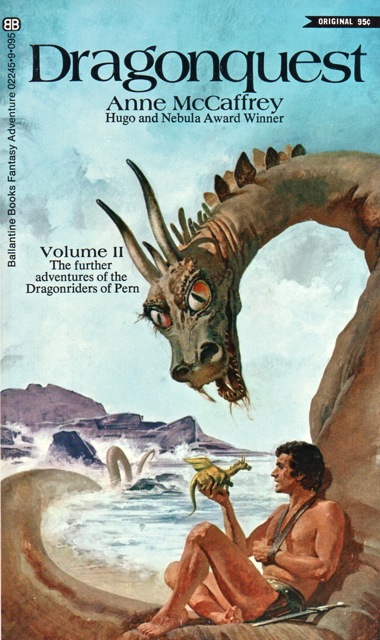
Dragonquest by Anne McCaffrey

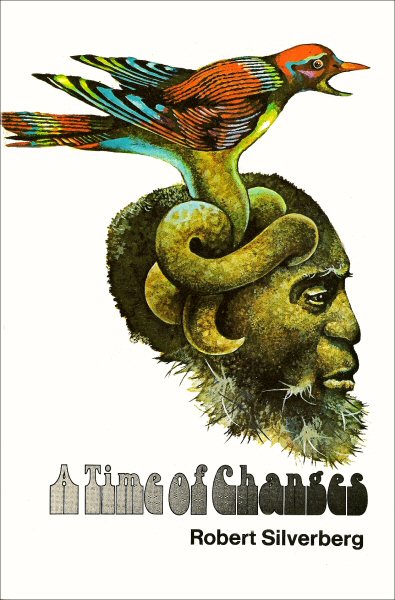
A Time of Changes by Robert Silverberg

Jack of Shadows by Roger Zelazny

The Actual Results

  1. To Your Scattered Bodies Go by Philip Jose Farmer
  2. The Lathe of Heaven by Ursula K. Le Guin
  3. Dragonquest by Anne McCaffrey
  4. Jack of Shadows by Roger Zelazny
  5. A Time of Changes by Robert Silverberg

How I Would Have Voted

  1. The Lathe of Heaven by Ursula K. Le Guin

Explanation

Cover art was so terrible in the 70s. Those are all the original edition covers for each book. They’ve all been reworked in later years, and most of them got a significant upgrade.

The Lathe of Heaven isn’t Ursula K. Le Guin’s greatest work, but I did find it to be decently good. The ending was a little too pat, but the set up was good, and the story itself was quite intriguing. In some ways, I feel that it would have worked better as a movie, maybe an animated feature by Studio Ghibli. It definitely had that kind of a dreamlike feel.

The rest of these books are not that great, to be honest. To Your Scattered Bodies Go and A Time of Changes were too pervy for me, with Farmer indulging in some really weird and disturbing treatment of children, and Silverberg indulging in pages and pages of navel gazing, all written very beautifully and signifying almost nothing, which is typical of Silverberg.

Jack of Shadows was confusing: I got about two thirds of the way in before I realized that I had no idea what was happening, and I didn’t really like any of the characters. I wonder if the real reason this book got nominated was because so many people enjoyed Nine Princes in Amber, the first Chronicles of Amber book, which came out in 1970 and was actually quite excellent. But he was writing and publishing the Chronicles of Amber all through this time period, and none of them ever got nominated for a Hugo, which seems really strange to me. With Zelazny, the only books I’ve found that I enjoyed are his Chronicles of Amber, and everything else is a huge miss for me. It’s weird.

As for Dragonquest, I know that the Dragonriders of Pern books have lots of fans, and I don’t find anything too objectionable with them (aside from the naively libertine Boomer attitudes toward sex, which is par for the course for this era and for Anne McCaffrey in general), but I just couldn’t get into this book. I read the first Dragonriders of Pern book in college, when I wasn’t nearly so cynical, and I thought it was okay, but it wasn’t compelling enough to go out and read the rest of the series immediately, and over the years I literally forgot everything that happened in that first book. So I read a synopsis before picking up book 2, and I just have to say that the dragons are way, way, way too OP. Seriously, they can teleport instantly through space AND time? That’s just too much. So I went into Dragonflight without feeling any real sense of peril, and right away, the novel turned into a giant soap opera about the various dragons and dragonriders: who had feelings for who, who was sleeping with who, etc etc. So after a couple of chapters, I just got bored and checked out.

So the only one of these books that I can positively vote for is The Lathe of Heaven, even though I think it pales next to Le Guin’s other work. But I wouldn’t actually put any of these books beneath No Award, since most of it is probably just a matter of my own personal taste. The perviness of To Your Scattered Bodies Go almost makes me want to put it below No Award: there’s a lot of graphic nudity, a lot of innuendo, and some innuendo / torture porn directed toward children, which was why I DNFed it. But it doesn’t cross over into outright pornography, and it’s not ideologically possessed in the way that most of the stuff coming out today tends to be. Also, the premise is pretty interesting: it’s in the execution where it all falls apart.

The 70s was a really weird time for science fiction. I wonder how many of the Worldcon attendees in 1972 were high on drugs—or whether some of these artists weren’t off their gourds when they wrote some of this stuff. I’ve heard stories about some of the orgies that Asimov used to hold in his con suite. It was a very different time.