Anti-AI is the new virtue signaling

According to Merriam-Webster, “virtue signaling” is:

the act or practice of conspicuously displaying one’s awareness of and attentiveness to political issues, matters of social and racial justice, etc., especially instead of taking effective action.

Because it is much easier to signal your virtue than it is to actually be virtuous, the people who virtue signal the loudest also tend to be the ones who have something they’re trying to cover up. This hypocrisy is a big part of what makes virtue signaling so obnoxious.

Time for me to spill a little tea. A couple of years ago, after I wrote “Christopher Columbus: Wildcatter,” I got an acceptance from the editor of Interzone. It wasn’t formalized yet, but he expressed over email that he was interested in purchasing the publishing rights for that story, the sequel, and possibly others after. It got far enough along that we were going back and forth on editorial details, our vision for the stories, etc.

Then the time came for him to send me a contract. Aaand… he ghosted me. Flat out ghosted me. A month went by without any correspondence at all. I didn’t want to seem too forward, but I also was starting to get a little concerned. So I sent out a brief follow-up email, asking about the contract… and I got a response that read like something copy-pasted from a form rejection.

Now, as far as literary transgressions go, that’s kind of tame. It’s not like the editor owed me money and refused to pay. And as far as I know, Interzone is prompt with all of their payments and pays all of their authors in full. After all, everyone deserves the benefit of the doubt.

But that sort of unprofessionalism really wasn’t cool, either. In fact, it was enough that I stopped sending Interzone any submissions. After all, if the editor saw nothing wrong with yanking my chain around before he published me, that’s kind of a yellow flag. Not to mention that it left a very sour taste in my mouth.

So when I saw this story from Jon Del Arroz, with the editor of Interzone accusing Asimov’s of using AI art, and using that as a pretext to blacklist all of their authors, I immediately recognized that sort of behavior for what it is: virtue signaling. Which made me wonder: how much of the anti-AI vitriol that’s ubiquitous in online writing communities these days really just a new form of virtue signaling?

Think about it. It explains so much about the insane anti-AI faux controversies that have been blowing up around 2025 WorldCon. For more than a decade now, the people chasing the Hugo Award have been among the worst offenders of gratuitous virtue signaling (especially Scalzi). It also explains why so much of the anti-AI content on YouTube is less about presenting well-reasoned arguments, and more about sighing dramatically or making snide, sarcastic remarks. Virtue signaling always appeals to pathos before it appeals to reason.

I expect this phenomenon is going to get a lot worse in the next few years, at least until AI-assisted art and writing become normalized (which is going to happen eventually, it’s just a matter of time and degree). So the next time you see someone publicly posting about how horrible it is for creatives to use AI, take a good, hard look at the person leveling the accusations. Chances are, they’re just virtue signaling.

New permafree first-in-series: Rescuer’s Reward

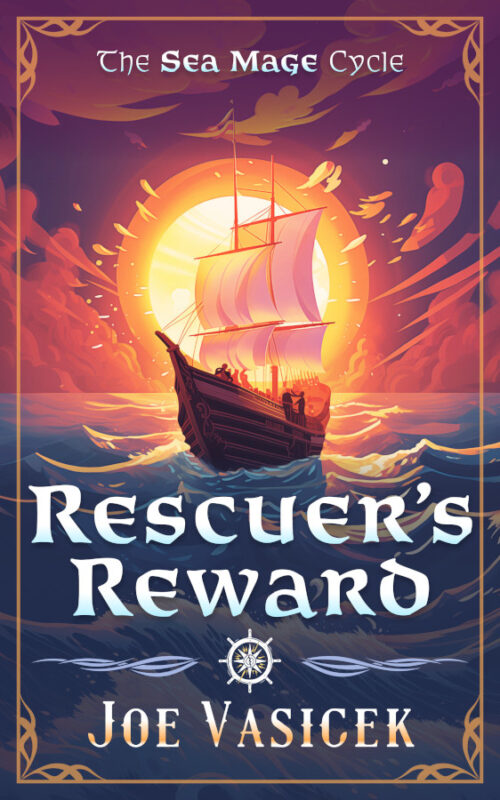
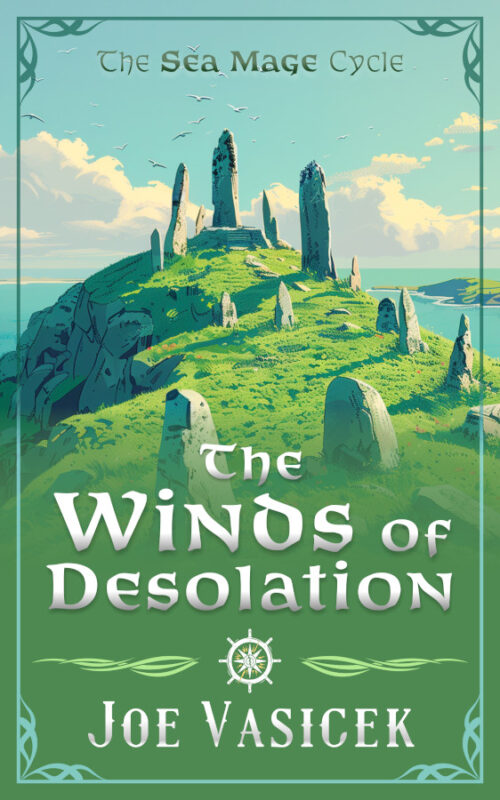
I have decided to make Rescuer’s Reward the permafree book for my Sea Mage Cycle fantasy series. If you haven’t yet read any of these books, this is a great place to start. It’s not the first book chronologically, but it is the first book that I published in the series, and since the Sea Mage Cycle is really just a series of interconnected standalones (kind of like most of Louis L’Amour’s westerns), you won’t miss anything by starting here.

Rescuer’s Reward

Rescuer’s Reward

A captain in debt, a princess in peril, and a fate that neither can foresee.

All Jason ever wanted was to sail the Azure Sea as a merchant ship's captain. But money problems have him up to his eyeballs in debt, and if he doesn't return to port with the gold, his dreams will be dashed forever. So when the princess of a far-off kingdom is kidnapped by pirates en route to her wedding, Jason merrily takes up the chase, staking his future on the reward for her safe return.

Yet the competition for the princess proves fierce, and Jason soon learns that there are far more powerful forces behind her kidnapping than any of them realize. And though Princess Julietta has no qualms about marrying for political advantage, the last thing she wants is to be a mere trophy in a different sort of game.

As duty, desire, and destiny clash, only one thing is certain: they both must risk everything to earn the ultimate reward.

Order Now!
About the Book
Details
Author: Joe Vasicek
Series: Sea Mage Cycle
Genres: Action & Adventure, Action & Adventure, Fantasy, Fantasy, FICTION, Romance, Sea Stories
Tag: 2024 Release
Publisher: Joe Vasicek
Publication Year: April 2024
ASIN: B0CTFVNKFL
List Price: $13.99
eBook Price: free!
Audiobook Price: free!
Joe Vasicek

Joe Vasicek fell in love with science fiction and fantasy when he read The Neverending Story as a child. He is the author of more than twenty books, including Genesis Earth, Gunslinger to the Stars, The Sword Keeper, and the Sons of the Starfarers series. As a young man, he studied Arabic at Brigham Young University and traveled across the Middle East and the Caucasus Mountains. He lives in Utah with his wife and two apple trees.

Preview
Some of the links in the page above are "affiliate links." This means if you click on the link and purchase the item, I will receive an affiliate commission. You will not receive any additional charge. As an Amazon Associate I earn from qualifying purchases.

Fantasy from A to Z: L is for Love

What is love? (Baby don’t hurt me…)

Seriously, though, what counts as “love” in fantasy these days? The romantasy subgenre is taking the field by storm, but much of it seems to be outright pornography, at least to me. Back when Twilight was all the rage, I at least understood the romantic angle, even if I didn’t particularly care for it. But now, there’s all this stuff about mate-bonding, consent/non-consent, something called “the omega-verse,” and a weird hierarchy of various forms of bestiality that I frankly cannot follow at all.

I should take a few steps back, and perhaps abandon romantasy altogether. I’m sure there are plenty of non-pornographic books in that subgenre—in fact, I’m fairly certain that one of my old college friends, Charlie Holmberg, was a pioneer in it. Everything of hers that I’ve read is pretty good, and also quite understandable, even to a dopey guy like me. 

Outside of romantasy (and paranormal romance, which it appears that romantasy has more or less cannibalized), the love stories are pretty straightforward. Epic fantasy in particular tends to have at least a couple of romantic subplots in every book—which makes sense, considering how expansive the subgenre is trying to be. After all, if you’re writing a story where the world itself is a major character, you’ve got to have at least a few good love stories in there too.

But as the internet has continued to spawn narrower and narrower niches and subcultures, all existing in their own little subcultures, things on the extremes have gotten… weird. And as the gender divide appears to be widening with each subsequent generation, especially in areas like politics and culture, it’s beginning to seem like we aren’t even speaking the same language, even when it comes to something as basic and essential as love.

Now, male-coded romances are pretty easy to understand (though I could be biased… I am a man, after all). It starts with a boy who really wants a girl. Like, really, really, really wants a girl. He likes her so much, he spends the whole book trying to get her—and by the end, he either wins her, or he realizes that he doesn’t actually want her, he wants this other girl he met along the way. If things get spicy, it’s all very straightforward and everyone generally has a good time. If there are issues with rape or non-consent, those are generally separate from the romantic subplot

And often, male-coded romances don’t even include much spicy content at all. Even Robert E. Howard’s original Conan the Barbarian stories were pretty mild, in terms of spiciness. Yes, there was usually a scantily-clad female love interest, described in such a way as to increase Howard’s chances of getting his story featured on the magazine cover (and thus earning double the pay). But when it came to the actual, you know, kissing and stuff, Howard never went into graphic detail. The most he would do was hide behind euphemisms like “he crushed her in his arms.” All of the ejaculations in his stories were saidisms—as in, “look out!” he ejaculated, waving his hands wildly (and you would be shocked how often he used “ejaculated” as a saidism—seriously, I think there’s at least one in every classic Conan story).

(Side note: just because Robert E. Howard’s Conan stories were pretty mild on the spiciness scale, that does not mean that subsequent authors kept it mild. Lin Carter and L. Sprague de Camp tended to keep it more in the vein of the original, but Robert Jordan’s Conan was… let’s just say, it was too much for me.)

And it used to be that female-coded romances were pretty simple, too. An ordinary, boring girl somehow finds herself the object of attraction between two incredibly powerful (and incredibly sexy) men from the other side of fairy, who are positively obsessed with her. However will she choose between them both? Oh, look—now they’re fighting each other to determine which one gets her. Stop fighting, you sexy fairy men! But seriously, however will she choose?

Somewhere along the line, that morphed into a thing called “reverse-harem,” which (as I understand it) is where the girl throws up her hands and decides that she can’t possibly choose between them, so she chooses them all. Which meant, of course, that the love triangles quickly turned into love dodecahedrons—since if you’re going to have a harem, you might as well fill it up with as many sexy fair men as you can. 

And then somehow, things got really weird—and also, really toxic. According to Malcolm and Simone Collins (who know more about this subject than I do), some of the more toxic behaviors that romantasy normalizes include:

  • Fated or “mate-bond” relationships that override consent,
  • Extreme male possessiveness portrayed as genuine love,
  • Drugging and public humiliation portrayed as romantic tension,
  • Huge age and maturity gaps between partners,
  • Serial betrayal framed as female empowerment and playing hard-to-get,
  • Intentional miscommunication, with heroines refusing to talk through their problems—again, often framed as female empowerment,
  • Violence rebranded as safety, since the love interest will never really hurt the heroine, 
  • Wish-fulfilment with serial partners, often framed as a justification for serial betrayal mentioned above, and
  • Lazy trope stacking (eg “rich-fey-boyfriend,” scent/marking, etc) without confronting the darker implications of coercive and non-consenting relationships.

Sadly, it seems that all of these toxic aspects of romantasy are reflections of the current state of modern dating and relationships. For example, in a world of online dating where ghosting and fading is all-too common, serial betrayal is a bit of a power fantasy, as is wish-fulfillment with serial partners, since if “true love” doesn’t work out, there’s always another one just a swipe away. Similarly, because women who have taken multiple sexual partners find it difficult to pair-bond with any of the later ones, the concept of “mate-bonding” may have arisen as a way to recapture that lost sense of bonding that comes with the “first time.”

Call me old fashioned or out of touch, but I preferred it when things were simpler, and the traditional boundaries around sex and relationships were still very much in force. There’s something charming about the love stories that were written before birth control and the sexual revolution, where men had to woo their women and get them to say “I do” before any of the bedroom gymnastics became a factor. Of course, I’m totally biased, because my wife and I both have a “body count” of exactly one.

I think romantic love is one of the greatest things in the world. I think that sex is also a wonderful and a beautiful thing, especially when it is used to fulfill its primary purpose: to facilitate lifelong pair-bonding between a man and a woman. In my experience, this is an even more important purpose of sex than procreation, though of course that is a very important (and very fulfilling) secondary purpose.

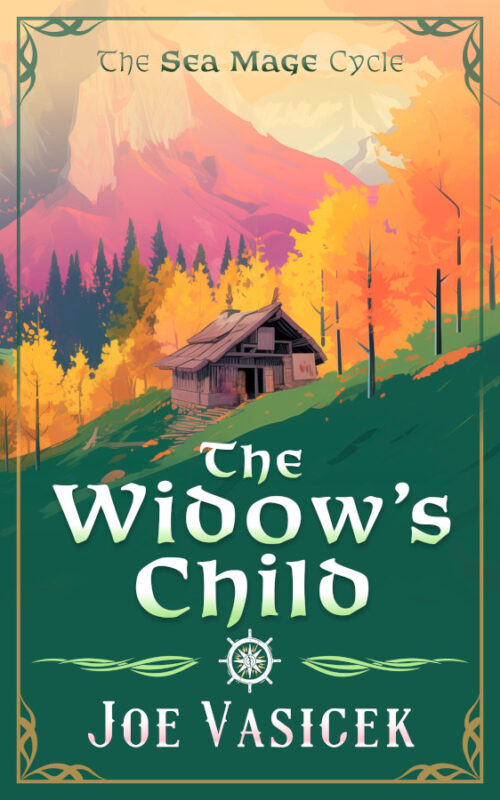
I don’t read or write romantasy, so you won’t find any of those tropes in my books. You will find a lot of romantic love, though, especially in my sea mage cycle books. Rescuer’s Reward is probably the closest thing I’ve written to a straight up romance, at least in the fantasy genre. The Widow’s Child also has a strong romantic subplot, though it goes a little further than fade-to-black. And of course, the Soulbond King books are going to have a lot of romance, since the magic system requires a man and a woman to become bonded in love in order to unlock their unique magical powers. Those books are going to be a lot of fun to write.

“Great, green, saurian things…”

The Hegemony Consul sat on the balcony of his ebony spaceship and played Rachmaninoff’s Prelude in C-sharp Minor on an ancient but well-maintained Steinway while great, green, saurian things surged and bellowed in the swamps below.

Hyperion by Dan Simmons (first line)

Fantasy from A to Z: K is for Kings

Why are kings and kingdoms so common in fantasy?

Part of it has to do with the genre’s nostalgic yearning for a distant past. One way of understanding the modern era is to see it as an unending series of political revolutions that have spread like a slow-moving contagion from one part of the world to another. 

It started with the English Civil War, then died down for a while until it manifested in the American Revolutionary War, which resulted in the creation of the United States. After that, it spread to France, leading to the French Revolution and a very messy tug-of-war between the Republicans and the Monarchists, ultimately leading to the permanent end of the French monarchy. 

Then we had the aborted revolutions of 1848, which ultimately gave us Karl Marx and Socialism, the Bolivarian revolutions in Latin America, the American Civil War, which culturally was something of an echo of the old English Civil War (with the Cavaliers in the south and the Puritan Roundheads in the north), and ultimately the Bolshevik Revolution which gave us global communism, etc etc.

I won’t belabor the point (though if you want to hear a good podcast that covers all this stuff, check out Revolutions by Mike Duncan). The point is that the modern era has basically been one long series of very messy wars to depose the old medieval kings and emperors. Today, the only monarchies that survive are either constitutional monarchies that no longer exercise direct political power (for example, King Charles of the United Kingdom), or else they are strange aberrations that only exist because of unique regional history and economic circumstances (for example, Mohammed bin Salman of Saudi Arabia, whose dynasty depends almost entirely on the country’s oil reserves).

Fantasy is all about hearkening back to a romantic view of the premodern past, even if that past never existed. So it shouldn’t come as a surprise that most fantasy—especially classic fantasy—tends to feature kings and kingdoms. Never mind that historically, many medieval kings were almost totally beholden to their dukes, especially in the time before gunpowder, when the dukes could just hole up in their castles and openly defy their kings. That’s why Europe has so many medieval castles.

Of course, some fantasy like George R.R. Martin’s Song of Ice and Fire does a really good job of capturing the complex dynamics of feudal politics. A lot of the old sword & sorcery also plays around with those kinds of medieval political tensions, balancing the nostalgic aspect of fantasy with the savagery of backstabbing courtiers and brutal hand-to-hand combat. Robert E. Howard’s classic Conan the Barbarian stories are a great example of this, with Conan ultimately rising to become King of Aquilonia.

Both grimdark and sword & sorcery embrace the medieval savagery—indeed, it’s a large part of the nostalgic yearning. Other subgenres play down the savagery, either by making the king a distant power, or by making the world out to be a lightly-populated wilderness. Lord of the Rings is a good example of both, though it still defaults to feudal monarchy as the majority political system.

Is there a subconscious yearning for old-fashioned monarchy that fantasy quietly fulfills? Perhaps, but I don’t think so. If kings and kingdoms are the default system of government in most fantasy novels, I think that’s because it was the default for much of the medieval era. In books like Game of Thrones where the political intrigue is a key aspect of the story, you get into the more complicated aspects of feudal politics, but that’s not necessarily a requirement.

Personally, I enjoy fantasy with a little bit of medieval-style political intrigue, though most grimdark tends to overdo it. I did really enjoy Larry Correia’s Saga of the Forgotten Warrior, though (no spoilers please—I haven’t yet read the last book!) Robert E. Howard hits the sweet spot, I think, with a world so wild and savage that no king has managed to subdue it, and even a barbarian can rise to become a king.

Independence Day update

Happy 4th of July, everyone! It’s Independence Day here in America, when we celebrate our nation’s birthday by doing all of the most American things possible: fly our flags, eat lots of meat, and blow things up. God bless America!

It’s been a busy month so far, with family visiting from out of town all last week, and lots of kids all over the place. Great for our kids, who got to play with their cousins, but not the best for writing. Oh well. It looks like things are going to settle down for the rest of the month, which is really good, especially for my wife, who is racing to finish her PhD before she starts her new teaching job. So I will definitely be helping her with that.

On the writing and publishing side of things, I am actually going to take advantage of this time to catch up on all of the non-writing things, like publishing tasks, that I’ve fallen behind on. When August rolls around, things are going to get really crazy, with our move back to Orem as my wife starts her new job, so I want things to be set up really well for that.

I will continue writing, though: just at a slower pace. If I plan to do about an hour a day, and make that a consistent thing, I think I can keep that up through the crazy times that are coming. Not only are we moving and starting a new job, but we also have a new baby due to be born very shortly after all of that. So I fully anticipate that it’s going to be a crazy year.

(still not the final cover)

My plan right now is to keep plugging away at The Soulbond and the Sling, slowly but surely, until the AI draft is complete. At the rate that I plan to go, however, it probably won’t be finished until August or September.

I’ll also be working on the human draft of The Road to New Jerusalem, but since my plan is to submit that to the Ark Press contest in October, I’m not too worried about rushing that one. Besides, it’s a much shorter novel, so it shouldn’t be that hard. A part of me wonders if I’ll finish that one before The Soulbond and the Sling.

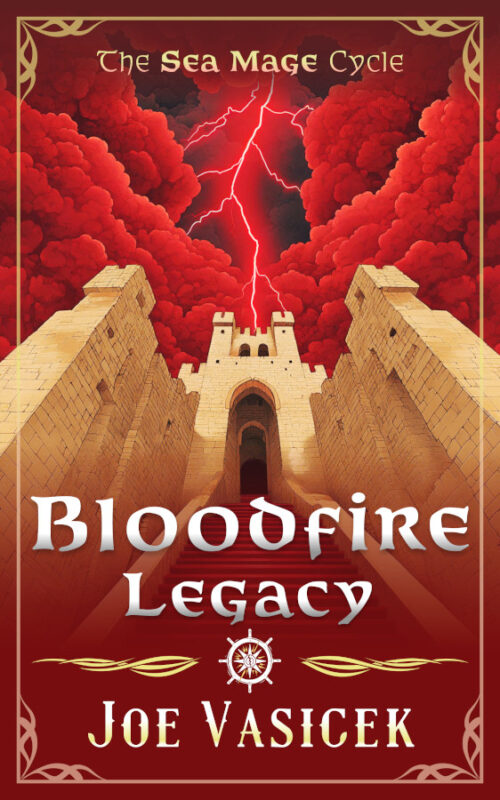
In the meantime, I plan to publish Bloodfire Legacy in paperback, ebook, and audiobook as soon as I go through the edits and get it formatted! In fact, that’s the next big thing I plan to work on in the next two weeks. With luck, it should be out very soon.

So those are the big things that I’m working on right now. I’m also going to try and finish all the blog posts for Fantasy from A to Z before the end of the month, though they will probably run through the first half of August or so. And once Fantasy from A to Z is done, I will turn that into an ebook exclusive for my newsletter list, and make my current newsletter exclusive, Science Fiction from A to Z, available as a regular ebook (and maybe audiobook and paperback as well).

All of this is part of my plan to pivot toward being more of a fantasy author. Right now, I’m a science fiction author who occasionally writes fantasy. In the future, I want to be known as a fantasy author who occasionally writes science fiction. Most of my science fiction leans heavily into fantasy tropes anyway, so it shouldn’t be too difficult to make the change. Hopefully most of my readers follow me over as I make the transition.

Toward that end, I’m happy to report that Rescuer’s Reward, the first novel in the Sea Mage Cycle, is now available as a permafree book! If you like fun quick fantasy adventures with a touch of romance, I think this will be right up your alley. All of the Sea Mage Cycle books are pretty short, and they all stand alone, though they often have recurring characters. Check it out and give it a read!

Fantasy from A to Z: J is for Jesters

Fantasy, for all its dragons and destiny, is often a very serious genre. Life and death, good and evil, wars and rumors of wars—these are just a few of the more serious subjects we often find in fantasy. But a good story needs to strike a variety of notes beside the somber ones. The darker the tale, the more important the laughter becomes.

Soldiers have known this for ages. Marines are famous for their gallows humor—twisted, irreverent, often completely inappropriate jokes that somehow manage to be hilarious precisely because of how bleak the surrounding circumstances are. In war, laughter can be a survival mechanism, a pressure valve, and a glue that bonds brothers together. If you can laugh with someone in the trenches, you’re probably going to trust them when the bullets start flying.

Fantasy, like war, often deals with high stakes and harsh realities. Armies march. Cities burn. Heroes fall. The world trembles on the edge of the abyss. But if the characters never laugh—if they can’t crack a smile even once—then something essential has been lost. Without humor, darkness becomes unbearable. With it, we can find the strength to endure.

Terry Pratchett understood this. His Discworld novels are farcical, yes, but they are also deeply wise. He made fun of everything—kings, wizards, police, journalists, Death himself—but always with a nod to the things that make us human. As a result, his stories are full of heart, even when they deal with some surprisingly dark and existential subjects—such as Death himself.

In fantasy, humor can take many forms. Sometimes it’s wordplay or irony. Sometimes it’s a running gag or a sarcastic sidekick. Sometimes, it’s directed primarily at the reader, such as William Goldman’s masterful narration of The Princess Bride. Other times, it flows from the characters in their interactions with each other. With Terry Pratchett, it often was both.

It can be done poorly, of course. In fact, humor is often one of the hardest things to pull off well. Few people take their craft more seriously than comedians (which itself is kind of hilarious, if you stop to think about it). To further complicate matters, the humorous elements in a good fantasy novel are often subtle and invisible, burning off just enough tension to let the story breathe. Anything more than that is liable to pull the reader out of the story, by drawing too much attention to the joke.

It can be a difficult thing to balance. But when it’s done well, it can make for a very entertaining tale. And when balanced with all the other elements of a good story, humor can make the emotional highs higher and the emotional lows lower. Which makes it a very powerful thing.

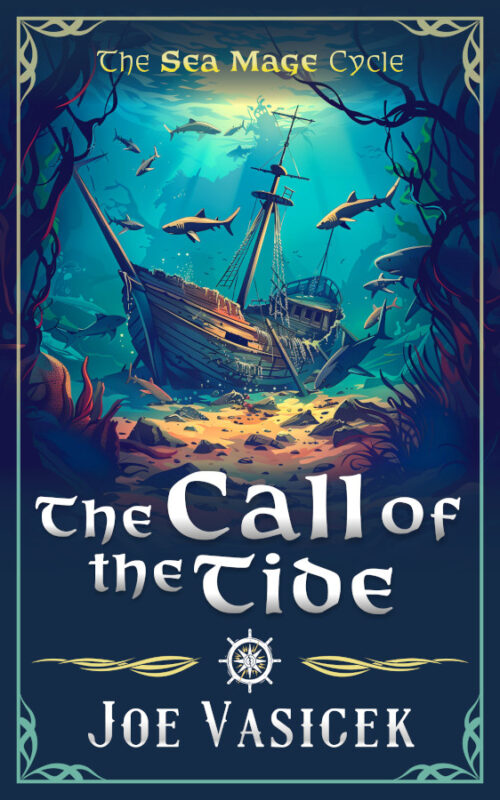
I don’t know how good I am at writing humor, but I try to sprinkle in enough of it to make my stories entertaining. My humor is often situational: for example, in The Call of the Tide, Samuel is a mage who can only exercise magic by never cutting his hair. That led to some mildly hilarious situations, such as birds trying to nest on his head at the most awkward of times. I also try to let it flow from the characters themselves. In Bloodfire Legacy, Corin often speaks with a sarcastic edge that flows from his experience growing up on the streets. This makes him a good foil for the somber ghost of Lord Arion, who was murdered in the first chapter of the book and now haunts him.

There’s a time to take things seriously, but there’s also a time to laugh and lighten up. And ultimately, if a story doesn’t entertain you, it’s not going to do much else. The best fantasy books have an element of humor, even if it’s subtle. After all, laughter is one of the most essential things that makes us human.

I’m unpublishing my short story singles

From 2020 to 2024, I did my best to publish a new short story every month. The idea was to make my short story singles free, and to rotate through so that there were only six of them out at a time. Occasionally, I would republish an old one, for those months where I didn’t have a new one to put out. But I tried to always have at least standalone short stories free at a time.

The main reason I did this was to have something new to share with readers each month. I knew I couldn’t write full-length novels at a rate of one per month, so I figured that short stories were the next best thing. And even if I put them out for free, it would still be a great way to build a following and keep my name fresh in readers’ minds.

As a publishing strategy, it worked decently well. The floor for my book sales rose during this period, suggesting that it was a good way to keep my name fresh. However, as a writing strategy, it wasn’t very good, because it meant that I was dividing my energy too much between short stories and novels. It’s probably the sort of strategy that works out better when you’re a new writer, still working to learn your craft and develop your voice, and hoping to build an audience at the same time.

For the past 18 months or so, I’ve just been cycling through the old short stories, and the effect has not been the same. For the strategy to work, you really do need to be putting out new short stories each month. If you can write them in such a way that they’re easy to bundle or stitch up into novels, that’s fantastic, but if you’re juggling full-length novels at the same time, both sides are going to suffer.

So in the next week or so, I’m going to retire my remaining free short story singles, since they’re all available in the bundles anyway. I’m working on an epic fantasy series right now, and that really needs my full attention and energy. I’ll republish some of the longer ones as $2.99 novelettes, but anything under 7,500 words is going to only be available in the short story collections for the foreseeable future.

June Reading Recap

Books that I finished

Chokepoints by Edward Fishman

Who Is Government? by Michael Lewis

The Lonely Men by Louis L’Amour

Beekeeping by Nancy Ross

Flash Boys by Michael Lewis

Finish by Jon Acuff

Where the Long Grass Blows by Louis L’Amour

Writing the Breakout Novel by Donald Maass

Empire of AI by Karen Hao

The Untold Story of Books by Michael Castleman

Real Artists Don’t Starve by Jeff Goins

Books that I DNFed

  • The Pornography Wars by Kelsy Burke
  • If You Could Live Anywhere by Melody Warnick
  • Writing on Empty by Natalie Goldberg
  • Crashed by Adam Tooze
  • The Four Hour Work Week by Tim Ferris
  • The Long Game by Dorie Clark
  • The Motivation Myth by Jeff Haden
  • When It All Burns by Thomas Jordan
  • Inside the Real Area 51 by Thomas J. Carey and Donald R. Schmitt
  • The AI Con by Emily M. Bender and Alex Hanna
  • The Shadow Rising by Robert Jordan