Trope Tuesday: Abduction is Love

In real life, abduction is an awful, violent thing that we hope would never happen to us or anyone we know.  But in fiction, the Rule of Romantic can make abduction the basis of a wonderful, heartwarming love storyat least for some of us.

This is actually a more common trope than you might think.  It’s the underlying premise for Beauty and the Beast, though Disney rewrote that part out of it.  It’s a major plot element in Watership Down, as well as The Courtship of Princess Leia.  More recently, Twilight featured a few variations on this trope, though considering the source, that probably isn’t surprising.

In G and PG rated versions, this often leads to And Now You Must Marry Me.  In PG-13 and R rated versions, leads to Rape Is Love, with many unfortunate implications.  Due to the violent nature of the story, it often involves a lot of Slap-Slap-Kiss.  Stockholm Syndrome, the psychological phenomenon whereby victims of abduction develop an emotional connection with their captors, is the overarching theme, making any abduction love story a match made in Stockholm.

In the West, this trope tends to be a lot less prominent than it used to be.  However, if you look at the trappings of our marriage customs, you start to notice some disturbing trends that point to a time when abduction-as-romance was much more common.  For example, what was the original function of the best man at a wedding?  Quite possibly, it was to keep the bride from escaping (or being rescued).  And why does the groom whisk the bride away to a remote, isolated place to consummate the marriage?  To evade the bride’s angry family, of course.

Here in Georgia, this trope is alive and well, not just in fiction but in real life–seriously.  It’s called motatseba, and is often discussed with a wink and a nod.  In the family that’s hosting me, the mother married her husband after he abducted her, then bore him four children.  Now, they both seem to remember it rather fondly.

This is such a bizarre tradition that I’m going to dedicate an entire post to it…after I figure out just what the hell is going on.  Seriously, I can barely make sense of the practice–it’s like a twisted game of tag involving sex and arranged marriage.  How it can possibly lead to love…that’s what I’m trying to figure out.

However, I’m sure it involves some interesting variation of this trope.

Staying in Georgia

So I’ve decided to stay here in Georgia for another semester.  Things are working out really well, I enjoy teaching English, and for the full experience I think it will be better to stay for a full year.

I’m not sure if I’ll stay in Kutaisi yet, though.  It’s a convenient place to live, but I have upwards of 30 kids in my classes, which can be a real challenge.  I’d kind of like to spend the next semester in a village or small town, where I can know all the kids by name.  Then again, I really like it here in Kutaisi, and I’m doing so much where I am that I’d kind of like to stay, just to see how things turn out.

Currently, I’m teaching grades 1-6, 9-10, and 12.  It sounds like a lot, but I’ve got great co-teachers who help out a ton.  I teach 18 class periods per week, which is enough to keep me busy but not so much that I feel overwhelmed.  My favorite grade to teach is probably 4th or 5th, where the kids know enough to surprise you but don’t have all the issues that come with teenagers.  There are different things I enjoy about each grade, though, so it’s good to have a mix.

The second semester doesn’t start until September, so that’ll give me a few months off to do whatever I like.  My current plan is to come home and work on getting print editions of my books out.  TLG will pay for my flight out and back, and my parents will let me stay at their place over the summer, so I think things will work out quite well.

As for what to do in December once this tour is finished–that’s an entirely different question.  I could probably leverage my experience here in Georgia to get a much higher paying job in Asia or the Persian Gulf, but all I’m really looking for is a job situation to tide me over until my writing career takes off.  That, and an awesome cultural experience.

What I’d REALLY like to do is find some remote desert village in the Middle East, where the locals will pay for room and board, my book royalties will pay the rest, the cultural experience will give me a chance to practice my Arabic, and my teaching skills will make a real difference in the local community.

Towards that end, I found this site called Workaway.  A friend of mine used it to get a short-term job in a Bedouin camp in Wadi Rum, and there are TONS of other opportunities listed just like it.  I freaked out a little when I saw it, because it looks AWESOME.  When I was in Jordan, I used to fantasize about spending some time in the desert with the Bedouin, so getting the chance to actually do that would be amazing!

TLG will pay for my flight home at the end of the second semester, but I can opt to go anywhere else, so long as the ticket price isn’t any more than Tbilisi to JFK.  Since this is the year my sister’s get together with their in-laws for Christmas, it might be better to go straight from Georgia to my next job at the end of December.

I was thinking about it as I walked around my neighborhood earlier today, and it made me wonder: why did I wait so long?  There are so many awesome opportunities overseas–if you don’t have any debt or anyone you need to support, you could spend years hopping from one random adventure to the next.  I could spend years doing that.  And with epublishing, all I really need is my netbook and periodic internet access to put up new books as I write them–everything else more or less takes care of itself.  It’s fantastic.

In any case, that’s the plan for now.  I’m taking the night train to Tbilisi tonight, so I’d better go get ready for that.  See you around!

Trope Tuesday: Chess Motifs

Chess is quite possibly the oldest, deepest, most well known and widely played board game in the world.  It should come as no surprise, then, that it’s often used as a motif in works of fiction.

The interesting thing is how well the pieces fit some of the classic character archetypes:

  • The King is like the Hero: the most indispensable character around whom the story revolves.
  • The Queen is like the Chick (or perhaps the Heart): less appreciated than the Hero but a powerful character who holds the team together (and whose loss often makes the team fall apart).
  • The Rook is like the Big Guy: the stoic, straightforward heavy-lifter who might not be quick (rooks are often the last pieces to be developed) but pulls a lot of weight, especially in the endgame.
  • The Bishop is like the Smart Guy: quick and versatile, mystical and unpredictable, striking from a long distance and often performing two or three jobs at once, but lacking the power by himself to achieve victory.
  • The Knight is like the Lancer: likely to go over the others’ heads and the one most likely to sacrifice himself for the cause (knights before bishops, after all).
  • The Pawns are like the Red Shirts: expendable minor characters who may, if they push forward bravely and stay faithful to the end, eventually become queens.

And that’s not all.  The major chess strategies also correlate loosely to major story tropes.  For example, at the beginning of the game, it’s important to move the king to safety, while in the endgame, the king becomes a much more important offensive piece.  Likewise, the hero often spends the first half of the story running away from the bad guys, while in the second half, he starts to take real action.

And the list goes on.  The more I learn about chess, the more parallels I see.  It’s gotten to the point where I want to try diagramming a novel, or perhaps a series, according to a chess game, with that fact being part of the big reveal.  Or perhaps to have one of the major characters have a long-standing chess rivalry with another character who ends up being a major bad guy.

Or something.  I’m just starting a new novel, so everything looks fresh and exciting.  The story will probably change and evolve considerably over the course of writing it, but since it’s a fantasy novel, I think that some chess motifs may be especially appropriate.  Fantasy, after all, is about taking the reader back to a golden age of magic lost in the pages of history, and chess is perhaps the oldest popular game in the world.

In the meantime, is anyone up for a game of chess?

Image (cc) from wikimedia commons.

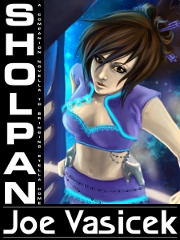
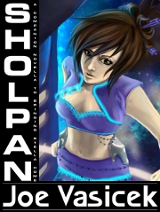
Sholpan is now available for free from Amazon!

My novella Sholpan just went free on the Amazon site!  Currently it’s at the #26 spot on the science fiction –> adventure bestseller list, and ranked #1,783 free in the kindle store overall.

If you’d like to check out some of my writing but haven’t gotten around to it yet, Sholpan is a good place to start.  It takes place in the same fictional universe as my novels Desert Stars and Bringing Stella Home, with several others in various stages of planning and completion.  It’s a companion novella for Bringing Stella Home, which means that it follows the first half of Stella’s storyline from the novel, with some extra scenes and backstory to flesh things out.

Of course, if you don’t like shopping at Amazon, you don’t have to be left out: Sholpan is also available as a free download from Barnes & Noble, Smashwords, Diesel, and Kobo.  All of my other ebooks are also available from those sites, so you can check them out there as well.

If you’ve already read Sholpan and enjoyed it, I would appreciate it immensely if you would take the time to rate it or post a review.  It only takes a moment, but it helps me out a ton.  And of course, I’m only looking for honest reviews, so I won’t be offended if you don’t give it five stars if you don’t feel it deserves it.

It isn’t free yet on Amazon’s other stores (UK, Germany, France etc), but I’ve contacted Amazon so hopefully that will soon change.  In the meantime, I hope you enjoy!

Trope Tuesday: True Neutral

The True Neutral is something of an enigma.  They generally take no side, either because they have moved beyond good and evil, or because they simply don’t see good and evil the way we do.  Or because this isn’t their war and they just want to be left alone.  Or…well, let’s get to it.

From the easydamus character alignment page:

A neutral character does what seems to be a good idea. She doesn’t feel strongly one way or the other when it comes to good vs. evil or law vs. chaos. Most neutral characters exhibit a lack of conviction or bias rather than a commitment to neutrality.

Some neutral characters, on the other hand, commit themselves philosophically to neutrality. They see good, evil, law, and chaos as prejudices and dangerous extremes. They advocate the middle way of neutrality as the best, most balanced road in the long run.

As you might expect, this alignment doesn’t describe just one type of character.  In fact, there are many different archetypes that fall under True Neutral.  They include:

That’s quite a spread, isn’t it?  The main thing to keep in mind is that these are the characters who refuse to take sides–not just in whatever overworld conflict is driving the story, but in the ethical questions that the story raises (unless neutrality itself is their answer).

My favorite example of this trope is the Childlike Empress from The Neverending Story.  As the very embodiment of Fantasia, she transcends good and evil so completely that her power, the Auryn, cannot be used to forbid a monster from acting on its own evil nature.  Truth from Fullmetal Alchemist is another good example of a transcendent True Neutral.

With everyday, down-to-earth characters, though, this alignment tends to tick me off.  The Ents, for example, very much fall under this trope (as does Tom Bombadil…unless you subscribe to this theory).  Most others examples either come across as weak, selfish, or cowardly to me, so I don’t really care much for this alignment–unless it’s the starting point of a well-constructed character arc.

For that reason, in my own work, most True Neutrals are either straight-up antagonists or gradually shift in alignment as the story progresses.  In Genesis Earth, Michael Anderson starts out as one of the weaker True Neutral types, but changes as events in the story make him grow.  In Desert Stars, Sathi probably falls into this type, though I’m not so sure; either way, he’s very easily manipulated by his Neutral Evil wife.  In Bringing Stella Home, Ilya falls under this alignment due to his moral cowardice, and Anya might as well, though more as a Selfish Good than anything else.  Roman probably does too, but more because he’s old and wants to give up the fight; that’s something I’m currently working on in Stars of Blood and Glory.

I haven’t done a transcendent True Neutral yet, but if I ever write a heroic fantasy tale with gods and demons, I probably will.  After all, if Michael Ende did it in my favorite novel of all time, how can I resist?

Winter in Kutaisi

From what I hear from my friends, it’s been a pretty mild winter back in the States.  Here in Georgia, though, it’s been a much different story.

I think we’ve had only three sunny days since I arrived here in Kutaisi almost four weeks ago.  The natives tell me that this is highly unusual.  The temperature hovers right around 0 degrees Celsius, which means the snow is wet and melts extremely fast.  It’s pretty for a day or two, then it turns to rain again, and that means mud…lots and lots of mud.

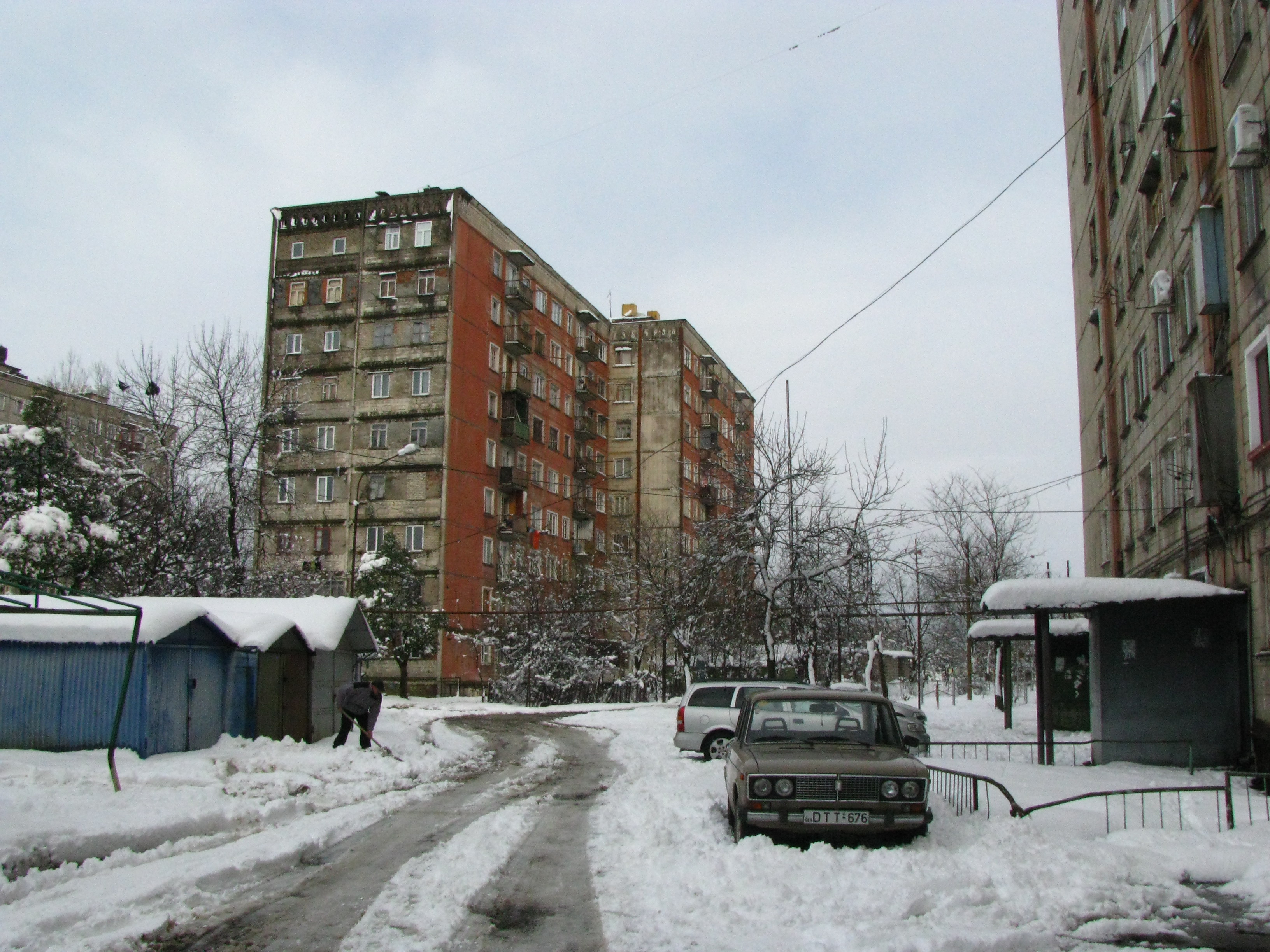
During a break in the snow, I ventured outside to take a few pictures of my neighborhood.  In a couple of weeks, the weather will hopefully be warmer and things will look a lot different, but still, I thought it would be good to give you guys an idea of what this place looks like.

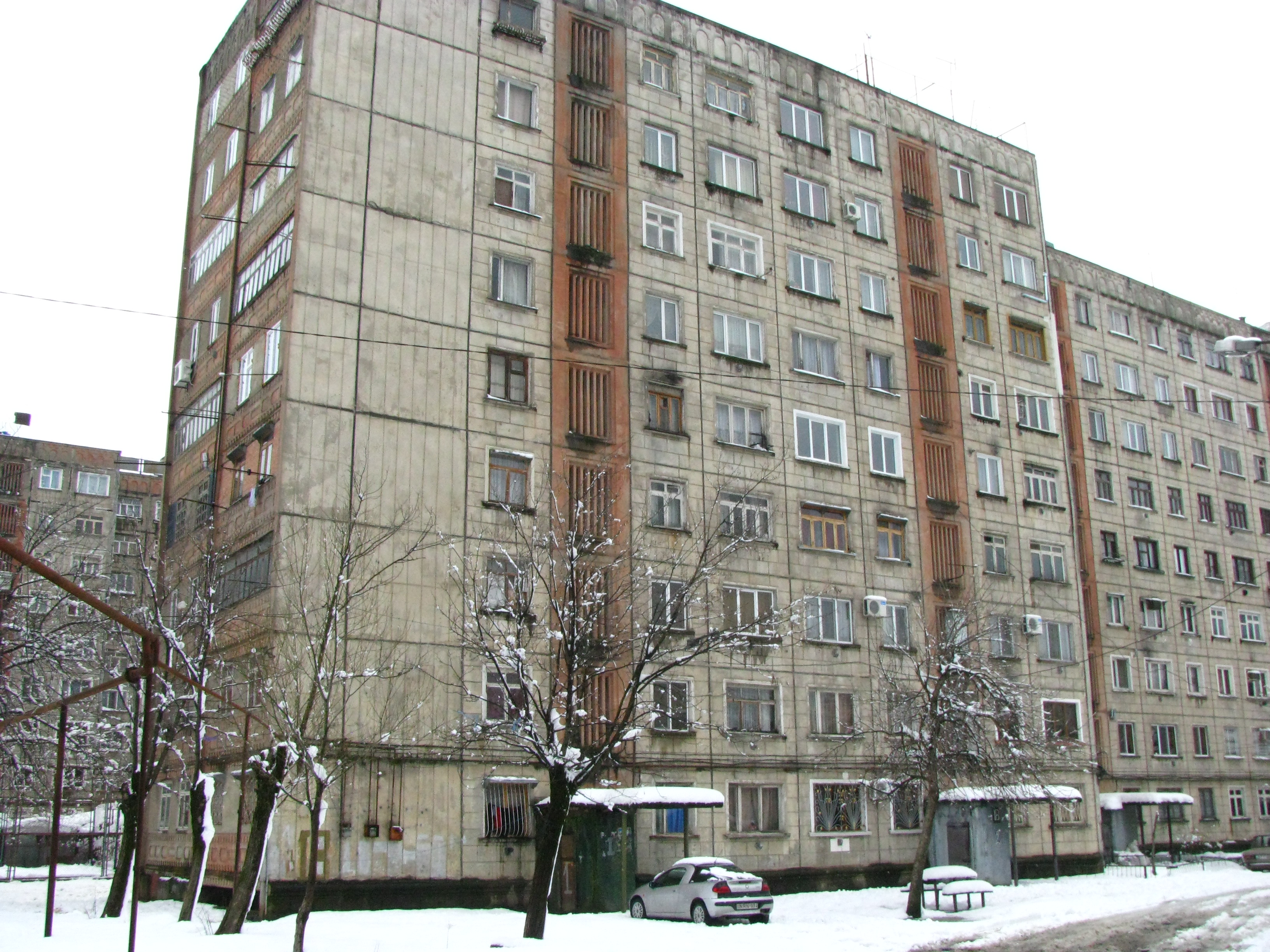
My host family's apartment. We live on the second floor, which is good since there isn't an elevator.

I live in the Avtokarkhana settlement, near the old Soviet auto factory.  The apartments are about 50 years old, and haven’t been renovated much since then.  It’s a poor neighborhood, but it’s comfortable enough, with all of the basic amenities like water and heating.

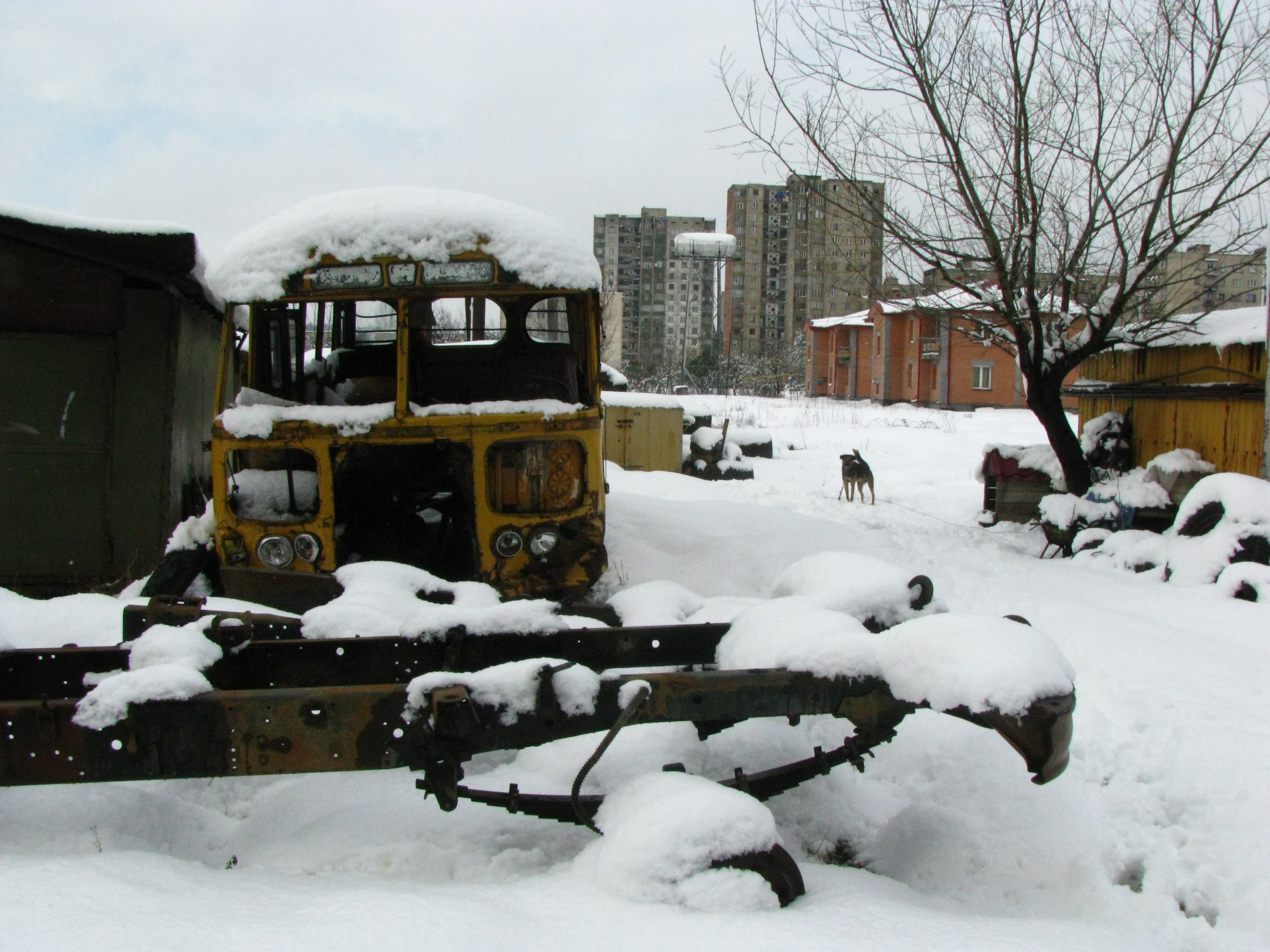
An abandoned bus along the road to my school. My host father has some choice words to describe his Russian-made vehicle.
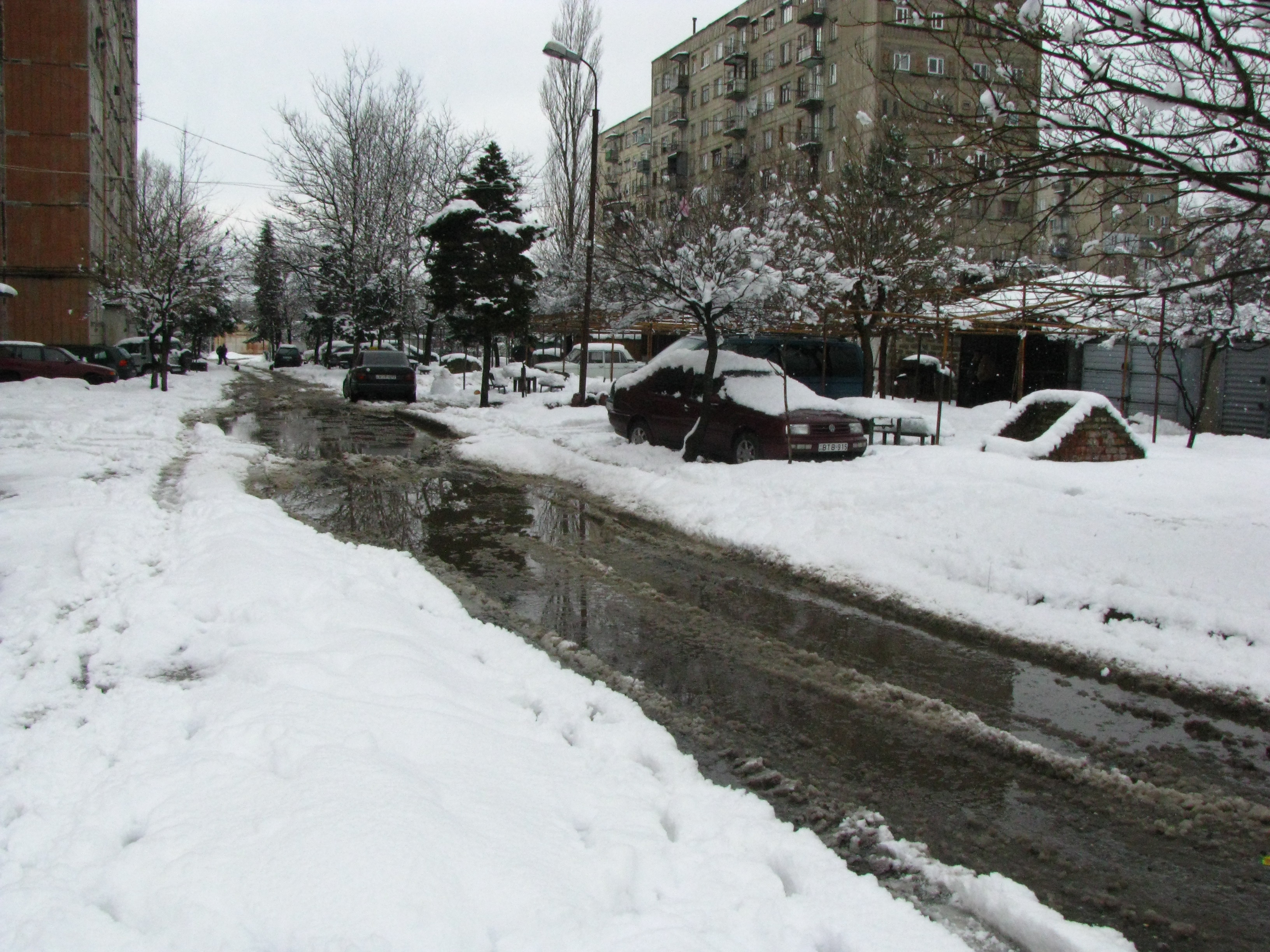
In Soviet Russia, puddle splash YOU!

The roads are pretty nasty; they haven’t been repaved in decades, and the potholes are so deep you practically need a raft to get across the street.  Most of the locals wear rubber boots during the rainy season, but I recently treated my boots with beeswax and that seems to be doing fairly well.  Besides, after a while, you figure out where the stepping stones are, and then it’s not so bad.

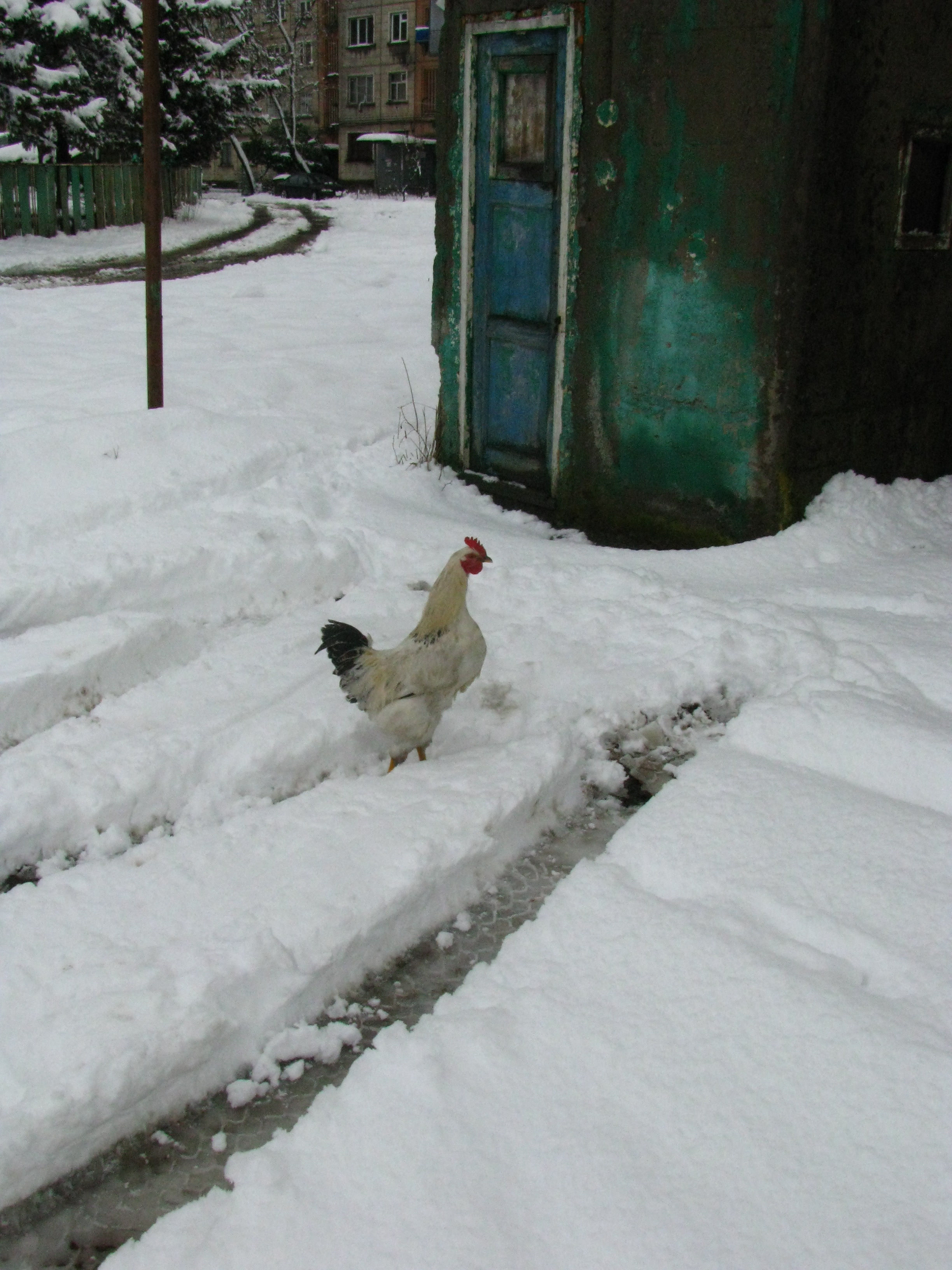
One of the local free-range chickens. There's a cow, too, but she was staying out of the snow.
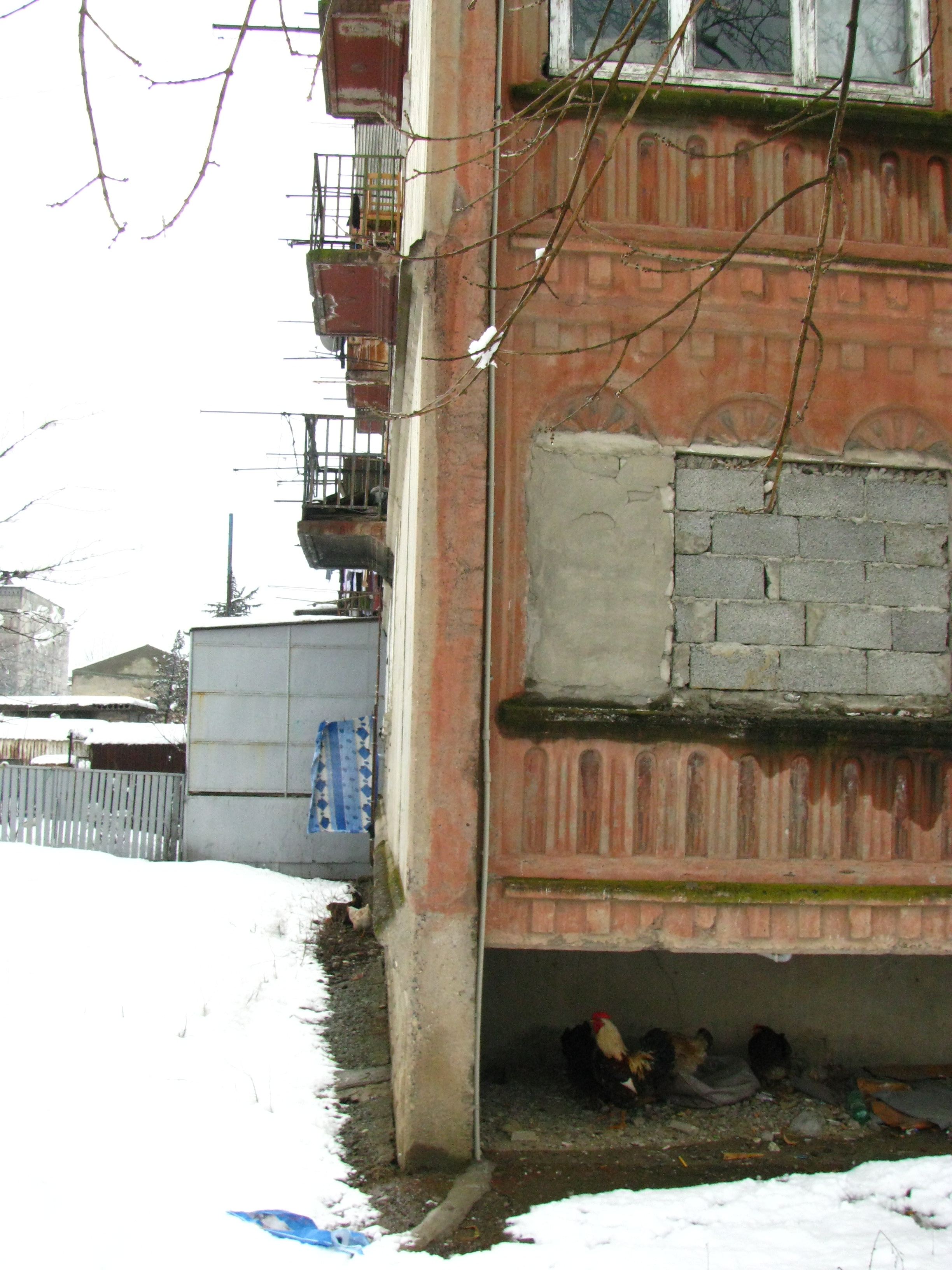
Where the chickens go to keep warm. My host family laughed when I showed them this picture.

Even though Kutaisi is a fairly large city, I get the feeling that there’s still a few lingering elements of the village mentality.  How else would you explain all the free-range chickens that people still keep?  The school is within walking distance, as are the stores where we buy our bread, and even though the pharmacy is a short drive away, I could probably walk there in fifteen or twenty minutes.

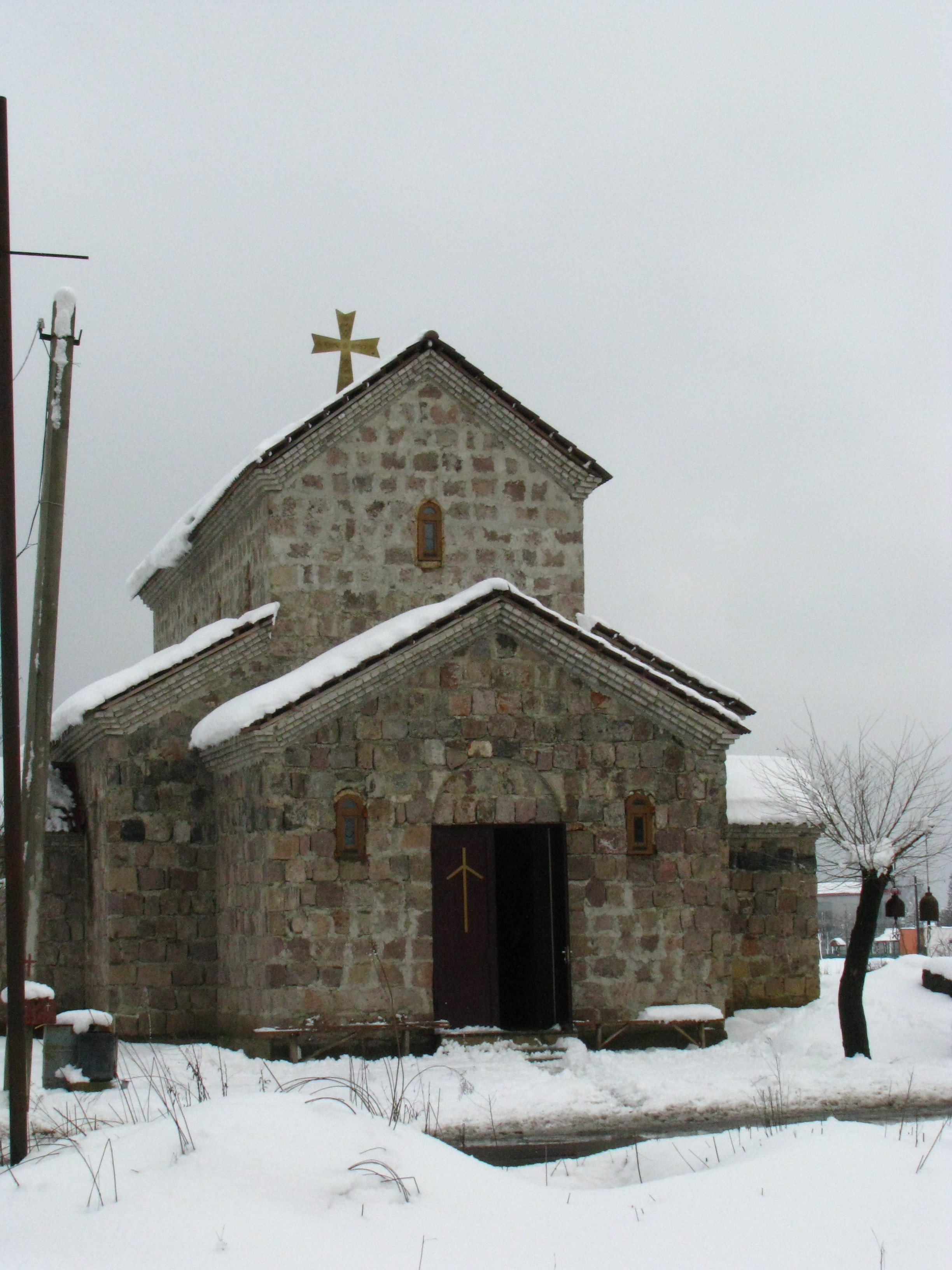
The local church. It seems pretty small, but Georgians don't really have weekly worship meetings like we do in the States.

Because of the snow, I haven’t gotten out much in the past few weeks.  I haven’t been stranded, though; there are about a dozen other TLG volunteers in the city, and we’ve had a few parties and get-togethers.  Kutaisi is a small city, as far as cities go, but there are plenty of interesting places if you know where to look, and even in the dead of winter, it’s still quite pretty.

The road I walk back from school every day.

So yeah, that’s what my neighborhood is like.  When the weather gets better, I’ll bring my camera to school and take some pictures of my school.  I should also take some pictures of my host family’s apartment, come to think of it.  What else do you guys want to see?

Finding the right price

One of the most controversial parts of indie publishing is deciding what price to set for your books.  Epublishing is so new that there isn’t any good data to base pricing decisions off of, and everyone seems to have a different feeling as to what is “fair.” Most readers (including me) agree that $12.99 is a little outrageous for an ebook, but beyond that, the opinions are all over the map.

When I published Genesis Earth, I priced it at $2.99 and haven’t changed it since.  It remains my best selling novel, but at maybe 5 to 10 sales per month, that really doesn’t mean much.  Besides, it’s impossible to know whether price has been the main factor in that.  I briefly dropped my other novels to $2.99, and it had absolutely no effect.

My ultimate goal is to make a living off of my writing, so if my books aren’t going to sell much better at $2.99 as they are at $4.95, from a business perspective I’d rather go with the higher price.  However, as a reader, I’m opposed to paying more than about $5 for an ebook, even from an author I love.  Others might be willing to pay more, but if I can build a readership large enough to support myself at the $4.95 price point, I’d much rather do that.

So, after experimenting with price points and thinking things through, here’s the scheme that I think I’m going to follow:

  • Short stories: $.99
  • Novellas and novel installments: $1.49
  • Short novels (under 90k words): $2.99
  • Longer novels (over 90k words): $4.95

The important thing, of course, is to build a readership that is willing to pay for my work.  I have no idea how to go about doing that, but as far as pricing goes it’s probably important to pick a scheme and be consistent.  Some of my friends are doing quite well at $2.99, while Dean Wesley Smith advises charging much more, but this is the scheme that makes the most sense to me–which honestly isn’t saying much.

About the only thing I can say is that the best way to push a title is to make it free.  All of my short stories were free at one point or another, and even after the initial rush was over, I was still getting around 80 to 100 downloads per week, sometimes more.  I have no idea how many of those people actually read the stories, or how many of those people went on to buy my other titles, but sales did seem to be slightly better across the board when I had at least something out for free.

Now that I’ve got eight titles out, I think it may be a good idea to drop the price of at least one of them for free and keep it there permanently.  David Gaughran recently featured a guest blogger who used this strategy to push her other titles at places like Barnes & Noble, which isn’t as indie friendly/agnostic as Amazon or Smashwords.

For that reason, I’ve decided to make Sholpan free again and to keep it there for the foreseeable future.  It’s already available for free at Barnes & Noble, KoboSmashwords, and Diesel, but Amazon hasn’t matched the price yet–and that’s where you can help me.

If you go to Sholpan’s Amazon page and scroll down to the Product Details, there’s a link that says “tell us about a lower price.” If you click on that, it asks for a link to the site that’s selling the ebook at a reduced price.  If enough people fill that out, I’m hoping that Amazon’s algorithms will take notice and match the price–so if you could take a moment and do that for me, I’d greatly appreciate it!

Also, if you’ve read the novella and enjoyed it, I’d appreciate it greatly if you’d take the time to post a favorable review.  Amazon has some weird thing where they copyright reviews written on their site, but for everywhere else you can just copy and paste the same review across multiple sites.  And a lot of them allow you to just leave a rating without writing a review, including Goodreads (Sholpan’s page is here).  I don’t want anyone to be disingenuous, of course, but if you enjoyed the book and took the time to rate it or leave an honest review, I would greatly appreciate it.

Thanks so much!  Until next time, I’ll see you around.

Trope Tuesday: Lawful Neutral

Hey, SOMEONE had to bring order to Europa.

Unlike the Lawful Good, the Lawful Neutral has no qualms about committing heinous acts to maintain order.  Whether for country, for position or for the preservation of the English language, these characters believe in law above all else, giving stern chase or sacrificing their own personal feelings to achieve it.

From the easydamus character alignment page:

A lawful neutral character acts as law, tradition, or a personal code directs her. Order and organization are paramount to her. She may believe in personal order and live by a code or standard, or she may believe in order for all and favor a strong, organized government.

Interestingly, while Lawful Neutrals believe in upholding some form of law, it doesn’t always have to be the law.  Characters who follow a strict personal code of honor often fall under this alignment, even if that code of honor runs contrary to the law of the land.  The most extreme example of this is the Übermensch, who transcends the laws of society and becomes a law unto himself (though in a lot of cases, the Übermensch ends up being Lawful Evil).

While it may seem like most Lawful Neutrals would be antagonists, that’s not always the case.  In Fullmetal Alchemist, General Olivier Armstrong may be stern and austere, but she spends most of the story on the side of the good guys.  And in Girl Genius, Klaus might seem like a bad guy at first, but really, he just wants to restore order and defeat the Other.  Both Death and Lord Vetinari in the Discworld series are also Lawful Neutrals, but they’re never on the bad guys’ side or the good guys’ side…they’re neutral.

In my own work, the best example of this would probably be the Patrician from Heart of the Nebula. I haven’t published this one yet, but I hope to have it out later this year.  Abaqa from Stars of Blood and Glory is another good example, the son of Qasar and Sholpan.  But in the works I’ve already published, Ben from Bringing Stella Home is probably the most prominent Lawful Neutral.

Back to writing (and publishing)

I was snowed in again this weekend, so I took advantage of the time to work on my writing–specifically, to figure out what to work on next.  Things have been kind of crazy these past few weeks, so I haven’t written very much, but now that I’ve settled into a new routine, it should be much easier to get back to writing again.

The plan is to finish Star Wanderers first, before April.  After taking a couple weeks off, I think I’m ready to get back into that project and write through the wall that I’d run up against earlier.  Besides, Stars of Blood and Glory needs more time; it’s only been about a month since I finished the last draft, and that’s not long enough to get a fresh perspective.

I’m a little past the midway point on Star Wanderers–around the middle of part III–so it should be about 20k to 25k before the whole novel is finished.  I wrote the first part in a little less than two weeks, so three weeks should be enough to finish at least the rough draft.  The main thing is to write every day and get some momentum going, which shouldn’t be too hard–I’m still really excited about this project.

As you may recall, I submitted Part I to Writers of the Future.  From lurking on the forums, it appears that the first round of rejections and honorable mentions are starting to come out.  I haven’t heard anything yet, so I’m still in the running.  Since no news is good news at this point, part of me hopes that I don’t hear back for a while–but the other part wants to hear back soon, so I can go ahead and publish it!

Here’s the current plan:

  1. Finish the rough draft of the complete novel.
  2. Publish Part I at $1.50 (free to newsletter subscribers).
  3. Get feedback for part II, revise and publish.
  4. Repeat for Parts III and IV, with one or two months between each release.

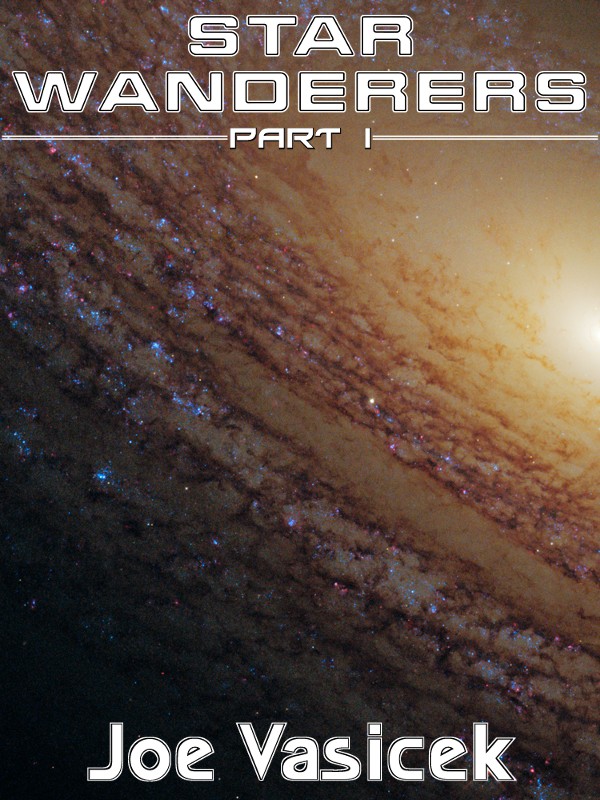
As a teaser, here’s the cover that I made when I was back in Massachusetts.  I decided to go with some NASA / Hubble images, at least for the first release.  Here it is:

Everything is ready to go; I just need to hear back from Writers of the Future before I can publish it.  I’m going to wait until the rest of the novel is finished, though, just to be safe.  Expect to see it sometime in April (unless it’s a finalist for WOTF–hey, you never know).

Enough for now; I’d better get back to writing.  See you around!

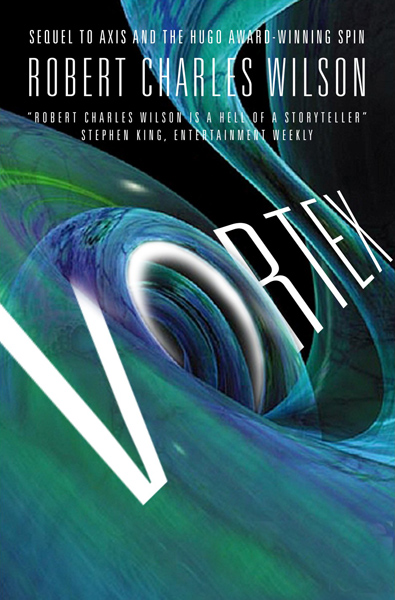
Vortex by Robert Charles Wilson

Almost seventy years ago, the mysterious alien beings known as the Hypotheticals encased Earth in a force field and built a network of giant arches facilitating overland travel to other habitable planets.  With access to the fossil fuel resources of half a dozen worlds, humanity is slowly killing its homeworld, even as it expands to other stars.

All of this matters little to Sandra Cole, however.  A psychologist at the State Care facility in Texas, it’s all she can do to endure another day.  But all of that starts to change when a police officer brings in a mysterious boy–a boy with a message from the future.

This is the third and final book in Robert Charles Wilson’s Spin trilogy, and it brings the series to a thoroughly satisfying conclusion.  The first book introduced the Hypotheticals and hinted at some greater scheme that they were involved in, the second book further explored the universe while raising more questions about the Hypotheticals, and the last book follows the Hypotheticals to the end of time, answering these questions while taking nothing from the truly alien grandeur of it all.

However, like the other books, the story itself is not about the aliens, but the people who make contact with them.  The high-concept science fiction goodness is all in there, but it’s framed by characters who are both human and relatable.  I wasn’t as invested in these characters as the ones in Spin, but I was still very interested in seeing what happened with them.

The structure of the book is a lot like Ursula K. Le Guin’s The Dispossessed, with alternating chapters telling two stories that don’t connect until the very end.  I finished the last half of it in practically one sitting, and the last chapter in a breathless sprint–much like Spin and Axis.  The way everything came together, not only for this book but the entire series, was awesome.

I was really happy to see this series finish well, because the first book was a major influence for me in writing Genesis Earth.  As I said in an earlier post, I don’t think anymore that this is the kind of science fiction I’ll write very often, but I sure love reading it.  I wouldn’t recommend starting with this book, but if you like science fiction that makes you stand back and blink at the sheer magnificence of the universe, this is a series you should definitely check out.