This Week

I was listening to the latest episode of This American Life yesterday, and at the end of the podcast, Ira Glass mentioned that this week’s episode will be themed “this week”–in other words, things that all happened in just the last seven days.

Well, things haven’t been too eventful out here in Georgia, but I liked the idea for the theme, so I decided to write up something as if it would appear on the show.  Here it is:

Early Tuesday morning, before the sun rose, I woke up from a dream that I was in a faraway place somewhere on this planet. Then I opened my eyes and realized that I live in the Caucasus Mountains.

I’m an American teaching English in the Republic of Georgia, in a small village half an hour south of Kutaisi. I live in a farmhouse with a local family. The mother teaches math at the village school, her son teaches computer science and makes wine for a company based out of Tbilisi. My host mother’s sister in law also lives with us, and this week, she cooked the most delicious borscht I’ve eaten in my life. She told me she’d teach me how to make it, and I’m ecstatic.

We keep sheep, cows, chickens, pigs, a turkey, and grow about half of the food we eat. Last week, five of the chickens were eaten by a wolf, including a mother hen and three of her chicks. The last surviving chick has been struggling, so every day after school I take her out of the little cage where we’ve beek keeping her and feed her from my hand. She isn’t as afraid as she used to be, and seems to be getting stronger.

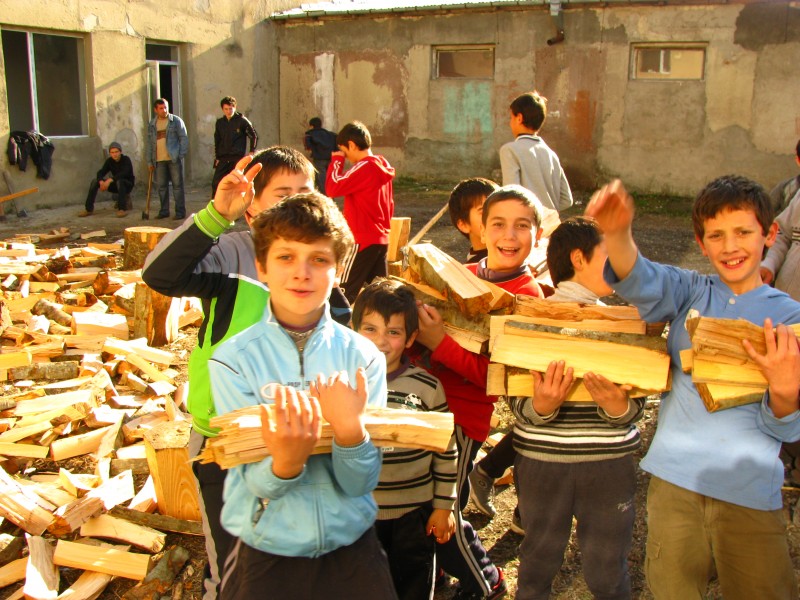
I teach grades I through VI at the village school, which amounts to about eighty kids. On Tuesday, we chopped wood for the winter. Each classroom has a small woodburning stove, and often smells like campfire smoke. It’s very warm, though–the teachers make sure of that, since cold leads to illness, and we can’t have that. The kids love learning, and I love teaching them. Every day after class, I say “goodbye,” and they run up screaming and laughing to give me high fives. I feel like a rockstar whenever I’m at school with them.

On Sunday, I went up to Kutaisi to use the internet. I use the internet maybe three times a week, sometimes four. The nearest place with reliable wifi is the McDonalds, and it takes half an hour and 1.5 lari to get there. On the way back, I chatted in the back of the marshrutka with some of the upper grade kids from my village. We sang songs by Michael Jackson, Justin Beiber, and Psy. Gangnam Style is very popular out here, and the kids think it’s hilarious when I do the dance for them at the village school.

It’s raining right now, which means that the power will probably go out soon. We have power outages almost every day, but they aren’t usually longer than one or two hours. Our water comes from a well, and our heat comes from the fireplace, where we also burn our garbage. When the rain lets up, I’ll help my host-brother cut down a few trees in the back and chop the wood.

Georgia is going through some difficult times politically right now, but we only hear about it through the TV. The country had its first peaceful democratic transition of power in October, and the new Prime Minister has been on a political witch hunt ever since. Some in the Western media find this disturbing, but my host-brother doesn’t think that Georgia has become less democratic because of it. We had a long conversation about politics on Monday night, which eventually turned into a discussion about the Israeli-Palestinian conflict, since the recent UN vote has also been in the news. He told me he’s pro-Palestinian because Israel’s occupation of Gaza and the West Bank sounds a lot like Russia’s occupation of Abkhazia and South Ossetia.

An expat friend of mine visited Abkhazia recently and posted the pictures on his blog on Tuesday. He called it an overpriced garbage dump, and from the pictures, you can definitely see why. Piles of trash in the courtyard of the biggest Orthodox church in Sokhumi, a derelict half-sunk ship rusting in the harbor, vines crawling up Soviet-era power lines that look about ready to fall over. And yet with Russia trying to keep Georgia from joining NATO, it looks like the status quo will remain in place for years to come.

Here in my village, though, that all seems far away. So do the economic problems back home, though they’re one of the reasons why I came out to Georgia in the firstplace. On Tuesday, I met up with a British friend of mine at McDonalds and we talked a bit about what we plan to do after we get home. He’s got a job lined up for him at the school where his mother works. I asked him if things are still tough in the UK, and he nodded. We didn’t have to say anything more than that to understand each other.

I don’t have a job lined up, but I’m actually not too worried. I’m a writer with a few science fiction stories self-published online, and on Tuesday I realized that I’ve earned as much money in the first four days of this month as I earned in the entire month of March earlier this year. It’s not enough to make a living yet–at least, not by US standards–but it’s growing.

On Sunday, I published another novelette, and on Wednesday, I went back to work on a fantasy novel that I started in October. The power hasn’t gone out yet, so I think I’ll get back to writing. It’s 3:32 PM and I have the rest of the day to myself, with maybe an hour to help my host brother cut down some trees. Life is good, especially out here in the Caucasus.

At this point, I should probably post some pictures:
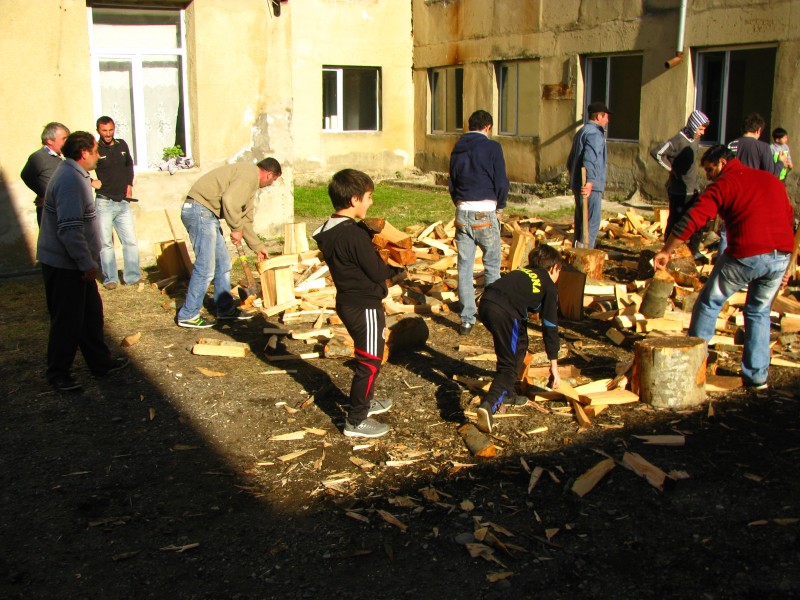
Chopping wood at the school. A bunch of men from the village did the chopping, while the kids carried the wood back inside.
Some of my VI and IV grade students helping out.
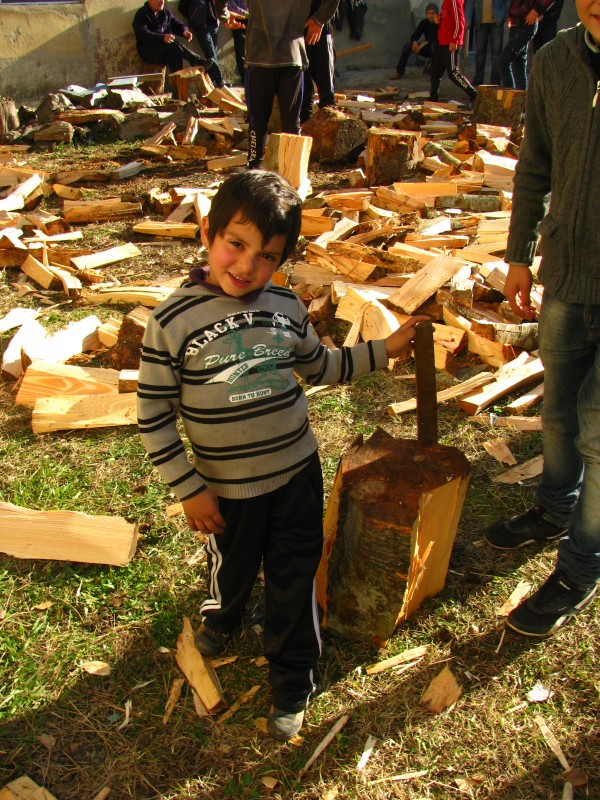
One of the first graders. I swear, this kid is like my biggest fan.
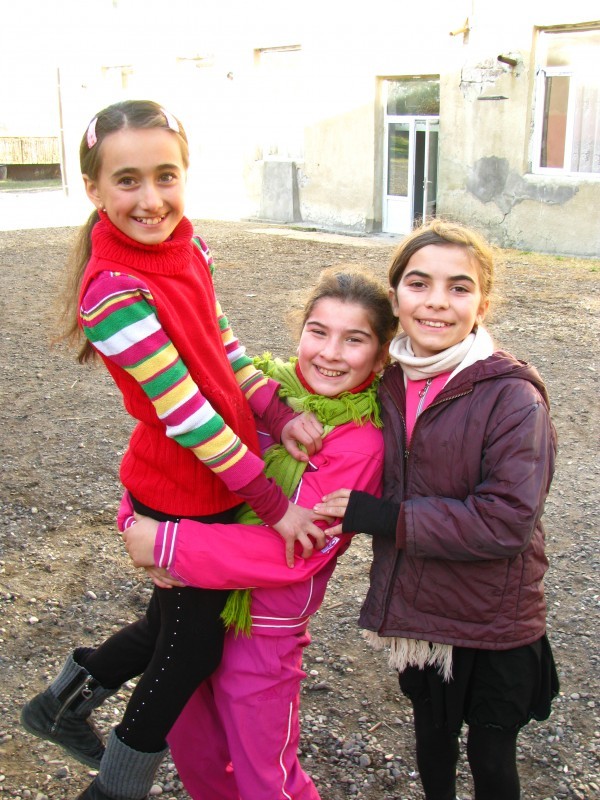
Some of my V graders. These kids are great.

In other news, I decided to drop my other projects and go back to writing The Sword Keeper.  I think part of the problem I had before was that I was trying to go too fast, writing-wise and story-wise.  This is my first time writing a fantasy novel, and I can already tell that it’s going to be a lot longer than I’d thought it would be.

Also, I took the time to draw up a map of the fantasy world where it takes place, and oh my gosh that changed everything.  Maps are awesome.  When I have access to a decent scanner, I’ll have to put it up.

That’s all.  See you around!


Trope Tuesday: Settling the (Final) Frontier

I love stories about colonization, especially when they’re set in space.  There’s just something about a small group of rugged pioneers striking out into the harsh, unforgiving wilderness to make a new life for themselves.  Maybe it’s just something about my American heritage, or all those 4x games I played as a kid, but I doubt it.  Ever since the dawn of time, we humans have been on the move, looking for new and better places to call home.  Small wonder, then, that so many of our stories, both ancient and modern, are about settling the frontier.

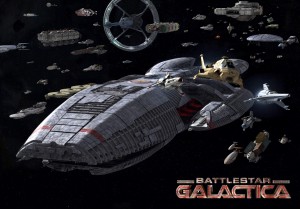
Since space is the final frontier, this trope is very common in science fiction.  Heinlein was a huge fan of it, but he wasn’t the only one to play with it–not by a long shot.  John Scalzi (The Last Colony), Nancy Kress (Crossfire), C.J. Cherryh (40,000 in Gehenna), Anne McCaffrey (Freedom’s Landing), and Kim Stanley Robinson (Red Mars, Green Mars, and Blue Mars) are just a few of the many science fiction writers who have explored this trope in their works.  In recent years, several sci fi miniseries (Battlestar Galactica, Terra Nova) have used it as a major premise as well.  And of course, you have all the classic 4x games like Masters of Orion and Alpha Centauri.

Space Colonies can come in a variety of different flavors:

  • Lost Colony — What happens when the original colonists lose all contact with the outside universe and no one thinks to check up on them for a while.  Can either turn into a story of survival or a clash of cultures, if/when they ever re-establish contact.
  • Cult Colony — Religion is one of the few things that will drive massive numbers of people to leave everything behind and start over in a new world.  Just look at the Pilgrims for a real-world examples.  In space colonies of this type, you can expect to see some extremely radical people, since the isolation of deep space tends to compound their fundamentalist tendencies.  Expect these to be both weird and frightening.
  • Space Amish — Something of a combination of the two, except with much more primitive technology.  Expect to see log cabins, horse- (or giant lizard) drawn carriages, and other tropes closer to the Western genre.  Sometimes, they may be hiding a superweapon.
  • Penal Colony — Australia in space (ahem…IN SPAAACE!!!).  What happens when the empire needs a place to conveniently exile all the troublemakers and rabble rousers.  Not a place for the faint of heart.
  • Wretched Hive — What happens to a penal colony when the prisoners actually run the place.  Like the previous type, except taken up to eleven.  Or not, depending on the history and culture.  Tatooine is the eponymous example.
  • Death World — As the name would suggest, this is not the kind of place you’d want to homestead.  Anyone who does is bound to be a badass.  The Empire and the Federation often recruit most of their soldiers from here.
  • Company World — I couldn’t find this one listed on tvtropes.  Basically, it’s a planet that is owned and governed entirely by a private corporation, which expects to make a tidy profit off of the place.  The colonists are basically indentured servants (since robots simply wouldn’t do) and have almost no property or rights.  Expect the story to be about sticking it to the man.

These are just a few of the many possibilities that you can play with when settling the frontier.  In my opinion, however, the essential elements are as follows:

  • The story is not just about exploring a new world, but establishing some kind of a permanent presence there.
  • By coming to the new world, the colonists must leave everything from their old, familiar lives behind.
  • The colonists must resolve the story conflict through their own self-reliance, not by waiting for an outside force to save them.

I’ve only dabbled with this trope, but it does play a role in many of my stories, most notably in the Star Wanderers series.  Genesis Earth also has elements of it as well, though it’s not the main driver for the plot.  It is a major factor in Heart of the Nebula, though, the (currently) unpublished sequel to Bringing Stella Home.  And in my future books, you can definitely expect to see this trope again.

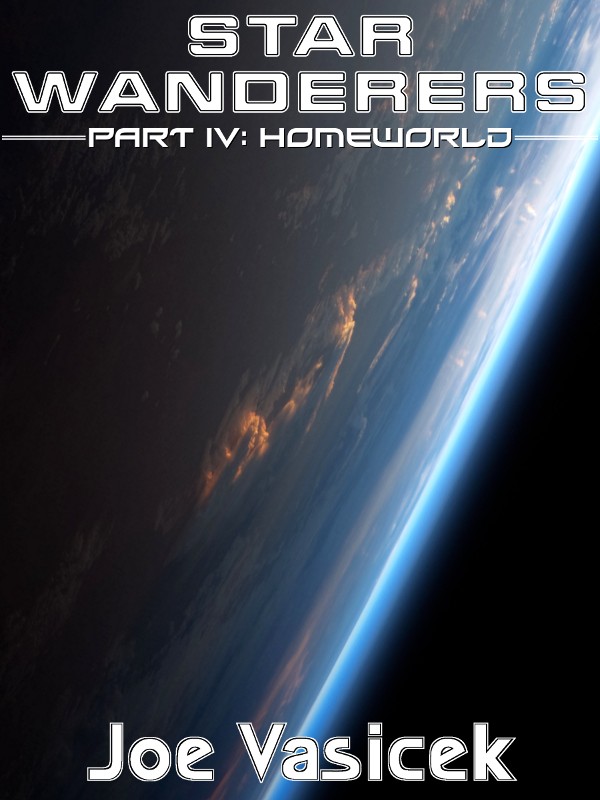
STAR WANDERERS: HOMEWORLD is now available on Kindle, Nook, Kobo, and Smashwords!

That’s right!  Part IV of the Star Wanderers series is available for $2.99 on Amazon, Barnes & Noble, Kobo, and Smashwords.  You can also find it listed on Goodreads here.  Newsletter subscribers should get the Smashwords coupon code in an hour or two.

From the book description:

THEY’VE FINALLY FOUND A WORLD TO CALL HOME—BUT FIRST, THEY HAVE TO FIGHT FOR IT.

For years, Jeremiah has wandered the stars in search of a home. With his wife Noemi about to have a baby, he thinks he’s finally found a place to settle down. The Zarmina system lies on the edge of the Outworld frontier, but together with their friends, they hope to establish a thriving new colony. The only problem is that the system is already inhabited—by pirates.

The colonists no sooner arrive than they fall prisoner to Captain Helena and her band of rogues from the New Pleiades. She gives them an ultimatum: live like slaves on the planet’s surface, or breathe vacuum. With all their dreams about to be shattered, they have to find a way to fight back. But to do so may endanger everything—including the lives of the ones they love most.

This one was a lot of fun to write.  Everything from all the previous parts came together wonderfully, and the ending just blew me away.  I hope you enjoy reading it as much as I enjoyed writing it!

This novella concludes the main series arc for Star Wanderers, but I still have a lot of stories that I want to tell in this universe.  I plan to write a few stand-alone novelettes and novellas from the other characters’ points of view, perhaps expanding the series to include another arc.  Part V, Dreamweaver, is already written, and if all goes well, I should write Part VI (Wanderlust) over the next couple of weeks.

That’s just about all for now.  Thanks so much to everyone who has liked, shared, or reviewed the other Star Wanderers stories!  I think you’re going to like this one.  Enjoy!

Trope Tuesday: Space Cossacks

I’m going to take a break from the hero’s journey trope posts for a while, until I have the time to do them justice.  In the meantime, let’s have a little fun.

Some of my favorite science fiction stories are the ones about a culture of nomadic starfaring people wandering the universe in search of a new homeworld.  Earth is usually a half-forgotten legend, and their starships have probably seen better days.  On tvtropes, the page for these stories is Space Cossacks, named after a real world culture in historic Russia that basically experienced the same thing, albeit on a terrestrial scale.

The description of this trope on the tvtropes page is so good, I’m just going to repost it here.  Seriously, every one of those cross links is worthy of your click.

There is no hope and You Can’t Go Home AgainThe Empire is spreading out. Even The Federation has too many Obstructive Bureaucrats. There is no way for free men to get out of the reaches of The Government and even mounting La Résistance will be of no avail.

So what do you do? You become Space Cossacks.

You flee to the border and live in a tough area where you all have to be sharp. You set up as Space Pirates or as Hired Guns or as Intrepid Merchants. Or all of these at once.

With you are various dissidents like people who feared being Made a Slave. There might be a Noble Fugitive or two, perhaps even a Defector from Decadence. You and your brave band of Fire-Forged Friends will struggle on to survive and maintain your freedom and heed no laws but your own.

One of the things that I think should qualify a story for this trope is that the society of space cossacks is just that: a community of people who share at least a few cultural bonds.  Battlestar Galactica definitely qualifies, but I’m a little on the fence as to Firefly, since that story is more or less about a ragtag band of failed revolutionaries.  Are the Browncoats all from the same culture, like the Kurds or the Circassians or the Ossetians, or are they just a pologlot group of frontiersmen from all over the settled worlds?  Does it even matter?

In the end, I suppose it doesn’t.  The spirit of this trope is a lot like that of Fighting for a Homeland: a bunch of displaced underdogs on the fringes of civilization trying to make their way in the universe.  The nature of the conflict is such that by the end, they can’t help but form their own distinct subculture.

I don’t know why I love this trope so much.  Maybe it has to do with the way it blends elements from the Western genre in a classic Science Fictional setting.  Maybe it’s because I was born in the wrong century and naturally dream of settling the frontier.  Maybe it’s because this is one of the best ways to get awesome space battles.

Whatever the reason, I can’t get enough of it, as you can probably guess from reading my books.  In Bringing Stella Home, Danica and her band of Tajji mercenaries fit this trope to a T.  Stars of Blood and Glory delves quite a bit deeper into their background, with Roman as a major viewpoint character.  In Heart of the Nebula, the people of the Colony basically become Space Cossacks over the course of the novel.  Both of those novels are currently unpublished, but I hope to put them up in the next year.

On the subject of roving bands of displaced Eastern Europeans, I listened to this Circassian folk song maybe a dozen times while writing this post:

Awesome stuff–I’m totally putting it in the soundtrack for my next Gaia Nova novel.  Also, I’ll have to name a moon or a planet in the Tajjur system after Mount Elrus or something.  Space Cossacks indeed!

Oh hey! Happy Thanksgiving!

Funny how holidays creep up on you when you’re in a foreign country.

We have Friday off here in Georgia, due to an Orthodox religious holiday.  I’ll probably head east and check out the Stalin museum, maybe Mtskheta and Qazbegi depending on the weather.  A friend of mine in Tbilisi said she’d get me a Svan hat, so if that works out, I’ll be sure to post pics.

In school today, we made the hand-traced turkeys from construction paper, with “I am thankful for…” on it.  I got to tell the kids the thanksgiving story, too.  I’m not sure how historically accurate it was, but they seemed to enjoy it.  They also enjoyed all the stickers I gave them for their finished projects.  The Nintendo stickers were the most popular.

So what am I thankful for this year?  Let’s see…

  • Delicious homemade Georgian food.  Beans, cheese, bread, potatoes, peppers, chicken, borscht–almost all of it grown right here in the village where I live.  It’s awesome.
  • My students.  Seriously, some of the awesomest kids I have ever known.  Every day when I get to teach them, I feel like a rockstar.  I’m going to miss them when the semester is over.
  • My friends and family.  Even though I’m literally on the other side of the world and hardly ever have internet, I’m glad that we still keep in touch.
  • My readers.  Seriously, it’s awesome that you guys are reading and enjoying my books.  I just wish I could put them out faster.
  • My first year of running a profitable business.  That’s right–with last month’s sales reports, I’m on track to run a modest profit for 2012.  Let’s hope that this growth continues well into the future!
  • The changing face of publishing.  Seriously, it is so awesome that for a very little upfront cost, a guy like me can sell his books across the world and find fans in places as far away as Singapore and the Czech Republic.  There are so many choices, so much freedom, that it’s staggering to see how different things were just a couple of years ago.  Kris Rusch said it much better than I did, so be sure to check out her most recent post on the subject.

There’s more, of course, but those are the big ones off the top of my head.

I know I missed Trope Tuesday again this week, but I wrote up a long post and then got dissatisfied with it just as I ran out of time.  We’re on the magic flight stage of the hero’s journey, but I’m having trouble finding a page on tvtropes that really fits it.  It’s not really a stage that I’m all that familiar with, either, so it’s going to be a bit of a challenge to figure it out.  But I will, don’t worry–hopefully next week.

As far as Star Wanderers goes, I’m working on the final revisions for Homeworld (Part IV) right now.  It’s going really well so far, so I expect to be finished in a week or two.  After that, I just need to get it copy edited / proofread, and then it should be good to publish.

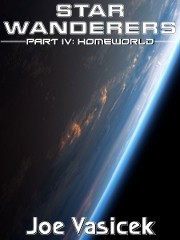
Just to tease you all, here’s the cover:

So yeah, definitely look out for that soon!

I’ve got to go, but I’ll post again when I get the chance.  Happy Thanksgiving, and I’ll see you around!

Have internet, will blog

Hey guys, I’m back in Kutaisi today, so I thought I’d drop in and post an update on this (much neglected as of late) blog.  Life hasn’t been too eventful, but there are a couple of things that I thought you might want to know about.

First of all, I’ll be participating in an ebook promo with some other sci-fi indie authors this cyber monday (the online equivalent of black friday).  My book Star Wanderers: Outworlder is already available for free, but if you’re a fan of science fiction and free / $.99 ebooks, be sure to check it out!  Here’s the link:

Also, if you check out the CURRENT PROJECTS section in the sidebar (over there ———>), you’ll see that I recently dusted off Heart of the Nebula for another revision pass.  This is a direct sequel to Bringing Stella Home, featuring many of the same characters (James, Lars, Stella) plus a few new ones.  I’m about midway through chapter 4 right now, and really getting into the story.

The previous drafts had some issues, but I think I’ve got a better handle on them now.  I have no idea when it will be ready to be published, but I’m shooting for sometime next summer.  With luck, this next revision will be finished in December, at which point I’ll send it out to my first readers and see what they think of it.

Also, I took some time out to work on meta-writing stuff, like goal setting and such.  I’ll save that discussion for new years, though, since that seems like a much better time to discuss goals and resolutions.  Also, it will give me a chance to refine them a bit in the intervening month.  Long story short, I was experiencing a creative block due to some unrealistic personal expectations, but I think I’ve more or less worked it out.

Other than that, life is pretty good.  I got to see my host family from last year a couple of days ago, when I came in late from Tbilisi and missed the last marshrutkka to my village.  Called up the family, and they were kind enough to let me spend the night on their couch.  Today, I said thank you by dropping by with a box of chocolates.

It was great to see them again and spend some time in the neighborhood where I lived last semester.  Also: twix cookies.  The market in Batoni next to ProCredit Bank is one of the few places in Kutaisi that sells them.  If you’ve ever spent any significant time in Georgia, you know exactly what I’m talking about.

So that’s just about it for now.  If all goes well, I should hear back from my first readers on Star Wanderers: Homeworld sometime during the Thanksgiving break.  Depending on their feedback, it’ll come out anywhere between 1-3 weeks later.  This will conclude the main story arc for Star Wanderers (at least, the first arc), but it won’t be the last book in the series.  More on that later, though.

Take care!

Trope Tuesday: I Choose To Stay

The hero’s journey can be divided into three basic phases: departure, intiation, and return.  In the departure phase, the hero receives the call to adventure and eventually leaves the familiar world.  In the initiation phase, the hero passes through a series of tests and trials eventually leading up to the climax and final confrontation with the Big Bad (if there is one).  But after the hero wins and receives the ultimate boon (aka MacGuffin), there’s nothing left except to go back home and share that boon with the rest of mankind.

Except…after having such an awesome adventure, he just doesn’t wanna.

Joseph Campbell called this stage the Refusal of the Return.  It’s a lot like the Refusal of the Call in the departure phase, except in reverse: instead of being reluctant to cross the threshold of adventure into the unfamilar world, the hero doesn’t want to cross the threshold in the opposite direction going back home.  Campbell put it this way:

When the hero-quest has been accomplished…the adventurer still must return with his life-transmuting trophy. The full round, the norm of the monomyth, requires that the hero shall now begin the labor of bringing the runes of wisdom, the Golden Fleece, or his sleeping princess, back into the kingdom of humanity, where the boon may redound to the renewing of the community, the nation, the planet or the ten thousand worlds.

But the responsibility has been frequently refused. Even Gautama Buddha, after his triumph, doubted whether the message of realization could be communicated, and saints are reported to have died while in the supernal ecstasy. Numerous indeed are the heroes fabled to have taken up residence forever in the blessed isle of the unaging Goddess of Immortal Being.

Anyone who’s ever been two years old should know the feeling.  You’re at the playground, having fun, when out of the blue your mom says that it’s time to go.  So what do you do?  Throw a hissy fit, of course!  Grab onto the cold hard steel of the swingset, and don’t let go until she drags you kicking and screaming all the way to the car.

The hero may have fallen with the new world the moment he left his home behind, but he might also have hated it initially.  In stories where the hero actually does stay, this allows the author to give him a character arc: at first, he hated the new world, but gradually he warmed up to it, until by the end he was changed so much by the adventure that he decided to settle down there.

In milieu stories (see Orson Scott Card’s MICE quotient), this often manifests as Going Native, while in stories that are more plot or character driven, it’s more likely to manifest as Can’t Stay Normal.  When the hero eventually comes around and goes home anyway, it frequently morphs into Stranger in a Familiar Land.  The polar opposite is But Now I Must Go, though that trope tends to apply more to side characters than the main protagonist.

Ultimately, however, adventures are like stories: they all have a beginning, a middle, and an end.  The hero may want it to keep on going forever, but that is not this trope.  Even if the hero does stay in the lands of adventure, those lands eventually become his new home.  It just can’t be avoided.

For that reason, there’s an important element of bittersweetness to this stage of the hero’s journey–one which, if done well, can add a crowning moment of heartwarming or turn the story into a real tear jerker.  Or both, actually.  It all depends on how invested the reader is in the story by the end.  If the reader feels like she’s been right there with the hero all this time, then you can expect the tears to flow no matter which way he ultimately goes.

I pretty much played this trope straight in Genesis Earth.  Most of my other books feature a Refusal of the Return moment of one kind or another, but the hero usually ends up going home anyway.  If there even is a home to return to, of course.  I don’t know why, but a lot of my stories are about characters who are searching for home.  Maybe that’s because at heart, I’m still a wanderer.  It will be interesting to see how that changes over the coming years.

The song at the top, by the way, is from Disney’s Tarzan, a movie which plays this trope straighter than most.  In fact, this trope is practically Disney’s bread and butter.

New Kindle! And some new old projects as well

So I came out to Tbilisi today, because MY NEW KINDLE PAPERWHITE JUST ARRIVED!

Okay, sorry for the all-caps shouting, but I’m really happy that it finally got here.  My old kindle broke down a few months ago, leaving me stranded in my tiny village without any books.  With the weather getting worse and the power outages becoming more frequent, cabin fever has started to become a problem.  So really, it couldn’t have come at a better time.

It shipped out almost a month ago, but Georgia (the country, not the state) is a fairly remote place, so it’s taken a looong time to get here.  The wait has definitely been worth it, though.  I love this device, especially the cover browsing function.  And the backlight is going to be very, very useful, what with all the power outages we get in the village.

So I’m about 100 pages into The Sword Keeper, my latest project, and I realized that I need to do a lot more worldbuilding before I can continue.  I’ve got a good handle on the characters and have more or less figured out the plot, but there are still a lot of holes in the setting.  This new project is a fantasy novel, and it seems to be leaning more towards epic than heroic, so I probably should take the time to really build the world before trying to finish the story.

I’ve been drawing a lot of inspiration from my experience here in Georgia, but right now, I feel like I’m too close to it to really take it in the right direction.  The time I spent in Jordan was a huge influence in Desert Stars, but I didn’t start it until I came home (and didn’t finish the first draft until almost two years later).  Ideas are like wine: sometimes, you just need to let them sit in the back of your head and age for a while.

So long story short, I’ve decided to put The Sword Keeper on the back burner for a while.  I’m  sure I’ll come back to it, though–the story is far too interesting to let go.  Magical thinking swords that meld with the minds of those who wield them, ancient prophecies and a secret order of warrior monks–and that’s just the backdrop.  The characters themselves are much more interesting–I have got to tell their story!

But for now, I’m going to revisit the Gaia Nova universe and finish the revisions for Heart of the Nebula.  This one is a direct sequel to Bringing Stella Home, and while it definitely still needs work, I feel like it’s almost there.  The first draft had some major problems and needed to be revamped, especially toward the end.  If all goes well, I should finish this pass before the end of November, with enough time to write another Star Wanderers story before the end of the year.

Stars of Blood and Glory is still with my first readers, but if they give it the green light, I hope to publish it sometime in February.  This one is also a direct sequel to Bringing Stella Home, with Danica, Roman, Stella, and Stella’s son Abaqa, and a couple of characters from Desert Stars as well.  I’m really excited about this story, but I figure it’s best to get some more feedback first before putting it out.

Which brings me to Star Wanderers: Homeworld (Part IV).  I can’t promise that it will be out before the end of November, but that’s what I’m shooting for.  Of course, I’m not going to put it out until I’m satisfied that it represents my best work, but even my first readers do come back with problems, I’m 99% confident I can fix them all by December at the latest.  There is nothing–absolutely nothing–like the feeling you get when you finish a story where everything just comes together.  I may not be the best judge of my own work, but I know that feeling.  You can definitely expect to see this story come out before the end of the year.

That’s about all for now.  Internet is spotty out in the village, but I’ve got a couple of interesting posts brewing in the back of my mind.  I’ll probably write them up in the next few days, and post them the next time I get a chance.  Until then, see you around!

Trope Tuesday: MacGuffin

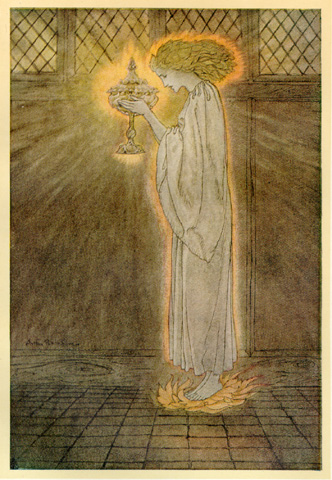
The Holy Grail of MacGuffins. Literally.

So the hero has crossed the threshold of adventure, thwarted the trickster, evaded the vamp, and met with the goddess.  He may have lost his mentor and descended into the deepest dungeon, but by calling on the supernatural aid he received at the beginning of the quest, he has passed the final test, found atonement with his father, and come back stronger than he ever was before.

So now that that’s all done, what’s left?  Just one thing, really–he has to receive the ultimate boon, or in other words, get the MacGuffin that he came out questing for in the first place.

A MacGuffin is an object whose main (sometimes only) purpose in a story is to motivate the plot.  It is usually something that everyone is chasing after, whether it be a ticking time bomb, a briefcase full of money, a priceless artifact, or some sort of superweapon.  Basically, it can be almost anything–that’s kind of the point.  If you can replace an object with something completely different that serves the exact same plot purpose–for example, a priceless stolen Picasso with a priceless stolen Dead Sea scroll–then it’s a MacGuffin.

Like it or not, MacGuffins are everywhere in fiction.  It’s such a prevalent trope, it even has its own Wikipedia page.  One of the most famous examples, at least in the Western literary tradition, is the Holy Grail.  Another example is the One Ring from Lord of the Rings–it could just as easily be a bracelet, or earring, or any other wearable artifact (though admittedly, if it were a necklace and Gollum had to bite off Frodo’s head, that would change the story quite a bit).  The MacGuffin page on tvtropes lists nearly 30 subtropes, from Egg MacGuffin to I’m Dying, Please Take My MacGuffin.

So what does this have to do with the hero’s journey?  The last phase of the initiation cycle (basically, all the stuff between the departure and return) is known as the Ultimate Boon.  It not only represents the achievement of the hero’s quest, it represents receiving something to bring to the people back home.  As Joseph Campbell pointed out:

The gods and goddesses then are to be understood as embodiments and custodians of the elixir of Imperishable Being, but not themselves the Ultimate in its primary state. What the hero seeks through his intercourse with them is therefore not finally themselves, but their grace, i.e., the power of their sustaining substance…This is the miraculous energy of the thunderbolts of Zeus, Yahweh, and the Supreme Buddha, the fertility of the rain of Viracocha, the virtue announced by the bell rung in the Mass at the consecration, and the light of the ultimate illumination of the saint and sage. Its guardians dare release it only to the duly proven.

According to Vogler, the hero has to return home with something to benefit himself or the community–otherwise, the whole journey has been a waste of time.  Before entering the return phase, then, the hero has to receive the object of his quest.

At this point, it’s worth pointing out that tropes are neither good nor bad.  Just because a story revolves around a MacGuffin doesn’t automatically make it cheap or formulaic.  Tropes themselves are value neutral–what matters is how you, as the author, use them.  Some of the greatest and most inspiring stories of all time make heavy use of MacGuffins.

Because the MacGuffin is a plot-centric trope, when you really understand how it works, you can do some interesting writerly things with it.  Michael Moorcock, for example, used this trope to formulate a method for writing a novel in just three days.  Would you like to be able to write a novel in three days?  Gosh, I’d like to.  And before you write that off as formulaic crap, remember, it wasn’t just anyone who came up with this method–it was Michael Moorcock.

In my own work, the best example of this trope would have to be Stella from Bringing Stella Home.  As you might have gathered from the title, Stella serves as a MacGuffin for her brother James (specifically, in The President’s Daughter flavor).  She does have her own character arc, of course, but as far as James’s storyline is concerned, she could just as well be his mother, or cousin, or <insert kidnapped loved one here>.  I did a similar thing in Stars of Blood and Glory, an as-yet-unpublished sequel to Bringing Stella Home, but it should be coming out in January or February of next year so you’ll have a chance to read it then.

Some new thoughts on productivity

I’ve been thinking a lot about writing and productivity, mostly because I seem to be struggling a lot with it lately. With nanowrimo just starting, this is a pretty topical thing to blog about, but I also want to look at it from a long-term career perspective, since that’s what I’m personally more interested in.

As writers, when we spend all our time procrastinating or fail to meet our word count goals, we tend to beat ourselves up and frame the problem in terms of a lack of self-discipline. If only we had greater will power, we could buckle down and pound out five or ten thousand words a day like those super-prolific authors.

While there’s definitely something to say for raw self-discipline, though, I think there’s another dimension to writing productivity that we tend to miss. Not all writing-related activities are productive–and not all non-writing related activities are totally unproductive. In order to make the most efficient use of our writing time, I think it’s more important to understand and respect our individual creative process than it is to merely force ourselves to produce more words.

To better understand my own creative process, I took a little time to group every writing-related thing I do into four different categories:

  • Writing activities
  • Fill-the-well activities
  • Publishing chores
  • Procrastinating

WRITING ACTIVITIES

This should be pretty self-explanatory. It’s basically all the stuff that leads directly to a finished manuscript. It requires the highest amount of energy and produces the most important content.

Activities in this category include:

  • Writing new material
  • Making substantial revisions (putting in and taking out)
  • Updating chapter and scene outlines

FILL-THE-WELL ACTIVITIES

This is the non-writing stuff I do that helps me to be more productive when I switch back to the writing activities. Basically, it’s the stuff I do before and after I write that helps me to maintain a creative momentum.

Activities in this category include:

  • Reading
  • Blogging
  • Catching up on blogs
  • Listening to podcasts
  • Doing mindles chores
  • Going on walks
  • Exploring new places
  • Watching movies
  • Playing RPGs
  • Talking with friends
  • Reviewing first reader feedback
  • Writing character outlines
  • Making book soundtracks

PUBLISHING CHORES

This is all the professional stuff that I have to do, which may feel productive while I’m doing it, but actually takes time away from the stuff I should be doing. I still have to do it, but I should waste as little time doing it as possible.

Activities in this cateogry include:

  • Ebook formatting
  • Producing cover art
  • Writing blurbs and book descriptions
  • Writing author’s notes
  • POD typesetting
  • Handing financial stuff (royalties, invoices, etc)
  • Researching the publishing industry
  • Processing copy edits
  • Sending out email newsletter

PROCRASTINATION

Again, pretty self-explanatory. This is the stuff I shouldn’t do, but end up doing anyway in order to avoid stuff that feels like work. It’s all the stuff that I need to cut out entirely if I want to maximize my productivity.

Activities in this category include:

  • Minecraft
  • Alpha Centauri
  • Any other game that I can’t stop thinking about
  • Checking ebook sales numbers
  • Dicking around on Facebook and Twitter
  • Browsing the Kindle Boards
  • Watching TV and Youtube
  • Minecraft

So now that that’s done, what next?

I’m still figuring this part out, but I think the best thing to do would be to put as much distance as possible between the stuff that boosts productivity (writing and filling the well) and the stuff that doesn’t (publishing chores and procrastination).

The way I see it, there are basically two ways to do this:

  • Physically separate the activities. Do all your writing on a machine that’s disconnected from the internet and doesn’t have any games installed, and do everything else on a separate computer.
  • Set aside blocks of time specifically for writing. Organize your schedule so that writing is a priority, while acknowledging the need to take breaks and refill the creative well.

I can’t really do the first one while I’m here in Georgia, but I definitely can do the second. So far, I’ve found that waking up early to start the day with an hour of writing helps me a ton to build and keep momentum. However, I need to do a better job setting time aside in the afternoon, both for writing and for refilling the well. If I don’t, I usually end up procrastinating by default without realizing it until it’s too late.

So anyhow, those are some of my latest thoughts on writing and productivity. What are yours? Does this square with your experience, or is there a better way to think about it that I’ve missed?