Fantasy from A to Z: W is for Worldbuilding

What is the biggest thing that sets fantasy apart from all other genres? Without a doubt, it has to be worldbuilding. In every other genre (even science fiction, to some extent), the writer can get away with a loose or surface-level understanding of the world. But in order to do fantasy right, you have to build the world from the ground up, and include such an immersive and visceral level of detail that the reader feels like it’s a real world that they can lose themselves in. That is the feeling that readers want when they pick up a fantasy book.

At the same time, I think that most writers put too much emphasis on worldbuilding. It’s become trendy in writerly circles to talk about worldbuilding, almost as if it’s something you do for its own sake. In the best books, though—even in the best fantasy books—the worldbuilding is always in service to the story, and not the other way around.

For many of us writers, the act of dreaming up a world is the thing that immerses us the most in it. Daydreaming about our fantasy worlds and working out all of the details about it—that’s often the fun part, and the thing that got us into writing fantasy in the first place. But it doesn’t translate very well to the page. The things that seemed so cool to us when we were dreaming them up often come across as dry and boring when we write them out in a huge info dump.

In order for a reader to feel immersed in the world, they need to have a character that they can follow through it. The character’s experience of the world becomes the reader’s experience. But the character needs to be in motion—they need to have some sort of goal or objective that they’re working toward, even if they don’t consciously realize it yet. And it needs to be a struggle for them, at least on some level. Even in cozy fantasy, where the stakes are typically pretty low, the characters still have to put some effort into getting the things they want.

That’s because characters show us who they really are through the trials and struggles that they face. Just like in real life, hard times make us see what people are made of. Without that, readers have a difficult time connecting with the characters through whose eyes we want to show them our fantasy worlds. It’s through a character’s struggle that we find that we can relate to them.

Another thing I’ve noticed, particularly in some recent big-name traditionally published fantasy, is that the viewpoint characters are often just terrible people. If I met them in real life, I often think that I would find them petty, narcissistic, and repulsive. At best, they are amoral, and at worst, they are little better than the villains who oppose them—and yet, from the way they’re written, it’s clear that we’re supposed to latch onto them simply because they are the main character.

As a reader, that doesn’t work for me. If I’m going to connect with a character deeply enough to get that immersive fantasy experience, I want them to either be the kind of person I can admire, or the kind of person I feel like I can hang out with. Preferably both. And if the character is going to do something morally repulsive early on in the book, I need to see them wrestle with the ethics of it first, and perhaps feel some remorse afterward. Otherwise, it’s going to throw me out of the book.

Anything that throws the reader out of the book is also going to kill that immersive experience, rendering all that worldbuilding utterly ineffectual. In some ways, the reader first has to feel immersed in the characters before they can feel immersed in the world.

This is why the characters in the best fantasy books often have more depth and nuance to them than the characters in any other genre. When the book is set in our own familiar world, the characters themselves are often larger than life. The heroes are billionaires or ex-Navy SEALs, the love interests are supermodels or billionaires, and the villains are criminal masterminds or rival billionaires. But in fantasy, the larger-than-life element is the world itself, so the characters (or at least the viewpoint characters) often feel much more like real people, so as to ground us in the story.

I’ve often heard people say that worldbuilding is a bit like an iceberg, in that only 10% or so should be visible. But I think it’s more precise to say that worldbuilding should be grounded in the character (or characters) through whose eyes we get to see it. Of course, those characters are grounded in the conflict or plot of the story, since that’s what shows us who they really are. And the plot itself is grounded in time and space, which brings us back full circle to setting and worldbuilding. So ultimately, it’s all a virtuous cycle.

I don’t think I’ve ever found an author who does character better than Ursula K. Le Guin. I haven’t read much of her fantasy, but I did read Powers, and I felt so totally immersed in that world because I felt like I knew the main character even better than I know myself. It was an incredible reading experience, just like the best of her science fiction, which I adore.

Brandon Sanderson also tends to buck the current trend of morally ambiguous main characters who never really earn our sympathy or admiration. In almost all of his books, his protagonists strike me as good people—the kind that I can admire and hang out with. That fact, combined with how his books tend to be much cleaner than most contemporary fantasy, go a long way toward explaining his tremendous success (though of course, Sanderson’s greatest strength is his ability to write killer endings).

Bottom line, the best worldbuilding in fantasy is only as good as the characters through whom we experience it. Worldbuilding should always serve the story, and not the other way around.

The Short, Victorious War by David Weber

This is it—the big showdown! The war between the Kingdom of Manticore and the People’s Republic of Haven has come!

I’ve really been enjoying this series. Like I said in my review of On Basilisk Station, the Honorverse is what Star Trek wants to be when it grows up. Where Star Trek is campy, the Honorverse is polished. Where Star Trek is preachy, the Honorverse is nuanced. Where Star Trek relies on hand waving and technobabble, the Honorverse shines with complex, believable world-building and incredible attention to detail. And perhaps most importantly, where Star Trek characters do things that are head-shakingly stupid, the characters in the Honorverse all, for the most part, smart, capable people with very good reasons for everything they do.

In any case, while the third book wasn’t quite as good as the previous two, it did not disappoint. In terms of character development, this may have been the best book in the series so far. Honor Harrington confronts a bunch of her private demons in this book, including her near-rape at the hands of Pavel Yong, and Weber did a really good job of that. There was also no shortage of action, seeing as Honor commands one of the biggest and most ferocious RMN warships in the fleet, and goes head to head with the greatest existential threat to the kingdom itself.

That said, in some ways the ending felt… a little too perfect. There was very little of the underdog stuff that really drove the first book, and while the stakes were definitely high, and lots of people died, the way they pulled it off felt a little too flawless. Without getting into spoilers, this was especially true of the intrigue going on within the People’s Republic of Haven itself. There was definitely intrigue and subterfuge, but it didn’t feel complex enough, or messy enough, to really satisfy me. Everything lined up just a little too perfect.

That’s really my only complaint, though. There was no shortage of crowning moments, and some great come-uppances for the bad guys, especially Pavel Young. Quite a few tear-jerking moments as well, especially in the side stories and peripheral conflicts that didn’t involve Honor directly. More than just big guns and explosions, Weber really knows how to personalize a conflict and get you to feel deeply intimate with the characters. In that aspect, this was probably the best book in the series so far.

Great book, and immensely enjoyable, just like the previous two. I heartily recommend it.


I think I’m going to take a break from the Honorverse for a while. I do intend to come back to it eventually, but there’s a bunch of other similar stuff that I want to get to first, like House of Assassins, the Vorkosigan Saga, and David Gemmell’s Troy series. Baen stories are like a rich chocolate cake, and I can only take so many at a time—and yes, I know Gemmell was never a Baen author, but his books scratch the same itch for me. In fact, they may be the richest chocolate cake of them all.

Extra Sci-Fi S3E1: Tolkien and Herbert, the World Builders

So I really enjoyed the first two seasons of Extra Sci-Fi, and since they’ve just started up with season three, I’d like to do a blog series where I react to the episodes.

From the first episode, it looks like the main focus of this season is on Lord of the Rings and Dune, two SF&F classics which I’ve read twice. While I have read The Silmarillion as well, I have to admit that I haven’t read any of the Dune sequels yet. Ah, the woes of a horribly massive TBR list.

In any case, the discussion of intentionality in world-building is quite interesting. The way they contrast it with the pulps got me to thinking about the direction science fiction and fantasy are headed in right now.

With the advent of indie publishing, the era we are living in right now is much more akin to the age of the pulps. The way most indies make a living is by following Kevin J. Anderson’s advice to be prolific—really, really prolific. That doesn’t mean that all books published these days lack the intentionality and depth of the great classics of the genre, but the pendulum seems to have swung in the other direction.

Here’s the problem: I’m sure there are books that are just as finely crafted as Lord of the Rings that are sitting on someone’s hard drive right now, or perhaps hanging out somewhere above the 500,000 ranking on Amazon. Perhaps some of these books are even more masterfully crafted, with greater intentionality and even more depth. Why aren’t they selling?

Lots of reasons. Perhaps the author hasn’t yet mastered the craft of writing. Perhaps the story isn’t compelling enough—the equivalent of a 50 cc engine in the body of a Harley.

Or perhaps it has nothing to do with the quality of the writing or storytelling, but the author’s lack of marketing acumen. The greatest product in the world is worth nothing if nobody knows it exists. Likewise, the worst product is worth at least something if everyone knows about it.

Harsh truths, but that’s the world we live in. I’m not so cynical that I believe that writing is a zero-sum game, but there is a lot of competition, especially with how many books are being published these days. That’s why I say that the pendulum has swung back in favor of pulp-style writing: because the writer who can put out a book a month and put it out to an email list of 10k or more has a decisive advantage over the writer who painstakingly crafts a magnificent epic over the course of an entire lifetime, as Tolkien did.

When will the pendulum swing back? I don’t know, but it’s actually not as daunting of an issue as the guys at Extra Credits make it seem.

The first time I read Dune, I was in high school. The second time, I was in college, where I’d already studied Arabic for a couple of years and become somewhat proficient at it. Studying Arabic pulled back the curtain a bit, and made me realize that Herbert’s world-building wasn’t quite as intentional as it seems at first glance.

There was still a lot of depth and intentionality in the major stuff, like the Bene Gesserit, the mentats and Orange Catholic Bible, and of course the ecology of Arakkis and the Spacing Guild. However, on some of the minor details, he occasionally cribbed or made up stuff, he just did a really good job of disguising it. Even the wider arcs of his world-building have borrowed heavily from the real world, such as the rise of the Fremen (which is basically the Rashidun Caliphate in space) and the politics and economics of the spice trade (which is basically a sci-fi version of the petrodollar).

This is why I’m not too worried. A masterful writer can produce on the level of the pulps, and still write with depth and intentionality—or at least, fake it so well that it feels that way. Writing that well requires skill, but once you’ve figured out all the levers behind the curtain, you really can pull off some truly amazing stuff.

I’m not quite there yet, but I’ve seen behind the curtain, and I’m figuring out how it works. Until now, I’ve leaned more toward the pulp-style of writing, just to get my writing career off the ground, but I hope to get to the level of Herbert and Tolkien before too long. It’s definitely possible, but can it be profitable too? That’s the tricky part.

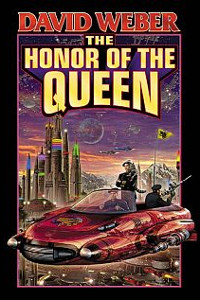
The Honor of the Queen by David Weber

I really enjoyed On Basilisk Station, the first book in the Honor Harrington series, and the second book did not disappoint. It had all of the stuff that made the first book so amazingly awesome, plus tons more action and political intrigue.

The dynamics in The Honor of the Queen were a bit different, in that Honor has definitely proved herself by now and is no longer the underdog freshman starship commander in the armpit of the galaxy. This time, she’s been given a small fleet, and assigned to an important diplomatic people with a critical potential ally of the Star Kingdom of Manticore.

But she still has a lot of proving to do, this time to the misogynistic people of Grayson who do not believe that women are capable of military command. If that sets off red flags, don’t worry: David Weber is no SJW, and this book was written long before “protect wamen” was a thing. The misogyny on Grayson has nothing to do with mansplaining, manspreading, or toxic masculinity: rather, it’s a culture that treats women literally as property, with none of the rights that women currently enjoy in the West.

One of the things that makes the Honor Harrington books so fantastic is the meticulous attention to detail. The history of Grayson is complex and nuanced, and presents a consistent and believable explanation for why the culture developed the way it did. Weber’s attention to detail extends beyond the world building to just about every aspect of the story: the characters, tactics, politics, and everything else. There’s a bit of handwaving when it comes to the technology—this is science fiction, after all—but not very much. Certainly, there’s no handwaving when it comes to human nature.

The part of the story that I found most interesting was the political intrigue between the Star Kingdom of Manticore and the People’s Republic of Haven. Honor’s enemy counterpart in the Havenite fleet is no pushover—in many ways, he’s just as sharp and capable as she is. Even though the People’s Republic of Haven are clearly the bad guys, I came away from this book thinking that Weber could easily write a book with the Havenite commander as the protagonist, and it would have been just as good. There are definitely bad guys and good guys, but they’re all still people, with reasons for believing the things that they do, right or wrong as they may be.

My only criticism of this book is that the ending felt a bit Mary Sue-ish with all of the accolades and promotions that Honor Harrington received. I still really enjoyed it, but if I didn’t already love the character, there were a couple of things that would have made me roll my eyes. Then again, truth is stranger than fiction, and I’m sure there are people who have received just as many honors and accolades as Honor Harrington did at the end of this one.

All in all, an excellent continuation to the series that builds on the first book and leaves plenty of room for more, especially in the rivalry between Manticore and Haven. Since that’s one of my favorite things about this series so far, I’m very interested to see what happens in the next book!

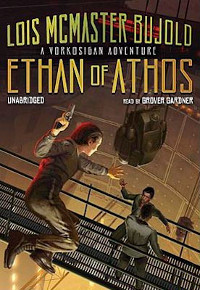
Ethan of Athos by Lois McMaster Bujold

I love the Vorkosigan books. Miles isn’t in this one, but a bunch of other characters are. It’s the same universe, with the same fascinating history, just with a bunch of new and interesting complications.

Ethan is from a world where women do not exist. The uterine replicator has rendered them obsolete, and a colony of fundamentalist MGTOWs has established a functional society where everyone is male and no one has ever seen or interacted with a dreaded female. But make no mistake, Ethan is not a MGTOW. He’s Athos’s best doctor: professional, responsible, and conscientious to a fault. And that’s why the council of elders has sent him on a mission to acquire female reproductive cultures before the ones on Athos all die out.

Along the way, he gets caught up with the Dendarii mercenaries, specifically one Commander Elli Quinn, and is soon caught up in the machinations of the Cetegandans and House Bharaputra, who are involved in some less-than-ethical bioengineering schemes that have brought the galaxy to the verge of war. If Ethan fails his mission, Athos itself might be nuked back to the stone age. But that is nothing compared to his most difficult task: learning how to work with a woman.

This book was a lot of fun! I have yet to read a bad book by Lois McMaster Bujold, and this one certainly didn’t disappoint. Lots of action and adventure, with dashing, resourceful heroes and frighteninginly comptetent villains. The all-male society of Athos was both fascinating and eminently believable, given the technology, and the interstellar espionage was loads of fun.

This isn’t the best place to start if you’ve never read any Bujold, but if you’ve already read The Warrior’s Apprentice and a couple of other Miles Vorkosigan adventures, you’ll really appreciate this book. Definitely one of the highlights of the series.

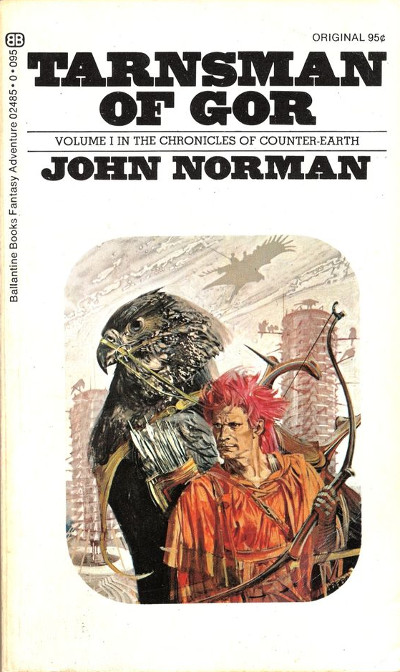
Tarnsman of Gor by John Norman

I’ve been meaning to read this book for a while, since I heard that it’s a classic of the Sword and Planet subgenre and I’ve really liked the other Sword and Planet books that I’ve read. (Princess of Mars, The Dying Earth, etc. Come to think of it, I haven’t done a review of Princess of Mars yet, so that’s as good a reason as any to reread it!)

Besides the association with Sword and Planet, the Gor books have also spawned a subculture of BDSM, and for good reason. On Gor, slavery is not only normalized, it’s romanticized. A typical marriage ceremony consists of the groom binding up his bride, carrying her off on a giant bird, and throwing off her clothes to “show her people what had been the fate of [such and such girl].”

I don’t swing that way, but I thought I’d give the first book a try. I’d heard that the bondage fetishism doesn’t take over until the fifth or sixth book, and while it’s definitely there in Tarnsman of Gor, it wasn’t enough to make me put the book down.

As a swashbuckling action-adventure tale, I thought this book was pretty good. There definitely was no shortage of action, and while the plot twists were fairly predictable, they were also enjoyable and interesting. It’s a fun, if brutal book.

There were a lot of lengthy info-dumps, though, which wouldn’t have been so bad except that I had problems with the world. In general, it felt like the author had come up with a really cool world but not sufficiently thought it through. For example, if humans aren’t the apex predator on Gor, how are there so many human cities? If the caste system is maintained by deliberately sharing false information with the lower castes, how is that system long-term stable if the caste isn’t something you’re born into?

The general impression I got was that this world is a brutal, savage place where everyone is broken in some way, a lot like Mad Max. The thing is, I’m not sure that that’s what the author was going for.

That may just be an artifact of the time this book was written, though. A lot of older books that invented the tropes now seem stiff and wooden—not because they weren’t innovative for their time, but because we’ve seen those tropes so many times that we already know what to expect. Tarnsman of Gor was written back in the sixties, before role playing games and chihuahua-killing fantasy tomes had made world-building so important. Back then, it probably was enough to say “here’s a really cool world” without first thinking about all the ways to break it.

Again, that wouldn’t be so bad if all this book attempted to be was a swashbuckling adventure on another world. But at several key points, the narrator steps back from the story to explain some aspect of the world that was only tangentially related to the plot.

All in all, I give this book three stars. It’s worth reading if it interests you, but it’s not a must-read.

What readers want

I’ve been thinking a lot recently about what science fiction and fantasy readers want in the books they read. I’m in the middle of writing and publishing a series of novellas and short novels, so it’s definitely on my mind. After publishing twenty books and completing another novella series, I think I have a pretty good idea.

First and foremost, I think that readers want to have an experience. The exact nature of that experience depends on the genre, but for science fiction and fantasy readers, that experience needs to be out of this world. They want to be transported somewhere and feel that they’re immersed in the world of the story.

I think I’ve done a pretty decent job of this so far. I’ve gotten a lot of feedback from readers who say that they really enjoy the worlds that I’ve created. There’s always room for improvement, but so far, I think I’ve done a pretty good job transporting my readers to other worlds.

Second, readers want characters that they can connect with somehow. That usually means characters that they can relate to, though it can also include larger-than-life characters as long as they don’t feel fake. The characters are especially important for science fiction and fantasy, since they make everything else in the book feel real and authentic. Besides, when you’re visiting a new and unfamiliar place, it’s always good to have a friend.

I think that character is one of my strong points. I love getting into my characters’ heads and showing how they uniquely see the world around them. I also love showing how characters change and grow as they struggle to overcome their weaknesses. I’ve gotten a lot of positive feedback from readers on my characters, even in some of the more critical reviews, so that tells me I’m doing something right that so many readers can connect with them.

Third, readers (especially sf&f readers), want an adventure. They don’t just want an internal struggle as a character wrestles with difficult moral issues, or a transformative growth experience as a character faces a difficult challenge. Both of those can make a good story into a great story, and turn a reader into a fan, but more than that they want stuff to actually happen. They want the plot to move at an exciting pace–to get sucked into a story as they wonder what’s going to happen next.

With the series I’m writing now (Sons of the Starfarers), I’m trying to do just that. Star Wanderers (my other novella series) did pretty well, but I think the conflict was more personal and internal, or had more to do with the relationships between the characters than any sort of adventure that they were having together. There’s a place for that, but I think a lot of readers got bored midway through the series, or didn’t feel a compelling need to finish it. With Sons of the Starfarers, I’ve been careful to keep the action moving at a good clip with every book, and so far almost everyone who reads the second book goes on to the third book.

So those, I think, are the top three things that the majority of readers are looking for. But there’s something else that I don’t think I’ve been as good at, and it has to do with everything above.

I think that most readers, especially sf&f readers, are looking for longer books. They want everything above, but they want it in much bigger doses. The enjoyment they get out of a book doesn’t increase linearly with the page count, it increases exponentially. The longer the book, the deeper the immersion. The characters feel that much more real the longer they get to spend with them, and the adventure feels that much more thrilling.

As I’ve said before, I really enjoy writing novellas. But if my readers want something meatier, I’ll do what I can to satisfy them. I may love writing novellas, but I also love writing novels too. Since they generally take longer to write, with a lot more time between new releases, it’s more of a challenge to market them, but I have enough books out now that I can switch gears.

There are a couple of half-finished novel projects that I’ve had on the back burner for a while. I’ll keep working on Sons of the Starfarers until that series is complete, probably sometime next year, but I’ll also work on the novels in the meantime. Sons of the Starfarers will have nine books (three omnibus editions), and then it will be complete. After that, time to move on to longer books.

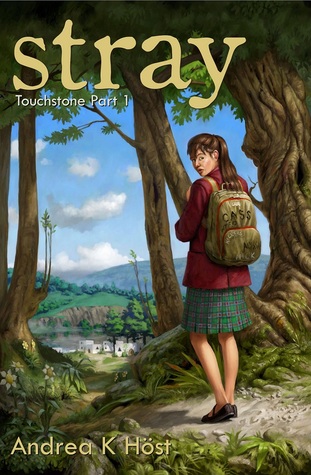
Stray by Andrea K. Höst

Stray (Adrea K Host)So I picked up this book on the Kindle Store shortly before boarding the California Zephyr for a cross-country train trip. For those of you not familiar with Amtrak, the California Zephyr runs from Emeryville to Chicago and is one of the most picturesque train routes in the United States, with some of the best views of the Colorado Rockies that you will ever see.

Well, I wasn’t paying much attention to the scenery this time, since I was way too engrossed in this book! I was more than halfway through by the time we got to Chicago, and finished it somewhere in the northeast corridor. It was an awesome, amazing read, one that I could hardly tear myself away from!

It starts out kind of like Hatchet, with a teenage Australian schoolgirl named Cassandra who suddenly and inexplicably finds herself in an uninhabited wilderness. It’s written in first person as a personal diary, so the first few chapters are all about the things she does to survive, such as finding food, water, and shelter, dealing with the wildlife, and trying to figure out just where she is exactly and how she can get herself rescued.

Eventually, she figures out that she’s on an alien planet. After a long trek in search of civilization, she finds a bunch of white stone ruins inhabited by cats. Then some weird things happen, which she doesn’t really understand (or oddly enough, doesn’t seem to be too bothered about), and shortly after that, she gets rescued–though not by people from our world.

It turns out that there are people living on another planet who have access to these naturally occurring inter-dimensional portals or gates, and use them to travel between real-space and near-space. This enables them to jump between worlds. Their civilization is about a hundred years more advanced than ours, with computers integrated directly into the human brain and other cool stuff like nanotech suits. They also have psychic abilities, like levitation, telekinesis, elemental manipulation of fire, water, lightning, etc, and supernatural sight.

Here’s the thing, though: they’re fighting a war against an infestation of trans-dimensional creatures called Ionoth, which originate in near-space and are creeping more and more into real-space. Some of them are relatively harmless, others are dangerous but unintelligent, and still others–the Cruzatch–are intelligent, highly dangerous, and very, very hostile. A special forces group called the Setari has been organized to fight them off, but the infestation is getting worse, and new gates are opening faster than anyone can close them. If nothing changes, humanity will be overrun in just a few short years.

It doesn’t take long for Cassandra to learn that she has psychic abilities of her own. The strange thing is that her abilities aren’t like any of the others. The people who rescued her soon enlist her into the Setari, where she may prove to be the key to turning the tide of the Ionoth war. But if the people of this dimension need her, how will she ever get back to Earth? Or will she even want to?

What starts off as a simple survival story soon turns into a complicated tale full of lost civilizations, trans-dimensional beings, psychic magic, high-tech, and political intrigue. At the center of it, though, is a very well-developed character who feels both real and authentic. Cassandra isn’t your typical YA heroine or “strong female character”–she doesn’t kick ass, she isn’t particularly attractive or popular, and she doesn’t get involved in any sort of sappy love triangle. But she is intelligent and resourceful, holds together under pressure, and is open and emotionally honest with her friends. She’s a great example of a female character who doesn’t have to be masculine or violent to be strong.

The world of this book is awesome. I was already sold on the ancient ruins and the alien planet wilderness, but the trans-dimensional stuff just takes it to a whole other level. The Taren civilization with their mind computers and neural network is pretty cool, and Andrea Höst very deftly works out the social and cultural implications of that technology. I’m not sure I’d want the government to have access to everything I can see, but this is definitely a world I’d like to explore. Fortunately, Stray is the first book in a trilogy, so it looks like I’ll be able to do just that!

The book ends almost exactly like you’d expect an old stock-bound composition notebook to end–on the last page, with a short entry that reads “sorry, ran out of room, will continue in the next volume.” The first book doesn’t have a clear ending that ties everything together, which is okay, because it fits very well with the overall tone and voice–it’s supposed to be a personal journal, after all. I wasn’t really bothered by it.

In fact, I can’t say that there was anything about this book that really bugged me. It’s a solid, awesome story. It does get a bit complicated by the end, but it’s not hard to follow, and the complications make it all the more engrossing. Reading this review, you probably think I’ve given away the plot of the whole book. Well, let me tell you, this quick synopsis barely scratches the surface! But I’m not a fan of spoilers, so I’ll end it here.

If you’re a fan of speculative fiction in any form–fantasy, science fiction, whatever–you’re probably going to love this book. You’ll especially love it if you’re sick and tired of the stereotypes that usually revolve around YA heroines and “strong female characters.” And if you just want to get lost in an alien world, this is one you won’t find your way out of easily!