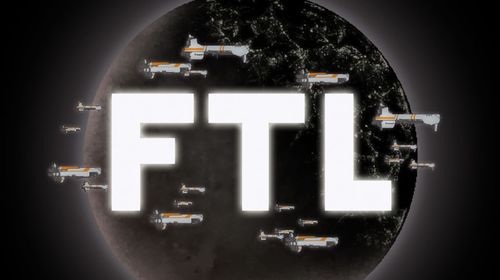
Last night, I caved and bought the new FTL game that all my friends have been talking about.
OMIGOSH.
Six hours later, I was screaming in agony as my awesome starship went down in flames. AGAIN. In sector eight (on the easy setting, though, so not too impressive).
Seriously, this game is AMAZING. I haven’t seen such a perfect combination of strategy, skill, random chance, and dumb luck since Star Control II. There are SO MANY things you can do … and SO MANY ways you can die! I love it!
Granted, with every game like this, there’s a danger that it will become a huge time suck (minecraft, anyone?). However, this one is different.
Famous last words, right?
But seriously, each round takes only an hour or two, there’s only one save slot, and you die so frequently that it’s hard to become too attached to any one game. In other words, this is the sort of game I can pick up and put down again without devoting too much mental space to it. Which (hopefully) makes it a perfect carrot to get me to write more.
Here’s what I’m going to do: for every thousand words in my WIP, I’ll allow myself to play one (and only one!) round of FTL. If I hit my daily goal, I’ll allow myself to play as much as I want.
It’s still too early to tell if this is going to work, but I’m going to give it a try. Seriously, though, once I told myself “you can play FTL as soon as you hit that first 1k,” all I wanted to do was write! And now that I’m more or less finished with this blog post, I think that’s what I’m going to do.
As you might have already guessed, this trope is extremely common, not the least because the princess classic has largely been discredited (at least, outside of Disney). There’s a lot of variation on it too, with some stories featuring the rebellious princess as the love interest, and others showcasing her as the hero.
George R.R. Martin (Song of Ice and Fire) deconstructs the trope with Arya, who eventually becomes something of a sociopath, and Brandon Sanderson (Elantris) subverts it with Sarene, who very much has the personality but uses her royal position to her advantage. Frank Herbert (Dune) zigzags with Lady Jessica, who is undylingly loyal to the Atreides family but rebels against the Bene Gesserit. As you might expect, J.R.R. Tolkien plays it straight, not once but twice: Éowyn in Lord of the Rings, and Lúthien in The Silmarillion.
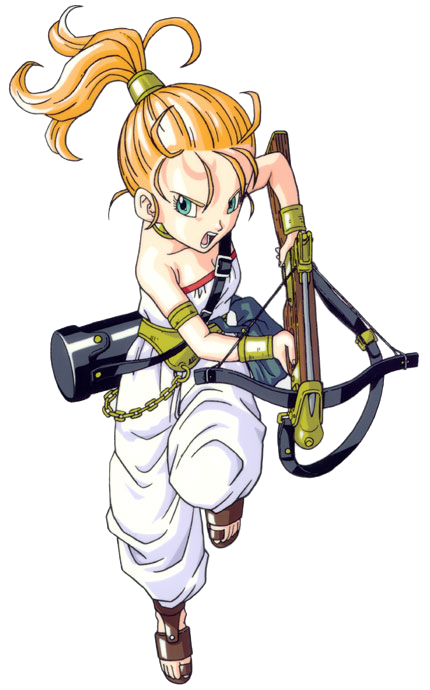
It transcends cultures, too. In Crouching Tiger, Hidden Dragon, Jen might not technically be royalty, but she is the governor’s daughter and she does reject an arranged marriage to run away and become a wandering warrior. And in classic RPGs, especially the old Japanese ones from Square, this trope is everywhere. The princess in the picture above is Marle from Chrono Trigger, who fits this trope to a T.
So why is this trope so prevalent nowadays? Probably because the modern feminist movement led us to discard most of our old-fashioned feminine ideals, as well as the characters who were held up as shining examples of them. That, and rule of drama. Everything ultimately comes down to rule of drama.
In my own work, Hikaru from Stars of Blood and Glory is an example of this trope, though she’s more of a president’s daughter than a hero or a love interest. She does have her own story arc, though, and I’ve got a sequel in the works with her as the main character. Scientists aren’t exactly royalty, but they do consider themselves elites in Genesis Earth, which means that Terra has echoes of this trope. And in Heart of the Nebula (as-yet unpublished), I’ve got a character who isn’t exactly rebellious, but she does qualify as a badass princess (though the society in question is a perfect techno-democracy and not a monarchy).
I’ve been thinking a lot about writing and productivity, mostly because I seem to be struggling a lot with it lately. With nanowrimo just starting, this is a pretty topical thing to blog about, but I also want to look at it from a long-term career perspective, since that’s what I’m personally more interested in.
As writers, when we spend all our time procrastinating or fail to meet our word count goals, we tend to beat ourselves up and frame the problem in terms of a lack of self-discipline. If only we had greater will power, we could buckle down and pound out five or ten thousand words a day like those super-prolific authors.
While there’s definitely something to say for raw self-discipline, though, I think there’s another dimension to writing productivity that we tend to miss. Not all writing-related activities are productive–and not all non-writing related activities are totally unproductive. In order to make the most efficient use of our writing time, I think it’s more important to understand and respect our individual creative process than it is to merely force ourselves to produce more words.
To better understand my own creative process, I took a little time to group every writing-related thing I do into four different categories:
Writing activities
Fill-the-well activities
Publishing chores
Procrastinating
WRITING ACTIVITIES
This should be pretty self-explanatory. It’s basically all the stuff that leads directly to a finished manuscript. It requires the highest amount of energy and produces the most important content.
Activities in this category include:
Writing new material
Making substantial revisions (putting in and taking out)
Updating chapter and scene outlines
FILL-THE-WELL ACTIVITIES
This is the non-writing stuff I do that helps me to be more productive when I switch back to the writing activities. Basically, it’s the stuff I do before and after I write that helps me to maintain a creative momentum.
Activities in this category include:
Reading
Blogging
Catching up on blogs
Listening to podcasts
Doing mindles chores
Going on walks
Exploring new places
Watching movies
Playing RPGs
Talking with friends
Reviewing first reader feedback
Writing character outlines
Making book soundtracks
PUBLISHING CHORES
This is all the professional stuff that I have to do, which may feel productive while I’m doing it, but actually takes time away from the stuff I should be doing. I still have to do it, but I should waste as little time doing it as possible.
Again, pretty self-explanatory. This is the stuff I shouldn’t do, but end up doing anyway in order to avoid stuff that feels like work. It’s all the stuff that I need to cut out entirely if I want to maximize my productivity.
Activities in this category include:
Minecraft
Alpha Centauri
Any other game that I can’t stop thinking about
Checking ebook sales numbers
Dicking around on Facebook and Twitter
Browsing the Kindle Boards
Watching TV and Youtube
Minecraft
So now that that’s done, what next?
I’m still figuring this part out, but I think the best thing to do would be to put as much distance as possible between the stuff that boosts productivity (writing and filling the well) and the stuff that doesn’t (publishing chores and procrastination).
The way I see it, there are basically two ways to do this:
Physically separate the activities. Do all your writing on a machine that’s disconnected from the internet and doesn’t have any games installed, and do everything else on a separate computer.
Set aside blocks of time specifically for writing. Organize your schedule so that writing is a priority, while acknowledging the need to take breaks and refill the creative well.
I can’t really do the first one while I’m here in Georgia, but I definitely can do the second. So far, I’ve found that waking up early to start the day with an hour of writing helps me a ton to build and keep momentum. However, I need to do a better job setting time aside in the afternoon, both for writing and for refilling the well. If I don’t, I usually end up procrastinating by default without realizing it until it’s too late.
So anyhow, those are some of my latest thoughts on writing and productivity. What are yours? Does this square with your experience, or is there a better way to think about it that I’ve missed?
Last week, I blogged about the Three Faces of Eve trope. But if we’re going to discuss power trios in any depth, we first need to examine the classic Freudian Trio, one of the most prevalent combos and, in some ways, a precursor to all others.
As you might expect, the Freudian Trio borrows heavily from Sigmund Freud, specifically, his theory of the Id, the Ego, and the Superego. The main idea is that the human mind is divided into three parts: the Id, which comprises our basest animal instincts; the Superego, which comprises our concepts of morality and social norms; and the Ego, which struggles to find a balance between the two.
In the Freudian Trio, these elements of the psyche are represented by:
The Kirk (Ego): A pragmatic, free-wheeling character who takes the lead and mediates between the other two. When the the group is in conflict, often resolves it by taking a third option, though this often makes him seem morally ambivalent. In a five-man band, this is the Hero.
Each of these character archetypes are fascinating in their own right, and deserve to be examined in much greater depth. However, in the Freudian Trio, it’s the combination of the three that proves so fascinating.
When faced with an interesting moral dilemma, the McCoy often wants to screw the rules and run in with guns blazing, while the Spock advocates caution, reminding us of the prime directive. Or maybe the McCoy is paralyzed by indecision, while the Spock is the only one cold enough to make the sadistic choice. In either case, the way the Kirk manages to resolve it will almost always reveal something deeper about the world or human nature.
The thing that’s truly amazing is how prevalent this trope is in fiction. To name a few:
Star Wars: Han (Id), Leia (Superego), and Luke (Ego), also:
Star Wars: Emperor Palpatine (Id), Grand Moff Tarkin (Superego), and Darth Vader (Ego).
Ender’s Game: Peter (Id), Valentine (Superego), and Ender (Ego).
Lord of the Rings: Gollum (Id), Sam (Superego), and Frodo (Ego), also:
Lord of the Rings: Gimli (Id), Legolas (Superego), and Agagorn (Ego), also:
Lord of the Rings: Dwarves (Id), Elves (Superego), and Humans (Ego).
Arthurian Legend: Sir Gawain (Id), Sir Lancelot (Superego), and King Arthur (Ego) (I would argue that Guinevere fits the Id role better, but I’m not an expert).
The Dark Knight: The Joker (Id), Harvey Dent (Superego), and Batman (Ego).
The Matrix: Neo (Id), Trinity (Superego), and Morpheus (Ego).
Shaun of the Dead: Ed (Id), Liz (Superego), and Shaun (Ego).
Fullmetal Alchemist: Edward (Id), Alphonse (Superego), and Winry (Ego).
The Melancholy of Haruhi Suzumiya: Haruhi (Id), Yuki (Superego), and Kyon (Ego).
Final Fantasy VI: Kefka (Id), Leo (Superego), and Emperor Gestahl (Ego).
Final Fantasy VII: Barrett (Id), Cloud (Superego), and Tifa (Ego).
Myst: Achenar (Id), Sirrus (Superego), and Atrus (Ego).
Starcraft: Zerg (Id), Protoss (Superego), and Humans (Ego).
Homestar Runner: Strong Mad (Id), Strong Sad (Superego), and Strong Sad (Ego).
The Good, the Bad, and the Ugly: Tuco (Id), Angel Eyes (Superego), and Blondie (Ego).
20,000 Leagues Under the Sea: Ned (Id), Conseil (Superego), and Aronnax (Ego).
Twilight: Jacob (Id), Edward (Superego), and Bella (Ego).
Archie Comics: Veronica (Id), Betty (Superego), and Archie (Ego).
Sometimes, the villains come from a dysfunctional or broken Freudian Trio, where one of the three died, was kicked out, or was never part of the combo in the first place. When this happens, it’s called (aptly enough) a Evil Duo. Examples include Pinkie and the Brain, Lex Luthor and the Joker, and Kefka and Gestahl (though that particular duo was very, very, VERY short lived).
Finally, it’s worth pointing out that the Freudian Trio is so common, it even occurs in real life. Perhaps the best example of this would be World War II, where Churchill was the Id, Stalin was the Superego, and Roosevelt was the Ego. With quotes like “never, never, never, never give up,” Churchill practically embodied the McCoy (his drinking penchant also helped), while Stalin, with his fanatic adherence to communism and his “million is a statistic” approach to the revolution, was as cold and calculating as you can get. FDR was the one who held the alliance together, and it was only after his death that the Cold War really broke out.
Of course, it’s possible that we only see this trope everywhere because our brains are programmed to see it. But if that’s true, it makes for an even stronger argument that the Freudian Trio plays on some powerful, universal archetypes.
Sid Meier’s Alpha Centauri is, without a doubt, the best strategy game I have ever played. I have many fond memories playing it into the early morning hours while I was in college.
The last time I played this game, it quite literally consumed my life. I eventually had to delete it from my computer just to keep up with my schoolwork.
But wow, it’s so good. And the best part, in my opinion, is the story. Unlike other 4x strategy games, where everything is basically up in the air, Alpha Centauri has a very distinct storyline full of interesting twists and turns.
It starts out with a colony mission to (where else?) Alpha Centauri that fractures into seven factions, based not on ethnicity or nationality, but on ideology. These are: the scientists, the religious fundamentalists, the communists, the free-market capitalists, the diplomatists, the militarists, and the environmentalists.
The last faction is my favorite, because the planet itself is a character in this story. As you settle and explore new territory, you come across giant patches of fungus and swarms of hostile mind-worms. The more the game progresses, however, the more you realize that the fungus is part of a giant neural network, and that it’s trying to communicate with you. When you finally learn to communicate back–THAT’S when things get interesting.
Oh man, I love this game. It’s a science fiction classic, reminiscent of Orson Scott Card and Arthur C. Clarke. I just hope I can exercise some self-restraint this time–but hey, if I can moderate how much time I spend on Minecraft, surely I can do the same with Alpha Centauri.
Why do so many character combinations come in groups of three? Unlike love triangles, where the combo is primarily a way to build conflict, the characters in power trios all build on each other in some way. They might be foils for each other, but as complementary archetypes, they do far more to drive the story together than they ever would apart.
One of the most interesting all-female power trios is the Three Faces of Eve, which combines the archetypes of child, seductress, and wife:
The “child” (who does not have to be a child literally) will be seen as innocent, perhaps to the point of naïveté. The wife, the wiser, calmer aspect, someone around whom one could build a home life. The third, the seductress, is sexually experienced and independent.
Roughly speaking, the characters in the trio correspond to:
The Ingenue: A naive, innocent, childlike girl who is just setting out into the world. In a Freudian Trio, this would be the Ego.
The Femme Fatale: A seductive, alluring, mysterious woman who is experienced in the ways of the world. Unlike the Vamp, she may or may not use her feminine wiles for evil. In a Freudian Trio, this would be the Id.
The Yamato Nadeshiko: A calm, steady, faithful wife, who provides the kind of marital stability and maternal strength that is ideal for settling down and raising a family. In a Freudian Trio, this would be the Superego.
You’d be surprised to see how often this trope shows up, even in works of science fiction. In Star Wars, Leia was the child in A New Hope, the wife/mother in Empire Strikes Back, and (what else?) the seductress in Return of the Jedi. Just about every Star Trek series featured some alignment of these archetypes.
Squaresoft played with this trope a lot in their Final Fantasy series, which may be illustrative to examine in greater depth. I’ve only played through FF IV, VI, VII, and Chrono Trigger, but each of these titles features some interesting variations (warning: spoilers!).
Final Fantasy IV: Porom (child), Rydia (seductress), Rosa (wife).
Porom is pretty solidly the child, though Rydia starts out as this and later grows up into the seductress role. She doesn’t get the guy in the end, though: that would be Rosa, who pretty much starts out with him as well.
In terms of story, the characters don’t really seem to build much on each other, though in terms of gameplay you definitely want to have Rydia and Rosa/Porom in your party (though not Rosa and Porom together–you only need one white mage, after all).
Final Fantasy VI: Relm (child) , Celes (seductress), Terra (wife).
This is my personal favorite in the series. Unlike IV and VII, which both center around male protagonists, Final Fantasy VI revolves around Terra (world of balance) and Celes (world of ruin) as the central protagonists. Because they also play a role in the power trio, their characters are quite complex, especially in the second half of the game. Relm is arguably more of a Mary Sue, but her relation to the other characters, especially Shadow, also makes her role more complex and interesting.
In the end, the romantic subplot is fulfilled by Celes, not Terra, which was something of a surprise to me in my first playthrough. It works really well, though, because of Celes’s heel face turn and subsequent reformation (in which Locke is arguably a Manic Pixie Dream GirlSpear Counterpart). Does that also translate into a shift from seductress to wife as well? I’m not sure, but I’d probably say no–after all, it’s Terra who takes on the mother role in the world of ruin.
Final Fantasy VII: Yuffie (child), Aeris (seductress), Tifa (wife).
The main twist with this one is that visually, you’d think Tifa is the seductress and Aeris is the wife. In terms of story archetypes, however, it’s just the opposite: Tifa is the one whom Cloud depends on, the one who helps him work through his problems, while Aeris is the shifty, mysterious one.
Unlike IV, where Rosa and Cecil are set up from the very beginning, for a while it actually looks like Aeris and Cloud are going to end up together. But then, in perhaps the most tragically gut-wrenching moment in all of video game history, Aeris dies (and doesn’t come back). Since Yuffie is kind of, well, crazy, Tifa and Cloud are pretty much garanteed to get together after that point (and as for Sephiroth…I don’t even want to go there).
Chrono Trigger is interesting because the girl who ends up with the guy in the end (Chrono) is actually the one who fulfills the child archetype, Marle. It works, though, because of the childlike feel of the story. Unlike FF VI and IV, Chrono Trigger is not a dark or an edgy tale–it’s heartwarming innocence at its best. I always did feel that Lucca got the short end of the stick, though–but she did get a cameo in Xenogears, so perhaps the last laugh was hers after all.
Ah, Xenogears. <sigh>
Anyhow, long story short, the Three Faces of Eve power trio is a fascinating way to play with feminine archetypes. Recently, I’ve become quite interested in it because it showed up quite inadvertently in my current project, Heart of the Nebula. It’s funny how tropes can sneak up on you like that, especially some of the more archetypal ones.
Anyhow, in its current form the novel is a piece of trash, but now that I’ve recognized the potential to set up this particular power trio, I think I can really make it shine. If you have any insights, please share–I’m very interested in this trope right now!
I have a confession to make…I bought minecraft a week ago, and I’ve been playing it almost non-stop ever since. It is such a fun, addicting game!
The goal is…well, there is no goal, and that’s kind of the point. You start out in this vast open wilderness full of resources, and you gather them together and build stuff while trying to survive the monsters that spawn in the night. It’s like a world made of legos–there’s no limit to what you can do!
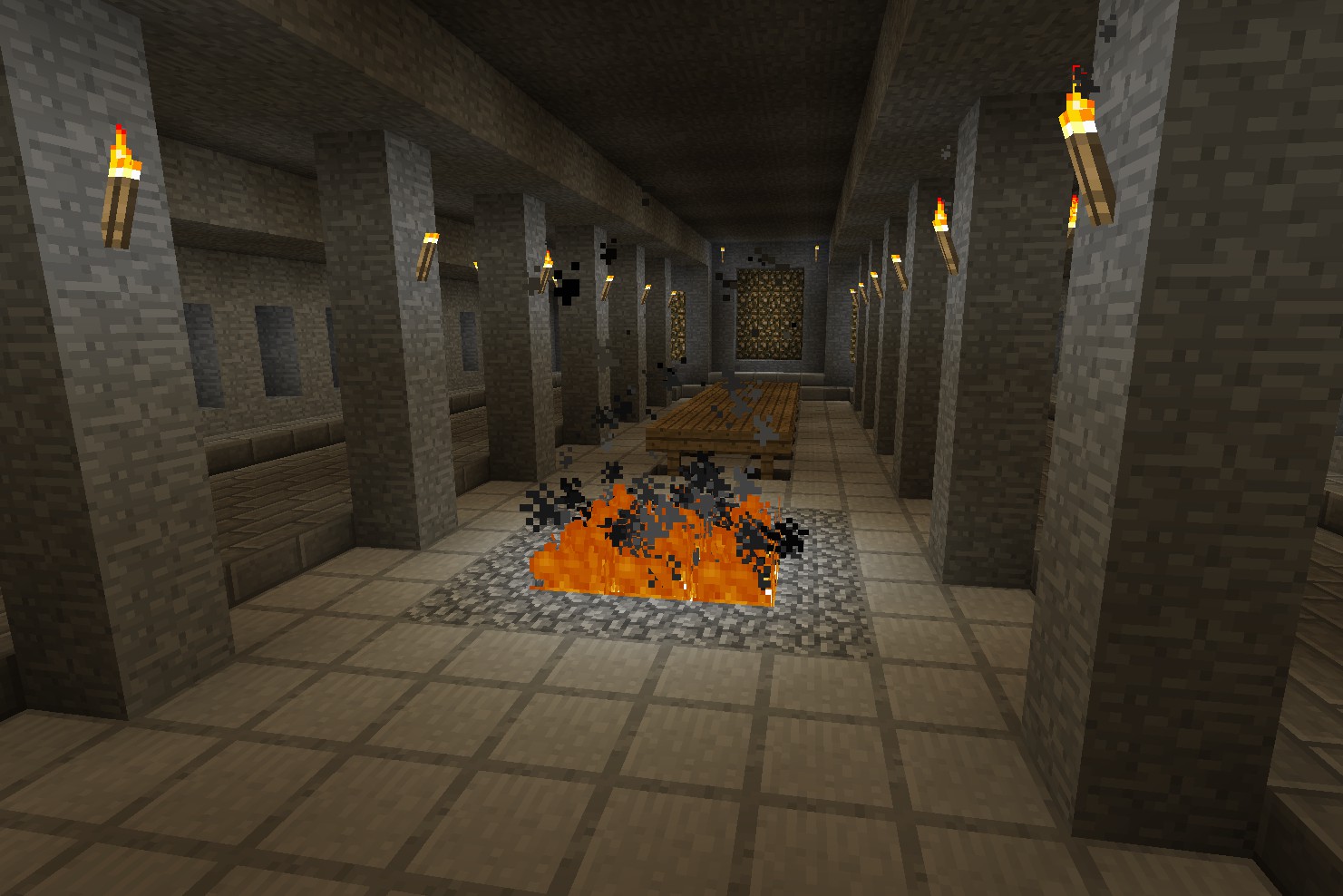
I got it so that I could play with my brother in law, but since then I’ve learned that a whole bunch of my other friends play too. I’ve got a pretty awesome world that I want to share with them, since multiplayer is probably a lot more fun than single player anyway. I call it New Cappadocia, and it’s basically a vast underground city that runs from the top of a mountain down to the bedrock.
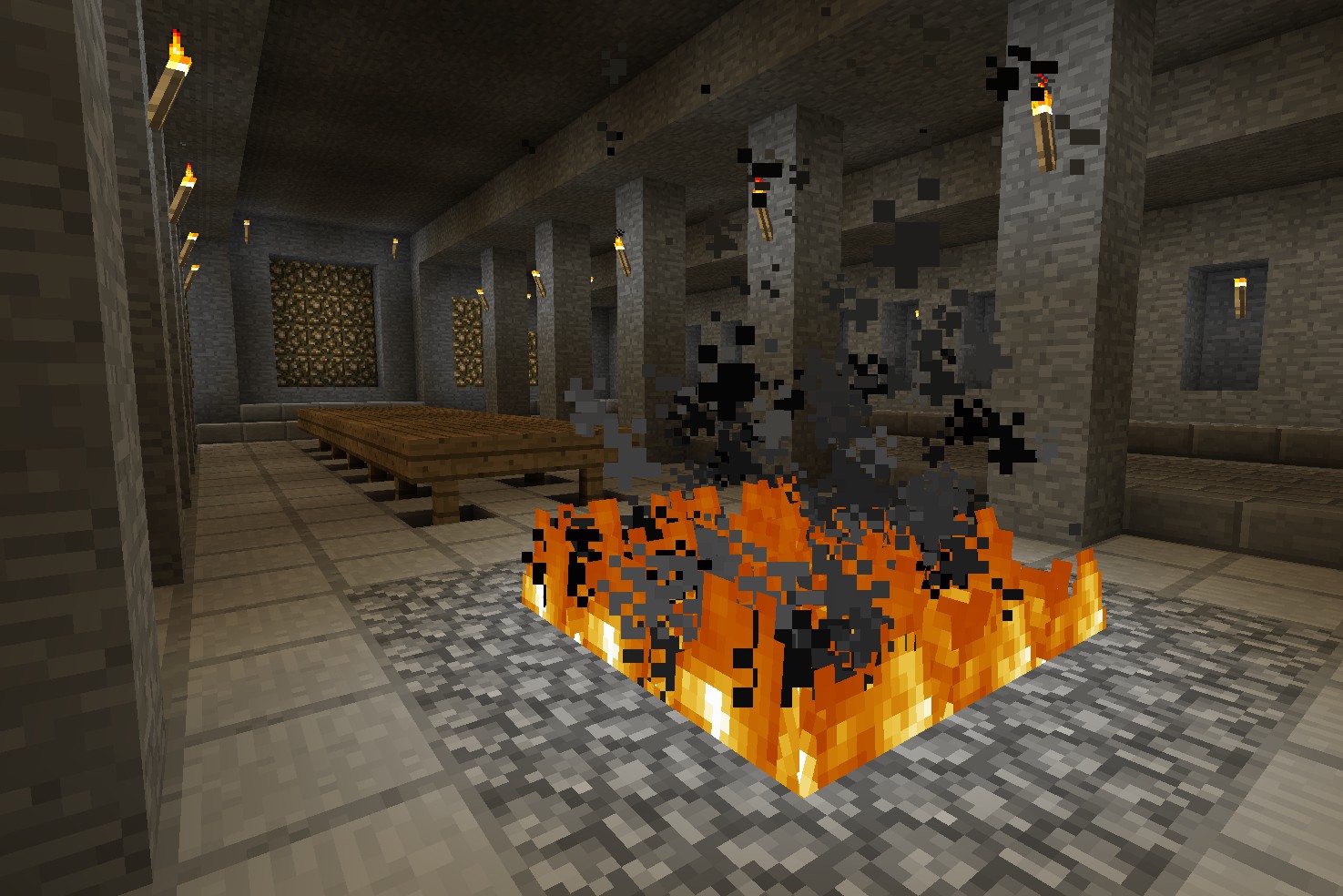
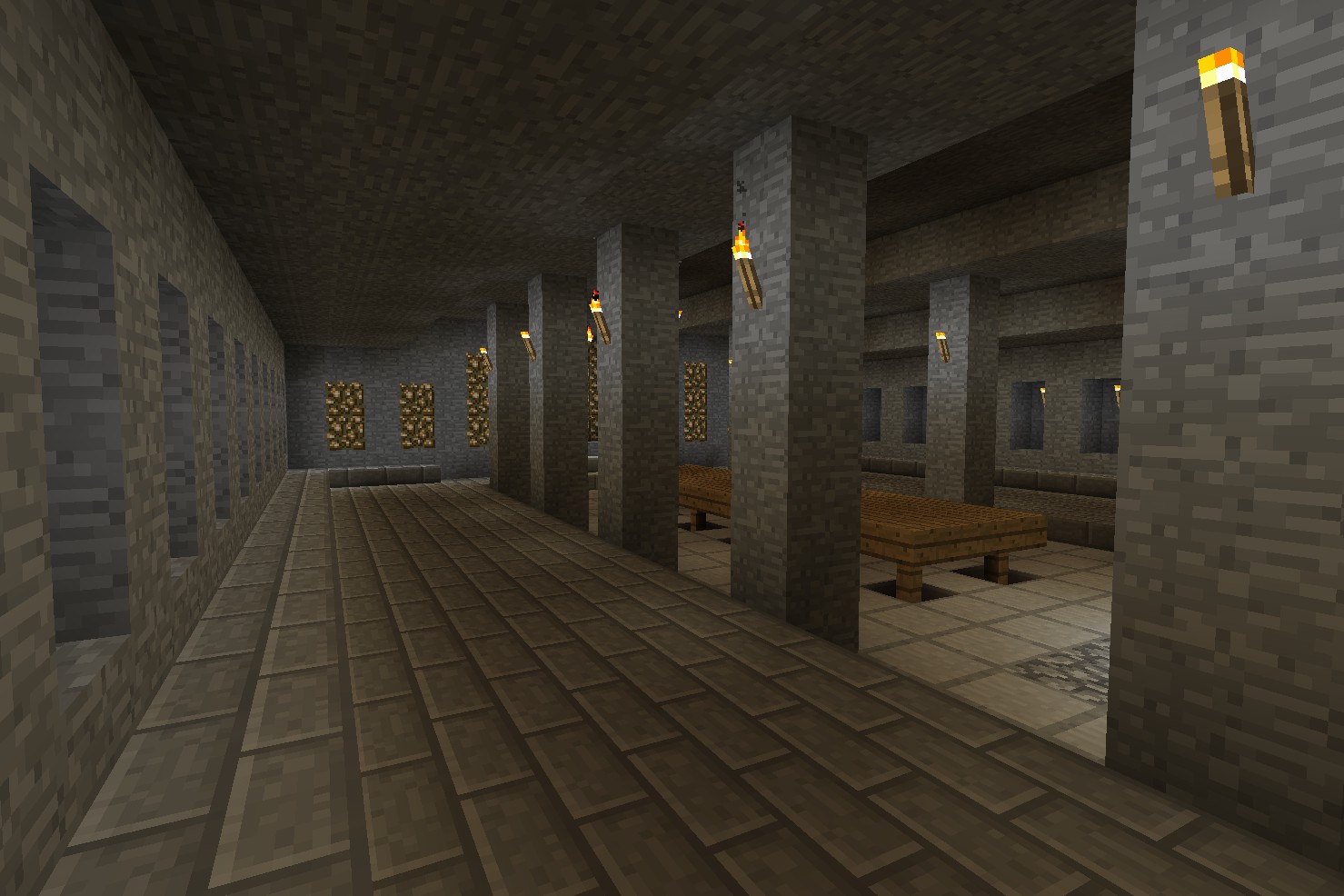
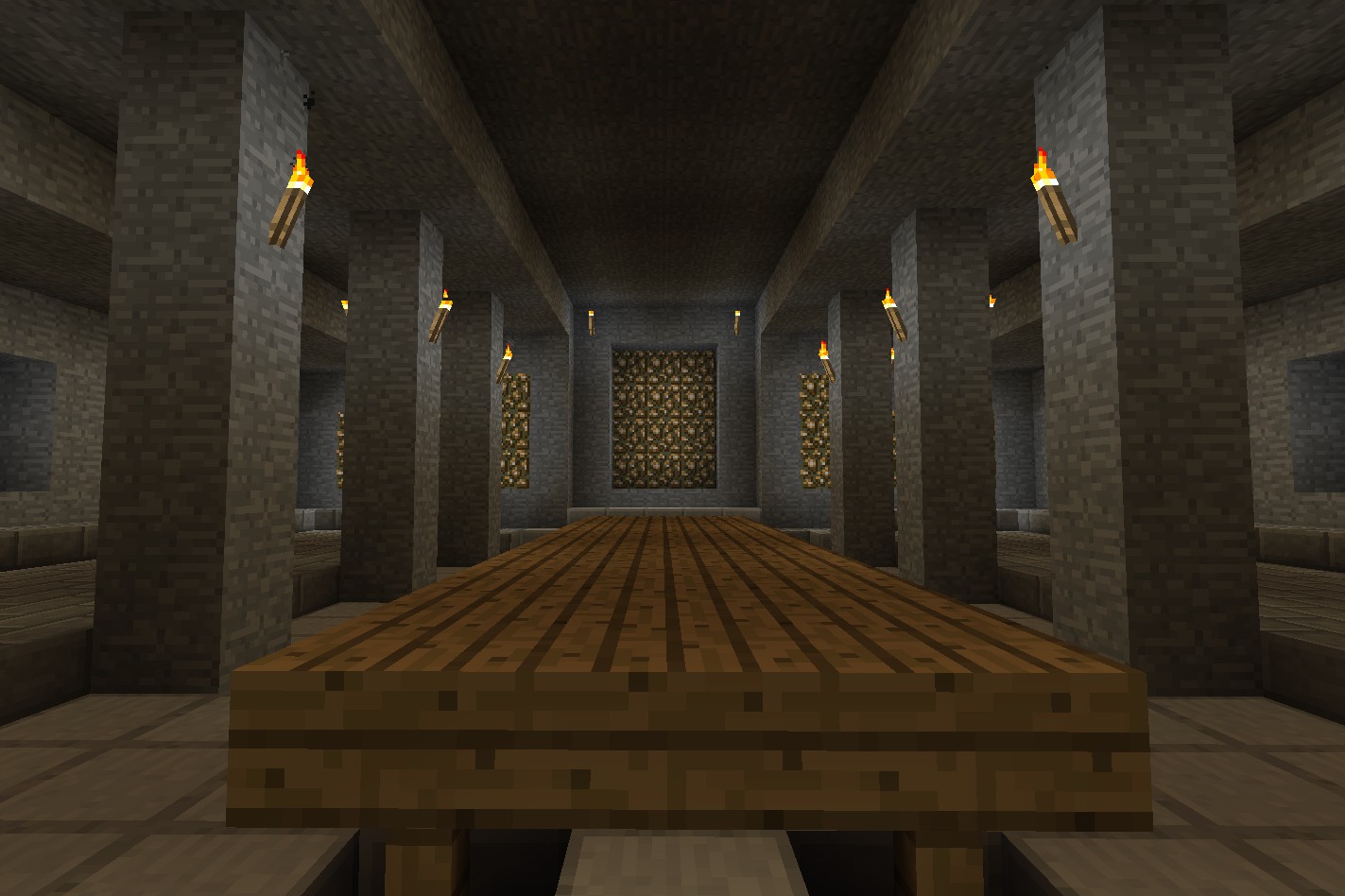
Anyhow, I just finished up the main hall. Here are some pics:
The view from the entrance.The hearth.One of the wings--not sure whether to build anything here or just leave it as is.The feasting table. Get me a tankard of ale, serving wench!
So yeah…needless to say, my productivity has taken a major hit. Fortunately, the novelty of the game has started to wear off; I managed about 2k words in Star Wanderers on Saturday, and I’ve all but got the kickstarter campaign for Desert Stars ready to launch. Last week was upside down, but this week I think I’ll be able to strike some balance. Famous last words, right?
Anyhow, if I did throw this up on a server, who would be interested in playing? I don’t want to make it too public for fear that griefers would tear it apart, but I think it would be cool to open it up to friends. My only rule would be that the physical structures have to look semi-plausible–no giant floating platforms with waterfalls that you swim up to get to the top (unless you can make it look believable).
Yep, that’s right! I finished another novel, in this case the second draft of my fourth. It’s not without its flaws, but good enough that I won’t feel humiliated for life by sending it out to my first readers.
Anyhow, here are the stats:
Worlds Away from Home 2.1 ms pages: 450 words: 96,212 file size: 219 KB chapters: 20 + prologue start date: 14 Jan 11 end date: 4 Mar 11
And the wordle:
Yeah, there are a few words that appeared a bit too frequently there. At least I know what to cut out in the next draft.
As for the song that best encapsulates the experience of writing it..hmm, I don’t know. The last couple chapters, I was kind of on a Metroid trip, so even though the old NES game has absolutely nothing to do with my story, I suppose I’d have to go with the Metroid title theme:
So yeah, those are the stats. As for my thoughts, here goes:
This draft was tough, but a lot more fun to write than the rough draft. Most of the struggle happened with the outline, which took about three or four weeks to actually come together, which is unusual for me.
I did a complete read through back in the first week of December, putting everything else on hold just to write the revision notes, and ended up following almost none of it. However, it wasn’t a complete loss, because outlining it helped me to cut out a bunch of useless filler and dead-end subplots.
I tend to do a lot of shotgun writing on my rough drafts, which means I spew out all my ideas in every which direction, going off on useless tangents and failing to properly foreshadow the major central conflicts.
However, by writing this way, I often discover things that I never could have foreseen from the outset. So long as I’m careful to outline each successive draft and cut out all the filler crap (even the crap that I love), it usually works out in the end.
This draft is somewhere on the crappier side of rough draft vs. finished, polished product, but it’s definitely better than the first one. If the third draft is this much better than the second, I’m optimistic that I’ll have this thing polished and ready to send out before the end of the year.
But before then, I need the help that only a few dozen pairs of eyes besides my own can give. That, and a few months to sit so that I can come back to it with new eyes.
If I know you IRL and you’re interested in being a first reader, please contact me. I’m especially looking for male readers, since the target audience is probably more male than female, but I’m open to pretty much anyone who enjoys reading science fiction.
So anyways, enough of that. On to the next project!
Yesterday, I was going to write a post about how pathetic this past week was: I only wrote about 1.5k per day (while unemployed), and spent most of my time on the internet reading blogs.
However, after reading some more of Dean Wesley Smith’s blog series,Kililng the Sacred Cows of Publishing, I have to admit that this week wasn’t a total loss. Because of what I’ve read this week, I’m starting to have a major paradigm shift about the publishing world, and that likely will have a huge impact on my writing career, hopefully for the better.
If I can sum up how my views have changed into one statement, it would be this: that in order to succeed in this business and avoid the common pitfalls, I need to learn how the entire publishing system works as a whole, so that I can game it to my advantage. A lot of the hard and fast “rules” of the industry are actually myths that make for bad business, for writers as well as editors and agents. But when you look at the system from a rational choice perspective, the flaws become obvious.
Take, for example, the “rule” that editors only accept unagented submissions. What does that do for the industry? It turns agents into the first tier of gatekeepers that new writers need to get past. But agents don’t pay writers; they get a 15% commission off of the books they manage to sell (which, according to DWS, is excessive, but that’s another topic). And they don’t get paid at all for reading slush.
So agents are spending more of their time doing things that pay less money, pressuring them to take less risks and work only with what they “know” will sell. This leads them to ignore the fresh, unconventional voices that turn the tropes on their heads and have the power to take the market by storm.
Furthermore, because of their newly christened gatekeeper status, they make their writers rewrite their manuscripts until they read just like clones of Harry Potter or The Davinci Code. And when the agents’ three or four closest buddies turn the book down, they come back to the writer and tell them to write something else.
It’s an extreme view, for sure, but it has a few good points. The incentives are all in the wrong places, with too many opportunities for the gems to fall between the cracks. And while the response from everyone in publishing is to cling to the myth and scream “the system works!” I have to wonder, does it really?
This comment from one of the threads struck me with particular force:
“The biggest mistake you can make is giving complete power over to someone who will never care as much as you do.”
Youch. And yet, it makes so much sense. How many writers’ careers have been ruined by doing just that? Ceding too much power to people who simply don’t care as much as they do, all in the name of some “rule” of publishing?
Of course, that’s not to say that the publishing industry is full of cheats and sleazebags. I’ve spent some time with professionals at World Fantasy and other conventions, and I’ve been very impressed with all of them. It’s just to say that writing is a business, and that writers need to approach their careers in the same way as anyone who’s self-employed. Certainly it’s important to work with other professionals, but that doesn’t mean handing over the fate of your business to them.
So anyways, what with all the business research I’ve been doing, I suppose the last week isn’t a total loss. However, I definitely feel a need to get back into writing. My deadline for WAFH is in two weeks, and the next 40k are going to require the biggest changes. So here’s my plan for the next two weeks:
Get up at 7 am every day.
Write at least 2.5k words per day (500 during LTUE).
Fill out at least 5 job applications per day.
Take a week-long Halo fast.
Probably the single biggest thing killing my creativity right now is the angst that comes from money woes. I redid my budget yesterday and realized I can get by this month without dipping too deeply into reserves, but still, that’s no substitute for a reliable source of income. Trouble is, it’s hard to find motivation to apply for jobs when most employers don’t even respond to your application, but hopefully a concrete goal will make that easier.
As for Halo, as much as I love the game, I just don’t have time for it right now. Personal writing deadlines are coming up, LTUE is just around the corner, and I’m falling too far behind to spend my time on video games.
I’m also going to make a concerted effort to get up earlier. If I stay up past midnight, I’m usually just dicking around on the internet, whereas my mornings are almost always productive. Plus, I hate sleeping in–hate it. Gotta get up earlier.
So anyhow, that’s the plan. Now, if you’ll excuse me, I’ve got some writing to do…
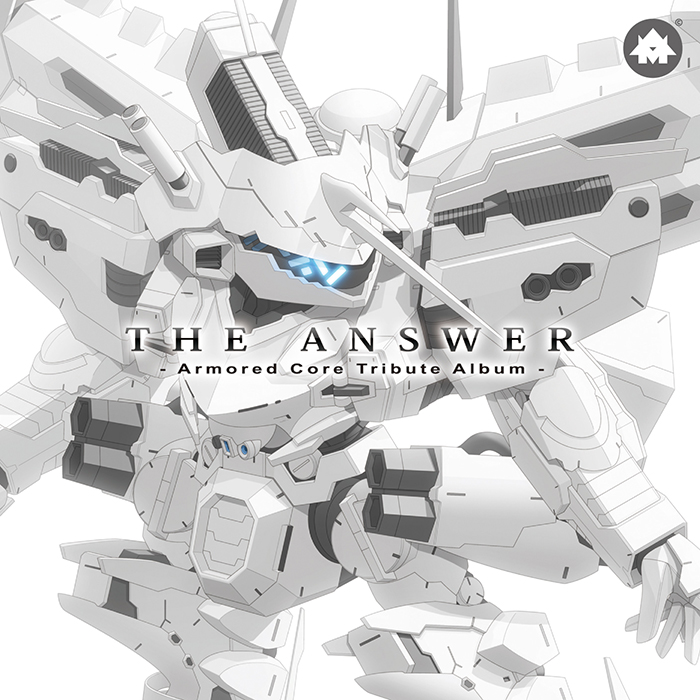
So overclocked remix came out with a new album a few days ago, and it is absolutely fantastic. It’s called THE ANSWER, and it’s a fanmade album of music from the Armored Core series.
For those of you who don’t know, ocremix is an online community of video game music fans. It’s got a database of almost two thousand fanmade remixes of popular game tracks, and all of them are available for free download.
THE ANSWER is ocr’s 21st album project, and in my opinion it is one of the best. It’s full of happy, high-energy techno mixed with guitar and drums, and the quality of production is quite good. While each track is unique, there are enough recurring elements that the album feels very coherent as a whole. In that, it reminds me a bit of Humans + Gears and Summoning of Spirits.
Anyhow, the album is available for free from the project’s webpage. You should definitely check it out, even if you’ve never heard of the Armored Core games. Good stuff– ocremix is definitely starting the year out right!
Speaking of which, remember how I mentioned I wanted to make an album of original chiptune music this year? Well, I found a program for doing just that!
It’s called MilkyTracker, and it’s an open source program based off of FastTracker 2, an old DOS program for writing computer music. The interface is way old school–makes me feel like I’m on my old 386 from the 90s. Ah, those were the good days…
Anyhow, after playing around with it for a while, I wrote an 8-bit style remix of Son of Flynn, the third track on the Tron: Legacy soundtrack by Daft Punk. Several excellent chiptune arrangements of songs from the Tron soundtrack have been popping up recently, so I thought I’d get in on the action.
Here it is:
Pretty sweet, huh? You can download the original file here, but unfortunately I don’t know how to convert .xm to .mp3, so unless you have a media player that can read extended module files, all I can say is go fish.
Anyhow, that’s what I’ve been up to these past few days. Haven’t gotten a whole lot of writing done, but I’m slowly transitioning back into WAFH and getting excited about it again. I’m not sure if I’ll be able to finish it before LTUE as I’d hoped, but a February 28th deadline seems reasonable. More on that later, for sure.