Thoughts on outlining

I’m on track to finish my fifth novel in a couple days, and surprisingly, the writing has been going very smoothly.

Usually by this point, my eyes are bleeding and I feel as if I have a hundred caltrops in my pants.  Finishing a rough draft is still the hardest part for me, since by the end everything seems to suck and I just want to trash the whole project.

I still feel a little bit of that with Into the Nebulous Deep, but not nearly as much as with my previous stuff.  Part of that is probably because I feel confident that I can fix whatever I screw up, but the other part probably has to do with the way I’ve learned to outline.  In one short sentence, here’s what I’ve learned:

An outline is simply the story you tell yourself to help you tell the story.

I don’t think there’s any mortal writer on this planet who can keep a whole novel in their head at one time.  Scenes, yes; chapters, maybe; novels, absolutely not.

However, since everyone’s creative mind works a little differently, everyone has to find the process that works for them.  Brandon Sanderson, for example, writes story bibles that are almost 100k words long.  If I were to try to do that, I’d get bored halfway through and spend the rest of the day dorking around on youtube.  Other people prefer to fly by the seat of their pants, and while there’s something to say about trusting your subconscious, I need a little structure to keep from getting totally lost.

It took me a while to figure out the process that best works for me, but based on how ITND has been going, I think I’ve hit my stride.  Breaking it down into plot, setting, and character, here’s how I basically do it:

Plot

For me, the basic plot of the story comes in a flash of creative insight once all the ideas in my head have reached a critical mass.  It’s like watching a fissure shoot across a smashed window pane, or lightning arcing from the ground to the sky.

If I don’t have time to start the project right away, I’ll let the plot mull around in my head for a couple days, then open up notepad and free write the basic structure of the story in an unedited stream of consciousness.  When I do start the project, I’ll look back to the free write to refresh my memory, but otherwise work out of what’s in my head (which may have changed).

While the project is ongoing, I’ll divide the whole novel into parts, chapters, and scenes.  For the chapter I’m currently working on, I’ll have the various scenes listed in bold with their corresponding point of view character (eg: “1.1: James“), followed by a brief one or two line description of the action and plot significance.  If I introduce a new character in that scene, I’ll write their name in ALL CAPS (I believe that’s a screenwriting convention I picked up from my old college roommate).

For chapters I haven’t written yet, I just write a few lines of description for what I envision happening in them.  When I first start out, I usually have a clear idea where I want the story to end, but I don’t bother outlining all the stuff in the middle since that usually changes based on stuff that comes before.  I only keep my outline a few chapters ahead of where I currently am, and may change things completely if something new comes up.

This process works very well for me.  I use it for every draft, and refer to it often.

Character

I’ve found that I need to do a lot more outlining to figure out my characters than I do with my plot.  However, it’s like Tracy Hickman said with the marbles: don’t hold onto your outline too tight, or all the marbles will slip out between your fingers.

The things I absolutely need to know about my characters are:

  • back story
  • motivations
  • first impressions
  • flaws & handicaps
  • strengths & advantages
  • why the reader should care about / sympathize with them

For some odd reason, I find it most helpful to write this out longhand, usually while taking a walk.  For additional help, sometimes I’ll take a personality test on behalf of my character and get a handle on them through their personality type; for that, I prefer the Meyers-Briggs typology.

But once I feel I have a solid handle on a character, I’ll throw everything out if it feels instinctively right for a character to do something completely different.  Thing is, I need the outline (especially the motivations and back story) to get to the point where I know the character well enough to let them take over.

And for some reason, all my main characters feel too…generic.  I’m not sure why, but that’s something I’ve got to work on.

Setting

Setting, for me, is all about discovery writing.  I’ve tried using wikidpad to worldbuild my universe before I start, but that’s never worked.  Instead, I daydream a lot and trust my subconscious to give me what I need when I need it.

That’s not to say I don’t do research–just that most of my research is on the fly.  If I only stay on wikipedia and the footnotes and references, no problem; if I get sidetracked on facebook, however…

Often, when I’m doing setting descriptions, I’ll run a quick google image search to pull up pictures to give me a better visual idea of what I’m describing.  I especially use this for clothing; that’s why, if you check my search history (please don’t), you’ll find all these weird, girly terms like “ottoman dress,” “jumpsuit,” “leather jerkin,” and “full frontal snogging” (whoops, where did THAT come from??).

The big problem is when I figure something at the beginning of the book and then forget about it halfway through.  For that reason, I should probably invest in a good copy editor when I start to publish.  I should also take the time to draw out a starmap, since it’s getting REALLY hard for me to remember where the Belarian system is in relation to Tajjur and Karduna Prime…hmm…

I should probably figure out a better system to keep track of my settings, but as far as outlining them goes, the less the better.  I love waving my hand and creating stuff–it’s one of the main reasons why I’m a science fiction writer.

So anyways, that’s more or less the outlining system I currently use.  I might end up outgrowing certain aspects of it, or finding a better system, but this is what works best for me now.

Of course, I still have a lot to learn.

Where will Joe go?

Just a quick and dirty update before bed, because hey it’s been forever since I’ve posted to this thing.

Holy crap, this last week was CRAZY for my family!  Youngest sister got married, middle sister had a baby, and oldest sister…well, I’m not at liberty to discuss that yet.  But congratulations to all of you!

It was fun to get out and see everyone, but now that I’m back, man I’m looking forward to the next month.  Wrote 2.5k words today in ITND, only two more chapters and an epilogue to go.

And strangely enough, I don’t feel like the project totally sucks.  Usually by this point, my fingertips are bleeding it hurts so much to write.  But no, even though this is a rough draft and it needs some major story level edits, I don’t feel that it totally sucks (knock on wood).

Now, whether that’s a sign that I’m maturing as a writer, or simply self-delusion …your guess is as good as mine.  Probably better, actually.

One thing I’m really wondering about, though, are my post-summer plans.  Originally, I was thinking of taking a year to teach English someplace where I could earn enough money to live off of until I break in with my novels.  Now…well, I’m not so sure.  I’d love to go back to the Middle East, or maybe someplace like Georgia on the TLG program, but Korea…I dunno.

As some of you know, I’m in a local Provo band.  Right now, we’re just writing music, but it’s coming along quite well, and we’re hoping to start putting on shows in August.  Except…that’s when I’d be leaving, if I were going to Korea.  For a year.

Also, I’d miss out on some prime opportunities to build my writing career, like Worldcon, and that seems rather foolish if what I really want to do is be a writer.

The TLG program looks interesting because 1) it’s closer to the Middle East, geographically and culturally, 2) it’s much shorter, and 3) the program isn’t quite as rigorous.  In short, it seems like a great way to test out whether I can juggle a TEFL career with my writing, whether I’m suited to TEFL, and whether dropping everything to travel for a while is really a good idea.

Trouble is, the program doesn’t pay much, so I wouldn’t be any better off financially once I get back to the states.  Also, if I sign up now, I’d still be there through much of the fall, cutting me out of band stuff.

But if I do decide to stay in Utah for the medium term, I feel like I should at least get something out of it–like, say, a master’s degree.  In something.  Not sure what yet, but I’ll start looking into that ASAP.

Man, I can just imagine my parents cringing as they read this…

But I still haven’t nixed Korea as an option.  The applications are still going through, and I plan on completing the online TEFL course this month.  Perhaps finishing the course will help me find out if this is what I want to do.  I don’t know.

But what I really want to do (besides go back to the Middle East) is write.  And I’m not going to lose sight of that, no matter what happens.

Why I am not afraid of the Noise

One of the biggest concerns for writers considering indie publishing is the fear of being drowned out by “the Noise”–all the obnoxious crap that will inevitably pile up because everyone thinks they can write a book.  After all, if anyone can self publish, anyone WILL self publish, including all the hordes of terrible, terrible writers.  In such an environment, how will anyone find you?

I’ve been thinking a lot about this, and reading a lot of author blogs to hear their take on this issue.  While I was afraid of the Noise at first, I’m not that worried about it anymore.  Here’s why:

1) The Noise has always existed.

The Noise is not a new problem.  Anyone with a printer and/or internet access can submit their stuff to agents and editors–and they do.  It’s called the “slushpile.”

Under the old system, good stories would never find their audience unless they got picked up by one of a handful of editors.  Problem is, this creates a huge bottleneck that only amplifies the Noise, making it even harder to get noticed.  Editors outsourced the slushpile to agents, but this only made it worse, like adding an extra level of bureaucracy to an already inefficient system.

The way I see it, if I’m going to have to fight the Noise one way or another, I would rather have direct access to my potential readership than be forced to submit to an overworked editor who doesn’t have time to give my work fair consideration.

2) Epublishing gives books more time to find their audience.

Traditional publishing works on the “produce” model, where new books have only a few months on bookstore shelves before they’re pulled to make room for something new.  In sf&f, it’s more like a couple years for paperbacks, but it’s still the same thing.

If your book doesn’t find its audience in those first few months–and therefore doesn’t sell very well–it’s considered a failure. With epublishing, though, there’s unlimited shelf space, and that means the book will ALWAYS be available.  It might not sell for the first few months, but that’s okay–it has as much time to find its audience as it needs.

I believe that given enough time, the good stuff always rises to the top of the heap.  I would rather follow the model that gives me that time, rather than gamble on the arbitrary timetable established by the traditional publishing establishment.

3) The revolution is social.

At LTUE this year, Tracy Hickman astutely pointed out that bookselling is no longer about creating artificial marketing hype so much as making a direct and personal connection with the reader.  With modern social networking platforms, writers can connect directly with their audience in a meaningful, peer to peer manner, expanding their readership naturally.

If we still had to rely on old, top-down marketing models, the Noise would certainly be a problem.  But with social networking, the audience is becoming much more interconnected, revolutionizing word of mouth and making it easier for writers and readers to connect than ever before.

4) Success comes at a much lower threshold.

For my purposes here, I’ll define “success” as making a full time living as a writer (>$20k/yr, though that will probably change when I’m married).

Under the old model, a $20k advance for a new writer like myself would be quite good, especially in my genre.  However, that money would get paid out over the course of several years, and I probably wouldn’t get a contract for another book until after the first book proved itself.

But the $20k is really just an advance against royalties, and the royalty rates run pretty low (<12% hardback, <8% paperback).  At those rates, I probably wouldn’t start to make a full time living until my devoted readership (those who buy my books in hardcover) numbered at least between 5,000 and 10,000.  And even then, my publisher might still drop me.

Under the current indie publishing model, though, the author gets a 70% cut.  That means that I could significantly undercut traditionally published books in price and still make more money per book. A $5 ebook earns as much at 70% as a $25 hardback at a 14% royalty rate, and will probably find its audience a lot faster because of the lower price.  With paperbacks, the difference is even more stark.

An audience of 5,000 is a drop in the bucket compared with the population of all readers.  The Noise might keep me from reaching everyone, but I don’t need to reach everyone to make a living–just a few thousand.

5) Transformational growth will greatly expand the market.

Right now, we seem to be on the verge of transformational growth in the publishing industry.  With epublishing, not only are avid readers buying more books, but more people are becoming avid readers.  This means that now, more than ever, publishing is NOT a zero sub game.

Sure, the Noise will get louder as more people self publish–but that Noise will also be spread out across a much larger market.  Even if my piece of the pie gets smaller, the pie itself is getting much, much larger, and that’s good news for everyone.

I have other reasons for not fearing the Noise, but these are the biggest ones.  Promotion is still a major question in my mind, but for now I’d rather get back to writing.  After all, that’s what I do–I’m a writer.

Disappointment and a shift in direction

So the latest round of judging for the 2011 Amazon Breakthrough Novel Award came out today…and Genesis Earth didn’t make the cut.

Oh well, at least I made it to the quarter finals.  Most of the reviews were encouraging, though the one from Publisher’s Weekly made me wonder if the reviewer had something against science fiction in general (or was perhaps underpaid and overworked, as seems to be common in traditional publishing these days).

I did notice that none of the previous years’ winners (or finalists, so far as I could tell) were science fiction–which is not to put down their quality, or the quality of the semifinalists.  It does make me wonder, however, whether part of the reason Genesis Earth didn’t move on was because of the tastes of the audience.

I’m not discouraged though.  My novel has garnered a lot of positive feedback, not only from alpha readers, but from agents and editors as well.  I know it’s got potential; just hasn’t come into its own yet.

The thing is, Genesis Earth is a YA science fiction romance novel, and the YA market is much harder to break into without an agent than adult sf&f.  I could probably find an agent if I queried around long enough, but after reading Dean Wesley Smith’s series Killing the Sacred Cows of Publishing, I’m convinced not to go that route.

At the same time, ebooks are revolutionizing the publishing world much faster than anyone had predicted.  We may pass the 50% mark in the next few months, if indeed we haven’t already.  Combine that with increasingly unfavorable contracts with traditional publishers and some disturbing accounting discrepancies at the major houses, and self-publishing is looking better and better every day.

So I’ve decided to put up Genesis Earth as my first indie published novel.  Expect to see it sometime this summer, probably in June or July.

If you’re an editor and would like to hire out your services, send me an email at joseph [dot] vasicek [at] gmail [dot] com.  I’ll send out a few test pages and ask about your rates (preferably per word).  I don’t have a whole lot of money, but I’m willing to pay for professional quality work.

If you have any ideas for cover art or a cover artist, let me know as well.  I’ll be spending a lot of time trawling Deviant Art and old Leading Edge issues, as well as analyzing traditional book covers to get a feel for that end of the business.  I’m a firm believer in the tradition of high quality science fiction and fantasy art, and want my own work to be a part of that, even if it costs a little extra.

I felt uneasy with going indie a few months ago, but right now it seems, if nothing else, like a very smart calculated risk.  The worst that can happen is that it takes a long time to find its audience, leaving me out a few hundred bucks in freelance costs until it does.  The potential benefits, on the other hand, are tremendous.

In the meantime, I’ll keep blogging about the process to share what I’m learning.  And if you want to support me, feel free to pick up one of my short stories on the Kindle and review it / blog about it / share it with a friend. The links are on the sidebar.  In the next couple of weeks, I’m going to put them up on Smashwords and B&N, so if you prefer those formats, they’ll be available soon too, I promise.

In unrelated news, my cousin Angela just got a publishing deal for her poetry chapbook!  Awesome!  I’m glad to see that someone else in the family is having some publishing success–good luck!

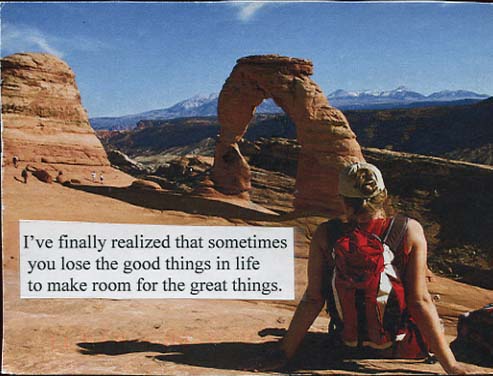
(Image courtesy postsecret)

Killing the sacred cows while doing data entry

Sorry for the lack of blog posts; I’ve been working 40 hours a week at this temp job, which doesn’t leave a lot of time for other things outside of writing.  I’m still plugging along at about 1k to 2k words per day, but a lot of other stuff is falling behind.  Fortunately, the job only lasts another two weeks, and that should earn me enough to take the next month off and focus on writing.  I’m really looking forward to that.

This job isn’t too bad; it’s tedious, but I can read blogs and listen to podcasts and music while I do it, so I’ve been catching up on a lot of business research.  Last week, I read all of Kris Rusch’s The Business Rusch Publishing blog series, and right now I’m working my way through Dean Wesley Smith’s Killing the Sacred Cows of Publishing.

Let me just say, this stuff is pure gold.  Every post (and a surprising number of the comments, especially those by Laura Resnick) have been extremely eye opening.  At the outset, almost everything Dean or Laura say about the industry seems absolutely blasphemous…but it all makes so much sense.

Like the post about how agents shouldn’t be giving authors any career advice… because they’ll usually advise you to write to the market, not to what you’re passionate about (and can therefore write well). Or how if you’re a midlister, it’s usually in the agent’s best interest to side with the editor, since they may have ten or more clients at stake in this house and you only represent a $3k annual revenue stream to them (or less).

The best piece of advice across the whole series so far comes from Dean:

Don’t listen to rules (myths) and do what works for you and if it doesn’t work, try something else, and when that stops working, try something else. Don’t do it my way or Larry Brooks way or Laura’s way or Harlan’s way. Steal parts from all of us and do it your way.

The thing I find most gratifying, however, is the fact that I figured out on my own that submitting to agents first probably isn’t the best way to break in. But man, there is so much awesome, paradigm-shifting stuff in these posts, it is amazing.  Pure gold.

In the meantime, Into the Nebulous Deep is going surprisingly well.  I should have it finished by mid-May, and though it will probably need some serious revision (unlike Dean, my creative mind gets more fired up in the revision process than the drafting process), the major story arc is coming along very nicely.

I wonder if that has to do with the fact that ITND will be my fifth completed novel.  My first one, Ashes of the Starry Sea, was mostly smooth to write, but it was also a practice novel and as such royally sucks.  Genesis Earth went through an EXTREMELY convoluted writing process, but it was good enough to get to the quarter-finalist stage of the 2011 ABNA contest (and in two days, I’ll find out if it made the semi finals…<fingers crossed>).  Bringing Stella Home was also pretty tough to write, as was Worlds Away from Home, though the revisions have been more straightforward so far.

So does this mean I’m starting to come into my stride as a novelist?  I hope so, because I want to start pushing myself.  After ITND, I want to revise WAFH in six weeks or less–and I’ll probably throw out 1/3 to 1/2 of the material and completely rewrite it.  After that, I want to do Sholpan in two or three weeks–but that shouldn’t be hard, because the material is mostly there already.  Whether Genesis Earth wins or loses the ABNA contest, I’ll want to write Edenfall–before August, if I can manage it.  And then, there’s always that post-apocalyptic blight project…

Anyhow, sorry for the rambling.  The point is, I want to take my writing to a new level this summer, and after this temp job is finished, I’ll be in a great position to do it.  In the meantime, I’ll merrily watch Dean kill the sacred cows while I fill out UPS shipping data for the next two weeks.

And now, here’s some candy for your ears:

A year later

So a year ago, I came back to Utah after a terrible internship experience, with no idea where I was going to live, how I was going to support myself, or what I was going to do with my life.  I was leaving the cloistered halls of academia and venturing for the first time out into the “real world.”

Now, a year later, I can honestly say that even though there have been ups and downs, overall it’s been a great experience.  I’ve learned a ton, both about myself and this “real world” business, and I’ve changed in some surprising ways.

How, you may ask?  Well, let’s see…

1) I never want to be salaried.

This was probably the most surprising thing I learned.  Even if my writing career never takes off, I would rather work for myself and own the value I create than work for someone else and have them own me. Even if it means not knowing where my next paycheck is coming from, I’d rather have the control, the independence, and the satisfaction of working for myself doing what I love.

Sometimes I wonder if we’ve unwittingly become a nation of wage slaves.  So many people work at jobs they hate, only to have the illusion of financial security.  Well, that’s not me, and it’s never going to be me.  I’d rather work for myself and love it than spend the rest of my life counting down the days to my next vacation, or the years to my retirement.  I’m a smart, resourceful guy; I’m sure I can figure things out.

Which brings me to the next point…

2) The idea of being an entrepreneur excites me.

Writing is not just an art, it’s a business, and the more I research the business aspect of it–or indeed, business in general–the more excited I’ve become.  Leaving academia has helped me get in touch with my entrepreneurial side, and surprisingly it’s a lot stronger than I’d thought it would be.

As a writer, I see myself as a self-employed small business owner who creates intellectual properties and licenses the rights to publishers, film makers, game designers, etc.  With ebooks, now I can sell my work directly to readers, and you have no idea how excited that makes me.  It’s not just because of all the hype surrounding Amanda Hocking or Joe Konrath–it goes much deeper into who I am.  All things being equal, I’d rather be an indie author because I see myself as an entrepreneur.

Those are probably the two biggest things I’ve learned.  I can probably summarize the others with a simple list:

  • It’s not possible to work two careers and focus all your effort on only one.  If you really want to be a writer, get a job, but focus on the writing.
  • Temp and part time jobs are much better for balancing creative pursuits, even though they offer less security (which may be an illusion anyway).
  • It takes a long time to naturally grow a blog readership, but once you hit a certain point, it grows very fast.  I assume it’s the same with books and stories.
  • Social media, when used correctly, can work magic.
  • Cheap/free headphones can sometimes work remarkably well.
  • Budgeting is not hard.  Neither are taxes (if you’re poor).
  • Never turn down a job because you think you might get a different one.
  • A creative career won’t give you security, but you can still make it work.

So, looking back, would I change anything?  Not really.  I kind of wish I’d applied earlier to teach English in Korea, but if I had, I’d have started in February, and I wouldn’t have been in a good position to take advantage of the ongoing ebook revolution.  In fact, I might not have even noticed it until I got back to the states.

My plans for now are to focus on my writing over the summer, leave in August to teach English abroad (probably in Korea, though I’m toying around with other places), spend a year or two traveling and earning money to live off of until the writing takes off.

And marriage and family…who knows?  That’s an adventure that still lies beyond my ability to foresee.  One thing is for sure, though; I’d better avoid getting trapped in any comfort zones if I want to make progress on that front.  In terms of work and career, the past year has definitely not been a comfort zone, but it’s also helped me to see what I want to do with my life–more than college, even.

The future is uncertain, but that’s what makes it so awesome.  Even if my writing career never gives me a “secure” source of income, I’m more confident now than ever that I can make it work.  Until then, I’ll be writing.

The Obligatory After-Conference Marriage Post

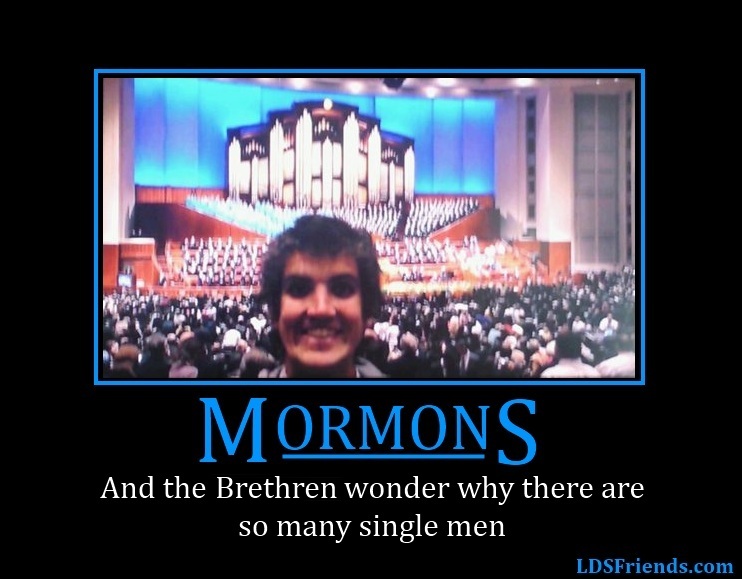
So in case you didn’t know, General Conference was this past weekend.  General Conference is this huge semi- annual conference broadcast live from Salt Lake City, where the leaders of the Church of Jesus Christ talk on a number of topics and issues relevant to the church.  This year, one of the main recurring themes was the need for young singles, especially men, to get married and settle down.

In a church where the holiest sacrament is temple marriage, where husband, wife, and children are considered sealed to each other “for time and all eternity,” this emphasis on marriage shouldn’t come as a huge surprise.  To be honest, I was more amused than anything; just a couple days before, I’d posted a comment on my sister’s blog mentioning how apathetic I am right now about dating and getting married.  Youch.

So anyhow, with my whole family nagging me about this–all of whom are married or engaged, by the way–I suppose I ought to give my thoughts on the subject.

This week’s Writing Excuses podcast was on writing romance, and while I found it extremely helpful in my own writing, I also found the points interesting as a young single adult.  According to Sarah Eden, a regency romance writer who was a guest in this episode, in order for a romance in a book to work, the characters must:

1) fulfill a need in each other,
2) create a relationship that has emotional resonance, and
3) be something for each other that no-one else can be.

Probably the biggest reason I’m not married right now (foregoing the whole “haven’t met the right person yet” question, which is valid) is because I just don’t feel like I have a need that isn’t being fulfilled.  That probably means I’m in a comfort zone, which is a bad thing, but that’s the truth.

It’s not that I’m not attracted to a fair number of women, because I definitely am.  It’s just that for most of the women in my life right now, when I ask myself “do I have a real, hungering need for her companionship?” the answer is “no.”

There have been a couple of times in my life where that wasn’t the case–where I felt infatuated with a girl and really, honestly felt that she was or could be something that no one else could be.  Long story short, for various reasons (some of which I still don’t understand), it never worked out.  Sometimes it was me, sometimes it was her, and now most of my old crushes are happily married…to other people.

And as for why I’m not looking more actively, I could go on a(nother) long rant about why the Utah dating scene really, really sucks for a person like me (doesn’t fit the cookie cutter mold, doesn’t have a secure financial future, isn’t ridiculously attractive, etc etc), but all that is beside the point.

I’ve never really seen the point in dating as a way to get to know people, since first dates are generally awkward and fake, but I’m also really bad at transitioning from friendship to something more than that. So in other words, the advice “go on more dates” helps me about as much as telling someone with clinical depression that they should just “be happy.”

Not that I’m depressed because I’m single.  I’m actually okay with it.  The thing I’m wondering, though, is whether that’s a good thing or a bad thing?

I should probably force myself to go out more often, or to at least try to connect with more eligible young women and make them a part of my life somehow.  And maybe another problem is that I’ve never really seen myself as a married person–though I doubt it, because most of my married friends have jumped into it without really knowing what life is like on the other side.

But the point is, I need to take some time and figure out how to make getting married a priority.  And really, that’s the only thing I can say for sure.

Spinning out

Just a quick post before I go to bed…and I really should, because it’s freaking late.

I feel like I’ve been getting more and more busy, yet less and less productive.  It’s @%$! frustrating.  In the last two weeks, I’ve had numerous job applications and interviews (though not as many interviews as I’d like), tons of complicated paperwork for the EPIK job in Korea I’m hoping to take come September, the only TEFL course I’m taking (in which I feel I am constantly behind), and all sorts of other random crap.

Oh, and then there’s writing.  I’ve been averaging only about 1.5k words per day, which is kind of pathetic when you realize that I don’t have regular work.

I wish I could say that I’ve been spending a lot of this extra time socializing, but sadly that isn’t the case.  I haven’t gone out on a date in months, and with each passing week I drift further and further from the people in my ward.  I’ve been pretty active with Quark, though, so that sort of makes up for things, but not enough.

One of the good things, though, is that I’ve been getting up relatively early all week–and by “relatively,” I mean before 9:00 am.  Next week’s goal: go to bed by 1:00, and get up before 8:00.  The timestamp on this post can probably tell you how much of a head start I’ve got.

Oh, and I have been exercising regularly.  That’s a good thing, I suppose.  Haven’t seen many results of that, except perhaps a slightly more active lifestyle, but it’s fun and I’ll keep it up.  Running is where I catch up on old podcasts, and I subscribe to quite a few.

I don’t know if this late night rant is useful in any way, except maybe to empathize with what it’s like when you’re busy all the time but never feel like you’re getting enough done.  I guess most people feel like that at one point or another, but it’s good to look back and see what you accomplished, like I did here.  For all the spinning out, I suppose it wasn’t a total wash.  And really, it almost never is.

But yeah, the main thing that makes me angsty is that I never feel that I’m writing enough.  I hear from everyone that with the way the publishing world is changing, fast writers have a huge advantage over slow ones.  And I know I have the ability to write fast, it’s just that I never really do it consistently.

Fast, in my mind, is 4k words or more per day.  I can hit it when I’m on, but that’s fairly rare.  Most of the time, I average between 2k and 2.5k, and my personal deadlines reflect that.

At least with ITND, however, I’ve been writing consistently every day…except today, when I took time off to revamp a short story (“From the Ice Incarnate”).  But my wordcount graph  hasn’t had any huge spikes or valleys, which is good I suppose.  The novel is coming along, if slowly, and that’s a good sign.

Anyhow, enough of this rant.  Time for bed.

A Fascinating Moral Dilemma

For FHE* tonight, we had an interesting discussion about ethical dilemmas and moral absolutes.  It started with the following question:

If you were a prisoner of war, would you consent to have sex with the prison warden if it would set you free?

The overwhelming answer, predictably enough (at least from a bunch of Mormons), was “heck no!” So then, the teacher upped the ante by asking: what if it would free one hundred other prisoners who were scheduled to die the next day?

I was a little surprised (but not really) when I was the only one who admitted that I probably would.  After all, there’s precedent for something similar in the Book of Mormon, and a very real question of whether or not the blood of the dead prisoners would be on your hands if you didn’t.  Also, I would still consider it rape, since I draw a distinction between the act of sex and the act of saving lives–IOW, the sex itself isn’t strictly consensual; it’s the cost of saving the other prisoners.

Laying aside completely the question of whether or not you can take the warden at his word, it’s a very interesting dilemma, and one that gets at the heart of what people really believe.  The fact that so many of my Mormon peers wouldn’t sleep with the guy tells you a lot about Mormon culture.  My follow up question would be: if it meant freeing yourself and the other prisoners, would you kill the warden?  Because I’m pretty sure most of them would say “heck, yes!” even though murder is typically considered to be a more heinous sin than fornication.

But anyway, the point here is that all of this makes excellent story material.  For your characters, what are the moral lines that they absolutely will not cross?  The ones where they’re a little more fuzzy?  What, for example, would a character be like whose method for choosing between two undesirable courses of action was to flip a coin–no matter the stakes?  And what about the characters like Ender Wiggins who flip the dilemma on its head by stabbing the giant in the eye?

This is the kind of stuff I love to read, and the stuff I love to write as well.  I’m hoping to pull off a really good one in Into the Nebulous Deep, but not for a couple of chapters.  Gotta set things up, get the story moving, and give the romance a little momentum.  But once the characters are all fleshed out and the stakes are insanely high, that’s when the fun begins.  Bwahahahaha!!

Man, I would make an awesome prison warden. ;P

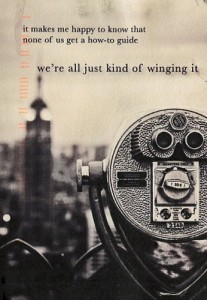
Image courtesy postsecret.

*FHE (Family Home Evening) is, for young single Mormons, roughly the equivalent of a college-aged church youth group meeting.

A few additional thoughts

So, after the last post on my ebook venture, I have a few thoughts:

I haven’t yet decided to go all out indie, so don’t think that I am.  All I’m doing right now is putting out a couple of my short stories, mostly so I can learn hands-on how the epublishing process works (and make all my mistakes with something that isn’t a full-length novel).

I write mostly space opera and science fiction adventure, and those are apparently selling pretty well.  I don’t know about horror or epic fantasy, so to all you horror / epic fantasy friends of mine, realize that my experience might not be your experience.

After looking into DBAs, LLCs, business licenses, and taxes, I’ve decided not to register as a business or set up a separate account for this venture–at least, not until I sell more than $500, which from what I understand is when the IRS requires Amazon to start reporting earnings (I could be wrong; I’m not a lawyer).  Again, I’m not doing this for the money right now, more for the experience and to learn how to do it.

Why, then, am I putting together a formal business plan?  Well, it’s more of a self-discipline thing; as a writer, I am in the eyes of the world a self-employed owner of a small business, so I want to discipline myself so that I can be successful as such.

And honestly, I think this is very exciting.  I’ve found, over the past year, that I’m the kind of guy who would rather work for himself or as an independent contractor than work for a corporation and take a salary–firstly, because I believe that the corporate paradigm is fundamentally evil, and second, because I enjoy the independence, the control over my livelihood, and the adventure of being an entrepreneur.

Anyhow, my CS friend Bryan is going to help me figure out how to publish on Kindle this Tuesday, so my short story “Memoirs of a Snowflake” will probably go live that afternoon.  As for “Decision LZ1527,” I’m probably going to spend some money on the cover art, which means figuring out contracts, payments, pricing, etc.  My my goal is to put it out sometime in April, though, and between now and then, I might put up something else.  So keep an eye out!