The key to understanding the Middle East (and possibly the world)

I just finished Douglass Murray’s latest book, On Democracies and Death Cults, and wow, is it an incredible book. Difficult to read, simply because of the grim nature of the subject, but a very powerful and very timely book.

My own thinking on Israel and the Middle East has changed a lot since the October 7th attacks. For the record, I studied Middle Eastern Studies and Arabic in college in the 00s, traveled throughout Jordan, Egypt, Israel, and Palestine / Judea & Samaria while I was pursuing my degree. I’ve kept up with geopolitical developments over the years, including during the Arab spring, and have helped some of my Arab friends navigate those developments.

The apocryphal Churchill quote that “if you’re not a liberal by your 20s, you have no heart, but if you’re not a conservative by your 50s, you have no brain” very much describes my own experience. I used to be very sympathetic toward the Palestinians, but after the October 7th attacks, my position has shifted almost 180 degrees.

The thing about the Middle East is that even though it’s complex, it’s not really that complicated. Within the Middle East, there are basically three kinds of people:

  • the Jews,
  • the people who want to kill the Jews, and
  • the people who really don’t care.

This dynamic has defined the politics of the region since at least the Babylonian sack of Jerusalem in 600 BC, and possibly quite longer. Possibly, in fact, since the very first Hebrews migrated to the region during the Bronze Age Collapse.

(As a side note, there has been a continuous Jewish presence in the Levant since our first historical records of the Jews. In other words, this is the one place in the world where the Jews are indigenous. Therefore, anyone who argues that the Jewish State of Israel is a “colonist” state is, in effect, arguing for the extermination of the Jews, because there is no other place in the world where the Jews can live and not be considered colonists. At the very least, they are laying the foundation for the ideological position that the Jews should always and everywhere be treated as subhuman.)

With the above dymanic in mind, there are only two configurations that possess any sort of inherent stability. The first is that the Jews are the people in charge of the region AND constitute the majority of the population. That way, even if all of the non-Jews fall into the kill-the-Jews camp, they are still not powerful enough to carry out their plans.

This was the state of affairs from the days of Ezra and Nehemiah basically to the Roman siege of Jerusalem. Following the Babylonian exile, the Jews returned to their homeland under the (mostly) benevolent rule of King Darius of Persia, who allowed them to rebuild the temple, which the Babylonians had destroyed. When Alexander took over the region and the Greeks began to Hellenize it, the Maccabees and other Jewish rulers still managed to hold their own.

But all of that changed when the Romans destroyed Jerusalem in 70 AD. They put down the Jewish revolt with utter ruthlessness, making a desert and calling it peace. They drove the main body of the Jews out of their ancestral homeland, making sure it would never be such a hotbed of rebellion again. They also renamed the region “Palestine,” after the ancestral enemies of the Jews, the Phillistines. The name “Palestine” was originally an insult to the conquered Jewish people, just like the name “Britain” (ie “land of the painted people”) was originally an insult to the conquered Celts. And just like the British came to own the term, the Jews also came to own the term “Palestine” until it was appropriated from them by the Levantine Arabs who wanted to kill all the Jews.

From 70 A.D. until the early 20th century, the Jews were a minority in their own homeland. And so long as their numbers didn’t get too large, things were relatively stable. Sure, there were plenty of people who still wanted to kill them all, but so long as the Jews mostly stayed out of sight, most of the non-Jews frankly didn’t care. It was only when their numbers began to grow that the I-don’t-care faction bled into the kill-them-all faction, leading to pogroms and mass rapes and all sorts of insane atrocities.

But then, in the 19th century, the Jews began to migrate back to the region in large numbers. This led to an inherently unstable configuration which persists to this day, where the Jews and non-Jews are roughly equal in number. The Jews formed the State of Israel with help from their Western patrons, who provided a degree of metastability. But the situation is not long-term stable, and hasn’t been for the last 150 years.

The Americans tried to solve this problem by bringing together the Jews and the people who want to kill the Jews—as if they could ever make peace. This was incredibly naive. So long as there are Jews, there will be people who want to kill them. Individuals may be persuaded to change their positions, but the ideologies of antisemitism are as persistent as the Jewish people themselves. The death cult will never be satisfied until all of the Jews are dead.

What October 7th showed us is that the three-way dynamic of the region is still very much in play, and that the kill-the-Jews faction is still far too strong. And given the way things are changing here in the United States, I suspect that the Jews have, at best, another generation before their Western patrons become unreliable, and the metastable nature of the current configuration begins to deteriorate.

The Abraham Accords are changing things in a very positive way. For once, instead of trying to get the Jews to make a deal with the people who want to kill them, we are moving away from that silly nonsense and cutting those people out of the equation by making a deal with everyone else (like we should have done in the beginning). And with the way that Iran was utterly defeated in the latest war, it looks like that might actually work. But even then I don’t think the situation is going to be long-term stable unless it ultimately leads to a mass resettlement of the Palestinians, because that’s the only thing (aside from the senseless massacre of millions of Israeli Jews) that puts us into a stable configuration.

I think the Israelis know this. And I think that Israel is going to get a lot more aggressive in the coming years, much to the consternation and perplexity of their friends here in the West who do not understand this three-way dynamic (or who think that the key to peace is for the Jews to play nice and not fight back, so that most of the non-Jews fall into the I-don’t-care camp).

Because here’s the thing that almost no one is talking about: the impetus for the October 7th massacre was the transportation of several red heifers to Israel from a ranch in Texas. In order to build the third Jewish temple, the land of the Temple Mount (where the Dome of the Rock and the Al-Aqsa Mosque currently stand) needs to be ritually cleansed by the ashes of a pure red heifer. The reason Hamas called their operation the “Al-Aqsa Flood” was to appeal to their Muslim brothers to defend the temple mount.

From what I understand, most Jews do not currently want to rebuild the temple, and the State of Israel itself has taken strong measures to suppress those who do. But every time the Jews have had a commanding presence in their own ancestral homeland, they have built or maintained a temple on the Temple Mount. So once they feel they’re strong enough, they will probably do it again. And when that happens (or as it is beginning to happen, perhaps even now), I think that this three-way dynamic will become much more of a global phenomenon.

Thoughts on the Israel-Iran War

I know that it’s been just a week since I said I would post less about politics and current events, but the events of the past week are so Earth-shattering that I really can’t hold back.

First, yesterday’s 200+ missile strike on Israel by Iran. For me, the scariest footage I’ve seen so far was this:

because it reminded me of this:

Obviously, Israel was not wiped off the map by Iran’s ballistic missile strike. In fact, from what I’ve heard most recently, the only casualties from that attack are one Palestinian in Judea/Samaria, and five Iranians when the missile they were prepping blew up on the launch pad. Wah wah sad trombone.

But it would be a very different story if any of those missiles had been tipped with a nuclear warhead.

So as we await Israel’s response to this unprecedented attack, I think it’s not to early to call the start of the Israel-Iran war. It’s been a long time coming, but I think it’s actually here, and I think it’s going to heat up a lot faster than most people think it will.

At this point, the two big questions on my mind are: 1) how many other countries are going to get dragged into this war, and 2) do the Iranian mullahs actually believe that they can win?

I’ll tackle the second question first. If the answer is “no,” then it means that the Iranians are being purely reactive, and this is Israel’s war to lose. And unlike the United States, which has a long track record of snatching defeat from the jaws of victory (especially under our current alleged president), the Israelis are clearly determined to win.

At the risk of waxing dangerously optimistic, I think there’s a very good chance that this is the case. The Hezbollah exploding pagers was an incredible operation that caught everyone by surprise, and the way the Israelis followed it up with the assassination of Hezbollah’s top dog Hassan Nasrallah was a massive blow that has the potential to completely reshape the Middle East. And now, with their assault on southern Lebanon, Israel has effectively eliminated Hezbollah as an existential threat to their nation, just as they have eliminated Hamas with the Gazan war.

Of course, given the nature of the escalation, the Iranians were forced to respond, and not just by shooting off a bunch of missiles into the desert for show, the way they did when Trump killed Qasam Soleimani. But such a response is guaranteed to escalate the conflict even further, to the point where Israel is now likely to take out Iran’s entire nuclear program, and possibly their oil wells too. They clearly have the capacity to do so.

Will the unpopular Islamist regime survive such a dramatic escalation? What if Mossad also assassinates a few of their mullahs, or the Ayatollah himself? Do the mullahs really think they can win?

What if they actually do?

What if they aren’t just purely reacting to events as they unfold, but are purposefully shaping events according to some script which we have yet to see? What if they want Israel to escalate, so as to drag other countries into the conflict?

I forget where I saw this statistic, but something like 70% of Iran’s oil production goes to China. If Iran’s energy sector is effectively taken offline by an Israeli strike, how will China respond? Does that make them more or less likely to launch an invasion of Taiwan, or to become more aggressive in the South China Sea?

Iran is also supplying Russia with most of their offensive drones, which the Russians have put to quite effective use in their war with Ukraine. If Israel takes out Iran’s drone production, or threatens to take it out, how will Putin respond? Will he come to Iran’s aid, the way he came to Bashir Al-Assad’s aid in the Syrian civil war? Will he expand the Russo-Ukraine war? Will he go nuclear?

If the Israel-Iran war is confined to a regional war, Israel will probably win and become a regional hegemon—and thanks to Biden’s and Obama’s catastrophic mishandling of foreign policy, the United States’ influence in the region has been and will continue to be seriously diminished. But with an Iranian defeat, the Abraham Accords are likely to become the framework for reshaping the entire region. The two-state solution to the Israeli-Palestinian conflict will be discarded, and most of the Palestinians will probably be relocated as Israel gradualy absorbs Gaza, Judea, and Samaria. Some of them may become Israelis, but most will not.

Iran’s best chance to win this war is to draw in as many other countries as it can, especially Russia and China. Will they do so? Can they do so? Do they believe they can do so? I think this question is the key.

But here’s one question I do believe that I can answer: is this the beginning of the Battle of Armageddon—the prophesied end-times conflict that will precede the second coming of Christ? No, I don’t believe that it is, for the following reasons: 1) the Jews have not yet built the third temple, 2) the Latter-day Saints have not yet built the New Jerusalem in Missouri, and 3) the world is not yet united in war against Israel. This war may be the dress rehearsal for Armageddon, and depending on the outcome, we may only be a decade or two away from it, but I don’t think this is the big event.

Not yet, in any case. As we’ve seen over the last week, the situation can change very quickly.

Thoughts on the recent escalation of the Israeli-Palestinian conflict

For the last couple of days, I’ve been going back and forth on whether to write this post. It’s not something that’s directly in my wheelhouse, and few things turn me off to other writers and artists more than when they feel a need to publicly post their every knee-jerk reaction to the political issues of the day.

But there are a few reasons why I think it would be a mistake not to post my thoughts about the recent Hamas attacks on Israel, and the new war that has broken out in the region. First, it’s a major watershed event, certainly for Israel, and probably for the rest of the world as well, especially if it spirals into a regional and ultimately a global war (which seems increasingly likely).

Second, I’ve actually had a lot of personal experience in the region, having traveled to Israel and the Palestinian territories, studied in Jordan, learned Arabic, and majored in Middle Eastern Studies and Arabic from BYU in 2010. Longtime readers will recognize the influence of all of these studies and travels on my work, especially on my earlier novels such as Desert Stars and Bringing Stella Home.

What the Hamas attacks have confirmed to me is that everything I learned in university about the Israeli-Palestinian conflict was a lie, sometimes of commission, but mostly of ommission. Compared to most schools, Brigham Young University’s MESA program is actually very ideologically balanced. But it wasn’t until after I graduated that I learned about things like taqiyya, which is a principal of the Islamic religion that it is virtuous to lie to the unbeliever in the service of Islam (and guess where all of us Kafirs get our information about Islam). Also, we never delved very deeply into the history and development of anti-semitism. As a result, when I traveled to the Middle East, I was shocked to discover that Mein Kampf is still one of the bestselling books in the Arab world. At the time, I thought it was kind of funny, but not anymore.

So the heinous attacks by Hamas on the music festival and the various towns kibbutzim in southern Israel haven’t shattered my illusions, so much as they have given me a great deal of moral clarity. And I have to say that after seeing what the Palestinians have done to these women and children, targeting, raping, slaughtering, and decapitating them, I cannot help but feel that Israel is justified in making sure that something like this can never happen again—even if it means violently displacing millions of Palestinians to bring this generations-long conflict to an end.

The two-state solution is dead. Land for peace is dead. So is any solution that would involve integrating these pre-civilizational savages into Israeli society. My younger, more naive self would argue “yes, but Hamas doesn’t represent all the Palestinians! In fact, Hamas is an authoritarian regime!” But my older, wiser self who lived through the pandemic knows that authoritarian regimes can only exist because the people living under them comply with their rule. The reason Hamas is has been in power in Gaza for more than a decade is because this wanton slaughter of Israelis is what most of the Palestinians want. Because of that, I don’t see how any lasting peace can be made, unless either Israel or Palestine is destroyed as a nation.

This is a huge shift in my own personal thinking on the conflict, because as recently as ten years ago, my sympathies lay mostly with the Palestinians. But the actions of Hamas and the Palestinian people this last weekend have forever shattered those sympathies, and none of the footage of the bombings in Gaza is going to win my sympathy back. Not after what Hamas did to those Israeli women and children.

And when I see the activists and protesters here in the US flying Palestinian flags and protesting “in solidarity” against the “occupation,” I cannot help but wonder: is this what they want for me and my family? Do the people who consider themselves part of the self-described “resistance” against capitalism, colonialism, and “whiteness” secretly want to force me to watch while they decapitate my children, rape and murder my wife, and finally murder me? Or perhaps it’s not so secret anymore, since these people are putting pictures of paragliders in their event fliers.

If you “stand with Palestine” after the events of this past weekend, I have to assume that you are either willfully ignorant, or a pre-civilizational savage who answers only to force. Perhaps both. Either way, I will never stand with Palestine again.

#GiveThanks Day Five

(61) I’m grateful for my truck and the mileage I’ve gotten out of it.

(62) I’m grateful for our Toyota Camry and the diligent service that the previous owners put in it, for it to run so well.

(63) Believe it or not, I’m actually grateful for the fact that our baby always gets up before 6am. On a good day, it allows me to get an early start to the day, and on a bad day, we just sleep in with her for a couple more hours.

(64) I’m grateful for all the baby clothes that our neighbors gave us.

(65) I’m grateful for all the board and picture books that my parents and friends gave us.

(66) I’m grateful that we have everything we need to take care of our baby’s needs.

(67) I’m grateful for the fact that I have a wife and a baby, and that my life doesn’t just revolve around me anymore.

(68) I’m grateful that I was able to grow up in an era of peacetime, between the end of the Cold War and the era of endless wars in which we now live.

(69) I’m grateful that our leaders, including President Trump, have made such incredible progress toward peace in the Middle East in just the last year.

(70) I’m grateful that I was able to read the Book of Mormon in another language (Arabic) for the first time this year.

(71) I’m grateful that I was able to see Jerusalem and spend a significant amount of time in the Holy Land while studying Arabic in college.

(72) I’m grateful for all the ways in which my experiences with Middle Eastern cultures and history have enriched my writing.

Thoughts on American Sniper

Yesterday, I saw American Sniper. In a word, it was fantastic. Super intense—so much that the friend I went to see it with had to walk out in the middle—but well, well worth it.

The movie is about Chris Kyle, a US sniper in Iraq who had an incredible number of kills. He’s credited with being the most lethal sniper in US history. And yet, at the end of the movie, he states quite openly that he can answer a clear conscience for every shot he took—including the one in the trailer, which was his first combat kill.

Pause for a minute to think about that. What must it be like to have your first ever kill be a child? There you are with your finger on the trigger, wondering if you have it in you to take another human life, and instead of an obvious combatant, you’re presented with a grenade-carrying child. On top of that, add on the fact that you’re a family man. Could you do it?

And that was just the first combat encounter of the film. Things got progressively more intense with each combat tour, with some truly evil people and some truly hard decisions.

At the same time, though, the film didn’t try to dehumanize the enemy. Again and again, Chris goes head-to-head with an enemy sniper named Mustafa who is just as good as he is. Just as we see Chris with his wife and child, we see that Mustafa has a family as well. But there are evil people in the movie—truly evil people, such as the Butcher, whose preferred instrument of death is a power drill—and we see them too. Because guess what? Those people were real, and the atrocities they committed were real as well.

I can’t imagine what it must be like to kill one person, let alone more than two hundred. And yet at the end of the film, I sincerely believe Chris Kyle when he says that he can answer a clear conscience for every shot that he took. That is what made the movie so fascinating. The man was a true hero—I don’t see how you can possibly come to any other conclusion than that.

Still, I couldn’t help but think about the wider context of the war in which Chris Kyle was fighting. Men like the Butcher exist in every society, including our own. If a foreign government had set up a brutal dictator over our country, plunged us into a ten year proxy war in which millions of our people were killed, imposed a punishing sanctions regime on us for another ten years, and finished it off by invading us, would the United States be any different? Because that’s exactly what happened in Iraq. Every enemy that we have in the Middle East is an enemy of our own creation, and the harder we try to fight them, the more enemies we create.

I don’t say this to diminish Chris Kyle at all. I admire the man tremendously, and I can only hope that I would rise to the level of his stature if given the same responsibility to protect American lives. And to be fair, American Sniper didn’t try to defend the Iraq War at all. In fact, it wasn’t even about the Iraq War—it was about a soldier who struggled to do the right thing in combat and not be consumed by the war itself. In that aspect, I think that this film was outstanding. It’s probably the most empathetic war movie that I’ve ever seen, and I would gladly watch it again.

I have tremendous respect for the men and women of the US military, and this movie reminded me why. At the same time, I have very little respect for the politicians who sacrifice the lives of these brave men and women for their political ambitions. My personal views on the subject are best reflected in this 2012 campaign ad for Ron Paul which sums up the history quite succinctly. I don’t agree with Ron Paul on every issue, but on this one, I think he’s spot on:

But yeah, American Sniper was an amazing movie—well worth seeing. It’s rated R mostly for language, so even if you don’t usually see R rated movies, don’t let the rating alone scare you away.

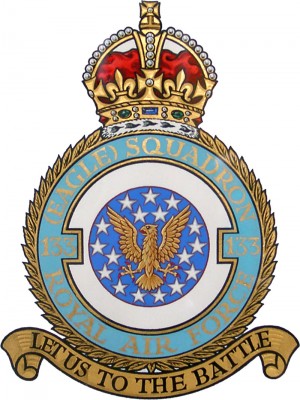
Trope Tuesday: Eagle Squadron

pdrm8846cYou’ve got your standard mercenaries: hired guns who fight for money.  Then you’ve got your fighting for a homeland types: mercenaries (usually) who used to have a cause to fight for, but now all they’ve got is each other, and maybe the hope that someday they’ll find a new homeland to replace the one they’ve lost.  Invert that, and you’ve got an eagle squadron: a ragtag bunch of volunteers who leave their homeland to fight for someone else’s cause, usually a sympathetic rebel faction or band of underdog freedom fighters.

It isn’t really fair to group these guys with mercenaries, since they aren’t fighting for money or fortune.  Far from it.  They believe so totally in the cause they’re fighting for that they’re willing to give up their lives for it, even though they could easily go home and live out their lives peaceably.  At least, that’s how it is on the idealist side of the sliding scale.  On the more cynical side, eagle squadron is really just a Legion of Lost Souls full of thugs and criminals who are hoping to clear their names.  Or, even further down the scale, perhaps they just love killing.

Even on the idealist side, there’s always the possibility that your terrorists are our freedom fighters.  After all, where did Al Qaeda come from?  The Mujahideen, volunteers from all over the Muslim world who joined with the Afghan freedom fighters against the Soviet invasion of the 80s.  When they won, it galvanized their Islamist cause and inspired them to take the fight to their homelands, many of which were ruled by dictators.  Since the United States props up many of these dictatorships, it was only a matter of time before they turned on us as well.

The name from this trope comes from three volunteer squadrons of US fighter pilots in World War II, who joined the RAF in the fight against the Nazis back when the United States was still neutral.  Since the Nazis have pretty much become the standard of all that is evil in the eyes of our modern society, the eagle squadrons are now heroes by default.  War is of course more complicated than that, though there is still room for heroism even in a world of moral ambiguity.

When the eagle squadron makes the ultimate sacrifice, you can count on them being remembered as heroes for all time.  That’s basically what happened with the Alamo: a bunch of frontier Americans sympathetic to the cause of Texan Independence went to join the fight against Santa Anna and made a bloody last stand when the war went out of their favor.  Of course, since history tends to be written by the victors, it’s arguable that this only happens if the survivors go on to win the war.  After all, plenty of expatriates volunteered to fight for the Nazis, but we don’t remember them in quite the same way.

Wow, this post turned out to be way more cynical than I’d intended.  The basic drive behind this trope is the yearning for an ideal, a cause to fight for.  We root for the eagle squadron because we want to believe that all it takes to defeat evil is for good men from across the world to take up arms against it.  If Eagle Squadron is led by the Incorruptible, then that might actually be the case, though it’s difficult to make that kind of a story anything other than black and white, one-dimensional, and utterly inauthentic.

I haven’t played with this trope too much yet, though I’ve been meaning to write a prequel book in the Gaia Nova series that tells the origin story for Danica and her band of Tajji mercenaries.  Her father was an admiral in the Tajji rebellion, and when the star system fell to the Imperials, they killed her entire family.  She escaped, though, and was taken in by an eagle squadron commander that fought alongside her father against the Imperial oppression.  After getting back on her feet, she leaves the Eagle Squadron to start her own military band, intent on getting revenge for the loss of her homeworld.  I’m not sure yet how the eagle squadron will play into that, but I see the commander as trying to dissuade her from this path.

In any case, it’s definitely a trope I want to play with.  I had a lot of fun with fighting for a homeland in Stars of Blood and Glory, so this would be a way to revisit some of the dynamics that made that story interesting.  You can definitely expect to see more of this from me in the future.

U is for Universal Translator

In science fiction, whenever two characters from different planets or different alien races have to interact with each other, they almost always speak the same language or have some sort of universal translator that magically makes them able to communicate with minimal misunderstandings.  This is especially common in Star Trek, though it happens in just about every franchise involving a far-future space opera setting of some kind.

I’ve got to be honest, I think this is a cheap plot device that almost always weakens the story.  As a writer, it’s tempting to have something like this so you don’t have to deal with any pesky language barriers, but when you do this, you remove a major potential source of conflict, thus violating the rule of drama.  Also, you make your fictional universe feel a little less grand, your aliens a little less alien.  After all, if everyone can perfectly understand each other, then there must not be a huge difference between Earth and the far side of the galaxy.

There are some times when having a universal translator allows you to broaden the story and focus on other conflicts.  For example, if some sort of interstellar legislation is under review in the grand galactic council, you can’t spend all your time focusing on basic communication difficulties.

However, if this is the case, then you can usually overcome the language barrier through other means–a galactic lingua franca, for example, or translation tools that may or may not misfire on occasion (much like Google Translate).  Of course, if you’re writing a comedy like Galaxy Quest (or parts of Star Control II), then falling back on a universal translator is forgivable.  But if you’re going for believability and a sense of wonder, this trope isn’t going to do you any favors.

While linguists and technologists have been working on translation programs for some time (and admittedly making some significant breakthroughs), I’m extremely skeptical that we will ever develop a perfect universal translator in real life.  If we do, I expect we will have to develop a sentient AI as a prerequisite, since the nuances of language are so inseparable from the things that make us human.

Here’s how translation services like Google Translate work:

  1. They amass an enormous database of language material by scanning websites, newspapers, and other documents.
  2. They analyze this database to look at word combinations and frequencies, observing the likelihood that any one word will appear in combination with any others.
  3. They compare these combinations and frequencies with those in other language databases to match words and phrases.

This data crunch method of translation works fairly well for simple words and phrases, but it falls apart in the more complex grammatical structures.  I see this any time I try to use Google Translate with an Arabic source.  Arabic is an extremely eloquent language, with all sorts of structures that simply don’t work in English.  One mistranslated word can completely change the meaning of the entire text, and even when it works, the technically correct English translation sounds as if it’s full of errors.

The methodology also falls apart for languages that are too small to have much of an electronic database.  The Georgian language is a good example of this.  It’s spoken by only about 4.5 million people worldwide, most of them in the country of Georgia, which is predominantly rural.  Internet access for most of the population is very limited, and most Georgians who do communicate online tend to use the Roman or Cyrillic alphabets more often than their own.  As a result, Google Translate for Georgian is utterly useless–seriously, you’re better off just sounding out the letters and guessing at the meaning.  There are some other sites like translate.ge that try to fill the gap, but they seem to rely on actual lexicons, not databases and algorithms.

All of this is between entirely human languages that developed in parallel on the same planet–indeed, languages between human cultures that have traded and shared linguistic influences for thousands of years.  What happens when we encounter an alien race whose biology makes it impossible for them to make human-sounding noises?  Or an alien race that communicates through smell or electromagnetic impulses instead of sound?  What happens when humanity is spread out across hundreds of star systems, each of which periodically becomes isolated from the others for hundreds or even thousands of years?  When our definition of human is stretched so thin that we would not even recognize our far-future descendents as anything but alien?

There is so much wasted potential whenever a science fiction story falls back on a universal translator.  Case in point, compare Halo I, II, and III with Halo: Reach.  In the first three games, the Master Chief’s universal translator enables him to hear exactly what the enemy Covenant troops are saying.  This is great fun when you’re chasing down panicked grunts, but it tends to get old after a while.  In Halo: Reach, however, the human forces haven’t yet developed a universal translator, so everything the Covenant say is in their original language.  All of a sudden, the game went from a hilarious joyride to a serious war against aliens that felt truly alien.  That one little change did wonders to the tone and feel of the entire game.

Needless to say, you won’t find a universal translator in any of my books.  In Star Wanderers, the language barrier is the heart and soul of the story–it’s a science fiction romance between two characters from radically different worlds who don’t speak the same language, and yet overcome that to develop a strong and healthy relationship.  In Sholpan and Bringing Stella Home, Stella knows a language that is fairly similar to the one spoken by the Hameji, but there are still words and phrases that elude her.  This detail is critical because it impedes her ability to understand and adapt to the Hameji culture, leading to some major conflicts later in the book.

As someone who’s lived for significant periods of time in Europe and Asia and learned languages very different from English, I can say that the language barrier is not something that we as writers should avoid, but something that we should embrace.  There are so many interesting stories that can be told when two characters don’t speak the same language.  Please, don’t be lazy and write that out of the story through a cheap plot device!  Let your aliens be truly alien, and your worlds and cultures so fantastic that we can’t help but feel hopelessly lost in them.

Trope Tuesday: Mexican Standoff

rsz_standoff_9776In a typical standoff, such as a hostage situation, two characters face off without immediately shooting at each other.  One or both of them may be using a human shield, or be reluctant to shoot first for fear that the other will take them with him.  A Mexican standoff, however, takes that up to a whole new level.

Perhaps the best explanation is the one from Wikipedia:

A Mexican standoff is most precisely a confrontation among three opponents. The tactics for such a confrontation are substantially different than for a duel, where the first to shoot has the advantage. In a confrontation among three mutually hostile participants, the first to shoot is at a tactical disadvantage. If opponent A shoots opponent B, then while so occupied, opponent C can shoot A, thus winning the conflict. Since it is the second opponent to shoot that has the advantage, no one wants to go first.

Basically, it’s Mutually Assured Destruction (MAD) on the level of individuals rather than nations.  The classic example is the finale from The Good, the Bad, and the Ugly.  Clint Eastwood’s character rigged it, though, so the outcome was never really in dispute.  Elsewhere, things rarely end so cleanly.

If the Cavalry doesn’t show up to save the day, these situations tend to lead to a messy free for all.  Heck, that may happen even if someone from the outside comes to save the hero.

If the resulting fight has a little more thought and strategy to it, though, you’ll get a Mêlée à Trois.  This happens in The Hobbit with the Battle of Five Armies, and in Downbelow Station with the stationers, merchanters, and Captain Mallory.  It also tends to happen a lot in A Song of Ice and Fire, with the various factions in that world.  Heck, it happened in real life during the Lebanese civil war, and is probably happening right now between the Christians, Sunnis, Shia, and Alawites of Syria.

When the fight has room for a little more scheming, you’ll often see things like a gambit pileup or a kingmaker scenario.  This is where things get really tricky, and the intrigue becomes positively delicious.  It isn’t enough just to have two parties duking it out–you’ve got to have lots of characters and factions, each with their own agenda.  That way, even the weakest party can win if they can convince everyone else to fight each other.

All of that happens after the Mexican standoff, though.  The standoff itself is the moment of tension and uncertainty before the crap hits the fan.  When done well, it’s an awesome moment of tension that can really boost the suspense.  When done poorly (or just for laughs), it’s over-the-top crazy, like Duke Nukem meets Scooby Doo.

I haven’t played around with this trope too much yet.  Stars of Blood and Glory has a little more intrigue than some of my other works, but I can’t think of a specific Mexican standoff moment in the book.  The situation near the end of Desert Stars is kind of like this, but with relationships and marriage alliances rather than guns.  I’m sure that’s a different trope, but I’m not sure which one.

Yet another reason to keep trawling tvtropes…

Teaching English and other future plans

I got my flight plans today from the TLG people in Georgia!  I’ll be flying out next week from JFK, connecting in Kiev and arriving at Tbilisi Wednesday afternoon.  On Monday, I’ll take the train down to my aunt and uncle’s place in New York city and spend a couple of days with them before flying out.

As you can imagine, I’m really excited about all of this!  It’s an adventure, a chance to experience a new culture, and an opportunity to start a new career and get some good experience, both for my resume and for my writing.  Since this is such a huge change in direction, I want to do some thinking aloud about where I see myself going in the next couple of years.  If you have any ideas or suggestions, please chime in!

Stay in Georgia for 2+ years: Right now, this honestly doesn’t seem too likely, but I’m not ruling it out.  After getting some English teaching experience, I’ll probably want to take a higher paying job somewhere else.  The biggest reason to stay would be if I find a local girl I’m interested in pursuing, but that’s not why I’m going out there so I’m not planning on it.  But then again, you never know.

Spend 1+ year(s) in Georgia and take a job in the Persian Gulf region: This is probably the most likely scenario. After teaching in Georgia, I’ll hopefully be in a good position to apply for for more lucrative jobs in Saudi Arabia or the other Gulf states.  I also really want to go down there because of the chance it would give me to work on my Arabic.  From what I’ve heard, there’s not a whole lot of interaction with the local culture, but I’m sure there’s plenty to see and do–and if there isn’t, then all the more time to spend writing.

After a couple of years in the Gulf, I’ll probably have enough money saved up to come back to the US and focus for a while on my writing career. That would be pretty awesome.  Or maybe I’ll decide to take that money and travel for a bit.  The potential downside, though, is that it’ll probably be harder to find a girl in Saudi Arabia–but then again, you never know.

Spend 1+ year(s) in Georgia and take a job elsewhere in the Middle East: Not as lucrative as the gulf, but the cultural experience might be more fulfilling.  I’ve already been to Jordan once, but only long enough to barely whet my appetite. 🙂 I’ve got friends there, too, which is also huge.  And even if I go somewhere besides Jordan, it will give me a great chance to work on my Arabic, maybe even more so than the Gulf.

The biggest downside, of course, is the security situation.  With the revolution in Syria quickly turning to a bloody civil war, and the brinksmanship between Israel and Iran getting worse by the day, it doesn’t look like things are going to be any better a year from now.  I’ll have to keep an eye on developments as they happen, and stay away from the region if thing heat up too significantly.

Spend 1+ year(s) in Georgia and take a job in Eastern Europe: This would be my second preference, after taking a job in the Middle East.  I’ve got a friend in the Ukraine who says it’s really good there, and I’ve got a lot of Czech heritage so it might be good to shoot for a job in the Czech Republic as well.  I won’t be able to work my Arabic as much, but my sister is making a lot of family history breakthroughs so it would be kind of cool to get in touch with those people.  Also, the security situation is considerably less volatile.  Not sure about pay, but I’m sure it will be enough to get by.

Spend 1+ year(s) in Georgia and take a job in East Asia: I don’t have a whole lot of interest in East Asia right now, but I hear there are some fairly lucrative teaching jobs out there, and I have a lot of friends with connections to Japan and China.  It would definitely be another adventure, that’s for sure.

Spend 1+ year(s) in Georgia and come back to the United States: This is probably the least likely scenario.  My main goal in going to Georgia is to use the experience with TLG to launch into a career teaching English as a second language.  Coming back to the states after a successful run would be kind of pointless…but hey, sometimes life gets in the way, so I can’t rule it out.

Come back to the United States in June: Right now, I’m only signed up with the TLG program through June, but if I find the program agreeable I’ll probably stay on for another semester.  Probably.  It really depends, and I can’t say for sure.

If I did come back to the states after fulfilling my term, it would probably be because I change my mind about pursuing a TEFL career altogether.  The only real way I can see that happening is if teaching English seriously hinders my writing, and that seems highly unlikely (it’s only thirty hours per week, including prep time).  From everything I’ve seen, this seems like a career I’m well suited for, and one that will be much easier to balance with my writing than anything else short of working graveyard shift at a hotel.

And if, by some random fluke of luck, my books start to sell like crazy while I’m overseas, I’ll probably still pursue this career choice, at least for the next few years.  When you don’t have anything else to get you out of the house, writing can be extremely boring.  Besides, I want to have something to write about, and what better way to do that than to spend a few years living and working abroad?

So that’s what I see happening in the mid- to near-future.  I’ll definitely post regular updates on my adventures, though the main focus of this blog will still be my writing.

And as for the next week, I plan to revise through Star Wanderers: Part II before leaving, then work on the next two parts of that novel before potentially moving on to Edenfall.  Really, I have no idea what I’ll do, but before Tuesday, I want to at least get Star Wanderers: Part II ready for my first readers.

Whatever happens, it’s going to be an adventure!

The Prophet by Gibran Khalil Gibran

AL MUSTAFA the chosen and the beloved, who was a dawn unto his own day, had waited twelve years in the city of Orphalese for his ship that was to return and bear him back to the isle of his birth.  And in the twelfth year, on the seventh day of Ielol, the month of reaping, he climbed the hill without the city walls and looked seaward; and he beheld his ship coming with the mist.  Then the gates of his heart were flung open, and his joy flew far over the sea.  And he closed his eyes and prayed in the silences of his soul.

Thus begins The Prophet, a timeless masterpiece by the Lebanese poet Gibran Khalil Gibran.  As the prophet Al Mustafa prepares to leave on his ship, the people of Orphalese come one last time, asking for him to share his wisdom.  And so he does, on a variety of subjects from love to houses, clothes to prayer, beauty, pleasure, and finally, death.

I really love this book, and not only because it gives me a chance to practice my Arabic.  Just about every line in this epic poem is both moving and profound, and gives you pause not only to think, but to feel, and feel deeply.  One cannot help but feel that Khalil Gibran was a man who knew not only great joy, but also great pain in his life–pain which made his soul all the greater.

Like many things Middle East, however, the book is not without controversy. I have no doubt that many of my friends would find some words in this book with which they would strongly disagree.  Even some of my Arab friends don’t like it for (I suspect) that reason.  However, even though I don’t necessarily agree with everything in here, it’s such a thoughtful book and makes so many good points that I can’t help but love it.

The style is very Arab, which is to say it’s a lot wordier and more colorful than most modern English literature.  From what I’ve heard, though, Khalil Gibran wrote this in English first, and then translated it into Arabic.  Still, it has a distinctive Middle Eastern feel to it, which I love.  One of my favorite passages:

Yet I cannot tarry longer.

The sea that calls all things unto her calls me, and I must embark.

For to stay, though the hours burn in the night, is to freeze and crystallize and be bound in a mould.

Fain would I take with me all that is here.  But how shall I?

A voice cannot carry the tongue and the lips that gave it wings.  Alone must it seek the ether.

And alone and without his nest shall the eagle fly across the sun.

That’s exactly how I felt before I left Utah, and one of the main driving reasons why I’m leaving to start a career teaching English abroad.  In dozens of passages like this, Gibran’s words reflect my own feelings even better than anything I could ever write.

I suppose that’s what poetry is all about; using words in such a way that you can really make people feel.  Gibran is a master of that, which is probably why he’s the third bestselling poet in the world (after Shakespeare and Lao-Tzu).  Regardless, this is definitely a book that I will read over and over, in English and in Arabic.