How I Would Vote Now: 2005 Hugo Awards (Best Novel)

For some reason, I have a handful of these posts that I thought I’d scheduled months ago, but that never went out.

The Nominees
The Algebraist by Ian M. Banks

Jonathan Strange & Mr. Norell by Susanna Clarke
River of Gods by Ian McDonald
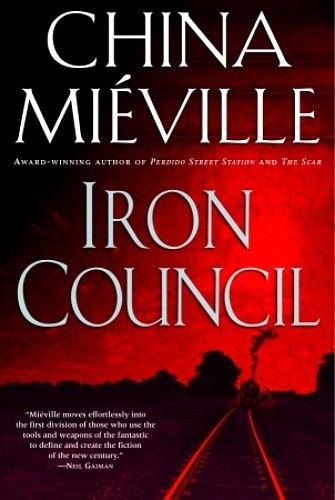
Iron Council by China Mieville
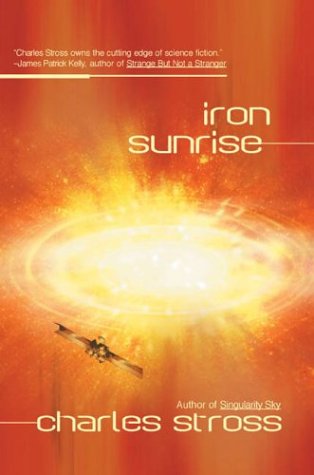
Iron Sunrise by Charles Stross

The Actual Results

  1. Jonathan Strange & Mr. Norell by Susanna Clarke
  2. River of Gods by Ian McDonald
  3. The Algebraist by Ian M. Banks
  4. Iron Sunrise by Charles Stross
  5. Iron Council by China Mieville

How I Would Vote Now

  1. No Award
  2. Jonathan Strange & Mr. Norell by Susanna Clarke

Explanation

To be frankly honest, the only book from this year that I actually picked up was Jonathan Strange & Mr. Norrell. It wasn’t a bad story, but it didn’t hook me enough to want to commit to almost 900 pages of reading. I think I got through about the first 100 pages before I gave up on it. Filling 900 pages is not a difficult thing to do; what’s difficult is filling 900 pages and making all of it compelling reason. Tolstoy, Dumas, and Tolkien all achieved that feat. Susanna Clarke’s debut novel did not achieve it, at least for me.

The reason I didn’t pick up Iron Council by China Mieville is because I DNFed his New Crobuzon series with the first book. I’ve written about this before, but the first book, Perdido Street Station, had a sex scene in one of the first chapters that was explicit enough to make me check out. That might not be an issue for most of you, but it was for me.

I didn’t pick up Iron Sunrise because I’ve read enough of Charles Stross’s other work to know that he doesn’t write the kind of books that I care to read. A lot of that comes down to explicit content as well, though I also detected a heavy strain of nihilism that I just have no interest in bringing into my life. So unless I get a strong recommendation from someone I know and trust, I’m just going to skip all of his books.

I’ve also decided to skip everything Ian Banks has written, after getting about halfway through Consider Phlebus before ultimately deciding to chuck it. In that book, there’s about a hundred page interlude where the story just comes to a stop so that the author can slip in a thinly-veiled lecture about how atheism is the only religious worldview that isn’t a scam. After getting through those hundred pages, I decided I’d read enough: Ayn Rand is just as preachy, and much more compelling.

(Interestingly enough, I don’t think I have ever read a Christian author who is as preachy or dogmatic in their Christianity as the hardcore atheists like Banks and Rand are dogmatic in their atheism. I’m sure they exist, but I have yet to discover them.)

That leaves River of Gods by Ian McDonald, but before picking up that novel, I decided to run that title by Orion, my AI assistant whom I now use to screen all of these novels for woke and explicit content before I try to read them. I trained Orion to screen these books after I had such a horrible experience reading The Man Who F***ed Himself by David Gerrold (you can read more about that here). When I ran River of Gods by Orion, this is what he said:

Synopsis (Spoiler-Free): Set in mid-21st-century India, River of Gods presents a richly woven tapestry of interconnected stories that explore a future shaped by climate change, political tensions, and technological advancements. From an AI researcher grappling with the ethical implications of her work to a comedian turned politician and a genderless individual navigating societal challenges, the novel offers a kaleidoscopic view of a diverse and fragmented world.

Explicit Content: The book includes some explicit sexual content and mature themes. Violence is present but not gratuitously described, serving to underscore the stakes of the characters’ struggles. Strong language and depictions of societal corruption also feature in the narrative.

“Woke” Elements: McDonald addresses issues like climate change, gender identity, social inequality, and the impacts of globalization, reflecting a progressive outlook. The exploration of gender fluidity and societal norms is particularly prominent, as is the novel’s focus on the intersection of tradition and modernity in India.

Overall Assessment: River of Gods is a bold, sprawling work of speculative fiction that blends science fiction concepts with cultural depth and complexity. Its explicit content and overtly progressive themes may not appeal to all readers, but its ambitious scope and richly detailed world-building make it a standout in the genre. Those who appreciate deeply layered narratives with a strong social and cultural lens will find much to admire.

The “exploration of gender fluidity” and “genderless individual navigating societal challenges” is a dead giveaway to me that this is not the kind of book I want to read. Honestly, the plot sounds a bit like Love Actually set in a near future version of India, where the love is replaced by wokeness. I suppose I could be wrong, but I don’t feel like reading 500+ pages to learn that Orion’s assessment was right. So far, he’s been surprisingly good at the other titles I’ve given him.

So much for 2005. It feels like every year since this one has been a tug-of-war between the kind of science fiction that I like, and the kind of science fiction that I absolutely cannot stand. That’s why I keep having to put No Award on the ballot for these How I Would Vote Now retrospectives. When I’m done, it will be interesting to go back and see which years got No Award and which ones didn’t. The 70s was another era where the award-winning science fiction really turned sour, but the good stuff came back in the 80s and 90s, if only briefly. I wonder if it will ever come back from what it is now.

How I would vote now: 2021 Hugo Award (Best Novel)

The Nominees

Piranesi by Susanna Clarke

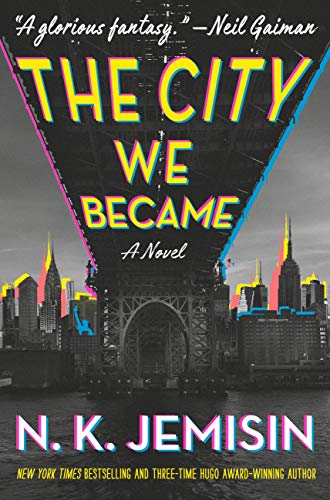
The City We Became by N.K. Jemisin

The Relentless Moon by Mary Robinette Kowal

Harrow the Ninth by Tamsyn Muir

Black Sun by Rebecca Roanhorse

Network Effect by Martha Wells

The Actual Results

  1. The Network Effect by Martha Wells
  2. The City We Became by N.K. Jemisin
  3. Piranesi by Susanna Clarke
  4. Black Sun by Rebecca Roanhorse
  5. The Relentless Moon by Mary Robinette Kowal
  6. Harrow the Ninth by Tamsyn Muir

How I Would Have Voted

  1. Network Effect by Martha Wells
  2. No Award
  3. Piranesi by Susanna Clarke

Explanation

Network Effect was pretty good. In fact, it’s my favorite Murderbot book. There was a little bit of wokery, mostly in the form of the polyamorous relationships of the humans, but that didn’t bother me as much because part of the point of the Murderbot books is that the humans are (for the most part) aggravatingly dumb and slow, so the polyamory kind of blended into the rest of the nonsense that muderbot constantly has to deal with. But I can see how it would bother some readers.

I DNFed all the other books, but I didn’t want to lump Piranesi in with all the others because it just wasn’t my kind of book. All the other ones had woke themes or tropes or other issues that turned me off immensely. I DNFed the first Lady Astronauts book when it turned into a story about the brave little woman that could and her band of misfit minorities fighting back against Captain Patriarchy. The City We Became dropped half a dozen f-bombs in the first chapter, and I think it had a gay rape scene too. Also, I have no love whatsoever for New York City. As for Black Sun and Harrow the Ninth, they both suffer from the trope that I call “death is chic.” At best, it’s an aesthetic that turns me off, and at worst it’s just a cover for outright nihilism and a pro-death, anti-life worldview that undergirds everything that I hate about our current culture.

As a side note, I just want to say that when it comes to book blurbs, Neil Gaiman is one of the best contrarian indicators for my own personal tastes that I’ve found. He may have blurbed a book or two that I actually enjoyed, but for every book or author that I can remember, if he gave them praise, I not only didn’t like it, but actively hated it. He may actually be a better indicator for me than the Hugo Award itself, since I actually enjoyed the book that won this year—but I cannot think of a single book that Neil Gaiman blurbed that I didn’t despise.

Reading Resolution Update: June

My 2022 reading resolution: Read or DNF every novel that has won a Hugo or a Nebula award, and acquire all the good ones.

This is the last one of these resolution updates that I’m going to post here on this blog. I’ve only got three books left now: Falling Free by Lois McMaster Bujold (1989 Nebula), A Fire Upon the Deep by Vernor Vinge (1993 Hugo), and Doomsday Book by Connie Willis (1993 Hugo and Nebula). Since I already own all of those, I’ll probably finish reading them by the end of July, and the only other books I need to acquire to finish the resolution are Way Station by Clifford D. Simak (1964 Hugo), Rainbows End by Vernor Vinge (2007 Hugo), and Powers by Ursula K. Le Guin (2009 Nebula).

I will, however, do an in-depth study of the final results and post them here. There should be some interesting trends, and hopefully my own reading preferences will provide some useful insights, though really those preferences say more about me than they do about these books. Reading tastes are very subjective, so I’m sure there are a lot of good and brilliant people who love some of these books that I’ve passed on, and vice versa. But maybe sharing my own reading preferences will help others to develop their own, and if that helps to encourage more reading, that would be great.

One of the major insights that I’ve already discovered is that the best predictor that I will not like a book is if it won a Nebula without winning a Hugo. In a post last month, I speculated as to why that may be. I’ve already expanded my Hugo/Nebula award spreadsheet to include all of the nominated books as well, but I’ve blacked out the Nebula nominated books and will probably skip most of them. After all, if there’s something about the Nebula books that rubs me the wrong way, maybe I can get more use from that award by using it as a “do not read” list rather than a recommended reading list.

I’m also branching out to the Dragons and Goodreads Choice award-winning books, starting with the most recent ones and working my way back. The really neat thing about Goodreads Choice is that they post how many votes each top-20 book got in each category, and how many votes were cast in each category overall, so it’s very easy to quantify and rank each book. For example, in the science fiction category, Project Hail Mary by Andy Weir won first place in 2021 with 92,831 votes out of 281,584, or a 32.97% plurality. That is the largest plurality that any book has ever won in that category, so either Project Hail Mary is a damned good book, or all the other books really sucked—and I tend to think it’s the former, which is why I’m reading it now.

The Dragons are very different, but I haven’t read enough of them to notice any trends or form any opinions. However, there are some indications that the Dragons are the anti-Hugos/Nebulas, and to some lesser extent the anti-Goodreads Choice Awards, which seem to swing more toward the Hugo/Nebula crowd, even if most of the Hugo and Nebula nominated books only typically get between 5% and <1% of the vote. To gather more data, I’ve decided not to skip any of the Hugo/Nebula books that placed in the Goodreads Choice Award, especially since 2015 when the Sad Puppies schism really shook things up in the science fiction book world. So it will be interesting to see which of these books I think are worth reading and owning, and which ones I think aren’t.

So in short, now that I’ve (just about) read all of the Hugo and Nebula winning books, I’m going to move on to the Hugo (but not Nebula) nominated books, the Dragons, and the Goodreads Choice winners and nominees. But I’m not going to set a deadline, or hold myself to reading all of them. Rather, I’m just going to take it as a starting point, and instead set a goal of 100 pages per day, reading whatever strikes my fancy.

Books that I read and plan to or have already acquired

  • Hyperion by Dan Simmons (1990 Hugo)

Books that I did not finish

  • Startide Rising by David Brin (1984 Hugo and Nebula)
  • The Uplift War by David Brin (1988 Hugo)
  • To Say Nothing of the Dog by Connie Willis (1999 Hugo)
  • A Deepness in the Sky by Vernor Vinge (2000 Hugo)
  • Darwin’s Radio by Greg Bear (2001 Nebula)
  • Jonathan Strange & Mr. Norell by Susanna Clarke (2005 Hugo)
  • A Master of Djinn by P. Djeli Clark (2022 Nebula)

An interesting personal discovery

I just made a very interesting personal discovery, gleaned from the data on my reading of the Hugo and Nebula winning books. Of the 110 novels that have won either award, I have now read all but 16 of them, which is enough data to get some reprentative results.

One of the best predictors that I will DNF a book is whether the author is a childless woman. Of the 18 books written by childless women, I have DNFed all but three of them (Downbelow Station by C.J. Cherryh, which I read years ago and would probably DNF today, and Network Effect by Martha Wells, which is a genuinely entertaining read, and Jonathan Strange & Mr. Norell by Susanna Clarke, which I haven’t read yet). For childless men, it’s a little bit more of a crapshoot: of the 31 books written by childless men, I’ve DNFed 16 of them and read 11, but only 6 of those are books I thought were worth owning.

Conversely, one of the best predictors that I will enjoy a book is whether the author is a mother. Of the 20 books written by mothers, I have DNFed only 6 of them and read 8, all of which I think are worth owning. Of the six remaining books that I haven’t read yet, I will almost certainly finish four of them, and may finish all six. The only book by an author I haven’t already read and enjoyed is The Speed of Dark by Elizabeth Moon, which I am currently reading and will probably finish next week.

For fathers, it’s more of a mixed bag. Of the 40 books written by fathers, I have DNFed 19 of them and read 16 (12 of which I think are worth owning). Of the five that I haven’t read yet, I’ll probably DNF at least one or two, so it’s safe to assume that there’s only a 50/50 chance I’ll enjoy a book if it’s written by a father, a little better than if it’s written by a childless man but not by much.

So there’s something about female authors that makes me much more likely to enjoy their books if they’ve decided to have children, and much less likely to enjoy them if they haven’t.

But I have to couch this discovery by saying “one of the best,” because so far, the best predictor that I will DNF a book is whether it won a Nebula without also winning a Hugo. Of the 31 books that have only won the Nebula, I have DNFed a whopping 23 and finished only 3 of them, none of which I thought was worth owning. Of the remaining five, however, I will probably finish at least another three of them, and all are books that I will probably decide are worth owning (Falling Free by Lois McMaster Bujold, The Speed of Dark by Elizabeth Moon, and Powers by Ursula K. Le Guin—all of them written by mothers). If that is the case, then the child-rearing status of the author (provided that she’s a woman) will indeed be the best predictor as to whether I’ll enjoy the book.

As for the decade in which the book came out, I’m slightly more likely to enjoy it if it was written between the mid-40s (counting retro-Hugos) and the mid-60s. From the mid-60s through the 70s, I thought almost all of the award-winning books were terrible (the only exceptions were Dune by Frank Herbert, which is more a creation of the early 60s, and The Left Hand of Darkness and The Dispossessed by Ursula K. Le Guin).

I haven’t yet read all of the books that came out in the 80s and 90s, but it generally looks like a 50/50 split, slightly favoring books from the mid-80s and disfavoring books from the late 90s. For the 00s, there isn’t enough data right now to say one way or the other. It’s the one decade left where most of the Hugo and Nebula award-winning books are still on my TBR.

But starting in 2010, the books all seem to become terrible again. The only exceptions are Blackout and All Clear by Connie Willis (whose heyday for the awards was really more in the 80s and 90s), The Three-Body Problem by Cixin Liu (a Chinese author who isn’t caught up in all of the culture war baggage here in the West), and The Network Effect by Martha Wells, which once again seems to be the exception that proves the rule.