Trope Tuesday: Neutral Good

Arguably the best of the good-aligned characters, the Neutral Good can always be counted on to do the right thing, whether that means working within the system or rebelling against it.  Whether young or old, soft or shrewd, nice or not so nice, these are the guys (and girls) most likely to save the world and defeat the enemy with love.

From the easydamus character alignment page:

A neutral good character does the best that a good person can do. He is devoted to helping others. He works with kings and magistrates but does not feel beholden to them.

The Neutral Good is not devoid of weaknesses, of course.  Although they are devoted to good, their lack of commitment to law means that they are not always willing to enforce it.  Also, for those who just want to get things done, this alignment can be somewhat limiting, in the way that a commitment to any higher ideal usually is.

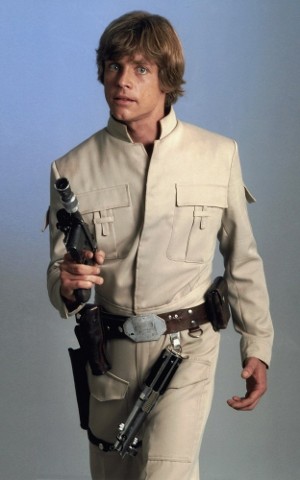
Interestingly, this is a very common alignment for heroes in space opera stories.  Case in point, Luke Skywalker: even though he’s young and reckless, he’s not above learning the ways of the force and joining the Jedi order.  Miles Vorkosigan from Lois McMaster Bujold’s Vorkosigan series also falls squarely into the Neutral Good camp.  Moving on to manga and webcomics, Alphonse and Winry from Fullmetal Alchemist both fall under this alignment, giving balance to Edward’s more chaotic outbursts.  Agatha from Girl Genius is also a Neutral Good…at least, when there aren’t any wrenches nearby.

There are quite a few characters with this alignment in my own work.  Even though she’s a mercenary captain, Danica from Bringing Stella Home falls squarely into this alignment; she’s got a tough outer shell, but she’ll do anything for her men, even…well, I don’t want to ruin Stars of Blood and Glory. 😉 Also from Bringing Stella Home / Sholpan, Stella is solidly Neutral Good, which is part of why the ending is so deliciously twisted.  In Star Wanderers, Jeremiah falls into this alignment mostly through default, which is good for Noemi because the circumstances of the novel put her totally at his mercy.  And in Desert Stars, this is probably Mira’s alignment, though she’s easily manipulated by her Neutral Evil mother.

What can I say?  I’ve got a soft spot for Neutral Goods.  Considering how well this kind of a hero fits in to a classic space adventure, it shouldn’t come as any surprise.
Trope Tuesday: Lawful Evil

If the term “villain” applies to anyone, it applies to the Lawful Evil.  Whether the evil overlord, his trusted right-hand man, or one of his devoted minions, these characters are dedicated wholeheartedly to their cause, whether they believe it will lead to a better world or not.  Taking over the world is often a major obsession, because hey, someone’s got to do it.  A staple of the evil empire, these guys often turn their country into an industrialized wasteland, though they often have propaganda machines to take care of any bad press.  Bonus points if they can transform into a freakish monster in battle.

From the easydamus character alignment page:

A lawful evil villain methodically takes what he wants within the limits of his code of conduct without regard for whom it hurts. He cares about tradition, loyalty, and order but not about freedom, dignity, or life. He plays by the rules but without mercy or compassion. He is comfortable in a hierarchy and would like to rule, but is willing to serve. He condemns others not according to their actions but according to race, religion, homeland, or social rank. He is loath to break laws or promises.

While Lawful Evils believe in following rules and keeping their word, they’re not above emotional manipulation, negotiating unfavorable contracts, or following the law in letter only.  Even so, they tend to suffer from genre blindness and bureaucratic stupidity (as well as megalomania–but hey, that’s part of the job description).

According to tvtropes, Lawful Evils come in four types:

  1. The supreme ruler, dedicated to establishing and maintaining a civic order that is itself evil.  A good example of this would be Sauron from The Lord of the Rings.
  2. A zealot or übermensch whose moral code falls outside of established social norms.  Khan from The Wrath of Khan is a pretty good example of this, as is Tyler Durden from Fight Club (though your mileage may vary).
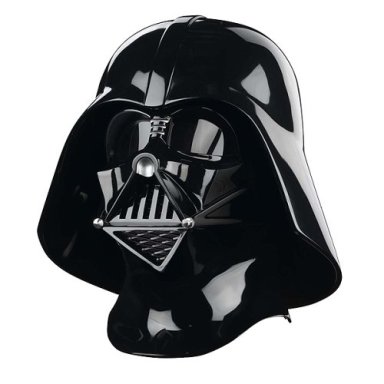
  3. The Dragon or other minion who may have their own goals, but answers to the big bad.  Darth Vader is probably the most well-known example.
  4. A complete monster who is dedicated to the destruction of free will and liberty.  The Mormon conception of Satan fits this perfectly.

The scary thing about this trope is that it actually exists in real life.  In fact, outside of our sheltered middle-class, liberal democratic existence (a relatively recent and unusual development in the eyes of history), this type of overlord tends to be the rule and not the exception.  You don’t have to look any further than North Korea, Burma, or Syria for examples of this–which is to say nothing of the Soviet Union, the Third Reich, or the British Empire.

My favorite example of this trope is probably Darth Vader, not just because of how badass he is, but because of his heel face turn at the end of Return of the Jedi.  Ignoring how bad episodes I, II, and III were, his character arc really is the thing that makes that story.  And while we’re on the subject of history, let’s not forget this epic showdown between Stalin and Hitler.  Seriously, click that link.

In my own work, the best example of a Lawful Evil would probably be Qasar from Bringing Stella Home / Sholpan.  He’s more of the affable type than a true evil overlord, though; that would be Tagatai, who doesn’t really come to power until Stars of Blood and Glory. A much more sinister example would be Emile from Heart of the Nebula, or the villain I have planned for Edenfall–I’d better finish those!  And of course, there’s Sheikh Sathi from Desert Stars, though he’s mostly a type 3 Lawful Evil under the thumb of his Neutral Evil wife.

Perhaps one of the reasons I haven’t done a truly despicable Lawful Evil yet is because I’ve been kind of sheltered here in the states.  It will be interesting to see how my writing changes after spending some time in Eastern Europe; Georgia, after all, is the homeland of Stalin.

Darth Vader helmet taken from this site.

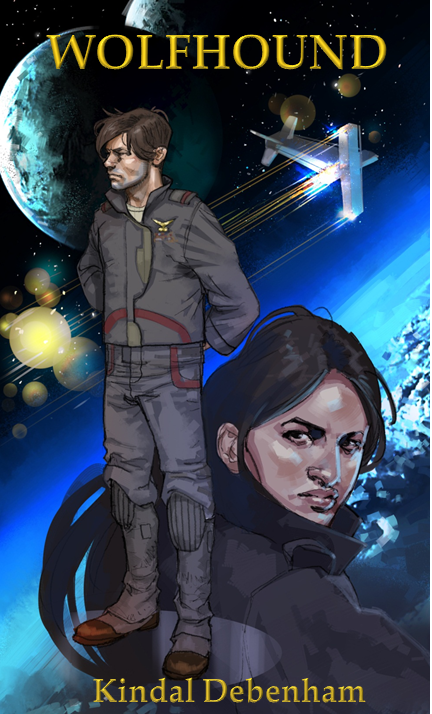
Wolfhound by Kindal Debenham

Jacob Hull may be just a spacer’s son, but he’s not afraid to dream big.  As an ensign in the Celostian Navy, his biggest dream is to pilot a destroyer like the Wolfhound, the brand new ship on which he receives his first assignment.  But when pirates attack on their training exercises and drive them far from the rest of the Celostian fleet, Hull realizes that his dream might be more than he asked for…

Full disclosure: Kindal Debenham is actually a good friend of mine–we were both members of Quark in college and still keep in touch as alpha readers for each others’ books.  That’s not why I’m saying that I loved this book, though.  I’ll admit, I had a few doubts when I first started it.  The descriptions are a little wordy, the formatting isn’t perfectly clean–but none of that really matters, because the story is AWESOME.

Why is it so awesome?  Because it’s full of characters you want to root for, facing one impossible conflict after the other, each one bigger and more daunting than the one before.  The story gets off to a decent start, but it really starts to take off after the first third or so, and just keeps getting better and better right up to the end.

Seriously, this is the kind of book I used to hunt for in the library as a kid.  It reminds me a little of the old Star Wars novels by Timothy Zahn, Kevin J. Anderson and Michael A. Stackpole.  Forget dark, dystopian futures and boring, high-concept stuff–this is some rip-roaring space opera, with stations you wish you could visit and starships you wish you could fly.

So yeah, I loved this book.  Great read; once I got into the second half, I couldn’t put it down.  If you’re a fan of space adventure stories, you should definitely check out this book.  It’s available from both Amazon and Smashwords as an indie published ebook, and it’s actually holding it’s own quite well on the Amazon bestseller lists.  It definitely deserves the spot!  Oh, and if you want to check out Kindal’s blog, you can find him here.

Trope Tuesday: The Call Knows Where You Live

Yeah, it's kind of like that.

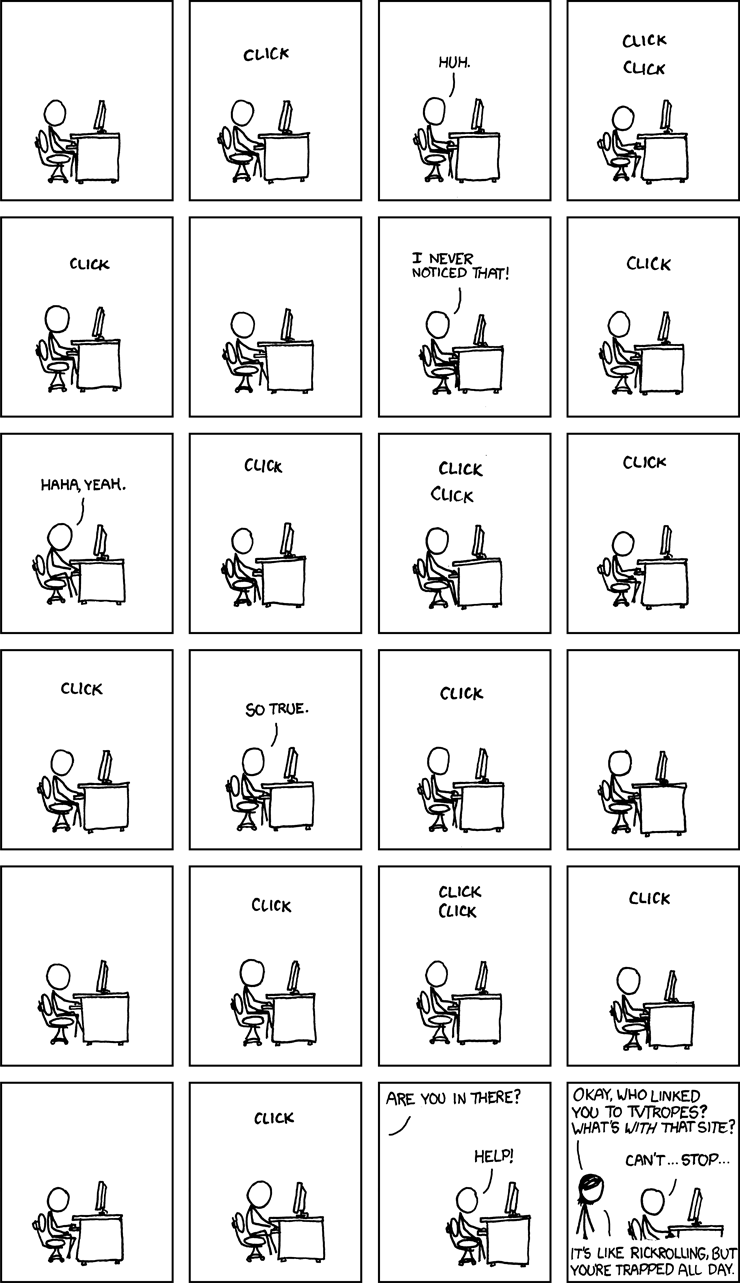
I have a confession to make: I’m a tvtropes addict.  Fortunately, it’s only about as bad as vicodin, which means that doses which would knock other people out do nothing to me–but still, I’ve wasted many, many hours on that site.

So anyhow, I thought it would be fun to do a weekly series where I pick out a trope and discuss it.  After a lot of deliberation (and much clicking), I decided to start with:

The Call Knows Where You Live

This trope stems from one of the stages of the archetypal Hero’s Journey.  The hero usually starts out in some sort of familiar setting, so that the reader gets a sense of who he is and where he’s coming from.  To get the story started, someone or something from the realm of the unfamiliar calls him to leave on an adventure.

Most of the time (but not always), the hero turns down the call at first, not wanting to leave his comfort zone.  This is called the Refusal of the Call, and it happens a lot.  In The Matrix, Neo refuses to climb outside the window to escape the agents.  In Ender’s Game, Ender Wiggin doesn’t actually want to go to Battle School, he just wants to be a normal kid and stay with his sister Valentine.  In Star Wars IV, Luke tells Obi-Wan that he can’t go to Alderaan because he’s needed on the farm.

Unfortunately, the Call is not so easily evaded.

Uncle Owen? Aunt Beru?

Sometimes, the best way to send a character off on an adventure is to have him lose everything right at the very beginning.  With nothing to hold him back, the hero is free to go off and do something truly reckless.

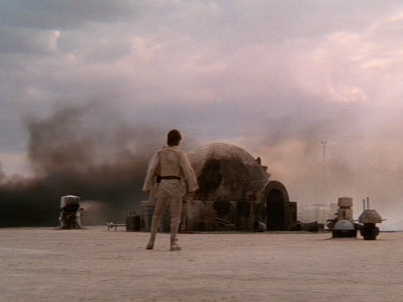
I still remember how I felt when I first saw the burning homestead scene in Star Wars IV.  The sinking feeling when I saw the smoke billowing from Luke’s house, the wide-eyed gasp at the mangled bodies of Luke’s aunt and uncle (I was so young, I had to close my eyes for that part).  All of a sudden, the conflict felt a lot more real–and a lot more inevitable.

Of course, this trope only works for a certain kind of story. If the hero’s family is dead before he even leaves his home, there had better be some serious action later on. Also, the villain had better be the real thing–if nothing else in the story lives up to the depravity at the very beginning, a major promise has been left unfulfilled.

Alternately, I suppose you could have the hero’s family killed off by a natural event, or an unintentional accident–something where he has no one to blame and no face to put to the tragedy.  I can’t think of any examples of this off the top of my head, but it seems a plausible motivation for, say, a scientist who wants to find a cure for some disease, or the source of some magnificent and dangerous anomaly.

Now, if I were an overlord, I would avoid this trope altogether by cozying up to the hero’s parents, perhaps even sending them Christmas cards.  I might consider imprisoning them alive as collateral, but that would give the hero too much of an incentive to storm my castle.  And of course, when slaughtering villages, I would make absolutely certain that everyone in the village is dead.

So what do you guys think of this trope?  Any other cool examples you can think of, or interesting ways to subvert it?  Let me know!

Blurb for Bringing Stella Home and thoughts on Borders

One of the essential elements for a successful in epublishing is a killer book description, and I think I’ve got a pretty decent one for Bringing Stella Home.  However, I could use some feedback, so if you could read it and tell me what you think, that would be great. Here it is:

It is a dark time for the galactic empire. Rebellions at Tajjur and the New Pleiades sap the empire’s strength from within, while hordes of spacefaring Hamiji warriors from the outer reaches sweep ever closer to the Imperial capitol, slagging entire worlds in their wake.

When the Hameji forces conquer his homeworld, young James McCoy runs away to rescue his older brother and sister, Ben and Stella, from their grasp. Though he faces an enemy undefeated in battle and feared throughout all of inhabited space, James will stop at nothing–not even death–to get his brother and sister back.

Things start to look up when he meets Danica Nova, a Tajji mercenary captain who takes him in and becomes his mentor. James reminds Danica of her own brother, whom she failed to protect when the empire slaughtered her family years ago. Now, she hopes to find some redemption from her demons by saving James from his own.

Unfortunately, neither of them realizes that Stella has become a concubine to the main Hameji overlord–and that Ben has been brainwashed and made into an elite shock trooper in the empath squadron sent to hunt them down.

So what do you think?  Too long, too confusing, too cliche, or too boring?  The genre (if you can’t tell) is space opera / space adventure, so I’m hoping it will appeal to fans of Orson Scott Card, C. J. Cherryh, Lois McMaster Bujold, Star Wars & Star Trek, etc.  It’s also got a slight military science fiction bent to it, though I wouldn’t presume to be qualified to write true military sf.

In unrelated news, I recently did an interview with Charlie of Playground51, which appears to be down for some reason (the link is on my Blog Tour page above).  Topics discussed include how I got the idea for Genesis Earth, which parts were inspired by real life, and thoughts on book promotion.  Hopefully the site will be up again soon!

Also, I’m thinking it’s time to do a major overhaul of my blog template.  As much as I love the current one with the purple stars and nebulae, I need something with two sidebars so that my books don’t push everything else to the bottom.  If you have some ideas for a good WordPress template that still keeps the sci-fi feel of this one, please let me know!  I’m very much open to suggestions.

Finally, since the Borders liquidation is all over the news, I thought I’d share my $.02.  It’s sad, certainly, but I don’t think that the fallout will be nearly as gloomy as Joshua Bilmes claims.

Corporate-run big box stores are certainly on the way out, but there will always be a market for good stories, and in many ways the new ebook technology is causing that market to expand at a wonderful rate.  So while the predictions of the print death spiral appear to be coming true (David Gaughran did a great post recently on that), new models will emerge–indeed, are already emerging–which will fill the vacuum.

The thing that gives me great reason to hope is that these new business models give so much power back to writers.  Instead of relying on the mercies of large media corporations to build a viable career, we can now make a living by publishing independently or going with any number of small independent presses.  Readers have more choices and writers have more options.  It’s glorious.

If anything, the Borders bankruptcy has confirmed to me that I’ve made the right choice to go indie, rather than wait for New York to anoint me before launching my career.  Will I ever go with a traditional publisher?  I’d like to someday, but I no longer feel dependent on the old system to accomplish my dreams.  Instead, it’s my readers who will decide my fate, and that’s exactly as it should be.

So thanks for reading!

4,271 words…whew!

Just a real quick post before I go to bed.

I wrote over 4k words today in WAFH–all for a chapter that I basically cooked up on the fly.  It feels amazing.

For the past month or so, I’ve been recycling old material, cutting a lot of stuff that doesn’t work, tweaking the stuff that does, and putting in a new scene here and there, but basically just doing revision (aka a “triage edit,” as Wolverton likes to call it).

I’m good at revision, but it seems that that’s all I’ve been doing for the past couple months.  The more I revise, the harder it is to write new material–or at least, the harder it feels.  I’ve always hated drafting new stuff, because midway through it all seems to fall apart and then I have to drop the project and let it settle in my mind.

But for this chapter, I basically told myself: “alright, this is what needs to happen, this is what the characters need to do–now GO!” I sped through the whole thing without paying conscious attention to the act of writing, and just pumped it all out.

Man, I need to do this more often.  Writing is so much fun!  I’m sure this stuff will need to be revised later, but the story is definitely taking form the way it needs to.

In other news, LTUE was this past weekend, and I was super lame for not posting about it.  But have no fear; I’ll recap the event soon, probably sometime tomorrow <fingers crossed>. And, as with past events, I recorded all the panels I attended.  I won’t post the links here, but if you want them, send me an email.

In unrelated news, Talecris sucks and I need a job.  Actually, correction: I need to start getting paid for the work I’m already doing by writing these novels.  One of these days, though…one of these days…

An interesting concept

Last night, I was hanging out with a friend of mine and a couple of girls in the apartment complex where I currently live.  We got to talking about books, and one of the girls said something really interesting:

Every book needs to have one thing that the main character knows that the reader doesn’t know, and one thing that the reader knows that the main character doesn’t know; otherwise, it’s too boring.

That’s a fascinating concept.  I know that both things are important, but I’ve never connected them together.

When the reader knows something that the main character doesn’t, it can make for great suspense.  A good example of this is this scene from Xenogears, when the characters are trying to hunt down a monster in the sewers (skip to 6:37):

It’s harder to pull off having the characters withhold information from the readers, but it can be done. I think a good example of this is the scene from Star Wars V: The Empire Strikes Back when the Millenium Falcon arrives at Bespin and C3PO gets shot:

Granted, nothing really vital is withheld here, since by this point Master Yoda has seen Luke’s friends in danger, and Bobba Fett has clearly followed them to Bespin–but the audience still doesn’t know exactly what’s going on, and so it creates suspense.

In terms of Orson Scott Card’s MICE quotient, this would definitely fall under the “information” component of stories. In Brandon Sanderson’s class (and in my own reading), I’ve focused a lot on character, setting (milieu), and plot (event), but I haven’t thought a lot about information.

I wonder how my own novels measure up to this principle. Let’s see…

In Genesis Earth, there are a lot of things that Michael and the reader doesn’t know, but not much that one knows and the other doesn’t. There are, however, quite a few things that Terra knows that the reader doesn’t. Those all come out in the middle, though. In terms of information withheld from the reader, I suppose you could count Terra’s feelings for Michael, in the buildup before the climax, but that’s about it.

In Mercenary Savior, the reader knows a TON of stuff that James doesn’t know–it’s a major source of the suspense in that novel. In terms of things the characters know that the reader doesn’t, there’s much less, but I can think of a few things Danica knows that are kept mysterious until a key climax. Those aren’t foreshadowed until maybe 50 or 100 pages before the reveal, but I suppose it still counts.

Thinking WAY back to my first practice novel, Ashes of the Starry Sea (which I will probably never publish), there is, again, a TON of stuff the reader knows that the characters don’t. Basically, every character is clueless in some crucial way, and the resulting comedy of errors drives the plot. In terms of information withheld from the reader, though, there’s not as much. There is a point where Ian runs off without an explanation, but I’m not sure if that’s just my own poor writing. I could probably pull it off in a revision, but I don’t know when or if that will ever happen.

So yeah, I suppose I’ve done that in my own writing. I suppose it’s much easier to do this in third person, however–Genesis Earth is entirely in first person, and there isn’t anything Michael thinks about that the reader doesn’t see. He is an unreliable narrator at times, but he’s not the character withholding the information–and if he was, I don’t think it would have worked very well.

In any case, it’s a very interesting principle. I’ll have to keep it in mind.

Climax (thank you Ennio Morricone)

Just passed the major climax in the middle of Bringing Stella Home.  In a moment that I hope is as poignant to the reader as it was to me, I…well, let’s just say I’m glad I’m not my main character.

I hit the climax doing a 1,765 word sprint, with this song playing on repeat:

So awesome. I just hope that when I wake up from this daze, my writing doesn’t suck.

Next, gotta finish up the chapter, clean up the mess, give the denouement. After every emotionally poignant climax, I think it’s critical to have a good denouement to give those emotions their proper release and bring everything full circle, bring some proper closure. Best denouement of any story I know: the Throne Room from Star Wars IV:

The denouement for my story will not be nearly so triumphant. But then again, it’s not the final climax–there’s a lot more to come, a lot more pain and suffering for my main character to endure.

I’m 2/3rds of the way through this rewrite now. I hope I’m not being too melodramatic, or that the story sucks. They say it’s not enough to be good–to make it as a writer, you have to be brilliant. Does this story have that potential? Gosh, I hope it does. As it stands, though, it sure needs a lot of work.

But still–it’s been awesome writing it.

Battle scenes are HARD

I’m in the middle of revising a major battle scene right now.  This is supposed to be one of the more important climaxes of the book, adding a lot more tension and emotion as the novel approaches the main climax.

Let me just say, writing a good battle scene is tough.  The first version of this one…yeah, it sucked.  Hardcore sucked.  I’m cutting whole sections at a time–five hundred words, eight hundred words–and completely rewriting them from the ground up.  I’m not sad to see these sections go, either–they were BAD.

I think the most difficult thing is to keep the pacing up without confusing the reader.  For that reason, I reconceptualized most of the action here and made it simpler.  I also repeated several times the main point of tension–basically, will we get out of here before reinforcements come and kick our trash?  I hate it when a fight scene is so confusing that the tension just leaks out.  I don’t want that to happen here.

At the same time, I’m trying to filter everything through the viewpoint character.  Too often, I’ll read an action scene that’s just a blow-by-blow of the physical action.  That gets boring REALLY fast.  Without character, you have no stakes.  I want the stakes to be high from the very onset.

Still, it’s hard.  I don’t know if I’m succeeding yet.  I probably won’t until I distance myself from what I’ve written tonight and take a good, hard look at it.

Since I can’t do that until the third revision, I’m not going to worry about it.  Better to write it out now and move on than to try so hard to get everything perfect that I can’t see the story for the words.

On the plus side, I’ve been listening to a LOT of Star Wars battle music while writing this.  That’s always fun!