H is for Hologram

cortanaIn real life, the term “hologram” means something fairly specific.  But in science fiction, it can mean a number of different things.

For example, in Star Wars it’s basically a three dimensional video recording projected on a flat surface.  In Halo, it’s the visual form that the AI character Cortana takes when she wants to interact with the Master Chief.  And in Star Trek, the holograms actually have a degree of physical substance, so that in some episodes they go rogue and try to take over the ship.

The basic underlying idea, though, is the same: blurring the line between the virtual world and the real world through a virtual projection that we can interact with.  And in that sense, this is actually an area where science fact is fast catching up with science fiction.

Some sub-genres, such as cyberpunk, focus almost solely on the tension between the real and the virtual.  Often set in a near-future world, cyberpunk stories often feature a crapsack future, from which the only meaningful escape is a virtual reality.  But the thing about virtual realities is that they can be reprogrammed in such a way as to give the ones controlling it almost absolute power over the lives of the people inside.  For that reason, the main characters are often hackers, struggling against the corporate evil overlords.

But holograms aren’t restricted to cyberpunk.  They’re quite common in space opera, too, and not just because they’re cool.  For one thing, they can be really useful for training simulations (which often leads to holodeck malfunctions, courtesy of the rule of drama).  They can also be useful as disguises or decoys, especially in the Halo series.

But perhaps the most memorable holograms are the ones who develop a close relationship with their real-world human counterparts.  This may include romance, which, combined with the existential angst that typically surrounds androids, robots, and cyborgs, makes for some very interesting tension.  A good example of this is Cortana from the Halo series, an alien AI who took on a younger form of her human handler, Doctor Halsey, and then developed a very close relationship with her Spartan bodyguard, the Master Chief.  It never actually went anywhere (at least in the main series arc), but it certainly made for an interesting story.

Jane from the Ender’s Game series would probably be my favorite hologram, though she’s more of a shapeshifting AI who can take many different forms, depending on what suits her.  Cortana is definitely up there too.  I haven’t used this trope much in my own fiction yet, but I’m playing with it in Heart of the Nebula, a currently unpublished direct sequel to Bringing Stella Home.  Not sure exactly where I want to take it yet, but it should be interesting.

D is for Droids

droidsSome of the best-loved characters in science fiction don’t even have a heartbeat.  Why?  They’re robots, that’s why!

Unlike the mechanical “slaves” (the original meaning of the Czech root robota) that built your car or enable your GPS devices, these robots are a lot more human.  In fact, the word “droid” is short for “android,” which comes from the Greek root for “man” (andr-) and means “manlike.”

In other words, the thing that defines these robots is that they blur the line between machine and man.  And ever since they made their first appearance in some of the earliest works of science fiction (Frankenstein by Mary Shelley was arguably the first), that’s exactly what they’ve been doing.

Star Trek loves to play with this trope, from Data in The Next Generation to the doctor in Voyager.  But where the droids in Star Trek tend to be angsty and existential, the ones who populate Star Wars already know their place and don’t have any qualms filling it.

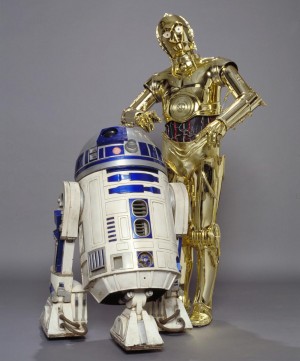
My first exposure to droids was when I saw the original Star Wars trilogy as a little boy.  An image of C3PO with his golden humanoid body wandering across the dune wastes of Tatooine will probably be stamped on my subconscious forever.  That, and the little traveling flea market the Jawas ran from their sand crawler.

One of the neat things about droids is that you can go either direction with them.  If you want to get all existential about the nature of humanity and whatnot, you can use them to explore those questions since they’re almost human but not quite.  On the other hand, if you just want an exciting space romp with some unique and interesting characters, you can bring them out as regular characters.

An advantage that droids have over humans is that they’re harder to kill and easier to bring back to life.  Star Wars leaned on this a lot, especially in episodes IV and V.  When R2D2 got shot in the battle of Yavin IV, right before Luke blew up the Death Star, I just about died.  And yet, they brought him back easily enough for the throne room scene because he’s a robot–all they had to say was “we’ll fix him up” and you knew that everything would be better.

So yeah, droids.  I haven’t done much with droids yet in my own writing, mostly because I’m a bit conflicted in my thoughts about the upper limits of AI (which I explored somewhat in Genesis Earth).  Most of my robots are actually cyborgs, and that’s something completely different.  Still, I can see myself playing with this trope at some point in the future, probably when/if I introduce some aliens or start a new series.

A is for Aliens

cantinaAlien races–what would science fiction be without them?  They’re as fundamental to the genre as elves and dwarves are to fantasy.  If you’re reading a book and an alien being from another planet shows up on the page, that in itself is usually enough to make the story science fiction.

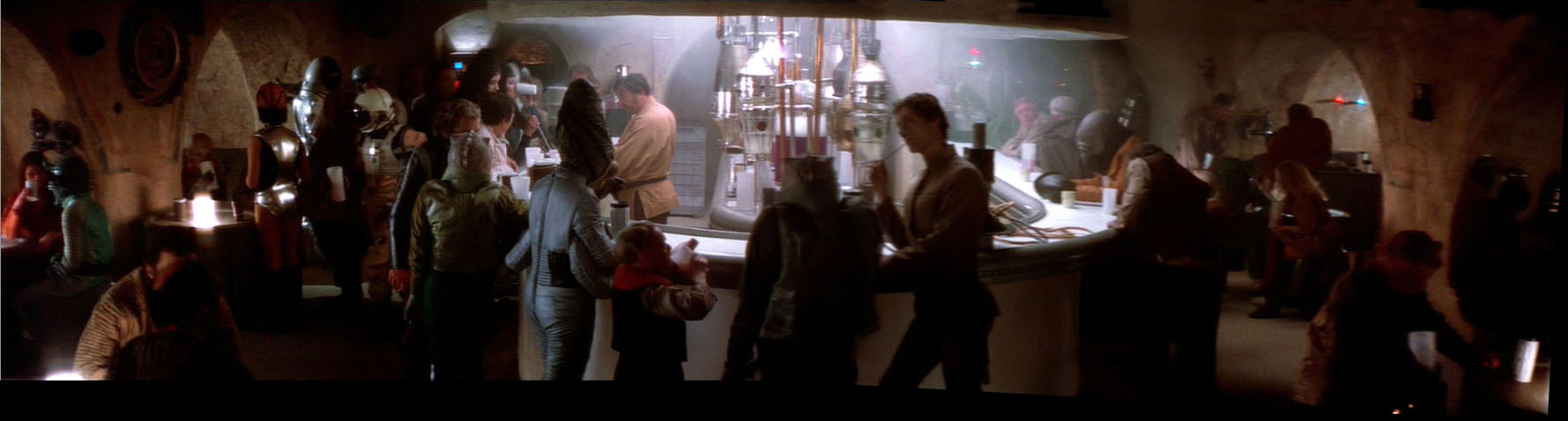
My first exposure to aliens came from Star Wars IV: A New Hope, which I saw as a kid sometime back in the early nineties.  The cantina scene with the weird, catchy music and all the frighteningly creatures both scared and fascinated me.  Here were a bunch of humans, mingling with these things that looked like monsters as if nothing were strange or unusual.  In fact, it soon became clear that these weren’t monsters at all, but regular people–that is, as regular as you can be without being human.

I think the main reason for including aliens in a space opera story is that it makes the setting feel more exotic and otherworldly.  It can also add all sorts of interesting possibilities for plot and character, depending on the different capabilities of the various alien races and the way their culture shapes them.  Babylon 5 is a great example of this, with the characters from each alien race interacting with each other in ways unique to their various cultures.

One way to think of science fictional aliens is to put them on a spectrum with two extremes.  On the one side, you have the more familiar aliens–the races from Star Trek, for example, which are basically human-like except with weird skin or bone ridges to physically distinguish them.  On the other side, you have the truly bizarre–the kinds of aliens that are so different from us, we cannot possibly conceive their thoughts or the way they see the world.

The main advantage of the more familiar alien types is that they’re easy to understand and relate to.  Yeah, they may look weird, but they don’t think or act much differently than the Russians, or the Arabs, or whatever human culture they roughly parallel.  In fact, it’s not uncommon in fiction of this type for the aliens to be less “alien” than the Japanese (at least, in Western fiction–obviously, it’s different in manga and anime).  This, in turn, is the main weakness with aliens of this type: they are so readily understandable that it’s easy to lose that sense of otherness.

The main advantage of the more extreme kind of alien is that it can make a much stronger impact, which makes for a more compelling and thought-provoking story.  For example, the Hypotheticals in Robert Charles Wilson’s Spin trilogy are so fascinating because we know so little about them.  They have the power to shape entire worlds, manipulating space and time itself, and yet none of the reasons behind what they’re doing make sense–if indeed there’s any reason behind it at all.  Or in Octavia Butler’s Xenogensis trilogy, it’s not too hard to figure out what the aliens are trying to do, but the way in which they do it, impregnating the main character through their tri-sexual biological capabilities makes for a profoundly disturbing story.

The disadvantage, of course, is that aliens of this kind are much more difficult for readers to relate to.  If the aliens are so advanced that their thoughts transcend our own, or if their sensory organs are so different that we cannot possibly conceive of how they see the world, then it’s very difficult for us to get inside of their heads.  For this reason, aliens of this kind tend to become more of a force of nature than actual characters–or characters in the aggregate, in the way that humanity is the main character of most of Arthur C. Clarke’s books.

Personally, I’m more of a fan of the extreme alien type.  The universe is so vast, and our understanding of it is so lacking, that it rings a lot truer to me.  The odds that we are alone in the universe are so infinitesimally small that refusing to believe in the existence of aliens would be akin to believing in 1492 that the Earth is flat, and yet if/when we ever make contact, I can’t help but wonder how different from us they’ll be.  So much of what we take for granted is just a fluke of our particular circumstances here on this planet–the chance combination of so many variables that changing any one of them would completely rewrite the story of how our species evolved, much less our civilization.

There is a place for the more familiar aliens of space opera, though. They make for some very entertaining stories, provide a fun escape from this world when that’s what we need.  They also give us a chance to look at ourselves through a lens that strips away our stereotypes and prejudices.  We might have some very strong opinions about immigrants, for example, or people of a different race or color, but none of us are prejudiced against Sand People, or Klingons, or Androsynth.  In space opera, most alien races are loosely based on real-world cultures, so it’s possible to draw parallels without all the cultural and historical baggage.

In a sense, all fiction is just the culture speaking to itself, so when we read about aliens we are really reading about ourselves.  Encountering the Other in a non-threatening fictional world enables us to face the real-world Other with understanding and compassion.

I haven’t written very many alien stories yet, but I have a couple cooking in the back of my mind.  Genesis Earth has an alien encounter with a bit of a twist to it, but the characters in my Star Wanderers and Gaia Nova series are all human (well, mostly).  If/when I do introduce an alien race, I plan to do it right, which will almost certainly involve a first contact story.  But that’s for Saturday’s blog post, not today’s.

Trope Tuesday: Freudian Trio

Last week, I blogged about the Three Faces of Eve trope.  But if we’re going to discuss power trios in any depth, we first need to examine the classic Freudian Trio, one of the most prevalent combos and, in some ways, a precursor to all others.

As you might expect, the Freudian Trio borrows heavily from Sigmund Freud, specifically, his theory of the Id, the Ego, and the Superego.   The main idea is that the human mind is divided into three parts: the Id, which comprises our basest animal instincts; the Superego, which comprises our concepts of morality and social norms; and the Ego, which struggles to find a balance between the two.

In the Freudian Trio, these elements of the psyche are represented by:

Each of these character archetypes are fascinating in their own right, and deserve to be examined in much greater depth.  However, in the Freudian Trio, it’s the combination of the three that proves so fascinating.

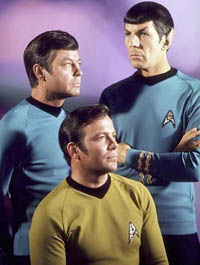
When faced with an interesting moral dilemma, the McCoy often wants to screw the rules and run in with guns blazing, while the Spock advocates caution, reminding us of the prime directive.  Or maybe the McCoy is paralyzed by indecision, while the Spock is the only one cold enough to make the sadistic choice.  In either case, the way the Kirk manages to resolve it will almost always reveal something deeper about the world or human nature.

The thing that’s truly amazing is how prevalent this trope is in fiction.  To name a few:

  • Star Trek: McCoy (Id), Spock (Superego), and Kirk (Ego).
  • Star Wars: Han (Id), Leia (Superego), and Luke (Ego), also:
  • Star Wars: Emperor Palpatine (Id), Grand Moff Tarkin (Superego), and Darth Vader (Ego).
  • Ender’s Game: Peter (Id), Valentine (Superego), and Ender (Ego).
  • Lord of the Rings: Gollum (Id), Sam (Superego), and Frodo (Ego), also:
  • Lord of the Rings: Gimli (Id), Legolas (Superego), and Agagorn (Ego), also:
  • Lord of the Rings: Dwarves (Id), Elves (Superego), and Humans (Ego).
  • Arthurian Legend: Sir Gawain (Id), Sir Lancelot (Superego), and King Arthur (Ego) (I would argue that Guinevere fits the Id role better, but I’m not an expert).
  • The Dark Knight: The Joker (Id), Harvey Dent (Superego), and Batman (Ego).
  • The Matrix: Neo (Id), Trinity (Superego), and Morpheus (Ego).
  • Shaun of the Dead: Ed (Id), Liz (Superego), and Shaun (Ego).
  • Fullmetal Alchemist: Edward (Id), Alphonse (Superego), and Winry (Ego).
  • The Melancholy of Haruhi Suzumiya: Haruhi (Id), Yuki (Superego), and Kyon (Ego).
  • Final Fantasy VI: Kefka (Id), Leo (Superego), and Emperor Gestahl (Ego).
  • Final Fantasy VII: Barrett (Id), Cloud (Superego), and Tifa (Ego).
  • Myst: Achenar (Id), Sirrus (Superego), and Atrus (Ego).
  • Starcraft: Zerg (Id), Protoss (Superego), and Humans (Ego).
  • Homestar Runner: Strong Mad (Id), Strong Sad (Superego), and Strong Sad (Ego).
  • The Good, the Bad, and the Ugly: Tuco (Id), Angel Eyes (Superego), and Blondie (Ego).
  • 20,000 Leagues Under the Sea: Ned (Id), Conseil (Superego), and Aronnax (Ego).
  • Twilight: Jacob (Id), Edward (Superego), and Bella (Ego).
  • Archie Comics: Veronica (Id), Betty (Superego), and Archie (Ego).

The Betty and Veronica one is particularly interesting because it’s also a love triangle.  In fact, most love triangles feature some kind of play on the Freudian Trio: the good girl vs. the bad girl, the nice guy vs. the jerk, the girl next door vs. forbidden love, prince charming vs. the loveable rogue.

Sometimes, the villains come from a dysfunctional or broken Freudian Trio, where one of the three died, was kicked out, or was never part of the combo in the first place.  When this happens, it’s called (aptly enough) a Evil Duo.  Examples include Pinkie and the Brain, Lex Luthor and the Joker, and Kefka and Gestahl (though that particular duo was very, very, VERY short lived).

Finally, it’s worth pointing out that the Freudian Trio is so common, it even occurs in real life.  Perhaps the best example of this would be World War II, where Churchill was the Id, Stalin was the Superego, and Roosevelt was the Ego.  With quotes like “never, never, never, never give up,” Churchill practically embodied the McCoy (his drinking penchant also helped), while Stalin, with his fanatic adherence to communism and his “million is a statistic” approach to the revolution, was as cold and calculating as you can get.  FDR was the one who held the alliance together, and it was only after his death that the Cold War really broke out.

Of course, it’s possible that we only see this trope everywhere because our brains are programmed to see it.  But if that’s true, it makes for an even stronger argument that the Freudian Trio plays on some powerful, universal archetypes.

Trope Tuesday: Lawful Evil

If the term “villain” applies to anyone, it applies to the Lawful Evil.  Whether the evil overlord, his trusted right-hand man, or one of his devoted minions, these characters are dedicated wholeheartedly to their cause, whether they believe it will lead to a better world or not.  Taking over the world is often a major obsession, because hey, someone’s got to do it.  A staple of the evil empire, these guys often turn their country into an industrialized wasteland, though they often have propaganda machines to take care of any bad press.  Bonus points if they can transform into a freakish monster in battle.

From the easydamus character alignment page:

A lawful evil villain methodically takes what he wants within the limits of his code of conduct without regard for whom it hurts. He cares about tradition, loyalty, and order but not about freedom, dignity, or life. He plays by the rules but without mercy or compassion. He is comfortable in a hierarchy and would like to rule, but is willing to serve. He condemns others not according to their actions but according to race, religion, homeland, or social rank. He is loath to break laws or promises.

While Lawful Evils believe in following rules and keeping their word, they’re not above emotional manipulation, negotiating unfavorable contracts, or following the law in letter only.  Even so, they tend to suffer from genre blindness and bureaucratic stupidity (as well as megalomania–but hey, that’s part of the job description).

According to tvtropes, Lawful Evils come in four types:

  1. The supreme ruler, dedicated to establishing and maintaining a civic order that is itself evil.  A good example of this would be Sauron from The Lord of the Rings.
  2. A zealot or übermensch whose moral code falls outside of established social norms.  Khan from The Wrath of Khan is a pretty good example of this, as is Tyler Durden from Fight Club (though your mileage may vary).
  3. The Dragon or other minion who may have their own goals, but answers to the big bad.  Darth Vader is probably the most well-known example.
  4. A complete monster who is dedicated to the destruction of free will and liberty.  The Mormon conception of Satan fits this perfectly.

The scary thing about this trope is that it actually exists in real life.  In fact, outside of our sheltered middle-class, liberal democratic existence (a relatively recent and unusual development in the eyes of history), this type of overlord tends to be the rule and not the exception.  You don’t have to look any further than North Korea, Burma, or Syria for examples of this–which is to say nothing of the Soviet Union, the Third Reich, or the British Empire.

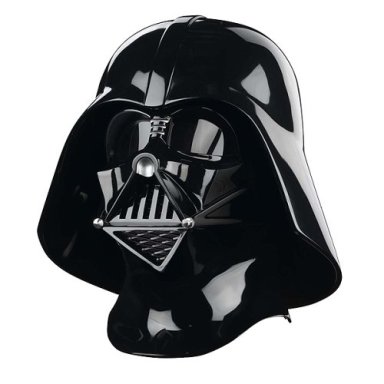
My favorite example of this trope is probably Darth Vader, not just because of how badass he is, but because of his heel face turn at the end of Return of the Jedi.  Ignoring how bad episodes I, II, and III were, his character arc really is the thing that makes that story.  And while we’re on the subject of history, let’s not forget this epic showdown between Stalin and Hitler.  Seriously, click that link.

In my own work, the best example of a Lawful Evil would probably be Qasar from Bringing Stella Home / Sholpan.  He’s more of the affable type than a true evil overlord, though; that would be Tagatai, who doesn’t really come to power until Stars of Blood and Glory. A much more sinister example would be Emile from Heart of the Nebula, or the villain I have planned for Edenfall–I’d better finish those!  And of course, there’s Sheikh Sathi from Desert Stars, though he’s mostly a type 3 Lawful Evil under the thumb of his Neutral Evil wife.

Perhaps one of the reasons I haven’t done a truly despicable Lawful Evil yet is because I’ve been kind of sheltered here in the states.  It will be interesting to see how my writing changes after spending some time in Eastern Europe; Georgia, after all, is the homeland of Stalin.

Darth Vader helmet taken from this site.

Trope Tuesday: Chaotic Good

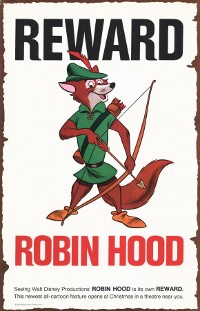
A pox on the phony king of England!

Wherever you find the evil empire, dirty cops, or a misguided crusade, chances are there’s a Chaotic Good somewhere in the shadows fighting against it.  From barbarian heroes to freedom fighters, rebellious princesses to ethical sluts, these free-spirited, noble-minded rebels are constantly at war with the man, robbing the rich to give to the poor.

From the easydamus character alignment page:

A chaotic good character acts as his conscience directs him with little regard for what others expect of him. He makes his own way, but he’s kind and benevolent. He believes in goodness and right but has little use for laws and regulations. He hates it when people try to intimidate others and tell them what to do. He follows his own moral compass, which, although good, may not agree with that of society.

Interestingly, once the evil bad guys are gone, the balance between Good and Chaotic is even more difficult to keep than the line between Good and Lawful.  For that reason, Chaotic Goods often make extremely poor rulers after the war is over.  When they win, they usually do one of the following:

Of all the character alignments, this one is my favorite.  It fits my own sensibilities almost perfectly.  Whenever a character of this type has to give up their old life to accept their new responsibilities, I can’t help but feel a little wistful and sad (maybe that’s why I haven’t settled down and married yet…hmm…).

This trope is extremely prevalent in manga and anime, with Edward Elric from Fullmetal Alchemist my personal favorite.  Agatha and Gil from Girl Genius are also really awesome–it’s going to be interesting to see how Gil shifts now that his father is out of the picture.  In science fiction, Captain Kirk is probably the most beloved character of this type, though almost all of Heinlein’s protagonists also fit the bill.

In my own work, Tiera Al-Najmi from Desert Stars is probably the best example of this trope.  She stands alone against the restrictive norms and hypocrisy of her society, urging Mira to do what’s right instead of what’s expected.  In Bringing Stella Home, James McCoy fits this trope too, though you could also make an argument that he’s more of a Neutral Good.  In Heart of the Nebula, however, he’s definitely Chaotic Good, which puts him squarely at odds with Lars, a Lawful Good who appears in all of the Gaia Nova novels thus far.