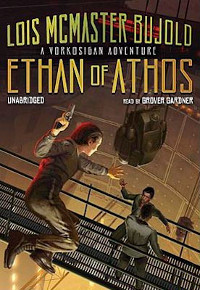
I love the Vorkosigan books. Miles isn’t in this one, but a bunch of other characters are. It’s the same universe, with the same fascinating history, just with a bunch of new and interesting complications.
Ethan is from a world where women do not exist. The uterine replicator has rendered them obsolete, and a colony of fundamentalist MGTOWs has established a functional society where everyone is male and no one has ever seen or interacted with a dreaded female. But make no mistake, Ethan is not a MGTOW. He’s Athos’s best doctor: professional, responsible, and conscientious to a fault. And that’s why the council of elders has sent him on a mission to acquire female reproductive cultures before the ones on Athos all die out.
Along the way, he gets caught up with the Dendarii mercenaries, specifically one Commander Elli Quinn, and is soon caught up in the machinations of the Cetegandans and House Bharaputra, who are involved in some less-than-ethical bioengineering schemes that have brought the galaxy to the verge of war. If Ethan fails his mission, Athos itself might be nuked back to the stone age. But that is nothing compared to his most difficult task: learning how to work with a woman.
This book was a lot of fun! I have yet to read a bad book by Lois McMaster Bujold, and this one certainly didn’t disappoint. Lots of action and adventure, with dashing, resourceful heroes and frighteninginly comptetent villains. The all-male society of Athos was both fascinating and eminently believable, given the technology, and the interstellar espionage was loads of fun.
This isn’t the best place to start if you’ve never read any Bujold, but if you’ve already read The Warrior’s Apprentice and a couple of other Miles Vorkosigan adventures, you’ll really appreciate this book. Definitely one of the highlights of the series.
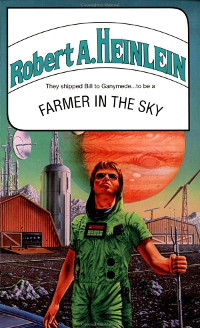
As a general rule, Heinlein novels are either really controversial (The Moon is a Harsh Mistress), really meta (The Number of the Beast), really fun (Citizen of the Galaxy), or some combination of all three (Starship Troopers). Farmer in the Sky is one of the really fun ones.
This novel was written before the Apollo 11 moon landing, but it read like something from an alternate reality long after that pioneering era, where the space program never slowed down. For that reason alone, it was a fascinating book. You can really see how it inspired people back in the 50s and 60s to reach for the stars.
More than that, it was really fascinating to get into the knitty gritty of colonizing a world like Ganymede. This is one of Heinlein’s juveniles, so he doesn’t get too technical, but you can definitely tell that he did the research and built a plausible near future world. More than that, it’s the kind of world I’d actually love to live in. Ganymede is the new frontier, and the colonists who settle it are pioneers in every sense of the word. Not everyone makes it, of course, but those who do are rugged, resourceful, and remarkable.
This was a really quick read. There was a lot of little stuff that dates it to the 50s, like gender relations and the prevalence of the Boy Scouts, who are sadly no longer a cultural force in today’s society. None of it bothered me or threw me out of the story. If anything, it added to the novel’s charm.
Heinlein knows his stuff. This was a really fun book. If you’ve never read any Heinlein, Farmer in the Sky is a good place to start.
In case you’re wondering what the heck is Sword & Planet, think Conan the Barbarian in space. With giant lizards and man-eating plants. And half-naked princesses getting kidnapped by evil technomancers with giant four-armed bodyguards that wield laser-bladed swords. Basically, science fiction in the style of the classic 20s pulp adventure novels.
In other words, this:
I’ve read a lot more Heroic Fantasy and Sword & Sorcery than straight Sword & Planet, but I figure there’s a good deal of overlap. I read A Princess of Mars way back in college and really enjoyed it, and of course I’m a huge fan of Star Wars and other series that were heavily influenced by the genre. Basically, I want to try my hand at a classic science fiction adventure style, without the scientific rigor of Hard SF or the sprawling world building of Space Opera. It’s all about the adventure, with liberal helpings of awesome sprinkled with omigoshomigoshomigosh.
The tentative title for this book is The Last Warrior Princess, though it’s about a twenty-something college grad working a wilderness job in southern Utah who accidentally finds a portal to another world while wandering around Arches National Monument. The princess comes later, though not too much later. I don’t know much about her yet.
In fact, I don’t know much about the story at all. I’m discovery writing everything, and I do mean everything. This is a fly-by-your-pants ready-set-go kind of book, with no restrictions and no limits–just me and the muse, not caring what anyone else thinks. My internal editor is bound and gagged in the cellar with the spiders, and if he breaks out somehow I’ll hamstring him and toss him back down. This project might never get another mention beyond this post, but I’m okay with that because it’s going to be a whole lot of fun.
For those of you waiting for the next Star Wanderers story, don’t worry, I’m still writing those too. This is more of a side project at this point, so I won’t put up a progress bar for it until I get fairly close to the end and know it’s something I want to keep. Which might never happen.
So basically, it’s just a personal pet project for now. It’s interesting, though, because when you’ve got nothing to fall back on but your own creative impulses, the words start to flow in remarkable ways. Take this passage, for example:
I drove up just as the sun was setting. The crescent moon hung like a razor in the yellow-orange sky, with Venus a twinkling point on its edge. Blood-red Mars was not far off, while Jupiter loomed ascendant.
I have no idea where that came from, but in the white-hot creative heat of the moment, it just spewed out onto the page that way. The only word that I changed was “loomed,” which I had originally written as “hung” (maybe I should change it back? Nah, who cares). In a little over an hour, I committed about 1,500 words, all just like this.
So yeah, if nothing else, this project will help to shake up my creative process and get the juices flowing for other projects. I could really use that right now, what with a couple of recent life roles (my grandmother passed away last week, which wasn’t unexpected but it did throw a kink in my already rocky routine). And who knows? If it turns out well, you might see me put it out as a novel in a few months. Or maybe the first part of a new series … nah, better not get carried away. Better just write it first.
Besides the A to Z challenge (which I may also turn into a book at some point) and Star Wanderers: Reproach, that’s what I’ve been up to recently. I’ve got a Star Wanderers omnibus in the publishing queue, but there’s nothing firm I can say about that yet, other than it will probably be for Parts I-IV and feature a professional cover (though I plan to keep the space images for the individual installments). I could say more, but I want to go for a walk. Later.
Right after I went through my Dinosaur phase, I saw Star Wars IV: A New Hope for the first time. Instantly, all that childlike excitement and exuberance was transferred from paleontology to astronomy. We had a series of about twenty astronomy books in my elementary school’s LRC (Asimov’s astronomy series, I believe–the ones with the gray dust jackets), and in about a year I’d read them all.
Star Wars was fun, but what was really fascinating was learning about the stars. When I started to grasp the scale of our galaxy–that if our solar system was the size of a milk carton, the Milky Way would be the size of North America–my mind was totally blown. Quasars, pulsars, black holes, white dwarfs, red giants–it was so amazing! And then, when I started thinking about all the other worlds out there, and what it would be like to visit them–that’s when I became a science fiction fan for life.
It goes without saying that you can’t have space opera without setting the story somewhere in space. But the best space opera goes much further than that–it’s about space as the final frontier, and humanity’s ultimate destiny among the stars. After all, if we as a species stay put on this pale blue dot, sooner or later we’ll kill ourselves off or suffer another mass extinction event that wipes us all out like the Dinosaurs.
For that reason, classic space opera often takes undertones of manifest destiny, except on a galactic scale. The stars are not just interesting places to visit, they’re absolutely crucial to our survival, and no matter what alien dangers await us, we will face them boldly and either conquer or be conquered.
Of course, not all space opera stories take place during the exploration and colonization phase of human interstellar expansion. Plenty of stories take place thousands of years later, once humanity has comfortably established itself among the stars. Even so, there are still more than enough wonders remaining to be explored–if not for the characters, then for the readership. The vastness of space is so great that there really is no end to it, and the possibilities are only bounded by the writer’s imagination.
One of my favorite space opera computer games is Star Control II, also know as the Ur-Quan Masters. In the game, you’re the captain of a giant starship built with alien precursor technology. The races of the Federation, including humanity, have been defeated and enslaved by an aggressive warrior race known as the Ur-Quan. You must travel from star to star, gathering resources to upgrade your starship and convincing the other alien races to join the new alliance.
By far, the best part about that game is the starmap. It’s HUGE! More worlds than anyone can possibly visit in any one playthrough, or five, or even ten. And each alien race has its own history, its own culture, its own set of goals and objectives–and oftentimes, most of these goals have very little to do with the actual conflict of the game. In fact, there are some races like the Arilou which don’t even seem to know that there’s a war going on. They’re much more interested in something frightening and mysterious from another dimension that they never quite explained, but that may involve the Orz somehow…
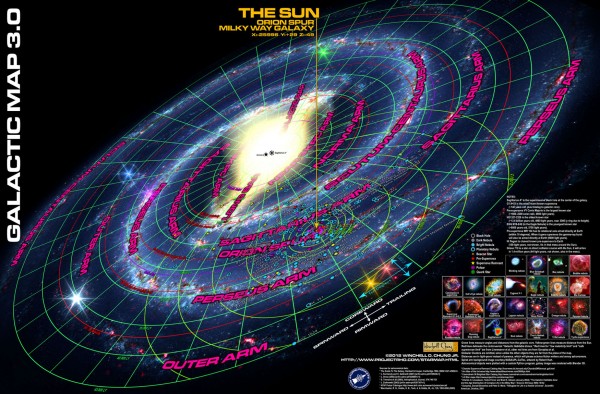
With each new world that you discover, you learn that the galaxy has a very, very, very long history. So long, in fact, that the human race has only really existed for a blip in time. The other races are involved in their own disputes, and many of these go back to the times when our ancestors were swinging through the trees somewhere in central Africa. But whether or not we want to be a part of it, we’re involved, simply by virtue of where our star happens to be located.
The best space opera isn’t just about our world: it’s about our place in a much wider universe. Whether it’s a serious tale about humanity’s ultimate destiny, or an action-packed intergalactic romp, there’s always that sense of something greater than us–that same sense of wonder that gripped me as a boy when I first started to learn about the stars.
Image by nyrath at Project Rho. I highly recommend checking out his excellent starmaps!
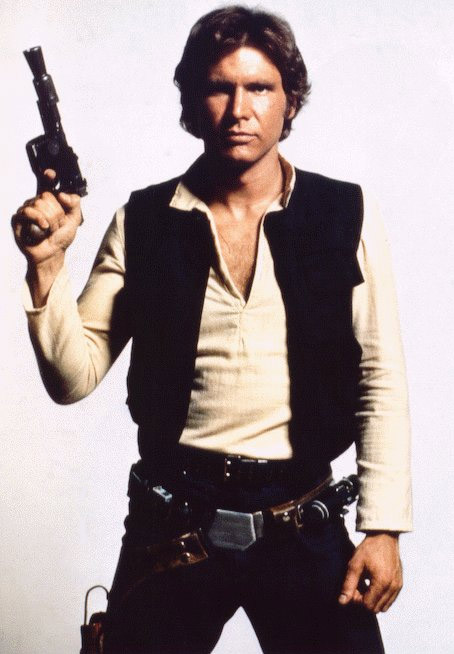
Look, I ain't in this for your revolution, and I'm not in it for you, Princess. I expect to be well paid--I'm in it for the money.
If you’ve ever read a space adventure with smugglers and pirates, or a sword & sorcery with rogue thieves and master-less swordsmen, or a western with gritty outlaws and mountain men, you know this character alignment. If you’re a fan of any of these genres, chances are you love him, too.
A chaotic neutral character follows his whims. He is an individualist first and last. He values his own liberty but doesn’t strive to protect others’ freedom. He avoids authority, resents restrictions, and challenges traditions.
A lot of characters start out as this but tend to shift as the story progresses. Han Solo, for example, shifts from Chaotic Neutral to Chaotic Good as he becomes more and more involved with the Rebellion. The Jägers from Girl Genius are Chaotic Neutral until they have a Heterodyne to lead them. But in other stories, such as Pirates of the Caribbean and Schlock Mercenary, the Chaotic Neutral serves as an anchor.
My favorite Chaotic Neutral is probably Waylander from David Gemmell’s Drenai series. The Jerusalem Man is another good one–in fact, just about every one of his books has a Chaotic Neutral that I love. Haruhi Suzumiya is an excellent example of a female Chaotic Neutral–in fact, she’s probably the queen of this particular character alignment.
In my own work, the best example of a Chaotic Neutral would probably be Tamu from Bringing Stella Home / Sholpan. Even though she’s technically a slave, she doesn’t really mind it because she has everything she wants and doesn’t have to be beholden to anybody (not even Qasar, really, since she’s his favorite). Amina from Desert Stars is also Chaotic Neutral, in contrast with Surayya, who is more of a Lawful Neutral, though sometimes it’s hard to tell. And in Genesis Earth, Terra is definitely a Chaotic Neutral at the beginning, though she shifts a little somewhere around the middle.
I’m hesitant to admit this, but when I took the character alignment test for myself, I tested out as a Chaotic Neutral. As to what that means, exactly…I’m not going to say. o.0
A neutral good character does the best that a good person can do. He is devoted to helping others. He works with kings and magistrates but does not feel beholden to them.
The Neutral Good is not devoid of weaknesses, of course. Although they are devoted to good, their lack of commitment to law means that they are not always willing to enforce it. Also, for those who just want to get things done, this alignment can be somewhat limiting, in the way that a commitment to any higher ideal usually is.
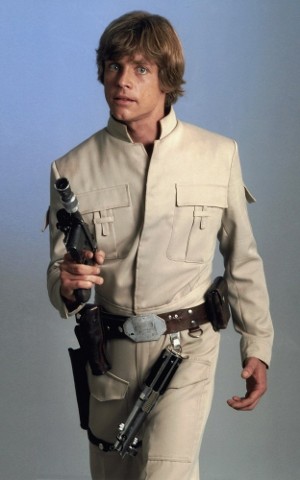
Interestingly, this is a very common alignment for heroes in space opera stories. Case in point, Luke Skywalker: even though he’s young and reckless, he’s not above learning the ways of the force and joining the Jedi order. Miles Vorkosigan from Lois McMaster Bujold’s Vorkosigan series also falls squarely into the Neutral Good camp. Moving on to manga and webcomics, Alphonse and Winry from Fullmetal Alchemist both fall under this alignment, giving balance to Edward’s more chaotic outbursts. Agatha from Girl Genius is also a Neutral Good…at least, when there aren’t any wrenches nearby.
There are quite a few characters with this alignment in my own work. Even though she’s a mercenary captain, Danica from Bringing Stella Home falls squarely into this alignment; she’s got a tough outer shell, but she’ll do anything for her men, even…well, I don’t want to ruin Stars of Blood and Glory. 😉 Also from Bringing Stella Home / Sholpan, Stella is solidly Neutral Good, which is part of why the ending is so deliciously twisted. In Star Wanderers, Jeremiah falls into this alignment mostly through default, which is good for Noemi because the circumstances of the novel put her totally at his mercy. And in Desert Stars, this is probably Mira’s alignment, though she’s easily manipulated by her Neutral Evil mother.
What can I say? I’ve got a soft spot for Neutral Goods. Considering how well this kind of a hero fits in to a classic space adventure, it shouldn’t come as any surprise.
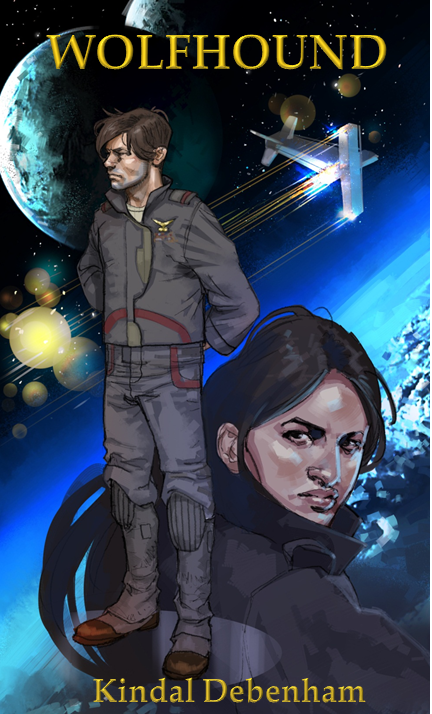
Jacob Hull may be just a spacer’s son, but he’s not afraid to dream big. As an ensign in the Celostian Navy, his biggest dream is to pilot a destroyer like the Wolfhound, the brand new ship on which he receives his first assignment. But when pirates attack on their training exercises and drive them far from the rest of the Celostian fleet, Hull realizes that his dream might be more than he asked for…
Full disclosure: Kindal Debenham is actually a good friend of mine–we were both members of Quark in college and still keep in touch as alpha readers for each others’ books. That’s not why I’m saying that I loved this book, though. I’ll admit, I had a few doubts when I first started it. The descriptions are a little wordy, the formatting isn’t perfectly clean–but none of that really matters, because the story is AWESOME.
Why is it so awesome? Because it’s full of characters you want to root for, facing one impossible conflict after the other, each one bigger and more daunting than the one before. The story gets off to a decent start, but it really starts to take off after the first third or so, and just keeps getting better and better right up to the end.
Seriously, this is the kind of book I used to hunt for in the library as a kid. It reminds me a little of the old Star Wars novels by Timothy Zahn, Kevin J. Anderson and Michael A. Stackpole. Forget dark, dystopian futures and boring, high-concept stuff–this is some rip-roaring space opera, with stations you wish you could visit and starships you wish you could fly.
So yeah, I loved this book. Great read; once I got into the second half, I couldn’t put it down. If you’re a fan of space adventure stories, you should definitely check out this book. It’s available from both Amazon and Smashwords as an indie published ebook, and it’s actually holding it’s own quite well on the Amazon bestseller lists. It definitely deserves the spot! Oh, and if you want to check out Kindal’s blog, you can find him here.