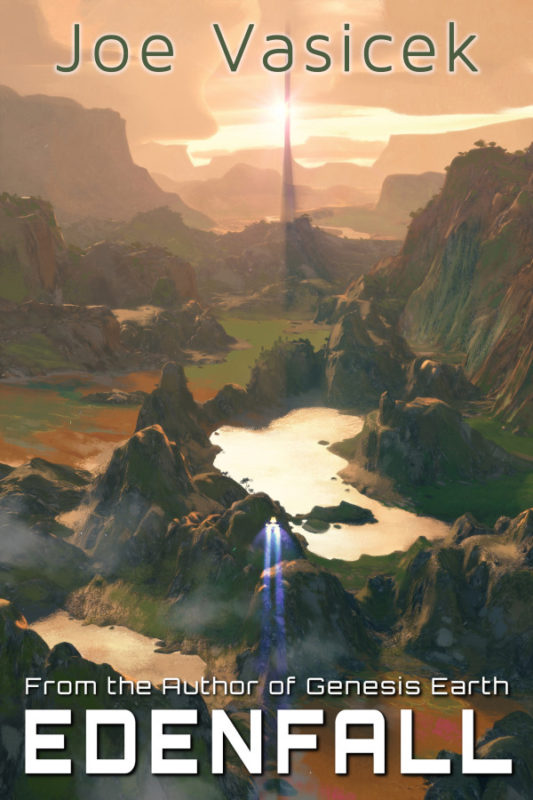
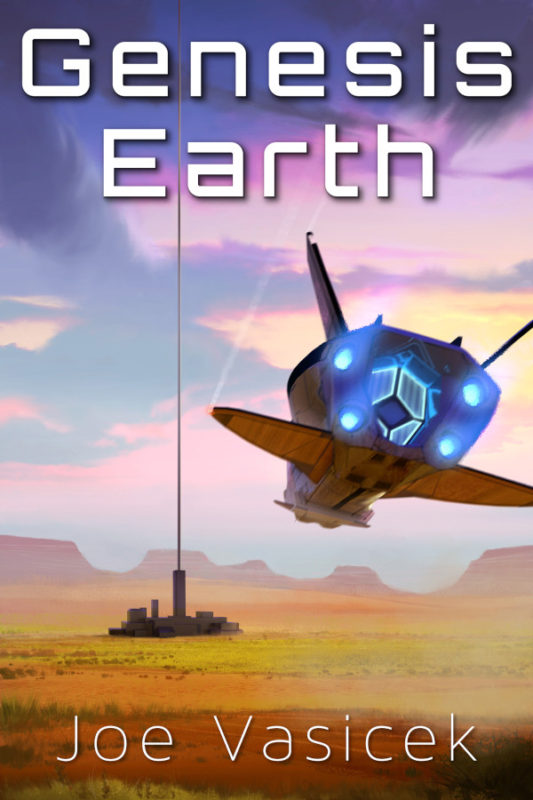
Edenfall continues the Genesis Earth Trilogy through the eyes of sixteen-year-old Estee Anderson, a girl raised in isolation on a mysterious alien world. Character-driven and emotionally grounded, it explores innocence, family bonds, and self-discovery under rising danger. Like the first book, it favors quiet depth over spectacle—only this time, the world is larger, the threats are sharper, and childhood ends faster.
What Kind of Reader Will Love Edenfall?
Edenfall is for readers who want hope-filled science fiction where wonder comes with consequences, and survival depends on courage, loyalty, and family. It is especially for readers who:
Love character-driven science fiction with emotional stakes and family at its core.
Enjoy exploration of alien worlds, survival, and first contact that feels personal rather than technobabble-heavy.
Appreciate worldbuilding that leans on atmosphere and mystery rather than dense scientific exposition.
Enjoy stories where children are real people—not plot devices: capable, flawed, curious, and heroic.
In other words, Edenfall is for readers who want science fiction that feels personal before it feels cosmic, with characters of quiet courage who rely on their family as they face the world. Like Genesis Earth, it’s a coming of age story of self-discovery, but with stronger family bonds.
What You’ll Find Inside
Edenfall begins when a military expedition arrives to investigate the anomaly that Estee’s parents were sent to explore. When one of the generals decides to take over and make the planet his own personal fiefdom, Estee must learn who she can trust in order to face the rising threat to her family, even as she grapples with trauma and loss of innocence.
In Edenfall, readers will find:
A young protagonist in isolation (Estee) who must navigate danger with wits, courage, and instinct.
A slow-burn planetary mystery involving ancient alien megastructures, lost history, and hidden data.
A human-versus-human first contact with catastrophic misunderstanding.
Nuanced moral ambiguity—leaders driven by fear, idealism, or ambition; soldiers who follow orders but question them.
Strong family themes: parental sacrifice, sibling bonds, and the pain of leaving childhood behind.
A lush, “wild-world” setting filled with dangerous fauna, hidden canyons, ancient ruins, and an ancient megastructure (the space elevator) stretching into the sky.
What Makes Edenfall Different
There is no chosen one, no prophecy, no love triangle, and no convenient mentorship arc. There are no precocious prodigies or destiny-driven heroes—just an unprepared girl trying to survive the collision between her family and the dangers of a world she doesn’t understand. The first contact story is human on human, told from both points of view, with all of the accompanying messiness and misunderstanding. The result is an intimate story that feels mythic, human, and fresh.
What You Won’t Find
This is not a book for readers who want love triangles or steamy romantic elements. There is no explicit sexualization, and the romance is very low-key and slow-build. It also avoids graphic violence and heavy militaristic fetishization. While there is some violence and some of the characters die, the tone ultimately leans toward resilience, curiosity, and hope rather than gritty cynicism. This is hope-forward science fiction, not despair-driven dystopia.
Why I Think You Might Love Edenfall
It took me more than ten years to finish this book. Ultimately, it wasn’t until I had a child of my own that I was finally able to write it. The experience of becoming a father and having my own family made it possible for me to write about family bonds with the sort of emotional depth that Edenfall required.
If you loved the characters, the heart, and the driving sense of wonder in Genesis Earth, I think you will enjoy Edenfall even more!
Genesis Earth is a thought-provoking science fiction novel about humanity, isolation, and the search for home in a vast and empty universe. In this post, I explore the deeper themes behind the story—how the meaning of home shapes the characters, and what that says about us as human beings.
What does it mean to be human when everything familiar—home, society, the Earth itself—is gone? What does it mean to lose one’s home, or to never really have a home in the first place?
In Genesis Earth, a work of existential science fiction, the story of Michael and Terra explores what it means to be human when isolation pushes the boundaries of identity and connection. Michael and Terra grew up away from Earth, isolated and estranged from humanity’s homeworld.
Their need to be rooted in something (or someone) drives the core theme of belonging and identity in the book. The mission is supposed to be about discovery, but what they truly discover is themselves—how fragile, lonely, and deeply human they are.
Where the Idea Came From
The central concept of Genesis Earth is that humanity has created an artificial black hole and opened a wormhole to some unknown part of the universe. In order to create that black hole, though, they would need to travel far from Earth, on the fringes of our Solar System—hence the isolated colony mission where Michael and Terra grew up. And because of the long distances from the wormhole to the star system on the other end, their mission would isolate them even further, not only in space but in time. Everyone would be gone by the time they got back home, if they could even call it “home” by then.
All of this drove me to explore the meaning of home, and how it would play out for these characters who are so isolated and separated from the rest of humanity.
How the Meaning of Home Shapes the Story
In Genesis Earth, Michael begins as a dutiful scientist. He’s loyal to “the Mission,” but that loyalty is hollow—he’s chasing a ghost of Earth rather than living for anything real. His arc is about realizing that meaning doesn’t come from data or duty, but from connection.
The story strands two people—Michael and Terra—alone in deep space. The physical isolation mirrors their emotional one. Their arguments, awkward silences, and gradual trust-building drive the tension far more than the alien mystery.
The “alien ship” and “new Earth” they find are really reflections of humanity’s own legacy: ruins of a civilization that destroyed itself but left behind traces of what it once was. This discovery forces Michael to see that knowledge without empathy leads nowhere. The universe is full of dead monuments to reason untempered by love.
In the end, the story is less about finding Earth again—or finding home—as it is about beginning it anew, through human love and connection.
What the Meaning of Home Says About Us
Michael and Terra inherit a civilization that has mastered the stars but lost its soul. Their journey shows that intellect without empathy leads to extinction. We can map galaxies, but if we forget why we exist or who we’re doing it for, all that brilliance turns sterile and meaningless.
It’s a mirror to our own age: we’ve never known more, but we’ve rarely been lonelier. And ultimately, the message of Genesis Earth is that we are not defined by where we come from, but by whom we choose to love and what we choose to build. Heart and home matter more than hubris and knowledge.
Why the Meaning of Home Matters to Me
After I left home, I spent nearly two decades of my young life as something of a modern nomad, rarely living in one place for more than six months. During this time, my parents moved not once but twice, so I lost all connection to my childhood home.
This personal loss of home and sense of being uprooted was a major influence in the writing of this book, though I didn’t realize it at the time. And the conclusion that Michael and Terra ultimately come to—that “home” isn’t found in a place so much as it is in the depths of the connections with the people in your life—was something I experienced as well, as I ultimately settled down and started a family of my own.
Genesis Earth is an introspective, awe-driven, charactor-anchored YA science fiction novel. It’s not a laser-blasting space opera; rather, it’s a quiet, psychological odyssey through the cosmos, through the eyes of a lonely young explorer haunted by the memory of Earth. Through this book, readers will experience the loneliness of deep space, the mystery of first contact, and the fragile human connection between two young scientists flung far from home.
What Kind of Reader Will Love Genesis Earth?
This book is perfect for readers who:
Love hard SF stories of space exploration rooted in both plausible science and human emotion,
Enjoy classic SF from authors like Clarke and Asimov—thoughtful, concept-driven, but with relatable, human characters,
Appreciate slow-burn tension and stories that make them think, long after they set the book down,
Are fascinated by themes of first contact, isolation, coming-of-age, and the psychological cost of human exploration, and
Crave science fiction that feels possible, where the sense of wonder comes from realism, not fantasy.
If any of that describes you, then you should definitely give Genesis Earth a try!
What You’ll Find Inside
Genesis Earth follows a young scientist, Michael Anderson, and his mission partner Terra as they explore a dangerous anomaly on the far side of a wormhole, that could either threaten or hold the key to humanity’s future. The result is an immersive and contemplative book that starts as a psychological drama and turns into a story of discovery, both cosmic and personal: what it means to be human when Earth is a ghost and “home” is light-years away.
What Makes Genesis Earth Different
Fans of classic science fiction will recognize the trope of the lonely astronaut or scientist setting out to explore the unknown, but where most protagonists in classic hard SF are seasoned professionals, the explorers in Genesis Earth are barely adults, raised in isolation on board a space colony, and psychologically unprepared for what awaits them. The story explores beyond the question “can humanity survive?” and asks “what happens to the human soul when it’s untethered from home?”
Distinctive features include:
Psychological depth: The fraught relationship between Michael and Terra gives the story an undercurrent of tension and unease that’s rare in classic hard SF.
Tone: Quiet, human, and melancholic—more existential wonder than space adventure.
Perspective: Told through a deeply personal first-person lens, with an almost diary-like immediacy.
Fast-paced, action-heavy sci-fi with constant battles, explosions, or villains.
Romantasy or sexually explicit romance plots — while there is emotional tension, it’s subtle and cerebral, not sensual or melodramatic.
Soft or mythic sci-fi full of alien empires or space wizards — the story stays grounded in realism.
Hard nihilism or grimdark — while introspective and serious, the book is ultimately hopeful, not bleak or cynical.
Readers who dislike slow builds or introspective narration.
If you’re looking for Star Wars, this isn’t it. If you’re looking for Arthur C. Clarke’s emotional heir, you’ve found it.
Why I Think You Might Love Genesis Earth
I wrote Genesis Earth when I was a lonely, single young college student trying to find my place in the world. That personal struggle in my own life definitely affected the conflict and themes of the book. I read a lot of classic SF in this time, including books by Arthur C. Clarke, Isaac Asimov, Ursula K. Le Guin, Robert Charles Wilson, and Orson Scott Card, and I wanted to create something that was just as awe-inspiring and thought-provoking as the great books by those classic authors.
If you’re looking for a book that sticks with you long after you’ve read it, and helps you to find your own place in the world, you should definitely give Genesis Earth a try!
I love fantasy books. I love the sense of adventure and possibility that I feel from reading a good fantasy story. I love how the best ones transport me to worlds untainted and unpolluted by modernity, rich in their own history and culture. I especially love it when these worlds are populated with characters who I feel could be my friends, their stories told in such a way that I almost feel I know them better than I know myself.
Every literary genre is defined by the primary emotions they are supposed to evoke in the reader. Thus, romance is all about the emotions associated with love and longing, horror is all about the emotions associated with fear and dread, mystery is all about the emotions associated with discovery and making sense of the world, etc.
Fantasy and science fiction are the two major divisions of the speculative fiction genre. The way I like to think of them is like two sides of the same coin. Both are defined by the sense of wonder they evoke, but where science fiction tends to be oriented toward the future, fantasy is oriented toward the past.
To me, this is the biggest thing that distinguishes fantasy from science fiction: the deep, almost nostalgic yearning for a long-forgotten past. This goes much deeper than superficial aesthetic details, such as the idea that if your story has trees, it must be fantasy, but if it has rivets it must be science fiction. Trees hearken back to a world before the modern era, when we lived much closer to the rhythms of nature. Rivets, on the other hand, hearken to a world utterly reshaped by human technology and engineering.
But if this is the case—if fantasy is all about a nostalgic yearning for a lost, pre-modern age—why does so much fantasy take place in a world that is not our own? Yes, if you read the lore for J.R.R. Tolkien’s Middle Earth and Robert E. Howard’s Hyborean age, you eventually learn that these worlds are supposed to be far ancient versions of Earth—but no one thinks or cares about that when they’re reading the stories. And these days, most fantasy worlds don’t even try to pretend that they have a connection with Earth. So how can they possibly channel that sense of nostalgic yearning?
Through archetypes.
“Type” is another word for symbol, and “arch-” is a prefix meaning the chief or principle thing. Thus, an “archetype” is the chief or principal symbol of a thing, such that every real-world example of that thing is a manifestation of its archetype.
It’s kind of like the inverse of a stereotype. When we stereotype someone, we mentally categorize them based on superficial characteristics like race, gender, age, etc, purposefully ignoring the things that make them different from other people. We start broad and go narrow. Archetypes, on the other hand, start narrow and go broad. The archetype of a hero slaying a dragon can be taken to represent anything from confronting childhood trauma to overcoming a deep-seated addiction—or something completely different.
The dragon starts off small, hatching from an egg, but if it is not slain when it is young and non-threatening, it grows into something huge and fearsome and almost impossible to slay. It also guards a horde of treasure, which can only be won by slaying it. Does that remind you of anything in your own life? If the story is told well enough, it should, because of how it points to certain universal truths. A problem that isn’t solved when it is small will often grow until it is almost impossible to solve. The greatest reward can often only be gained by doing the most difficult thing.
The best fantasy books use archetypes to evoke that sense of wonder that defines the genre—and because these archetypes are so timeless, they often evoke a sense of familiarity and nostalgia. In the best books, they also imbue the surface-level story with deep layers of meaning, making it a rewarding experience to come back and reread it again.
I love stories that are full of meaning. But in order to be truly meaningful, a book shouldn’t set out with a specific message in mind. Rather, the best books use well-constructed archetypes to resonate with the ideas that the author wants to explore—and often, the readers will draw conclusions that the author never consciously intended. To me, this is the hallmark of the best kind of fantasy book—and of archetypes done well.
So I’m reading The Expanse, and I recently finished the third book in the series, Abaddon’s Gate. Really great book! I thoroughly enjoyed it. Lots of action, lots of adventure, and a very optimistic ending, which is not something you see a lot of in science fiction and fantasy these days.
However, there was one small thing that bugged me about one of the major viewpoint characters: Anna, the Christian pastor. To be fair, they played her religious devotion straight, and didn’t just make her a hypocrite or the bad guy—which is another thing we don’t see a lot of in SF&F these days (more on that later). But they also made her a lesbian, and to be honest, yeah, that bugged me.
Why did that bug me? Because most conservative Christians (and most Muslims, by the way) believe that homosexuality is a sin. Not that being attracted to the opposite sex is inherently sinful, but that acting out on those sexual desires is. Of course, there are plenty of liberal churches that do not believe this, but their theology is in conflict with all of mainstream Christian teaching from the time of Christ himself. So by making Anna a lesbian, the authors were basically saying “yeah, she’s a Christian, but she’s not that kind of Christian.”
Not that I blame the authors for doing that. I totally get that they were writing for a mainstream SF&F audience and wanted to be able to bring up theological topics in the story without turning off any non-religious or LGBT readers. By making the religious character a lesbian, they signalled that the character was “safe,” even if she was a Christian.
But it got me to thinking: when was the last time that a mainstream, bestselling book, movie, or series had a devoutly religious Christian main character who 1) is not a villain or anti-hero, 2) is not a hypocrite, and 3) is not LGBT? Kind of like the Bechdel test, except for Christians.
Firefly comes to mind, though that was twenty years ago. Monster Hunter International has a devoutly religious side character—does he get his own book? I haven’t read far enough in the series yet to know. Looking at my bookshelf, I can see A Canticle for Leibowitz,The Speed of Dark,Hyperion, and Folk of the Fringe, but all of those books are old now. The most recent award-winning example I can think of is Eric James Stone’s novelette “That Leviathan Whom Thou Hast Made” (2010).
I’m having a very hard time thinking of anything published in the last ten years that passes the test. Even with authors like Larry Correia and John C. Wright, those guys have faced tremendous pushback from the left. It really does seem like there is an effort, at least from some quarters to erase good, faithful, conservative Christian characters from SF&F, and to ostracize or marginalize any authors who dare to buck that trend.
It reminds me of a family history podcast from NPR that I checked out once, only to find that the very first episode was about someone finding that two of their ancestors were gay. Laying aside the rather obvious (and hilarious) biological problems with that—adopted family is still family, after all—the implication here was that by making family history LGBT, NPR was making it “safe,” probably for their liberal listeners who have come to associate family history with the Latter-day Saints.
At the same time, we’ve heard a lot in recent years about how important it is to include underrepresented groups in fiction—to make sure that every reader can find characters who “look like them,” or “love like them.” And yet, none of the people championing this cause seem to care whether I can read about characters who “look like me” when it comes to religion. In fact, it seems that the people screaming the loudest about how we need “more diverse books” and more “own voices” are also the loudest in trying to erase and marginalize Christians like me.
So was it really ever about “representation” or “diversity” at all, or was all of that lip service about tolerance and diversity just a Trojan horse from the very beginning? Because here’s the thing: if I as an author don’t include any LGBT, BIPOC, or LMNOP characters in my books, I’ll get slammed by the woke activists for not having enough representation in my books… but if I do include any “marginalized” characters, then I’ll be accused of cultural appropriation. Unless, of course, my book promotes the woke activists’ agenda visavis things like climate change, ESG, gay pride, etc.
“Show me the man and I’ll show you the crime” said Lavrentiy Beria, one of the most psychopathically evil agents of the Soviet Union. That is exactly the same principle that the woke movement operates on, and unfortunately, that movement has come to dominate the SF&F field (just look at what they did to Mercedes Lackey). So really, it should not come as a surprise to anyone that they don’t apply the same principles of tolerance, diversity, and equal representation to conservative Christians—which are rapidly becoming the most marginalized and underrepresented minority in science fiction and fantasy.
So what is the solution? Honestly, it may just be to smile and turn the other cheek. If we give these people enough rope, they will hang themselves with it. Get woke, go broke. Granted, there are reasons to be worried about ESG, Big Tech, and Amazon’s dominance, but it is still possible to build a resilient author career where you aren’t beholden to all that. The more of us accomplish that, the less power these woke crazies will have over us.
Lash out in kind, bend the knee, or smile and turn the other cheek… definitely the third option is best. It’s what Christians have been doing since the time of the Savior Himself, and is the unique genius of the religion that has allowed it to thrive in the face of so much persecution. But it’s important to keep in mind that turning the other cheek is not the same as bending the knee.
There was a time when science fiction was bigger than fantasy. More people read it, more authors wrote it, and more editors demanded it. Would-be fantasy authors were steered toward writing science fiction, because they knew that it would sell better than the stuff they actually wanted to write.
Now, the roles are reversed. More people read fantasy, more authors write it, and more editors are demanding it (except in the short story world, but none of them are in it for the money, which proves my point). For every year of the Goodreads Choice Awards, the fantasy section has gotten more total votes than the science fiction section. And authors like me, who often prefer to write science fiction, are instead veering more toward fantasy, because we can see that it sells better.
I’m not decrying this shift. I enjoy fantasy differently than I enjoy science fiction, but I genuinely enjoy them both. And as science fiction writers have pivoted to writing fantasy, I think it’s improved fantasy considerably, with magic systems that actually have rules and fantasy worlds that are actually realistic, given our understanding of physics, geography, etc. So just to be clear, I’m not complaining about this.
But I have wondered more than once how it got to be this way. What caused science fiction to fall out of favor? What made readers turn toward fantasy instead? Why has science fiction been on a general decline for the better part of half a century?
There was a time when science fiction was fun and inspiring. When scientists, engineers, inventors, and pioneers cited their favorite science fiction stories as major inspiration for their work. These were the people who put satellites in orbit, who put a man on the moon, who invented computers and the internet and in many ways built our modern world. And it worked both ways: not only did the fiction writers inspire the scientists and pioneers, but the new discoveries and inventions inspired the next generation of science fiction writers to write fun and inspiring stories about that.
What broke the cycle? What got us to the point where today’s kids no longer dream about becoming astronauts or paleontologists, but about being YouTube stars and “influencers,” whatever the hell that means? Why is there such a dearth of truly inspiring science fiction nowadays?
To be sure, there are a lot of factors at play, and no one single person or organization bears all of the responsibility. But if I had to point to just one thing as the primary cause, it would be SFWA.
The Science Fiction and Fantasy Writer’s Association, formerly known as the Science Fiction and Fantasy Writers of America, formerly known as the Science Fiction Writers of America, was started in 1965 by noted author and Futurian member Damon Knight. (Who were the Futurians? We’ll come to that later.) It is a professional organization for writers with a membership requirement of making at least 3 professional short story sales (only from SFWA-approved markets, of course), or a professional novel sale (also only from SFWA-approved markets), or to make something like $5,000 in sales on a single title if you’re self-published (which involves opening the kimono to these sleazeballs), or… frankly, I don’t know what the membership requirements are these days, and I don’t think SFWA does either, because their membership requirements page currently says that they have “a plan to create a comprehensive market matrix or scorecard to better guide creators toward professional publishers,” and that they are just now “starting with short fiction markets on this rollout.” Whatever the hell that means.
In practice, SFWA is a very snobbish club of “important” science fiction (and fantasy?) writers, or rather, a club of snobbish people who consider themselves to be important. Every year, they give us the Nebula Awards, which are supposed to represent the “best of the best” that science fiction (and fantasy?) has to offer.
The reason I’m keeping “fantasy” in parentheses is because the organization was very clearly founded with a focus on science fiction, and to the extent that it later expanded to include fantasy, it did so as a means to stay relevant in a world where fantasy had come to dominate science fiction. At least, that’s what I gather. But even if I’m wrong about that, I’m not wrong that the SF in SFWA originally standed for “science fiction,” and that the addition of fantasy came much later—and not without a ridiculous amount of controversy typical of this toxic and disfunctional organization.
Those of you who have been following the devolution of the genre since the dumpster fire that was the response to the Sad Puppies will no doubt agree that SFWA is a major part of the problem. But the thing that may (or may not) surprise you is that SFWA was toxic from the moment of its inception, and was always the primary factor in science fiction’s decline.
To see why, let’s go back to the Futurians. This was a small but tight-knit community of superfans, kind of like the Inklings, whose members went on to found Worldcon, the Hugos, DAW books, the Nebulas—and yes, SFWA itself. These were all people who grew up with the pulps, were active during the golden age, and became the movers and shakers in the field in the latter half of the 20th century: people like Donald A. Wollheim, Frederik Pohl, Isaac Asimov, Damon Knight, and others.
The key thing to know about the Futurians is that they were left-wing radicals. In the 1930s, when communism was a very dirty word, Pohl was literally a communist. Wollheim was also a believer in communism, and stated that science fiction writers and fans “should actively work for the realization of the scientific world-state as the only genuine justification for their activities and existence.” (Carr, Terry (1979). Classic Science Fiction: The First Golden Age p430) According to Asimov, the Futurians broke off from the Greater New York Science Fiction Club precisely because of their political and ideological differences. In short, the Futurians were all true blue, dyed-in-the-wool, die-hard Marxists of one stripe or another, and they were very overt about bringing their politics into their fiction.
When I first started to get involved in fandom, I heard an apocryphal story that at the very first Worlcon, there was a schism between the group of fans who wanted science fiction to advance the cause of global communism—basically, the Futurians’ view—and the majority of fans, who just wanted to read and talk about fun science fiction stories. That first major schism (or so the story goes) became the root cause of every fannish conflict and controversy that has ever happened since.
Now, if we had to sum up the chaos and insanity of the last ten years in just three words, most of us would probably agree that “politics ruins everything” is a fair assessment. For science fiction, it was no different. The science fiction of the golden age, for all its flaws, was fun, adventurous, inspiring—and not overtly political (for the most part). Then, in the 60s and 70s, science fiction took a strong turn to the political left, glorifying sexual liberation and Marxist utopias, and pounding the idea that the world was going to end very soon in some sort of climate catastrophe, or a nuclear holocaust brought on by politicians like Goldwater and Reagan.
I used to think that science fiction was an inherently political genre, but why should it be? After all, there is nothing inherently political about science. If the pandemic has taught us anything, it’s that the moment science becomes politicized into “The Science,” it becomes toxic and unreliable. And the more I read, the more I’m convinced that this is true of science fiction as well. The difference between art and propaganda, truth and narrative, is the same difference between science and “The Science.”
What happened in the 60s and 70s was science fiction’s version of the long march through the institutions, as the Futurians and their ideological allies came to dominate the professional side of the field. Even though they were outnumbered and their political views put them solidly in the minority, they took their love of science fiction way more seriously than everyone else, and so while a lot of those early fans of the 40s and 50s either grew out of science fiction or moved on to other things, the Futurians and their allies stayed. Science fiction was their life. Science fiction was their passion. And thus they became the next generation of authors, editors, and publishers.
Through SFWA, they were able to leverage their position and influence into real power. With Worldcon and the Hugos, anyone who was willing to shell out the money could vote or join the convention, and a lot of people did. It was much more democratic that way. But with SFWA, you had to sell enough stories to the qualifying markets—and increasingly, all of those qualifying markets came to be run by left-wing political ideologues.
In a recent Project Veritas expose, an engineer at Twitter explained that one of the reasons why Twitter has such a left-wing bias is because the left-wing extremists refuse to compromise on any of their views. According to the engineer, right-wingers tend to say “I disagree with what the other side is saying, but I don’t think they should be silenced for it,” whereas left-wingers tend to say “that’s violence and hate speech, and if you don’t censor it, I won’t use your platform.” Because the left-wingers are the super-users, Twitter is more likely to cater to them, and thus rewards their extremism instead of limiting it.
A similar dynamic emerged in science fiction, where the left-wing editors and publishers—many of whom had always viewed science fiction as a means to achieving their ideological ends—rewarded politically like-minded authors with story sales, publishing contracts, favorable reviews, and the Nebula Award. These left-wing authors went on to join SFWA and vote for other left-wing authors in the Nebulas, feeding the cycle.
Meanwhile, all the other authors and fans—the ones who cared more about telling good stories than conveying a political message—only stuck around so long as the quality of the stories hit a certain minimum threshold. And I’ll be the first to point out that there were many left-wing authors who wrote genuinely good stories: Ursula K. Le Guin, for example. But there were also some real hacks who were awarded the Nebula mainly because of their politics. Since the minimum threshold was different for every reader, as the stories got more political, more and more readers abandoned science fiction.
In other words, the reason why science fiction became so political was because the institutions—most notably, SFWA—rewarded political purity more than they rewarded telling a good story. From the beginning, SFWA had this toxic dynamic, because it was founded by political ideologues who wanted to use science fiction to achieve their ideological ends. And because politics ruins everything, SFWA ruined science fiction.
How does all of this end? With an insanely toxic purity spiral and a collapse into cultural irrelevance. That is what we are witnessing right now, with the recent brouhaha over Mercedes Lackey accidentally saying “colored people” instead of “people of color.” (Both terms are equally racist, by the way: it’s just that the one flavor of racism is more fashionable right now.) The purity spiral has been ongoing for years, perhaps since SFWA’s inception, and the collapse into cultural irrelevance is well underway. The only questions left are 1) how much damage will be done before SFWA fades into much-deserved obscurity, and 2) if science fiction has a comeback from its long decline, who or what will turn it around?
As to the second question, it’s possible that the damage is permanent and nothing will stem the genre’s decline. That’s what ultimately happened to the western, after all. Or maybe it will follow the same path that horror did, with some authors adapting to the changing market and rebranding as something else (ie urban fantasy, paranormal romance), while the genre purists languish, at least in terms of commercial viability.
Or maybe, if SFWA just dies, science fiction will begin to experience a renaissance. Same thing at this point if Worldcon doesn’t survive the pandemic (or gets totally captured by the Chinese, which honestly would be an improvement). With the advent of indie publishing, the field is very different right now, and we’ve already seen some amazing indie authors like Andy Weir and Hugh Howey take the field by storm. Without the toxicity of SFWA holding us back, I think we will see some very good things come out of the genre in the coming years.
But for that to happen, SFWA really does need to die, or at least fade into cultural irrelevance like the Author’s Guild and the Libertarian Party. Starve the beast. Don’t let them have any of your money. Mock the organization relentlessly, both online and offline, or else ignore them entirely. And if a book or a story wins a Nebula, take that as a mark against it. I’ve read all but five of the Hugo and Nebula award winning novels, and now I can say with certainty that the best predictor that I will personally hate a book is if it won a Nebula but not a Hugo. Test that out for yourself. If you haven’t been red-pilled yet, you’ll probably be surprised.
Also, check out this podcast if you haven’t already. Good stuff as always from Steve Diamond and Larry Correia.
So I DNFed Timescape by Gregory Benford today. I didn’t like any of the characters, and the retro-future view of the 90s as a dystopian post-climate catastrophe wasteland was predictably bad. But this quote from the afterword got me to thinking:
Habitual readers of science fiction will feel right at home with some features of Timescape: the ecological crisis, the contact between past and future and resultant time paradox, the scientists working to solve a scientific puzzle and save the earth [sic], and even a certain amount of scientific theorizing.
For 70s science fiction, the idea of an imminent, inevitable, and nigh-apocalyptic environmental collapse was thought to be so ingrained in the genre that it was accepted as a foundational trope of the genre. As a consequence, 70s science fiction tends to age very poorly. Almost all of the “important” works of the era, like Timescape, are infused with this Malthusian nonsense, and accept as axiomatic that all of the big crises of the 70s would only get worse and worse.
In contrast, the science fiction of the 40s and 50s was all about how science could help us to overcome the crises of their time, not how those crises were fundamentally insurmountable. Small wonder, then, that authors like Heinlein and Clarke inspired us to put men on the moon and satellites into orbit. And what did the authors of the 70s inspire us to do? Certainly not to tear down the Iron Curtain, pull the world back from the brink of nuclear war, or reduce global poverty at the most extraordinary rate in history. And yet, all of those things actually happened.
It makes me think of this apocryphal Mark Twain quote:
It ain’t what you don’t know that gets you into trouble. It’s what you know for sure that just ain’t so.
So what are some of the current assumptions of the science fiction field that will make future generations of readers scratch their heads? What are the things that will make the “important” works of 2020s science fiction age rather poorly?
Racial essentialism is probably a big one. I sense a growing cultural backlash against the racism of the intersectional left, especially in the wake of the George Floyd riots of 2020. That’s why the term “white supremacy” is in vogue right now, because the word “racist” has lost all of its power through overuse. If Worldcon doesn’t survive the pandemic, then I suspect that at least a few future SF historians will draw a connection between the Hugo’s demise and N.K. Jemisin’s three consecutive Hugo wins in the 2010s.
Transgenderism is probably another. Laying childish things aside, a society that rejects the biological essentialism of gender is not even metastable, as we’re seeing right now with all of the rapes in transgender bathrooms and prison facilities, with the obvious social contagion driving LGBTQ trends in the rising generation, and with all of the ways that political correctness demands that we reject basic science, typified so perfectly by the pregnant man emoji. That doesn’t necessarily mean that gender norms will revert to what they were in the 50s—in fact, I tend to think that the norms of that era were only metastable at best—but I do think that there’s a major cultural backlash on the horizon.
There’s a lot of other low-hanging fruit: the cli-fi of our era will probably age just as poorly as the apocalyptic visions of climate catstrophe written in the 1970s, and books that are based on 20s feminism will probably age just as poorly as 20s feminism itself. But what about some of the more difficult things to predict?
One of the more subtle ways that our current science fiction may age poorly is the complete ignorance of worldviews that clash with the established narrative. I would say that there’s a refusal to engage with contrary narratives, but it actually goes much deeper, as many writers are so deep in their own echo chambers that they don’t even know that contrary viewpoints exist. This has less to do with partisan politics and more to do with all of the ways that social media has re-engineered our society. Future generations will probably see the effects of this re-engineering much more clearly, and will wonder that the science fiction writers of our age were so unaware of how it affected them—both on the political right and on the political left.
Another less obvious thing is our generation’s lackadaisical and often schizophrenic attitudes on the importance of the family. When the chaos of the 20s is finally in the rear-view mirror, I suspect that there’s going to be a major groundswell of public interest in forming, cultivating, and maintaining strong families—largely because I suspect that’s how we’re ultimately going to find our way out of all this chaos. There’s a reason why Augustus Caesar, founder of one of the greatest empires in world history, placed such an emphasis on the importance of the family. Much of today’s science fiction takes it for granted that “love makes a family,” which was never true in any age—not even our own. It also takes for granted that found family is an adequate substitute for the real thing. With mutual commitment and great personal sacrifice, it can be, but that isn’t usually expressed on the page.
Does this feel a bit too much like wishcasting? How am I wrong, or what are some of the other things that I’ve missed? It’s probably just as difficult for us to answer this question as it is for a goldfish to comprehend what water is, but it is an interesting exercise, and hopefully a useful (or at least entertaining) one.
The 50s: We’re going to SPACE, baby! By the end of the century, space travel will be cheap and we’ll have a permanent base on the Moon, and probably on Mars too.
The 60s: We’re going to have a free love future, but relations between the sexes will remain essentially unchanged. Also, communism will win in the long run.
The 70s: By the beginning of next century, the Earth will be so polluted and overpopulated that it will practically be unlivable. And then, we’re all gonna die in a big nuclear war.
The 80s: Yeah, Earth will probably suck, but that’s okay because we’re gonna build some massive, sprawling space empires! Humanity’s future lies among the stars.
The 90s: Oh good, we didn’t all die. Let’s have some fun with time travel and space empires. Better yet, let’s go to Mars, since that’s obviously humanity’s next big step.
The 00s: …are we sure we’re not all gonna die? Maybe not in a nuclear holocaust, but climate change will be even worse, and who has time for space empires anyway? So unrealistic.
The 10s: If you’re white, or straight/cisgender, or Christian, or your politics are to the right of Stalin, GET OUT! We’re queer, we’re here, and the future belongs to us now!
This author’s note originally appeared in the February 20th edition of my newsletter. To sign up for my author newsletter, click here.
One of the projects I hope to get to someday is to make a podcast on the history of science fiction. I’m a huge fan of podcasts, and subscribe to almost 100 of them, and some of my favorites are history podcasts like Hardcore History, History of Rome, Revolutions, The Cold War: What We Saw, etc. At this point in my life, I don’t think it’s the right time to get into podcasting, but at some point in the next few years I’d really like to try my hand at it.
I have thought a lot about what this History of Science Fiction podcast would look like, though, and it’s led to some interesting thoughts about the future direction of the genre. Let me explain.
Modern science fiction began with Mary Shelley’s Frankenstein, which laid the groundwork for just about everything else. Authors like Jules Verne and H.G. Wells picked up the torch, launching “scientific romance” as its own literary genre. Many of the conventions and tropes of science fiction were set during this era, which lasted from the 1820s through the early 1900s.
The next major era of science fiction was the era of the pulps, which experienced its heyday in the 1920s and 30s. The publishing innovations that had made the penny dreadfuls possible only a generation earlier now led to a proliferation of novels and short story magazines, opening up all sorts of opportunities for new writers.
This was the era of bug-eyed aliens and scantily-clothed damsels in distress, as frequently displayed in the cover art. Science fiction, mystery, western, adventure, and true crime stories were all mashed up together. Major names from this era include Edgar Rice Burroughs and Hugo Gernsback, who coined the term “scientifiction” to distinguish the stories that would later be called under the name “science fiction.”
The pulps laid the groundwork for the golden age, which lasted through the 40s and 50s. It was greatly influenced by John Campbell’s tenure as editor of Astounding Science Fiction, and the authors that he mentored. This was when science fiction really came into its own. Major authors from this era include Isaac Asimov, Robert A. Heinlein, Arthur C. Clarke, George Orwell, and Ray Bradbury.
The next major era was the New Wave, when authors like Ursula K. Le Guin, Michael Moorcock, Frank Herbert, and Phillip K. Dick broke out of the conventions established by Campbell and other golden age figures, experimenting with new styles and creating new tropes. This was when we began to distinguish between “hard” science fiction that revolved around the hard sciences like physics and math, and “soft” science fiction that revolved instead around things like political science and social studies. The political radicalism of the 60s and 70s also influenced the science fiction of this era.
At this point, most histories of science fiction point to an era called “cyberpunk” or “the digital age,” which emerged in the 80s and defines the period that we’re currently living through. However, I don’t think this is correct. Instead, I think that literary science fiction went through a dark age from the mid-80s to the late 00s, and only recently began to emerge from it. Let me explain.
In film, TV, and video games, the 80s and 90s were a golden age. For books, however, it was exactly the opposite. The rise of the big box stores like Borders and Barnes & Noble drove independent booksellers out of business, which caused many local distribution companies to collapse. This, in turn, led to a period of mergers and consolidation within the publishing industry, giving rise to the “big six”: Hachette, HarperCollins, Macmillan, Penguin, Random House, and Simon & Schuster.
At the same time, the rise of the internet led to a massive and precipitous decline across newspapers and periodicals, including traditional short story magazines such as Analog and Asimov’s. Most of the science fiction magazines folded, unable to adapt their business models to the changing world. This would later change as podcasting and crowdfunding, but before those innovations would later revolutionize the industry, many considered short stories to be dead.
The effect of all of this was that literary science fiction entered a period of managed (and sometimes catastrophic) decline. As the publishing houses merged and consolidated, their offices all moved to New York City in order to pool talent and resources into one geographic center. However, this also led to problems like groupthink as publishing fell in an echo chamber.
Science fiction began to balkanize. The proliferation of cyberpunk, steampunk, deiselpunk, biopunk, and all the other _____punk subgenres is emblematic of this. Furthermore, as all of the major editors became caught up in the echo chambers of progressive, blue-state politics, they increasingly overlooked red state authors from “flyover country.” Baen, whose offices are in North Carolina, has never suffered from this, but Tor and the other New York publishers really have.
I think Orson Scott Card really bookends this period. In the 80s, he was the first author to win the Hugo and the Nebula in the same year. In the 00s, he was all but excommunicated from the canon for his allegedly homophobic views. Science fiction had transformed from the big tent genre of the 50s, 60s, and 70s to something so balkanized, elitist, and radical that “wrongthink” had unironically become a crime in the very genre that had invented the term.
And then indie publishing happened.
This author’s note is getting long, and there are other things (including writing) that I have to do today, so I’ll have to end on that note. I’ll follow up in my next newsletter with my thoughts on current trends in the science fiction genre, and where we’re heading from here. I think the 20s will see some massive creative destruction, but ultimately I’m hopeful that the best is yet to come. The dark age is over, and there’s never been a better time to be a reader—or a writer!
This author’s note originally appeared in the February 6th edition of my email newsletter. To sign up for my newsletter, click here.
It has been an eventful week in American politics. Impeachment, State of the Union, Iowa Caucuses… don’t worry, I’m not going to go off on a rant about politics (much as I’m tempted to do so). I recognize that of the three main factions that exist in the United States—Team Red, Team Blue, and Team “I don’t want to talk about politics”—the vast majority of my readers belong to the latter. That probably includes you.
I wonder sometimes about the rest of the science fiction community, though. I read Locus Magazine each month, and while I think the editors generally do a good job of allowing all their contributors to offer their own views, you can hardly turn the page sometimes without an underhanded jab or a snide remark at the people on Team Red. Most of the time, they don’t seem to even realize that they’re doing it.
Does the science fiction genre rightly belong to the people who hold the “correct” political views? Should it? I don’t think so. If science fiction is truly the genre of ideas, then there needs to be a place in the genre for all ideas, even the really bad ones. Why? Because eventually, the people who decide which ideas are good or bad will be the absolute worst people to do so, if we give them that power.
That’s why I still read Locus Magazine, and why I’m still subscribed to all the SF&F short story podcasts (even if I don’t always listen to them). There was a real stinker of a story by N.K. Jemisin on Lightspeed last month: a barely disguised political screed arguing that tolerance is not enough, that free speech shouldn’t be a right, and that “some people are just fucking evil.” I didn’t finish that one. However, Lightspeed has put out some really tremendous stories in the past, and I’m sure they will again in the future.
Is this a frustration that you’ve had with some of the other authors you read? Do you ever feel that they, like many of our politicians, just aren’t listening to you? I think the main reason for all of the outrage in our politics these days is that everyone wants to talk and no one wants to listen. From what I can tell, that’s not just true in the United States, but in Europe, the United Kingdom, France, Hong Kong—pretty much everywhere else as well.
When I was in the Boy Scouts, I did a team-building ropes course during summer camp one year. One of the obstacles took us forever because everyone was screaming at everyone else, telling them what to do. For the next obstacle, our coach told us that the only people who could speak were the ones who had said nothing in the previous obstacle. I thought that we were going to fail. Instead, the quiet kids figured it out faster than any of the rest of us, and with their direction we were able to finish the course faster than I thought possible.
That experience taught me that it’s just as important to listen as it is to speak. Often, even more so. One of the reasons I deleted my social media was because I felt that I was becoming addicted to hearing myself speak, and consciously or not, surrounding myself with people who enabled that addiction.
If science fiction is truly the genre of ideas, then the best way to defeat the bad ideas isn’t to silence or cancel them, but to push them out with better ideas. As for the people who are “just fucking evil,” the best way to deal with that is to take a good, hard look in the mirror. That’s what I try to do. I just wish our politicians would do the same.