How I Would Vote Now: 1970 Hugo Awards (Best Novel)

The Nominees

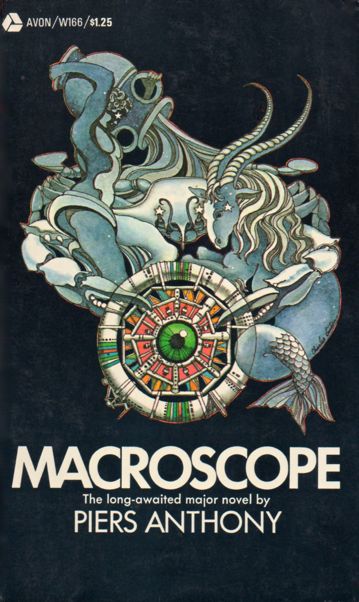
Macroscope by Piers Anthony
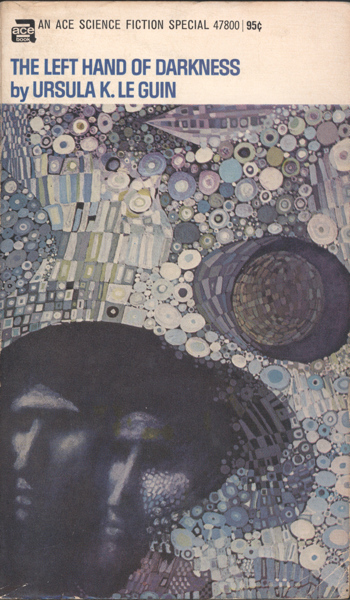
The Left Hand of Darkness by Ursula K. Le Guin
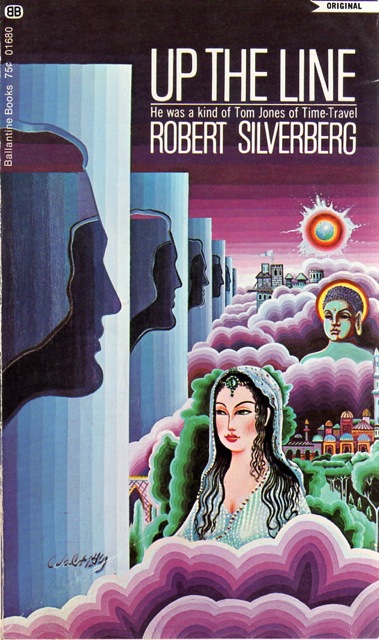
Up the Line by Robert Silverberg
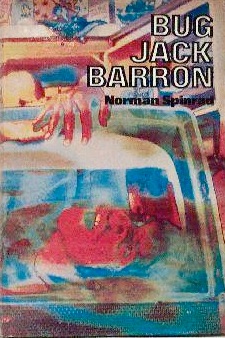
Bug Jack Barron by Norman Spinrad
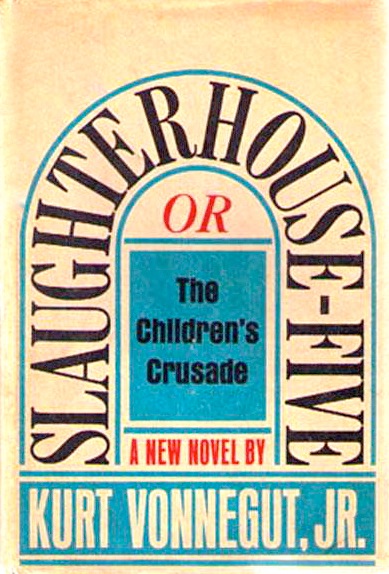
Slaughterhouse Five by Kurt Vonnegut, Jr.

The Actual Results

  1. The Left Hand of Darkness by Ursula K. Le Guin
  2. Up the Line by Robert Silverberg
  3. Macroscope by Piers Anthony
  4. Slaughterhouse Five by Kurt Vonnegut, Jr.
  5. Bug Jack Barron by Norman Spinrad

How I Would Vote Now

  1. The Left Hand of Darkness by Ursula K. Le Guin
  2. No Award
  3. Slaughterhouse Five by Kurt Vonnegut, Jr.

Explanation

Wow—I’d forgotten just how terrible book covers were in the 70s. I particularly had trouble finding an early edition cover for Bug Jack Barron that didn’t have psychadelic topless women plastered all over the front of it. The 70s was a weird time.

First, the good: Ursula K. Le Guin is one of the best science fiction writers of all time, and her novel The Left Hand of Darkness may be the greatest book she’s ever written. Personally, I was more impressed by The Dispossessed, but they’re both quite excellent. The thing I like most about Le Guin is that she genuinely follows her characters wherever they lead her, even (or especially) if their own beliefs and values contradict her own. This means that all of her books present a fully developed and well-rounded argument, which makes them ring true in a very deep and compelling sense.

On the surface, there are a lot of reasons for a conservative reader like myself to hate this book. It’s written by a left-wing atheist, it was published in the 70s, and it won the Nebual Award, the Hugo Award, and the Tiptree Award. Digging a little deeper, the core concept of the story is an exploration of gender issues, where biological sex is fluid and the characters may be male one month and female the next. And yet, Ursula K. Le Guin’s unwavering commitment to telling a truthful story keeps it from feeling “woke,” at least to me. Le Guin is one of the most clear-eyed and honest writers I have ever read, which is why none of the surface level stuff bothers me. It’s also what makes her books so timeless.

Now, for the bad—although “bad,” in this case, is more just a matter of personal taste, since I don’t much care for the literary genre (and yes, “literary” is a genre—just because your books aren’t commercial doesn’t make them superior to everything else). Slaughterhouse Five is written with such a heavy-handed style that I just couldn’t get into it. But since that’s more of a personal taste issue, I’d still put it on the ballot under No Award, and if it weren’t for the other three books, I wouldn’t have put No Award for this year.

But now, we come to the ugly, starting with Macroscope. I have to admit, I skipped this one on account of the author. I never grew up reading Piers Anthony, so when I finally got around to picking up his books, it was immediately clear to me that he’s a dirty old man. Which is a shame, because it’s clear that he knows how to write an entertaining story—it’s just that these stories all seem to be peppered with weird sex stuff, often bordering on rape fantasies. I have no idea if that’s true for Macroscope, but I’ve DNFed enough by this author that I don’t really care to find out.

I’ve also DNFed a lot of stuff by Robert Silverberg that was just too explicit for me, so I asked ChatGPT to screen Up the Line for me, and this is what it said:

The narrative features frank depictions of sexual relationships, including a controversial incestuous encounter resulting from a time-travel paradox. Silverberg uses this scenario to examine the moral implications of unrestricted access to history and personal indulgence.

Yeah… Silverberg’s exploration of incest sounds like exactly the kind of book I never want to read. Hard pass.

I also asked ChatGPT to screen Bug Jack Barron for me—though from the fact that so many editions of this book feature outright pornographic cover art, I suppose I didn’t have to go that far to know this would get a hard DNF. This is what ChatGPT said:

Sexual Content: The novel includes graphic depictions of sexual relationships, often tied to the characters’ moral complexities. The narrative explores Jack’s personal relationships with raw detail, including manipulative and transactional dynamics, as well as moments of stark intimacy.

Social Justice Themes: Issues of race, class, and exploitation are central to the narrative. Spinrad tackles these topics with a provocative, satirical approach, which might align with modern “woke” sensibilities despite the book’s 1960s origin.

Yeah, I’m gonna give this one a hard pass too. And given what I already know about 70s science fiction, I suspect that ChatGPT will be invaluable in screening the books from this decade.

How I would vote now: 1972 Hugo Award (Best Novel)

The Nominees

To Your Scattered Bodies Go by Philip Jose Farmer

The Lathe of Heaven by Ursula K. Le Guin

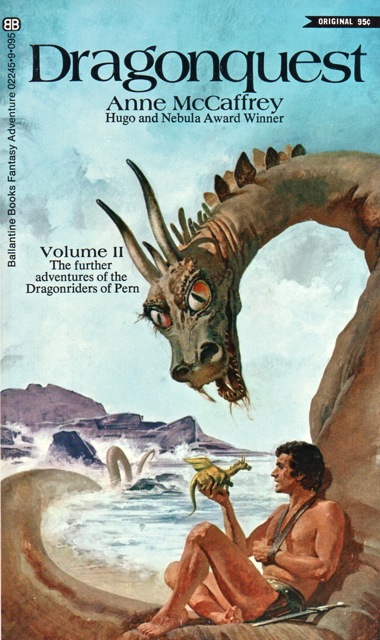
Dragonquest by Anne McCaffrey

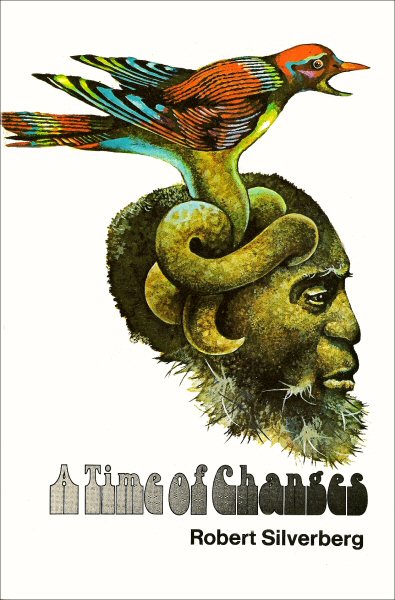
A Time of Changes by Robert Silverberg

Jack of Shadows by Roger Zelazny

The Actual Results

  1. To Your Scattered Bodies Go by Philip Jose Farmer
  2. The Lathe of Heaven by Ursula K. Le Guin
  3. Dragonquest by Anne McCaffrey
  4. Jack of Shadows by Roger Zelazny
  5. A Time of Changes by Robert Silverberg

How I Would Have Voted

  1. The Lathe of Heaven by Ursula K. Le Guin

Explanation

Cover art was so terrible in the 70s. Those are all the original edition covers for each book. They’ve all been reworked in later years, and most of them got a significant upgrade.

The Lathe of Heaven isn’t Ursula K. Le Guin’s greatest work, but I did find it to be decently good. The ending was a little too pat, but the set up was good, and the story itself was quite intriguing. In some ways, I feel that it would have worked better as a movie, maybe an animated feature by Studio Ghibli. It definitely had that kind of a dreamlike feel.

The rest of these books are not that great, to be honest. To Your Scattered Bodies Go and A Time of Changes were too pervy for me, with Farmer indulging in some really weird and disturbing treatment of children, and Silverberg indulging in pages and pages of navel gazing, all written very beautifully and signifying almost nothing, which is typical of Silverberg.

Jack of Shadows was confusing: I got about two thirds of the way in before I realized that I had no idea what was happening, and I didn’t really like any of the characters. I wonder if the real reason this book got nominated was because so many people enjoyed Nine Princes in Amber, the first Chronicles of Amber book, which came out in 1970 and was actually quite excellent. But he was writing and publishing the Chronicles of Amber all through this time period, and none of them ever got nominated for a Hugo, which seems really strange to me. With Zelazny, the only books I’ve found that I enjoyed are his Chronicles of Amber, and everything else is a huge miss for me. It’s weird.

As for Dragonquest, I know that the Dragonriders of Pern books have lots of fans, and I don’t find anything too objectionable with them (aside from the naively libertine Boomer attitudes toward sex, which is par for the course for this era and for Anne McCaffrey in general), but I just couldn’t get into this book. I read the first Dragonriders of Pern book in college, when I wasn’t nearly so cynical, and I thought it was okay, but it wasn’t compelling enough to go out and read the rest of the series immediately, and over the years I literally forgot everything that happened in that first book. So I read a synopsis before picking up book 2, and I just have to say that the dragons are way, way, way too OP. Seriously, they can teleport instantly through space AND time? That’s just too much. So I went into Dragonflight without feeling any real sense of peril, and right away, the novel turned into a giant soap opera about the various dragons and dragonriders: who had feelings for who, who was sleeping with who, etc etc. So after a couple of chapters, I just got bored and checked out.

So the only one of these books that I can positively vote for is The Lathe of Heaven, even though I think it pales next to Le Guin’s other work. But I wouldn’t actually put any of these books beneath No Award, since most of it is probably just a matter of my own personal taste. The perviness of To Your Scattered Bodies Go almost makes me want to put it below No Award: there’s a lot of graphic nudity, a lot of innuendo, and some innuendo / torture porn directed toward children, which was why I DNFed it. But it doesn’t cross over into outright pornography, and it’s not ideologically possessed in the way that most of the stuff coming out today tends to be. Also, the premise is pretty interesting: it’s in the execution where it all falls apart.

The 70s was a really weird time for science fiction. I wonder how many of the Worldcon attendees in 1972 were high on drugs—or whether some of these artists weren’t off their gourds when they wrote some of this stuff. I’ve heard stories about some of the orgies that Asimov used to hold in his con suite. It was a very different time.

How I would vote now: 1977 Hugo Award (Best Novel)

The Nominees

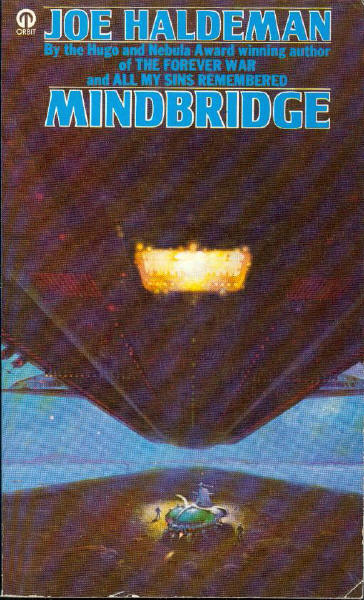
Mindbridge by Joe Haldeman

Children of Dune by Frank Herbert

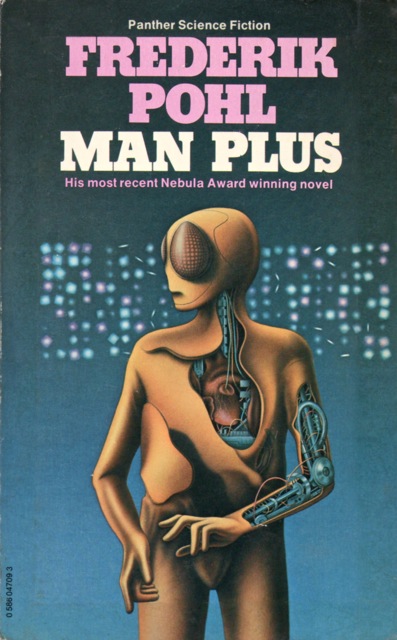
Man Plus by Frederik Pohl

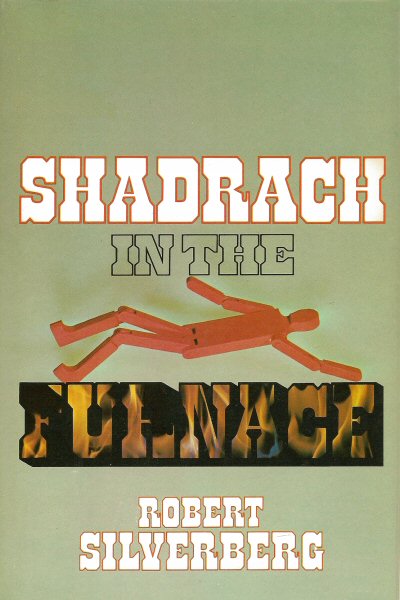
Shadrach in the Furnace by Robert Silverberg

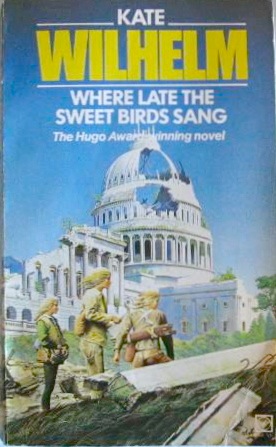
Where Late the Sweet Birds Sing by Kate Wilhelm

The Actual Results

  1. Where Late the Sweet Birds Sing by Kate Wilhelm
  • Children of Dune by Frank Herbert
  • Man Plus by Frederik Pohl
  • Mindbridge by Joe Haldeman
  • Shadrach in the Furnace by Robert Silverberg

How I Would Have Voted

  1. Children of Dune by Frank Herbert
  2. No Award
  3. Man Plus by Frederik Pohl
  4. Shadrach in the Furnace by Robert Silverberg

Explanation

It’s interesting to see which of these books hold up after nearly fifty years, and which of them really don’t. Of the five here, I think Children of Dune is the only one that still has any lasting cultural relevance, and that only because of the first book, Dune.

Children of Dune is also (perhaps not surprisingly) the only book that I would consider worthy of voting for. It’s nowhere near as good as Dune, but of the Dune sequels, it’s the best one I’ve read so far (though the way Leto transformed into a… whatever really seemed to come out of nowhere). Man Plus and Shadrach in the Furnace weren’t terrible, but I didn’t finish them. I can’t speak to Mindbridge, because I didn’t bother reading it: I’ve read enough Haldeman to know that he has a penchant for nihilism that really rubs me the wrong way.

As for Where Late the Sweet Birds Sang, it was really awful. I don’t remember the plot exactly, but the book is full of leftist 70s doom porn regarding climate change and Malthusian resource shortages, combined with a resurgence of The Patriarchy that forces all the female characters into becoming breeders. It’s dark, dystopian, and apocalyptic in all the worst ways, with a very strong political bent to it that holds up about as well as all of the end-of-the-world predictions that the climate cultists have been peddling since the 70s. Basically, Where Late the Sweet Birds Sang is why I’d vote “No Award” after Children of Dune.

Man Plus had some interesting writing, but it didn’t really hold my interest, probably because of all the Malthusian and Freudian undertones. It wasn’t insufferably political, though, which is why I would actually affirmatively vote for it after “No Award.” I would certainly rather that Man Plus had won out over Where Late the Sweet Birds Sang. Same with Shadrach in the Furnace, which isn’t terrible, though it does have some weird communist power fantasies in it. I really love the way Silverberg writes, but the things he chooses to write about just seem totally pointless to me.

The 70s was a very weird time for science fiction… and probably a weird time for the world in general. As you can probably tell, I’m not a huge fan of New Wave science fiction (with a few notable exceptions). Things got a lot better after Reagan’s Morning in America, not just for the country, but for science fiction as well. Then we hit the 90s, which the Zoomers tend to look on as a simple, idyllic time when all was bright and wonderful in the world, which strikes me as hilarious because I remember it as a time of rampant school shootings and MTV-driven cultural decay. But that’s a subject for another post.

Reading Resolution Update: April

My 2022 reading resolution: Read or DNF every novel that has won a Hugo or a Nebula award, and acquire all the good ones.

In 2007, when I was a sophomore in college, I went up to Salt Lake City with some friends and was browsing the awesome (and fairly run down, even at the time) used bookstore near the Gallivan Plaza TRAX stop, which has since changed names and moved to another location. It was a really awesome used bookstore, and I determined to buy a SF novel while I was there, since I was really getting back into SF after my mission. I saw a massive 600+ page trade paperback edition of Cyteen by C.J. Cherryh, and since I was reading Downbelow Station at the time, I decided to get that one.

For the next fifteen years, I lugged that book everywhere, through more than a dozen moves (though for the biggest move, where I made the pioneer trek in the wrong direction and repented 8 months later, I boxed it up with my other books and left it in a friend’s basement). In all that time, I never actually read it—or even opened it up, really—but it was always there, somewhere in the middle of my dismally long TBR list.

It wasn’t that I didn’t want to read it: I just didn’t have (or make) the time. Downbelow Station had been an okay read, if not spectacular, but I had really enjoyed some of C.J. Cherryh’s shorter books, like Merchanter’s Luck and Voyager in Night. Also, space opera books about sprawling galactic empires were right up my wheelhouse, so it didn’t seem odd for me to own such a book that I hadn’t yet read. In fact, most of the books that I owned throughout this time were books that I wanted to read but hadn’t gotten around to yet. If I have a superpower, it’s an uncanny ability to acquire books no matter where I am. Unfortunately, I’m not as good at reading them.

Fast forward to 2022. I’ve gotten married, had a daughter, launched my own writing career, and become a homeowner—and I’m still lugging this massive 600+ page trade paperback book that I’ve never read. But I’ve just set a resolution to read (or DNF) every Hugo and Nebula award-winning novel, and Cyteen is on the list. So around the middle of March, I finally open it up and start reading it.

After about a month, I decided to DNF it.

It’s not that it was terrible. Perhaps you enjoyed it, and that’s fine. I just found it to be too drawn out and confusing. I think C.J. Cherryh does better when she’s focusing on just a few characters, rather than trying to give the grand sweep of galactic civilization or whatever. I didn’t finish Foreigner for similar reasons. Maybe someday I’ll return to that one and Cyteen, but for now, I’m counting it as a DNF.

But the thing is, I was hauling around this massive book for most of my adult life. When I bought it in 2007, I figured that since it had won a Hugo, it had to be good. Perhaps, if I’d read it back then, I would have been more patient with it and slogged through to the end. Perhaps I would have decided it was just as good as Downbelow Station. Or perhaps, if I read Downbelow Station today, I would end up DNFing it as well.

The point is, I wish I’d been a lot more discerning about my reading when I was younger, and not just acquired books that I hoped to read “someday”… because books (at least the paper ones) are heavy and take up a lot of space. And a lot of them really aren’t worth reading. Of course, you’ve got to read a few stinkers to figure out what you really like, so it isn’t always a waste… but libraries exist for a reason.

So what this experience really tells me is that Mrs. Vasicek and I are doing the right thing by taking our family to our local library once a week. Also, it tells me that the second part of my resolution—to actually acquire all of the books that I think were worth reading—is just as important as actually reading them. Because, if the ultimate goal is to “seek… out of the best books words of wisdom,” then it’s not enough to just make a list: you actually have to read the damned things, and keep your own personal library in order to revisit those words and share them with others. Because ultimately, you have to discover which books are the “best books” on your own, and your best books list isn’t going to be the same as anyone else’s best books list. Which means that you can’t rely on anyone else’s list. You can use it as a starting point to make your own list, but that’s all you should use it for.

So now I want to go through all of the books I’ve acquired over the years and figure out which ones I ought to get rid of, because Cyteen certainly wasn’t the only one. In fact, most of the books in our family library are books that I haven’t (yet) read. By my count, there are just under 150 of them, totalling about 55k words. Even at a rate of 100 words or two hours of reading each day, that’s still going to take almost two years… and that’s not counting all the library books that we’re sure to check out in the meantime.

Oh well. I suppose this is more of a process than anything else. Journey before destination, and all that. And I’m sure I’ll have fun in the process, since despite the fact that I DNF far more books than I actually read, I do genuinely enjoy reading.

In any case, here are all of the Hugo and Nebula award-winning books that I read (or DNFed) in the month of April:

Books that I read and plan to or have already acquired:

  • Rainbows End by Vernor Vinge (2007 Hugo)
  • Blackout by Connie Willis (2011 Hugo and Nebula) (audio)

Books that I read and do not plan to acquire:

  • Blackout by Connie Willis (2011 Hugo and Nebula) (print)

Books that I did not finish:

  • A Time of Changes by Robert Silverberg (1972 Nebula)
  • The Gods Themselves by Isaac Asimov (1973 Hugo and Nebula)
  • The Fountains of Paradise by Arthur C. Clarke (1980 Hugo and Nebula)
  • The Claw of the Conciliator by Gene Wolfe (1982 Nebula)
  • Cyteen by C.J. Cherryh (1989 Hugo)
  • Tehanu by Ursula K. Le Guin (1991 Nebula)
  • The Diamond Age by Neal Stephenson (1996 Hugo)
  • The Moon and the Sun by Vonda N. McIntyre (1998 Nebula)
  • Parable of the Talents by Octavia E. Butler (2000 Nebula)
  • 2312 by Kim Stanley Robinson (2013 Nebula)
  • Beyond This Horizon by Robert A. Heinlein (1943 Retro Hugo, awarded in 2018)
  • The Nemesis from Terra by Leigh Brackett (1945 Retro Hugo, awarded in 2020)

Total books remaining: 26 out of 110 (currently reading 12 and listening to 3).

Worldcon 2011: Saturday

Alright, I should just write this up and finish my convention report before life sweeps me away completely.

Saturday was the main day of the con.  To be honest, I forgot all the panels I went to, except this really awesome one by a guy at NASA on near Earth objects (NEOs).  Holyfreakingcow there are thousands of these objects AND WE ARE SENDING MISSIONS TO THEM!!!  So cool!

I went to a kaffeklatsch with Nancy Kress, which turned out to be quite an interesting experience.  She’s an extremely gracious person, much like Tracy Hickman, and gave some excellent career advice: 1) no matter the obstacles or difficulties, always find a way to keep writing, and 2) always be true to the story.

Had dinner with some other Utah writers, and I wish I could say it was pleasant, but for some reason it got very antagonistic.  I know it takes two to tango, but I honestly don’t know what I did to make it that way.  Perhaps stress levels were running high, or people misread my tone, but the conversation at our table completely fell apart at least twice.  It was very wierd.

Part of it might have to do with the fact that I’ve become something of a trailblazer for indie publishing within the SLC / Utah Valley writing community.  Which brings me to another side note: everyone talks about how militant and polarizing self publishers are, when in my experience it’s the advocates of traditional publishing who tend to adopt an us vs. them attitude.  To be sure, there are plenty of desperate to be published writers who take the indie path just to “stick it to the man,” but those people tend to fade away once they realize it isn’t a silver bullet.

Anyway, the Hugo Awards in the evening were great!  Robert Silverberg presented the award for Best Novella, and for fifteen minutes he was my favorite person in the world.  So hilarious!  I’ve tried to find a video, but there doesn’t seem to be one up yet.  Utah writers were nominated in six categories, and even though none of them won, the competition was pretty dang good, so I don’t feel so bad about losing.

All in all, it was a great convention!  I had a lot of fun, even if I did feel a little exhausted by the end of it.  I’m not sure if I’ll be attending future worldcons in my current capacity as a beginning writer, but I most likely will buy supporting memberships in order to vote in the Hugos (and download the voting packet).  It’s a good community, and I’m glad to be a part of it.