The need to read

So for the past couple of weeks, I haven’t been as productive at writing as I’d like. I could list off a lot of reasons, some of which would be legitimate, others of which would sound like (and probably be) excuses, but that would get tedious rather quickly, so I’ll spare us both the trouble. Instead, there’s one in particular that I’d like to focus on, and that’s the connection between reading and writing.

They say that if you want to be a writer, you have to write a lot and read a lot. Writing is important for obvious reasons, but reading is also quite important, though we tend to forget that. Reading is how we replenish the story well–it’s how we feed our imaginations, revisit familiar tropes and archetypes, find and spark new story ideas, and generally immerse ourselves in the world of story. For those of us who write fiction for a living, that’s vitally important.

At the beginning of the year, I made a resolution to read at least one book every week. That worked out well until about mid-February, when most resolutions die a horrible, miserable death. This one was no exception. For the past couple of months, I’ve hardly read anything, and I can feel it.

Here’s the thing: if I stop reading for a little while, I can still keep writing just fine. There’s no immediate effect. And if I don’t read anything for a long time, I can still push myself and get stuff done–it just takes more effort, and feels a lot more like work. Because of that delay, it’s hard to tell if there’s really a causal link between how much I read and how easy it is to write.

I definitely believe in that connection, though. I can feel it. And after going for so long without reading, I’ve found that my writing doesn’t come as easily as it used to. It feels more like a chore than something that I look forward to each day. I find myself getting distracted more easily, or procrastinating longer, or just flat out avoiding the work altogether. What’s more, when I do write, it doesn’t feel as satisfying. It feels like I’m doing just enough to get by, rather than putting out my best work.

And that’s the danger–that not only the quantity, but the quality of your work will suffer for not reading. It’s a trap that I don’t want to fall into, so I’ve decided to reverse it by picking up my to-read list and working my way through it. I started with a couple of David Gemmell novels, and they were both so good I finished them in just a matter of days. Boy, was it great to rediscover just how awesome a good book can be! It’s reading stuff like that that made me want to be a writer in the first place.

I don’t know if it’s limited just to reading books and novels. I know that I’ve found all sorts of excellent story material in movies, TV shows, animes, and other forms of storytelling media. Those probably have a positive effect as well. If you’re a creator, though, it’s probably more important to immerse yourself in the medium in which you do your creating. For writers, that means reading. Movies and TV shows can be great, but I doubt that they work as substitutes.

What do you guys think? Have you noticed a connection between what you read and how you write? I’m still trying to tease out the exact nature of the connection, so I’m definitely interested in hearing some other perspectives on the subject.

And just for fun, here’s a sampling of my current to-read list, in no particular order:

  • Gods and Generals by Jeff Shaara
  • Caszandra by Andrea K. Host
  • A Fire Upon The Deep by Vernor Vinge
  • A Wizard of Earthsea by Ursula K. Le Guin
  • Existence by David Brin
  • Cyteen by C.J. Cherryh
  • Sackett’s Land by Louis L’Amour
  • Anna Karenina by Leo Tolstoy
  • The Sekhmet Bed by L.M. Ironside
  • Bloodstone by David Gemmell

Time to start reading!
N is for Noise

With all the millions of books out there, and more coming out each year, is it getting harder for authors to market their books? Since anyone can publish a book now, is all that noise drowning out new voices?

It’s tempting to think that way, especially when you’re just starting out as an indie author. Everything is a big struggle, and you find yourself grasping for something–anything–to explain why you aren’t seeing the success that you want to see. With all of the millions of books flooding the marketplace, it’s easy to feel that your own books are getting buried.

Personally, though, I reject this idea that the noise is drowning us all out. You aren’t getting drowned out by all the other books out there. You’re not locked in a zero-sub competition with other authors. And readers who pick up another book in your genre aren’t overlooking yours–in fact, they’re more likely, not less likely, to find and enjoy your books.

A couple of years ago, I wrote three posts on this subject. The first one discusses self-publishing as it relates to traditional publishing, and why the ebook revolution is something for authors to be excited about rather than afraid of. The second one discusses how what the elites view as noise is actually the democratization of literature. The third one compares publishing a book with writing a message in a bottle–even though the ocean/marketplace is vast, if the bottle/book doesn’t sink to the bottom, it will eventually wash up somewhere and be discovered.

The idea that the noise is drowning out your book is based on a number of false assumptions, the first that all things equal, a reader is more likely to read your book if there are fewer options available. But for that to be true, 1) readers would have to be equally motivated to read all books, and 2) readers would have to devote the same amount of time to reading, no matter how many other priorities compete for their time.

No one reads a book for entertainment just because there’s nothing else for them to read. Perhaps that would be true if they were stranded on a desert island with just a couple of books, but boredom is a very, very low bar to cross and there are thousands of non-reading activities that can clear it as well or better than reading a book. Even for the voracious readers whose addiction to the written word is stronger than their need to eat, there’s an endless buffet of fanfiction and all sorts of other reading options made possible by the internet.

If someone reads your book, it’s not because there’s nothing else for them to read–it’s because they find your book interesting. And if someone reads another author who writes a lot like you, chances are that they’ll be more likely, not less likely, to pick up your book than someone who’s never read that kind of stuff before. Readers rarely tire of their favorite genres–the more they love a book, the more likely they are to search out another just like it.

Complaining about all the books that make it harder for readers to find yours is like complaining that girls never like nice guys. The people who complain the loudest never really seem all that willing to take a good, hard look at themselves and ask why it is that girls/readers aren’t interested in them. It’s not enough just to be “nice”–you’ve got to have some personality. If a book sinks, it’s almost always because something about it sucks. No author is entitled to success, just like no guy is entitled to a girlfriend.

I firmly believe that there’s room enough in the marketplace for everyone–provided, of course, that your book doesn’t suck. And even if it does, there are probably still readers out there who will love it. Beyond a certain point, literary quality is all subjective anyway. If you write good books, give them the proper mating plumage (blurb, cover, metadata), and put them out where readers can find them, they will–no matter how many other books are out there.

I need to read more. A lot more.

Recently, I’ve come to the conclusion that I need to read a lot more than I have been.  I’ve read a couple of books in the past few months, but to take things to the next level I feel like I should be reading at least one or two novels a week.

I came to this conclusion last week after visiting the Provo Library to pick up a copy of Gettysburg (the movie based on The Killer Angels) that was on hold for me.  Unfortunately, someone had misplaced it, but since I was there I took some time to browse the shelves.

Holy cow, it’s been a while since I was surrounded by actual physical books.  I get about 60% to 70% of my books nowadays on my kindle, so browsing through the shelves, I felt like a kid in a candy shop.  I picked up the last Drenai book that I haven’t yet read (finished it today, actually), a classic by Heinlein, and an Alliance-Union novel by C.J. Cherryh.

The thing about physical library books, though, is that if you don’t read and return them in time, they tend to cost you money.  LOTS of money.  I can’t tell you how much I’ve paid in library fines over the years–it seems like every time I go to check something out, I have to pay a couple of bucks.  What can I say–I’m not a very disciplined reader.  But this time, I figured I would actually go through and do it.  That’s why I limited myself to just three (or was it four?).

If you’re a writer, reading voraciously is essential.  Not only is it a great way to pick up new tricks, it’s absolutely vital in keeping your sense of story honed and sharp.  I wonder how much of what we call “writers block” would actually best be solved, not by just writing through it, but taking some time to just immerse yourself in a good book and recharge your creative batteries by filling your mind with story.

Another reason to read is that it helps to keep you from being stretched too thin by online distractions and obligations.  I picked up this tip from Jeff VanderMeer in his writing book, Booklife.  It’s a good one.  Basically, if you find yourself wasting too much time on the internet, cycling endlessly through your email, your facebook, your twitter, webcomics, message boards, blog aggregator, sales stats etc etc–the best way to break free of that addictive cycle is to sit down and read a book.

A couple of days later, I was at Leading Edge and noticed that they have a whole bunch of unread ARCs in their cabinet.  A couple of small publishers send them stuff every couple of months, and it tends to accumulate, especially in the summer when most of the students are gone.  Well, I ended up coming home with three of them, with a promise that I’d read and review a couple before the next issue goes out in June.

Not that I’m complaining–not at all.  In fact, I’m excited.  I’ve been doing a lot to rework my routine recently, mostly having to do with writing in the mornings and finding a good place outside of my apartment to get stuff done.  I find that it helps to take frequent breaks when writing, so if I can fill those with reading instead of useless internet browsing, I figure I’ll be in good shape.  I’ll let you know in a couple of weeks how that goes.

In the meantime, I’ve got to go, but you can expect another squeeing fanboy review of David Gemmell soon–as in, probably tomorrow.  I just finished the last remaining bok in the Drenai series that I hadn’t yet read, and holy crap, it is AMAZING.  It makes me want to go through and read the whole series all over again!  At the same time, I’m so sad that there aren’t any more of these books left anymoer–if Gemmell had written a hundred Drenai books, I would have read (and gone fanboy crazy over) every last one of them.  Sadly, that is not to be.  But maybe when my soul passes over to the Void, I can sit at his feet and hear them direct from the mouth of the master … okay I’d better end this before I go all fanboy again.  Later.

Y is for Yesteryear

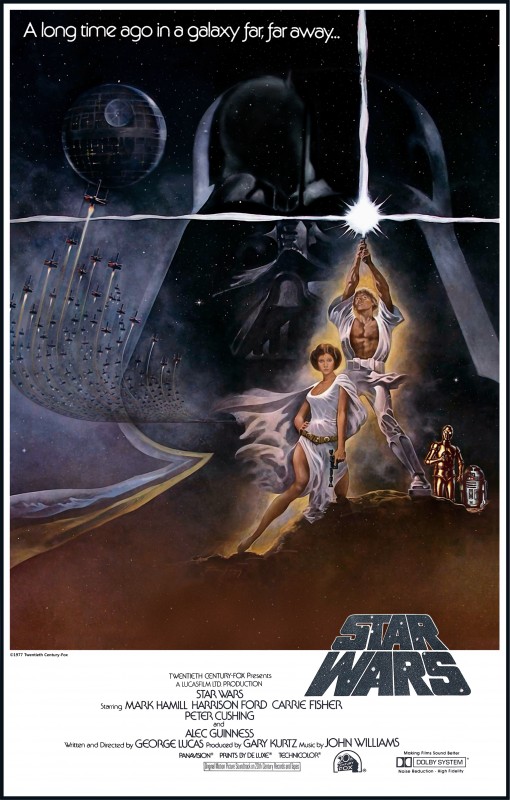
Star_wars_oldThey say that the golden age of science fiction is about twelve years old.  That’s definitely true for me.

My first exposure to the genre was Star Wars: A New Hope.  I saw it when I was seven, right around the height of my dinosaur phase.  Everything about the movie completely blew me away, from the Jawas and Sand People of Tatooine to the stormtrooper gunfights and lightsaber duels.  After watching Luke blow up the Death Star, I spent the next few hours running around the yard pretending to fly my own starfighter.

In a lot of ways, I’ve never really stopped.

My parents made me wait until I was nine to watch The Empire Strikes back, because it was rated PG.  Without any exaggeration, I can say that those were the longest two years of my life.  I was literally counting down days by the end, and to pass the time without going crazy, I read up on all the books about space that I could possibly find.

My father bought the original X-wing flight simulator game somewhere around then, and I soon became totally engrossed in it.  Since the 386 was our only entertainment system (no Super Nintendo–I had to visit a friend’s house for that), X-wing became the defining game of my childhood.  I spent hours and hours on that game, to the point where I knew exactly which simulated missions the characters from the books were flying and how to complete them faster and easier.

I thought The Empire Strikes Back was a little slow the first time I saw it, but it’s since grown on me, to the point where now it’s my favorite film in the whole series.  Thankfully, my parents let me watch Return of the Jedi the next day, and for the next few months my life felt utterly complete.

Around this time I discovered the Star Wars novels and soon immersed myself in them.  The Courtship of Princess Leia by Dave Wolverton soon became one of my favorites, as well as the Heir to the Empire trilogy by Timothy Zahn and the X-wing series by Michael A. Stackpole.

But it was Roger Allen McBride who first introduced me to a different flavor of science fiction with his Corellia trilogy.  As I mentioned in V is for Vast, those books had just enough of a touch of hard science to intrigue me about the other possibilities of the genre.  That was the last Star Wars series that I read before branching out into other works of science fiction.

The Tripod trilogy by John Christopher was my first introduction to the dystopian / post-apocalyptic genre, depicting an enslaved humanity after an alien invasion.  Those books really captured my imagination for a while.  The Giver was also quite interesting and thought provoking, though since it didn’t involve spaceships or aliens it wasn’t nearly as compelling.

I read a lot of fantasy in my early high school years, including Tracy Hickman, Lloyd Alexander, and (of course) J.R.R. Tolkien.  While I enjoyed those books and immersed myself in them for a while, my true love was still science fiction.  For almost a year, I watched Star Trek: Voyager religiously with my dad.  And every now and again, I’d pick out a science fiction book from the local town library and give it a try.  That’s how I discovered Frank Herbert’s Dune.

In eleventh grade, my English teacher had us choose an author and focus our term papers solely on their books for the entire year.  She suggested I choose Orson Scott Card, but I chose Cormac McCarthy instead.  I’m not sure if that was the worst decision of my high school career, or the best decision, since assigned high school reading tends to make any book feel like it sucks.  I discovered Ender’s Game the following summer, and finished it in a delirious rush at 3am the morning after checking it out from the local library.

More than any other book, Ender’s Game cemented my love for the genre, and showed me just how powerful and moving the genre could be.  It opened so many insights into the world and human nature, reading that book made me feel like I’d opened a pair of eyes that I didn’t even know I’d had.  Looking back, that was probably the moment when I knew I would be a science fiction writer.  I’d known I was going to be a writer ever since I read A Wrinkle in Time at age eight, but to be a science fiction writer specifically, that goal was probably cemented by reading Orson Scott Card.

After high school, I served a two year mission for my church, during which I didn’t read any novels or watch any TV or movies.  When I came back, though, Orson Scott Card and Madeline L’Engle helped me to ease through the awkwardness of adjusting back to normal civilian life.  When I left for college, I expanded my horizons even further, starting with Isaac Asimov’s Foundation series and Edgar Rice Burrough’s Princess of Mars.

When I discovered Pioneer Books in downtown Provo, I knew I’d found my favorite bookstore in Utah Valley.  I have so many fond memories sitting cross-legged on the floor in the science fiction section, browsing through the musty used books for hours at a time.  That’s where I discovered C.J. Cherryh, Arthur C. Clarke, Robert A. Heinlein, Ursula K. Le Guin, and numerous other authors who are among my favorites today.

When I discovered Spin, Robert Charles Wilson soon became one of my favorites.  I picked up that novel as a free PDF from Tor, and read it over the summer while studying abroad in Jordan.  Once again, that same hard sf sensibility I’d gotten from Roger Allen McBride touched me in an unforgettable way.  But it was the human element of that book that really moved me–in fact, it’s always been about the human element.  The world building in Downbelow Station was great and all, but the romance of Merchanter’s Luck had a much more lasting impact.  Starship Troopers had some good ideas, but it was Mandella’s personal journey in The Forever War that moved me almost to tears.  The intrigue of the Ender’s Shadow series was quite entertaining, but it was Ender’s Game and Speaker for the Dead that really taught me what it means to be human.

I finished my first novel, Genesis Earth, shortly after returning from that study abroad, and tried to capture the same sensibility from Spin as well as the intimately human element.  Since then, I’ve written several more sci-fi novels, some of them tragic, some triumphant, but in all of them I’ve tried to get as close as I can to the personal lives of the characters.  I don’t know if I’ll ever write a character portrait so intimate as Shevek’s in Ursula K. Le Guin’s The Dispossessed, but I certainly hope to someday.

For me, science fiction started out as a wonderfully exciting entertainment and turned into something much more meaningful.  If there’s anything the genre has taught me, though, it’s that the two aren’t mutually exclusive–that you can have your adventure and learn what it means to be human as well.  Indeed, the more imaginative the adventure, the greater the truths I’ve taken from it.

Because of that, even though I’m almost in my thirties now, I can’t possibly foresee a time when science fiction isn’t a major part of my life.  It’s a love affair that’s grown just as much as I have, and continues to grow with each new author I discover and each new book I write.  When I’m old and grizzled and pushing eighty, I’m sure there will still be a part of that twelve year old boy in me, still running around the yard flying his starship.

Trope Tuesday: Fridge Logic, Fridge Horror, and Fridge Brilliance

It's amazing how many existential story questions arise from this view.
It’s amazing how many stories suddenly stop making sense from this point of view.

You know that moment after the end of the show, when the credits are rolling and the glory of that crowning moment of awesome is just beginning to fade?  When you go to the fridge to get something to eat, and all of a sudden that gaping plot hole or internal consistency problem with the story hits you?  Yeah, that’s fridge logic.

The key, though, is that it’s not something you normally question while you’re reading the book or watching the show.  While you’re in the story itself, the narrative is so compelling that you just don’t question it–that, or rule of cool is in play.  It’s only after the story is over that those questions start to arise.

It doesn’t have to come from bad writing.  Sometimes, it’s a result of values dissonance, especially for stories written in a different time or culture (although by no means is this phenomenon immune to bad writing).  Sometimes, it’s a result of a tomato surprise, where a reveal of something the characters have known all along completely changes the audience’s understanding of the story (though certainly, this isn’t immune to bad writing either).

Not all fridge logic is bad.  Fridge horror happens when a story becomes even more terrifying the more you think about it.  Some of the scariest horror stories have done this to me, as well as some that weren’t really intended to finish on downer endings but kinda sorta did.  Cracked.com did an interesting article on six movies that went that way.

But the best is when a story turns around and gives you fridge brilliance–that moment when you realize that that thing that bothered you actually changes the nature of the story in a way that suddenly makes it your favorite.

My favorite novel of all time, The Neverending Story, totally did this to me.  When I first read it in fourth grade, there were so many things that made the story awesome: the Temple of a Thousand Doors, the test of the three gates, the old man who is the exact opposite of the Childlike Empress in every way, and of course the signature phrase “but that is another story and shall be told another time.” But when I reread it in college, I realized that the real story–the underlying story that brings everything together–isn’t about a loser kid having all sorts of adventures in a fantastic world, but about the power of storytelling itself, and how it can fill the world with love.

Another moment of fridge brilliance came to me when I learned the story behind the writing of Legend, my favorite novel by David Gemmell, my favorite fantasy writer.  The book is about a hopeless battle that everyone knows cannot be won, and the people who decide to go and fight it anyway.  That’s all well and good, except that David Gemmell wrote it immediately after he was diagnosed with terminal cancer.  The story of the battle itself was a metaphor for his own life, and his struggle with his own impending death.  Lucky for all of us, after he finished writing it the doctor came back and told him that the first test was a false positive–that he was going to live after all.  He then went on to write almost thirty more books, all of them off-the-charts awesome.

So yeah, there you have it.  These are more reader tropes than writer tropes, but as a writer it’s good to keep them in mind.  Don’t be lazy, otherwise your fans will pick your stories apart (or if you have to leave a hole, be sure to hang a lampshade on it).  And if you find yourself smacking your forehead over something you’ve already written and published, see if you can’t revisit it in later books in the series and turn it into fridge brilliance.

Quick summer update

So I just finished a quick 2.0 draft of Star Wanderers, and there still seems to be something missing.  Not sure what it is, but I probably need to take a break from it for a while and focus on something else.

Working on it has really drained me, which is one of the reasons why I missed the Trope Tuesday post this week–sorry!  I’ll try to get something up this coming Tuesday, though I can’t make any promises since I’ll be at Cape Cod on vacation with the family.

I’m not sure whether to take a break for a while or to throw myself into another project, but I’m going to take it easy this next week and focus on  having a good time with my family.  That’s the main reason why I came back to the States, after all.  But one thing I do want to do is read more, so I’ll definitely be spending some time with my kindle while on the beach.  Expect to see a few reviews here shortly.

I can’t really say which project I’m going to pick up next, but I’m going to take a break from Star Wanderers for a while.  Don’t worry–Part III will be out no later than October, possibly sooner depending on any number of things.  Taking a break from this story will help me come back to it with a fresh perspective.  And who knows?  I might write something really awesome in the meantime.

That’s just about it for now.  If updates are sporadic for the next week, it’s because I’m on the beach somewhere, reading a good book. 🙂

Thoughts after finishing Vortex by Robert Charles Wilson

Whoa.

If I had to sum up my thoughts with one word, that would be it–though of course, by itself that word is hopelessly inadequate.  Let’s just say that, for me at least, this  was a truly astounding book, a literary journey that left me wide-eyed with my mouth hanging open, blinking wearily as I looked up from the last page and returned, reluctantly, to the world of physical reality.

I don’t plan to spend this blog post talking about how awesome this book is, however; I’ll save that for a review.  Rather, I want to spend some time talking about how this book has influenced the way I think about science fiction and my own writing, and to share a few of my thoughts having just finished it less than an hour ago.

If anything, this book has shown me that science fiction–real science fiction–is about staring into the unblinking void of the cosmos with a deep and abiding need to find answers, or perhaps more accurately, to ask questions.  This inevitably produces a sense of wonder, but that’s merely incidental; the genre is really about fulfilling an almost religious need to connect with something greater than oneself.

I enjoy reading science fiction and experiencing that connection, but I don’t need it–not in the way that I sense some of the grand masters of the genre truly did.  Instead, I hunger for the sense of wonder and adventure that is more characteristic of fantasy.  In my own writing, it’s not so much the grand sweep of the cosmos that interests me as much as the intimacies of human nature–which isn’t to say that the two are incompatible, but that my preferences lean more to the one than the other.

What I’m saying is that it’s not science fiction that I write, so much as science fantasy.  I still feel drawn to space adventures and the trappings of science fiction–I’m not at all interested in writing about elves or dragons–but at their heart, the books I write are more fantasy than true science fiction.

Which might be a purely esoteric distinction to the average reader, but if it helps me to understand my own writing, it’s a distinction worth making.  If science fantasy is the sub-genre that really speaks to me, then that’s the kind of literature that I should explore.  Of course, it’s important to be well-read in multiple genres, but if there’s a particular one in which you want to write, it stands to reason that that’s the one on which you need to be an expert.

So that’s my new goal: to explore fantasy, science fantasy in particular, and the ways in which other sub-genres like space opera and space adventure lean more toward the fantasy side of things than pure science fiction. And to keep reading really awesome books.

Writing Resolutions for 2012

As I write this post, I’m riding on the California Zephyr through western Colorado, going to my parents’ house in Massachusetts before heading out overseas on an adventure that I have no idea where it will take me before the end of the year. It’s an interesting time to make New Year’s resolutions, because so much is up in the air at this point, but two things are for certain: I will continue to write, and I will continue to publish.

A lot has changed for me since 2010. Around this time last year, I was still in query-writing mode, looking for an agent, and getting a little desperate for work. I eventually found work at an alarm company, which lasted through the summer until I realized it wasn’t helping me advance towards my long-term goals. And as for the query-go-round, I made the tremendous paradigm shift into indie publishing around the same time, eventually publishing three novels, three short stories, and one novella. Sales haven’t been spectacular, but they have been earning me a trickle of money that amounts to a few hundred dollars by now. Not quite a living yet, but if I keep at it, it might just become that.

My dream since 2009 has been to make a full-time living telling stories that I love. With all the opportunities made possible through ebooks and indie publishing, I have great hopes of accomplishing that within the next few years. However, I do think it’s going to take time, which is why I’ve decided to go abroad to teach English for a while. It’s the perfect kind of career for young people going through a transitional time in their lives, and I think I’ll find it a lot more enriching than bouncing around dead-end warehouse jobs until the writing starts to take off.

I can’t foresee exactly where this path will take me, but I can take accountability for the things within my control. So with that in mind, here are my resolutions:

1: Independently Publish At Least Two Books in 2012.

This shouldn’t be too hard. Journey to Jordan is already in the queue; all I have to do is make a final self-editing pass and figure out how to insert the photos. Besides that, I have the direct sequel to Bringing Stella Home, Heart of the Nebula, which I should be able to revise, polish, and publish before the end of the year, perhaps as early as summer.

Besides these projects, though, the queue is conspicuously empty, which is why I’ve come up with the following resolution:

2: Constantly Work on Producing New Material.

This is a big one–in the past, I’ve taken time off from new projects to work on major revisions, and as I mentioned in this post, it’s slowed me down a lot more than I would like. I’ve never been able to juggle two projects for more than a week, but this is a skill I should probably learn if I’m going to do this professionally.

I hesitate to put a concrete number like “four completed novel drafts before 2013” because this is an aspect of my writing process that I still need to explore. If I peg myself to a number, I could as easily find that I’ve set it too low as that I’ve set it too high. The important thing at this point is to learn the self-discipline.

3: Read and Review a New Book Every Week.

This is a tricky goal that I’ve tried and failed at before, but I really feel that reading voraciously is going to help my writing more at this point than working on craft or attending conventions. Those are good too, of course, but there’s something about reading and analyzing other works, both inside and outside of your chosen genre. I’ve been slacking off on this a lot lately, and if I’m not careful, my writing will get worse because of it.

With my Kindle ereader and low-priced ebooks, I have a lot of reason to be optimistic about this goal, even though I’ll be on the go for most of the year. It’s like having an iPod for books–and with the sampling system, I don’t have to worry so much about whether or not it’s worth buying the book. Simply download the free sample, and if I’m still interested by the end, click and continue.

4: Experience at Least Three 10k Days.

This ambitious resolution comes from a post I wrote earlier in reaction to this post here. Basically, I want to boost my productivity and break through some mental barriers that have been in place for the past few years, and pushing myself to do a couple 10k sprints will hopefully help to reset my stride at a much higher rate.

At first, I was going to say “three consecutive 10k days,” but with all the uncertainty accompanying my travels and new TEFL career, that doesn’t seem like a good idea at this point. If/when I’ve saved up enough money to take a few months off from everything else, then I’ll set a goal like that.

5: Attempt to Write a Novel in a Week.

This is more of something I want to do for fun, just to see if I can. Apparently, Michael Moorcock used to write novels in three days, and while I’d like to try that too, a week seems like a more realistic goal. At 40,000 to 50,000 words minimum, I don’t even have to break 10k/day to do it. 🙂

So those are my writing resolutions for the next year. As always, I’ll continue to write for this blog, hopefully with a lot more book reviews in the coming months. In the meantime, though, this post is getting long, and I’d better get back to writing.

Happy New Year everyone! Here’s to 2012 and all the possibility it brings!

How do you know when you’ve succeeded?

With books and publishing changing so quickly, a lot of writers are wondering how they can tell when they’ve actually “made it.” It’s a valid question, one that I think we all need to answer if we want to write seriously.  For myself in particular, as an indie writer, how will I know when I’ve achieved success?

The question made me think about my experience as a Mormon missionary in California, and the definition of success that my mission president (the ecclesiastical leader and father figure for the missionaries) often quoted:

Success is peace of mind which is a direct result of self-satisfaction in knowing you did your best to become the best you are capable of becoming.

— John Wooden

This definition taught me that success isn’t just about external things that may or may not be in your control (for example, the number of convert baptisms per month), but is more about doing the things that are in your control to stretch yourself and reach your full potential.  To be sure, external factors are important measures of success, but at the end of the day, it’s not just about the numbers.

That said, for a writer like me who hopes to make a living at it, the numbers are pretty dang important.  At my current standard of living, I need to sell between 550 and 750 ebooks per month priced at $2.99 and $3.95 to accomplish that goal.  Right now I’m doing about 30 to 50, so I still have a ways to go.

But is that the best measure of commercial success?  If I have 10 titles selling around 55 to 75 copies each per month, will those books be hitting their full potential?

Probably not.  For that reason, I’ll probably end up signing a deal with a publisher at some point in my career; there’s only so much that I can do by myself.  However, in order for me to do that, the terms have to be right; I’m not going to sell myself short just to see my name in print.

(This is one thing that bugs me whenever I hear writers discuss whether traditional or indie publishing best fits their goals.  If all you want is “to see my name in print,” or “to see my book in a bookstore,” how is that any different from vanity publishing?  If that’s really your goal, fine, but don’t think it somehow puts you above indie writers–many of whom have goals that are much more pragmatic than yours.)

Artistically, I think the best way for me to achieve success is to take on a new challenge with every project and still feel like each book is better than the one before it.  Contests and reviews have their place, but going back to the definition, success is all about self-satisfaction and peace of mind.  I don’t want to tie any of those to someone else’s opinion about my work–that way lies madness.

But really, I think it all comes down to the readers.  Unless you stuff your manuscript in the closet, writing is never a solitary act: it is an act of collaboration with the reader.  If I have any measure of success, it will be because someone took the time to read my words.  To be sure, I can’t please everyone, but that doesn’t matter; it only takes one person to make a story come alive.

When I was a missionary, I constantly asked myself whether I was doing the will of God in the life of every person that I met.  That’s how I knew that I had succeeded: when I felt the peace of mind that came from knowing I’d made that personal difference in someone’s life.

I expect it to be similar with my writing.  Commercial success is great, but numbers aren’t everything.  What really matters is telling a story that connects with people on a deep and personal level, transforming them in some meaningful way.  If I can do that and make a living at it, that’s how I’ll know I’ve succeeded.

Shoot your fans?

Today’s issue of Dave’s Daily Kick was titled “Hooking Credibility,” and I’m not sure what I think of it.  At the end, Dave’s brother Tailspin Jim had the following to say:

What I’m about to add is so basic that [Dave] would never think to include it, but you may be like the vast majority of Kick readers who just don’t have his depth of background on this subject or who would be benefited from taking a look at it.

Each hook or marketing ploy is like firing a bullet at your reader. You probably won’t kill their resistance with the very first shot. You want to fire bullet after bullet until they collapse and make the decision to buy.

Not only does this statement smack of everything I hate about sales and salespeople, but it seems to fundamentally clash with the new reality of publishing.

With social networking and the internet, writers can now connect directly with their readers.  For those going the indie route, this is absolutely essential.  The key element to success, from what I can see, is developing an ongoing relationship with your fans–one in which they take the role of patron, not merely consumer.

There’s a huge difference between thinking of readers as patrons and thinking of them as consumers.  If they’re just consumers, then the end goal is to get them to buy your product, and there’s nothing wrong with spamming them or shamelessly plugging yourself if that’s what works.

But if they’re patrons, the end goal is to develop that relationship–to connect with your readers on a meaningful level, both before and after they buy your work.  And in this brave new world of publishing, that seems like the best coarse to take.  Consumers have to be sold on each individual book; patrons are sold on you, so they’ll read everything you put out.

And as a reader, that’s how I buy.  Whenever I find an Ende or a Wilson or a Le Guin in the bookstore, I rush to grab it, because those are the writers who speak to me.  I’ve bought just about every Sanderson in hardcover because I love his work and want to support him.

That’s why this comparison of bookselling to “a series of bullets being fired from an automatic rifle at the prospective buyer” rubs me in all the wrong ways.  I’m not just peddling widgets; I’m creating art and sending it out into the world, waiting patiently for it to return back a hundredfold.  And if I work hard to create the best possible art and treat my readers (aka you guys) as my patrons, I sincerely believe that it will.

So to all of you who have read my books, regardless of whether you bought them or downloaded them from Smashwords for free, I just want to say thank you!  The greatest honor any writer can have is to be read, period.

I also want you to know that I’m never going to “shoot” you with a bunch of cheap sales tricks or “hooks” that get in the way of the story.  I’m just going to write damn good books and put them out where you can find them, trusting you to rate, review, like, and share them if you feel they truly deserve it.

I will never, ever, EVER put a gun to your head to get you to buy my work.  I’d much rather you jump at the chance to read a Vasicek, because that’s what speaks to you.