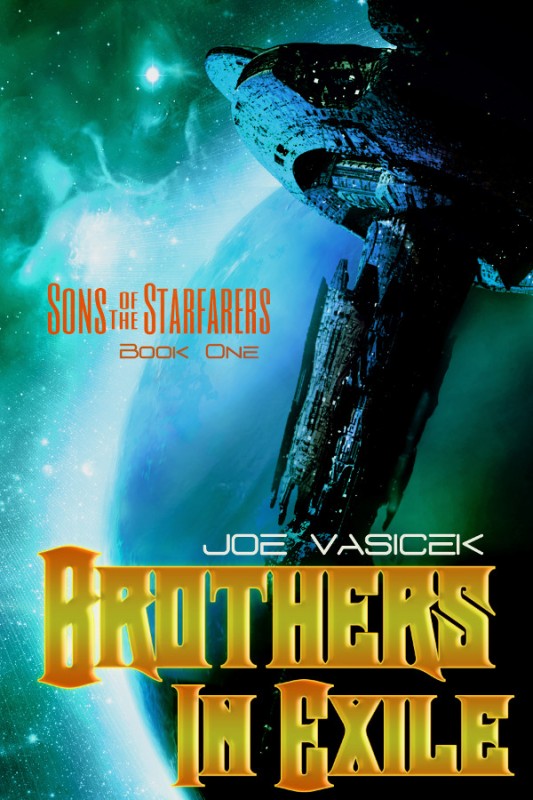
Is Brothers in Exile for you?

Brothers in Exile by Joe Vasicek is a character-driven space opera / adventure sci-fi about two brothers trying to survive as independent starfarers on the edge of a growing empire. When their routine run takes them to a silent derelict station—and a discovery they can’t ignore—the story turns into a tense, momentum-driven ride through frontier ports, bad deals, and the early tremors of interstellar conquest.

Brothers in Exile is Book 1 of Sons of the Starfarers, a clean, character-driven space opera series about starfarers caught in the early tremors of imperial expansion.

What Kind of Reader Will Love Brothers in Exile?

If you love…

  • frontier space opera: starships, stations, salvage, dangerous trade routes
  • space opera with heart: loyal crews, sacrifice, and family bonds under pressure
  • clean, hopeful science fiction (minimal profanity, no explicit sex) with faith, family, and conscience in the background
  • high-stakes trouble that escalates fast: one decision → bigger consequences → empire-scale ripple effects
  • mystery + rescue momentum, where “we can’t just walk away” drives the plot

…then Brothers in Exile is probably your kind of story.

What You’ll Find Inside

Isaac Deltana is the careful one—the older brother trying to keep their ship, their finances, and their lives from flying apart. Aaron is the spark—reckless, brave, and stubbornly determined to do the right thing once he believes something matters. The tone is tense but humane: a fast-paced, character-driven space adventure with heart, built around survival, moral choice, and the bond between brothers as the Outworlds begin to feel the shadow of the Gaian Imperials stretching outward.

What Makes Brothers in Exile Different

A lot of space opera is driven by lone wolves or chosen ones; this one is driven by family—two brothers who can’t stop being brothers even when everything is going wrong. It has the frontier trading feel of classic space opera, but puts family and moral choice front and center. It has a “scrappy ship on the fringe” flavor you might associate with Firefly, but the moral center is steadier and the tone is less cynical. And while there’s big-picture geopolitics (expansion, control, annexation), the story stays grounded in human-scale decisions: what you owe a stranger, what freedom costs, and how far you’ll go to keep someone from being used or erased.

What You Won’t Find

You won’t find grimdark nihilism, explicit sexual content, or shock-for-shock’s-sake violence. This is clean, character-driven space opera—fast-moving and emotional—rather than slow, technical hard sci-fi. The science is ‘believable enough,’ but the focus is on choices, consequences, and the bond between brothers.

Why I Think You Might Love Brothers in Exile

I wrote Brothers in Exile because I wanted a space adventure where the relationship mattered as much as the action. In my author’s note, I talk about how the brother dynamic in the film Gettysburg (and the real emotional weight behind it) helped shape the characters Isaac and Aaron—the older brother trying to be the responsible one, and the reckless younger brother who pushes back against the authority figures in his life. If you enjoy stories where family is both the complication and the strength—where two people face the void together and refuse to stop caring—I think you’re going to enjoy this book.

Where to Get Brothers in Exile

Related Posts and Pages

Explore the series index for the Sons of the Starfarers series.

Return to the book page for Brothers in Exile.
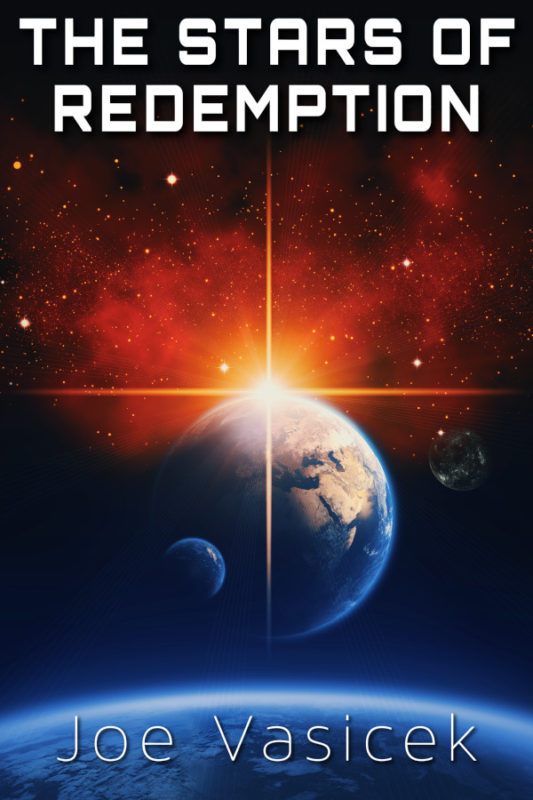
Is The Stars of Redemption for You?

The Stars of Redemption brings the Genesis Earth Trilogy to its heartwarming conclusion, weaving together cosmic mystery, high-stakes adventure, and the emotional journey of a family caught between past and future. In this character-driven science fiction novel and grand finale of the Genesis Earth Trilogy, the secrets of the ghost ship, the wormhole, and humanity’s long-lost Earth collide, pushing Terra, Michael, Estee, and Khalil toward a destiny that tests their courage, their bonds, and their hope.

What Kind of Reader Will Love This Book?

If you like…

  • Character-driven science fiction where relationships matter as much as the big ideas
  • High-stakes adventure rooted in loyalty, courage, and found family
  • Deep-time, big-concept SF (time paradoxes, shattered superintelligences, dead Earth, existential threats)
  • Teens thrust into danger who must grow up fast without losing their humanity
  • Stories where the emotional journey hits as hard as the plot twists

…then The Stars of Redemption is exactly the kind of story you’re looking for.

What You’ll Find Inside

The Stars of Redemption follows Estee and Khalil as they ride a mysterious ancient ghost ship run by a fractured AI. The two young adults now know the truth about the time travel paradox that created it, but they aren’t sure how to stop it from going back and annihilating the human race. But solving the paradox will create an alternate timeline—one where many of their loved ones have lived totally different lives. The result is a tense, emotional, wonder-filled journey that blends survival, mystery, love, grief, and cosmic terror into a finale that feels both epic in scope and heartwarmingly personal.

What Makes It Different

Fans of classic time-paradox stories and authors like Arthur C. Clarke, Becky Chambers, or Michael Crichton will recognize the sense of cosmic mystery, but The Stars of Redemption takes those ideas in a uniquely human direction. Where many time-loop or AI-disaster stories focus on spectacle, this one leans into relationships, trauma, and the fragile bonds that hold people together when everything else collapses. And unlike most YA or near-YA science fiction, it refuses to sacrifice scientific wonder or thematic depth—holding the line on both heart and hard SF ideas.

What You Won’t Find

If you’re looking for grimdark nihilism, sexually explicit romance, or nonstop action with minimal character growth, this isn’t that book. But if you prefer science fiction grounded in hope, heart, survival, and meaning, with characters who feel real enough to bleed, you’ll feel right at home here.

Why I Think You Might Love It

I wrote The Stars of Redemption shortly after becoming a young father, and that life-changing experience deeply informed the conclusion of the Genesis Earth Trilogy. Starting a family of my own made Estee and Khalil’s found family more vivid, as well as Estee’s need to fill the hole left by losing her parents. This became the most mature and thoughtful book in the trilogy—the kind of story I always wanted to write but couldn’t until I’d lived a little more myself.

If you loved the high-concept wonder and emotional heart of Genesis Earth and Edenfall, I think you will find The Stars of Redemption to be a thoroughly satisfying, deeply meaningful conclusion to the trilogy!

Where to Get the Book

Related Posts and Pages

Explore the series index for the Genesis Earth Trilogy.

Visit the book page for Genesis Earth for more details.

Read about breaking the time paradox in The Stars of Redemption.

See all of my books in series order.

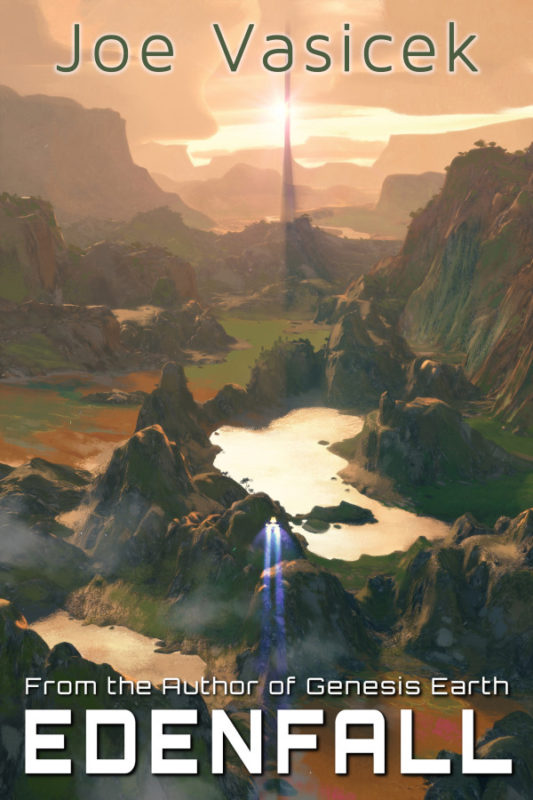
Is Edenfall for You?

Edenfall continues the Genesis Earth Trilogy through the eyes of sixteen-year-old Estee Anderson, a girl raised in isolation on a mysterious alien world. Character-driven and emotionally grounded, it explores innocence, family bonds, and self-discovery under rising danger. Like the first book, it favors quiet depth over spectacle—only this time, the world is larger, the threats are sharper, and childhood ends faster.

What Kind of Reader Will Love Edenfall?

Edenfall is for readers who want hope-filled science fiction where wonder comes with consequences, and survival depends on courage, loyalty, and family. It is especially for readers who:

  • Love character-driven science fiction with emotional stakes and family at its core.
  • Enjoy exploration of alien worlds, survival, and first contact that feels personal rather than technobabble-heavy.
  • Appreciate worldbuilding that leans on atmosphere and mystery rather than dense scientific exposition.
  • Enjoy stories where children are real people—not plot devices: capable, flawed, curious, and heroic.

In other words, Edenfall is for readers who want science fiction that feels personal before it feels cosmic, with characters of quiet courage who rely on their family as they face the world. Like Genesis Earth, it’s a coming of age story of self-discovery, but with stronger family bonds.

What You’ll Find Inside

Edenfall begins when a military expedition arrives to investigate the anomaly that Estee’s parents were sent to explore. When one of the generals decides to take over and make the planet his own personal fiefdom, Estee must learn who she can trust in order to face the rising threat to her family, even as she grapples with trauma and loss of innocence.

In Edenfall, readers will find:

  • A young protagonist in isolation (Estee) who must navigate danger with wits, courage, and instinct.
  • A slow-burn planetary mystery involving ancient alien megastructures, lost history, and hidden data.
  • A human-versus-human first contact with catastrophic misunderstanding.
  • Nuanced moral ambiguity—leaders driven by fear, idealism, or ambition; soldiers who follow orders but question them.
  • Strong family themes: parental sacrifice, sibling bonds, and the pain of leaving childhood behind.
  • A lush, “wild-world” setting filled with dangerous fauna, hidden canyons, ancient ruins, and an ancient megastructure (the space elevator) stretching into the sky.

What Makes Edenfall Different

There is no chosen one, no prophecy, no love triangle, and no convenient mentorship arc. There are no precocious prodigies or destiny-driven heroes—just an unprepared girl trying to survive the collision between her family and the dangers of a world she doesn’t understand. The first contact story is human on human, told from both points of view, with all of the accompanying messiness and misunderstanding. The result is an intimate story that feels mythic, human, and fresh.

What You Won’t Find

This is not a book for readers who want love triangles or steamy romantic elements. There is no explicit sexualization, and the romance is very low-key and slow-build. It also avoids graphic violence and heavy militaristic fetishization. While there is some violence and some of the characters die, the tone ultimately leans toward resilience, curiosity, and hope rather than gritty cynicism. This is hope-forward science fiction, not despair-driven dystopia.

Why I Think You Might Love Edenfall

It took me more than ten years to finish this book. Ultimately, it wasn’t until I had a child of my own that I was finally able to write it. The experience of becoming a father and having my own family made it possible for me to write about family bonds with the sort of emotional depth that Edenfall required.

If you loved the characters, the heart, and the driving sense of wonder in Genesis Earth, I think you will enjoy Edenfall even more!

Where to Get Edenfall

Related Posts and Pages

Explore the series index for the Genesis Earth Trilogy.

Visit the book page for Genesis Earth for more details.

Ponder the loss of innocence in Edenfall.

See all of my books in series order.

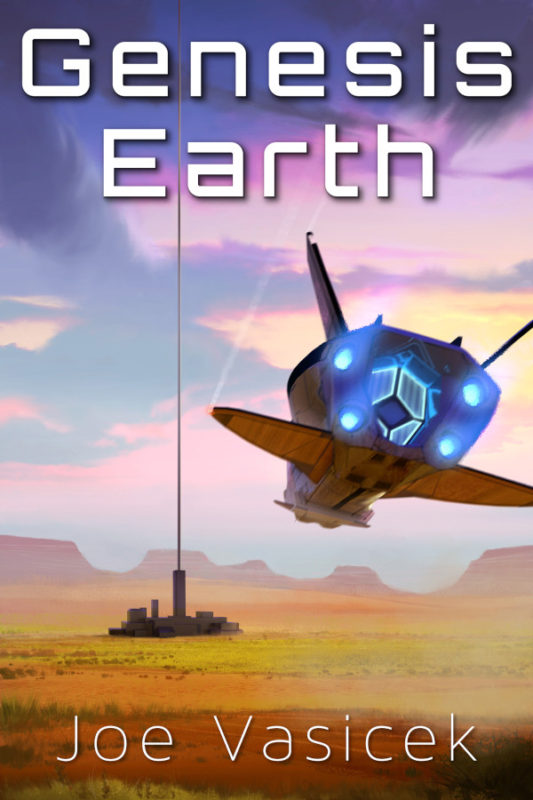
Is Genesis Earth for You?

Genesis Earth is an introspective, awe-driven, charactor-anchored YA science fiction novel. It’s not a laser-blasting space opera; rather, it’s a quiet, psychological odyssey through the cosmos, through the eyes of a lonely young explorer haunted by the memory of Earth. Through this book, readers will experience the loneliness of deep space, the mystery of first contact, and the fragile human connection between two young scientists flung far from home.

What Kind of Reader Will Love Genesis Earth?

This book is perfect for readers who:

  • Love hard SF stories of space exploration rooted in both plausible science and human emotion,
  • Enjoy classic SF from authors like Clarke and Asimov—thoughtful, concept-driven, but with relatable, human characters,
  • Appreciate slow-burn tension and stories that make them think, long after they set the book down,
  • Are fascinated by themes of first contact, isolation, coming-of-age, and the psychological cost of human exploration, and
  • Crave science fiction that feels possible, where the sense of wonder comes from realism, not fantasy.

If any of that describes you, then you should definitely give Genesis Earth a try!

What You’ll Find Inside

Genesis Earth follows a young scientist, Michael Anderson, and his mission partner Terra as they explore a dangerous anomaly on the far side of a wormhole, that could either threaten or hold the key to humanity’s future. The result is an immersive and contemplative book that starts as a psychological drama and turns into a story of discovery, both cosmic and personal: what it means to be human when Earth is a ghost and “home” is light-years away.

What Makes Genesis Earth Different

Fans of classic science fiction will recognize the trope of the lonely astronaut or scientist setting out to explore the unknown, but where most protagonists in classic hard SF are seasoned professionals, the explorers in Genesis Earth are barely adults, raised in isolation on board a space colony, and psychologically unprepared for what awaits them. The story explores beyond the question “can humanity survive?” and asks “what happens to the human soul when it’s untethered from home?”

Distinctive features include:

  • Psychological depth: The fraught relationship between Michael and Terra gives the story an undercurrent of tension and unease that’s rare in classic hard SF.
  • Tone: Quiet, human, and melancholic—more existential wonder than space adventure.
  • Perspective: Told through a deeply personal first-person lens, with an almost diary-like immediacy.
  • Balance: Seamlessly blends scientific authenticity (cryonics, wormholes, planetary science) with literary emotion.

What You Won’t Find

This book is not for readers seeking:

  • Fast-paced, action-heavy sci-fi with constant battles, explosions, or villains.
  • Romantasy or sexually explicit romance plots — while there is emotional tension, it’s subtle and cerebral, not sensual or melodramatic.
  • Soft or mythic sci-fi full of alien empires or space wizards — the story stays grounded in realism.
  • Hard nihilism or grimdark — while introspective and serious, the book is ultimately hopeful, not bleak or cynical.
  • Readers who dislike slow builds or introspective narration.

If you’re looking for Star Wars, this isn’t it. If you’re looking for Arthur C. Clarke’s emotional heir, you’ve found it.

Why I Think You Might Love Genesis Earth

I wrote Genesis Earth when I was a lonely, single young college student trying to find my place in the world. That personal struggle in my own life definitely affected the conflict and themes of the book. I read a lot of classic SF in this time, including books by Arthur C. Clarke, Isaac Asimov, Ursula K. Le Guin, Robert Charles Wilson, and Orson Scott Card, and I wanted to create something that was just as awe-inspiring and thought-provoking as the great books by those classic authors.

If you’re looking for a book that sticks with you long after you’ve read it, and helps you to find your own place in the world, you should definitely give Genesis Earth a try!

Where to Get Genesis Earth

Related Posts and Pages

Explore the series index for the Genesis Earth Trilogy.

Visit the book page for Genesis Earth for more details.

Discover the meaning of home in Genesis Earth.

See all of my books in series order.