Reading Resolution Update: Before 2022

My 2022 Reading Resolution: Read or DNF every novel that has won a Hugo or a Nebula award, and acquire all the good ones.

I was going to keep track of my reading resolution this year by mentioning each book and what I liked or didn’t like about it, why I DNFed it if I did, etc… and then I thought about it a little more and realized that that’s a terrible idea. Perhaps if I weren’t an author myself, I could risk bringing down the wrath of the internet by broadcasting everything that I really think about these books, but that’s still a really stupid thing to do—not to mention, a great way to burn a bunch of bridges that, as a writer, I really shouldn’t burn.

Instead, I’m going to post a monthly update where I list all of the books that I read and want to acquire, all the books that I read and probably won’t acquire, and all of the books that I DNFed, without any book-specific commentary. I do think that having some public accountability will help me to keep this resolution, and I do intend to keep it. But because I anticipate DNFing a lot of books that have very, um, merciless fans, this seems like a better way to do it.

So here is how things stood on the morning of January 1st, 2022:

Books that I read and want to / have already acquired:

  • Double Star by Robert A. Heinlein (1956 Hugo)
  • Starship Troopers by Robert A. Heinlein (1960 Hugo)
  • A Canticle for Leibowitz by Walter M. Miller Jr. (1961 Hugo)
  • The Man in the High Castle by Phillip K. Dick (1963 Hugo)
  • Dune by Frank Herbert (1966 Hugo and Nebula)
  • The Left Hand of Darkness by Ursula K. Le Guin (1970 Hugo and Nebula)
  • The Dispossessed by Ursula K. Le Guin (1975 Hugo and Nebula)
  • Downbelow Station by C.J. Cherryh (1982 Hugo)
  • Neuromancer by William Gibson (1985 Hugo and Nebula)
  • Ender’s Game by Orson Scott Card (1986 Hugo and Nebula)
  • Speaker for the Dead by Orson Scott Card (1987 Hugo and Nebula)
  • Barrayar by Lois McMaster Bujold (1992 Hugo)
  • Mirror Dance by Lois McMaster Bujold (1995 Hugo)
  • The Mule (included in Foundation and Empire) by Isaac Asimov (1946 Retro Hugo, awarded in 1996)
  • Harry Potter and the Goblet of Fire by J.K. Rowling (2001 Hugo)
  • Farmer in the Sky by Robert A. Heinlein (1951 Retro Hugo, awarded in 2001)
  • Fahrenheit 451 by Ray Bradbury (1954 Retro Hugo, awarded in 2004)
  • Spin by Robert Charles Wilson (2006 Hugo)
  • The Sword in the Stone by T.H. White (1939 Retro Hugo, awarded in 2014)
  • Network Effect by Martha Wells (2021 Hugo and Nebula)

Books that I read and don’t plan to acquire:

  • The Demolished Man by Alfred Bester (1952 Hugo)
  • The Forever War by Joe Haldeman (1975 Hugo and Nebula)
  • Gateway by Frederik Pohl (1977 Hugo and Nebula)
  • Red Mars by Kim Stanley Robinson (1993 Nebula)
  • American Gods by Neil Gaiman (2001 Hugo)

Books that I did not finish:

  • The Moon is a Harsh Mistress by Robert A. Heinlein (1966 Hugo)
  • Flowers for Algernon by Daniel Keyes (1966 Nebula)
  • Lord of Light by Roger Zelazny (1967 Hugo)
  • Ringworld by Larry Niven (1970 Hugo and Nebula)
  • Rendezvous with Rama by Arthur C. Clarke (1973 Hugo and Nebula)
  • Green Mars by Kim Stanley Robinson (1993 Hugo)
  • Blue Mars by Kim Stanley Robinson (1996 Hugo)
  • Forever Peace by Joe Haldeman (1997 Hugo, 1998 Nebula)
  • The Fifth Season by N.K. Jemisin (2015 Hugo)
  • The Obelisk Gate by N.K. Jemisin (2016 Hugo)
  • The Stone Sky by N.K. Jemisin (2017 Hugo and Nebula)
2020-02-20 Newsletter Author’s Note: Thoughts on the History and Future of Science Fiction (Part 1)

This author’s note originally appeared in the February 20th edition of my newsletter. To sign up for my author newsletter, click here.

One of the projects I hope to get to someday is to make a podcast on the history of science fiction. I’m a huge fan of podcasts, and subscribe to almost 100 of them, and some of my favorites are history podcasts like Hardcore History, History of Rome, Revolutions, The Cold War: What We Saw, etc. At this point in my life, I don’t think it’s the right time to get into podcasting, but at some point in the next few years I’d really like to try my hand at it.

I have thought a lot about what this History of Science Fiction podcast would look like, though, and it’s led to some interesting thoughts about the future direction of the genre. Let me explain.

Modern science fiction began with Mary Shelley’s Frankenstein, which laid the groundwork for just about everything else. Authors like Jules Verne and H.G. Wells picked up the torch, launching “scientific romance” as its own literary genre. Many of the conventions and tropes of science fiction were set during this era, which lasted from the 1820s through the early 1900s.

The next major era of science fiction was the era of the pulps, which experienced its heyday in the 1920s and 30s. The publishing innovations that had made the penny dreadfuls possible only a generation earlier now led to a proliferation of novels and short story magazines, opening up all sorts of opportunities for new writers.

This was the era of bug-eyed aliens and scantily-clothed damsels in distress, as frequently displayed in the cover art. Science fiction, mystery, western, adventure, and true crime stories were all mashed up together. Major names from this era include Edgar Rice Burroughs and Hugo Gernsback, who coined the term “scientifiction” to distinguish the stories that would later be called under the name “science fiction.”

The pulps laid the groundwork for the golden age, which lasted through the 40s and 50s. It was greatly influenced by John Campbell’s tenure as editor of Astounding Science Fiction, and the authors that he mentored. This was when science fiction really came into its own. Major authors from this era include Isaac Asimov, Robert A. Heinlein, Arthur C. Clarke, George Orwell, and Ray Bradbury.

The next major era was the New Wave, when authors like Ursula K. Le Guin, Michael Moorcock, Frank Herbert, and Phillip K. Dick broke out of the conventions established by Campbell and other golden age figures, experimenting with new styles and creating new tropes. This was when we began to distinguish between “hard” science fiction that revolved around the hard sciences like physics and math, and “soft” science fiction that revolved instead around things like political science and social studies. The political radicalism of the 60s and 70s also influenced the science fiction of this era.

At this point, most histories of science fiction point to an era called “cyberpunk” or “the digital age,” which emerged in the 80s and defines the period that we’re currently living through. However, I don’t think this is correct. Instead, I think that literary science fiction went through a dark age from the mid-80s to the late 00s, and only recently began to emerge from it. Let me explain.

In film, TV, and video games, the 80s and 90s were a golden age. For books, however, it was exactly the opposite. The rise of the big box stores like Borders and Barnes & Noble drove independent booksellers out of business, which caused many local distribution companies to collapse. This, in turn, led to a period of mergers and consolidation within the publishing industry, giving rise to the “big six”: Hachette, HarperCollins, Macmillan, Penguin, Random House, and Simon & Schuster.

At the same time, the rise of the internet led to a massive and precipitous decline across newspapers and periodicals, including traditional short story magazines such as Analog and Asimov’s. Most of the science fiction magazines folded, unable to adapt their business models to the changing world. This would later change as podcasting and crowdfunding, but before those innovations would later revolutionize the industry, many considered short stories to be dead.

The effect of all of this was that literary science fiction entered a period of managed (and sometimes catastrophic) decline. As the publishing houses merged and consolidated, their offices all moved to New York City in order to pool talent and resources into one geographic center. However, this also led to problems like groupthink as publishing fell in an echo chamber.

Science fiction began to balkanize. The proliferation of cyberpunk, steampunk, deiselpunk, biopunk, and all the other _____punk subgenres is emblematic of this. Furthermore, as all of the major editors became caught up in the echo chambers of progressive, blue-state politics, they increasingly overlooked red state authors from “flyover country.” Baen, whose offices are in North Carolina, has never suffered from this, but Tor and the other New York publishers really have.

I think Orson Scott Card really bookends this period. In the 80s, he was the first author to win the Hugo and the Nebula in the same year. In the 00s, he was all but excommunicated from the canon for his allegedly homophobic views. Science fiction had transformed from the big tent genre of the 50s, 60s, and 70s to something so balkanized, elitist, and radical that “wrongthink” had unironically become a crime in the very genre that had invented the term.

And then indie publishing happened.

This author’s note is getting long, and there are other things (including writing) that I have to do today, so I’ll have to end on that note. I’ll follow up in my next newsletter with my thoughts on current trends in the science fiction genre, and where we’re heading from here. I think the 20s will see some massive creative destruction, but ultimately I’m hopeful that the best is yet to come. The dark age is over, and there’s never been a better time to be a reader—or a writer!

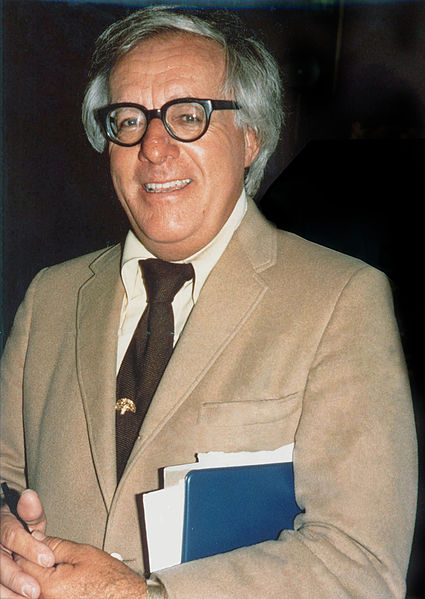
Ray Bradbury, 1920-2012

Ray Bradbury, 1920-2012

Wow.  Ray Bradbury, one of the greatest writers of our time, just passed away at the age of 91.  The news is affecting me a lot more than I thought it would.

My first exposure to Bradbury’s work came in seventh grade, when I read Farenheit 451 as part of the required summer reading.  Most of the books I read in middle school and high school were quite forgettable, but that one stuck with me, especially the scene with the professors scholars sitting around homeless in front of the fire.

Later in college, when I was just starting to find my footing as a writer, I read Zen and the Art of Writing, and it had quite a positive impact while I was still largely insecure about my own writing.  The most memorable piece of advice I gleaned from it was to write about the stuff that really moved me–to infuse all my writing with passion, and not give a damn about those who told me otherwise.  That helped give me the strength to tell the stories that I love, which is now a huge part of everything I do.

My favorite Bradbury work is his collection The Martian Chronicles.  The stories in that book are just amazing, and infused to the core with passion.  I remember breathlessly reading the one about the astronauts who land on Mars, only to find a beautiful Ohio village populated with all of the friends and family that they’d left behind.  Wow.

Whenever I pick up a Bradbury story, it’s like having this little old man clasp his hands on my shoulders and, with a gleam in his eye, shake me until I’m sure I’ll never forget it.  Every story is like a roller coaster, with stunning heights, beautiful views, and drops that make you scream for your life.  It’s awesome.

It brings tears to my eyes to know that he’s gone, but they’re bittersweet tears of the best kind.  The man had a rich, full life, and lived to see his work appreciated for how great it truly is.  At 27 novels and over 600 short stories, with more than 8 million copies in print in at least 36 languages, he has truly left us a great wealth of literature.  Some mourn that the world is a poorer place because of his passing, but I rejoice for how rich the world is because he lived at all.

Goodbye, Ray Bradbury.  Your stories truly changed the world.

Red Mars by Kim Stanley Robinson

For eons, sandstorms have swept the barren, desolate landscape of the red planet.  For centuries, Mars has beckoned to mankind to come and conquer its hostile climate.  Now, in the year 2026, a group of one hundred colonists is about to fulfill that destiny.

I first picked up this book two and a half years ago, when I was still trying to read a novel a week.  I’ve got to be honest; this was the book that made me break that new years resolution.  It is freaking huge, and some points are more interesting than others.

That said, this is an awesome piece of hard science fiction.  Lots of people have written about Mars, but very few have done it believably.  Kim Stanley Robinson does an job here–you can tell that he put in a ton of research, both into Martian geography (areology?) and feasible technology.

When I read science fiction, however, that’s not what I generally read for.  I’m more interested in characters, conflict, and thematic elements–in other words, the stuff that makes for a good story.  As far as that stuff goes, my opinion of Red Mars is somewhat mixed.

For example, the first chapter starts out with a murder, as seen from the point of view of the murderer.  Right away, I’ve got a reason not to sympathize with the main viewpoint character.  When we get into his mind and I see his motivations for killing the character, I like him even less–and he’s one of the main, driving characters.

Some of the characters are more sympathetic, and I enjoyed the sections in their point of view.  Others, however, were just plain boring–I neither loved them nor despised them.  Because of this, a lot of the character drama early in the novel didn’t engage me much; stuff was happening, but I didn’t really care.

When it comes to setting, Red Mars is also somewhat mixed.  Robinson goes to great depths to describe the Martian landscape, and several of his setting descriptions were quite interesting and wonderful.  At the same time, he explains everything in a very clinical, scientific way–his imagery is never as poetic and captivating as Ray Bradbury’s, or Ursula K. Le Guin’s, or George R. R. Martin’s.  I came away with a lot more knowledge about Mars, but not quite as much of a sense of wonder.

Things did get interesting once the political tensions started to come into play.  Robinson’s portrayal of the colonization of Mars raises a lot of interesting questions about the political relationship between Earth and Mars once those colonies start to become self-sufficient.  He follows things through right to the war for independence, and the implications of the conflict are quite interesting.  I finished the last hundred pages or so at a sprint.

All in all, I wouldn’t recommend this book unless you’re already a fan of hard science fiction.  Like most hard sf, character and conflict plays second string to scientific plausibility.  Within its sub-genre, however, Red Mars is awesome.  Let’s just put it this way: even though I got bored with it the first time, I knew I would one day pick it up and finish it.  I don’t regret that I did.

The Martian Chronicles by Ray Bradbury

Welcome to Mars, a magical world of ancient ruins like giant glass chess sets and canals of wine and sandy desert seas. A world inhabited by golden eyed people who can telepathically project hallucinations–some of them still live up in the hills. A desolate, empty world, the next frontier for a new generation of pioneering spirits, each with different dreams, different reasons, different goals and outlooks on their new life in the new world. Some come with respect and reverence to the ancient world, while others come to exploit it. But no matter why they come, everyone is deeply and profoundly changed. Some never return.

Ray Bradbury is one of the biggest names in science fiction, and this book is one of his greatest works. A lot of my friends really love Bradbury, but strangely, I haven’t read a lot of him (Fahrenheit 451, way back in Middle School, and a few essays, but that’s pretty much it). After putting this book down, all I can say is wow. Now I know what my friends were talking about.

The Martian Chronicles is more of a collection of short stories than anything else. That’s understandable, when you consider that science fiction began with short stories, not with novels. Keep that in mind as you read it, too. This is not a book you can read all in one go; you have to take time between the chapters to let each one soak in, otherwise your mind will just get overloaded. Bradbury delivers a bang! ending to just about every story in this book, and some of them are really deep. My favorite one was the one with Sender, and how the fourth rocket discovered that all the Martians were killed off by the chicken pox. There are some really profound ideas in that one, and I loved reading it.

A lot of hard sf purists tend to call Bradbury a writer of fantasy disguised as science fiction, and I can see where they’re coming from. There’s nothing really scientific about this book; the Mars of Bradbury’s stories is a purely fantastic invention (even for the 50s). I remember the story about the third rocket, and how it landed on a grassy green lawn, and all the crew stepped out and found themselves in a little Ohio town, and all I could think was “what??” It was very fantastic, very surreal and even trippy at parts, but once you get the hang of it, it’s not so bad. And really, I’d argue with the whole “Bradbury = fantasy” thing–I think some of the ideas in these stories definitely blur the line between fantasy and science fiction.

One thing Bradbury is fantastically good at is infusing all of his writing with passion. There wasn’t a moment in this whole book when I couldn’t envision Bradbury himself, his eyes wide and bloodshot, gripping me by the shoulders and shaking me. His imagery was amazing, and his twist endings were incredible. You really read Bradbury for his prose and for his ideas; everything else takes a back seat, but he does so well with the first two that that’s ok.

These are the kinds of stories that stick with you long after you’ve read them. They might not be consistent with each other or follow in a coherent, logical order, but they will deeply and profoundly move you.