Thoughts on outlining

I’m on track to finish my fifth novel in a couple days, and surprisingly, the writing has been going very smoothly.

Usually by this point, my eyes are bleeding and I feel as if I have a hundred caltrops in my pants.  Finishing a rough draft is still the hardest part for me, since by the end everything seems to suck and I just want to trash the whole project.

I still feel a little bit of that with Into the Nebulous Deep, but not nearly as much as with my previous stuff.  Part of that is probably because I feel confident that I can fix whatever I screw up, but the other part probably has to do with the way I’ve learned to outline.  In one short sentence, here’s what I’ve learned:

An outline is simply the story you tell yourself to help you tell the story.

I don’t think there’s any mortal writer on this planet who can keep a whole novel in their head at one time.  Scenes, yes; chapters, maybe; novels, absolutely not.

However, since everyone’s creative mind works a little differently, everyone has to find the process that works for them.  Brandon Sanderson, for example, writes story bibles that are almost 100k words long.  If I were to try to do that, I’d get bored halfway through and spend the rest of the day dorking around on youtube.  Other people prefer to fly by the seat of their pants, and while there’s something to say about trusting your subconscious, I need a little structure to keep from getting totally lost.

It took me a while to figure out the process that best works for me, but based on how ITND has been going, I think I’ve hit my stride.  Breaking it down into plot, setting, and character, here’s how I basically do it:

Plot

For me, the basic plot of the story comes in a flash of creative insight once all the ideas in my head have reached a critical mass.  It’s like watching a fissure shoot across a smashed window pane, or lightning arcing from the ground to the sky.

If I don’t have time to start the project right away, I’ll let the plot mull around in my head for a couple days, then open up notepad and free write the basic structure of the story in an unedited stream of consciousness.  When I do start the project, I’ll look back to the free write to refresh my memory, but otherwise work out of what’s in my head (which may have changed).

While the project is ongoing, I’ll divide the whole novel into parts, chapters, and scenes.  For the chapter I’m currently working on, I’ll have the various scenes listed in bold with their corresponding point of view character (eg: “1.1: James“), followed by a brief one or two line description of the action and plot significance.  If I introduce a new character in that scene, I’ll write their name in ALL CAPS (I believe that’s a screenwriting convention I picked up from my old college roommate).

For chapters I haven’t written yet, I just write a few lines of description for what I envision happening in them.  When I first start out, I usually have a clear idea where I want the story to end, but I don’t bother outlining all the stuff in the middle since that usually changes based on stuff that comes before.  I only keep my outline a few chapters ahead of where I currently am, and may change things completely if something new comes up.

This process works very well for me.  I use it for every draft, and refer to it often.

Character

I’ve found that I need to do a lot more outlining to figure out my characters than I do with my plot.  However, it’s like Tracy Hickman said with the marbles: don’t hold onto your outline too tight, or all the marbles will slip out between your fingers.

The things I absolutely need to know about my characters are:

  • back story
  • motivations
  • first impressions
  • flaws & handicaps
  • strengths & advantages
  • why the reader should care about / sympathize with them

For some odd reason, I find it most helpful to write this out longhand, usually while taking a walk.  For additional help, sometimes I’ll take a personality test on behalf of my character and get a handle on them through their personality type; for that, I prefer the Meyers-Briggs typology.

But once I feel I have a solid handle on a character, I’ll throw everything out if it feels instinctively right for a character to do something completely different.  Thing is, I need the outline (especially the motivations and back story) to get to the point where I know the character well enough to let them take over.

And for some reason, all my main characters feel too…generic.  I’m not sure why, but that’s something I’ve got to work on.

Setting

Setting, for me, is all about discovery writing.  I’ve tried using wikidpad to worldbuild my universe before I start, but that’s never worked.  Instead, I daydream a lot and trust my subconscious to give me what I need when I need it.

That’s not to say I don’t do research–just that most of my research is on the fly.  If I only stay on wikipedia and the footnotes and references, no problem; if I get sidetracked on facebook, however…

Often, when I’m doing setting descriptions, I’ll run a quick google image search to pull up pictures to give me a better visual idea of what I’m describing.  I especially use this for clothing; that’s why, if you check my search history (please don’t), you’ll find all these weird, girly terms like “ottoman dress,” “jumpsuit,” “leather jerkin,” and “full frontal snogging” (whoops, where did THAT come from??).

The big problem is when I figure something at the beginning of the book and then forget about it halfway through.  For that reason, I should probably invest in a good copy editor when I start to publish.  I should also take the time to draw out a starmap, since it’s getting REALLY hard for me to remember where the Belarian system is in relation to Tajjur and Karduna Prime…hmm…

I should probably figure out a better system to keep track of my settings, but as far as outlining them goes, the less the better.  I love waving my hand and creating stuff–it’s one of the main reasons why I’m a science fiction writer.

So anyways, that’s more or less the outlining system I currently use.  I might end up outgrowing certain aspects of it, or finding a better system, but this is what works best for me now.

Of course, I still have a lot to learn.
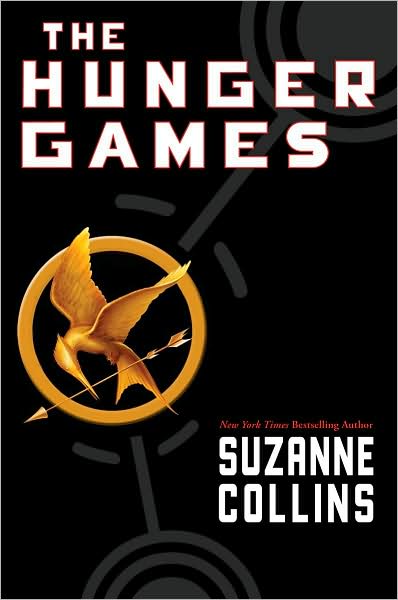
The Hunger Games by Suzanne Collins

This book review is going to be a bit unconventional, so please bear with me.

Normally, I only review books on my blog if I feel I can recommend them.  They might not be perfect, but overall, the praise outweighs the criticism. However, for me personally, The Hunger Games was a huge disappointment.

I’m not going to do a little book blurb like I usually do, because I want to spend all the available space on this post explaining the reasons why I was so disappointed.  Also because of that, this post will be full of spoilers.  Consider yourself warned.

First, let me say that I don’t think this book was all bad.  Suzanne Collins is very good at plot and pacing, and she knows how to keep a reader hooked.  In that way, this book reminded me of the old Michael Crichton thrillers that I devoured as a kid.

However, two crucial things killed about half of the suspense for me: the fact that this book was the first in a series, and the first person viewpoint.

From the very beginning, we know that Katniss isn’t going to die.  We know it, because she’s narrating the story to us directly (in present tense, which personally irks me, but I won’t go into that).  Unlike other gladiator-style heroic fantasies, where the major draw is to see who lives and who dies, we have that spoiled for us.

Of course, the argument in favor of the first person is that it helps the reader feel a closer connection with the viewpoint character.  The problem is, I never did.  At the end of the book, Katniss still feels like an outsider to me; I never felt like I got inside her head well enough to know who she really is.  When I try to imagine her, all I can envision is a wide-eyed mannekin.  She just didn’t come alive to me.

Why? Because the whole time, she’s only got one thing on her mind: survival.  I don’t see anything but fragmentary glimpses of her other motivations, and those are never fully fleshed out.  Her experiences growing up were just so traumatic that I can’t relate to her, and Suzanne Collins never provides a reference point outside of the awfulness of Katniss’s crapsack world.

Which is another thing that got to me: the setting.  Every time I opened the book, I dreaded going back to Collins’ world–and not in a good, “ooh, this world is so creepy/frightening” way, but in a “man, this place just makes me depressed” kind of way.  It wasn’t even that original–Panem is basically the USA as North Korea (though it could take place anywhere, for all the details Collins gives us).

What’s more, the setting is full of inconsistencies.  The people are starving to death, but the forests are full of game and wildlife.  In North Korea, people raze the forests for fuel and timber, driving all the game out.  Yes, I know the people of District 12 mine coal, but all of it presumably goes to Capitol, just like in District 11 all the grain goes to Capitol and the people still starve. Which makes me wonder: why are all the districts specializing in only one commodity?  That’s just stupid.

Which brings me to another thing: the sheer idiocy of the rulers of Panem.  If the Hunger Games are supposed to remind the people of how subjugated they are, why allow the tributes the opportunity to do something like pull a romance stunt?  Why spend all that time primping and preening them, interviewing them, and giving them an opportunity to manipulate the crowds?  When the people of District 11 sent Katniss the bread, why didn’t a government censor stop that from happening?  And finally, when Katniss and Peeta were the only ones left standing, why give them the opportunity to upstage the games by falling on each others’ swords?

Seriously, that last point got to me more than any of the others.  When they announced the rules change, that Peeta and Katniss were supposed to kill each other after all, why couldn’t the GM see the potential for things to go wrong?  Seriously, having them both kill each other–or refuse to kill each other–was such a blatantly obvious choice, I saw it the moment the rule change came into play.  The fact that the villains didn’t just threw me out of the story.

But that wasn’t the first thing that threw me out of the story.  The first thing was the parade, with Katniss and Peeta marching into the arena with their flaming cloaks.  All this time, Katniss has been set up as the underdog–she isn’t pretty, she isn’t strong, she’s mildly sympathetic for volunteering in place of her sister, but the audience in that arena is looking for blood, not sympathy.  So when the crowd goes wild for her and Peeta, I just didn’t buy it.

It only got worse as things went along.  When the tributes did the skill check, Katniss–who, from the beginning of the story, has been set up as the underdog–scores higher than anyone else.  Every time she’s in front of an audience, everyone is oohing and ahhing.  It made me want to gag.

Honestly, you know what it seemed like?  It seemed like Suzanne Collins fell in love with Katniss so much that she wanted to spoil her, even though the story required her to keep up the pressure.  She made sure to torture Katniss in the games–so much so that it felt downright melodramatic at times–but while they were still in Capitol, waiting for the games to start, Katniss felt like a spoiled Mary Sue.

And as for the romance, it fell completely flat from the beginning.  Katniss was nothing but a manipulative faker from the beginning–granted, because she needed to in order to stay alive, but the least she could have done was coordinate that with Peeta.

And that’s another reason why I had such little sympathy for her–she’s a callous, manipulative, lying little heartbreaker, like far too many women in this world.

So yeah, The Hunger Games was, in my opinion, a huge disappointment.  I can partially see why it did so well (strong female protagonist, excellent plot structure and pacing, lots of hooks and cliffhangers), but personally, I don’t think it deserves half the praise it’s gotten.  And after what friends have told me about the rest of the series, I can guarantee that I won’t be reading them.

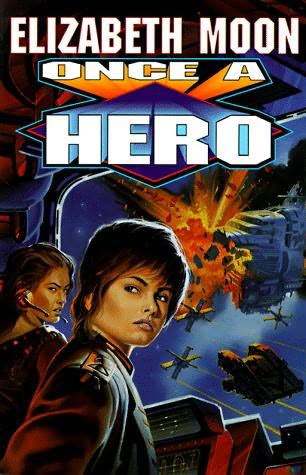
Once a Hero by Elizabeth Moon

Esmay Suiza never asked to be a hero.  All she wanted was to leave her dysfunctional home and join the navy.  But after surviving a mutiny and leading her spaceship to a most unlikely victory, everyone seems to be showering her with unwanted attention–or worse, examining her files for signs of command potential.

No, all she wants is to disappear–and now that her family has offered her a generous inheritance on her home world of Altiplano, she finds herself tempted to leave the stars behind and settle down for a while.

Little does she know, her family has hidden secrets from her–secrets from her past, which have the power to undo and destroy her.  Unfortunately, being a hero has a price–and the trauma of combat has already unearthed things from her subconscious than she cannot keep buried any longer.

This was my first time reading Elizabeth Moon, and I enjoyed it quite a bit.  Moon is extremely good at portraying a complex, believable military culture; she was a Lieutenant in the Marines, and definitely knows how to do military SF right.

My favorite part of the book was the descriptions of Altiplano, and Esmay’s experience returning to her homeworld of Altiplano.  Elizabeth Moon does an excellent job of creating a captivating world and transporting the reader there.  I fell in love with Altiplano almost instantly–not only with the planet itself, but the culture and the people, the whole society.  Excellent job.

Elizabeth Moon also does an excellent job developing her characters and giving them believable internal conflicts.  The way she portrays Esmay’s PTSD is quite striking, and very interesting.  Her struggles feel very real, and important too.  I think this novel helped me to better understand those who suffer from similar traumatic experiences, and that was very meaningful.

Storywise, however, I had a few minor issues, most of them having to do with the plot.  Things dragged a bit in the middle; when Esmay left her homeworld, I lost a sense of progression and felt that she was just wandering around.

When the antagonists came in–basically, a hostile army trying to capture her ship–I felt that Esmay solved her problems too easily, without any real try-fail cycles.  It gave me the sense that Esmay was some kind of superhero girl–not quite a Mary Sue, but toeing the line.

And Esmay’s love interest…I didn’t really get into him at all.  He seemed like a stereotypical damsel in distress, except with the sexes reversed.  I heard once that in good romance stories, the girl readers want to be the female protagonist, and the guy readers want to be the male protagonist.  Yeah…call me a chauvinist, but I never really wanted to be that guy.

I hate to be too critical, though, because Elizabeth Moon’s writing is quite good.  She has an excellent grasp of character, and her ability to transport her readers to another time and place more than makes up for her shortcomings with plot and story structure.  Also, I get the sense that this isn’t her best work.

In any case, if you’re a fan of military SF, you’ll probably enjoy this book.  I enjoyed it, and I will certainly be reading more Elizabeth Moon in the future.

Danger: difficult plot ahead

Just a quick post before I turn in and try to catch up on the sleep that I didn’t get last night (insomnia sucks).

I’m entering a very difficult part of the revision for Mercenary Savior. I’m a little more than a third of the way through the story (as you can tell from the status bar to your right), which is usually where my writing starts to get iffy.

Up until now, most of the work has to do with revising or rewriting individual scenes.  That’s no too difficult; it’s very easy, for me at least, to focus on the page itself and fixing problems on the sentence and paragraph level.

The problem now, though, is that some of the chapters aren’t working as coherent units.  Some of them feel slapped together, as if scenes that don’t really have much in common have been thrown in the same chapter merely because I didn’t know where else to put them.  That doesn’t make for good chapters.

So now, I need to take a few steps back from the page and look at the forest instead of the trees.  I need to figure out which events need to be clustered into which chapters, in order for the scenes to resonate with each other and build up to the climax without bumbling on each others’ toes.

I’m going to try out a few new tools to help with the plotting, most notably Dan Well’s 7 point system.  I’ve already worked out the essential plot points for about a dozen of the conflicts in the story; now I just need to see which ones go in which chapter.

I wish I had time to use it now, but dagnabit, it’s 1:30 in the morning, and I have to get up at 7:00 tomorrow.  Dang.  Well, at least I have work–and it’s good work for an aspiring writer in my position.  More on that in a later post.

Anyway, good night.

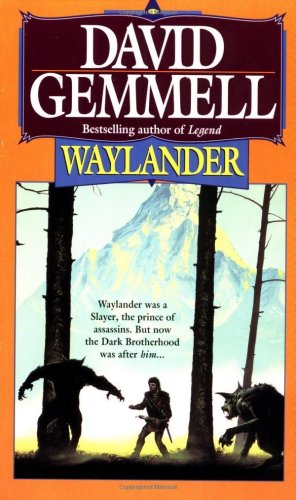
Waylander by David Gemmell

The Drenai lands have been overrun, and the Vagrian conquerors, led by Kaem and the Dark Brotherhood, are laying waste to all that lies before them.  Only the stronghold at Purdol withstands them, but unless the Drenai can rally a counterattack, all will be lost.

In these trying times, a strange old man visits the assassin Waylander and urges him to go to the sacred Nadir mountain of Raboas and retrieve the legendary Armor of Bronze.  With this armor, the Drenai commander Egel can rally the army that will save the kingdom.

But Waylander is a hunted man–a man of dark secrets and many enemies.  Kaem wants him dead for killing his son.  The Nadir want him dead for violating their lands.  And the Drenai want him dead for assassinating their king.

I love David Gemmell.  When you pick up one of his novels, you know exactly what you’re going to get: gritty, complex characters, bloody battles, ruthless villains, and difficult moral decisions that transform even the most depraved individuals into true heroes, if only for a few moments before they die.  Waylander is no exception.

Perhaps the most interesting part of the book is the story behind the founding of the Thirty.  When the young Source priest named Dardalion forsakes the pacifism in order to save the lives of his fellow countrymen, twenty nine fellow priests join him to form the band of legendary warrior monks.  This religious order goes on to play a pivotal role in some of Gemmell’s best works.

Waylander himself is also an interesting, memorable character.  During the events of Waylander, he’s basically hit rock bottom, but as he learns again what it means to love and fight for what he loves, he climbs out of that dark place.

I really enjoyed this book.  My only complaint is that the ending felt a little rushed.  All the plots and subplots get tied up, but some of them so abruptly that there’s little room to savor the emotional impact.  Still, the novel was quite satisfying overall.  I look forward to reading the next book in the Waylander saga.

Thoughts on the convolutions of discovery writing

It’s been forever since I posted, so I figured I’d put something up and let you guys know what I’ve been up to.

I’m happy to say that Worlds Away From Home is going well; I wrote just under 20k this week, which is more than I’ve written in a long time.  I hope to keep a steady 15k to 20k for the next three weeks as I finish this draft.

I think I’m through the roughest parts (famous last words, right?), and I’ve got a fairly clear idea where I want to take this.  That is, I have a target ending that’s both specific enough to give me direction and vague enough to give me some flexibility.  If I’m doing things right, I expect these characters will surprise me before the end.

When I first started this novel almost two years ago, I hit a bad rough patch right around my current spot and had to put it on hold for a while.  At the time, I thought it was because of a particularly difficult scene (which I just rewrote), but now I see that the problem was much bigger.

I thought that I was telling a story about a guy who nearly falls for the wrong girl and ends up with the right one in the end, when really the first girl was the right one.  Once again, I found myself telling a very different story than the one I set out to tell.

Interestingly, in order to see what I needed to do to fix the problem, I had to write a completely unrelated novel in the same world about the same overarching world events.  My problem, I think, was that I spent so much time world building that I stopped paying attention to what the characters were doing.

With the current draft, I’ve discovered that this story is very solidly a science fiction romance.  There’s plenty of sf action, but it’s the romance that drives the plot.

While this discovery comes as a pleasant surprise, it also worries me because the potential audience may be very small.  Traditionally, science fiction has been anathema to romance, and while that may be changing (as evidenced by this interesting post at tor.com), I wonder how well this book will sell, especially because it’s not your typical romance.  In some ways, it’s actually a critique of our typical ideas of romance.

Oh well.  I suppose there isn’t anything I can do about it except finish the damn thing and worry about selling it later.  These types of thoughts tend to be counterproductive to the creative process, especially when you’re more thank 50k into the draft.

Overall, though, I’m optimistic.  I like this story that I’m telling, and while I may cringe at the mistakes I make as I go along, I know that I need to resist the urge to fix them until the rough draft is complete.

Writing for me is like wandering around blindfolded with a Polaroid camera and taking a picture of something that sounds cool.  When I take off the blindfold and check the picture, it takes a while before I can see the coherent whole.  Usually, though I have some idea what to expect, the end result surprises me.

I love it, though.  That element of surprise and spontaneity is well worth the lack of control, because usually (if I handle things right) it helps to give the story depth, meaning, and honesty that my conscious mind simply could not give it.

I’m very optimistic about this novel.  Now that the world is solidly built, I can focus everything on the characters, and that’s where the true story lies.  I’m currently having a lot of fun torturing them, but I know where their headed with their growth arcs and how all of this ties together (well, most of it, anyway).  If I can pull it off, it should be quite satisfying.  In the meantime, I’m excited to seeing where it takes me.

The Madness Season by C. S. Friedman

In the 21st century, Earth was conquered by an alien collective consciousness known as the Tyr.  Now, five hundred years later, humankind has been scattered across the Tyr-occupied worlds as slaves.  It is a dark and uncertain existence, under the rule of masters who do not care whether their charges live or die.

For the last five hundred years, Daetrin has been a survivor.  An anomaly among humans–a man with the power to live indefinitely–Daetrin is used to keeping his true nature hidden.  But when the Tyr learn of his strange abilities and take him away for further study, he finds himself on the run, out in the open.

In order to survive, however, he must face his greatest fear–the fear that he isn’t entirely human.

This book was interesting.  C. S. Friedman’s prose is quite good, and her main character has a very unique and engaging voice.  For some reason, she wrote all of Daetrin’s stuff in first person, while the other characters in third person.  I think that the main reason for this was to preserve the sense of surprise and horror when he made certain discoveries while at the same time revealing certain critical aspects of her world that the reader absolutely needed to know in order for the story to make sense.  It didn’t bother me–in fact, I think she did it quite well–but it might not work for you.

In terms of story, this book was interesting but a little confusing.  It lagged at times, especially towards the beginning, and towards the end so many things came together at once that it was difficult for me to keep track of them.  I’m not entirely sure why that was, but I think it’s related to the fact that I never felt a very clear sense of progression.  Plotwise, things happened, but I didn’t see how one led necessarily to the next, or where things were going overall.

That said, the ending was satisfying, and I enjoyed reading this book.  You don’t realize it until the end, but the whole book is basically Friedman’s sf take on a certain type of well known, very popular mythical monster.  I won’t spoil the book by telling you which one, but when I saw it, it made me smile.

In terms of science fiction, there are a lot of old tropes with very few new ideas, except for the shapeshifting alien species known as the Marra.  Their culture was interesting, and I thought Friedman did a very good job conveying both the familiarity and the alien-ness of that species.  The Tyr weren’t quite as interesting, because they were basically just the Borg with scales and spikes, but the Hraas and the Tekk (who are a type of human) were also well done.

This is definitely the kind of book you’d want to sit down and read, rather than take everywhere with you and read whenever you get a spare moment.  Without sitting down and dedicating some time to it, it’s very difficult to really get into the story or feel immersed in the world.  I made that mistake, and it took me nearly a month to finish it.  That said, it was a good book; I’ll definitely be reading some Friedman again.

Untitled

Man, I don’t write for this blog as much as I should.

Life is going well.  I just recently got a part time job doing telephone surveys; hopefully, it will help tide things over until I can get something better.  Between that and donating plasma, I should be able to pay the bills for the next couple of months.

I’ve also been writing quite a bit, hitting between 2k and 4k words per day.  At this rate, Mercenary Savior 3.0 should be finished by the end of next week.  That’s good, because I’m excited to start submitting it.  I’ve already got Genesis Earth making the rounds, but the sooner I can get another project out there, the better.

For my next project after , I want to recycle Hero in Exile (ugh, it needs a new title) and turn that into a complete novel.  I have a lot of ideas for it, but it will require some research, which may delay the actual start date.

For example, the main character (who I’m going to rename) has this major conflict where he’s trying to go home.  As a young boy, his parents put him in an escape pod that crash landed on the planet, where he was raised by the locals.  As the writer, I’m going to need to know about adoptions, know a handful o f adoption stories to pattern things off of, and maybe read a couple of essays  on the meaning of “home.”

As another example, one of the major themes I want to get across is the struggle to maintain personal moral integrity in a morally corrupt world.  I probably won’t have to look too far for that–being Mormon has given me lots of opportunities for research there–but I need to do a lot more to be aware of that particular conflict.  When you’re slogging away, it’s very easy to focus too much on plot and no enough on the rest.

Probably the biggest preparation is going to be working through the character motivations, and that inevitably means building a background, since motivations grow out of the character’s history and background.  But that’s going to involve a fair degree of pre-writing, which I may or may not be able to do before I start page one.

And that’s another scene; I’ve got to completely revamp the beginning.  What I have now involves the main character staring out over the desert just before a sandstorm.  Picturesque, but essentially navel gazing with little real character development.  Instead, I want to show him thinking or doing something that reveals the central, most important aspect of his character, the way Brandon Sanderson did it in Elantris.

So anyways, lots of work to look forward to, in terms of writing that is.  Other kinds of work…well, it’s good to have a sense of security.  Even though I’ve been producing a lot, I’m sure I could have been producing more (upwards of 6k or 8k per day) if I’d had that sense of security provided.

Anyways, there is more that I could say, but I’m going to go to bed because it’s freaking 2:22 AM.  Night.

Dying of the Light by George R. R. Martin

Worlorn is a planet without a sun, wandering on the fringes of the galaxy where the skies are starless.  Though it came to life briefly as it passed the red giant Fat Satan, those days are over, and the world is slowly dying.
Dirk T’Larien never thought he would find himself on such a forsaken world. But when his onetime lover, Gwen Delvano, sends him a plea for help, he realizes that more than anything, he wants to have her back.

It will not be easy, however.  Gwen is betheyn to two men: Jaantony Vikary, whom she loves, and Garse Janacek, whom she hates.  Both are from Kavalar, a warlike planet where offworlders are considered subhuman.  And even though Worlorn is slowly dying, a colony of extremist Kavalars has taken root, planning to bring back the old ways when offworlders were hunted like beasts.

I picked up this book at Pioneer Books a couple weeks ago; I saw that it was by George R. R. Martin and decided to give it a try.  I was very much impressed.  For the last hundred pages, I couldn’t put it down, and the story haunted me for a couple days after I’d finished it.

The strongest element of the story was definitely the setting.  The story may be set in a grand galactic empire with spaceships and alien worlds, but make no mistake, this beautiful piece of space opera reads more like fantasy than science fiction.  There’s even a thirty page glossary of terms in the back, for ease of reference.

The effect of Martin’s grandiose worldbuilding is a haunting sense of wonder that keeps you, as the reader, hooked.  The more you read, the more you immerse yourself in the world; and the more you immerse yourself, the more you want to read.  After the story ends, you still find yourself thinking about the fantastic worlds, as if you’ve actually been there.  It’s awesome.

Another thing that kept me hooked was the basic premise of the plot.  The main character, Dirk T’Larien, is trying to win back the affection of an ex-girlfriend and get back together.  That’s something with which I can definitely relate–the ex even has the same name (roughly) as a girl I once chased after (quite unrequitedly, may I add).  Because of this, I was drawn into the story right away.

Martin is known for his plot twists, however, and though the story began as a basic love triangle, it very quickly became… something else.  I’m not entirely sure how to describe it without giving major spoilers, but I will say that I found it impossible to predict how this story would end.  I found that a lot more annoying than enjoyable, however–just when I thought things were headed in a certain direction, something happened to nullify everyone’s efforts and turn things completely around.

Despite this, however, the story…worked.  I don’t know quite how to describe it.  The basic markers were all there, even though they were jumbled in unpredictable patterns.  No death was meaningless, no success was insignificant; there was no excess baggage in the story that didn’t somehow belong.

All around, it was a very good book.  Kind of dark, but not nearly as edgy as I was expecting.  This is definitely the kind of science fiction that a fantasy reader would go for–and probably most science fiction readers as well.

Near scare and an awesome idea for the next novel

I wrote 1,780 words this morning–not bad.  After such a good start, I figured I’d finish the last 720 for the day after finishing the day’s errands.

Long story short, when I finally settled in at 11pm to do a little writing before going to bed, I had some weird problems.  Openoffice froze up, I ended it prematurely, and it turned out that that somehow corrupted one of the files I had opened.  Instead of being 370 KB, it was now over 1,000 KB, and every time I tried to write something,  it froze up for nearly half a minute.

In the end, I had to delete it.

Fortunately, this was NOT the main file for Mercenary Savior. Thank goodness!  It was just the revision notes.  I had copies of both (both about a week old), but I’m glad it wasn’t the main file, because I’d have lost over thirty pages of revisions.  Yikes.

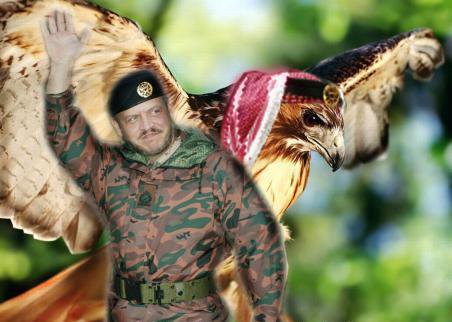
On a totally different note, I had an awesome dream this morning–one that I’m totally using in next novel I’m going to write (probably recycling much of Hero in Exile).  It’s hard to describe it exactly, which is why I added this really weird picture to this post.

You may be wondering, “what the crap is that supposed to be?” I’ll tell you: it’s Arab.  It’s Arab on so many different levels it makes me happy inside.  I took it from the facebook profile pictures album of an old friend of mine from the ELC in Provo.  What’s so Arab about it?  Well, there’s 1) King Abdullah II 2) in battle fatigues 3) waving to the people 4) with an eagle in the background 5) wearing a Bedouin hutta 6) and some kind of military insignia on the agal.  So freaking Arab.

So what was my dream?  Well, it was kind of like a cross between Lawrence of Arabia and…a lot of weird stuff.  At one point, King Hussein of Jordan commanded me to go into the desert east of Jerusalem and raise an army.  I had a lot of questions, so he explained exactly what he wanted me to do–and in so doing,  he explained exactly how the Bedouin fight wars.

Instead of keeping a standing army, a military leader must draw the warriors of the other tribes to his banner through his charisma, egalitarianism, reputation, etc.  The warriors join his campaign, not to serve some grand concept of country, but to win spoils and glory.  Once the campaign ends, they disband and return to their tribes until the next leader rallies them together.

Because of the way this works, a charismatic leader can pass through the desert virtually by himself, only to come out on the other side with a fearsome army.  This is what happened in Lawrence of Arabia when Lawrence took Aqaba–he passed through the desert with a token force of barely fifty men, but the feat (and his brilliant diplomatic skills) so impressed the Bedouins on the other side that they rallied to him and stormed the city.  From the Turks’ point of view, the army came out of nowhere and crushed them.

So that’s what I’m thinking I need to do at some point in my next novel: have the main character, poor and destitute, go out to the desert and rally the tribes with nothing but his charisma.  I’ve already got the rough (VERY rough) outline of the story in my head, and this plot point fits perfectly into this one section where I was worrying that things lagged too much.

Oh man, I’ve got such awesome plans for this book!  But first, must revise Mercenary Savior and send it out.  Don’t worry, I’m enthusiastic about that project, too. It will get done!  Momentum is building–I’ll  more than make up those 720 words tomorrow.