How I Would Vote Now: 2000 Hugo Awards (Best Novel)

The Nominees

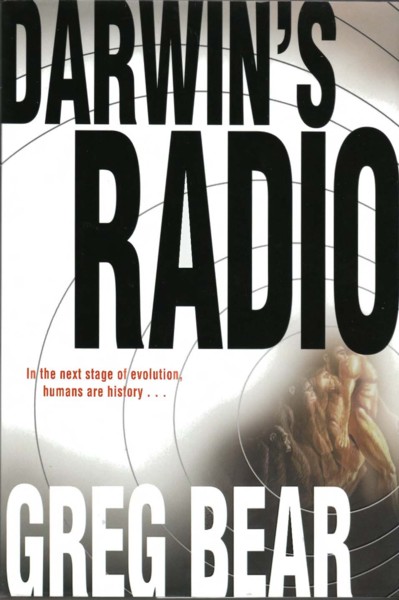
Darwin’s Radio by Greg Bear
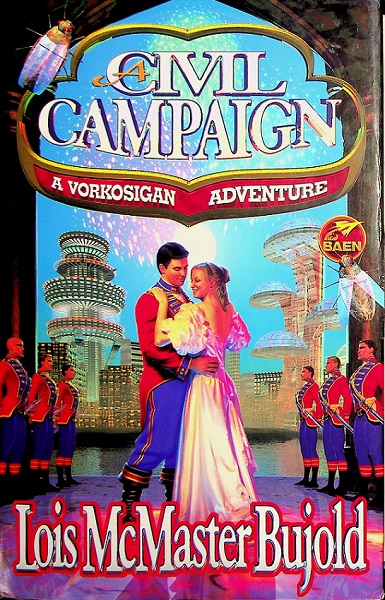
A Civil Campaign by Lois McMaster Bujold

Harry Potter and the Prisoner of Azkaban by J. K. Rowling
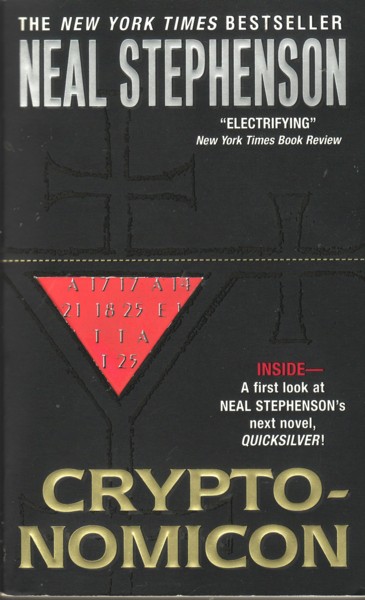
Cryptonomicon by Neal Stephenson

A Deepness in the Sky by Vernor Vinge

The Actual Results

  1. A Deepness in the Sky by Vernor Vinge
  2. A Civil Campaign by Lois McMaster Bujold
  3. Cryptonomicon by Neal Stephenson
  4. Darwin’s Radio by Greg Bear
  5. Harry Potter and the Prisoner of Azkaban by J. K. Rowling

How I Would Vote Now

  1. Harry Potter and the Prisoner of Azkaban by J. K. Rowling

Explanation

It’s been a long time since I read any of the Harry Potter books, but I thoroughly enjoyed Harry Potter and the Prisoner of Azkaban and would have no issue voting for it in one of these awards. But I DNFed all of the other books on the ballot for this year, so I couldn’t bring myself to vote for any of them.

I really wanted to enjoy A Deepness in the Sky, and will probably read it again at some point, especially since my wife really enjoyed this one and gives me a hard time for DNFing it. Also, it’s the kind of science fiction that’s right up my wheelhouse, so I kind of feel bad about not finishing it.

So what’s the deal? The first time I tried to read it, I got caught up in this enormous subplot where the good guys, after having been mentally enslaved by the bad guys, try to figure out a way to break them all free. It goes on for over 100 pages, with an elaborate plan that involves secretly drilling into an asteroid and taking enormous risks. I got really into it, rooting for them to succeed… only for the whole thing to fail miserably, to the point where all of the characters involved in the actual escape attempt to die horribly, and everyone else who was enslaved (including a 14 year old girl, a major character in the book, who is sexually exploited by the villain of the novel) to go on about their happy little mentally enslaved lives without even realizing what had happened.

After that enormous letdown, I just couldn’t get back into the book. The stuff with the aliens was really cool, and I enjoyed that very much, but all of the stuff with the humans just made me want to stop reading the book. It was a little bit like my experience with Children of Time by Adrian Tchaikovsky, except with that book, there was never the false hope that the humans were on the verge of heroically saving themselves; things just kept getting progressively worse and worse until the alien and human storylines converged, in an awesome and thoroughly satisfying way. And maybe that happens in A Deepness in the Sky too, but I don’t know if I’ll ever find out. Maybe someday.

I enjoyed the first few Vorkosigan Saga books, especially The Warrior’s Apprentice. I even enjoyed some of the spinoff novels that aren’t about Miles Vorkosigan, like Ethan of Athos. But the later books in the series just feel too much like a soap opera rehash of the characters from the earlier books. That was why I couldn’t really get into A Civil Campaign.

It also doesn’t help that I read a bunch of the books out of order, partially because they were written out of order and partially because the order of the books isn’t clearly labeled (and how can they be, with how Bujold is always skipping around writing in different parts of the timeline?) Whenever I start a new series, I always try to read it in chronological order, not publication order, but in every Vorkosigan novel I read, it seems that Bujold refers to at least half a dozen things that happened in some previous book that I haven’t read. Some of these, apparently, are books she hasn’t written yet (or books that she hadn’t yet written at the time when I was reading).

So my whole experience of the Vorkosigan Saga has just been very confusing all around. And looking back, I can say that neither the publication order nor the chronological order is the right way to read the series. Shards of Honor and Falling Free really aren’t the best books to start out with, even though they happen first chronologically, but a part of me wishes I’d read Barrayar before The Warrior’s Apprentice, since that would have made a lot of the political intrigue much more satisfying.

Honestly, though, it seems to me that the Vorkosigan Saga has just gone on way too long in general. Which is probably why I couldn’t get into A Civil Campaign.

As for Cryptonomicon, it was way too dense and raunchy. The first chapter has more homoerotic innuendo than explicit gay sex, but it was still just too much for me, and the writing was so dense that I never really got into the novel itself. Neal Stephenson’s writing has always been like that for me, and I’ve read enough of his other books to know that he definitely crosses the line in terms of explicit sexual content. I’ve never been able to finish anything he’s written. I was tempted to put Cryptonomicon beneath No Award, but I decided it didn’t quite cross that line for me. It’s close, though.

I forget why I DNFed Darwin’s Radio, but I think it mostly had to do with how I really didn’t care about any of the characters. I think the main character was having an affair or something, too, which made me really not like him. That’s the thing about high-concept science fiction: the plot or characters are often not nearly as well thought out, and since that’s what I often read for, I sometimes find it really difficult to get into those kinds of books. But it wasn’t terrible, just not my kind of story.

How I would vote now: 2016 Hugo Award (Best Novel)

The Nominees

The Aeronaut’s Windlass by Jim Butcher

The Fifth Season by N.K. Jemisin

Ancillary Mercy by Ann Leckie

Uprooted by Naomi Novik

Seveneves by Neal Stephenson

The Actual Results

  1. The Fifth Season by N.K. Jemisin
  2. Uprooted by Naomi Novik
  3. Ancillary Mercy by Ann Leckie
  4. Seveneves by Neal Stephenson
  5. The Aeronaut’s Windlass by Jim Butcher

How I Would Have Voted

  1. The Aeronaut’s Windlass by Jim Butcher
  2. No Award
  3. Uprooted by Naomi Novik
  4. Seveneves by Neal Stephenson

Explanation

I enjoyed The Aeronaut’s Windlass. It was a fun steampunk adventure, sort of like a mashup between Horatio Hornblower and the Bioshock games. It’s also very unlike most books to be nominated for the Hugo, probably because it was nominated by the Sad Puppies. After this year, the people who run the Hugo Awards rewrote the rules to allow them to disallow “slate voting,” which was how they disqualified the majority of ballots in the 2023 Hugo Awards, including almost all of the ballots cast by Chinese fans. But guys, it’s the Puppies who were totally the racists.

All of the other books were pretty terrible, in my opinion. I’ve already written about The Fifth Season at length, so I won’t go into that rant here. I’ve also written at length about Ann Leckie’s obsession with fake transgender pronouns, and since Ancillary Mercy is basically just another book about pronouns, I won’t waste any more time on that subject.

I wanted to like Uprooted, since I loved Spinning Silver so much, but both times I tried to read it, I ended up DNFing it midway through. Partly that’s because the fantasy retelling of Beauty and the Beast was not as interesting to me, but there was also a scene where the main character and her mentor randomly started making out after casting a spell together, with a graphic description of digital penetration. The whole thing came so totally out of the blue that it threw me out of the book, and I had no desire to finish it after that.

I’m also really conflicted about Seveneves. I’m not a huge fan of Neal Stephenson generally, especially after the neon orgy scene at the end of Diamond Age, and Seveneves is loooong… like, over 800 pages long. Which would be fie, if Stephenson had the economy of words of a true master like Louis L’Amour, but Stephenson really doesn’t. Around 100 pages or so, I skipped to the last chapter and read a spoiler-filled synopsis just to see if it was worth pressing on, and I decided that it really wasn’t, because 1) it’s apparently never explained why or how the moon exploded, and 2) the Hillary Clinton analog becomes absolutely insufferable, and I really didn’t want to slog through four hundred pages of that. Seveneves has an interesting premise, but if you cut out half the words it would be a better book.

How I would vote now: 2009 Hugo Award (Best Novel)

The Nominees

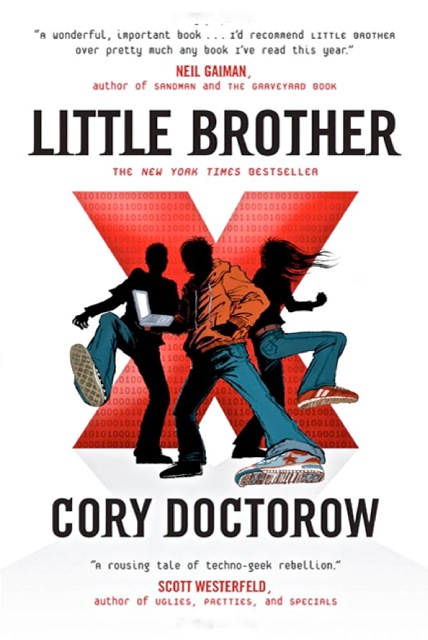
Little Brother by Cory Doctorow

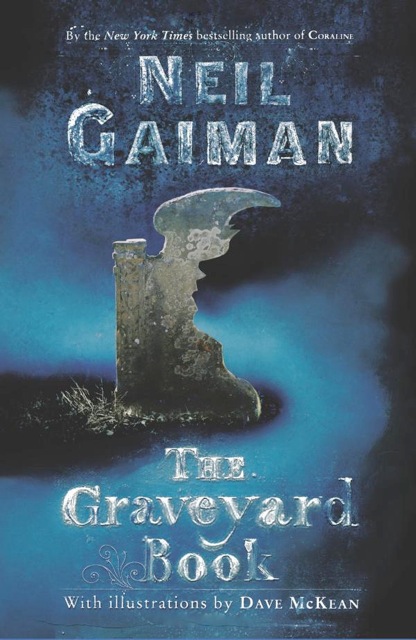
The Graveyard Book by Neil Gaiman

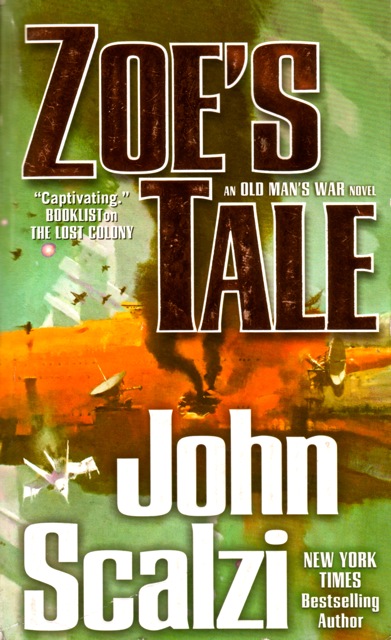
Zoe’s Tale by John Scalzi

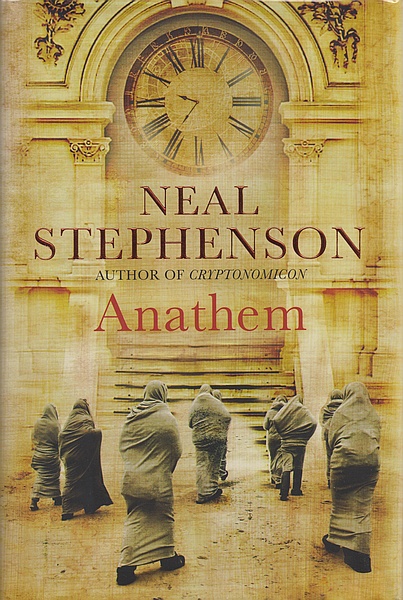
Anathem by Neal Stephenson

Saturn’s Children by Charles Stross

The Actual Results

  1. The Graveyard Book by Neil Gaiman
  2. Little Brother by Cory Doctorow
  3. Anathem by Neal Stephenson
  4. Saturn’s Children by Charles Stross
  5. Zoe’s Tale by John Scalzi

How I Would Have Voted

  1. No Award
  2. The Graveyard Book by Neil Gaiman
  3. Little Brother by Cory Doctorow

Explanation

I’ve found that Hugo Award winning / nominated books tend to fluctuate in decade-long waves, in terms of how much I enjoy them. Some decades are pretty good, others are just downright terrible. Generally speaking, the books from the 50s and early 60s were good if not great (though Dune is certainly a masterpiece), the late 70s had a couple of years with some hits and misses, and most of the books from the late 80s and early 90s were actually pretty good. But from the mid 60s through most of the 70s (and into the early 80s), the Hugos were generally garbage, mostly because of how they were saturated with radical feminism, Malthusian economics, and global cooling global warming climate change hysteria. Also, there were lots of communist “fellow travelers” writing during that era. After the mid 90s, it seems like the Hugos tried to become “dark and gritty,” just like comic books and epic fantasy. A lot of those old political trends from the 60s and 70s came back with a vengeance, and from the late 90s through the early 2010s, the books are really hit and miss for me.

The year 2009 was a complete and total miss, in my opinion. I didn’t like any of the books or authors that were nominated that year, though I will admit that I skipped all but two of them. I’ve written before about how much I cannot stand Scalzi as either an author or a human being, and after trying to read his Interdependency novels, I’ve just completely sworn him off. Zoe’s War is technically a sequel to Old Man’s War, which I enjoyed at the time, but after all of Scalzi’s shenanigans I have no desire to finish that series. As for Neal Stephenson and Charles Stross, everything I’ve read from them is so loaded with gratiutous sex, graphic violence, and sheer unadulterated nihilism that I’ve sworn them off as well. Dark and gritty is almost always overrated.

Moving on to Little Brother… how can I put this? The book is about a teenage hacker and his high school buddies who fight back against an insidious surveillance state, which seeks to control every aspect of its citizens’ lives. Great concept… except that if you went back in a time machine and brought Cory Doctorow from 2009 into a debate with Cory Doctorow today, one of two things would happen: 1) the debate would turn into a vicious cage match, from which only one of them would leave alive, or 2) the older Doctorow would say “but a police surveillance state isn’t bad if the Democrats are in charge,” to which the younger Doctorow would say “you make a very good point, sir,” and the two would leave as best of friends. Which is to say that Cory Doctorow is a massive hypocrite when it comes to the lucrative merger of Big Tech and the state, and I can’t tell if his hypocrisy goes back all the way to the Bush years, or whether the election of 2016 broke him. Either way, I just could not get into Little Brother because of how thoroughly he’s flip-flopped on his views.

(As a side note, I really would like to see someone train two large language models on Doctorow’s writings, one from everything pre-Trump, and the other from everything post-Trump. It would be fascinating to pit those two models against each other in a simulated debate, because of how thoroughly he’s flip-flopped. Also, it would be entertaining to watch the real Cory Doctorow’s reaction to this simulated debate, because he’s written extensively about how much he hates ChatGPT and generative AI.)

With all of that said, however, I didn’t think Little Brother was terrible, even though I couldn’t finish it. As with Scalzi, it had less to do with the book itself and more to do with my opinion of the author, which is why I’ve decided to rank it above the other books below No Award. But I put it below The Graveyard Book, because there wasn’t really anything political or offensive in that one; it just wasn’t for me. I can’t affirmatively vote for The Graveyard Book, because I didn’t enjoy it enough to finish it, but if it had been a different year, I simply would have abstained instead of putting it below No Award.

Reading Resolution Update: April

My 2022 reading resolution: Read or DNF every novel that has won a Hugo or a Nebula award, and acquire all the good ones.

In 2007, when I was a sophomore in college, I went up to Salt Lake City with some friends and was browsing the awesome (and fairly run down, even at the time) used bookstore near the Gallivan Plaza TRAX stop, which has since changed names and moved to another location. It was a really awesome used bookstore, and I determined to buy a SF novel while I was there, since I was really getting back into SF after my mission. I saw a massive 600+ page trade paperback edition of Cyteen by C.J. Cherryh, and since I was reading Downbelow Station at the time, I decided to get that one.

For the next fifteen years, I lugged that book everywhere, through more than a dozen moves (though for the biggest move, where I made the pioneer trek in the wrong direction and repented 8 months later, I boxed it up with my other books and left it in a friend’s basement). In all that time, I never actually read it—or even opened it up, really—but it was always there, somewhere in the middle of my dismally long TBR list.

It wasn’t that I didn’t want to read it: I just didn’t have (or make) the time. Downbelow Station had been an okay read, if not spectacular, but I had really enjoyed some of C.J. Cherryh’s shorter books, like Merchanter’s Luck and Voyager in Night. Also, space opera books about sprawling galactic empires were right up my wheelhouse, so it didn’t seem odd for me to own such a book that I hadn’t yet read. In fact, most of the books that I owned throughout this time were books that I wanted to read but hadn’t gotten around to yet. If I have a superpower, it’s an uncanny ability to acquire books no matter where I am. Unfortunately, I’m not as good at reading them.

Fast forward to 2022. I’ve gotten married, had a daughter, launched my own writing career, and become a homeowner—and I’m still lugging this massive 600+ page trade paperback book that I’ve never read. But I’ve just set a resolution to read (or DNF) every Hugo and Nebula award-winning novel, and Cyteen is on the list. So around the middle of March, I finally open it up and start reading it.

After about a month, I decided to DNF it.

It’s not that it was terrible. Perhaps you enjoyed it, and that’s fine. I just found it to be too drawn out and confusing. I think C.J. Cherryh does better when she’s focusing on just a few characters, rather than trying to give the grand sweep of galactic civilization or whatever. I didn’t finish Foreigner for similar reasons. Maybe someday I’ll return to that one and Cyteen, but for now, I’m counting it as a DNF.

But the thing is, I was hauling around this massive book for most of my adult life. When I bought it in 2007, I figured that since it had won a Hugo, it had to be good. Perhaps, if I’d read it back then, I would have been more patient with it and slogged through to the end. Perhaps I would have decided it was just as good as Downbelow Station. Or perhaps, if I read Downbelow Station today, I would end up DNFing it as well.

The point is, I wish I’d been a lot more discerning about my reading when I was younger, and not just acquired books that I hoped to read “someday”… because books (at least the paper ones) are heavy and take up a lot of space. And a lot of them really aren’t worth reading. Of course, you’ve got to read a few stinkers to figure out what you really like, so it isn’t always a waste… but libraries exist for a reason.

So what this experience really tells me is that Mrs. Vasicek and I are doing the right thing by taking our family to our local library once a week. Also, it tells me that the second part of my resolution—to actually acquire all of the books that I think were worth reading—is just as important as actually reading them. Because, if the ultimate goal is to “seek… out of the best books words of wisdom,” then it’s not enough to just make a list: you actually have to read the damned things, and keep your own personal library in order to revisit those words and share them with others. Because ultimately, you have to discover which books are the “best books” on your own, and your best books list isn’t going to be the same as anyone else’s best books list. Which means that you can’t rely on anyone else’s list. You can use it as a starting point to make your own list, but that’s all you should use it for.

So now I want to go through all of the books I’ve acquired over the years and figure out which ones I ought to get rid of, because Cyteen certainly wasn’t the only one. In fact, most of the books in our family library are books that I haven’t (yet) read. By my count, there are just under 150 of them, totalling about 55k words. Even at a rate of 100 words or two hours of reading each day, that’s still going to take almost two years… and that’s not counting all the library books that we’re sure to check out in the meantime.

Oh well. I suppose this is more of a process than anything else. Journey before destination, and all that. And I’m sure I’ll have fun in the process, since despite the fact that I DNF far more books than I actually read, I do genuinely enjoy reading.

In any case, here are all of the Hugo and Nebula award-winning books that I read (or DNFed) in the month of April:

Books that I read and plan to or have already acquired:

  • Rainbows End by Vernor Vinge (2007 Hugo)
  • Blackout by Connie Willis (2011 Hugo and Nebula) (audio)

Books that I read and do not plan to acquire:

  • Blackout by Connie Willis (2011 Hugo and Nebula) (print)

Books that I did not finish:

  • A Time of Changes by Robert Silverberg (1972 Nebula)
  • The Gods Themselves by Isaac Asimov (1973 Hugo and Nebula)
  • The Fountains of Paradise by Arthur C. Clarke (1980 Hugo and Nebula)
  • The Claw of the Conciliator by Gene Wolfe (1982 Nebula)
  • Cyteen by C.J. Cherryh (1989 Hugo)
  • Tehanu by Ursula K. Le Guin (1991 Nebula)
  • The Diamond Age by Neal Stephenson (1996 Hugo)
  • The Moon and the Sun by Vonda N. McIntyre (1998 Nebula)
  • Parable of the Talents by Octavia E. Butler (2000 Nebula)
  • 2312 by Kim Stanley Robinson (2013 Nebula)
  • Beyond This Horizon by Robert A. Heinlein (1943 Retro Hugo, awarded in 2018)
  • The Nemesis from Terra by Leigh Brackett (1945 Retro Hugo, awarded in 2020)

Total books remaining: 26 out of 110 (currently reading 12 and listening to 3).