 Last week, I blogged about the Three Faces of Eve trope. But if we’re going to discuss power trios in any depth, we first need to examine the classic Freudian Trio, one of the most prevalent combos and, in some ways, a precursor to all others.
As you might expect, the Freudian Trio borrows heavily from Sigmund Freud, specifically, his theory of the Id, the Ego, and the Superego. The main idea is that the human mind is divided into three parts: the Id, which comprises our basest animal instincts; the Superego, which comprises our concepts of morality and social norms; and the Ego, which struggles to find a balance between the two.
In the Freudian Trio, these elements of the psyche are represented by:
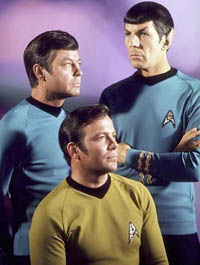
- The McCoy (Id): A character who acts primarily on his feelings and emotions, rather than logic or reason. Tends to be hot-blooded and place honor before reason, though his depth of feeling often serves as an anchor that holds them all together. In a five-man band, this is the Lancer.
- The Spock (Superego): A character who acts primarily on logic and social convention, rather than his own feelings. Tends to be cold and calculating, though the needs of the many may prompt him to make a heroic sacrifice. In a five-man band, this is the Smart Guy.
- The Kirk (Ego): A pragmatic, free-wheeling character who takes the lead and mediates between the other two. When the the group is in conflict, often resolves it by taking a third option, though this often makes him seem morally ambivalent. In a five-man band, this is the Hero.
Each of these character archetypes are fascinating in their own right, and deserve to be examined in much greater depth. However, in the Freudian Trio, it’s the combination of the three that proves so fascinating.
When faced with an interesting moral dilemma, the McCoy often wants to screw the rules and run in with guns blazing, while the Spock advocates caution, reminding us of the prime directive. Or maybe the McCoy is paralyzed by indecision, while the Spock is the only one cold enough to make the sadistic choice. In either case, the way the Kirk manages to resolve it will almost always reveal something deeper about the world or human nature.
The thing that’s truly amazing is how prevalent this trope is in fiction. To name a few:
- Star Trek: McCoy (Id), Spock (Superego), and Kirk (Ego).
- Star Wars: Han (Id), Leia (Superego), and Luke (Ego), also:
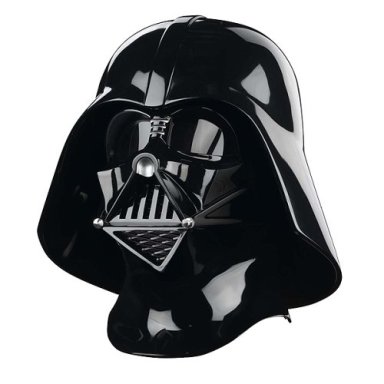
- Star Wars: Emperor Palpatine (Id), Grand Moff Tarkin (Superego), and Darth Vader (Ego).
- Ender’s Game: Peter (Id), Valentine (Superego), and Ender (Ego).
- Lord of the Rings: Gollum (Id), Sam (Superego), and Frodo (Ego), also:
- Lord of the Rings: Gimli (Id), Legolas (Superego), and Agagorn (Ego), also:
- Lord of the Rings: Dwarves (Id), Elves (Superego), and Humans (Ego).
- Arthurian Legend: Sir Gawain (Id), Sir Lancelot (Superego), and King Arthur (Ego) (I would argue that Guinevere fits the Id role better, but I’m not an expert).
- The Dark Knight: The Joker (Id), Harvey Dent (Superego), and Batman (Ego).
- The Matrix: Neo (Id), Trinity (Superego), and Morpheus (Ego).
- Shaun of the Dead: Ed (Id), Liz (Superego), and Shaun (Ego).
- Fullmetal Alchemist: Edward (Id), Alphonse (Superego), and Winry (Ego).
- The Melancholy of Haruhi Suzumiya: Haruhi (Id), Yuki (Superego), and Kyon (Ego).
- Final Fantasy VI: Kefka (Id), Leo (Superego), and Emperor Gestahl (Ego).
- Final Fantasy VII: Barrett (Id), Cloud (Superego), and Tifa (Ego).
- Myst: Achenar (Id), Sirrus (Superego), and Atrus (Ego).
- Starcraft: Zerg (Id), Protoss (Superego), and Humans (Ego).
- Homestar Runner: Strong Mad (Id), Strong Sad (Superego), and Strong Sad (Ego).
- The Good, the Bad, and the Ugly: Tuco (Id), Angel Eyes (Superego), and Blondie (Ego).
- 20,000 Leagues Under the Sea: Ned (Id), Conseil (Superego), and Aronnax (Ego).
- Twilight: Jacob (Id), Edward (Superego), and Bella (Ego).
- Archie Comics: Veronica (Id), Betty (Superego), and Archie (Ego).
The Betty and Veronica one is particularly interesting because it’s also a love triangle. In fact, most love triangles feature some kind of play on the Freudian Trio: the good girl vs. the bad girl, the nice guy vs. the jerk, the girl next door vs. forbidden love, prince charming vs. the loveable rogue.
Sometimes, the villains come from a dysfunctional or broken Freudian Trio, where one of the three died, was kicked out, or was never part of the combo in the first place. When this happens, it’s called (aptly enough) a Evil Duo. Examples include Pinkie and the Brain, Lex Luthor and the Joker, and Kefka and Gestahl (though that particular duo was very, very, VERY short lived).
Finally, it’s worth pointing out that the Freudian Trio is so common, it even occurs in real life. Perhaps the best example of this would be World War II, where Churchill was the Id, Stalin was the Superego, and Roosevelt was the Ego. With quotes like “never, never, never, never give up,” Churchill practically embodied the McCoy (his drinking penchant also helped), while Stalin, with his fanatic adherence to communism and his “million is a statistic” approach to the revolution, was as cold and calculating as you can get. FDR was the one who held the alliance together, and it was only after his death that the Cold War really broke out.
Of course, it’s possible that we only see this trope everywhere because our brains are programmed to see it. But if that’s true, it makes for an even stronger argument that the Freudian Trio plays on some powerful, universal archetypes.