How I Would Vote Now: 1959 Hugo Awards (Best Novel)

The Nominees

The Enemy Stars by Poul Anderson
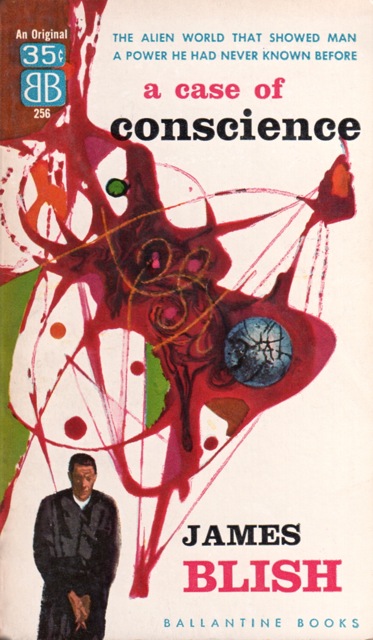
A Case of Conscience by James Blish
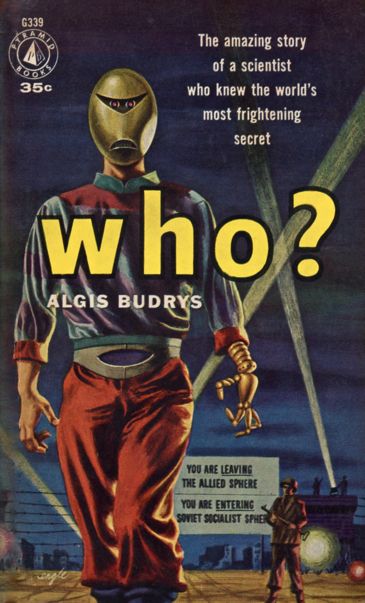
Who? by Algis Budrys
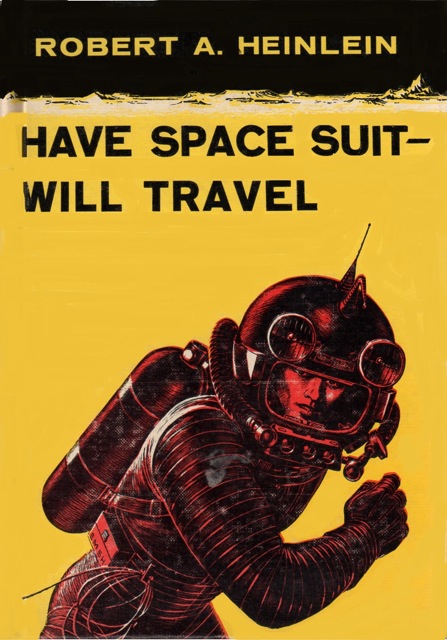
Have Space Suit Will Travel by Robert A. Heinlein

Immortality, Inc. by Robert Sheckley

The Actual Results

  1. A Case of Conscience by James Blish
  • Have Space Suit Will Travel by Robert A. Heinlein
  • Immortality, Inc. by Robert Sheckley
  • The Enemy Stars by Poul Anderson
  • Who? by Algis Budrys

How I Would Have Voted

  1. Immortality, Inc. by Robert Sheckley
  2. Have Space Suit Will Travel by Robert A. Heinlein

Explanation

Immortality, Inc. is the first book I’ve read by Robert Sheckley, and while it’s definitely dated, I enjoyed it quite a bit. The premise was fun and interesting, and the writing was fast-paced with a healthy dose of suspense. As for the stuff that felt dated, I actually think that added to the book’s charm, making it feel like a throwback to an earlier (if not quite innocent) time. I’ve often felt like if I’d had a choice in the time in which I’d been born, I would have chosen to be born about a hundred years ago, so I do occasionally like a good throwback to golden age sci fi. I’m definitely interested in reading more Robert Sheckley.

While I’ve enjoyed Algis Budrys in the past, I found it difficult to get into Who? though not due to any fault of the book or the author. The basic premise of the book is that a spy has returned from enemy custody, but he’s recieved so many prosthetics (including a prosthetic head and brain) that he’s practically a machine now, to the point where his handlers can’t tell if he’s the actual spy or someone trying to impersonate him. Back in the 1950s, the premise made sense, but that was before we knew about DNA, which renders the whole thing obsolete since a small blood sample and a DNA test would resolve the main conflict right away. I just couldn’t get over that, and the story itself didn’t really hook me, so I gave up midway through. Perhaps I should try it again, though.

The Enemy Stars was another Poul Anderson book that I just couldn’t get into. The characters weren’t quite as flat as in some of his other books, but they all still tended to blend together, and by about page 50 I still couldn’t tell what the main conflict of the story was. I love sprawling space operas just as much as the next sci fi reader, but the book has to have a plot, too. Less worldbuilding and more actual story, please.

Have Space Suit Will Travel was okay, but I didn’t really love it, and if I hadn’t picked up the audiobook, I probably would have DNFed it. It’s a book for young readers that feels like a book for young readers—in other words, a book that seems to talk down to the reader more than was necessary. It did have a lot of golden-age, 50’s era charm, and I enjoyed the world and the characters. Heinlein can definitely write a fun story. But with all that said, I don’t think this is one of his best—in fact, I wouldn’t even say it’s one of his best juveniles.

It’s been a while since I read A Case of Conscience, but I think the main reason I DNFed it had to do with its Malthusian premise and treatment of religion. Basically, it’s about a Catholic priest who is also an interstellar explorer, and how he wrestles with the question of whether a certain race of intelligent alien beings has souls. One of the aliens comes back to Earth and is instrumental in the complete collapse of society, which somehow ties into the philosophical questions, but that part wasn’t very clear to me. The story was very dry and cerebral, and I was never really sold on the central premise. Also, the religious character felt like he was obviously written by someone who isn’t religious (though I suppose I could be wrong about that—after all, I’m not a Catholic). But perhaps that was just me.

In short, while I wouldn’t say this was one of the best years for the Hugo, it had some good books, and none of the ones that made the ballot were particularly objectionable. With that said, though, I don’t think any of them stand the test of time.

Reading Resolution Update: January

My 2022 reading resolution: Read or DNF every novel that has won a Hugo or a Nebula award, and acquire all the good ones.

I had expected to DNF a lot of these books, but I was a little dismayed at how terrible they are. Or rather, how some of them can be so well-written and yet so idelogically possessed.

For a while, I worried that I was pre-judging some of these books too harshly, based on my opinions of the author. After all, shouldn’t art be treated separately from the artist? But then I decided that it would be better to lean into that bias, and trust my intuition. After all, it’s impossible to approach reading without a personal bias—and even if it were possible, it wouldn’t be advisable.

One of the key things I’m hoping to take away from reading these books is a better understanding of my own personal tastes. Toward that end, it’s much better to DNF early and often, since that tells me something valuable about my own tastes. I’ll get much more out of this exercise if I pay attention to that than whether or not I’m being “fair” to a particular book or author.

As for how my bias against an author might prejudice me against a book, I don’t think that’s too much of a problem so long as I’m aware of those biases. Yes, it makes it more likely that I’ll read a book with a critical eye, and not in the way that I typically read for enjoyment, but that goes both ways, since if I do enjoy a book, that’s going to improve my opinion of the author (or at least make me reconsider my opinion). So long as I’m aware of my biases and make sure that they aren’t set in stone, I think it should be fine

Besides, it’s not like I have anything to prove. Sure, China Mike Glyer might pull out an excerpt from this post to use as content (hi China Mike!), but I couldn’t care less what that particular corner of fandom thinks about my public ruminations. I will know if I’m being too “unfair” to a book or an author, and the only criterion that really matters is whether I have a clear reason for DNFing the book, separate from my biases about the author.

And honestly, what I’ve found so far is that my biases are pretty spot on. Authors who behave insufferably in public or on the internet tend to write some pretty insufferable books, especially if they’re woke.

Fortunately, I have found a few new-to-me books and authors who are really fantastic. And my decision to DNF early and often is helping to keep it from becoming too much of a slog, which is good. It also means that I may complete this resolution a lot sooner than I’d expected, at which point I’ll probably move on to the Dragons or the Prometheus awards.

In any case, here are all the Hugo and Nebula awared-winning novels that I read or DNFed in January 2022:

Books that I read and plan to / have already acquired:

  • Way Station by Clifford D. Simak (1964 Hugo)
  • Foundation’s Edge by Isaac Asimov (1983 Hugo)
  • The Vor Game by Lois McMaster Bujold (1991 Hugo)
  • Annihilation by Jeff VanderMeer (2015 Nebula)

Books that I read and don’t plan to acquire:

  • None

Books that I did not finish:

  • The Big Time by Fritz Leiber (1958 Hugo)
  • A Case of Conscience by James Blish (1959 Hugo)
  • The Wanderer by Fritz Leiber (1965 Hugo)
  • The Einstein Intersection by Samuel R. Delany (1968 Nebula)
  • Stand on Zanzibar by John Brunner (1969 Hugo)
  • Rite of Passage by Alexei Panshin (1969 Nebula)
  • Man Plus by Frederik Pohl (1977 Nebula)
  • Dreamsnake by Vonda N. McIntyre (1979 Hugo and Nebula)
  • A Deepness in the Sky by Vernor Vinge (20000 Hugo) (My wife recommended this one, and I will probably try it again, since I took a break midway through and forgot who all of the characters were. But for now, I’m counting it as a soft DNF.)
  • Camouflage by Joe Haldeman (2006 Nebula)
  • The Windup Girl by Paolo Bacigalupi (2010 Hugo and Nebula)
  • Redshirts by John Scalzi (2013 Hugo)
  • Ancillary Justice by Ann Leckie (2014 Hugo and Nebula)
  • All the Birds in the Sky by Charlie Jane Anders (2017 Nebula)
  • The Calculating Stars by Mary Robinette Kowal (2019 Hugo and Nebula)
  • A Memory Called Empire by Arkady Martine (2020 Hugo)
  • A Song for a New Day by Sarah Pinsker (2021 Nebula)