Checklist for STAR WANDERERS update

As I mentioned last week, I plan to take down the individual novellas in the Star Wanderers series and keep the two omnibus editions instead. This is both to declutter my book page and to prepare the way for new sequel novels.

However, it’s really easy to get deer-in-the-headlights syndrome when undertaking a major project like this. So to help overcome that, here’s a checklist of all of the things that need to get done, in rough order:

Phase 1: Metadata

  • Prepare new metadata for:
    • Outworlder
    • The Jeremiah Chronicles
    • Tales of the Far Outworlds
  • Update title and series.
  • Write new short descriptions.
  • Write new long descriptions.
  • Update book teaser file.
  • Research new keywords.

Phase 2: Formatting

  • Create new teaser XHTML pages.
  • Identify all books needing new teaser pages.
  • Format new master files:
    • EPUB
    • MOBI
    • PDF
  • Update links file.

Phase 3: Uploading

  • Upload new EPUBs of all books requiring changes to:
    • Amazon KDP
    • Draft2Digital
    • Kobo
    • Smashwords
    • DriveThruFiction
  • Also, update new metadata and pricing for:
    • Outworlder
    • The Jeremiah Chronicles
    • Tales of the Far Outworlds

Phase 4: Clean-up

  • Remove old Star Wanderers books from sale on all sites:
    • SW-II: Fidelity
    • SW-III: Sacrifice
    • SW-IV: Homeworld
    • SW-V: Dreamweaver
    • SW-VI: Benefactor
    • SW-VII: Reproach
    • SW-VIII: Deliverance
  • Also remove all book pages on blog.
  • Update book pages for:
    • Outworlder
    • The Jeremiah Chronicles
    • Tales of the Far Outworlds
  • Set up redirect from Fidelity to The Jeremiah Chronicles (for anyone with an old edition of Outworlder who clicks the link in the back of the book).
  • Consolidate blog categories for old books.
  • Remove old books from Calibre library.

I think that’s everything, though it feels like I’m forgetting something. The goal is to get it all done before the end of the month, ergo the end of the week. Seems simple, but each phase introduces a new multiplier to the workload, with lots of potential to introduce errors.

Wish me luck.

Racism is trendy again

“People of color” is an inherently racist phrase.

There. I said it. I may get into trouble for saying it, but that doesn’t make it any less true.

Before we unpack the phrase “people of color,” let’s first define our terms. This is where the heart of the controversy lies.

According to the Merriam-Webster Dictionary, racism means:

: poor treatment of or violence against people because of their race

According to the Oxford English Dictionary, racism means:

Prejudice, discrimination, or antagonism directed against someone of a different race based on the belief that one’s own race is superior.

I refer to the Merriam-Webster Dictionary and the Oxford English Dictionary specifically because they are the two highest authorities in the English language. In the interest of impartiality, I’ll include the Wiktionary definition as well, which anyone can edit:

Prejudice or discrimination based upon race.

Seems pretty clear, right? Racism is discrimination based on race.

That is, unless you’re a progressive. To them, the only people who can ever be racist are whites, because racism is systematic and the systems of oppression benefit whites at the expense of non-whites. This is called “white privilege,” and the fact that most of us cannot see it is further proof that it is true.

(Pay no attention to the fact that a black man became President of the United States—effectively the most powerful man on Earth—in the face of these “systems of oppression.” How do the progressives justify this? I have no frickin’ idea. The mental gymnastics it must take… but I digress.)

Because the system is racist, and all non-white people are oppressed, according to progressive “logic” non-whites cannot be racist. This effectively gives them a free pass to discriminate in almost any way, shape, or form against people who are white.

This is where the term “people of color” comes in. It’s simply a more polite way of saying “non-white.” Don’t believe me? Check out the Wikipedia article. It’s right there in the first sentence:

Person of color (plural: people of color, persons of color, sometimes abbreviated POC) is a term used primarily in the United States to describe any person who is not white.

In other words, it is a term that was invented to discriminate against whites. What do African-Americans, Punjabs, Japanese, Mayans, and Australian Aborigines racially have in common? Nothing at all—except that they’re all non-white, and therefore fall under the catch-all term “people of color.”

I despise the progressive redefinition of racism as much as I despise the term “reverse racism.” There is no such thing as reverse racism, because racism doesn’t have a damned direction! When ANYONE discriminates against another person based on ANY race, whether black, white, yellow, red, green, or purple, it is racism pure and simple.

Lately, I’ve seen the phrase “people of color” come up in the submissions guidelines of a number of short story markets. Usually, it will be something along the lines of a call of submissions for a special issue, though it sometimes appears in their diversity statements as well. To me, it always raises a red flag.

When all of the major markets are regulary running “people of color” special issues, with diversity statements calling for more submissions from “people of color,” then we’ve achieved a system that is racist to the core. If it weren’t for indie publishing and the Sad Puppies, I would be very wary of this trend. And if things change in the indie world to really put the squeeze on writers (subscription services, exclusivity agreements, royalty cuts, etc), I would be very concerned.

Make no mistake about it: “people of color” is a racist term. It’s also quite trendy, but that doesn’t make it any less racist.

I’ll leave you with this hilariously topical video from Sargon of Akkad:

Thoughts on series and perma-free

For the last five years, the conventional wisdom among most indie writers has been to write short books in sequential series and make the first book permanently free. It’s a strategy that works, to a certain extent. It’s what got me from making pizza money on my book sales to making a humble living at this gig. However, I’m starting to question that wisdom.

I have two books available for free this month: Genesis Earth and Star Wanderers: Outworlder (Part I). Genesis Earth was my first indie published novel, a “standalone with series potential” (specifically, a trilogy) written according to the conventional wisdom for breaking into traditional publishing. Outworlder is a very different book: the first in an eight-book novella series, strong enough to stand alone but short enough to leave the reader wanting more. And for several years, it was perma-free.

Outworlder was the first of my books to make it big. It’s gotten tens of thousands of free downloads and driven thousands of sales (I don’t have the exact numbers because I haven’t yet collated all of my sales reports from the past five years, but that’s something I plan to do). It was largely on the success of Outworlder and the Star Wanderers series that I built my early career.

But over time, downloads of Outworlder slowed to a bare trickle, and sales did as well. I could give it a short-term boost by running a few strategically placed ads, but it would always fall back down to a baseline that was simply unacceptable.

Also, when you have a book that’s permanently free, it tends to accumulate a lot of negative reviews. It’s strange, but some people seem to feel more entitled to XYZ when they get it for free, as opposed to paying for it. Or maybe these are the people who try to go through life without actually paying for anything? Who hoard everything, even the stuff that they hate, so long as they can get it for free? I don’t know.

Certainly, that’s not true of everyone who reads free books. But when you have a perma-free book, it tends to accumulate more of the barely-coherent “dis buk sux” kinds of reviews from people who probably weren’t in the target audience to begin with. And over time, that tends to weigh the book’s overall rating down, which unfortunately can be a turn-off for people who are in the book’s audience.

Contrast that with Genesis Earth. I launched it at full price with a blog tour (which I put together myself, among writer friends whom I knew personally and who had readers who would probably enjoy the book). It sold about a hundred copies in the first ninety days, then slowed to a very low trickle—maybe one or two sales each month, if that. Things continued like this for several years.

Then, back in December, I made it free for one month. Downloads immediately shot up, and continued strong throughout the entire month. Even without any advertising, I was still getting maybe 50 downloads per day on Amazon, plus a constant trickle on the other platforms. For the next couple of months, sales of all my other books grew as well

For April, I decided to make it free again, just to see if I could duplicate that kind of success. I haven’t done any paid advertising for it, but I have submitted it to various sites and newsletters that will promote free books. The result? Thousands of downloads, with a baseline rate of more than a hundred downloads per day.

Genesis Earth has never been perma-free, but every time I set it free for a limited time, it’s like I’ve released the pent-up flood waters. In contrast, Outworlder struggles to get any downloads at all, even when it’s free for only a limited time.

Part of this may have to do with the reviews. Genesis Earth has a much better overall book rating, simply because most of the people who read it over the years were the ones willing to pay full price. This also means that the book has grown into its own niche organically, since the people who have bought Genesis Earth also tend to buy other books similar to it. Retailers like Amazon take note of this, and tend to associate these books with each other in things like also-bought recommendations.

This is all just speculation, but when all of this comes together, it seems to result not only in a higher download rate when the book is free, but more downloads from people who are in the book’s targeted audience.

The mos fascinating result of this is that when the book goes back to full price, sales get a small but long-lasting boost. I’ve seen this with Bringing Stella Home, which was free in March. It’s not a huge boost—maybe only five or six books a month—but it boosts all of the other books in the series as well, and lasts for a couple of months. It’s not just Amazon where this is happening, either—in fact, it may be boosting sales on the non-Amazon platforms even more.

Bringing Stella Home is different, though, because it’s a full-length novel (about 110k words, or +300 pages) in a series that can be read out of order just fine. In other words, more of the “stand-alone with series potential” that was the convential wisdom in the old tradpub world. Like Genesis Earth, it has never been perma-free.

So what’s the takeaway?

That maybe the convential wisdom among indies is all wrong. That perma-free actually taints books and makes it harder for them to stick in the rankings, or to grow into their natural audience. That longer stand-alone books with recurring characters set in the same universe may be better for gaining long-term traction than shorter, more episodic books. Also, that the more books you give away for free—not just first in series—the better that all of your books will sell.

My experience is purely anecdotal, and there’s a lot more analysis I need to do before I can say anything for sure. From what I can tell, though, it seems that the best strategy is to write longer, fuller books that satisfy more than they entice, and to use free as a marketing strategy for only a limited time.

In other words, the collective wisdom of KBoards is completely off the mark, and Kris Rusch (who regularly gets vilified on KBoards) actually knows what she’s talking about most of the time.

Like I said, this is all anecdotal and more analysis is required. But I’m very curious now to make some of my non- first-in-series books free for a month, just to see if it has a similar boost. With Bringing Stella Home, for example, a lot of readers seem to be jumping over books 2 and 3 to read Heart of the Nebula, the direct sequel (but book 4 in the Gaia Nova series order). It would be very interesting to see if Desert Stars has an awesome free run as well, resulting in more sales after it reverts back to full price.

Lots of interesting stuff to consider. It’s definitely going to inform my writing and marketing efforts in the future.

The Self-Sufficient Writer: Makers vs. Takers

There are two kinds of people in the world. No, not those who can count and those who can’t. No, not those with loaded guns and those who dig. Stay with me for a minute, because this is important. In fact, it may be the most important realization I’ve ever had.

We have a tendency to see the world in terms of haves and have-nots. This is because it’s so easy for us to see the difference. The haves tend to live in nice houses, drive nice cars, and have (hence the term “haves”) lots of nice stuff. The have-nots, on the other hand, tend to scrape the bottom of the barrel just to get by.

This distinction between haves and have-nots, while real and present, isn’t actually that useful. Why? Because it doesn’t get to the crux of the issue: it doesn’t explain why some people have and some people have-not.

Sometimes, a have-not is just a have going through a downturn or temporary setback. Sometimes, a have is just a have-not who won the jackpot and is spending himself back to poverty as fast as he can.

This doesn’t just apply to socioeconomics, by the way. A writer who “lacks talent” may just be the next Kevin J. Anderson writing his way through his first million words. A bestselling author may just be a one-hit wonder who hit the current zeitgeist in just the right way. This also applies to personal virtues and character traits: there are haves and have-nots of honesty, compassion, generosity, charisma, etc etc.

Ultimately, it doesn’t matter at any given moment who has and who has-not. What matters is what you—what anyone—chooses to do about it. And that’s where we get to the heart of the matter.

There are two kinds of people in this world: the makers and the takers. A maker, when presented with a narrow slice of the pie, immediately thinks “I should go make more pie,” while a taker grabs the knife and tries to re-slice everyone’s piece.

Makers recognize that there isn’t a fixed amount of wealth, or success, or happiness in the world. They don’t feel threatened by another person’s success because they know that it doesn’t take away from their own. They are confident in their ability to go out and create, knowing that their only limitation is their ability to innovate and solve problems.

Takers, on the other hand, are obsessed with fairness and equality. They view wealth as a finite resource that need to be redistributed in order for everyone to get their “fair share.” They are threatened by other people’s success and feel that it diminishes their own. This often leads them to sabotage their relationships, leading to things like gaslighting, manipulation, and abuse.

Makers believe in freedom; takers believe in control. Makers judge people by what they do; takers judge people by what they are. Makers pursue opportunity; takers try to shut other people out. Makers are pioneers and entrepreneurs; takers are parasites and thieves.

I’m deliberately oversimplifying this in order to show the two extremes. Of course, no one is 100% to one side or the other. There are areas in our lives where we are makers, and other areas where we are takers. Humans are complex variables that don’t fit neatly into any equation.

What isn’t gray is that making is a virtue and taking is a vice.

So what does this have to do with writing and self-sufficiency? In the age of indie publishing, just about everything.

The publishing industry today is full of both extremes. In the contract clauses of traditional publishing, we have some of the most eggregious rights grabs that have ever been penned. Non-competes, rights reversions, right of first refusal—it’s a minefield out there, littered with the bloody, dismembered limbs of broken dreams.

On the other end of the spectrum in indie publishing, there is a perfect confluence of opportunity for makers to do what they do best: make. In the indie world, you have no one but yourself to blame for your failures, but your successes are all your own. Yes, there are a lot of failures—but there are also a hell of a lot of successes.

In other words, publishing is the wild, wild west right now. And just as the west was notorious for robbers and bandits, it also saw some of the greatest pioneering the world has ever seen.

Do you want to be self-sufficient as a writer? Do you want to be able to live off of your writing through the good times and the bad?

Be a maker, not a taker.

When you see an author outselling you with a crappy-looking cover and a blurb/sample rife with grammar and spelling errors, don’t fall prey to jealousy. Don’t be petty about it. That book is not preventing people from reading yours. That author’s success does not diminish your own. Don’t try to take his success away from him; go and make success of your own.

When you’re talking shop with other writers and things get into an argument, don’t throw down the gauntlet by demanding that everyone share their sales numbers. Don’t turn it into a dick measuring contest. The only circumstance in which sales numbers prove one side right is a controlled A/B test, where everything else is constant except for the thing that you’re trying to test.

Again, it’s not about the haves and the have-nots. Just because another writer doesn’t currently have as much success as you doesn’t make them wrong. Be a maker: strive to learn from everyone.

Avoid your toxic writer “friends” who seek to diminish your success because you haven’t hit such and such bestseller list, or won such and such award. Don’t attach your emotional well-being as a writer to the opinions of other people. Hell, don’t attach your emotional well-being to anything that isn’t in your control. Be independent, not codependent. Cultivate self-sufficiency by making your own success.

Don’t obsess about book piracy. If your books are fairly priced, DRM free, and widely available, a pirated book is almost never a lost sale. Instead of playing whack-a-mole with takedown notices, focus that energy on finding new readers who are willing to pay for your books.

Don’t obsess over book reviews. Don’t try to control every little thing that people say about your books. Let readers freely and honestly express what they liked and didn’t like about your books, without any interference from you. And if it turns out you wrote a stinker, learn what you can from it and write a better one next time.

Be a maker, not a taker.

Only makers are truly self-sufficient. When the takers run out of haves to take from, they inevitably tear each other apart. If you’re in a writing group or online community where that is currently happening, don’t let yourself get caught up in that. Leave.

A maker is someone who can leave everything behind and start over with nothing. It’s never easy, but when it has to be done, you will always be better off for it. The self-sufficient writer recognizes this, and strives to live and writes in such a way that they can start over if they have to.

Being a maker is a choice. It is something that you can always control. Even as an indie writer, there are a lot of things you can’t control. You can’t control how well your books will sell. You can’t directly control how much success you experience, or how soon you will experience it.

You can’t always choose to be a have or a have-not. But you can always choose to be a maker instead of a taker.

Be a maker, not a taker.

The Self-Sufficient Writer (Index)

Guest Lecture to Brandon Sanderson’s English 318R class

A couple of weeks ago, I gave a guest lecture to Brandon Sanderson’s English 318R class at Brigham Young University. I was one of Brandon’s students back in 2008, and he wanted me to talk about my experiences as a self-published indie writer. The lecture wasn’t recorded this year, but here is a rough outline from my notes. Enjoy!


How many of you know for sure that you want to write fiction professionally? (about half) How many of you know enjoy writing as a hobby, but know that you don’t want to do it professionally? (a handful) How many of you aren’t yet sure? (the vast majority)

Eight years ago, I was where you are today: sitting in Brandon Sanderson’s class, wondering if I should turn pursue this writing thing as a career. Back then, self-publishing was the kiss of death. If you self-published any of your books, you would never be taken seriously by anyone in the publishing world again. They would treat you like the kid who ate the paste in kindergarten.

You see, back then there was a very strict and well-defined path to get published. First, you wrote query letters to agents. You did not write them to editors, because none of them accepted unsolicited submissions, and submitting to them directly was bad form. You had to personalize your query letter for the agent you were submitting it to. You had to spend almost as much time revising and reworking your query letter as you did on your manuscript.

If you were lucky enough to get picked up by an agent, they would (hopefully) get you a publisher. If you were lucky enough to get a publisher, they would (hopefully) get you into bookstores. And if your books got into bookstores, you would (hopefully) get readers. Get enough readers, and you’d be swimming in caviar, having dinner parties with Castle as a bestselling author. That was the dream.

After taking Brandon’s class, I decided to pursue writing as a full-time career. I graduated in 2010 and immediately faced a dilemma. The Great Recession made it virtually impossible to find a day job, so I had to figure out how to make the writing thing work. Writing was my plan A, and there was no plan B.

Brandon Sanderson had taught us to attend the major conventions, where we could rub shoulders with the bigwigs in publishing and maybe score a book deal through networking connections. But when I attended World Fantasy in 2010, I noticed a couple of things that were disconcerting. First, there were a lot of other aspiring authors trying to rub shoulders, many of whom were more aggressive about it than I was. Second, none of the major publishers seemed to want the stuff that I was writing (far future space opera and military SF).

Brandon’s advice, I realized, basically amounted to “if you want to get struck by lightning, wave a metal pole from the rooftop while standing in a bucket and shouting at the wind.” Which is good advice if there’s a thunderstorm. But it’s not so good on a clear and sunny day, and since none of the major publishers seemed to want the kind of science fiction I was writing, I realized I would have to find another way.

I kept trudging along, writing more books and querying agents (most of whom never responded). Then I submitted my novel Genesis Earth to the Amazon Breakthrough Novel Award contest. To my surprise, it passed the first two rounds of voting and became a quarter-finalist. It looked like this could be my lucky ticket into the world of publishing.

Around this same time, Amanda Hocking became one of the first self-published writers to sell more than a million books on Amazon. When she did that, it made me sit up and take notice. Here was a twenty-something aspiring writer just like me, who had decided to eat the paste and do the thing that you were never supposed to do. Instead of failing at it, though, she made it big. What was going on here?

I began to re-examine the traditional path to publishing that before had seemed so sure. I started following Dean Wesley Smith and Kristine Katherine Rusch, Joe Konrath, David Gaughran, The Passive Voice, and a bunch of others who were breaking out of the mold. I questioned the established wisdom, and started to find all sorts of inconsistencies in what I had always believed.

For example, why has the slushpile been outsourced to agents if they aren’t getting paid for it? Is an agent really going to go up to bat for you if you only represent an income stream of a couple hundred dollars for them? Why should publishers take 75% of net for the lifetime of the book for something that you can do on your PC in a couple of hours with open-source software?

In the Writer > Agent > Publisher > Bookstore > Reader value chain, there are really only two people that matter: writers and readers. Everyone else is a middleman. In the traditional publishing model, however, the bookstore takes half, the publisher takes most of the rest, and the agent takes a 15% cut of whatever you make. Most books never earn out their advance, and most book advances for SF&F are $5,000 or less!

As I was sorting through all of this, I heard back from the Amazon Breakthrough Novel Award contest. Genesis Earth had not made it past the quarterfinal stage. The review from Publisher’s Weekly read like someone had handed the manuscript off to an unpaid intern and said “here’s one of the books that didn’t make it past the quarterfinals, write a half-assed review that makes us look good so we can fulfill our contractual obligations to the contest.” It was clear from the review that the person at PW didn’t even read science fiction.

It was at that point that I realized I didn’t want to win the publishing lottery or be struck by publisher lightning. I wanted to build a career.

Now that I’m self-published, am I swimming in caviar or having dinner parties with Castle? Hardly—or at least, not yet. There’s nothing about self-publishing that makes it easier or less work than the traditional publishing path. But it does give you a lot more control, and a lot more ownership over your successes and failures.

My first year of self-publishing, I put a lot of money into my first couple of novels and published them to a resounding chorus of crickets. In my second and third year I wised up a bit, wrote a series of short novellas, published them on a shoestring budget, and made the first one permanently free. Sales began to rise, and I went from making pizza money to learning just how much it sucks to pay self-employment taxes.

Ever since then, I have been running a profitable business. Of course, it’s had its ups and downs, but even in the bad months, it’s made more money than it’s cost.

In fact, my second and third years were successful enough that in 2014, I made enough to support myself on my writing income alone. It was then that I learned one of my most important lessons: that you always need to have an impossible dream to strive for. Up until that point, my impossible dream was to make a living telling stories that I love. When I found I had achieved that, I lost direction and went into a writing slump that lasted the better part of a year.

One of the other important lessons I learned was not to underestimate the importance of marketing. When Amazon rolled out their Kindle Unlimited program, my sales took a major hit because Amazon’s algorithms started prioritizing KU books over non-KU books. Until that point, I’d been relying almost totally on Amazon to market my books for me, which was a major mistake.

My biggest mistake, though, was to underprice my books, which I did for the better part of 2015. In order to push sales of my other series, I dropped the prices of all my Star Wanderers novellas to $.99. It backfired spectacularly. I did glean a lot of data from it, however, and learned that the best price points for my own books was between $2.99 and $3.99. The $.99 price point did not see enough of an increase in sales to offset the lower royalty, or lead to any noticeable increase in my other books. However, the $3.99 price point did see increased sales and revenue compared to $4.99 and $5.99.

As you can probably tell, self-publishing is the sort of thing you learn how to do as you’re doing it. There is no clear path, no one true way to success. But I’ve learned a lot over the past few years, and I’ve seen my sales and readership grow from it. I’m no longer as worried about my future as I was back in 2010, because I know that I can make it work. And if you’re willing to put in the effort and learn from your experiences, you can too.

I sincerely believe that this is the best time in history to be a writer and a reader. There are so many publishing opportunities available to us now that would have been unthinkable just a generation ago, and this has led to an explosion of fantastic new books that would have never gotten published under the old system.

So is it possible to make a living as a self-published writer? Yes! It’s not easy to make your own path, but it’s definitely possible to do it and find success. So set your sights on an impossible dream, and when you’ve achieved it, find another one. When you have nothing to lose and everything to gain, don’t let your fears hold you back.


Can you make a living writing short fiction?

This question has been on my mind for the last couple of weeks, ever since I made a couple of semi-pro story sales. From all of the classes and conventions I’ve attended, the answer has been no, but I’m starting to wonder if that hasn’t changed in the last few years.

First of all, it’s worth pointing out that short stories are not like longer books. In my experience (and I am not a master of the short form by any stretch), short stories do not sell as well in ebook form as longer books. That’s been corroborated anecdotally by virtually every indie writer I’ve spoken with.

At the same time, they aren’t like longer form books in the traditional sense either. I have three deal breakers when it comes to traditional publishing: no non-compete clauses, no ambiguous rights reversion, and no payments based on net. Short story markets typically only buy first publication rights with a 6-12 month exclusivity period, and pay by the word. That means that there’s no reason (unless you want to self-publish immediately) not to sell your short stories to a traditional market first.

(For the sake of argument, I’m going to assume that you’re not writing erotica. It’s a completely different market with its own idiosyncracies, which I’m going to ignore just because I don’t write it. But numerous indies have already proven that it is definitely possible to make a living writing short-form erotica.)

So let’s do a little back-of-the-envelope to see what a professional short-story writer can make.

According to SFWA, a short story is any piece of writing less than 7,500 words long. For the sake of argument, let’s say you average about 4,000 words per short story.

If you write one short story per month, you’ll have 12 by the end of the year. If you write two per month, you’ll have about 25. That comes to about 300 words per day.

If you buckle down and write one short story a week (only 600 words per day), you’ll have about 50 short stories by the end of the year. Raise that to two short stories per week, and that’s 100 short stories per year.

For the sake of argument, let’s say you’ve written 100 short stories. The next step is to put them on submission, using a database like The Submission Grinder to help you find markets. Here are the basic rules you’ll follow:

  1. Start at the top-paying markets and work your way down.
  2. Don’t submit to a market that pays less than $50 for your story.
  3. Don’t submit to markets that purchase full copyright (in other words, markets that won’t allow you to self-publish it after they buy it).

The professional markets pay upwards of $.06 per word. For a 4,000 word short story, that comes to $250 per sale. If we apply the Pareto principle to short story sales, only about 20% of our 100 stories will sell at this level (which is pathetically low for a professional short story writer, but let’s err on the conservative side). That comes to $5,000.

For the other 80 stories, let’s say you only manage to sell half of them at the minimum $50 rate—pathetic, I know, but we’re trying to be conservative. Forty stories at $50 each comes to $2,000. Together with the professional sales, that comes to a total of $7,000.

For reprint rights, let’s just apply the Pareto principle again to say that reprints account for about 20% of your income from traditional story sales, and original sales account for 80%. $7,000 divided by .8 is $8,750, which we’ll round down to $8,500 just to make the math easier.

So before you do any kind of self-publishing, you’ve got a positive balance of $8,500 just from writing and submitting those 100 stories. It’s not a lot, but it’s not insignificant either.

Now let’s say it takes about three years for you to make that $8,500, since it takes about two or three years to submit a story to all of the pro and semi-pro markets. That’s about $750 per quarter, or two professional sales, two or three semi-pro sales, and two or three reprint sales.

If I were going to self-publish short stories in order to make a living off of them, I would bundle and price them like this:

  • Singles for $.99 (ebook only).
  • Bundles of 3 for $2.99 (ebook only).
  • Collections of 10–12 for $6.99–$7.99, with paperback editions.

For the sake of argument, let’s ignore the $.99 singles. They only bring in 35¢ per sale, and you’re probably not going to release all of your short stories as singles. They can be useful for promotions, especially if you make them free from time to time, but they aren’t going to be moneymakers.

If you put all 100 stories into the $2.99 bundles, that comes to 33 (which we’ll round up to 35, just to make the math easier). The royalty rate on each of those sales is 70%, or $2. If you average only 8 sales each month of the $2.99 bundles, that comes to $560.

Looking at it another way, let’s apply the Pareto principle to say that 20% of those 35 bundles are selling a book a day. That’s 7 bundles making about $60 a month, or $420, and the rest are making $105, bringing the total each month to $525.

So for argument’s sake, let’s round down and say that you’re making $500 a month on your $2.99 bundles.

For the larger collections, let’s say you average only about 5 sales each per month, earning about $5 per sale. That’s $50 per collection, or $500 for 10 collections. Paperback sales may add to that, but let’s be conservative and just roll print sales into that number.

If it seems unusual to sell that much with self-published short stories, remember that each story published in a magazine serves as a de-facto advertisement for your self-published stories. With each new magazine publication, your name is put in front of hundreds or even thousands of short story readers, a portion of whom will search for you online and find your other work. Combine that with periodic free promotions on your singles, and it shouldn’t be too hard to build an audience.

So a typical month at these numbers would look something like this:

  • A pro-sale or a couple of semi-pro / reprints ($250)
  • About 250 sales of the $2.99 bundles ($500)
  • About 100 sales of the print/ebook collections ($500)

This is after only a year’s worth of work, writing 2 short stories per week or about 1.2k words per day. It might take a few years to get to this point, since it takes a few years to submit a short story to all of the markets, but if you can keep up this pace then by the time you’ve got 100 self-published short stories, this is probably what your career is going to look like.

And this is using conservative numbers. If you manage to sell half of those 100 stories to professional markets, the numbers go way up. Same if you have a couple of bundles that sell more than 1 copy per day. Same if you build a respectable email list that can push a couple hundred sales with each new release.

So is it possible to make a living writing short fiction? Well, let’s flip that question around and ask: is it possible to make a living writing short non-fiction? Of course it is—it’s called freelance writing. If anything, writing fiction gives us an advantage, because with fiction, the author is the brand.

These numbers look meager ($1,250 a month isn’t a great living), but remember, it’s only after 100 stories, or a year’s worth of work, writing at 1.2k words per day. If you can keep that up for several years, your income will scale up accordingly—especially on the self-publishing side.

Before the digital disruption of publishing, short fiction was dying a long, slow death. There weren’t a lot of paying markets for it, and self-publishing wasn’t a viable option. Now, there appears to be a renaissance of the short form. New pro and semi-pro markets are popping up all the time, ebooks and print on demand are opening up all sorts of new opportunities, and reader engagement has never been higher. That’s true of short fiction just as it’s true of the longer forms.

Is it easy to make a living writing short fiction? Hell no! It requires a tremendous amount of self-discipline, personal organization, and dedication. Even though 1.2k words/day isn’t a whole lot, headspace does become an issue with multiple stories. Above all else, you need to have an iron-thick skin when it comes to rejection. I’ve accrued over 150 rejections and only 4 semi-pro story sales over the course of my career.

But if you’re a prolific, hard-working writer with an efficient system for submitting, self-publishing, and marketing, then in theory at least it appears to be possible to make a living writing non-erotica short fiction.


Giving Thanks

If there is any national holiday that is routinely overlooked, it is Thanksgiving. In our intensely consumer-driven society, Christmas looms ever greater, bringing with it the pseudo-holidays like Black Friday and Cyber Monday. Each year, the jingles of commercialism threaten to drown out the message of gratitude which Thanksgiving celebrates.

So with that in mind, I intend to keep a proper Thanksgiving this year, and every year. It is a time for food, a time for family, and above all else a time to ponder on all the good things in our lives, and to give thanks for them.

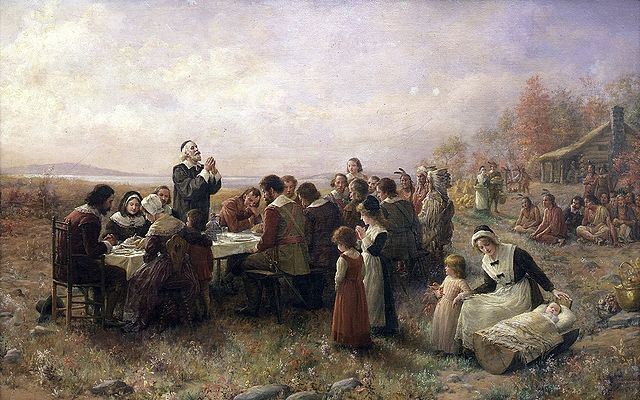
According to tradition, the first Thanksgiving feast was made by the pilgrims in 1621, after their first good harvest in the New World. They had come to America seeking religious freedom, which had been denied them in Europe. Instead, they found a foreboding wilderness whose native inhabitants had been all but wiped out by the plague. There were no hospitals, no grocery stores, no internet—no one except an English-speaking indian named Squanto to help them, and no way to send for help across the wide, dark Atlantic.

It was a struggle just to survive. Many of them died. Those who lived saw the hand of Providence in their survival, and after a bounteous harvest ensured that they would have food for the winter, they dedicated a feast to acknowledging that Providence that had saved them.

In a lot of ways, the pilgrims are to America what the pioneers are to the Mormons. And interestingly enough, I have direct ancestors among the pilgrims as well as the Mormon pioneers. So for me, it’s more than just a nice story: it’s a part of my family history that makes me who I am. And I suspect the same is true for many other readers of this blog.

So in the spirit of that first Thanksgiving feast, here are the things that I am especially thankful for this year:

  • I am thankful for my near and extended family. Tolstoy was wrong when he said that all happy families are alike: every family has their own quirks, even the ones that hold together. I wouldn’t give up my family’s quirks for anything.
  • I am thankful to live in a free country, where my rights to life, liberty, and property are respected and honored. I am also thankful for the brave men and women of our armed forces who sacrifice so much to keep it free.
  • I am thankful for the opportunity to pursue a career as an author, and for the flexibility and control that indie publishing provides. I have no one but myself to blame for my failures, but my successes are all my own. Even after four years, it’s still exhilarating.
  • I am thankful for my readers, who have made and continue to make this publishing journey possible. I am thankful for all that they do that supports me, from buying and reading my books to sharing with friends, posting reviews, sending me fan mail, and connecting in a hundred other little ways that together make this whole thing worthwhile. Seriously, you guys are awesome. The only thing I could ask is to have more of you!


Why SSF-V: Captives in Obscurity won’t be coming out in January

Okay, so here’s the deal.

Back in May, I made what might possibly be the worst mistake of my entire publishing career: I severely underpriced all of my Star Wanderers books. For the year and a half leading up to that decision, sales had been declining rather steadily, and I was getting rather desperate for some way to reverse that. By lowering my prices from $2.99 to $.99 for that particular series, I thought I would bring in some new readers who would go on to buy my other books, and that that would offset the loss in income.

At the time, I kind of had an impression in the back of my head that it was a bad idea. And for a while, I listened to that impression. But when you feel desperate, there’s a temptation to shift strategy and just do something, especially if it’s easy and produces immediate results.

So from May to October, I severely underpriced my books. In October, I went through all the data I’d collected, and realized that I’d categorically failed to accomplish any of my goals. Sales had increased by only two or three copies a week for the books I’d discounted, and sales for the non-discounted books hadn’t increased at all. Meanwhile, my writing income had fallen precipitously, to the point where I could barely cover costs.

At the same time, my personal expenses started to become a problem. I’ve always been frugal, but a couple of unexpected expenses combined with poor planning and lack of work meant that by the end of the summer, my emergency savings were drained and I had to make some hard choices. Long story short, I had to pull most of the money out of my business account in order to avoid going into debt.

I’m doing okay right now, so don’t worry about that. Work opportunities have picked up with the Christmas season, so I should be able to get by for the next couple of months just fine. And as for the writing end of things, business is still profitable, so if I just let it sit for a couple of months I should be able to replenish the money I had to take out. It’s not like I’ve eaten my seed corn.

At the same time, though, it kind of is like I’ve eaten my seed corn, because I don’t currently have the money to pay for editing and cover art. In a couple of months, I will, but not soon enough for a January release.

I had originally planned to release Captives in Obscurity (Sons of the Starfarers: Book V) in January. And on the writing end, I’m still doing pretty good: I’ve heard back from my first readers and should have the revisions done by the end of the month. But the actual production isn’t something I can do right now, so I have to put the project off until the money comes in.

So that’s what’s going on. It kind of sucks, but lesson learned.

As for Captives in Obscurity, barring any more problems, it should come out in March. And I do still plan to publish some short stories between now and then. The nice thing about short stories is that they’re small enough that you can do most of the editing/art yourself. It’s kind of like the difference between planting a backyard garden and planting several acres of farmland. In fact, if things go well I should be launching a pen name soon, potentially as soon as December.

And for the future, I will be careful not to underprice my books. If I could, I would love to give away all of my books for free (in fact, I actually do: on Smashwords, my books are available on a “reader sets the price” arrangement), but that just isn’t practical. Lesson learned.

A blast from the past: predictions from 2011 on how the ebook revolution would turn out

While cleaning up some of the unpublished drafts on this blog, I came across this interesting post which I wrote in August 2011 but never published.

At the time, I had just published my second novel, Bringing Stella Home, and was very much committed to the indie career path. Self-publishing was still a very new thing, however, and most of my writer friends thought that I was crazy. Sometimes, I couldn’t tell if I was crazy or if everyone else was, and I was the only sane one. Because self-publishing had such a stigma, I actually lost a couple of friendships over this. That’s probably what prompted this post.

Looking back, this was the reason why online self-publishing communities like KBoards were so important. The ebook revolution was in full swing, and self-publishing still required a massive leap of faith. No one really knew how things would turn out. Writers who had chosen to stay the traditional route of querying agents saw us indies as subversives and heretics, and every week saw a new article go viral bashing either indies, or Amazon, or ebooks in general. It was pretty wild.

Those days are over now. We won. Self-publishing no longer has its stigma, at least in the mainstream, and it’s considered perfectly normal to forego submitting to agents and editors altogether. According to some reports, indies control more than 30% of the ebook market.

But back then, everything was still very much in the air. It was in that vein that I wrote this post.

================================

1) Ebooks will radically change the way we read, write, and think of books.

Nothing has demonstrated this more to me than owning a Kindle.  It is truly a revolutionary device.  Not only do I have instant access to practically any book I want to read, I can hold my entire library in the palm of my hand and take it with me wherever I go.  I can see what others are saying about any given title, and interact with them as well.  It’s incredible.

For writers, the changes are even more profound.  Printing, shipping, and warehousing costs are nonexistent in the digital realm, and with increasingly ubiquitous internet access, distribution is no longer a problem.  Put simply, ebooks are game changing–this is nothing less than a technological revolution.

Where are we going?  No one really knows, but I find that exciting.

2) Not all major publishers will survive the change.

For numerous reasons, the old publishing system is being rendered obsolete, and I’m not convinced that all the major publishing houses are adapting rapidly enough to weather the changes.

How many will go under, and which ones?  I have no idea, but since I don’t want my book rights to get tied up in a bankruptcy case, I’m forgoing traditional publishing for a year or so until I have a clearer picture.

However, please note: this is a business decision, not an emotional one.  I have nothing against any of these houses; in fact, I’m quite grateful to them for providing me with so many good books over the years.  I hope they make the necessary changes to succeed, but until they do, I’d rather go it alone.

3) To succeed, it is critical that we acknowledge and embrace these changes.

This is why I focus so much on issues that can be so controversial.  Change can be frightening, but I think that it’s important that we engage in an open, honest, and critical discussion about what’s going on.  Doing this will help us to adapt to the new world and take advantage of its many opportunities.

4) Writers and readers are more empowered than ever before.

This excites me more than just about anything else.  If I want to read a quirky science fiction story that most people would find strange and bizarre, I can find it.  I don’t have to rely on tastemakers to tell me what is literature and what is crap; I can decide for myself.  And frankly, for someone who loves science fiction as much as I do, that’s quite liberating.

Perhaps this is why I come across as antagonistic of traditional publishing sometimes: I tend to believe that they’re under-serving the science fiction readership.  But if I am upset, it’s more with the top-down corporate system than any house in particular.  I love what Tor, Baen, Pyr, and Night Shade Books are doing, and will keep reading their titles as long as they’re still around.  I just wish they’d put out more of them, and at lower prices.

5) The future is bright.

There’s a lot of opportunity for creative types right now–not just writers, but illustrators, game designers, programmers, and a host of others.  That’s why I don’t buy into the doom and gloom arguments, and perhaps I can be a bit overzealous about it at times.  However, if I had to err, I would rather be an overzealous optimist than an overzealous pessimist.

Well, this post is getting a little long, so I’d better end it soon and get back to writing.  I just want to say that if I come across as a jerk sometimes, it’s not because I’m trying to tear anyone down–quite the opposite.  My message to my fellow writers is to not be afraid, but to recognize some of the really cool ways in which things are changing, and what that means for you and your careers.

Goodbye KBoards, or how I was banned for the sake of social justice.

In 2011, I joined an online message board forum called Kindle Boards (later KBoards) where other self-publishers had joined to give each other support, share what works, and otherwise band together as a community. Back then, self-publishing was considered the kiss of death, and many of my former writer “friends” shunned me for starting down that dark path. Having a community where people could assure you that you weren’t crazy was really a big help.

Yesterday, I was permanently banned from KBoards. But from the way it went down, I doubt that I’m going to miss the place, because it is a very different community now from the one that I joined in 2011.

The brewhaha started when a new member posted a thread to announce a book promotion site that she had just started. These types of sites offer advertising opportunities to authors and curated book recommendations to readers. There are dozens of these sites across the internet, and they are an important part of the indie book world.

On the thread, someone noted that the OP’s promo site did not accept erotica or LGBT books, according to the submission guidelines. Immediately, people began to pile up on the OP, demanding an explanation and accusing her of being unfair. The pile-up had all the signs of a social justice mob:

  • Unsubstantiated accusations that get taken at face value and added to a laundry list of perceived wrongs.
  • The formation of a narrative that ties in with a much wider set of perceived injustices, making the accused guilty by association.
  • Calls for “justice” that make a peaceful and mutually amicable reconciliation impossible.

I’ve seen it happen many times, as I’m sure you have too. If the accused tries to make amends, it only makes the social justice warriors howl even louder. The only thing that can satisfy them is the complete ruination of their enemy—and sometimes, even that is not enough.

As a side note, I would like to point out that I have nothing wrong with people who write LGBT books. Should these books be allowed to be published? Absolutely! The book world is a richer place because of them. I have nothing against people writing them, reading them, publishing them, or promoting them. People should be free to write whatever they want, so long as it does not cause criminal harm (such as doxxing or child porn).

But that’s not what this social justice mob was about. They had taken one line from the submission guidelines (which has since been removed) about not accepting LGBT books, and twisted it in every possible way to skewer the OP. For example, people took it to mean that books of any genre with LGBT characters would not be accepted, when original intent was pretty clear that genre LGBT would not be accepted. There is a difference. They then went on to say that LGBT is “not a category” (though according to Amazon, it most certainly is), and to accuse the OP of all sorts of other things.

When I saw this social justice mob forming, I decided to step in and stop it by deflecting some of the attention onto myself. The idea was to tank their attacks, rile them up just enough for the moderators to take notice, and leave it to them to stop the bullying.

Until this point, my opinion of the moderators at KBoards was pretty good. Even though I’d been on the receiving end of the “cattle prod” a couple of times, I’d always felt that they were more or less fair—or at least that they gave fair reasons for everything that they did. On the KBoards forums, the mods are generally praised as one of the main reasons why the place is so friendly and welcoming.

Part one of my plan worked out perfectly. I poked the SJWs just enough for them to show their true colors, and the thread was predictably locked. The OP and some other KBoards members sent me private messages thanking me for standing up to the bullies. When the mods re-opened the thread, however, all of my posts were gone, but the pile-up that had started the mob from forming was still in place. And predictably, the bullying began again in earnest.

I was disappointed in the mod’s decision, and stated as much, but tried to exercise restraint since there wasn’t much else I could do. Then someone openly accused the OP of being “discriminatory” because their site didn’t promote LGBT books. In response, I started a new thread:

Can we please stop calling promo sites “discriminatory”?

On another thread announcing a new promo site, a bunch of writers are piling up on the OP for stating in their guidelines that they do not promote LGBT books. Rather than derail that thread even further, I figured it would be better to start a new thread to say my piece about it.

It really galls me when anyone accuses a promo group of being “discriminatory” because it doesn’t promote their particular kind of book. By turning their rejection into a social justice issue, it flies in the face of the obvious: that readers aren’t morally obligated to like every kind of book equally, and that promo sites have to pick and choose which books they promote according to (among other things) the tastes of their readers.

Look, I have no problems with people writing, reading, publishing, or promoting LGBT books. If you’re an LGBT author who writes LGBT books, rock on and more power to you. But as a reader, I probably wouldn’t subscribe to a newsletter that promoted them—not because I hate gays, but because it’s just not the sort of thing that I read. Does that make me evil and discriminatory? Am I having “wrongfun”? Should I be forced to read a book that I don’t want to read? No? Then why say all that of promo sites that don’t carry those kinds of books?

My BS test for this sort of thing is to replace the allegedly oppressed minority group with Mormon Texas Czech (I defy you to find a smaller minority group!). If a promo site rejected, say, religious historical fiction, would I get all huffy and accuse them of discriminating against my Moravian Mormon heritage because they rejected my novel about a 1920s Czech immigrant who ran away to Utah and started a kolache shop? No—I’d shrug and figure my book probably wouldn’t do all that well at that site anyway, since their readership obviously isn’t into that sort of thing, and look for a promosite that would be willing to carry my book. And if that site doesn’t exist, I would create it!

Behind these knee-jerk accusations of discriminatory behavior is an implicit call for a new regime of gatekeepers to ensure that the “right” books—the ones that promote the accuser’s particular brand of social justice—are entitled to premium placement. But the fact is that no one is entitled to anything in this business, nor should they be. Besides, we tore down the gates years ago.

I knew that the thread would ruffle some feathers, but I did not predict the response—though in retrospect, it wasn’t surprising at all. Instead of trying to engage with my ideas, the SJWs reported the thread to the mods, who promptly locked it. Only two responses got through, both of which came within spitting distance of Godwin’s Law (“What if a promo site refused to accept books with Jews in them? Huh? HUH?”).

A lot of people were upset that the thread got locked. It accumulated more than 400 views before it dropped off the front page, and I got several PMs saying “I totally agree, these people have gone too far,” and “I was in the middle of my response when the mods locked this thread,” etc.

When I got back to my computer, I posted on the first thread, where I basically said “I find it telling that instead of engaging with me, you got the mods to lock my thread. Since when did disagreement become tantamount to hate speech?” In response, I got the following PM from the moderators:

Joe,

even before the blow up in the My Book Cave thread, you had been pushing the boundaries in your posts here and many had to be edited or removed.

In the My Book Cave thread, it was the tone of your posts that was the problem.  I advised you via PM that people who appreciated the restrictions posed by My Book Cave were welcome to post their support in a civil manner.  You have refused to do that, instead choosing to make more than one inflammatory post or thread.  I refer you again to  my most recent PM.

Accordingly, you are placed on post moderation.  I note that this at least your third significant moderation action.  As you indicate in your most recent post, now deleted, perhaps you need to think about whether KBoards is the place for you.  Hopefully this period of post approval will give you that opportunity to think about it.

Betsy
KB Moderator

In response, I wrote the following:

The question is not whether Kboards is the place for me, but whether KBoards has become the sort of place where people can be bullied in the name of social justice. In the last couple of days, I have received multiple PMs thanking me for taking a stand against these bullies, which tells me that this problem is much larger than just me. The fact that your response is to put me on post moderation tells me everything that I need to know: that disagreement truly is seen as hate speech in this community. I won’t be the only one who leaves KBoards because of this.

The final message that I received from the moderators was this:

Joe,

Please tell me where I equated disagreement with hate speech?  In the My Book Cave thread, to the best of our ability, we have removed and continue to remove posts on both sides that attacked other members or the OP in the thread and left those that stated their reason for not using the service or asked more questions about it.

I refer you again to my prior PM.  You, and others, are more than welcome to state your support for My Book Cave in a civil manner.  Instead, you have attacked your fellow members for stating their reasons for not wanting to use the service and for asking questions to clarify the restrictions.  There were also questions about the erotica restriction and the restrictions on language.  These are reasonable questions.  It would also be reasonable for a member to state (as you did, in one bit of your locked thread), that you would appreciate a site that had restrictions.  Posts that stated a different point of view in a civil manner without attacking your fellow members would have remained and have been protected.

You chose not to do that, but to instead start yet another thread that attacked your fellow members.  While we were discussing that thread (which had not been permanently locked at that time–we were still in discussion), you chose to make yet another post continuing the same discussion in the original MBC thread.

Refusal to accept moderation is a bannable offense.  You have been previously banned and placed on post moderation and tonight have refused to accept post moderation.  Immediately after posting this, I will ban your account.  KBoards is clearly not the right forum for you.

I wish you the best in your future endeavors.

Betsy
KB Moderator

There are a number of things that I found disingenuous about this exchange.

First, I never attacked anybody. I never singled anyone out. I never engaged in personal insults, though personal insults (now deleted) were directed at me. And while I was aggressive in the way that I engaged, I also endeavored to be as intellectually honest as possible. I cannot say the same of those I disagreed with.

Second, it’s pretty clear that the mods were not treating me with the same benefit of the doubt as the bullies. SJWs have a way of rewriting history, and that’s exactly what they were doing by claiming to ask “questions to clarify the restrictions.” There were no attempts to clarify the promo site’s submission guidelines: as soon as one person suggested that any book with an LGBT character would be rejected, everyone assumed that it was true.

Third, it seems quite clear that the mods were waiting for an excuse to ban me. They locked down my thread within minutes of posting it, based solely on reports from people who disagreed with it. With the phrase “perhaps you need to think about whether KBoards is the place for you,” they issued a veiled threat which they followed through on within minutes. Their claim that they hoped “this period of post approval” would help me turn around was duplicitous on its face. So was the question “Please tell me where I equated disagreement with hate speech?” because my account was locked and my IP was banned, making it impossible for me to respond.

Looking back on what I could have done differently, I suppose I could have toned down my rhetoric a bit, or refrained from engaging. But at what point does silence become complicity? If I had let the social justice mob run its course, and the OP had been attacked outside of the boards, would I have done the right thing? When it became clear that the mods were going to let the bullying continue, what was I supposed to do?

Honestly, I feel like I came out of that exchange with my integrity intact. If that means I got banned, so be it.

And to be frankly honest, if KBoards is the kind of place where social justice warriors can dominate the discussion and drive out anyone who disagrees with them, then I really don’t feel bad about getting banned. There is a war going on in our culture today, and I would rather pick a side than be complicit through my silence.