The Healing Power of Love in Star Wanderers

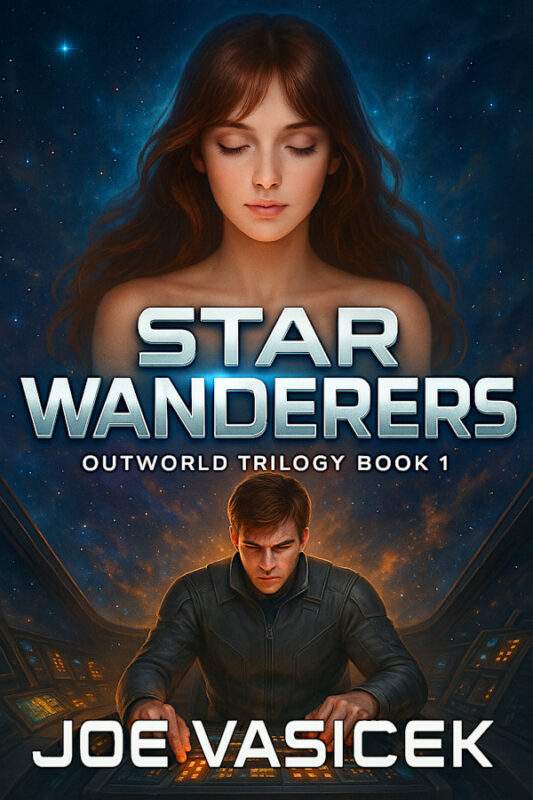
What heals a person when the universe won’t stop moving—when home is gone, language is чужой, and every port feels temporary? Star Wanderers is a character-driven science fiction novel built around a simple, stubborn hope: that the healing power of love isn’t just something you feel, but something you build—and that it can stitch a fractured life back together into belonging.

Where the Idea Came From

The seed of this theme came from two places. First, I wanted to take the love-story core of an old western (Jeremiah Johnson) and translate it into frontier science fiction—into a world where survival is hard, communities are fragile, and intimacy carries real risk.

Second, the story grew alongside my own life. I began writing the original novellas as a single young man during the Great Recession, pouring real loneliness into Jeremiah’s wandering. Years later, I finished the novel married and on the verge of fatherhood. That personal journey reshaped the book’s central idea: that love has the power to heal isolation—not by removing hardship, but by giving hardship meaning.

How the Healing Power of Love Shapes the Story

In Star Wanderers, the central conflict isn’t just pirates, frontier scarcity, or outworld politics—it’s the ache beneath all of that: the fear that drifting will hollow you out. Jeremiah begins the story as a lone starship pilot shaped by motion and isolation, surviving by staying unattached. But when Noemi enters his life, love becomes the force that redefines what “survival” even means. Commitment pulls him out of mere wandering and into responsibility: protecting someone else, learning someone else’s world, and choosing a future that requires roots instead of constant escape.

That healing love ripples outward through the story. Other characters see the difference it makes—because love creates an anchor in chaos. It becomes the standard by which temptation, loyalty, and trust are measured. Again and again, the story asks: what happens when you risk the one thing that’s keeping you whole? That’s why moments of fear, sacrifice, and moral choice matter so much here—not as plot mechanics, but as stress tests that reveal whether love is strong enough to carry a life.

What the Healing Power of Love Says About Us

This theme is hopeful, but it’s not naïve. It suggests that loneliness isn’t only a circumstance—it’s a wound—and that healing usually comes through commitment rather than convenience. Real love costs something: pride, independence, comfort, the illusion that you can keep yourself safe by staying separate. But it also gives back something many of us are quietly starving for: a place to belong, even when the world remains uncertain and unfinished.

Why This Theme Matters to Me

I keep returning to this theme because I’ve seen how easy it is to drift—emotionally, spiritually, socially—especially when life feels hostile or unstable. Star Wanderers is the most personal thing I’ve written in that sense: it begins in loneliness and ends in family. I wanted to capture that truth as honestly as I could—that love doesn’t magically remove hardship, but it can transform hardship into a life worth living, and an adventure you’re grateful to stay for.

Where to Get the Book

Related Posts and Pages

Explore the series index for The Outworld Trilogy.

Return to the book page for Star Wanderers.

Is Star Wanderers for You?

Star Wanderers is a character-driven frontier space opera and science fiction adventure about loneliness, love, and the search for home on the far edges of human civilization. It delivers a quiet, emotional adventure centered on wandering starship pilots and fragile outworld communities—less about conquering the stars and more about what it costs to keep moving when you don’t know where you belong.

What Kind of Reader Will Love Star Wanderers?

If you love…

  • frontier space opera with a lone-trader or wandering starship feel
  • character-driven science fiction focused on relationships, marriage, and family under pressure
  • stories where faith, conscience, and moral choice shape the action
  • found family science fiction set against danger, exile, and cultural collision
  • quieter, thoughtful adventures that balance tension with hope

…then Star Wanderers is probably your kind of story.

What You’ll Find Inside

Star Wanderers follows Jeremiah, an independent starship pilot drifting from port to port, whose life changes when he rescues a young woman from a dying frontier station and becomes entangled with her people, her faith, and her future. As pirates, famine, and outworld politics close in, the story explores loneliness, commitment, belief, and the cost of choosing to belong. The pacing blends reflective, intimate moments with sharp spikes of danger, resulting in a hopeful but hard-earned journey.

What Makes Star Wanderers Different

Rather than focusing on galaxy-spanning wars or elite soldiers, Star Wanderers centers on ordinary people trying to do the right thing in an unforgiving frontier. Romance, marriage, and faith aren’t side plots—they’re core engines of the story, shaping every major decision. The book treats technology and heroism pragmatically, favoring ingenuity, sacrifice, and cooperation over brute force or spectacle.

What You Won’t Find

This is not grimdark science fiction, nor is it nonstop military action. You won’t find cynical nihilism, endless explosions, or characters who survive purely on luck. Instead, the tension grows from moral choices, relationships under strain, and the consequences of standing your ground when running would be easier.

Why I Think You Might Love Star Wanderers

I put more of myself into Star Wanderers than almost anything else I’ve written. I began the story as a single young writer wrestling with loneliness and finished it while married and preparing for parenthood, and that journey shaped its heart. If you’re drawn to science fiction that treats love, faith, and responsibility as real forces—capable of both wounding and saving—I think this story will resonate with you.

Where to Get the Book

Related Posts and Pages

Explore the series index for the Outworld Trilogy.

Return to the book page for Star Wanderers.

Is Bringing Stella Home for You?

Some science fiction dazzles with ideas. Some unsettles with spectacle. Bringing Stella Home is the kind that stays with you because it feels personal. It’s a character-driven science fiction novel about family loyalty, moral courage, and the consequences of refusing to abandon the people you love. It blends character-driven space opera with political science fiction and ethical war fiction, set during a brutal interstellar war fought by clashing human civilizations.

This is an emotionally grounded story where the biggest question isn’t how the war is won—but who the characters choose to be while it’s being fought.

What Kind of Reader Will Love Bringing Stella Home?

If you love…

  • Science fiction that treats war as a human and moral problem, not just a tactical one
  • Character-driven space opera focused on families, civilians, and reluctant heroes
  • Stories about siblings and loved ones who refuse to “move on” when someone is taken
  • Thoughtful, serious SF that explores captivity, occupation, and ethical resistance

…then Bringing Stella Home is probably your kind of story.

What You’ll Find Inside

Bringing Stella Home follows James McCoy after his sister Stella is captured during a catastrophic invasion that leaves entire worlds devastated. While governments negotiate and societies rebuild, others learn to live with loss. James refuses to accept that Stella is simply gone. His search forces him into political gray zones, moral compromises, and dangerous alliances—while Stella, trapped inside captivity, fights a quieter but no less difficult battle to preserve her dignity, identity, and sense of right and wrong.

The story is tense, intimate, and emotionally weighty, balancing suspense and danger with a steady focus on conscience, restraint, and the long-term cost of love.

What Makes Bringing Stella Home Different

Where many science fiction war stories focus on soldiers and commanders, Bringing Stella Home centers on civilians—families caught between invasion and indifference, and on the uncomfortable truth that compassion doesn’t end when the crisis fades from the headlines. Readers familiar with classic space opera will recognize the larger-scale setting, but this story consistently pulls inward, asking what responsibility looks like when walking away would be easier, safer, and socially acceptable.

What You Won’t Find

If you’re looking for grimdark cynicism, casual brutality, or a story where morality is treated as naïve, this isn’t that book. While the story does not shy away from darkness or injustice, it treats suffering seriously and never as entertainment. If you’re drawn to science fiction that wrestles honestly with evil while still affirming human dignity, you’ll feel at home here.

Why I Think You Might Love Bringing Stella Home

I wrote Bringing Stella Home early in my career, when finishing a novel still felt like climbing a cliff with your fingernails. The idea first took shape in a BYU history class, where studying the Mongol conquests made me wonder what a ruthless, sky-mandated expansionist culture would look like in space—and how it would collide with a radically democratic society built on shared civic responsibility. But the real heart of the story came from something more personal: my instincts as an older brother. The scariest thing I can imagine is not being able to save the people I love—and the even darker possibility of being able to save them, only to have them refuse rescue—and choosing to stay where they are.

I also wrote this book with a deliberate ethical aim: to take suffering seriously without exploiting it—to write about captivity, power, fear, and vulnerability in a way that insists the characters remain fully human and morally real. Some scenes were emotionally exhausting to write, but I didn’t want to soften them just to make the story easier. At its core, this novel reflects a belief that integrity matters most when it costs something.

If you’re drawn to science fiction that goes to dark places without becoming cynical—stories that still reach for the good, the true, and the beautiful—I think this one will stay with you.

Where to Get the Book

Related Posts and Pages

Explore the series index for The Hameji Cycle.

Return to the book page for Bringing Stella Home.

Is Brothers in Exile for you?

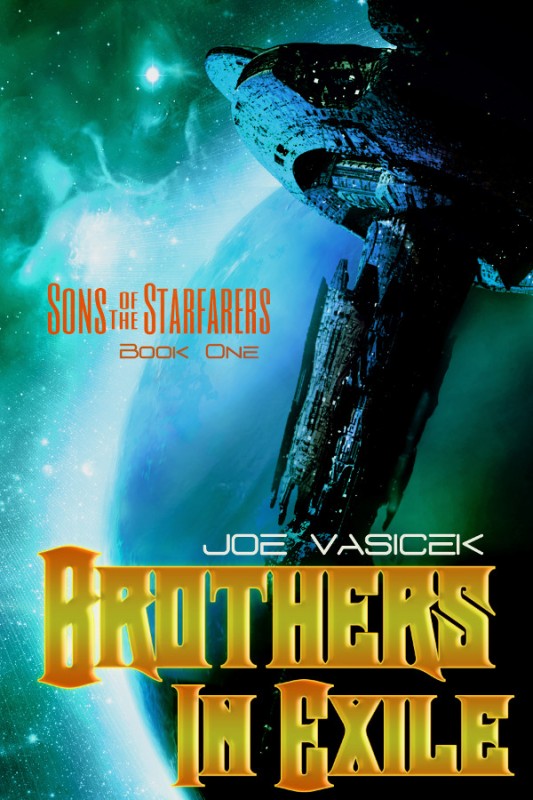
Brothers in Exile by Joe Vasicek is a character-driven space opera / adventure sci-fi about two brothers trying to survive as independent starfarers on the edge of a growing empire. When their routine run takes them to a silent derelict station—and a discovery they can’t ignore—the story turns into a tense, momentum-driven ride through frontier ports, bad deals, and the early tremors of interstellar conquest.

Brothers in Exile is Book 1 of Sons of the Starfarers, a clean, character-driven space opera series about starfarers caught in the early tremors of imperial expansion.

What Kind of Reader Will Love Brothers in Exile?

If you love…

  • frontier space opera: starships, stations, salvage, dangerous trade routes
  • space opera with heart: loyal crews, sacrifice, and family bonds under pressure
  • clean, hopeful science fiction (minimal profanity, no explicit sex) with faith, family, and conscience in the background
  • high-stakes trouble that escalates fast: one decision → bigger consequences → empire-scale ripple effects
  • mystery + rescue momentum, where “we can’t just walk away” drives the plot

…then Brothers in Exile is probably your kind of story.

What You’ll Find Inside

Isaac Deltana is the careful one—the older brother trying to keep their ship, their finances, and their lives from flying apart. Aaron is the spark—reckless, brave, and stubbornly determined to do the right thing once he believes something matters. The tone is tense but humane: a fast-paced, character-driven space adventure with heart, built around survival, moral choice, and the bond between brothers as the Outworlds begin to feel the shadow of the Gaian Imperials stretching outward.

What Makes Brothers in Exile Different

A lot of space opera is driven by lone wolves or chosen ones; this one is driven by family—two brothers who can’t stop being brothers even when everything is going wrong. It has the frontier trading feel of classic space opera, but puts family and moral choice front and center. It has a “scrappy ship on the fringe” flavor you might associate with Firefly, but the moral center is steadier and the tone is less cynical. And while there’s big-picture geopolitics (expansion, control, annexation), the story stays grounded in human-scale decisions: what you owe a stranger, what freedom costs, and how far you’ll go to keep someone from being used or erased.

What You Won’t Find

You won’t find grimdark nihilism, explicit sexual content, or shock-for-shock’s-sake violence. This is clean, character-driven space opera—fast-moving and emotional—rather than slow, technical hard sci-fi. The science is ‘believable enough,’ but the focus is on choices, consequences, and the bond between brothers.

Why I Think You Might Love Brothers in Exile

I wrote Brothers in Exile because I wanted a space adventure where the relationship mattered as much as the action. In my author’s note, I talk about how the brother dynamic in the film Gettysburg (and the real emotional weight behind it) helped shape the characters Isaac and Aaron—the older brother trying to be the responsible one, and the reckless younger brother who pushes back against the authority figures in his life. If you enjoy stories where family is both the complication and the strength—where two people face the void together and refuse to stop caring—I think you’re going to enjoy this book.

Where to Get Brothers in Exile

Related Posts and Pages

Explore the series index for the Sons of the Starfarers series.

Return to the book page for Brothers in Exile.