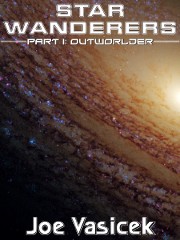
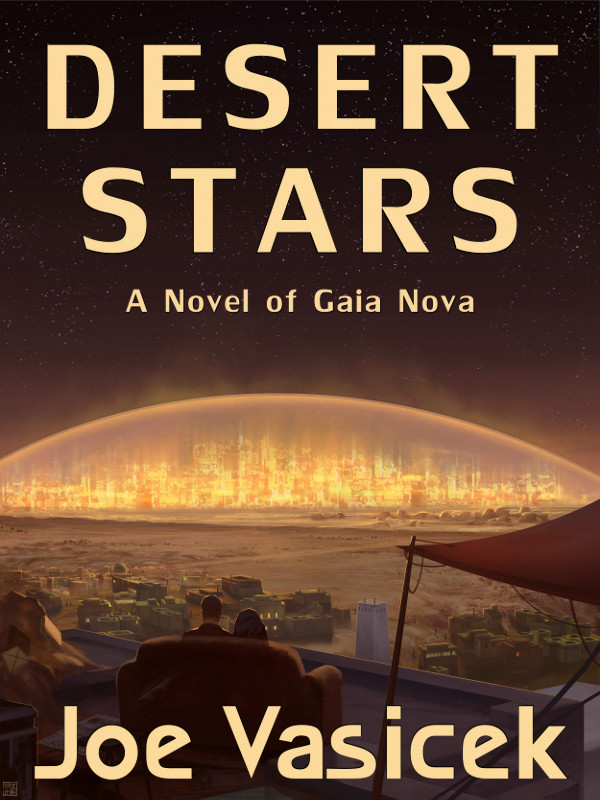
Star Wanderers: Outworlder (Part I) is now free on Amazon!

Good news!  Amazon just made Star Wanderers: Outworlder (Part I) free!  It’s been free for a while on all the other eretailers, but if you do most of your ebook shopping on Amazon, it’s now free there as well.
Star Wanderers: Outworlder (Part I) is the first part of a four part series of science fiction novelettes, possibly with other installments after the main storyline is complete.  From the book description:

HE WANDERS THE STARS IN SEARCH OF A HOME. INSTEAD, HE GOT A GIRL WITHOUT ONE.

When Jeremiah arrived at Megiddo Station, all he wanted was to make some trades and resupply his starship. He never thought he’d come away with a wife.

Before he knows it, he’s back on his ship, alone with his accidental bride. Since neither of them speak the same language, he has no way to tell her that there’s been a terrible mistake. And because of the deadly famine ravaging her home, there’s no going back. She’s entirely at his mercy, and that terrifies him more than anything.

Jeremiah isn’t ready to take responsibility for anyone. He’s a star wanderer, roaming the Outworld frontier in search of his fortune. Someday he’ll settle down, but for now, he just wants to drop the girl off at the next port and move on.

As he soon finds out, though, she has other plans.

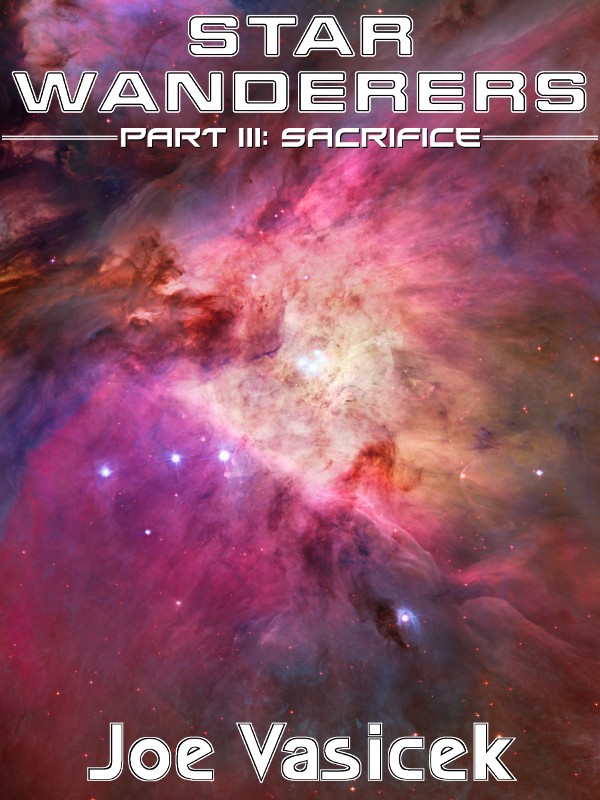
Also, for those of you who have been looking forward to the next Star Wanderers release, I have a tentative cover for Part III:

Pretty cool, huh?  What do you guys think?

The feedback from my first readers has been mostly positive, so I think this story is mostly ready for publication.  I’ll probably do another quick pass to touch up some relatively minor issues, then it’s just a matter of proofreading, formatting, and crafting a solid author’s note and book description.  If all goes well, it should be up in two or three weeks.

That’s just about it for now.  More updates later, especially on life here in Georgia and that new fantasy series I just started.  See you around!

New print proof and an update on Star Wanderers

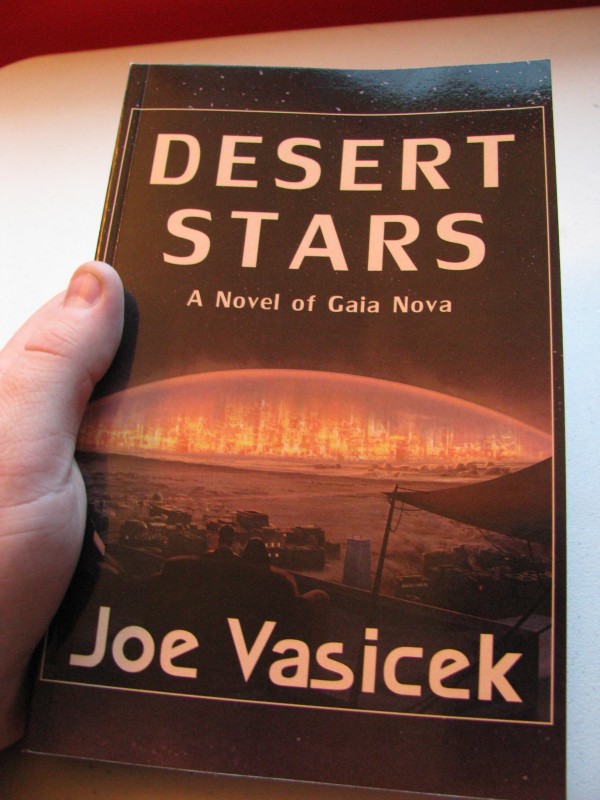
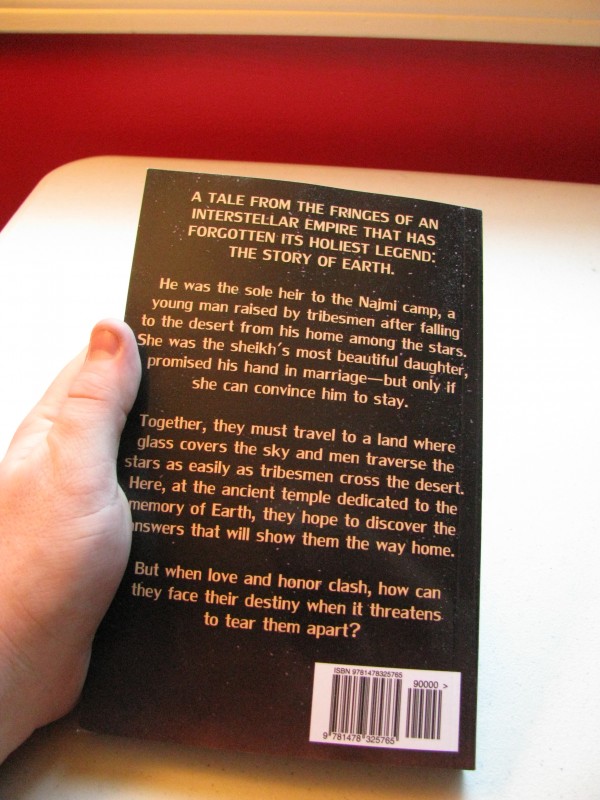
So the proof for Desert Stars came in the mail today, and it looks great!

The front cover.
The back cover.
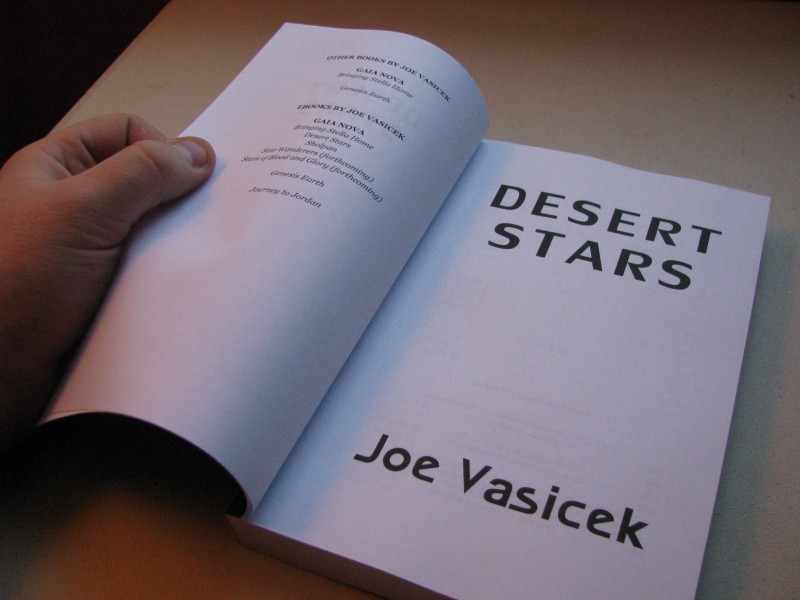
Title page.
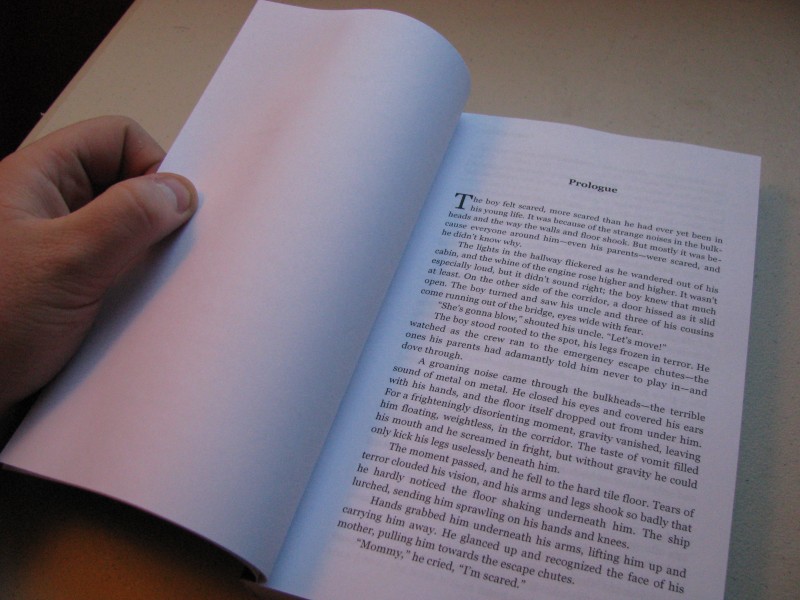
First page.
No matter how much I do this, it never gets old. 🙂

It’s available now from CreateSpace, if you want to pick up a copy.  If you’d rather buy it on Amazon, it should go live there in a few days.  And if you want to buy an autographed copy of this one or Genesis Earth, let me know ASAP: I can order author copies and ship them wherever you want me to, but I’m leaving again for Georgia at the end of August, so I can only do that for the next two or three weeks.

As for Star Wanderers: Part II, I finished the major revisions just yesterday, and plan to go through it again this next week before publishing, mostly to fix typos and get it ready for publication.  There weren’t too many story issues, but my first readers helped me to see a couple of areas where things were unclear (especially Laura–thanks for the awesome feedback!).

After going through this latest draft, I’ve got to say I am way excited to finish Part III and Part IV.  It’s going to take a little more work, and it’ll definitely need some feedback before publishing, but I think I can have the first round of revisions done before the end of August.  A couple of scenes are missing, and there are some key elments I need to change, but I definitely know where this story is going and I’m excited to tell it!

That’s about it for now.  I’ve gotten some initial feedback from my first readers on Stars of Blood and Glory, and so far it’s been surprisingly positive.  I may post the prologue here for you guys, or release it as an extra through the newsletter.  The unpublished prologue for Bringing Stella Home would also make good newsletter content too, come to think of it…

Electronic publishing is like playing a really awesome video game.  Once things get going and you really start getting into it, you just don’t want to stop!

New blurbs and an interview

First of all, I recently did an interview with Elizabeth Baxter on her blog, Small Blonde Hippy. In it, I discuss Star Wanderers, Stars of Blood and Glory, and a bit about my path to becoming an indie author.  You can find it here–go check it out!

Second, in preparation for the new ebook versions of my novels which I plan to release soon, I’ve been going over some of the old blurbs and updating them.  It’s harder than you might expect!  I think the new ones are getting better, but I’d appreciate some feedback before I post them.  What do you think?

For Genesis Earth:

A BOY AND A GIRL ON A VOYAGE TO AN ALIEN STAR.

Michael Anderson never thought he would set foot on a world like Earth. He only studied planetology to satisfy his parents, two of humanity’s most brilliant scientists. But when they open a wormhole to an alien planet—one emitting a signal that can only be a sign of intelligent life—he soon becomes caught up in the mission to explore it.

His sole mission partner, Terra, doesn’t care nearly as much about the science as he does, though. The child of a bitter divorce, she sees the mission as a chance to escape from the expectations of others.

Before they can work out their differences, a mysterious alien ship begins to hunt them down. Alone, twenty light-years from the nearest human being, they must learn to open up and trust each other—but how can they do that when they can’t even agree why they’re there?

As Michael struggles to keep the mission from falling apart, he is forced to reexamine his deepest, most unquestioned beliefs about the universe—and about what it means to be human.

For Bringing Stella Home:

HE’LL GO TO THE ENDS OF THE GALAXY TO SAVE HIS BROTHER AND SISTER.

The New Gaian Empire is crumbling. An undefeatable enemy from the outer reaches of space is sweeping across the frontier stars, slagging worlds and sowing chaos. No one dares to stand up to them—no one, that is, except James McCoy.

As the youngest son of a merchanter family, James never thought he would get caught up in the Imperial wars. But when his home world falls to the barbarian Hameji, his brother and sister, Ben and Stella, are taken away as prisoners and slaves. With the rest of the galaxy thrown into chaos, only James has the determination to rescue them—even if it means losing everything in the process.

For Sholpan:

SHE’D RATHER DIE THAN BE A SLAVE TO THE CONQUERORS OF HER HOME WORLD.

Stella McCoy never thought she’d fall prisoner to the barbarian Hameji. The oldest daughter of a working class family, all she wanted was to finish her apprenticeship and start a career an astrogator. But when the Hameji conquer her home world with their starfaring battle fleets, she is forced against her will to become a concubine to one of their highest ranking warlords.

Stella would rather die than spend the rest of her life as a concubine. Fortunately, as she looks for a chance to escape, she starts to make friends in high places. But in the dangerous world of harem politics, with new friends come new enemies—ones that have the power to destroy her.

One of the changes I plan to make is to insert the blurb immediately before the first chapter.  I’ve heard that a lot of ebook readers are downloading so many free books and samples that it often takes months before they get around to reading them. This parallels my own experience, so I figure it’s a good idea to have something in the beginning to remind readers what the book is and why they picked it up.

Other than that, no big changes except fixing typos and formatting errors.  I’m not the kind of writer who makes sweeping changes to a published story based on reviews, one-star or otherwise.

In other news, I’m almost finished with the second draft of Stars of Blood and Glory.  This has been a surprisingly fast revision, but then again, that might be because I haven’t sent it out yet to my first readers.  Based on their feedback, I’ll probably do another draft before putting it in the publishing queue.

Star Wanderers is going to be my main focus until the end of the year, though.  I’ve gotten a lot of excellent feedback on Part II, and should start the revisions in the next couple of days.  With luck, I’ll have it published by mid-July.  Part III is going to take a little more time, but I’m pretty confident I’ll have it up by October at the latest.

For that to happen, though, I need to get back to writing.  So long!

No more word counts and other paradigm shifts

This August, it will be five years since I decided to start writing on a professional level.  A lot of things have changed since then, and in some ways they’re changing even faster now.

For example, in May 2009 I started a spreadsheet to keep track of my daily word counts.  I’ve been keeping it diligently ever since then, with graphs and everything.  But just recently, I’ve decided to stop doing that.  Word count is a very shallow indicator of progress: it only measures quantity, and often leads to unnecessary angst or diverts attention from more important things.

Instead, I’m going to focus more on deadlines and work to develop some other, better indicators.  Number of books published per year is probably a key one, as well as number of manuscripts finished.  But deadlines are probably going to be the most important drivers from here on out: publishing deadlines as well as writing deadlines.

Another thing that’s shifting is my revision process.  I know that a lot of beginning writers hate Heinlein’s rules, but almost all the long-term professionals swear by them–especially the ones with careers that I would like to emulate.  This makes me think that I need to scale back on the revisions and develop more trust in my creative voice.

Just as a point of reference, Heinlein’s rules are:

  1. You must write.
  2. You must finish what you write.
  3. You must refrain from rewriting, except to editorial order.
  4. You must put the work on the market.
  5. You must keep the work on the market until it has sold.

I’m currently on the second draft of Stars of Blood and Glory, and what I’ve found so far is that the overall story is actually pretty good.  Some of the scenes are a little out of order, and some of the plot-lines are missing elements that need to be added in, but aside from a few chapters where I got lost for a couple of pages, not a lot needs to be changed.

Of course, I could spend a draft or two tweaking every other sentence, tossing out most of what I wrote in the heat of my creative passion–but would that really make the story any better?  I recently had Kindal’s writing group critique my first chapter–the one that I revised pretty heavily in April–and they found all sorts of problems that weren’t in the original draft, as I wrote it back in December.

Don’t get me wrong–I do think there is an important place for revision.  But I think it’s best epitomized by Tracy Hickman in this episode of Writing Excuses:

We write from the heat of our passion, but we edit to see the fire through the smoke.

And even Tracy only does three drafts.

The other thing that’s changing is how I look at alpha reading.  I used to have different tiers of alpha and beta readers–most of whom were writers in other genres, and not really fans of  science fiction.  I asked them to give me as much feedback as they could, and bugged them for weeks or months at a time asking if they’d read my story.  I then compiled all their line-by-line comments into one giant master-file, which I kept open on the left side of my screen as I made the changes to my manuscript on the right.

Well, I’ve started to realize that there’s a huge difference between reading for criticism and reading for enjoyment.  Because of that, a lot of the things my alpha and beta readers pointed out were things that most regular readers probably wouldn’t have noticed.  Towards the end, I started to get wise on this, and only followed about a third of the criticism that I received.

Don’t get me wrong–I do appreciate the feedback.  A lot of it helped me to see and fix problems that I’d otherwise missed.  But a lot of it came out in casual conversations with my readers after they’d finished the story–not in the line-by-line comments on the original draft.

For those reasons, I think I’m going to change the way I ask for feedback.  Instead of alpha and beta readers, I’m going to go with a handful of “test readers”–readers who enjoy the kind of science fiction I like to write, but who may or may not be writers themselves.  Instead of asking for a detailed, line-by-line critique, I’m going to ask them three things:

  1. Did you enjoy the story?
  2. If you stopped reading it, where did you stop?
  3. Did you enjoy it enough to pay for it?

I’ll ask them to give it three chances, and if they still can’t finish, that’s okay–just let me know where the hangups were.  And if they do finish it, I might have some questions for them–but then again, I might not.  It all depends on the story.

Compared to where I was when I started out–or even where I was three months ago–those are some pretty huge paradigm shifts.  I have no idea how it’s going to turn out.  I’ve grown a lot as a writer recently, and I hope that this is moving me in the right direction, but I won’t really know until I’ve tried it out for a while.

In any case, this post is long enough.  I’d better get back to writing.

Trope Tuesday postponed again

Sorry, but no Trope Tuesday post this week.  Long story short, more internet problems–I’m blogging right now from the McDonald’s on Tch’avtch’avadze Street.  Since my battery’s running out, this is going to have to be a quick post.

I suppose I should ask, though: what tropes do you want me to cover in the future?  I’m open to pretty much anything, as long as it’s got a tvtropes page.  Together, we can enable our addictions have some productive story research.

In other news, I finished part III of Star Wanderers, and I’m putting that project on hold for a while.  Writing a novel in serial parts is proving to be a lot more difficult than writing it straight.  Not only do I hit a wall at the 2/3rds mark, but I have difficulty moving on to the next part until the part before it is free of major problems.  Because I have to take a break and distance myself before I can really address those problems, I think it will be better to move on to something else.

On the upside, it only takes two or three weeks to knock out each draft, so I’m not too concerned about finishing this project before the end of the year.  Part I is already set to go, and Part II just needs some vetting before I feel it’s ready.  If you’re one of my first readers and you’re up for a quick novella-sized work, let me know.

That’s about all for now. I also signed up to do a couple of blog interviews, so those should be up in a couple of weeks.  And I’ve also got some more posts coming about Georgia and Turkey, so that should be interesting.  Stay tuned!

Desert Stars is now published!

Desert Stars, my third novel (and second in the Gaia Nova series), is now available as an independently published ebook from Amazon, Barnes & Noble, and Smashwords.  Within the next couple of weeks, it’ll be available through Kobo, iTunes, Diesel, Sony, and Xinxii as well.

It’s been a long journey, and I’m thrilled to finally see it come through.  I started the first draft back in the fall of 2008, but had been working on ideas for the world since 2005, when I returned from my LDS church mission in California.  Spending the summer of 2008 in Jordan was a major catalyst for my imagination, and I soon was bursting with ideas for a far-future story on a desert world.

I got stuck in the winter of 2009, however–right before taking Brandon Sanderson’s English 318 class.  Since he encourages all of his students to work on something new, I decided to write a book in the same universe in order to work through some of the world-building things that were holding me up.  That book became Bringing Stella Home, which was a thrill to write all of its own.

The strategy worked; by the time I’d finished that one, I had a much clearer idea where to go with Desert Stars, and an awesome ending that was nothing like anything I’d planned in the first draft.  And so, after graduating in April 2010, I soldiered through and finished the rough draft that summer.

It still had a lot of problems, though.  Fortunately, my first readers were extremely helpful both in pointing those out and in giving me fantastic ideas for other things I could do.  In the second draft that winter, I completely scrapped a major subplot in the second half of the book and focused on perfecting the character arcs for the two main characters: Jalil and Mira.

Around this time, I made the paradigm shift from traditional to indie publishing.  Other projects like Genesis Earth and Bringing Stella Home took my attention for a while, as I learned the basics of the new world and prepared those books for publication.  However, I always kept coming back to Desert Stars: I knew I had a good story there, and I was just itching to bring it to its full potential.

In the fall of 2011, I finally had that opportunity.  The last draft flew by in three weeks, and was one of the funnest writing experiences I’ve had since I started writing seriously in 2007.  By the end, I knew it was ready.  I sent it out to my editor, Josh Leavitt, and started to prepare it for publication.

In writing any book, there are always moments that stand out; experiences where things come together in an unexpected yet memorable way.  One of those came to me in Jordan, while I was walking down Queen Rania street from the University of Jordan to Al-Dustour, and the phrase “Temple of a Thousand Suns” flashed into my mind and sparked the whole novel.  Another of those moments happened while I was driving from Salt Lake to Provo, and Mira’s final words in the last chapter came to me; I literally could not stop screaming for two or three minutes.

I could share more, but if I did, I’d find it difficult to maintain the illusion that I’m not a loony psychopath. 🙂

In any case, it’s just awesome to see the story come to maturity and embark out into the world.  I’m sure this isn’t the end of the journey, but it’s definitely entering a new and exciting phase.  I sincerely believe that this is my best book yet, and I hope you find it as worthwhile to read as I have found it worthwhile to write.  If you do, I would appreciate it greatly if you took the time to post a review, or share it with a friend.  Every little bit helps, and I’m grateful for whatever support you can give!

In the next couple of days, I’m going to send out a newsletter with some freebies including desktop backgrounds of the cover art.  If you’d like to get in on that, be sure to sign up for the email newsletter via the form on the sidebar; you’ll also receive notices for other giveaways, as well as new releases.  It costs nothing and you can always unsubscribe, so there’s no pressure or obligation.

And that just about wraps it up.  Now: on to the next book!

Heart of the Nebula 2.0 is finished!

That’s right: the second draft of Heart of the Nebula, direct sequel to Bringing Stella Home, is now finished.  Here are the stats:

words: 90,081
chapters: 20
ms pages: 426
start date: 7 Nov 2011
end date: 4 Dec 2011

And the word splash:

Wordle: Heart of the Nebula 2.0

This was just a quick draft to fix some of the known problems before sending it off to my first readers.  I’d thought that it was missing a whole bunch of stuff, but I ended up taking out more than I’d put in.  Still, it feels like it’s missing something, and I’m not sure what.  Hopefully, my readers will be able to help me figure it out.

I’m starting to notice a pattern with my writing.  The first draft is always the hardest, fraught with all sorts of frustrations and setbacks.  In contrast, the second draft is usually pretty quick, and involves fixing the problems without making any drastic changes.  The third draft is where the story really comes to life, as I start to make connections and tap the latent possibilities.  This may continue in the fourth draft, but anything after that is usually just a matter of polishing the prose.

For those of you who’ve read Bringing Stella Home, this novel takes place five years after and centers around James McCoy and Lars Stewart.  Stella/Sholpan makes a brief appearance, but Danica and the Tajji mercenaries do not; I plan on writing more about them (a LOT more about them) in Stars of Blood and Glory.

I’m going to send this draft out to my first readers and let it settle for a couple of months.  Once I’ve gotten their feedback, I’ll undertake a thorough revision, possibly with some drastic changes to the story.  I don’t want to commit myself to  a specific date, but if all goes well, I may publish it sometime next summer.

In the meantime, if you’re interested in beta reading Heart of the Nebula, shoot me an email–but please, only ask if we know each other IRL.  My next big project is Star Wanderers, which should hopefully be finished by mid-January.  And of course, there’s Desert Stars–I’m in the process of getting the cover art, so it shouldn’t be more than a couple of weeks before it’s up!

So much going on…it’s good to get something finished.

Heinlein’s rules for the digital age

I’ve been thinking a lot about Heinlein’s rules and how they apply to my own writing career.  While a lot of newer writers like to debate Heinlein, all of the long-time professionals tend to agree with him.  For that reason, I think it’s worth taking a serious look at his rules and doing my best to follow them.

The trouble is that Heinlein formulated his rules before the digital age, when self-publishing was non-viable and writers sold to editors, not to readers.  While I wouldn’t go so far as to say his rules are outdated, I do think that they need to be tweaked a little in order to apply to today’s aspiring professionals.

As a disclaimer, I should say that I’m only a beginning writer without much authority or experience.  However, my goal is not to debate Heinlein, but to explore ways in which his advice can be adapted to myself and writers in my position.  If any of you have any thoughts or input, I would very much like to hear it.

So anyhow, here we go:

Rule One: You Must Write.

Pretty straightforward: if you want to write for a living, then the bulk of your time should be spent writing.  Too many indie writers spend all their time and energy promoting their one book when they should be writing others.  If promotion gets in the way of writing, then you should stop promoting and just go write.

Personally, I could probably spend a lot more time writing new material as opposed to revising stuff I’ve previously written (yes, that’s the infamous third rule; I’ll get to it in a minute).  I tend to spend a month writing something new, then take a couple of months to revise old works without producing new material.  If I want to be strict about following Heinlein’s rules, I should probably change that.

Rule Two: You Must Finish What You Write.

Another straightforward rule, but you’d be surprised how hard it is when you know you can publish whatever you write.  Kris Rusch calls these ideas “popcorn kittens,” after a popular youtube video that embodies what goes on in our minds when we have the freedom to create anything.  The problem with too much freedom is that it’s a struggle not to flit from one idea to another, dabbling in all of them but carrying none to completion.

I myself had this problem over the summer, and to some extent I’m struggling with it now.  The key is just to buckle down and have the discipline to finish what you start.  Pretty straightforward.

Rule Three: You Must Refrain From Rewriting, Except to Editorial Order. 

This is Heinlein’s most controversial rule, especially for new writers.  However, I think he has a good point.  If a story is fundamentally broken, revising it is no more effective than stirring around a pile of crap; and if the story works, revising it without first getting a trusted second opinion could actually make it worse.  After all, writers are often the worst judges of their own work.

The key question, then, is where to go for that second opinion.  In the old days, money flowed from the editors to the writers (or at least from the publishers, who employed the editors), but in the new world of publishing, it’s exactly the opposite.  Most of us can’t afford to hire editors for extensive developmental edits, especially when we’re just starting out, and while it’s possible to publish a rough draft, for most of us it’s probably not a good idea.

My approach is to share my unpolished work with a network of trusted first readers, and use their feedback to guide me in the revision process.  I don’t always adopt all of their suggestions, but I carefully consider each one.  Most of the time, I use them to see where the problems are, then use my creative mind to come up with a solution, sometimes taking the book in an entirely new direction.  And if something works well for some but doesn’t for others, I figure it’s not a problem but a judgment call that requires my attention.

Using this method, it currently takes me about four or five drafts before I feel confident enough to publish something.  If I really wanted to follow Heinlein’s rules, I would probably try harder to nail it on the first draft, but I’ve found that my creative process works better in revision mode than while writing new material.  So long as I can revise efficiently enough to produce at least two novels each year, I think I’ll be in good shape.

Rule Four: You Must Put Your Story on the Market.

In the old days, this meant submitting your manuscript to contests, magazines, and publishing houses, not self-publishing.  For short stories, contests and magazines are probably still the best place to start.  However, with novels, indie publishing is generally much better.

The trouble is that publishing your own work is as scary as hell, especially when it’s close to your heart.  This is probably the main thing keeping most new writers from going indie: the need for external validation which grows out of a lack of much needed self-confidence.

The key, I believe, is to get some emotional distance between yourself and your work.  As a rule, I don’t respond to reviews, good or bad.  As for external validation, I don’t seek it at all.  I only publish the stories that I believe in, and even if I’m nervous about sending them out into the world, I figure it’s better to suck it up and do it anyway.  It was the same with writing queries; the only difference is that the market is now the readers, not the editors.

Rule Five: You Must Keep It On The Market Until It Has Sold.

This is especially challenging for indie writers.  When weeks go by without a single sale, it’s easy to believe that your work is crap and that you should just take it down.  It’s even worse when your book isn’t selling and you get a bad review.

Just like with queries, however, the key is to keep your work out there until it finds its natural audience.  With indie publishing, you have all the time in the world, provided you don’t lose confidence.

The key question in my mind is whether to take down your old, crappy stuff as your writing improves, or to leave it up alongside your newer, better work.  Personally, I think it should come down to the readers; if the old stuff is consistently getting bad reviews, it’s probably better to take it down, but if not, might as well keep it up.

So there you have it.  From Heinlein’s rules, I’ve more or less crystalized the following approach:

  1. Always make time to write, even at the expense of promotion.
  2. Only chase new ideas if you know you can finish what you start.
  3. Don’t revise without first getting feedback from trusted readers.
  4. Don’t wait for external validation before you publish.
  5. Keep your work up, even if it doesn’t sell.

Not quite as pithy as Heinlein’s rules, but they seem pretty reasonable.  I don’t have the experience to say whether they follow his, however, so if you have any comments or suggestions, please chime in.

Struggling not to settle

I’m in the middle of my first revision pass through Heart of the Nebula, direct sequel to Bringing Stella Home, and…I don’t know exactly how to put this, but the story seems to be simultaneously smoother and more shallow.  Plot-wise, everything works great; character-wise, there just doesn’t seem to be as much depth as my other work.

I remember finishing the first draft in May, and being surprised at how well structured it was.  Each of the three major plot points happened after exactly five chapters, and each of the chapters was almost perfectly balanced–a far cry from my previous work.  I had a few stops and starts in the first part, but everything after the first hundred pages was smooth as gravy.  What’s more, I’m finding in this revision that not a whole lot needs to change; it works pretty well as-is.

And yet…I can help but feel as if something is missing.  The characters just aren’t coming alive the way they did in my previous works.  The story isn’t quite as engaging, the climaxes quite as gut-wrenching as I would like.  It feels like a good story, but not a great story.

Here’s the thing: my previous stories were all broken in this phase.  Desert Stars was so broken I had to write another novel to figure out how to finish it–and even then, the second half of the book went entirely in the wrong direction and had to be thrown out.  Bringing Stella Home had a solid storyline, but Stella’s character was completely broken and had to be rebuilt from the bottom up.  And Genesis Earth had half a dozen false starts, and at least as many chapters that had to be thrown out because they did nothing to advance the plot.

But Heart of the Nebula isn’t exactly broken, it’s just…not at the level I would like.  And I worry that because it isn’t broken, I won’t feel as compelled to make it better.  I worked hard on the others, and learned a lot of lessons which helped me to write this book, but even if I’ve hit my stride and this is the result, it feels too much like settling.  I can do better.

None of this probably makes any sense if you haven’t read the manuscript, but I hope it doesn’t sound too much like whining.  Even if these are problems, these are good problems and I’m happy to have them.  When I share this with my first readers, they will probably have all sorts of insights that will make me smack my forehead and make everything awesome again.

I guess my point is that I don’t want to settle, even though this draft will probably not be as good as I’d like it to be.  I’ll fix all the known problems, then send it out to my first readers and trust them to help me find the unknown problems.

In the meantime, I should probably start something new.  I have a ton of great ideas for the fantasy novel, and bouncing them off of friends has really helped me to figure out what else the story needs.  After I finish reading American Gods, I’ll stock up on some fantasy to get into the right mindset, starting with David Gemmell (incidently, at dinner group tonight, I literally squeed while talking about David Gemmell.  It was simultaneously embarrassing and really awesome).

Enough of this.  Time for sleep.

Why I’m not a fan of writing groups

I was listening to a recent episode of I Should Be Writing today, and it got me thinking about writing groups and how my philosophy on them has changed.  Long story short, I used to love them, but now I’m not such a huge fan.

I should probably start out by mentioning that I lead a college writing group for two years, and I don’t regret the experience at all.  The Quark writing group was extremely helpful, both in terms of my own growth as a writer, and the connections it gave me with other writerly people.  I still keep in touch with many of them.

But now…I just don’t think writing groups are all that great.  In fact, I think that they often do more harm than good, not just for experienced writers, but for the beginner who lacks the confidence to strike out on their own.  Here’s why:

The group dynamic gives inexperienced critiquers a false sense of authority.

Most writing groups consist of writers who are at roughly the same level of expertise.  For beginners, this means that the people critiquing your story might not know any better than you whether the story is broken.  However, because of the dynamics of the whole thing (captive audience, desire to impress peers, etc), these people are likely to act as if they have more authority than they really do.

To be fair, I’ve had plenty of critique partners who have managed to be modest and down-to-Earth when offering their critiques.  However, I’ve also seen plenty of others get puffed up and offer some really dumb advice.

Beginning writers often naively look for someone to show them the answers–some mentor or authority figure whose every word is true, who will light the path and show them the way.  Put a bunch of them into a writing group together, and more often than not you’ll end up with the blind leading the blind.

The weekly submission process does not simulate the reading experience.

Logistically, most writing groups have to set a limit on the size and number of submissions.  For the Quark writing group, our limit was three submissions of four thousand words each.  It worked out fine for short stories, but most of us were writing novels, which meant that we had to workshop our books in little four thousand word chunks.

The problem is that nobody reads novels at that rate.  Either they get hooked and finish the thing, or they get bored and stop reading.  Therefore, while the feedback you receive might be good for helping out with craft issues, by the time the next week rolls around either everyone has forgotten what happened already, or they remember it wrong, or they were expecting something different and are ticked off because they have to wait another week.

After I revised Bringing Stella Home a couple of times (after–see below!), I workshopped it through a writing group I’d put together after leaving the Quark writing group.  I can’t tell you how many times I heard “why are we in James’s point of view this week?  I hate James!  I want to get back to Stella!” I got this comment so often, for a while I thought the book was really flawed.  However, when I got the feedback from my first readers, no one had this problem at all.

The reason?  They read the book the way it was actually meant to be read.

Workshopping a work in progress is the surest way to kill a book.

Committees might be good at doing some things, but they’re absolutely horrible at producing anything innovative or original.  Make no mistake: if you’re workshopping something you haven’t already finished and you follow most or all of the feedback you receive, you’re writing your book by committee.

Most writers agree that when you write your first draft, you should not revise anything until it’s done.  This is because the act of revision makes you so critical of your own work that it’s very easy to get discouraged or “fix” something that was actually a good idea.

Workshopping a work in progress does exactly the same thing: it puts you in a critical frame of mind that will literally kill your book.  Even if you manage to finish it, it won’t be nearly as good as it could have been because you’ve probably nipped all your best ideas in the bud, before they had time to grow and develop.

A truly great book does not appeal to everyone.

There’s a word for something that appeals to everyone equally, that runs about middle of the road and doesn’t upset anyone.  That word is “average.”

No truly great work is loved by everyone.  This isn’t just true of controversial stuff–it’s true of everything.  For every one of your favorite books, there’s a one-star review of it on the internet somewhere.  So if everyone tells you your book is good, that might not actually be the case.  In fact, it’s a much better sign when some people hate it and others can’t stop raving about it.

The trouble with writing groups is that the group dynamic can lead to a herd mentality, where everyone goes along with the first opinion that gets expressed.  Ever played Werewolf?  The same thing happens there.  One person throws out an accusation, the vote gets called, everyone starts looking around to see who is raising their hand and before you know it, all the hands are in the air.

So unless one of the seven or eight people in your writing group loves your work enough to stand up and defend it, chances are the feedback will err on the side of being too negative.  This makes it very difficult to tell whether your story actually sucks, or whether it’s just above average.

Writing groups teach you to write to rules, not for readers.

One of the dynamics of writing groups is that they encourage people to find and latch on to certain writing rules, where people can say “this story is broken because of x” or “this writing is flawed because of y.” Over time, this becomes so ingrained that people stop reading to see whether the story actually works and instead read to see whether the story follows the rules.

The truth, however, is that there are no hard and fast rules when it comes to writing.  For example, you’ve heard of “show, don’t tell”?  Yeah, go and read Ender’s Game.  The entire book is one giant tell–and it’s brilliant.  It was the first sf novel to win both the Hugo and the Nebula awards in the same year, and has remained a perennial bestseller ever since.

Nothing hit this home for me more when the cryo scene excerpt from Genesis Earth won first place in the 2009 Mayhew contest at BYU.  Parts of the scene lapse from first person past tense to second person present tense, and the members of my writing group pointed that out as a major no-no.  However, even though it broke the rules, it worked well enough to win an award.

To be fair, there are some things that writing groups are very good for.  They can be a good way to learn the basics of craft (ie “the rules”), and they do give you a sense of community that can be very encouraging when you’re just starting out.  However, the drawbacks are so great that I don’t think I’ll ever go back.

Personally, I’ve moved from writing groups to a core group of first readers whose feedback I value and whose opinions I trust.  I finish my project, send them the entire manuscript with a deadline in which to read it, and thank them graciously for whatever feedback I receive.  Most of them aren’t even writers, in fact–but all of them are readers.  Most of them don’t know who the others are, and none of them ever see any of the feedback from the others.

Criticism is good; if you want to grow as a writer, you should welcome criticism and constantly solicit it.  But I do believe it’s possible to grow out of a writing group–or to succeed without ever being a part of one at all.