Fantasy from A to Z: Y is for Yearning

What kind of fantasy books do you hope to see more of in the next few years? What direction do you hope the genre goes next?

Personally, I would like to see the genre return to its roots. But that probably isn’t a surprise, if you’ve read the other blog posts in this series. I’ve invoked Robert E. Howard and J.R.R. Tolkien in almost all of them. Those two men are the grandfathers of modern fantasy: Howard from the sword & sorcery side, and Tolkien from the epic fantasy side. Until just the last few years, most fantasy authors stood on the shoulders of those great authors.

I’m not opposed to rules-based magic on principle. I do think that it can be done quite well, such as with Brandon Sanderson’s earlier work. But I would like to see a revival of more traditional fantasy magic systems, which aren’t really “systems” at all, but mysterious forces of nature rooted in folklore and mythology. With its overemphasis on game-like dynamics and quirky rules-based magic systems, much of modern fantasy seems to have lost sight of the ancient archetypes that gave the works of Tolkien and Howard their staying power.

As the modern world drifts further from its roots, forgetting all the stories that were handed down to us from countless generations past, so too has our fantasy lost sight of its roots, thinning out to the point where it’s little more than an aesthetic—a bundle of tropes and caricatures that evoke a nostalgia not of our pre-modern past, but of other popular fantasy stories. Thus, with each new work in this vein, the genre is diluted just a little bit more, becoming a pale shadow of what it once was.

That is why I would like to see fantasy return to its roots. I would like to see more fantasy that draws deeply from the well of history and mythology, not just to create an aesthetic, but to embed those themes and archetypes deeply into the story itself. I don’t care whether that mythology is European or not (though as a pan-European mutt, that is the culture that resonates most with me), but I do want to read books that do more than file the serial numbers off of another culture and wear it like a skin suit. 

It’s not so much that I’m worried about “cultural appropriation”—hell, as the son of medieval vikings, cultural appropriation is my culture—but if that’s what you’re going to do, you should damn right do it well. There’s a reason why we all got sick and tired of all the Tolkien clones. If we’re going to take fantasy back to its roots, we’ve got to do more than copy all the greats who came before us. We’ve got to understand, in a deep and visceral way, just what exactly they were trying to build, and then build upon it with something new.

Fantasy and science fiction are all about evoking that sense of wonder. Science fiction evokes that wonder by looking to the future; fantasy evokes that wonder by looking to the past. Our modern world has forgotten far too much of its cultural heritage. I want to see more fantasy that brings it back.
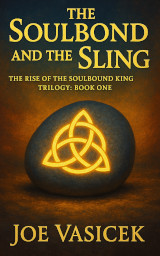
Going full-tilt on The Soulbound King

I’ve decided to put The Road to New Jerusalem on the back burner and focus instead on my epic fantasy series, The Rise of the Soulbound King Trilogy. If I push, I think I can finish the AI draft of book 1 in the next two weeks. I’ve also nearly finished the outline for book 2, and will probably have a rough AI draft for that one by the end of September.

I would really like to publish this series in 2026, but I don’t want to launch it until I’m ready to rapid release the first three books. And since these books are all epic fantasy, it’s going to take a lot of time and effort to write them. Without AI, it would probably take me something like two or three years for each book. I’m not a very fast writer, and I tend to get stuck in the middle, even when I have a solid outline. With AI, I think I can shorten that to 6-8 months.

These books are probably going to range between 150k and 200k words, so not super long for epic fantasy (for comparison, Mistborn: The Final Empire is about 214k words, and The Way of Kings is about 384k words). That’s much longer than most genre books, though, including most of the books I’ve written until now. And writing difficulty doesn’t scale linearly with book length; it scales logarithmically. So while it may take only 1-2 months to write a Sea Mage Cycle book, those are only about 1/3rd the length of a Soulbound King book.

My long-term goal, though, is to pivot to epic fantasy, to the point where that’s mostly what I write. And if you read my science fiction novels, you’ll find that they’re much more like epic fantasy, with multiple viewpoints, grand galactic empires, wars and political machinations, and a universe that has its own character arc. So while this may superficially seem like a huge pivot, it’s actually not.

There are three science fiction books that I need to write before I can pivot entirely to writing fantasy: Captive of the Falconstar, Lord of the Falconstar, and The Return of the Starborn Son. Those are the only outstanding science fiction series that need finishing (and I will finish them, I promise—I’m not going to pull a GRRM). I also need to finish the Twelfth Sword Trilogy, the epic fantasy series I started in the 2010s while I was still mostly writing science fiction.

Realistically, the only ones of those books that are going to be finished between now and the end of next year are the Falconstar books, since I need to juggle all of these with the Soulbound King epic fantasy books that I’m also writing. But I think I can finish the Falconstar books, and also write and publish a Sea Mage Cycle book or two within the next year. I’ve found that it often helps to take week-long breaks to work on other projects, which allows me to approach a larger and more challenging WIP like The Soulbond and the Sling with new eyes. So I will probably alternate between working on the Soulbound King books and working on Falconstar and Sea Mage Cycle for the forseeable future.

But my goal for the next two weeks is to go full steam ahead on The Soulbond and the Sling, until it is finished. And with luck, I will also have a few excerpts to share with you soon!

Fantasy from A to Z: A is for Archetypes

I love fantasy books. I love the sense of adventure and possibility that I feel from reading a good fantasy story. I love how the best ones transport me to worlds untainted and unpolluted by modernity, rich in their own history and culture. I especially love it when these worlds are populated with characters who I feel could be my friends, their stories told in such a way that I almost feel I know them better than I know myself. 

Every literary genre is defined by the primary emotions they are supposed to evoke in the reader. Thus, romance is all about the emotions associated with love and longing, horror is all about the emotions associated with fear and dread, mystery is all about the emotions associated with discovery and making sense of the world, etc. 

Fantasy and science fiction are the two major divisions of the speculative fiction genre. The way I like to think of them is like two sides of the same coin. Both are defined by the sense of wonder they evoke, but where science fiction tends to be oriented toward the future, fantasy is oriented toward the past. 

To me, this is the biggest thing that distinguishes fantasy from science fiction: the deep, almost nostalgic yearning for a long-forgotten past. This goes much deeper than superficial aesthetic details, such as the idea that if your story has trees, it must be fantasy, but if it has rivets it must be science fiction. Trees hearken back to a world before the modern era, when we lived much closer to the rhythms of nature. Rivets, on the other hand, hearken to a world utterly reshaped by human technology and engineering.

But if this is the case—if fantasy is all about a nostalgic yearning for a lost, pre-modern age—why does so much fantasy take place in a world that is not our own? Yes, if you read the lore for J.R.R. Tolkien’s Middle Earth and Robert E. Howard’s Hyborean age, you eventually learn that these worlds are supposed to be far ancient versions of Earth—but no one thinks or cares about that when they’re reading the stories. And these days, most fantasy worlds don’t even try to pretend that they have a connection with Earth. So how can they possibly channel that sense of nostalgic yearning?

Through archetypes.

“Type” is another word for symbol, and “arch-” is a prefix meaning the chief or principle thing. Thus, an “archetype” is the chief or principal symbol of a thing, such that every real-world example of that thing is a manifestation of its archetype. 

It’s kind of like the inverse of a stereotype. When we stereotype someone, we mentally categorize them based on superficial characteristics like race, gender, age, etc, purposefully ignoring the things that make them different from other people. We start broad and go narrow. Archetypes, on the other hand, start narrow and go broad. The archetype of a hero slaying a dragon can be taken to represent anything from confronting childhood trauma to overcoming a deep-seated addiction—or something completely different. 

The dragon starts off small, hatching from an egg, but if it is not slain when it is young and non-threatening, it grows into something huge and fearsome and almost impossible to slay. It also guards a horde of treasure, which can only be won by slaying it. Does that remind you of anything in your own life? If the story is told well enough, it should, because of how it points to certain universal truths. A problem that isn’t solved when it is small will often grow until it is almost impossible to solve. The greatest reward can often only be gained by doing the most difficult thing.

The best fantasy books use archetypes to evoke that sense of wonder that defines the genre—and because these archetypes are so timeless, they often evoke a sense of familiarity and nostalgia. In the best books, they also imbue the surface-level story with deep layers of meaning, making it a rewarding experience to come back and reread it again.

I love stories that are full of meaning. But in order to be truly meaningful, a book shouldn’t set out with a specific message in mind. Rather, the best books use well-constructed archetypes to resonate with the ideas that the author wants to explore—and often, the readers will draw conclusions that the author never consciously intended. To me, this is the hallmark of the best kind of fantasy book—and of archetypes done well.

Late February Update

Wow, it’s been a while since I gave an update on what I’ve been up to. Life has been crazy, but not too crazy. I really ought to get back into the habit of blogging more regularly.

Last week was LTUE here in Utah Valley, and while I didn’t attend the convention, I did stop by the launch party for Ark Press. It looks like it’s going to be an interesting publishing venture, with Tony Daniels, Dave Butler, and David AF heading it out. Their goal is basically to be the MAGA of science fiction and fantasy publishing, though they probably wouldn’t put it quite that way. However, they do want to publish more pro-American, pro-conservative, pro-human fiction, and to fill a gap in the current publishing market that has neglected male readers in recent years.

They’re also running a contest, with the winner receiving a $10,000 publishing contract, to be published on July 4th, 2026. The theme for the contest is America 2076, and it can be any genre (though it sounds like they want it to be a pro-American story). Of all the WIPs I currently have floating around, The Road to New Jerusalem might actually be a good fit for that. I haven’t worked on it for a few months, but I’ll probably dust it off pretty soon here and get it ready to submit.

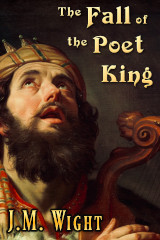
Speaking of my J.M. Wight pen name, I ran the first three chapters of The Fall of the Poet King through my writing group, and I think the best course of action is to rewrite it as a fantasy novel loosely based on the David and Bathsheba story. If I’m going to write it as a straight historical fiction, I need to do a lot more research to firmly ground it in the era, and the trouble with adapting a Bible story (especially a more difficult story like David and Bathsheba) is that everyone brings their own baggage or personal interpretation to it, and is liable to get miffed if your retelling doesn’t exactly match what they’ve got in their own head. Besides, fantasy sells a lot better than religious fiction, so I think this is a much more prudent course to take.

In fact, I’ve recently made an inventory of most of my WIPs, and decided to trunk all of them that don’t explicitly fall in the fantasy genre. I will still finish the Outworld Trilogy and the Falconstar Trilogy, but after that, I’m going to focus a lot more on writing fantasy than on writing science fiction. Also, I’m not going to work on those until after I’ve filled up my writing queue with more fantasy-oriented works. This is a pivot that I’ve been meaning to make for some time now, and I’ve been slowly making that pivot, but now I think I need to speed it up and make it more definitive.

So that’s what I’ve been up to, mostly. I’m currently finishing up the rough AI draft of The Unknown Sea, and plan to pick up the human draft of Bloodfire Legacy, which should be coming out in the Spring. And hopefully I’ll be working on that David and Bathsheba story again soon.