2019-10-03 Newsletter Author’s Note

This author’s note originally appeared in the October 3rd edition of my author newsletter. To subscribe to my newsletter, click here.

When Mrs. Vasicek and I got married, we decided that there would be no smart devices or screens in our house beyond the master bedroom. Our reasoning had mostly to do with personal health and avoiding bad habits, though there was also some concern about data collection and privacy.

One of the things I really like about this rule is that it keeps me from becoming too attached to my smart phone. Most of us are never be more than an arm’s reach away from our phones, and over time we come to feel almost like they’re a physical part of us. But every night, Mrs. Vasicek and I leave our phones to get ready for bed, and we don’t pick them up again until after we’re fully awake.

I have to admit that I had withdrawals at first, but now I feel much better. My phone is just another tool now; it no longer feels like an extension of myself.

Another thing I really like about this rule is how it sets apart a large section of the house that is free from digital distractions. The bedroom is now a really great place to read. Our one exception to the no screens rule is my Kindle Paperwhite, which uses e-ink anyway so it’s not as bad as an LED screen. It’s also seven-and-a-half years old, so web browsing isn’t really practical.

The other thing I really like is how it sets my mind at ease to know that there’s at least one part of the house where there aren’t any digital recording devices surveilling and collecting data on us. (Please don’t tell me that the Paperwhite is recording me too!)

In the last few years, it seems that Big Tech has been increasingly intrusive in our lives. Over the summer, it seemed like every week there’d be a new story about a Silicon Valley whistleblower, or an undercover investigation, or even a senior Google executive coming out on the record about censorship, bias, and control.
A couple of weeks ago, Glenn Beck did a fascinating interview with Robert Epstein, a researcher who found compelling evidence that Google has both the capability and the motivation to sway major national elections. (Epstein voted for Clinton in 2016, so the interview wasn’t partisan.) It reminded me of a presentation that Chamath Palihapitiya (senior executive at Facebook from 2007 to 2011) gave at Stanford in 2017, where he talked about social media addiction and explained why he doesn’t use social media nor allow his children to do so.

It’s becoming increasingly difficult to navigate our modern, complex world in a way that doesn’t surrender most of our agency to Big Tech and Silicon Valley. It’s also becoming increasingly ambiguous how much of that agency is an illusion, with companies like Facebook and Google influencing us in ways we aren’t consciously aware of.

As an indie author who depends on Amazon for a large part of my income, I’m very much aware of these issues. It’s part of the reason why I’m working so hard to build and maintain this newsletter, so that I don’t have to depend on Big Tech for my book marketing. It’s impossible to be a career author these days without a plan for navigating this world.

Where are we headed? Science fiction gives us a chilling answer. Right now, it appears that China and the East are going the way of 1984, while the United States and the West are going the way of Brave New World.

But those books were written almost a hundred years ago, and technologies have been developed that Orwell and Huxley couldn’t have even dreamed of. It’s time for a new generation of writers to pick up the torch that they handed off to us.

That’s a big reason why I’m writing “Sex, Life, and Love under the Algorithms.” As for where to go next, I honestly don’t know. So much happening in the world today screams out for new science fiction just to make sense of it all, so when I’m not writing fantasy I’ll probably delve more into that.

Whatever else happens, we’re all in this rabbit hole together.
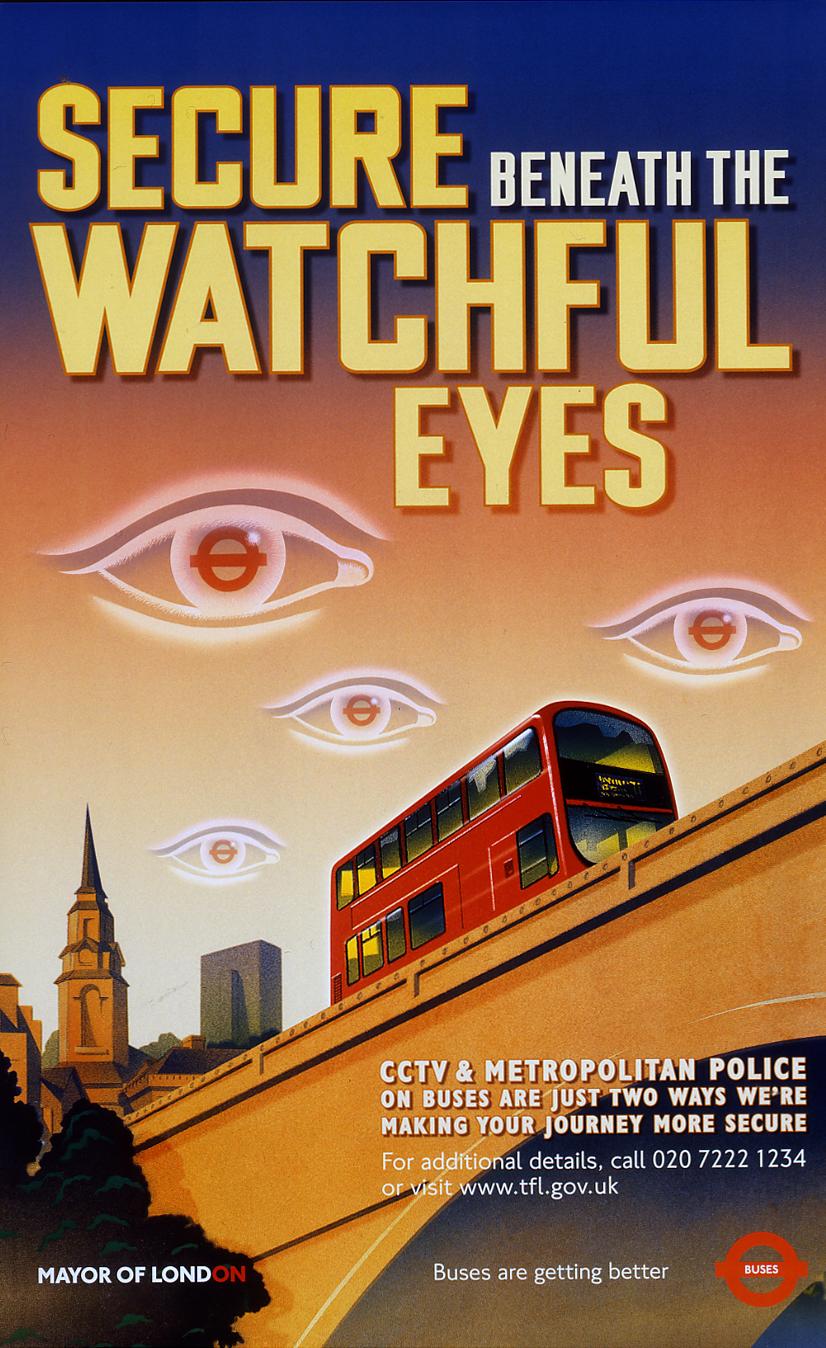
Trope Tuesday: Sinister Surveillance

secure
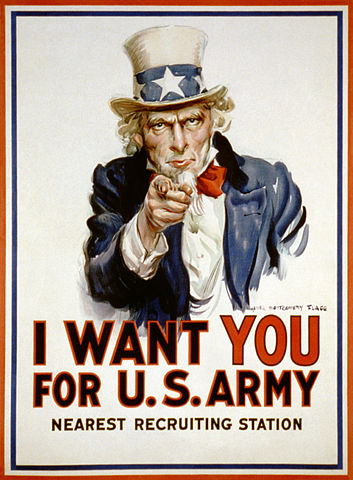
This was actually a real poster.

Someone is watching you.  Their eyes are everywhereEverything you do, everything you say … it’s all being recorded in a giant database.  But don’t worry–you can trust the ones watching youThey have your best interests at heartThey’re only after the bad guys.  You won’t even know that they’re there.

Sinister Surveillance is a hallmark of Dystopia, as essential to the genre as the Crapsack World and the Police Brutality tropes.  Often, you’ll find all three in the same story together.  It’s closely related to Big Brother is Watching, where the government is so powerful, and reaches into so many aspects of everyday life, that they see and record everything you do.  Where Big Brother shapes every aspect of the society, however, down to the language of the citizens and the basic truths accepted as facts, Sinister Surveillance is more about the surveillance itself, and the ulterior motives behind it.

It’s not enough for the government to simply watch you, though.  Even more important in some ways is the idea that you don’t know what they can and can’t see.  The reason for this is the same reason why, in horror stories, we almost never see the monster until the very end–because our imagination makes things a lot scarier than they really are.  If we the bad guys know the limitations of our government surveillance, we they can safeguard our privacy and basic rights game the system.  We’re all afraid of the dark, not because of what’s actually there, but what could be.

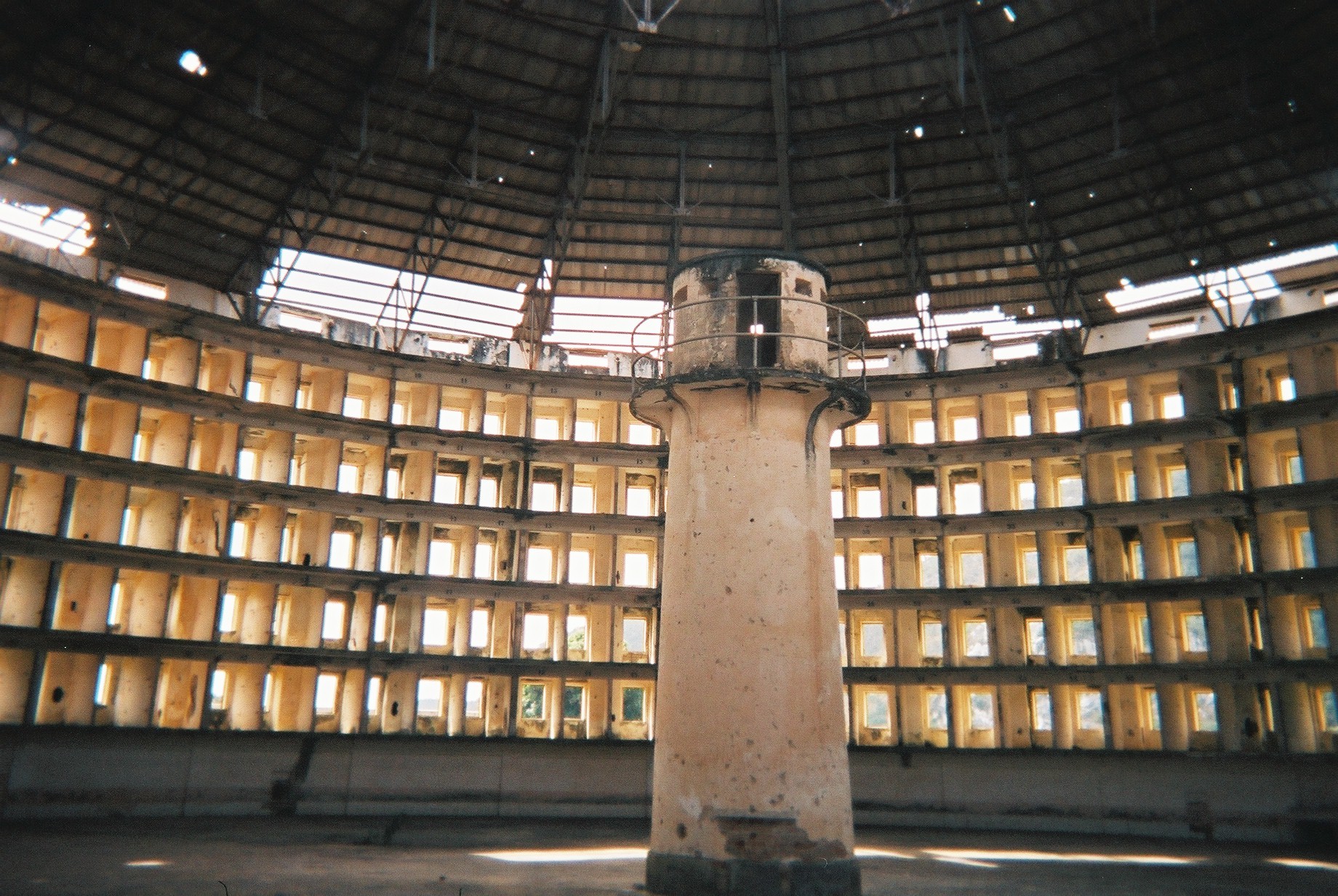
The concept behind all this goes back to the Panopticon, a hypothetical prison where the prisoners know that the guards are constantly watching them, but can’t actually see any of the guards themselves.  Proposed by the British philosopher Jeremy Bentham in the 1700s, the idea is to disempower the prisoners and empower the guards simply through the act of surveillance.  If everything you do can be seen, and you don’t know exactly who’s watching, that puts a tremendous amount of social pressure on you to conform.  As Michel Foucault put it:

The Panopticon creates a consciousness of permanent visibility as a form of power, where no bars, chains, and heavy locks are necessary for domination any more.

But if the prisoners are the citizens, and the guards are the government, how can such a system ever be democratic?  How can the citizens of such a society ever give their informed consent?  Well, that’s kind of the point.  The government in dystopian stories is rarely democratic–it’s usually a dictatorship of some kind, or a system that turns well-meaning people into Knights Templar, showing how even the best of us die like animals when the game is rigged.

As benevolent the intentions of the government may initially be, it is nonetheless true that power corrupts, and absolute power corrupts absolutely.  Just as the Panopticon takes power from the prisoners and concentrates it with the guards, so does universal surveillance grant dangerous amounts of power to the government–not because the act of surveillance is dangerous in itself, but because it brings out the worst in the people doing the surveillance.

In The Road to Serfdom, Freidrich Von Hayek pointed out that self-serving, ambitious, power-hungry people tend to rise in government a lot faster than people who have others’ best interests at heart, especially when so much power is concentrated in the government.  That’s one of the biggest dangers of surveillance–and in stories where Sinister Surveillance is in play, the government has already passed that point.

I wish I could say that this trope is limited mostly to the realm of fiction, but unfortunately, that does not appear to be the case.  These days, it’s impossible to talk about surveillance without getting political, even on a blog dedicated to books and writing.  Because everything these days is online, it’s easier now than ever before for our governments to watch us.  And if Edward Snowden’s claims are even partially correct, that’s exactly what they’re trying to do.  Even more worrying are the indicators that they’re trying to do it in secret, such as this recent letter from Senators Wyden and Udall.  The United States government has lied to us in the past about the extent of the PRISM surveillance program, and it would appear that they’re continuing to do just that.

Wherever you fall politically on PRISM or the Edward Snowden case, I think that Sinister Surveillance is a trope that we should all find profoundly disturbing.  When George Orwell took this trope to its extreme logical conclusions in 1984, he did so to prevent that horrific social order from ever coming to pass.  I wonder: only two or three generations after that book came out, have we forgotten its lessons already?  Or do we need a new retelling to remind us?  I fear that that retelling is taking place, not in the pages of a novel, but in real time on the major blogs and news sites.

Trope Tuesday: After the End

i am legend2It’s the end of the world as we know it … so why do we feel fine?

On the apocalyptic scale of world destruction, when the thing that wipes out civilization doesn’t quite kill everyone, we’re left with an After the End type setting.  Depending on where the writers fall on the sliding scale of idealism vs. cynicism, this may range from a futuristic Arcadia to a crapsack post- hell on Earth.

Whatever the case, expect to see lots of modern ruins and schizo tech mashups (horse-driven cars?  Wood-wheeled bicycles?).  If anarchism reigns, expect to see lots of punks roaming the wastelands in muscle cars and motorcycles.  If Ragnarok Proofing is in effect and the ruins of civilization haven’t quite decayed yet, expect some variation of a scavenger world.  And if someone from our modern era finds himself lost in this bizarre post-apocalyptic future, expect him to find some sort of constant to reinforce that he’s not in Kansas anymore.

Unlike dystopian settings, where society evolves (or is deliberately turned) into a horrible, hellish place, a post-apocalyptic setting represents a reboot of civilization itself, where one society has passed away and a new one is slowly picking itself up from the ashes.  It has the potential to be a lot more hopeful, and to give the reader a lot more wish fulfillment.  After all, who wouldn’t want to be one of the lucky survivors tasked with rebuilding civilization?  Sure there may be zombies or nuclear nasties wandering about, but on the plus side, you don’t have to worry about your bills or your deadbeat job anymore.

Douglas Rushkoff has some interesting ideas about why this type of story is becoming more and more popular nowadays.  In his new book Present Shock which he’s been promoting recently, he argues that many of us are so overwhelmed by a world where everything happens now that we wish we could end it all and start over.  When we live in an ever-changing present without a coherent narrative to reference our past or our future, we long for something to restore that sense that we’re part of a larger story, even if that story is racing towards a horrible, tragic end.

But every ending is a new beginning, and that’s what lies at the very core of this trope.  When our world passes away, what will the new world look like that takes its place?  Will we learn from our mistakes, or are we doomed to repeat our worst atrocities?  Will we eat each other like dogs, or will we tap into some deeper part of human nature where mercy and compassion lie?

This is all on my mind right now, because I’m writing a post-apocalyptic novel (with the working title Lifewalker) that takes place in Utah 200 years after the end.  Humanity was hit by a plague that kills everyone over the age of 25, so that the only people left are orphans, teenage adults, and their babies.  It’s fascinating to wonder what from our era would fall apart and what would remain, or what would be preserved and how the new society will take shape.

But it’s not the apocalypse itself that I’m interested in, so much as what happens after things stabilize.  The main character is one of the few people who’s immune to the plague, so naturally he feels like a complete outcast.  He’s walking the Earth, riding down the ruins of I-15 with a copy of Brandon Sanderson’s Mistborn in his saddlebag.  And the people he meets … well, let’s just say I wasn’t very kind to Las Vegas.

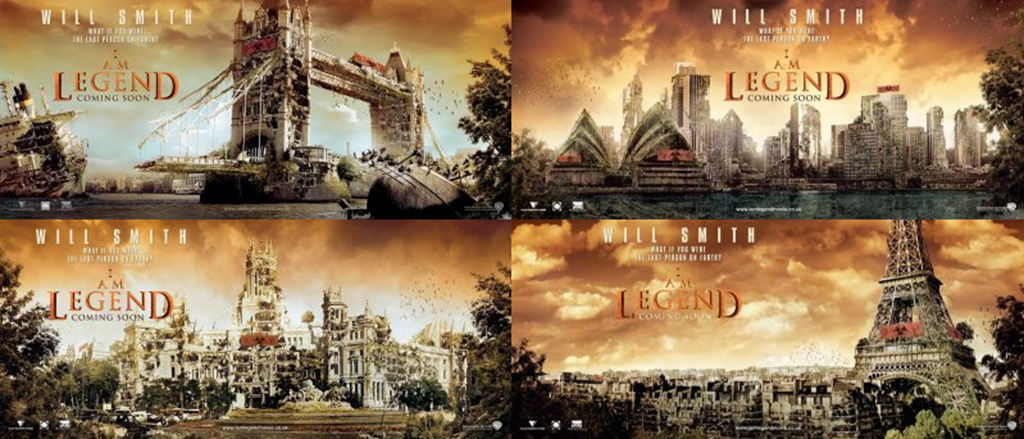
I think that’s another part of the appeal of this trope: it takes our own world and twists it into something fantastic, so that instead of having to wrap our minds around a whole new set of history and physics, we can build on the familiar in wild and interesting ways.  A Canticle for Leibowitz did this very well, with another post-apocalyptic tale set in Utah.  However, the most famous popular example is probably the movie I Am Legend.  I love those long panoramic shots with Will Smith hunting deer in Times Square, or hitting golf balls off the wing of a fighter jet.  Stuff like that really sparks the imagination because it combines something familiar with something wild and different.

Believe it or not, this trope has actually happened in real life.  After the bubonic plague swept across Europe, whole cities were depopulated, with as much as 60% casualties in some places.  When the Pilgrims settled at Plymouth, they were actually building over the ruins of a large Indian settlement that had been wiped out by smallpox just a few years before.  And using DNA evidence, scientists now believe that all of modern humanity is descended from a small group of just 50 females who survived a global volcanic eruption some 70,000 years ago.

So yeah, this is definitely a trope I like playing with.  I’m on track to finish Lifewalker by the end of May, so you can definitely expect to hear more about it in the weeks and months to come.

Also, for those of you looking for resources to help you visualize what the world will look like after the end of human civilization, here are a couple of excellent resources I’ve found.  First, check out The World Without Us, an excellent book written by an environmentalist that poses a basic thought experiment: what would happen if all humans everywhere magically vanished, and all that was left was the stuff that we’ve built?  What, if anything, would remain? (spoilers: not much) If you want to explore that idea but you don’t want to read the whole book, check out this wiki on Life After People, a series of History Channel documentaries that basically posed the same question.  The answers may surprise you.

Y is for Yesteryear

Star_wars_oldThey say that the golden age of science fiction is about twelve years old.  That’s definitely true for me.

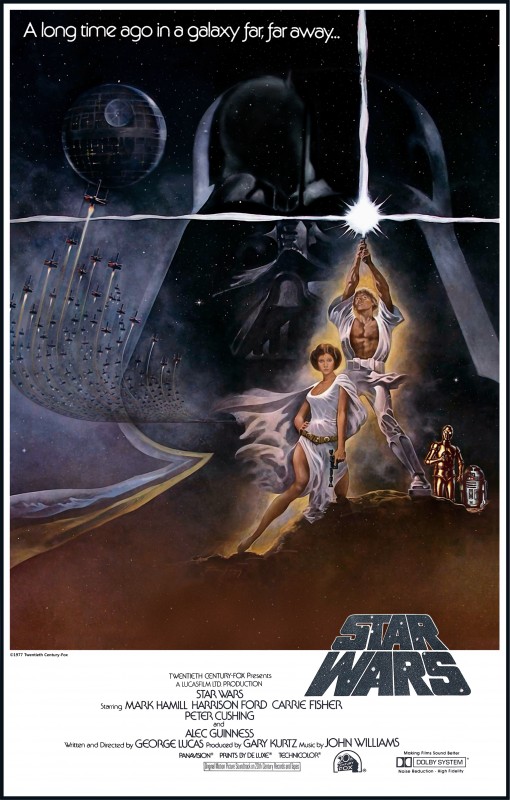
My first exposure to the genre was Star Wars: A New Hope.  I saw it when I was seven, right around the height of my dinosaur phase.  Everything about the movie completely blew me away, from the Jawas and Sand People of Tatooine to the stormtrooper gunfights and lightsaber duels.  After watching Luke blow up the Death Star, I spent the next few hours running around the yard pretending to fly my own starfighter.

In a lot of ways, I’ve never really stopped.

My parents made me wait until I was nine to watch The Empire Strikes back, because it was rated PG.  Without any exaggeration, I can say that those were the longest two years of my life.  I was literally counting down days by the end, and to pass the time without going crazy, I read up on all the books about space that I could possibly find.

My father bought the original X-wing flight simulator game somewhere around then, and I soon became totally engrossed in it.  Since the 386 was our only entertainment system (no Super Nintendo–I had to visit a friend’s house for that), X-wing became the defining game of my childhood.  I spent hours and hours on that game, to the point where I knew exactly which simulated missions the characters from the books were flying and how to complete them faster and easier.

I thought The Empire Strikes Back was a little slow the first time I saw it, but it’s since grown on me, to the point where now it’s my favorite film in the whole series.  Thankfully, my parents let me watch Return of the Jedi the next day, and for the next few months my life felt utterly complete.

Around this time I discovered the Star Wars novels and soon immersed myself in them.  The Courtship of Princess Leia by Dave Wolverton soon became one of my favorites, as well as the Heir to the Empire trilogy by Timothy Zahn and the X-wing series by Michael A. Stackpole.

But it was Roger Allen McBride who first introduced me to a different flavor of science fiction with his Corellia trilogy.  As I mentioned in V is for Vast, those books had just enough of a touch of hard science to intrigue me about the other possibilities of the genre.  That was the last Star Wars series that I read before branching out into other works of science fiction.

The Tripod trilogy by John Christopher was my first introduction to the dystopian / post-apocalyptic genre, depicting an enslaved humanity after an alien invasion.  Those books really captured my imagination for a while.  The Giver was also quite interesting and thought provoking, though since it didn’t involve spaceships or aliens it wasn’t nearly as compelling.

I read a lot of fantasy in my early high school years, including Tracy Hickman, Lloyd Alexander, and (of course) J.R.R. Tolkien.  While I enjoyed those books and immersed myself in them for a while, my true love was still science fiction.  For almost a year, I watched Star Trek: Voyager religiously with my dad.  And every now and again, I’d pick out a science fiction book from the local town library and give it a try.  That’s how I discovered Frank Herbert’s Dune.

In eleventh grade, my English teacher had us choose an author and focus our term papers solely on their books for the entire year.  She suggested I choose Orson Scott Card, but I chose Cormac McCarthy instead.  I’m not sure if that was the worst decision of my high school career, or the best decision, since assigned high school reading tends to make any book feel like it sucks.  I discovered Ender’s Game the following summer, and finished it in a delirious rush at 3am the morning after checking it out from the local library.

More than any other book, Ender’s Game cemented my love for the genre, and showed me just how powerful and moving the genre could be.  It opened so many insights into the world and human nature, reading that book made me feel like I’d opened a pair of eyes that I didn’t even know I’d had.  Looking back, that was probably the moment when I knew I would be a science fiction writer.  I’d known I was going to be a writer ever since I read A Wrinkle in Time at age eight, but to be a science fiction writer specifically, that goal was probably cemented by reading Orson Scott Card.

After high school, I served a two year mission for my church, during which I didn’t read any novels or watch any TV or movies.  When I came back, though, Orson Scott Card and Madeline L’Engle helped me to ease through the awkwardness of adjusting back to normal civilian life.  When I left for college, I expanded my horizons even further, starting with Isaac Asimov’s Foundation series and Edgar Rice Burrough’s Princess of Mars.

When I discovered Pioneer Books in downtown Provo, I knew I’d found my favorite bookstore in Utah Valley.  I have so many fond memories sitting cross-legged on the floor in the science fiction section, browsing through the musty used books for hours at a time.  That’s where I discovered C.J. Cherryh, Arthur C. Clarke, Robert A. Heinlein, Ursula K. Le Guin, and numerous other authors who are among my favorites today.

When I discovered Spin, Robert Charles Wilson soon became one of my favorites.  I picked up that novel as a free PDF from Tor, and read it over the summer while studying abroad in Jordan.  Once again, that same hard sf sensibility I’d gotten from Roger Allen McBride touched me in an unforgettable way.  But it was the human element of that book that really moved me–in fact, it’s always been about the human element.  The world building in Downbelow Station was great and all, but the romance of Merchanter’s Luck had a much more lasting impact.  Starship Troopers had some good ideas, but it was Mandella’s personal journey in The Forever War that moved me almost to tears.  The intrigue of the Ender’s Shadow series was quite entertaining, but it was Ender’s Game and Speaker for the Dead that really taught me what it means to be human.

I finished my first novel, Genesis Earth, shortly after returning from that study abroad, and tried to capture the same sensibility from Spin as well as the intimately human element.  Since then, I’ve written several more sci-fi novels, some of them tragic, some triumphant, but in all of them I’ve tried to get as close as I can to the personal lives of the characters.  I don’t know if I’ll ever write a character portrait so intimate as Shevek’s in Ursula K. Le Guin’s The Dispossessed, but I certainly hope to someday.

For me, science fiction started out as a wonderfully exciting entertainment and turned into something much more meaningful.  If there’s anything the genre has taught me, though, it’s that the two aren’t mutually exclusive–that you can have your adventure and learn what it means to be human as well.  Indeed, the more imaginative the adventure, the greater the truths I’ve taken from it.

Because of that, even though I’m almost in my thirties now, I can’t possibly foresee a time when science fiction isn’t a major part of my life.  It’s a love affair that’s grown just as much as I have, and continues to grow with each new author I discover and each new book I write.  When I’m old and grizzled and pushing eighty, I’m sure there will still be a part of that twelve year old boy in me, still running around the yard flying his starship.

Trope Tuesday: The Call to Adventure

One of the first (and most important) stages of the hero’s journey is the call to adventure.  It happens when the hero first confronts something outside the experience of his ordinary world that beacons him to leave it.  It overlaps closely with the inciting incident, and marks the point at which the hero’s journey begins.

However, it is not typically where the story begins.  In order for the hero to leave the ordinary world, he must first start out there, so we know what’s at stake and what he’s leaving behind.  This is why Luke Skywalker starts out on his uncle’s homestead, and why Neo starts out as a bored and lonely employee of Metacortex.  Events outside the hero’s experience may have already put him on a trajectory to leave on the adventure, but he won’t know it until the call comes.

The hero may start out in a quiet, peaceful village, far removed from any sort of conflict–or he may start out in the middle of a crapsack world, as is the case with dystopian fiction.  The important thing is that it’s the world he’s always known–that he hasn’t ever really made an effort to leave or change it.

How he feels about his world largely determines how he chooses to respond to the call.  In older literature, the hero typically refuses it.  The advantage of this is that it gives the reader a sense of scope–that this adventure is not a small or a trivial thing.  It also sets up an immediate minor conflict that gives some motion to the opening chapters.

In modern stories, though, it’s more common for the hero (or his friends) to jump at the call.  There are also many advantages to this.  In Lord of the Rings, it gives Frodo an immediate band of sidekicks.  In Harry Potter, it plays up the sense of wonder at the magical world.  In the Chronicles of Prydain, it highlights the impulsiveness and naivete of Terran, as he realizes later on in the story just how stupid of him it was.

The call itself can take many forms.  It can come as a fateful visitation from a supernatural messenger, a mysterious request from a dying stranger, or a sacred trust from a dying friend.  It can also be more internal, such as an important moment of decision, or a desire to find some greater purpose in life.  Whatever the case, the one thing the hero cannot do is ignore it–at least, not forever.  One way or another, the hero sets out, and the adventure begins.

The gulf between the generations

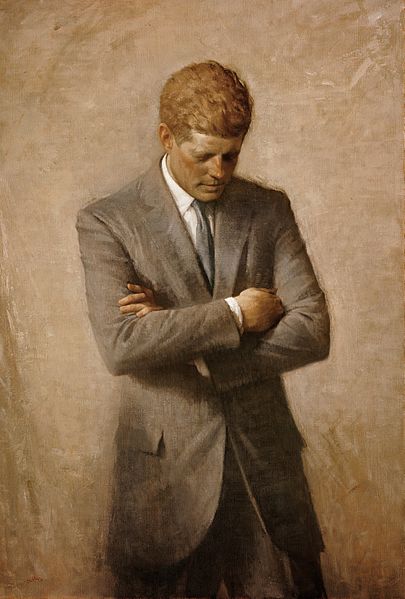
I just watched a fascinating interview with a 1960s White House intern who claimed to have an eighteen month affair with President John F. Kennedy.  But the most interesting thing wasn’t the affair itself, but the way the President’s staff, the “fourth branch” of government (AKA the media), and the entire general public of 1960s America seemed more intent on keeping the secret than on facing the truth about JFK’s many affairs.

It seems that my parents’ generation had so much trust in their government that nobody would even raise the question–that to raise doubts about the integrity of the man who held the highest office in this country would itself be unconscionable.  Rather than face the facts, the American public seemed unwilling to do anything that would shatter the gilded image of the man who led the free world.  And that, quite frankly, is a mindset that I simply cannot understand.

In contrast, my own generation has very little trust in our government.  We’ve been raised in an age of ambiguity, where the enemy doesn’t wear a uniform or pledge allegiance to a flag, but live quietly among us, until they strap a bomb to their bodies or turn a commercial airplane into a weapon of terror.  Or at least, that’s the excuse our government gives us for an increasingly invasive security regime that infringes on our basic liberties, enables the military to hold us in detention indefinitely, and sends our soldiers overseas to fight increasingly senseless wars to “liberate” the people of oil-rich nations who don’t even want us there.  As if that weren’t enough, the economic crash has taught us that all that stuff our parents taught us about equality and opportunity is really just a pack of lies–that the rich get bailouts while the rest of us foot the bill, and all that stuff about changing the world and being whatever you want to be…yeah.  Lies, all of it.

My Dad had an interesting rebuttal to all this, though.  He said that it wasn’t his generation that put the president on a pedestal–it was his generation that tore the pedestal down.  During the 60s and 70s, the Vietnam era and the rise of the hippy movement, his generation fought back and made it acceptable for us to question the president, or to criticize the government, or to do all the things that we take for granted today.  In fact, he said that we’re the ones who are backsliding into complacency, with our deafening echo chambers, our social media inanities, our reactive attachment to corporate brands and advertising, and our almost religious sense of  entitlement.

I’m not totally convinced he’s right, but I do think there’s a fundamental gulf between these three generations.  Our grandparents’ was the silent generation, where people were expected to keep to their own business and not rock the boat.  Our parents’ generation was one of top-down media, where ABC, NBC, and CBS ruled the airwaves and told us all what to think, buy, and believe.

Ours is a much more peer-to-peer generation, but I worry that we’re turning into a collection of mindless herds who are turning the culture wars into a messy riot where we abandon civil dialog and rational thinking for a much more destructive mob mentality that isn’t really building anything, but tearing it all down.

Sometimes, it gets so frustrating that it makes me yearn for the days of the frontier, when anyone could leave it all behind and reinvent themselves somewhere out in the west.  That’s probably why I’m so drawn to science fiction, where space is the final frontier.  There really are times when I wish I could go to the stars and escape to it all, and I think that shows in my writing.

Maybe that’s why I feel so compelled to write Star Wanderers.  It’s basically 80% wish fulfillment, about a guy who goes from planet to planet on the kind of spaceship I wish I had.  It’s not all rosy, of course–space can be a cold, dark, and lonely place–but so can this world, when you’re lost and you don’t really know what you’re doing with your life.

Anyhow, those are just some of my random late-night thoughts about the situation in this country and how much things have changed over the decades.  If I had a time machine and got a chance to go back to the 60s (after seeing The Empire Strikes Back on opening night, of course), I don’t know I’d be able to recognize this as my own country.  But really, I don’t think I recognize anything as my own country anymore.  Like Van Gogh, all I can say is the sight of the stars makes me dream.

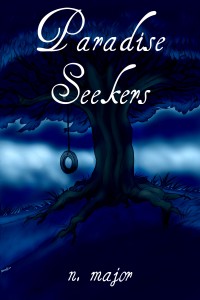
Paradise Seekers by Nathan Major

Haven–a land where no one knows who they are, where they’re from, or how they got there.  A place where everyone has a different recurring dream every night, which gradually grows in intensity until it drives them to madness.  A place where everyone has only a short amount of time to find Paradise, before they perish.

When Sam first comes to Haven, he thinks he’s found an idyllic utopia.  However, as he slowly uncovers the gruesome secrets of the place, he realizes he’s in a race against time to make Atonement and escape.

But how can he do that, when he can’t even remember who he is?  And how can he save the girl he loves, when she has only days before her dreams drive her into madness?

A few weeks ago, I said I’d start reviewing indie books on this blog.  This is my first one.  As a disclaimer, Nathan Major is a fellow Utah writer and a friend of mine, and I received a copy of the book for free, with the agreement that I would review it.

I genuinely enjoyed this book.  It’s a very compelling story, with a mysterious dystopian world and an intriguing premise.  Nathan is very good at building suspense and keeping the reader hooked, and the ending fully lived up to its potential.

As far as editing goes, I noticed only minimal spelling and grammatical errors.  However, the copy I read had some major formatting issues, such as wacky indents and an auto-generated table of contents that missed a few chapters.  Nathan assures me he’s fixed those issues, but I can’t vouch for the most recent copy.

As for the story, while I enjoyed it, it did feel as if it had been published too early.  More than once, I wanted to scream at the characters for doing something stupid, and the romance was occasionally over-the-top sappy.  The level of melodrama was on par with most anime, which is great if you can stand it.  Still, the story kept me hooked, and while I occasionally had to put the story down just to cool off, I always came back to it, right up to the very satisfying end.

If you like dystopian YA, I think you’ll like this book.  It reminded me a little of The Giver, with the urgency and sense of danger of a thriller.  Like I said, it also had a bit of an anime flair to it, so if you’re a fan of anime and manga, the issues I had with it probably won’t be as bad for you.

Overall, I rate Paradise Seekers at 3.5 stars.  If the formatting issues were fixed, I would rate it at 4.  Nathan has a natural talent at good storytelling, and I expect we’ll see many good things from him in the future.

Paradise Seekers is available for .99c from Amazon and free on Smashwords.

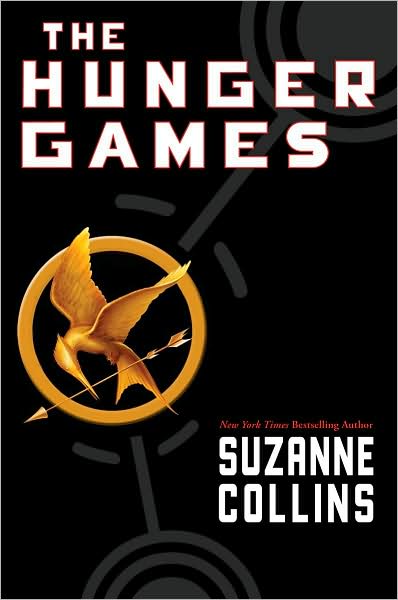
The Hunger Games by Suzanne Collins

This book review is going to be a bit unconventional, so please bear with me.

Normally, I only review books on my blog if I feel I can recommend them.  They might not be perfect, but overall, the praise outweighs the criticism. However, for me personally, The Hunger Games was a huge disappointment.

I’m not going to do a little book blurb like I usually do, because I want to spend all the available space on this post explaining the reasons why I was so disappointed.  Also because of that, this post will be full of spoilers.  Consider yourself warned.

First, let me say that I don’t think this book was all bad.  Suzanne Collins is very good at plot and pacing, and she knows how to keep a reader hooked.  In that way, this book reminded me of the old Michael Crichton thrillers that I devoured as a kid.

However, two crucial things killed about half of the suspense for me: the fact that this book was the first in a series, and the first person viewpoint.

From the very beginning, we know that Katniss isn’t going to die.  We know it, because she’s narrating the story to us directly (in present tense, which personally irks me, but I won’t go into that).  Unlike other gladiator-style heroic fantasies, where the major draw is to see who lives and who dies, we have that spoiled for us.

Of course, the argument in favor of the first person is that it helps the reader feel a closer connection with the viewpoint character.  The problem is, I never did.  At the end of the book, Katniss still feels like an outsider to me; I never felt like I got inside her head well enough to know who she really is.  When I try to imagine her, all I can envision is a wide-eyed mannekin.  She just didn’t come alive to me.

Why? Because the whole time, she’s only got one thing on her mind: survival.  I don’t see anything but fragmentary glimpses of her other motivations, and those are never fully fleshed out.  Her experiences growing up were just so traumatic that I can’t relate to her, and Suzanne Collins never provides a reference point outside of the awfulness of Katniss’s crapsack world.

Which is another thing that got to me: the setting.  Every time I opened the book, I dreaded going back to Collins’ world–and not in a good, “ooh, this world is so creepy/frightening” way, but in a “man, this place just makes me depressed” kind of way.  It wasn’t even that original–Panem is basically the USA as North Korea (though it could take place anywhere, for all the details Collins gives us).

What’s more, the setting is full of inconsistencies.  The people are starving to death, but the forests are full of game and wildlife.  In North Korea, people raze the forests for fuel and timber, driving all the game out.  Yes, I know the people of District 12 mine coal, but all of it presumably goes to Capitol, just like in District 11 all the grain goes to Capitol and the people still starve. Which makes me wonder: why are all the districts specializing in only one commodity?  That’s just stupid.

Which brings me to another thing: the sheer idiocy of the rulers of Panem.  If the Hunger Games are supposed to remind the people of how subjugated they are, why allow the tributes the opportunity to do something like pull a romance stunt?  Why spend all that time primping and preening them, interviewing them, and giving them an opportunity to manipulate the crowds?  When the people of District 11 sent Katniss the bread, why didn’t a government censor stop that from happening?  And finally, when Katniss and Peeta were the only ones left standing, why give them the opportunity to upstage the games by falling on each others’ swords?

Seriously, that last point got to me more than any of the others.  When they announced the rules change, that Peeta and Katniss were supposed to kill each other after all, why couldn’t the GM see the potential for things to go wrong?  Seriously, having them both kill each other–or refuse to kill each other–was such a blatantly obvious choice, I saw it the moment the rule change came into play.  The fact that the villains didn’t just threw me out of the story.

But that wasn’t the first thing that threw me out of the story.  The first thing was the parade, with Katniss and Peeta marching into the arena with their flaming cloaks.  All this time, Katniss has been set up as the underdog–she isn’t pretty, she isn’t strong, she’s mildly sympathetic for volunteering in place of her sister, but the audience in that arena is looking for blood, not sympathy.  So when the crowd goes wild for her and Peeta, I just didn’t buy it.

It only got worse as things went along.  When the tributes did the skill check, Katniss–who, from the beginning of the story, has been set up as the underdog–scores higher than anyone else.  Every time she’s in front of an audience, everyone is oohing and ahhing.  It made me want to gag.

Honestly, you know what it seemed like?  It seemed like Suzanne Collins fell in love with Katniss so much that she wanted to spoil her, even though the story required her to keep up the pressure.  She made sure to torture Katniss in the games–so much so that it felt downright melodramatic at times–but while they were still in Capitol, waiting for the games to start, Katniss felt like a spoiled Mary Sue.

And as for the romance, it fell completely flat from the beginning.  Katniss was nothing but a manipulative faker from the beginning–granted, because she needed to in order to stay alive, but the least she could have done was coordinate that with Peeta.

And that’s another reason why I had such little sympathy for her–she’s a callous, manipulative, lying little heartbreaker, like far too many women in this world.

So yeah, The Hunger Games was, in my opinion, a huge disappointment.  I can partially see why it did so well (strong female protagonist, excellent plot structure and pacing, lots of hooks and cliffhangers), but personally, I don’t think it deserves half the praise it’s gotten.  And after what friends have told me about the rest of the series, I can guarantee that I won’t be reading them.

Story Notebook #4

Alright, it’s been too long since the last time I posted any story ideas here on this blog, so I thought I’d go back to my old notebooks and post a few of them here.  Currently, we’re on notebook #4, which basically covers the second half of 2009.

And so, without further ado…here goes!

A society in which infanticide, up to the first two years, is not considered a crime (since infants are not conscious in the same way as adults and children)

Youch–talk about a dystopia!  Which makes me wonder, what kind of a society would develop this belief?  Probably not one that values human life–or rather, one that somehow considers adults to be more “human” than young children.

As a direct result of this society’s system of values, there’s probably going to be a lot more promiscuity–or perhaps the promiscuity is what causes this belief to be engendered in the first place?  It reminds me of an ancient Carthaginian brothel, where hundreds of baby bones were found stuffed in the narrow alley between the brothel and the next building over.

Blegh–icky stuff!  Which is to say, it’s probably good story material. 🙂

A near-future dystopia in which the extras in movies (made in overpopulated developing countries) literally act out battle scenes, because hollywood studios can afford to pay for the loss of life

I got this idea from a comment by Dave Wolverton at a con, in which he said that in China, the maximum fine for negligent homicide is $10,000.  This is one of the reasons why so many movie studios do business there–if their extras die or get injured, they aren’t held nearly as liable as in the United States.

Of course, if the maximum fine is $10,000, why not put that in a deposit up front and have the workers fill out a form indicating who should get the money if they die?  You can then have gladiatorial movies and TV shows, where people actually die.  It sounds sick, but I’ll bet you could find a significant audience for that kind of thing.

Economically speaking, it’s a win-win-win situation.  The studios save on safety equipment and profit from the relatively cheap labor costs; the workers benefit whether they live or die, because either way, they’re getting paid much more than they would ever make otherwise; and the host country benefits, because the survivors can then be conscripted to form an elite corps of warriors.

The only real downside is the utter moral depravity of it all–but hey, we’ve already crossed that moral line so many times, what’s to keep us from crossing it again?

A time travel device that allows collection of data from the future without affecting causality–how would this change political science?

By “without affecting causality,” I think I meant that the time travel device itself wouldn’t cause any huge problems–that one could use it to observe without interaction, something akin to Orson Scott Card’s Postwatch. And of course, because I was so deeply engrossed in school at the time, the first application that came to mind was political science.

It would certainly lend a degree of credibility to the science, something which it currently does not enjoy.  It would probably also lead to fierce debates about fate vs. free will between the positivists and the interpretivists–something that has already been ongoing for some time.

My second novel (Genesis Earth) was, in some ways, a response to that debate.

A character who always has the latest liberal candidate’s bumper sticker on the same corner of his/her car, so that it builds up over time.

Interesting character quirk–though since it could only really makes sense in our world, I would never write about it.  Stories set in the real world bore me.

An MMORPG for orcs and elves where they play as humans

Check it out!  I’m a level 80 corporate CEO with the ability to cast ‘complete financial collapse’ and totally screw you out of a job!

Zombie insects

Oh noes!  Even worse if humans can become infected.

Sentient planets

Already done; the book is called Solaris.

Golfing on the Moon or Mars

This…would actually make a fairly awesome short story.

Were-squirrels!

Sounds like something Terry Pratchett would write if/when he parodied the urban fantasy genre.

What if all of us are characters in someone’s story?

God help us all!

A psychic agency that allows you to instant message dead relatives

Personally, I’d never stop wondering whether it’s just an elaborate hoax.

And that’s all for notebook #4!  Don’t worry–I swear I’m not as screwed up as these story ideas make me out to be.

Retired notebook: part 1

Like most writers, I keep a notebook with me at all times.  I use it a lot for scrap paper, but I also jot down all the weird story ideas that come to me, usually while I’m doing something completely unrelated to the idea.

A while ago, my old notebook got too ratty to keep in my back pocket, so I replaced it and put the other in my dresser drawer.  I thought it would be interesting, though, to go through some of the ideas I came up with.

Here they are, from the beginning:

A society in which infanticide is not considered a crime, up to two years (since infants are not conscious in the same way as adults and children).

…okay, maybe that one was a little creepy. Next:

A near future dystopia in which the film extras in movies made in overpopulated developing countries literally act out the battle scenes, because hollywood studios can pay for the loss of life.

Another creepy one, but it’s actually legit. I came up with it in the Las Vegas airport, listening to a panel from CONduit on my iRiver while waiting for my connecting flight.

On the panel, Dave Wolverton mentioned that in China, the most that any corporation can be sued for negligent homicide is $10,000. This got me to thinking, what if they had the extras fill out forms indicating next of kin, and shoot the battle scenes with real guns? It would cause a huge uproar among humanitarian organizations, for sure, but there’s certainly an audience that would pay for it. And really, who loses from it?

Yet another example of economics at work–and why capitalism is evil.

A time travel device that allows collection of data from the future without affecting causality–how would this change political science?

In other words, what if we could go into the future and quantifiably measure the effects of decisions made in the present? What if our hindsight really was 20/20? Something like that.

A candidate who always has the latest liberal candidate’s bumper sticker on the same corner of his/her car, so it builds up over time.

Just an interesting character quirk.

An MMORPG for orcs and elves where they play as humans.

Haha! I’d forgotten about that one. 🙂

Zombie insects.

“Infestation” takes on a new meaning.

Sentient planets.

We’ve already got that (sort of): it’s called the Gaia hypothesis.

Golfing on the moon or mars.

Or tennis, or soccer, or basketball…seriously, how cool would it be?

Were-squirrels!

…okay, maybe that one wasn’t quite as awesome.

A psychic agency that allows you to IM dead relatives.

I’d be surprised if this doesn’t already exist.

There’s more, but I’ll save it for another post.