How I would vote now: 2018 Hugo Award (Best Novel)

The Nominees

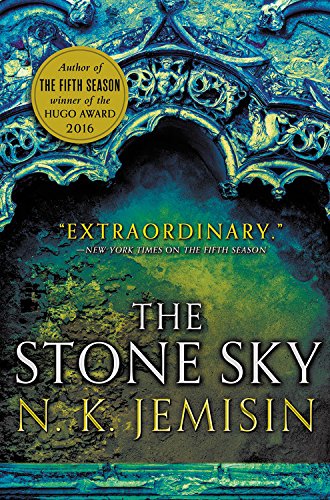
The Stone Sky by N.K. Jemisin

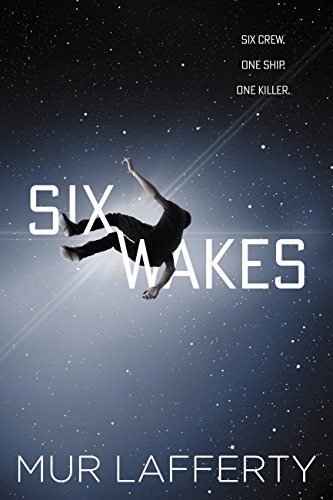
Six Wakes by Mur Lafferty

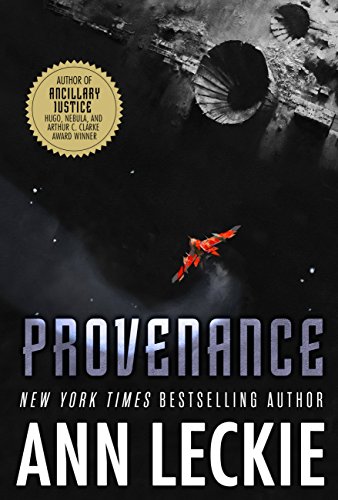
Provenance by Ann Leckie

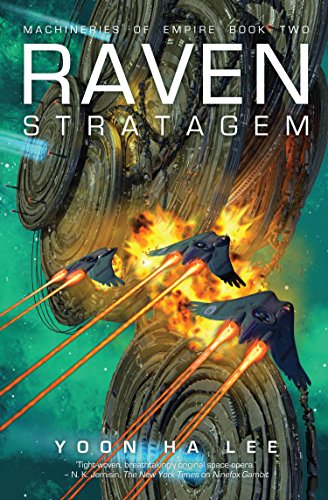
Raven Strategem by Yoon Ha Lee

New York 2140 by Kim Stanley Robinson

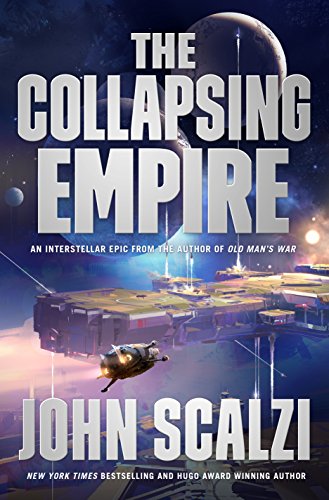
The Collapsing Empire by John Scalzi

The Actual Results

  1. The Stone Sky by N.K. Jemisin
  2. The Collapsing Empire by John Scalzi
  3. Provenance by Ann Leckie
  4. Six Wakes by Mur Lafferty
  5. Raven Strategem by Yoon Ha Lee
  6. New York 2140 by Kim Stanley Robinson

How I Would Have Voted

  1. Six Wakes by Mur Lafferty
  2. No Award

Explanation

I liked Six Wakes. It was a fun murder mystery on a spaceship, with cloning technology that led to some interesting twists (for example, everyone wakes up to discover their dead bodies floating everywhere, and the murderer doesn’t actually remember know who he/she was, because those memories weren’t uploaded to the database in time). It’s not up there with Dune or Hyperion, but it was a good read, with interesting world building and better-than-average attention to detail. There were a couple of passages that a conservative reader might consider woke, but it wasn’t enough to bother me.

Everything else from this year is pretty much terrible, in my opinion. I skipped The Stone Sky, Provenance, and Raven Strategem because those were all series that I had already DNFed. I could probably be persuaded to try Yoon Ha Lee’s Machineries of Empire series again (the first book was just too confusing and absurdly violent), but I have no desire to go back to Jemisin’s Broken Earth Trilogy or Leckie’s Ancillary Justice universe. Short version: Leckie’s entire career at this point seems to be premised on creating fantasy genders and playing to our culture’s current transgender moment, while Jemisin’s trilogy is the most anti-life (anti-pro-life?) thing I think I have ever read. Also, she’s suuuper anti-racist, which makes me think of this:

The Collapsing Empire was where I decided to give up on reading any more Scalzi. It’s basically an inferior clone of Star Trek, with random meaningless sex thrown in, which Scalzi somehow manages to make boring. I haven’t read Starter Villain and I don’t intend to, but many of this BookTuber’s criticisms of Scalzi’s writing apply to The Collapsing Empire too:

As for New York 2140, I DNFed after the first couple of pages when Robinson began to wax political, and not in a good way. I know that Kim Stanley Robinson is supposed to be one of the great SF writers of our time, but the only book of his that I’ve managed to get through was Red Mars (and that was over a decade ago). He’s one of those writers who wears his politics on his sleeve, and preaches more than he entertains. Also, he will occasionally throw in stuff that’s uncomfortably weird, like the Mars colonists having secret sex cult orgies in the farm modules. There was a time when the sex and the politics didn’t bother me as much, but it does now, so I’ve put him on my “skip this author” list, along with Ann Leckie, John Scalzi, and N.K. Jemisin.

How I would vote now: 1977 Hugo Award (Best Novel)

The Nominees

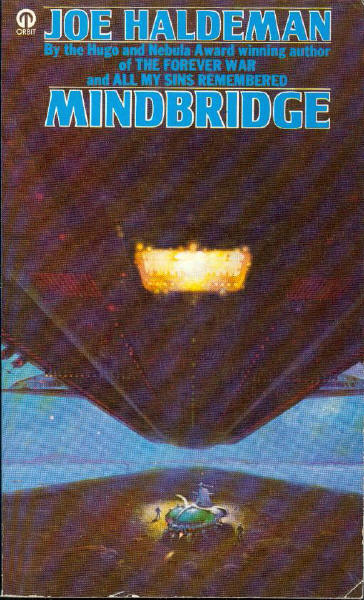
Mindbridge by Joe Haldeman

Children of Dune by Frank Herbert

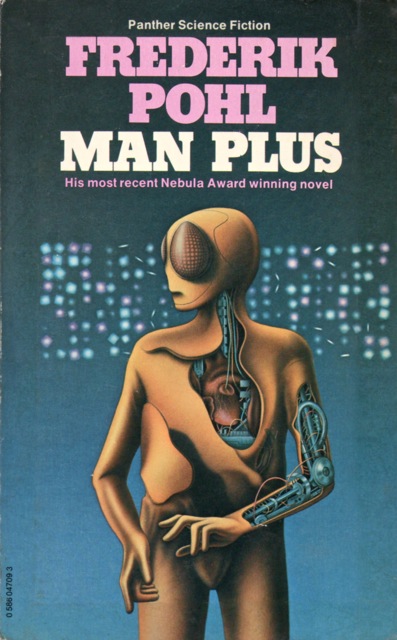
Man Plus by Frederik Pohl

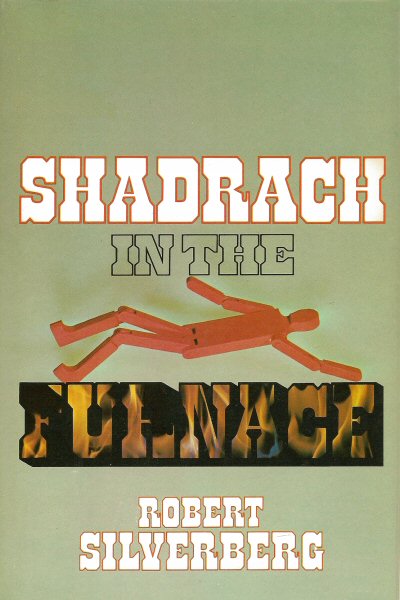
Shadrach in the Furnace by Robert Silverberg

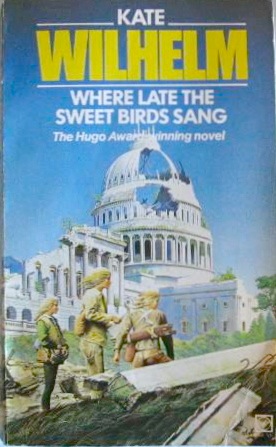
Where Late the Sweet Birds Sing by Kate Wilhelm

The Actual Results

  1. Where Late the Sweet Birds Sing by Kate Wilhelm
  • Children of Dune by Frank Herbert
  • Man Plus by Frederik Pohl
  • Mindbridge by Joe Haldeman
  • Shadrach in the Furnace by Robert Silverberg

How I Would Have Voted

  1. Children of Dune by Frank Herbert
  2. No Award
  3. Man Plus by Frederik Pohl
  4. Shadrach in the Furnace by Robert Silverberg

Explanation

It’s interesting to see which of these books hold up after nearly fifty years, and which of them really don’t. Of the five here, I think Children of Dune is the only one that still has any lasting cultural relevance, and that only because of the first book, Dune.

Children of Dune is also (perhaps not surprisingly) the only book that I would consider worthy of voting for. It’s nowhere near as good as Dune, but of the Dune sequels, it’s the best one I’ve read so far (though the way Leto transformed into a… whatever really seemed to come out of nowhere). Man Plus and Shadrach in the Furnace weren’t terrible, but I didn’t finish them. I can’t speak to Mindbridge, because I didn’t bother reading it: I’ve read enough Haldeman to know that he has a penchant for nihilism that really rubs me the wrong way.

As for Where Late the Sweet Birds Sang, it was really awful. I don’t remember the plot exactly, but the book is full of leftist 70s doom porn regarding climate change and Malthusian resource shortages, combined with a resurgence of The Patriarchy that forces all the female characters into becoming breeders. It’s dark, dystopian, and apocalyptic in all the worst ways, with a very strong political bent to it that holds up about as well as all of the end-of-the-world predictions that the climate cultists have been peddling since the 70s. Basically, Where Late the Sweet Birds Sang is why I’d vote “No Award” after Children of Dune.

Man Plus had some interesting writing, but it didn’t really hold my interest, probably because of all the Malthusian and Freudian undertones. It wasn’t insufferably political, though, which is why I would actually affirmatively vote for it after “No Award.” I would certainly rather that Man Plus had won out over Where Late the Sweet Birds Sang. Same with Shadrach in the Furnace, which isn’t terrible, though it does have some weird communist power fantasies in it. I really love the way Silverberg writes, but the things he chooses to write about just seem totally pointless to me.

The 70s was a very weird time for science fiction… and probably a weird time for the world in general. As you can probably tell, I’m not a huge fan of New Wave science fiction (with a few notable exceptions). Things got a lot better after Reagan’s Morning in America, not just for the country, but for science fiction as well. Then we hit the 90s, which the Zoomers tend to look on as a simple, idyllic time when all was bright and wonderful in the world, which strikes me as hilarious because I remember it as a time of rampant school shootings and MTV-driven cultural decay. But that’s a subject for another post.

Do all books deserve to be read?

From TV Tropes:

Half an hour after the show is over, a random viewer is staring into their refrigerator, vaguely bemused by the fact that their six-pack of beer has somehow become a two-pack of beer. Rather than work out how this might have happened, it occurs to them to wonder how in the hell Sydney Bristow went from Hungary to Melbourne, Australia, then to LA, all within 24 hours. Or maybe it occurs to them that they’ve never met anyone who actually named their dog Fido. It didn’t bother them during the show. It wasn’t until they discovered they were running short of beer that it became an issue.

When China Mike Glyer picked up my post a couple of days ago, I was skimming over the comments and saw one that said, in effect, “every book deserves to be read.” At the time, I thought “well, that’s obviously stupid” and moved on, but last evening I had a moment of fridge logic, almost exactly like TV Tropes describes (minus the beer, since I don’t drink).

Every book deserves to be read? Really? Prove it by reading the Bible cover to cover. And the Book of Mormon. And the Doctrine and Covenants / Pearl of Great Price. And the Complete Journal of Discourses. And every General Conference report going back for the last two centuries. Heck, even as a believing Latter-day Saint, I don’t think there’s anyone alive who’s read all of that.

Or how about Mein Kampf? Does that deserve to be read?

(I happen to believe that it does, but in a “he who knows himself and the enemy does not need to fear the outcome of a hundred battles” sort of way. And no, I haven’t read it yet.)

Seriously, though, how insane do you have to be to actually believe something like that? “All books deserve to be read.” That’s not the sort of thing that a person comes up with unless they’ve been programmed to think a certain way. Like, “all women deserve to be believed” (except for Tara Reade, of course).

Now, I don’t believe that there’s a nefarious conspiracy to deliberately program people like this commenter to read crappy books. But there is a lot of propaganda out there that follows the formula “all _____ deserve to be ______.” Case in point, believe all women. What probably happened was this commenter, who has already been programmed by this sort of propaganda, tried to reformulate it in a way that would make me look bad. As in, “Vasicek is such a heartless monster to DNF so many books. All books deserve to be read.”

Here’s the thing, though: books are inanimate objects. They don’t have feelings. They don’t care if you read them or not. But readers do care if a book wastes their time. Time is a scarce resource for all of us, and there are more books in the world than can be read in a thousand lifetimes. So if you want to have any chance of finding and reading the best books, you need to be discerning—and that means acknowledging that some books just aren’t worth your time.

This is why I’m such a firm believer in DNFing books early and often. There’s nothing I hate about reading more than slogging through a book that isn’t working for me, only to find that I should have DNFed it a hundred pages ago. That’s why I was so frustrated with Stranger in a Strange Land. I love many of Heinlein’s other books, especially his juveniles, but some of them really misfire for me. So now, I assume that the author needs to prove themselves with every book.

But Joe, doesn’t it bother you as an author that people are DNFing your books? Not at all! Reading is an act of collaboration between the reader and the writer, which means that everyone’s “best books” list is going to be subjective. Some of the elements that make a book good can be measured objectively, but those elements are going to hit differently for different people—and that’s okay. Besides, even Jesus gets one-star, “did not finish” reviews. Who am I to think that I’m better than Him?

I used to worry that I was DNFing books to easily. But over the course of this last year, I’ve come to trust my own tastes. One of the things that I do test this is to skip to the last chapter of every book that I DNF, and read that. In 9/10 cases, I find that yes, there really is something objectionable about the book, and I made the right choice. And in the 1/10 books where that isn’t the case, something about it usually sticks with me, so that I end up coming back and reading it later. One of those books for me now is Deadhouse Gates, which I am thoroughly enjoying.

But you can’t learn to trust your own tastes if you adopt this insane idea that “every book deserves to be read.” In fact, if I still believed that I needed to finish every book that I started, I probably wouldn’t be much of a reader right now, just like most Americans.

So no, not every book deserves to be read. And at the end of the day, it isn’t about the books at all: it’s about the readers.

Reading Resolution Update: April

My 2022 reading resolution: Read or DNF every novel that has won a Hugo or a Nebula award, and acquire all the good ones.

In 2007, when I was a sophomore in college, I went up to Salt Lake City with some friends and was browsing the awesome (and fairly run down, even at the time) used bookstore near the Gallivan Plaza TRAX stop, which has since changed names and moved to another location. It was a really awesome used bookstore, and I determined to buy a SF novel while I was there, since I was really getting back into SF after my mission. I saw a massive 600+ page trade paperback edition of Cyteen by C.J. Cherryh, and since I was reading Downbelow Station at the time, I decided to get that one.

For the next fifteen years, I lugged that book everywhere, through more than a dozen moves (though for the biggest move, where I made the pioneer trek in the wrong direction and repented 8 months later, I boxed it up with my other books and left it in a friend’s basement). In all that time, I never actually read it—or even opened it up, really—but it was always there, somewhere in the middle of my dismally long TBR list.

It wasn’t that I didn’t want to read it: I just didn’t have (or make) the time. Downbelow Station had been an okay read, if not spectacular, but I had really enjoyed some of C.J. Cherryh’s shorter books, like Merchanter’s Luck and Voyager in Night. Also, space opera books about sprawling galactic empires were right up my wheelhouse, so it didn’t seem odd for me to own such a book that I hadn’t yet read. In fact, most of the books that I owned throughout this time were books that I wanted to read but hadn’t gotten around to yet. If I have a superpower, it’s an uncanny ability to acquire books no matter where I am. Unfortunately, I’m not as good at reading them.

Fast forward to 2022. I’ve gotten married, had a daughter, launched my own writing career, and become a homeowner—and I’m still lugging this massive 600+ page trade paperback book that I’ve never read. But I’ve just set a resolution to read (or DNF) every Hugo and Nebula award-winning novel, and Cyteen is on the list. So around the middle of March, I finally open it up and start reading it.

After about a month, I decided to DNF it.

It’s not that it was terrible. Perhaps you enjoyed it, and that’s fine. I just found it to be too drawn out and confusing. I think C.J. Cherryh does better when she’s focusing on just a few characters, rather than trying to give the grand sweep of galactic civilization or whatever. I didn’t finish Foreigner for similar reasons. Maybe someday I’ll return to that one and Cyteen, but for now, I’m counting it as a DNF.

But the thing is, I was hauling around this massive book for most of my adult life. When I bought it in 2007, I figured that since it had won a Hugo, it had to be good. Perhaps, if I’d read it back then, I would have been more patient with it and slogged through to the end. Perhaps I would have decided it was just as good as Downbelow Station. Or perhaps, if I read Downbelow Station today, I would end up DNFing it as well.

The point is, I wish I’d been a lot more discerning about my reading when I was younger, and not just acquired books that I hoped to read “someday”… because books (at least the paper ones) are heavy and take up a lot of space. And a lot of them really aren’t worth reading. Of course, you’ve got to read a few stinkers to figure out what you really like, so it isn’t always a waste… but libraries exist for a reason.

So what this experience really tells me is that Mrs. Vasicek and I are doing the right thing by taking our family to our local library once a week. Also, it tells me that the second part of my resolution—to actually acquire all of the books that I think were worth reading—is just as important as actually reading them. Because, if the ultimate goal is to “seek… out of the best books words of wisdom,” then it’s not enough to just make a list: you actually have to read the damned things, and keep your own personal library in order to revisit those words and share them with others. Because ultimately, you have to discover which books are the “best books” on your own, and your best books list isn’t going to be the same as anyone else’s best books list. Which means that you can’t rely on anyone else’s list. You can use it as a starting point to make your own list, but that’s all you should use it for.

So now I want to go through all of the books I’ve acquired over the years and figure out which ones I ought to get rid of, because Cyteen certainly wasn’t the only one. In fact, most of the books in our family library are books that I haven’t (yet) read. By my count, there are just under 150 of them, totalling about 55k words. Even at a rate of 100 words or two hours of reading each day, that’s still going to take almost two years… and that’s not counting all the library books that we’re sure to check out in the meantime.

Oh well. I suppose this is more of a process than anything else. Journey before destination, and all that. And I’m sure I’ll have fun in the process, since despite the fact that I DNF far more books than I actually read, I do genuinely enjoy reading.

In any case, here are all of the Hugo and Nebula award-winning books that I read (or DNFed) in the month of April:

Books that I read and plan to or have already acquired:

  • Rainbows End by Vernor Vinge (2007 Hugo)
  • Blackout by Connie Willis (2011 Hugo and Nebula) (audio)

Books that I read and do not plan to acquire:

  • Blackout by Connie Willis (2011 Hugo and Nebula) (print)

Books that I did not finish:

  • A Time of Changes by Robert Silverberg (1972 Nebula)
  • The Gods Themselves by Isaac Asimov (1973 Hugo and Nebula)
  • The Fountains of Paradise by Arthur C. Clarke (1980 Hugo and Nebula)
  • The Claw of the Conciliator by Gene Wolfe (1982 Nebula)
  • Cyteen by C.J. Cherryh (1989 Hugo)
  • Tehanu by Ursula K. Le Guin (1991 Nebula)
  • The Diamond Age by Neal Stephenson (1996 Hugo)
  • The Moon and the Sun by Vonda N. McIntyre (1998 Nebula)
  • Parable of the Talents by Octavia E. Butler (2000 Nebula)
  • 2312 by Kim Stanley Robinson (2013 Nebula)
  • Beyond This Horizon by Robert A. Heinlein (1943 Retro Hugo, awarded in 2018)
  • The Nemesis from Terra by Leigh Brackett (1945 Retro Hugo, awarded in 2020)

Total books remaining: 26 out of 110 (currently reading 12 and listening to 3).
Reading Resolution

My resolution last year was to read or DNF 100 books. I was doing pretty well on it through the summer, but then I stopped using Goodreads and lost count. (No particular reason, other than that I just fell out of using the site. It’s clunky and difficult to navigate, and after I started using my wife’s spreadsheet system for tracking my reading, I just didn’t feel like posting updates.) Counting children’s books, I definitely hit 100—probably more like 120—but without counting children’s books, it was probably closer to 80.

I do really want to keep up on my long-term goal to become a better reader—or to be more well-read, which amounts to the same thing. This last week, I’ve been giving that goal some serious thought, and I’ve decided on the following new year’s resolution for 2022:

Read or DNF every novel that has won a Hugo or a Nebula award, and acquire all of the good ones.

Ever since 2015, I’ve been pretty jaded about the Hugos (and the Nebulas, to a lesser extent). However, for a long time they were the most important and authoritative awards in science fiction, and by using it as a reading list, I hope to get a better sense of how the genre has evolved over the years, including how in recent years it has fallen to the woke insanity of our time.

There are 110 novels that have won either a Hugo or a Nebula award (or both). Of those, I’ve already read or DNFed 33 as of today, January 1st. I anticipate that I will DNF many of the rest, but I’ll give them all an honest try, and differentiate between hard DNFs (where I know I’ll never get back to reading it) and soft DNFs (where I intend to come back to it later). For purposes of this resolution, though, I’ll count both, since as a reader I believe in DNFing early and often.

As for acquiring them, that shouldn’t be too hard, and will help to build our family library, which is one of my long-term goals. Paperback Swap is great for acquiring used books, especially mass market paperbacks, which is actually my preferred format for most books (great for stuffing in a back pocket or tossing in a backpack, and you don’t mind it as much if someone borrows and never returns it). The added benefit of using Paperback Swap is that it will help me to get rid of some of the books I’ve acquired over the years that I’ll probably never read.

That’s actually a huge problem for me, and I was thinking about making another resolution to have read at least half of the fiction books that we own before the end of the year, but I think this reading resolution will help with that enough that I don’t need to make it more complicated. I’ve found that it’s generally better to set one resolution and focus on that, rather than setting so many that I’ll probably forget all of them by mid-March. Besides, having a bunch of unread books isn’t actually much of a problem, unless you don’t have a place to store them. We do.

While putting together the spreadsheet of all the Hugo and Nebula winning books, I discovered some very interesting things. One of them had to do with the age of each winner at the time they won the award. The average age was about 46, with Samuel Delany coming in as the youngest for Babel-17 in 1967 at age 25, and Ursula K. Le Guin as the oldest for Powers in 2009, at age 80. (Her first novel to win either award was The Left Hand of Darkness, in 1970 when she was 41.) The average age skewed younger in earlier decades; now, it’s closer to 50.

Another very interesting thing to look at is which authors have had children and which ones haven’t. Of the Hugo and Nebula award-winning novels that I’ve DNFed, almost all of them are from authors who are childless. That’s not too surprising when you consider how much it changes your perspective on the world to have or adopt a child. What’s really surprising to me is how many of these authors are childless, and how many of the childless authors are writing books for children. Since 2015 and 2016 respectively, none of the living authors who have won a Hugo or a Nebula award for best novel have had any children of their own—or if they have, it’s not public knowledge and the internet doesn’t know.

So anyways, that’s basically the long and short of it. I’ll keep track of this goal through the detailed spreadsheet I’ve set up for it, and post updates throughout the year. And when I’m done with the Hugos and Nebulas, I’ll probably move on to the Dragon Awards, which may actually be harder since 1) there are more than half a dozen sub-categories, 2) many of the winning novels are the umpteenth book in a long-running series, and 3) I probably won’t DNF as many of them.

What are your reading resolutions?