Change of plans

So I was going to start Edenfall this week…but then, I realized I wanted to spend some more time in the universe of Worlds Away from Home, so I decided to work on Into the Nebulous Deep instead.

ITND is a direct sequel to Mercenary Savior.  Basically, it grew out of the realization that James’s story wasn’t anywhere near finished.  Like WAFH, I’m trying to throw in some romantic elements…how well that works out remains to be seen.  I’ll probably get it all wrong on the first draft, but make it shine in subsequent drafts.

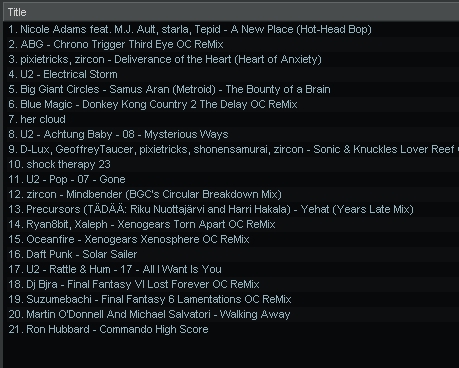
Anyhow, here’s the soundtrack I’ve put together.  Most of the songs are from ocremix, but there’s also a good bit of U2 and a little Daft Punk, as well as a couple chiptunes that probably no one’s heard of.  Man, I love chiptunes.


I’m going to try to write through this rough draft as quickly as possible.  Right now, I’ve got a deadline for April 16th, but I wonder if I can finish before that.

Part of that has to do with my new goal of two novels per year; I want to train myself to write quickly, so I can be putting out more work.  More than that, though, I want to try and tap into my creativity in a deeper way.  If I can train myself to write quickly, I’ll be less prone to self-edit, which hopefully will help the creative part of my mind to flourish more freely.  That was certainly the case with WAFH 2.1, and I want to do it again.

I stopped ITND 1.0 back in December in order to work on Bringing Stella Home; not because it wasn’t working, but because BSH needed a little more work.  After that, I ended up picking up WAFH.  Now, it’s time to go back and finish this project.

Slogging through to the bitter happy ending

Oh man.  I was hoping to hit 5k words today, and even though I must have spent five or six hours writing, I only managed half of that.  It’s progress, I know, but it’s not as much progress as I’d like; the words just aren’t coming, no matter what I do.  Blarg.

The worst part is that I know that most of these words are just crap.  I’ll get to the end of a chapter and think “oh yeah, shouldn’t these characters be doing/thinking this?” And I’ll make a couple of notes in the revision guide, or touch up what I’ve written just a little bit, but one thing compounds on another until everything’s got problems.

But you know what?  I’m almost three quarters of the way through, so it’s probably better just to write on through these problems and finish the @#$! thing.  At this point, I’ve got a good enough story that I can carry things through to the end, as horrible as it may be, and just fix everything in the next draft.

It’s frustrating, though, because I know that most of the changes I’m going to make will seem obvious.  Why can’t I just get it right the first time?

Is it because I failed to outline things enough?  I know from experience, however, that outlining too much can be fatal for me.  Is it because I didn’t take the time to immerse myself in my story?  But then again, I’ve been spending so much time on my writing, everything else seems to be suffering, including my social life…

BLARG.

I’m probably just missing the forest for the trees.  Once I get out of these woods, though, I’m sure things will fall into place.  One way or another, in two weeks this abomination will be FINISHED! …at least until the next draft.

Braving the unexpected rough spots

Right now, I’m going through this unexpected rough spot in my novel, where I know what’s supposed to happen (or at least I have enough of an idea to wing it fairly well), but the writing just isn’t coming.  This happens every time I hit the two thirds mark, and it really sucks.

Currently, I’m using two methods to get through it: 1) keep a running chapter-by-scene outline of the next few scenes, and 2) use a loose adaptation of story theory models (such as the hero’s journey) to keep perspective on things.  Right now, this is what my chapter-by-scene outline looks like:

Chapter 14
14.1: Jalil
Jalil meets LARS, who with Michelle shows him the ship. Jalil learns that Lars has a connection with the Farlen family and that the Stewarts are from his parents’ home.
14.2: Mira
Mira returns home an outcast. Sheila rails at her for failing to seduce Jalil, while Sathi pulls her into his quarters to tell her that he’s arranged for her speedy marriage.
14.3: Jalil
The Bridgette launches from GN-2 using a gravity whip maneuver. The ship heads out for the L2 point, using a second gravity whip around GN-2b. Jalil realizes this is goodbye.

Chapter 15
15.1: Mira
While Mira prepares herself to get ready to meet her cousin Ibrahim, Tiera approaches her in private to apologize for calling her a whore. Tiera advises her to stand up for herself.
15.2: Mira
IBRAHIM’s convoy arrives. As Sathi and Ibrahim’s father conduct negotiations, Mira meets him and is surprised to find that she’s attracted to him.
15.3: Mira
Mira, Surayya, Amina, and Tiera discuss Ibrahim in the women’s quarters. Tiera advises Mira not to pursue him, but Surayya and Amina convince her to go ahead with it.

Chapter 16
16.1: Jalil
Lars and Michelle tell Jalil about the Colony. They show him pictures, and he has flashbacks.
16.2: Jalil
While making maneuvers around GN-2a, the Bridgette receives news of Hameji movements near Karduna. Jalil learns a bit of the Hameji.
16.3: Jalil
The Bridgette arrives at the L2 station and enters the starlane. Jalil’s first experience as an adult making the jump.

Chapter 17
17.1: Mira
???

As you can see, I’ve broken down each chapter by scene, with the viewpoint character indicated as well as a short one or two line description of what happens. When a new character comes along, I mention them by name in ALL CAPS. I use the auto font color for story that I’ve already written, and the stuff that remains to be written in red. Also, I only outline a handful of scenes ahead of my current position.

That’s the method that works for me.  I have no idea if it will work for you, but feel free to give it a try or let me know what methods you’re using.

I’m finding that even though I’m more of a “discovery writer,” certain methods of outlining give me much greater flexibility to discovery write than simply winging it all on the fly.  In particular, I find that outlining my characters and keeping a running scene-by-scene map for the next couple days helps to keep me on track.

I ran into this problem earlier in the week: without any kind of outline, and no previously written material to fall back on, I had no idea what to do.  Instead of sitting at my keyboard doing nothing, though, I plotted out the next few scenes to give me some idea what to do.

That helped me out for a while, but now…man, it’s still rough.  I did 3,251 words yesterday, but today I only hit 1,555.  It’s a lot, I know, but with all my free time, I should be hitting more.  Much more.

I suppose the only way out of this slump is to write–and write I certainly must.  I seriously need a real job, and right now I’m looking into the field staff position at Wilderness Quest.  If they hire me, I’ll need to finish this novel before I start work, since I’ll be out in the wilderness for three weeks at a time and the last thing I want is to pick up a half-finished project after it’s gone cold–especially when I’ve got to rewrite Mercenary Savior for World Fantasy 2010.

So that’s what I’m looking at right now.  Three weeks, inshallah, and Worlds Away from Home 1.2 will be finished.  Hopefully by then, I’ll have a real job too.

To close, check out this awesome version of the Corridors of Time song (Zeal theme) from the Chrono Trigger soundtrack.  I’ve heard maybe twenty or thirty different arrangements of this excellent composition, and this one takes the cake.  Beautiful.

Forward to new ground

A couple days ago, I finished writing through the material I’d written for Worlds Away From Home back in 2008 before I dropped the project.  For the first time since March, I find myself drafting entirely new material.
It’s a little bit unnerving; I’m a much better reviser, I feel, than straight up writer.  Revising is awesome because I know that the book is getting better, whereas drafting is frustrating because the written story never turns out as awesome as it was when it was in my head.

At the same time, it’s really fun to play fast and loose with your book.  Need a new character?  Throw him in!  A new romantic subplot?  Go for it!  A new planet for the characters to visit?  Sure, why not?

I will say, though, that it’s much harder to keep up a steady writing rate when you’re drafting new material.  My daily word count has fallen to about 2k, give or take a few hundred words.  In order to finish this by August 15, I just need to do 2.2k per day, but I’m sure something will come up and I’ll find myself in a crunch by the end.

One thing that might throw a kink in the works is getting a new job.  Being underemployed really sucks, and I want to move on to a new job by the beginning of August.  Easier said than done in this economy, right?  Well, there are some options open to a young, single college grad in my position: namely, a wilderness job.  I’ve been holding out on that because eight days in the wilderness for every six days off seems like a lot of time away from other pursuits, but the more I look at it, the more appealing it seems.  Six days completely off, with no money problems…hmm…

Which reminds me: would it be lame to put up a donate button on this blog?  One that said “buy me a (non-alcoholic) drink” or something like that?  I don’t want to ask for money, but if you guys feel like throwing it at me, who am I to hold you back?  I don’t expect it to earn much, but something is better than nothing, especially these days.

Thoughts on the convolutions of discovery writing

It’s been forever since I posted, so I figured I’d put something up and let you guys know what I’ve been up to.

I’m happy to say that Worlds Away From Home is going well; I wrote just under 20k this week, which is more than I’ve written in a long time.  I hope to keep a steady 15k to 20k for the next three weeks as I finish this draft.

I think I’m through the roughest parts (famous last words, right?), and I’ve got a fairly clear idea where I want to take this.  That is, I have a target ending that’s both specific enough to give me direction and vague enough to give me some flexibility.  If I’m doing things right, I expect these characters will surprise me before the end.

When I first started this novel almost two years ago, I hit a bad rough patch right around my current spot and had to put it on hold for a while.  At the time, I thought it was because of a particularly difficult scene (which I just rewrote), but now I see that the problem was much bigger.

I thought that I was telling a story about a guy who nearly falls for the wrong girl and ends up with the right one in the end, when really the first girl was the right one.  Once again, I found myself telling a very different story than the one I set out to tell.

Interestingly, in order to see what I needed to do to fix the problem, I had to write a completely unrelated novel in the same world about the same overarching world events.  My problem, I think, was that I spent so much time world building that I stopped paying attention to what the characters were doing.

With the current draft, I’ve discovered that this story is very solidly a science fiction romance.  There’s plenty of sf action, but it’s the romance that drives the plot.

While this discovery comes as a pleasant surprise, it also worries me because the potential audience may be very small.  Traditionally, science fiction has been anathema to romance, and while that may be changing (as evidenced by this interesting post at tor.com), I wonder how well this book will sell, especially because it’s not your typical romance.  In some ways, it’s actually a critique of our typical ideas of romance.

Oh well.  I suppose there isn’t anything I can do about it except finish the damn thing and worry about selling it later.  These types of thoughts tend to be counterproductive to the creative process, especially when you’re more thank 50k into the draft.

Overall, though, I’m optimistic.  I like this story that I’m telling, and while I may cringe at the mistakes I make as I go along, I know that I need to resist the urge to fix them until the rough draft is complete.

Writing for me is like wandering around blindfolded with a Polaroid camera and taking a picture of something that sounds cool.  When I take off the blindfold and check the picture, it takes a while before I can see the coherent whole.  Usually, though I have some idea what to expect, the end result surprises me.

I love it, though.  That element of surprise and spontaneity is well worth the lack of control, because usually (if I handle things right) it helps to give the story depth, meaning, and honesty that my conscious mind simply could not give it.

I’m very optimistic about this novel.  Now that the world is solidly built, I can focus everything on the characters, and that’s where the true story lies.  I’m currently having a lot of fun torturing them, but I know where their headed with their growth arcs and how all of this ties together (well, most of it, anyway).  If I can pull it off, it should be quite satisfying.  In the meantime, I’m excited to seeing where it takes me.

Quarterly report

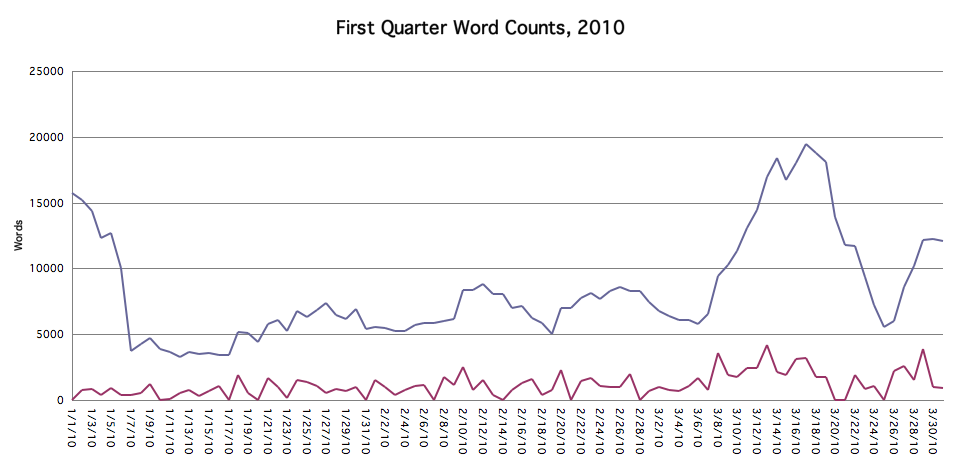
So I figure that since I want to write professionally, it would be a good idea to keep track of my writing and do quarterly updates on my blog.  Here’s the first one for this year:

The red line shows my daily writing word count, the blue line a running seven day total.  The graph starts January 1st and goes to March 31st.

For the first part of January, the seven day total was high for a week because I’d just finished Bringing Stella Home 2.0. It dropped down way low for a while because I was busy moving into the Barlow center, starting my internship, and starting a new novel at the same time.  Combining all three of those things at the same time made for very little progress, until about the middle part of the month.

Things progressed at a moderate rate (about 1k words per day) from the middle of January until snowmageddon, which hit us in the second week of February.  I got a lot of writing done while snowed in, and my work in progress at the time, To Search the Starry Sea 1.0, got a lot of momentum behind it.

That momentum started to taper off, as I realized that the story I was writing was different than the story I had in my head.  I swear, this happens EVERY time I try to write a novel.  I tried to stick with the story in my head, but the gap got wider and wider until I realized the story just wasn’t working.

At the end of February, I decided to put it on the back burner and let my ideas simmer for a while.  I’ll probably pick it up again at some point in the future, but not in the short term–I need to put it away for a while.  I’m sure I’ll finish it someday, though.

So then, in the beginning of March, I went through all the comments I’d received on Bringing Stella Home.  The HUGE spike you see right around the middle of the month represents all the revision notes I put together for the 3.0 draft.  I read through the entire manuscript in about a week and a half, made a detailed scene by scene outline, and figured out my strategy for the revision.

Things dropped off again pretty sharply the last couple weeks of March because that was right around when I was fired from my internship.  That was one hell of a stressful week.  They picked up pretty quick after that, though, because 1) I had a lot more free time, and 2) I’m REALLY excited about this project.

Looking ahead, I think if I push myself, I can finish Bringing Stella Home 3.0 by the end of April.  It will be difficult because I’ll be looking for an apartment and a job at the same time, but after next week I won’t have to worry about schoolwork anymore (potentially for the rest of my life…whoa).  Definitely, I’ll have it done in time for CONduit 2010.

One thing I need to work on a lot more is submitting.  I’ve got a list of agents to submit Genesis Earth to, I just haven’t got around to sending it to them all.  The responses I’ve received have been generally encouraging: all rejections, but about half form rejections, half personalized in some way.  I do think this book will find it’s way in print, though it may not be my first to be published.

Even though Bringing Stella Home will probably need at least one more major revision before the full manuscript is ready to be sent out to editors/agents, I can probably polish the first three chapters enough to shop it around sometime in May.  I’m not sure if that’s what I’ll do, but it’s an option.  It depends on whether I jump right in to the 4.0 revision after finishing the current draft, which I probably won’t do; better to let it sit for a while.

Instead, I think I’ll jump right in to finishing that novel I started in late 2008, Hero in Exile.  The title will have to change (as always), but I’ve got a lot of fresh ideas for it, plus the enthusiasm to pull it off.  In many ways, Hero in Exile is a non-linear sequel to Bringing Stella Home, so if I get a deal with the one, I can always pitch the other as the next in the series.  That’s a huge plus–and a major reason why I’ll be enthusiastic about the project, since the two novels build off of each other.

Anyway, that’s what things are looking like from here.  Somewhere in the middle of all that, I’ll read a couple of friends’ novels (I haven’t forgotten about you, Jakeson and Drek!), graduate, get an apartment, get a job (inshallah), write an article for Mormon Artist, go to a con or two, and maybe even get a girlfriend and/or figure out what to do with my life.

Major project shift

I’ve got this goal to finish my current work-in-progress, To Search the Starry Sea, by May 1st 2010.  However, the deeper I get into the story, the more I realize how many problems it has–how much it sucks, in other words.

Normally, this wouldn’t keep me from dropping the project or putting it on hold.  It happens with every rough draft (or second or third draft, for that matter); midway through every project, I start to get all angsty and worry that the project sucks, that it’s beyond saving, that I’m wasting my time, etc.

However, this time it’s different for a number of reasons.

First of all, the story itself doesn’t suck. However, it does have a weak beginning and a poor setup, which makes it very difficult to develop the middle section.  With better conflict foreshadowing and character introductions, I could tear right through this section, but without that, I’m floundering more and more.

A couple months ago, I started to realize this, so I started a set of revision notes for the next draft.  My thought was “if I know the story needs changes, rather than going back and changing them, I can just make a note of them and move on.”

However, that approach isn’t working because the unwritten changes aren’t impacting the story as fully and completely as they would if I’d write them out.  If the changes were minor, I could let them go–but when they have to do with something fundamental, like setting up a romantic subplot, or turning a minor character into a major character into a major viewpoint character, I can’ t just make a note of the change and move on–I need to write the thing to see what it changes.

In other words, I need to restart this project from the beginning.  But if I do that while I’m still angsty about it, it’s going to end up like crap.  I’ve got to let it sit for a while.

It’s frustrating, because I really want to finish a straight draft from start to finish.  For both Genesis Earth and Bringing Stella Home, I only finished the rough draft after dropping the project for a while and restarting it at the beginning.  If it works, I guess it works, but it would be nice if the creative process were more linear.  Blegh.

All is not lost, however.  Most of my first readers for Bringing Stella Home have gotten back with their feedback, and it’s been extremely helpful.  I’ve got a clear direction and lots of ideas for where I want to take that story, and now that I’ve spent some time away from it, I can honestly say that it doesn’t suck all that bad.  In fact, after a lot of work, it might actually be decently good.

There are several reasons why it makes sense to work on Bringing Stella Home right now.  For example,

  1. I’m excited about it.  Better to capitalize on that now than wait until after the enthusiasm has died.
  2. I’ve got lots of ideas flowing to me now.  I could try to write them all down for later, but why not try them out now, while they’re still fresh?
  3. I’m sending Genesis Earth out to a bunch of places, and the rejections are starting to come in.  If I can respond to a rejection by sending out a second book in a timely way, I will look much more like a professional, and the agents/editors will take me more seriously.

My goal was to have To Search the Starry Sea done by May 1st.  Let’s see if I can do Bringing Stella Home 3.0 (and yes, the title will change) by that day instead.  And if that proves too difficult, what with graduation, internship, looking for work, and figuring out life, at least I can reach the halfway mark by then.

So that’s my new goal: Finish Bringing Stella Home 3.0 by May 1st, 2010 (or at least be halfway finished). To do that, I’ll have to read through all the comments by the end of this week and have the revision notes all figured out.

Better get started!

Gah! It sucks

I’m about a third of the way through To Search the Starry Sea, and my greatest fear at this point is that it isn’t as good as the last novel I wrote.  Because if it isn’t as good, that means that I’m getting worse, not better, and if I’m getting worse, that means I’m never going to make it as an author, because I’m not even published yet, and if I’m not going to make it as an author, that means I’m going to have to do what I’m doing NOW for the rest of my life, which means that I’m going to be miserable and life is going to suck…

<pant> <pant> <pant>

Seriously, though, sometimes I wonder if I’ve really made the right choice.  To Search the Starry Sea is much more of a happy adventure story, but sometimes I feel that it lacks depth and meaning.  I’m starting to get feedback from my alpha readers for Bringing Stella Home, and their reactions to it are surprisingly encouraging.  That story moved people–but this one?  I don’t know.

Then again, Bringing Stella Home is dark, gritty, and very tragic.  I remember feeling depressed by the story even as I wrote it.  Is that the kind of story I want to be known for?  If I can write something deep and meaningful and have it be optimistic and adventuresome, that would be a lot better.

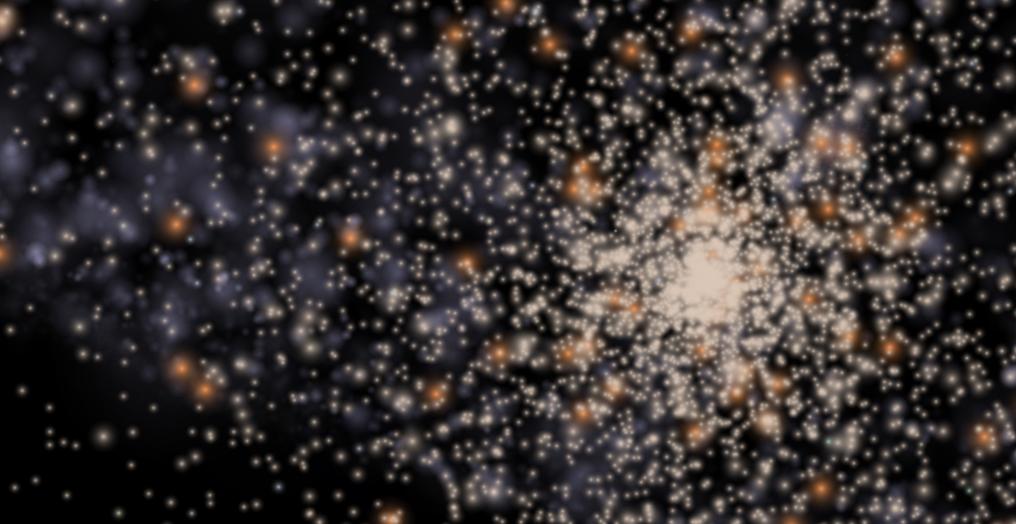
I’m discovery writing it hardcore, which means that side characters often come to play a much more central role than I’d thought, and events that I thought I could cover in a chapter, I have to cover in two.  I have an idea where the story is going to end up, though, and it’s going to be awesome. How awesome?  Let me show you:

Yeah, it’s going to be awesome.

I think the key to keeping it meaningful is 1) to keep in mind the main character’s inner conflicts, framing them in a way that the readers can relate to their struggles, and 2) keeping the overall growth arc constantly in mind.  How does what’s happening affect how the character is changing?  That kind of stuff.

I hope I can finish this in two months.  I’m mired in the middle of it right now, and the end is far from sight.

In the meantime, I think I’ll get some sleep.

Snowmageddon! Hooray!

So for the past week, a series of crazy snowstorms has been pelting the Mid-Atlantic.  President Obama has dubbed it “snowmageddon,” and it’s so bad that all federal government offices have been closed since Friday.  With another storm hitting us tonight, it looks like we’re going to have the whole week off! Yay!!!

So, for the past couple of days, I’ve been hanging out around the Barlow Center, watching movies, doing random stuff with my friends here in the program, taking naps in the middle of the day, and writing.  Lots of writing!  It’s awesome–I haven’t had this much free time since Christmas (which wasn’t all that long ago, but still…)!

Today I didn’t write quite as much.  I got in about 1.1k words, a decent amount, but if I’d pushed myself I could have finished the current chapter.  Monday went much better, because I sat down and forced myself to write in the morning.  Once those initial hundred or so words were out, the rest came much easier.

On the first day of snowmageddon, when we were snowed in at Valley Forge, I got in over 1,000 words before noon.  It was rough going, though–nothing was flowing, and everything took a lot of effort.  I hate it when that happens–blegh.

But I think it was necessary, because now, the scenes are flying by pretty easy.  Sometimes, when I’m struggling with momentum, I find it helps if I take a day to focus and push myself through it.  Get rid of all distractions, put my butt in the chair, close all internet browsers, and just write, no matter how difficult.

My next novel, To Search the Starry Sea, is going to be a lot of fun.  It starts out almost exactly like Homer’s Odyssey, with the same basic conflict and setup.  Beyond that, however, I have nothing solid planned–I’m just following where the story takes me.  And boy, is it taking me to some crazy places!

For example, one of the first places Katriona (the Telemachus character) goes is a nearby world, ruled by a friend of her father’s.  To liven things up, I decided to have him live on a giant rotating space station, where the inside is covered by forests and jungles–scenery that Katriona has never seen.

This got me wondering, however: how did the jungle get there?  The answer: thousands of years ago, before superluminal space travel, a group of colonists set out for this world, freezing themselves in cryo.  When they got there, they found that a solar flare-up had rendered the planet uninhabitable, so instead they built this massive station, hoping that it would serve as a second ark for humanity.

Instead, a raiding party of space barbarians took them over, enslaved the colonists, and built their palace in the midst of the carefully maintained artificial biosphere.

This opened up a series of new possibilities for subplots, which shapes my protagonists interactions with the people here, which points her in new directions for the main plot–the next few places that she’s going to go.

This is discovery writing at its best.  Even though I have no clue where she’s going to go next, things are unfolding very nicely, and I’m excited to find out!

Thoughts on writing characters

A couple months ago, I was listening to one of my personal recordings of Brandon Sanderson’s English 318 lectures from last  year’s class.  The topic was writing characters.

Brandon outlined several techniques for making characters sympathetic.  He also outlined how to round them out: give them flaws and handicaps, as well as little quirks to make them unique and memorable.

However, I couldn’t help thinking that something was missing in his formulation.

Before I continue, let me say that I’m not disparaging or criticizing Brandon Sanderson’s abilities to write compelling, well-rounded characters.  As his novel Mistborn shows, writing characters is one of his strengths.

At the same time, I feel that the “checklist” approach to writing characters can be dangerously counter-productive.  Too often, characters in sub-par novels feel like a patchwork of characteristics and personality traits, not like actual, real people.

When I asked Brandon about this, he said that his techniques should be seen as tools, not as fundamentals.  He then went on to say that the most important thing to keep in mind is the character’s motivations–why they want what they want.  Beyond that, you just have to tweak the character until they fit into their role.

After thinking about it for some time, I came to the conclusion that the best way to write characters is to keep two essential rules in mind:

Rule #1: Every character is the hero of their own story.

Rule #2: Every story is composed of three parts: beginning, middle, and end.

The first rule is straightforward: every character sees their life as a story in which they are the main character.  This is because all of us, as human beings, view our own lives in this way.  We may look at other people and consider them nothing but extras in the story of our life, but they certainly do not think of themselves in this way.

To apply this rule, however, we need to understand what it exactly means to be the hero of one’s own story.  We can only understand this when we realize that a story is composed of three basic parts: beginning, middle, and end (or, as we see ourselves: past, present, and future).

Every hero has an origin and a destiny.  Without these, they don’t have a story; they don’t have a beginning and they can’t have a meaningful end.  This is why the hero cycle begins with the miraculous birth and ends with ascension and apotheosis.

Writers should keep this in mind as they sketch their characters.  If you don’t know where your character came from–who their parents are, where they  grew up, what were their major formative experiences, etc–your characters are going to fall flat because they’re just extras in someone else’s story; they have no story of their own.

Likewise, your characters need to have a destiny.  If you’re a discovery writer (like me), this might be harder because you don’t know, from the outset, where everyone’s going to end up.  Keep in mind, though, that rule #1 applies to the story the characters tell themselves just as much as the story you’re telling the reader.

Each character’s individual story is like a thread, which the writer weaves together with other threads to form a beautiful tapestry.  That tapestry is the novel; without the individual characters’ stories, the work would feel week, shallow–threadbare.

Of course, it’s not always possible (or a good idea) to reveal everything about every character.  It’s also not always possible to outline every character in great depth–not without catching “worldbuilder’s disease.” Instead, the rules of worldbuilding should apply–only use 10% of your worldbuilding in the actual story, no info dumps, etc.

I don’t think that’s a comprehensive theory of character just yet, but I think it’s a step closer to one.  If you have any ideas or suggestions of your own, please do share.

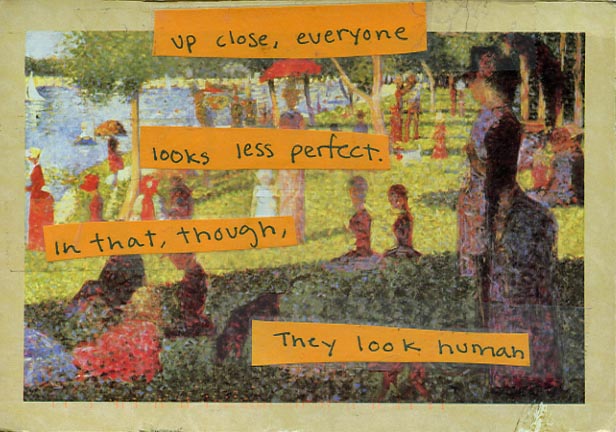
Image courtesy Postsecret