Character Interview: Master Sergeant Roman Andrei Krikoryan

So I recently heard about a really interesting blogfest, where the goal is to blog about the characters in your story, as well as have a little fun with flash fiction.  The prizes look pretty good, too: a couple of free books and a manuscript critique, from a couple of up-and-coming editors.

Not bad…but the 250 word limit on the character interview seemed a little too restrictive.  The idea really caught my imagination, though, so I decided to go ahead and do it for the main character of the book I’m writing now: Stars of Blood and Glory.

It was really fun!  Stuff like this can be great for working out different aspects of your character.  I already knew most of this stuff about Roman, but the exercise helped to solidify it.

And so, without further ado: enjoy!

========================================

Hello, and welcome!  I’m here on the Tajji Flame with Master Sergeant Roman Andrei Krikoryan, one of the Tajji mercenaries in Bringing Stella Home and a major character in the sequel, Stars of Blood and Glory.  How are you doing today, Roman?

How do you do, my friend.

Very well, thank you.  Let’s get started shall we?  First question: What is your biggest vulnerability? Do others know this or is it a secret?

What is my vulnerability?  This is strange question to be asking a mercenary.  Why do you wish to know? <narrows eye>

Um, it’s not meant to be intrusive, more just as ah, um…well, what would you say is your biggest emotional vulnerability?

“Emotional vulnerability”?  Look at me.  I am not a man anymore, but a cyborg; what “emotions” I still feel, they are distant and weak.  Rare pleasures, like sweet, unbidden memories.

I tell this to the doctor every time at check up, but she does not believe me.  She is still young, and wishes to believe that there is some humanity left in me.  Who knows?  Perhaps she is right.  But cyborgs do not die, my friend: their humanity fades until they are a ghost within a machine.

I have wandered the stars for over seventy standard years; I have seen my homeworld conquered not once, but twice.  I have killed many men, I have slept with many whores, I have watched my old friends die, and had other friends watch me, thinking I was dead.  I am old–too old.  And yet cyborgs do not die: they fade.

So if you consider this as “emotional vulnerability,” then this is mine: to be alive, and yet not truly living.  And it is no secret.  I am a man of very few secrets.

What do people believe about you that is false?

Many things, some more false than others.  You cannot be soldier for as long as I without learning how to cultivate a certain, how do I say?  Persona.  My men, they see the side of me that is strong–and it is a true side, for in battle, it is impossible to live a lie.  But the side that they do not see, that is the pain–the memories, the weariness, the silent longing.  It is dull now, but it is still there, even if I do not show it.

And so, if there is something that people believe about me that is false, it is that I feel no pain.  I have always felt pain, until even before the rebellion was lost.  It is way of life for me now.  When the pain finally stops, then I will know that I am no longer human.

What would your best friend say is your fatal flaw? Why?

My best friend is the captain, Danica Nova.  She knows of my pain; she shares in it.  And what would she say is my flaw?  That I suffer in silence, perhaps.  Every time she has question, she is asking me for help, seeking for my guidance.  She believes that everyone must have someone on whom they can lean, that without this, no one can truly stand.  And so she sees me suffering, and wishes that I would talk with her, so that these wounds might heal.

But I do not wish for my wounds to heal.  They are the last thing I have left–the pain which tells me I have not yet faded, that I am still human.  I have lived many years with this pain, and I do not know what would become of me without it.  And so, it is not my friends, but the pain, that has been my constant companion these many long years.

I do not know if this is flaw, but I do know that Danica would say that it is.

What would the same friend say is your one redeeming quality? Why?

That question, I know without a doubt what is the answer.  It is that I will do anything–anything–for my men.  You see my arm, how that it is prosthetic?  I lost the original fighting in a battle that all of us thought we would lose.  If I am fading, it is because I have given my life for my men–and I will continue to do so until I have nothing left to give.

What do you want most? What will you do to get it? 

<laughs> A strange question, with an even stranger answer.  As you can see, I am man of war–but if there is one thing that I wish for, it is peace.  Peace!  And what sort of peace, you may ask?  I will tell you.  I wish for the peace that one feels by coming home. <throws back head and laughs again>

And so you see, my friend, this is a peace that I can never feel.  My homeworld is gone–slagged into oblivion.  My country has been destroyed, my people scattered across a hundred stars. I have nothing left but to keep on fighting; and so, even though I long for peace, I continue to make war, because it is all that I am.

But what will I do to get this peace?  I will tell you.  Since I do not have a homeland, I will find this peace by dying for my men.  It is fitting, is it not?  That the man of war should only find peace in his own death?  This is as it should be.  But it must not be a selfish death–it must be a sacrifice, so that others may live.

Thank you very much, Roman.  I enjoyed writing Bringing Stella Home, and look forward to chronicling your further exploits in Stars of Blood and Glory.

My pleasure.

========================================

As an interesting side note, if Roman had a theme song, this would be it.  Have a great day!
The interior designer’s approach to story

I recently read a fascinating post on John Brown’s blog with an interesting exercise for analyzing the kinds of stories you most like to read.  By finding out what really turns you on in a story, you can have a much better idea what to write, and how to make your own stories better.

He prefaced the exercise with a story about the interior designer who helped them to decorate their house.  The designer spread out a number of home magazines in front of them, and told them to go through and tear out the pictures that most turned them on.  After doing this, they analyzed the pictures to see what they had in common, and thus discovered how to best decorate their house.

The exercise works much the same way.  First, pick out five books you really like that immediately come to mind.  Mine are:

As many of you know, these are some of my favorite books of all time.  I’ve reread three of them, and I intend to reread the other two at some point.

Next, pick out the elements that these books have in common.  Here’s what I came up with:

1) Set in a different time and place.

Not all these books are science fiction, but the all take place in a world far removed from our own.  Only Spin takes place largely on Earth, but the events of the story transform the world as we know it so much that by the end of the novel, it’s completely different. SPOILER (highlight to see) Besides, at the very end, the two main characters leave Earth by going through the giant portal to another planet, so the novel is arguably about escaping the world as we know it.

2) Stakes that are much more personal than global.

This was interesting, and highlights something I realized when I compared Merchanter’s Luck with Downbelow Station.  In all of these stories, the central driving conflicts are extremely intimate and personal.

To be sure, many of these stories also have an epic backdrop; Mistborn certainly does.  However, I was much more interested in Vin’s growth and development than I was in how the Ska would overthrow the Lord Ruler–in fact, Mistborn is my favorite book in the trilogy for that very reason.

3) Encourages deep introspection.

This shouldn’t come as too much of a surprise if you’ve followed this blog for a while, but I love love LOVE stories that make me see the world in a new way.  Thrillers and adventures are all fun and good, but if it doesn’t make me think, I’m usually like “meh” at the end.

4) Female characters who aren’t weak or passive.

This one might be a bit more controversial, but in all of these stories, I’ve noticed that the female characters are pretty strong, even if they aren’t all kick-butt Katniss wannabes (ugh…I hate Katniss).  Even in Legend, which is largely dominated by men, you still have the earl’s daughter, who is one heck of a spirited woman.

5) Life and death conflicts.

This is interesting: in all of these books, the threat of death is immanently real.  Some of them, such as Legend and On My Way to Paradise, are among the most violent books I’ve ever read.  I’m not sure what it is, but there’s something about life and death struggles that really draws me.

6) Romantic in a broad sense.

I’m using Tracy Hickman’s definition here, in which romance is all about teaching us to feel and bringing us in touch with our deepest feelings.  That’s the central theme of On My Way to Paradise: learning how to be a man of passion after witnessing some of the worst atrocities of war.

All of these books not only make me feel, they are about the feelings that they inspire.  In other words, the emotional elements of the story are both a part of and deeply embedded in the story’s central theme.

The exercises isn’t complete after this, though.  For the last part, take another five books and analyze them to see how they compare.  My second list includes:

So how does the list stack up?  Let’s see…

  1. Definitely true.  NONE of these stories take place in the world as we know it–and that’s awesome.
  2. A Canticle for Leibowitz might seem like an exception, since it follows the broad rise and fall of human civilization after the nuclear apocalypse.  But the things that really drew me to the story were the more personal elements: the novice who makes the illuminated manuscript of the electrical diagram, for example, or the abbot at the very end who SPOILER tries desperately to convince the single mother not to take her baby to the mercy killing station after the bomb fatally irradiates them.  In any case, it’s telling that A Canticle for Leibowitz made this list, whereas none of Arthur. C. Clarke’s books even came to my mind.
  3. Definitely true.  Even Citizen of the Galaxy, which is more adventure fiction than high concept sf, features a fascinating society of interstellar traders that really made me sit back and think about the way we structure our society.  Heinlein has a really awesome way of doing that with everything he writes.
  4. The only possible exception here might again be Heinlein, who had some very extremist views of women (putting it lightly).  However, if I recall, Citizen of the Galaxy has a female character at the end who helps pull out the main character from his indigent circumstances and helps him to come into his own.  Again, they might not all be kick-butt tramp-stamp vampire slayers, but they certainly aren’t weak.
  5. Less true of The Neverending Story and The Dispossessed, but while the central conflicts might not be about life and death, the threat of death (or a total loss of identity) certainly comes into play.
  6. Definitely true.  Few books have taught me to feel more deeply than The Neverending Story.  An absolutely magnificent piece of literature.

So there you have it.  According to this exercise, I should write books set in another time and place, where strong female characters face life and death decisions that personally impact the people in their lives and make the readers think and feel.  Interestingly enough, that is a PERFECT description of Bringing Stella Home, as well as Desert Stars and Into the Nebulous Deep.

Cool stuff.  Makes me want to write.  So on that note, I think I will.

A Fascinating Moral Dilemma

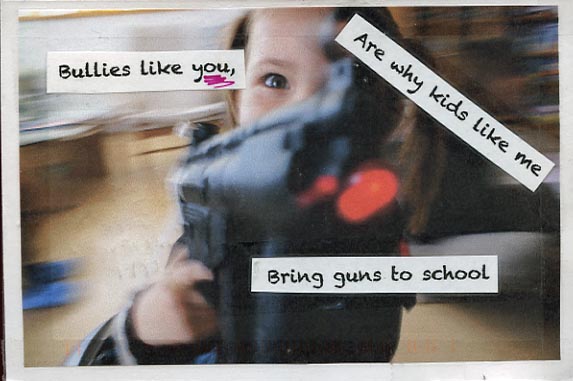
For FHE* tonight, we had an interesting discussion about ethical dilemmas and moral absolutes.  It started with the following question:

If you were a prisoner of war, would you consent to have sex with the prison warden if it would set you free?

The overwhelming answer, predictably enough (at least from a bunch of Mormons), was “heck no!” So then, the teacher upped the ante by asking: what if it would free one hundred other prisoners who were scheduled to die the next day?

I was a little surprised (but not really) when I was the only one who admitted that I probably would.  After all, there’s precedent for something similar in the Book of Mormon, and a very real question of whether or not the blood of the dead prisoners would be on your hands if you didn’t.  Also, I would still consider it rape, since I draw a distinction between the act of sex and the act of saving lives–IOW, the sex itself isn’t strictly consensual; it’s the cost of saving the other prisoners.

Laying aside completely the question of whether or not you can take the warden at his word, it’s a very interesting dilemma, and one that gets at the heart of what people really believe.  The fact that so many of my Mormon peers wouldn’t sleep with the guy tells you a lot about Mormon culture.  My follow up question would be: if it meant freeing yourself and the other prisoners, would you kill the warden?  Because I’m pretty sure most of them would say “heck, yes!” even though murder is typically considered to be a more heinous sin than fornication.

But anyway, the point here is that all of this makes excellent story material.  For your characters, what are the moral lines that they absolutely will not cross?  The ones where they’re a little more fuzzy?  What, for example, would a character be like whose method for choosing between two undesirable courses of action was to flip a coin–no matter the stakes?  And what about the characters like Ender Wiggins who flip the dilemma on its head by stabbing the giant in the eye?

This is the kind of stuff I love to read, and the stuff I love to write as well.  I’m hoping to pull off a really good one in Into the Nebulous Deep, but not for a couple of chapters.  Gotta set things up, get the story moving, and give the romance a little momentum.  But once the characters are all fleshed out and the stakes are insanely high, that’s when the fun begins.  Bwahahahaha!!

Man, I would make an awesome prison warden. ;P

Image courtesy postsecret.

*FHE (Family Home Evening) is, for young single Mormons, roughly the equivalent of a college-aged church youth group meeting.

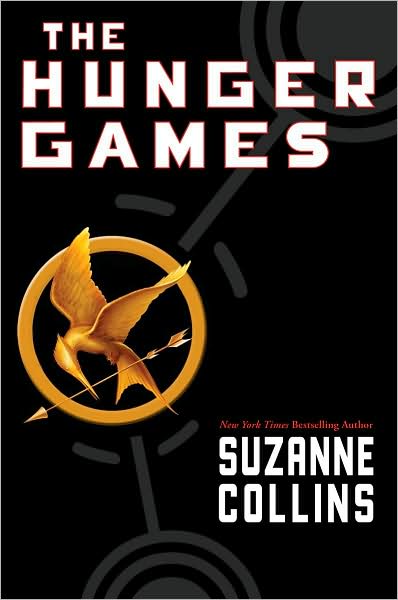
The Hunger Games by Suzanne Collins

This book review is going to be a bit unconventional, so please bear with me.

Normally, I only review books on my blog if I feel I can recommend them.  They might not be perfect, but overall, the praise outweighs the criticism. However, for me personally, The Hunger Games was a huge disappointment.

I’m not going to do a little book blurb like I usually do, because I want to spend all the available space on this post explaining the reasons why I was so disappointed.  Also because of that, this post will be full of spoilers.  Consider yourself warned.

First, let me say that I don’t think this book was all bad.  Suzanne Collins is very good at plot and pacing, and she knows how to keep a reader hooked.  In that way, this book reminded me of the old Michael Crichton thrillers that I devoured as a kid.

However, two crucial things killed about half of the suspense for me: the fact that this book was the first in a series, and the first person viewpoint.

From the very beginning, we know that Katniss isn’t going to die.  We know it, because she’s narrating the story to us directly (in present tense, which personally irks me, but I won’t go into that).  Unlike other gladiator-style heroic fantasies, where the major draw is to see who lives and who dies, we have that spoiled for us.

Of course, the argument in favor of the first person is that it helps the reader feel a closer connection with the viewpoint character.  The problem is, I never did.  At the end of the book, Katniss still feels like an outsider to me; I never felt like I got inside her head well enough to know who she really is.  When I try to imagine her, all I can envision is a wide-eyed mannekin.  She just didn’t come alive to me.

Why? Because the whole time, she’s only got one thing on her mind: survival.  I don’t see anything but fragmentary glimpses of her other motivations, and those are never fully fleshed out.  Her experiences growing up were just so traumatic that I can’t relate to her, and Suzanne Collins never provides a reference point outside of the awfulness of Katniss’s crapsack world.

Which is another thing that got to me: the setting.  Every time I opened the book, I dreaded going back to Collins’ world–and not in a good, “ooh, this world is so creepy/frightening” way, but in a “man, this place just makes me depressed” kind of way.  It wasn’t even that original–Panem is basically the USA as North Korea (though it could take place anywhere, for all the details Collins gives us).

What’s more, the setting is full of inconsistencies.  The people are starving to death, but the forests are full of game and wildlife.  In North Korea, people raze the forests for fuel and timber, driving all the game out.  Yes, I know the people of District 12 mine coal, but all of it presumably goes to Capitol, just like in District 11 all the grain goes to Capitol and the people still starve. Which makes me wonder: why are all the districts specializing in only one commodity?  That’s just stupid.

Which brings me to another thing: the sheer idiocy of the rulers of Panem.  If the Hunger Games are supposed to remind the people of how subjugated they are, why allow the tributes the opportunity to do something like pull a romance stunt?  Why spend all that time primping and preening them, interviewing them, and giving them an opportunity to manipulate the crowds?  When the people of District 11 sent Katniss the bread, why didn’t a government censor stop that from happening?  And finally, when Katniss and Peeta were the only ones left standing, why give them the opportunity to upstage the games by falling on each others’ swords?

Seriously, that last point got to me more than any of the others.  When they announced the rules change, that Peeta and Katniss were supposed to kill each other after all, why couldn’t the GM see the potential for things to go wrong?  Seriously, having them both kill each other–or refuse to kill each other–was such a blatantly obvious choice, I saw it the moment the rule change came into play.  The fact that the villains didn’t just threw me out of the story.

But that wasn’t the first thing that threw me out of the story.  The first thing was the parade, with Katniss and Peeta marching into the arena with their flaming cloaks.  All this time, Katniss has been set up as the underdog–she isn’t pretty, she isn’t strong, she’s mildly sympathetic for volunteering in place of her sister, but the audience in that arena is looking for blood, not sympathy.  So when the crowd goes wild for her and Peeta, I just didn’t buy it.

It only got worse as things went along.  When the tributes did the skill check, Katniss–who, from the beginning of the story, has been set up as the underdog–scores higher than anyone else.  Every time she’s in front of an audience, everyone is oohing and ahhing.  It made me want to gag.

Honestly, you know what it seemed like?  It seemed like Suzanne Collins fell in love with Katniss so much that she wanted to spoil her, even though the story required her to keep up the pressure.  She made sure to torture Katniss in the games–so much so that it felt downright melodramatic at times–but while they were still in Capitol, waiting for the games to start, Katniss felt like a spoiled Mary Sue.

And as for the romance, it fell completely flat from the beginning.  Katniss was nothing but a manipulative faker from the beginning–granted, because she needed to in order to stay alive, but the least she could have done was coordinate that with Peeta.

And that’s another reason why I had such little sympathy for her–she’s a callous, manipulative, lying little heartbreaker, like far too many women in this world.

So yeah, The Hunger Games was, in my opinion, a huge disappointment.  I can partially see why it did so well (strong female protagonist, excellent plot structure and pacing, lots of hooks and cliffhangers), but personally, I don’t think it deserves half the praise it’s gotten.  And after what friends have told me about the rest of the series, I can guarantee that I won’t be reading them.

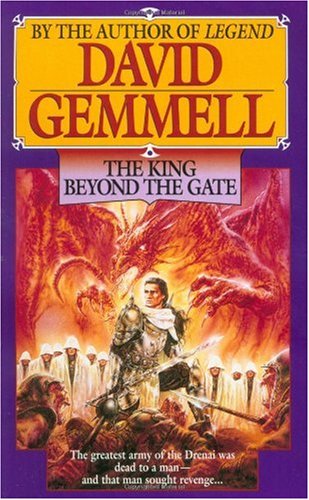
The King Beyond the Gate by David Gemmell

Tenaka Khan was a child of two nations and an outsider to both.  Half Nadir, half Drenai, the only home he ever knew was in the ranks of the Dragon, the elite fighting forces of the Drenai.  But now, a mad dictator rules the land, and the Dragon has been destroyed.

With all his friends dead at the hand of the evil Drenai emperor, Tenaka has only one desire: to steal into the palace and assassinate him.  Along the way, however, he makes a number of friends, all of whom seek the same thing, but all for different reasons.  As they join forces with the Skoda rebels, Tenaka realizes that he not only has something to die for–he has something to live for.

But in order to defeat the mad emperor, the rebels must fight the Joinings–terrible creatures made from man and beast, who slaughtered the Dragon years before.  Only the Nadir can save them–but the Nadir want nothing more than to ravage the Drenai.

If  you’ve read my review of David Gemmell’s Legend, you know why I love his books.  This one was no less incredible.  Parts of it were just as poignant as anything in Legend, and the ending, while bittersweet, was no less satisfying.

It’s really fascinating to me, because Gemmell’s books are not particularly flowery or well written.  His descriptions are sparse, his prose is unassuming, his characters, while distinguished from each other, sound more or less the same, and his viewpoint is often inconsistent.  But in terms of raw storytelling, his books are unequaled by anything else I’ve ever read.

He makes me fall in love with his characters: I cheer for them when they rise to the heroic deeds that circumstances demand of them, I cry when they fall short of what they could have been, and I weep when they give their lives in the service of something greater than themselves, which is almost invariably the case.

My favorite part of any David Gemmell book has got to be the order of warrior priests known as the Thirty.  They don’t show up in every book, but they show up in many of them, and they always share the same characteristics.  The warrior priests are dedicated to the Source (Gemmell’s equivalent of God in his Drenai universe), and have the supernatural abilities to speak telepathically, put thoughts into others’ minds, shield their comrades from the magic of the Chaos brethren, and leave their bodies to fly across the world and do battle in other dimensions beyond the grave.

The way the order is run is absolutely fascinating.  One person is the mouth, the other the ears, the other the heart, etc.  The most unlikely characters always fill the particular roles–but always for good reason.  They fight to defend the innocent and pure, but more than that, they always have some great destiny to perform–a destiny that invariably pits them against the forces of Chaos in some great, decisive battle.  In that battle, all of them invariably die, except for the weakest among them, who goes out to found the next order of the Thirty.

I don’t know about you, but this kind of stuff, just makes me want to jump up and down.  This is fantasy at its best–good versus evil, warriors facing death, and the most unlikely heroes rising to the level of greatness that war and honor demand of them.  Throw in a little magic, a brotherhood of evil sorcerers bent on crushing all that is good in the world, and terrible monsters the likes of which exist only in nightmares, and I am so there, man–I am so there.

In short, this book was nothing less than awesome.  If you love any book by David Gemmell, I think you’ll enjoy this one.  It’s got everything you could possibly expect from heroic fantasy, and more.

Story Notebook #4

Alright, it’s been too long since the last time I posted any story ideas here on this blog, so I thought I’d go back to my old notebooks and post a few of them here.  Currently, we’re on notebook #4, which basically covers the second half of 2009.

And so, without further ado…here goes!

A society in which infanticide, up to the first two years, is not considered a crime (since infants are not conscious in the same way as adults and children)

Youch–talk about a dystopia!  Which makes me wonder, what kind of a society would develop this belief?  Probably not one that values human life–or rather, one that somehow considers adults to be more “human” than young children.

As a direct result of this society’s system of values, there’s probably going to be a lot more promiscuity–or perhaps the promiscuity is what causes this belief to be engendered in the first place?  It reminds me of an ancient Carthaginian brothel, where hundreds of baby bones were found stuffed in the narrow alley between the brothel and the next building over.

Blegh–icky stuff!  Which is to say, it’s probably good story material. 🙂

A near-future dystopia in which the extras in movies (made in overpopulated developing countries) literally act out battle scenes, because hollywood studios can afford to pay for the loss of life

I got this idea from a comment by Dave Wolverton at a con, in which he said that in China, the maximum fine for negligent homicide is $10,000.  This is one of the reasons why so many movie studios do business there–if their extras die or get injured, they aren’t held nearly as liable as in the United States.

Of course, if the maximum fine is $10,000, why not put that in a deposit up front and have the workers fill out a form indicating who should get the money if they die?  You can then have gladiatorial movies and TV shows, where people actually die.  It sounds sick, but I’ll bet you could find a significant audience for that kind of thing.

Economically speaking, it’s a win-win-win situation.  The studios save on safety equipment and profit from the relatively cheap labor costs; the workers benefit whether they live or die, because either way, they’re getting paid much more than they would ever make otherwise; and the host country benefits, because the survivors can then be conscripted to form an elite corps of warriors.

The only real downside is the utter moral depravity of it all–but hey, we’ve already crossed that moral line so many times, what’s to keep us from crossing it again?

A time travel device that allows collection of data from the future without affecting causality–how would this change political science?

By “without affecting causality,” I think I meant that the time travel device itself wouldn’t cause any huge problems–that one could use it to observe without interaction, something akin to Orson Scott Card’s Postwatch. And of course, because I was so deeply engrossed in school at the time, the first application that came to mind was political science.

It would certainly lend a degree of credibility to the science, something which it currently does not enjoy.  It would probably also lead to fierce debates about fate vs. free will between the positivists and the interpretivists–something that has already been ongoing for some time.

My second novel (Genesis Earth) was, in some ways, a response to that debate.

A character who always has the latest liberal candidate’s bumper sticker on the same corner of his/her car, so that it builds up over time.

Interesting character quirk–though since it could only really makes sense in our world, I would never write about it.  Stories set in the real world bore me.

An MMORPG for orcs and elves where they play as humans

Check it out!  I’m a level 80 corporate CEO with the ability to cast ‘complete financial collapse’ and totally screw you out of a job!

Zombie insects

Oh noes!  Even worse if humans can become infected.

Sentient planets

Already done; the book is called Solaris.

Golfing on the Moon or Mars

This…would actually make a fairly awesome short story.

Were-squirrels!

Sounds like something Terry Pratchett would write if/when he parodied the urban fantasy genre.

What if all of us are characters in someone’s story?

God help us all!

A psychic agency that allows you to instant message dead relatives

Personally, I’d never stop wondering whether it’s just an elaborate hoax.

And that’s all for notebook #4!  Don’t worry–I swear I’m not as screwed up as these story ideas make me out to be.

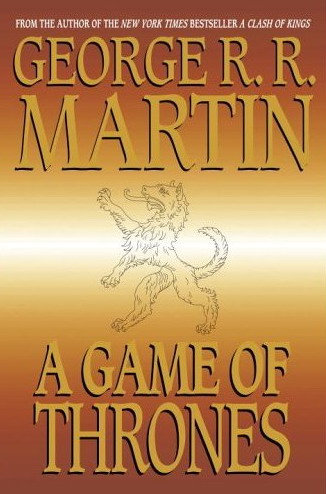
A Game of Thrones by George R. R. Martin

Almost twenty years have passed since the fall of the Targaryen dynasty–twenty years since the last of the dragons was seen in the Land of the Seven Kingdoms.  Now, the libertine Robert Baratheon sits on the Iron Throne, blind to the conspiracies and secret combinations that surround him.

In this dangerous time, Ser Jon Arryn, the King’s Hand, dies of mysterious causes.  Most of the realm accepts the official story that the death was natural, but when Arryn’s wife Lysa sends a letter to her sister, Catelyn and her husband Ser Eddard Stark immediately suspect that the death was orchestrated by the Lannisters.  Only one thing remains: to travel to King’s Landing and uncover the proof.  Soon, King Robert calls on Ser Eddard to become his new Hand, giving them the perfect opportunity to do this.

Little does Ser Eddard know, the intrigue goes much deeper than any of them realize.  For the Lannisters are gathering an army, and Queen Cersei and her brother, Ser Jaime, harbor a secret that would tear the realm apart.  Meanwhile, the last of the Targaryens bears a child prophesied to rule the world, while far to the North, an ancient evil bides its time, waiting to sweep the seven kingdoms with horror the likes of which has not been seen in a thousand years.

Winter is coming–and the people of the Seven Kingdoms are ill prepared to face it.

Everyone seems to be talking about George R. R. Martin’s Song of Ice and Fire series these days–next to The Wheel of Time, it’s probably the biggest epic fantasy line of the last ten or fifteen years.  Martin is well known for killing off his characters and writing in shades of gray, so I thought it would be good to give this series a try.

As soon as I picked up the book, I was hooked.  Martin knows how to craft a beautiful, engrossing fantasy world.  In order to leave no doubt on that point, observe:

Yeah, that pretty much sums up what Martin did with his Land of the Seven Kingdoms. It’s an awesome fantasy world, and I found myself lost in it from the first page.

I must admit, however, after hearing so much about the Song of Ice and Fire series, I was surprised at how few characters died in this book. That’s not to say everyone survived–in fact, Martin killed my favorite character, which made me feel HORRIBLE–but I was expecting there to be more. However, this is the first book in the series, so I assume that the really crazy stuff happens later.

While overall I loved A Game of Thrones, I admit I did have a few misgivings about the book. Martin really does write in shades of gray, and while that makes the story unpredictable and surprising, it also makes things very dark and austere. Martin seems to have no interest in redeeming his characters, and when any of them try to be noble, he cuts them down at every turn.

Personally, I don’t care for that. Flawed characters may be more relateable, but seriously flawed characters (or characters with no interest in overcoming their flaws) turn me off. In this way, Martin is practically the antithesis of David Gemmell; whereas Gemmell makes you love his characters despite their flaws, Martin keeps you reading in spite of the fact that you hate all his characters.

How does he do it? By creating a beautiful, wondrous world. By crafting a masterful story full of intricate twists and turns. By making you hate some of the characters so #%$^! much that you have to stick around and see how they die. It’s all entertaining and extremely engrossing, but at the end of it all, I didn’t come away with any real love for Martin’s characters–except perhaps for a couple of Eddard’s kids, who are still young enough to be somewhat innocent.

I suppose it’s all a part of this new non-conciliatory movement in fantasy. Don’t get me wrong; A Game of Thrones is an EXCELLENT book, but it’s very…non-conciliatory. If that’s your thing, more power to you, but I personally prefer stories about redemption, where romance still lives and even the most unlikely character can be a True Hero, if only for a few fleeting, glorious moments.

Dog dead workdays and killing your characters

This post is going to be super quick because I’m dead tired.

Due to power surges and computer glitches, I had to work overtime today and yesterday at the warehouse, so I really haven’t had time for anything except writing and a little socializing at Leading Edge.  However, things are going well.  I’ll get the extra hours off on Friday, which means a big chunk of free time to do whatever I want.

I broke 3k words today in Mercenary Savior. It was awesome.  I love revision–taking something good and making it really shine.  Just hit some major climaxes and killed off a side character, which is always exhilarating if you do it right.

As a footnote to that, I’m reading George R. R. Martin’s Game of Thrones, and I just reached the part where he kills off the first major character.  What’s more, he was my favorite character in the book so far!!! AAUGGH!  Why, Mr. Martin?  Why???  Yet I must confess, killing him was necessary to take the story to the next level of awesomeness <grumble>.

I’ve been thinking a lot about killing characters recently, and I figure the best way to do it is to recognize that everyone has to go sometime (in real life if not always in fantasy), and to write accordingly.  We tend to ignore our own mortality, when really, there can be so much meaning to it.  After all, to die for something is to make the ultimate sacrifice.  If you make sure your characters die for a reason–either heroic or tragic (or both)–then I think that’s the key to make it work.

The Book Academy Conference at UVU was great; I’ll do a writeup on that soon, probably over the weekend.  I probably won’t post the audio files, but if you want them, just email me and I’ll send you the link.

I’ve been waking up early each day this week, and it’s been great. I’m so much more productive in the morning, writing wise.  It’s like a computer: when you first boot up, your desktop is so clean. With only the startup programs running in the background, everything feels uncluttered.

At the end of the day, though, it’s the exact opposite. You’ve got maybe a dozen applications running, and it’s all too easy to get distracted by switching from one to the other. What’s more, you just don’t have the energy to get things done.

The downside (if you can call it that) is that it’s only midnight and already I’m about to collapse.  Oh well–guess I’ll just have to go to bed earlier.

In closing, let me leave you with this really weird, slightly disturbing anime clip I found on youtube of a vegetable committing seppuko. I guess it has something to do with the rest of the post, seeing as I went on a tangent about killing characters. Anyhow, this is the friendship among vegetables…

Thoughts after finishing In the Realm of the Wolf

Wow.  I just finished In the Realm of the Wolf by David Gemmell a couple hours ago, and it was AMAZING.  So amazing, in fact, that I want to write a post examining my reaction to it before I write the review.

You know that ecstatic, otherworldly feeling you get when you finish an amazingly good book?  Where you feel like you just came home from a long, epic journey and you can’t stop thinking about it?  Where your mind is racing with all sorts of new and beautiful ideas, as if you’ve opened your eyes for the first time?

That’s how I felt after finishing this book.

As a writer, I want more than anything for my readers to have the same experience when reading my books.  I don’t expect everyone will, but I want to be able to connect with a good chunk of my readers this way.  David Gemmell does this for me, and my main question is therefore: how does he do it?

Looking back, I’ve got to say that the book started good and steadily got better, right up until the awesome finish.  The first two chapters were good, but around the third chapter, my expectations started to be exceeded.  It wasn’t until the last half of the book that I realized just how much I was connecting with the characters, and when the climaxes hit, I found myself rooting for them more than I usually do.

So I guess escalation had something to do with it.  Gemmell starts with a pretty simple plot: Waylander has to evade a bunch of guild assassins out to kill him, but he doesn’t want to because his wife just died and he’s depressed.  Then more and more characters get involved, and the stakes steadily grew until the fate of global empires hung in the balance.

Yet throughout it all, the focus was always on the personal conflicts and the impact of the events on the individual characters.  The vast armies sweeping the land were more of a background setting element than anything else; the real story lay in the choices the characters made and why they made them. And when the characters started confronting their demons, I rooted for them as if they were my close, personal friends–or more than friends.

Yet Waylander himself is very much a larger-than-life character.  He’s a better hunter and tracker than the Sathuli tribesmen, a better swordsman than most of his opponents, by far the best crossbowman in the Drenai saga, and a cold, efficient killer with a body-count of hundreds.  Not only is he rich enough to support the bankrupt king of Drenai singlehandedly with his vast financial assets, but in each of the three books in his trilogy, he plays the most pivotal role of any character in the rise and fall of nations and empires.

And yet…I can still connect with him.  Why is that?

Maybe it’s because he’s far from perfect.  He vanquishes hundreds of soldiers, assassins, monsters, and demons, but he doesn’t escape uninjured.  In Realm of the Wolf, his less-than-perfect swordsmanship is a key element of the plot.

It’s the internal conflict, however, that really makes me connect with him.  Don’t get me wrong–I’m not a cold, unfeeling killer, nor have I lost my whole family to roving bandits–but I can understand his struggle to find happiness in the face of so much evil, both within him and without.

Or maybe it’s not so much that I understand him as that I’m fascinated by him, and I don’t know why.  It certainly helps that he has a soft side–that he’s not a complete monster.  In all the books, his quest is always to save lives, not just to take them, and every once and a while he does something to keep my sympathy.  The way he spared the Sathuli scout in Realm of the Wolf, for example.

Overall, though, I think it’s the characters and their conflicts that made this book come alive.  Waylander is basically an adventure tale with some interesting characters; In the Realm of the Wolf is also an adventure tale, but the personal stakes are much higher, and the focus is more on the characters than on the rise and fall of empires.

Anyways.  I still feel like there’s something elusive that I’m not quite getting, but those are my thoughts after finishing this book.  If you didn’t find it helpful, I hope you at least found it interesting.  And if you have the chance, read the trilogy!  It’s goood!

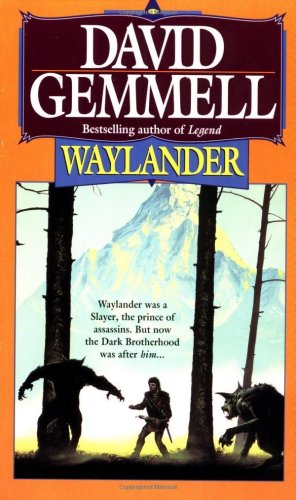
Waylander by David Gemmell

The Drenai lands have been overrun, and the Vagrian conquerors, led by Kaem and the Dark Brotherhood, are laying waste to all that lies before them.  Only the stronghold at Purdol withstands them, but unless the Drenai can rally a counterattack, all will be lost.

In these trying times, a strange old man visits the assassin Waylander and urges him to go to the sacred Nadir mountain of Raboas and retrieve the legendary Armor of Bronze.  With this armor, the Drenai commander Egel can rally the army that will save the kingdom.

But Waylander is a hunted man–a man of dark secrets and many enemies.  Kaem wants him dead for killing his son.  The Nadir want him dead for violating their lands.  And the Drenai want him dead for assassinating their king.

I love David Gemmell.  When you pick up one of his novels, you know exactly what you’re going to get: gritty, complex characters, bloody battles, ruthless villains, and difficult moral decisions that transform even the most depraved individuals into true heroes, if only for a few moments before they die.  Waylander is no exception.

Perhaps the most interesting part of the book is the story behind the founding of the Thirty.  When the young Source priest named Dardalion forsakes the pacifism in order to save the lives of his fellow countrymen, twenty nine fellow priests join him to form the band of legendary warrior monks.  This religious order goes on to play a pivotal role in some of Gemmell’s best works.

Waylander himself is also an interesting, memorable character.  During the events of Waylander, he’s basically hit rock bottom, but as he learns again what it means to love and fight for what he loves, he climbs out of that dark place.

I really enjoyed this book.  My only complaint is that the ending felt a little rushed.  All the plots and subplots get tied up, but some of them so abruptly that there’s little room to savor the emotional impact.  Still, the novel was quite satisfying overall.  I look forward to reading the next book in the Waylander saga.