Buy me lunch and I’ll teach you how to make an ebook

Okay, this is insane.  For a long time, I’ve kept up with Writer Beware as a source for quality news about publishing scams, but now…huh?
Recently, Dean Wesley Smith and Kristine Katherine Rusch have been giving a TON of warnings about “agent-publishers” –agents who are electronically publishing their clients when they’re supposed to represent their clients’ interests to publishers.

DWS and KKR have both been unequivocal about this–any agent doing this is running a scam and should be avoided like the plague.  And you know what?  I believe them.  Why?  Because using entirely free and/or open source software, I can create a professionally formatted ebook from any of my manuscripts in less than an hour. 

Less than an hour.

And I’m not a computer expert either, just a blogger who knows some basic html (which you, too, can learn free of charge at w3schools).

Well, just today I read a post on Writer Beware about these agent-publishers that made my jaw drop.  Summary: agents who ran publishing operations used to be considered scammers, but things have changed so that that’s legit now.  The phrase that really got to me was “unimpeachably reputable agencies.”

Huh?

According to DWS and KKR, these “unimpeachably reputable agencies” become scammers the moment they start publishing their clients’ works.  Clearly, someone is wrong, and my own experience tells me it isn’t DWS or KKR.

Making a professional looking ebook is literally easier than writing a query or a synopsis.  Light years easier.  Paying someone a commission for doing it is like writing the boy down the street who mows your lawn into your mortgage contract.  It makes literally no business sense.

And yet people still think that this agent-publisher things is legitimate?  Wha…?

Okay, you know what?  If you’re a writer in the Provo/Orem area, I’ll show you everything I know about making an ebook if you’ll buy me lunch.  Heck, if you live in Salt Lake and are willing to take me to this awesome Lebanese place, I’ll make a special trip just for you!

I’ll show you what you need to download, install it for you, teach you how it works, and run you step by step through the formatting process until you have a beautiful ebook on your hard drive.  I’ll teach you everything I know (which honestly isn’t that much), and I’ll do it all for the price of lunch.  Just email me at joseph [dot] vasicek [at] gmail [dot] com, and I’ll write you into my schedule.

Why would I take the time out of my day (and away from my own writing) to do this?  Well, for one, I really like Lebanese food.  But more importantly, it’s in all of our interests as writers that none of us get caught up in these crazy scams.  They don’t benefit us and will actually hurt us all in the long run, if we let them happen.

So yes, once again, if you’re a writer living anywhere between Provo and Salt Lake City, I will show you everything I know about formatting ebooks if you will buy me lunch. I’m not even joking.

And I love Lebanese food.  Once we’re finished, I think you will too.

Disappointment and a shift in direction

So the latest round of judging for the 2011 Amazon Breakthrough Novel Award came out today…and Genesis Earth didn’t make the cut.

Oh well, at least I made it to the quarter finals.  Most of the reviews were encouraging, though the one from Publisher’s Weekly made me wonder if the reviewer had something against science fiction in general (or was perhaps underpaid and overworked, as seems to be common in traditional publishing these days).

I did notice that none of the previous years’ winners (or finalists, so far as I could tell) were science fiction–which is not to put down their quality, or the quality of the semifinalists.  It does make me wonder, however, whether part of the reason Genesis Earth didn’t move on was because of the tastes of the audience.

I’m not discouraged though.  My novel has garnered a lot of positive feedback, not only from alpha readers, but from agents and editors as well.  I know it’s got potential; just hasn’t come into its own yet.

The thing is, Genesis Earth is a YA science fiction romance novel, and the YA market is much harder to break into without an agent than adult sf&f.  I could probably find an agent if I queried around long enough, but after reading Dean Wesley Smith’s series Killing the Sacred Cows of Publishing, I’m convinced not to go that route.

At the same time, ebooks are revolutionizing the publishing world much faster than anyone had predicted.  We may pass the 50% mark in the next few months, if indeed we haven’t already.  Combine that with increasingly unfavorable contracts with traditional publishers and some disturbing accounting discrepancies at the major houses, and self-publishing is looking better and better every day.

So I’ve decided to put up Genesis Earth as my first indie published novel.  Expect to see it sometime this summer, probably in June or July.

If you’re an editor and would like to hire out your services, send me an email at joseph [dot] vasicek [at] gmail [dot] com.  I’ll send out a few test pages and ask about your rates (preferably per word).  I don’t have a whole lot of money, but I’m willing to pay for professional quality work.

If you have any ideas for cover art or a cover artist, let me know as well.  I’ll be spending a lot of time trawling Deviant Art and old Leading Edge issues, as well as analyzing traditional book covers to get a feel for that end of the business.  I’m a firm believer in the tradition of high quality science fiction and fantasy art, and want my own work to be a part of that, even if it costs a little extra.

I felt uneasy with going indie a few months ago, but right now it seems, if nothing else, like a very smart calculated risk.  The worst that can happen is that it takes a long time to find its audience, leaving me out a few hundred bucks in freelance costs until it does.  The potential benefits, on the other hand, are tremendous.

In the meantime, I’ll keep blogging about the process to share what I’m learning.  And if you want to support me, feel free to pick up one of my short stories on the Kindle and review it / blog about it / share it with a friend. The links are on the sidebar.  In the next couple of weeks, I’m going to put them up on Smashwords and B&N, so if you prefer those formats, they’ll be available soon too, I promise.

In unrelated news, my cousin Angela just got a publishing deal for her poetry chapbook!  Awesome!  I’m glad to see that someone else in the family is having some publishing success–good luck!

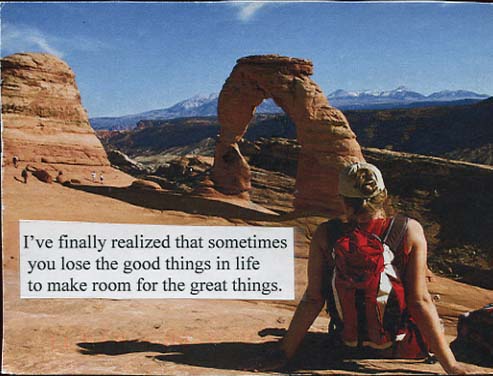
(Image courtesy postsecret)

Killing the sacred cows while doing data entry

Sorry for the lack of blog posts; I’ve been working 40 hours a week at this temp job, which doesn’t leave a lot of time for other things outside of writing.  I’m still plugging along at about 1k to 2k words per day, but a lot of other stuff is falling behind.  Fortunately, the job only lasts another two weeks, and that should earn me enough to take the next month off and focus on writing.  I’m really looking forward to that.

This job isn’t too bad; it’s tedious, but I can read blogs and listen to podcasts and music while I do it, so I’ve been catching up on a lot of business research.  Last week, I read all of Kris Rusch’s The Business Rusch Publishing blog series, and right now I’m working my way through Dean Wesley Smith’s Killing the Sacred Cows of Publishing.

Let me just say, this stuff is pure gold.  Every post (and a surprising number of the comments, especially those by Laura Resnick) have been extremely eye opening.  At the outset, almost everything Dean or Laura say about the industry seems absolutely blasphemous…but it all makes so much sense.

Like the post about how agents shouldn’t be giving authors any career advice… because they’ll usually advise you to write to the market, not to what you’re passionate about (and can therefore write well). Or how if you’re a midlister, it’s usually in the agent’s best interest to side with the editor, since they may have ten or more clients at stake in this house and you only represent a $3k annual revenue stream to them (or less).

The best piece of advice across the whole series so far comes from Dean:

Don’t listen to rules (myths) and do what works for you and if it doesn’t work, try something else, and when that stops working, try something else. Don’t do it my way or Larry Brooks way or Laura’s way or Harlan’s way. Steal parts from all of us and do it your way.

The thing I find most gratifying, however, is the fact that I figured out on my own that submitting to agents first probably isn’t the best way to break in. But man, there is so much awesome, paradigm-shifting stuff in these posts, it is amazing.  Pure gold.

In the meantime, Into the Nebulous Deep is going surprisingly well.  I should have it finished by mid-May, and though it will probably need some serious revision (unlike Dean, my creative mind gets more fired up in the revision process than the drafting process), the major story arc is coming along very nicely.

I wonder if that has to do with the fact that ITND will be my fifth completed novel.  My first one, Ashes of the Starry Sea, was mostly smooth to write, but it was also a practice novel and as such royally sucks.  Genesis Earth went through an EXTREMELY convoluted writing process, but it was good enough to get to the quarter-finalist stage of the 2011 ABNA contest (and in two days, I’ll find out if it made the semi finals…<fingers crossed>).  Bringing Stella Home was also pretty tough to write, as was Worlds Away from Home, though the revisions have been more straightforward so far.

So does this mean I’m starting to come into my stride as a novelist?  I hope so, because I want to start pushing myself.  After ITND, I want to revise WAFH in six weeks or less–and I’ll probably throw out 1/3 to 1/2 of the material and completely rewrite it.  After that, I want to do Sholpan in two or three weeks–but that shouldn’t be hard, because the material is mostly there already.  Whether Genesis Earth wins or loses the ABNA contest, I’ll want to write Edenfall–before August, if I can manage it.  And then, there’s always that post-apocalyptic blight project…

Anyhow, sorry for the rambling.  The point is, I want to take my writing to a new level this summer, and after this temp job is finished, I’ll be in a great position to do it.  In the meantime, I’ll merrily watch Dean kill the sacred cows while I fill out UPS shipping data for the next two weeks.

And now, here’s some candy for your ears:

More thoughts on indie publishing

Since my last post on indie publishing, I’ve been thinking a lot about this subject.  I haven’t decided to take the plunge into self published ebooks yet, but I have decided to make some changes in my writing and my career strategy, in order to position myself more favorably if/when I choose to do so.

Basically, my new strategy is something like Japan or Saudi Arabia’s approach to nuclear weapons: they don’t have an explicit nuclear program (since that would violate the nuclear non-proliferation treaty), but they have gathered the equipment, resources, and expertise together so that if they decided to go nuclear, they could do it in a year or less.

First, though, I attended Brandon Sanderson’s class lecture this Thursday, in which he had some very interesting things to say about ebooks and the publishing industry.  This was part I of his “how to get published” lecture, and here are some of the more interesting points he made:

  • Almost all the indie writers who are making it big have at least one loss leader ($.99 or less) on their list.
  • No one really knows whether indie publishing will be viable for large numbers of writers, or whether authors like Amanda Hocking and Joe Konrath are outliers.
  • Successful indie published books are typically:
    1) short (70k to 80k words)
    2) written in a pulp genre (thriller, romance, paranormal, sword & sorcery, etc)
    3) promoted very well through social networking
  • We have not yet seen any indie successes in epic fantasy, young adult / middle grade, historical fiction, or non-fiction.
  • The produce model vs. unlimited shelf space argument for going indie doesn’t apply as much to science fiction & fantasy as other genres, because:
    1) sf&f stays on the shelves in bookstores longer than other genres
    2) sf&f series grow better with a big push on the first book
    3) sf&f makes a lot of money on hardcover, unlike other genres

A lot of these points tend to mesh with what I’m hearing from my other sources–and Brandon really represents the last of the successful writers to make it big on the old model, before the ebook revolution began to take off.  He doesn’t make as big a deal on the current 25/75 split on net ebook sales as I would make, but then again, he’s making most of his money through print.

So anyways, here is what I plan to change about what I’m doing in order to better position myself to best take the ebook plunge, if/when I decide to do so:

1) Write at least 2 polished novels per year

Kris Rusch and Dean Wesley Smith make very good arguments about how being able to write well quickly is a huge asset for a writer these days.

There are many good reasons for this:

1) Writing faster gives you more practice with craft, which tends to improve quality.
2) The best way to promote  your books is to constantly write new books.
3) The limited shelf space argument against writing quickly is now moot with ebooks.

In particular, I want to increase my writing speed in order that I can have a larger list to put out if/when I decide to go with indie publishing.  It’s much harder to be successful if you’ve only got one book available for sale; if/when I decide to take the plunge, I want to have at least three.

So far this year, I’ve finished one (Bringing Stella Home), but that’s because it was already sitting in the queue and only needed a quick touch up.  I would like to get Worlds Away from Home polished before the end of the year, and possibly one other project, such as Edenfall.

2) Reduce production time to as close to one year as possible

Right now, it takes me on average about two years to write a polished, salable novel.  That’s not a problem, because I have a lot of projects in the queue, but it’s not as fast as I would like.  I wrote Genesis Earth and Bringing Stella Home while I was still a journeyman writer, figuring out my craft.  I should be able to produce a lot faster.

Towards that end, I’m going to try to get Edenfall finished and polished within a year.  Since it’s already March, that might mean getting it polished by February of next year, but I still want to try.

My biggest weakness is first drafts; I always tend to get stuck midway and drop the project for a while before I feel ready to finish it.  That’s something I would like to change.  Then again, that might just be part of my writing process, and shouldn’t be forced.  However, I certainly could go through my revisions much faster.

3) Write out the direct sequels while the first book is still unpublished

Previously, I thought it was a bad idea to write out all the books in a series or trilogy before the first one is ever picked up.  After all, a rejection from a publisher on the first book is a rejection on all the other books in the series as well.  Using this reasoning, it was much better to write the first book of another trilogy, in order to maximize how much I could submit at any given time.

With indie publishing, however, it’s much better to release the whole trilogy all at once, so that readers who finish the first book can immediately pick up the others.  Again, the paradigm here is that the best way to sell books is with other books; if they loved the one, they’ll buy the others, especially to find out what happens next.

Of course, the best model is probably to have an open series with several indirect sequels with recurring characters in the same world.  With the Gaia Nova books, that’s exactly what I plan to do: Worlds Away from Home is set in the same universe as Bringing Stella Home, but with different characters and different story arcs.

However, Genesis Earth has serious trilogy potential, and with Edenfall I’ve decided to actually write the other books.  If/when I decide to take the plunge, I want to be able to release at least the first two books in that trilogy at the same time.  In fact, Genesis Earth is perhaps the biggest reason why I’m thinking so seriously about going indie, but that’s a subject for a whole other post.

4) Experiment with pulp genres such as space adventure stories

When Brandon said that the pulp genres tend to do better, I wasn’t sure whether that includes what I write.  I write primarily science fiction, but not the kind of stories you’d read only for entertainment and promptly forget once you’re finished.  If anything, I want to write more like Ursula K. Le Guin, whose stories are so meaningful they stick with you long after you’ve finished them.

Then again, there tends to be a lot of overlap in science fiction between the thoughtful, meaningful stuff and the pulps.  Ender’s Game and Starship Troopers immediately come to mind as awesome, entertaining stories that also have a lot of depth.  In his lecture, Brandon made it clear that “pulp” does not necessarily conflict with high art–just that the primary purpose of the story is to entertain.

I can live with that–and I actually have several story ideas that would translate well with the pulp mentality.  I’d like to do a novel (or a series of novels) with Danica from BSH and her mercenary team, perhaps as a sort of origin story for Roman, Anya, Artyom, and the others.  I’d like to revisit the Hameji as well, with a sort of “Ain Jalut in space” involving Sholpan’s son (BSH was basically the Mongol conquest of Baghdad in space).  I’ve already started an “Odyssey in space,” as told from a female Telemachus character–that’s To Search the Starry Sea.  All of these are, at their core, space adventure stories, and might translate well as pulps.

5) Commit to releasing one book every 6 months if/when I take the plunge

This is related to the first strategy on the list, but it’s more of a business plan than a personal writing goal.  Basically, if/when I take the plunge, I want to:

1) have at least 3 finished, polished books to put out at first,
2) know that I can put out one book every six months at least.

This not only means developing a backlist, it means doing some soul searching as a writer to find out how difficult it is to keep up with this pace–and adjusting my writing habits accordingly.  I’m optimistic that I can, but it’s something of a paradigm shift, and I want to make sure I’ve made that shift before I take the leap.

Anyhow, these are my thoughts on how to alter my current writing strategy.  I haven’t yet decided to go indie, but when the time comes, I think that these things will help me to maximize my potential if/when I decide to do so.

Of course, what do any of us really know?