Reading Resolution Update: April

My 2022 reading resolution: Read or DNF every novel that has won a Hugo or a Nebula award, and acquire all the good ones.

In 2007, when I was a sophomore in college, I went up to Salt Lake City with some friends and was browsing the awesome (and fairly run down, even at the time) used bookstore near the Gallivan Plaza TRAX stop, which has since changed names and moved to another location. It was a really awesome used bookstore, and I determined to buy a SF novel while I was there, since I was really getting back into SF after my mission. I saw a massive 600+ page trade paperback edition of Cyteen by C.J. Cherryh, and since I was reading Downbelow Station at the time, I decided to get that one.

For the next fifteen years, I lugged that book everywhere, through more than a dozen moves (though for the biggest move, where I made the pioneer trek in the wrong direction and repented 8 months later, I boxed it up with my other books and left it in a friend’s basement). In all that time, I never actually read it—or even opened it up, really—but it was always there, somewhere in the middle of my dismally long TBR list.

It wasn’t that I didn’t want to read it: I just didn’t have (or make) the time. Downbelow Station had been an okay read, if not spectacular, but I had really enjoyed some of C.J. Cherryh’s shorter books, like Merchanter’s Luck and Voyager in Night. Also, space opera books about sprawling galactic empires were right up my wheelhouse, so it didn’t seem odd for me to own such a book that I hadn’t yet read. In fact, most of the books that I owned throughout this time were books that I wanted to read but hadn’t gotten around to yet. If I have a superpower, it’s an uncanny ability to acquire books no matter where I am. Unfortunately, I’m not as good at reading them.

Fast forward to 2022. I’ve gotten married, had a daughter, launched my own writing career, and become a homeowner—and I’m still lugging this massive 600+ page trade paperback book that I’ve never read. But I’ve just set a resolution to read (or DNF) every Hugo and Nebula award-winning novel, and Cyteen is on the list. So around the middle of March, I finally open it up and start reading it.

After about a month, I decided to DNF it.

It’s not that it was terrible. Perhaps you enjoyed it, and that’s fine. I just found it to be too drawn out and confusing. I think C.J. Cherryh does better when she’s focusing on just a few characters, rather than trying to give the grand sweep of galactic civilization or whatever. I didn’t finish Foreigner for similar reasons. Maybe someday I’ll return to that one and Cyteen, but for now, I’m counting it as a DNF.

But the thing is, I was hauling around this massive book for most of my adult life. When I bought it in 2007, I figured that since it had won a Hugo, it had to be good. Perhaps, if I’d read it back then, I would have been more patient with it and slogged through to the end. Perhaps I would have decided it was just as good as Downbelow Station. Or perhaps, if I read Downbelow Station today, I would end up DNFing it as well.

The point is, I wish I’d been a lot more discerning about my reading when I was younger, and not just acquired books that I hoped to read “someday”… because books (at least the paper ones) are heavy and take up a lot of space. And a lot of them really aren’t worth reading. Of course, you’ve got to read a few stinkers to figure out what you really like, so it isn’t always a waste… but libraries exist for a reason.

So what this experience really tells me is that Mrs. Vasicek and I are doing the right thing by taking our family to our local library once a week. Also, it tells me that the second part of my resolution—to actually acquire all of the books that I think were worth reading—is just as important as actually reading them. Because, if the ultimate goal is to “seek… out of the best books words of wisdom,” then it’s not enough to just make a list: you actually have to read the damned things, and keep your own personal library in order to revisit those words and share them with others. Because ultimately, you have to discover which books are the “best books” on your own, and your best books list isn’t going to be the same as anyone else’s best books list. Which means that you can’t rely on anyone else’s list. You can use it as a starting point to make your own list, but that’s all you should use it for.

So now I want to go through all of the books I’ve acquired over the years and figure out which ones I ought to get rid of, because Cyteen certainly wasn’t the only one. In fact, most of the books in our family library are books that I haven’t (yet) read. By my count, there are just under 150 of them, totalling about 55k words. Even at a rate of 100 words or two hours of reading each day, that’s still going to take almost two years… and that’s not counting all the library books that we’re sure to check out in the meantime.

Oh well. I suppose this is more of a process than anything else. Journey before destination, and all that. And I’m sure I’ll have fun in the process, since despite the fact that I DNF far more books than I actually read, I do genuinely enjoy reading.

In any case, here are all of the Hugo and Nebula award-winning books that I read (or DNFed) in the month of April:

Books that I read and plan to or have already acquired:

  • Rainbows End by Vernor Vinge (2007 Hugo)
  • Blackout by Connie Willis (2011 Hugo and Nebula) (audio)

Books that I read and do not plan to acquire:

  • Blackout by Connie Willis (2011 Hugo and Nebula) (print)

Books that I did not finish:

  • A Time of Changes by Robert Silverberg (1972 Nebula)
  • The Gods Themselves by Isaac Asimov (1973 Hugo and Nebula)
  • The Fountains of Paradise by Arthur C. Clarke (1980 Hugo and Nebula)
  • The Claw of the Conciliator by Gene Wolfe (1982 Nebula)
  • Cyteen by C.J. Cherryh (1989 Hugo)
  • Tehanu by Ursula K. Le Guin (1991 Nebula)
  • The Diamond Age by Neal Stephenson (1996 Hugo)
  • The Moon and the Sun by Vonda N. McIntyre (1998 Nebula)
  • Parable of the Talents by Octavia E. Butler (2000 Nebula)
  • 2312 by Kim Stanley Robinson (2013 Nebula)
  • Beyond This Horizon by Robert A. Heinlein (1943 Retro Hugo, awarded in 2018)
  • The Nemesis from Terra by Leigh Brackett (1945 Retro Hugo, awarded in 2020)

Total books remaining: 26 out of 110 (currently reading 12 and listening to 3).
Y is for Yesteryear

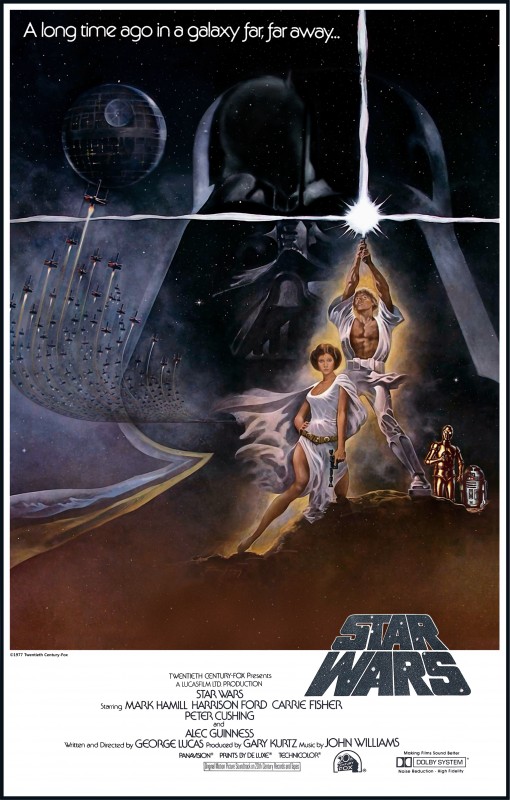
Star_wars_oldThey say that the golden age of science fiction is about twelve years old.  That’s definitely true for me.

My first exposure to the genre was Star Wars: A New Hope.  I saw it when I was seven, right around the height of my dinosaur phase.  Everything about the movie completely blew me away, from the Jawas and Sand People of Tatooine to the stormtrooper gunfights and lightsaber duels.  After watching Luke blow up the Death Star, I spent the next few hours running around the yard pretending to fly my own starfighter.

In a lot of ways, I’ve never really stopped.

My parents made me wait until I was nine to watch The Empire Strikes back, because it was rated PG.  Without any exaggeration, I can say that those were the longest two years of my life.  I was literally counting down days by the end, and to pass the time without going crazy, I read up on all the books about space that I could possibly find.

My father bought the original X-wing flight simulator game somewhere around then, and I soon became totally engrossed in it.  Since the 386 was our only entertainment system (no Super Nintendo–I had to visit a friend’s house for that), X-wing became the defining game of my childhood.  I spent hours and hours on that game, to the point where I knew exactly which simulated missions the characters from the books were flying and how to complete them faster and easier.

I thought The Empire Strikes Back was a little slow the first time I saw it, but it’s since grown on me, to the point where now it’s my favorite film in the whole series.  Thankfully, my parents let me watch Return of the Jedi the next day, and for the next few months my life felt utterly complete.

Around this time I discovered the Star Wars novels and soon immersed myself in them.  The Courtship of Princess Leia by Dave Wolverton soon became one of my favorites, as well as the Heir to the Empire trilogy by Timothy Zahn and the X-wing series by Michael A. Stackpole.

But it was Roger Allen McBride who first introduced me to a different flavor of science fiction with his Corellia trilogy.  As I mentioned in V is for Vast, those books had just enough of a touch of hard science to intrigue me about the other possibilities of the genre.  That was the last Star Wars series that I read before branching out into other works of science fiction.

The Tripod trilogy by John Christopher was my first introduction to the dystopian / post-apocalyptic genre, depicting an enslaved humanity after an alien invasion.  Those books really captured my imagination for a while.  The Giver was also quite interesting and thought provoking, though since it didn’t involve spaceships or aliens it wasn’t nearly as compelling.

I read a lot of fantasy in my early high school years, including Tracy Hickman, Lloyd Alexander, and (of course) J.R.R. Tolkien.  While I enjoyed those books and immersed myself in them for a while, my true love was still science fiction.  For almost a year, I watched Star Trek: Voyager religiously with my dad.  And every now and again, I’d pick out a science fiction book from the local town library and give it a try.  That’s how I discovered Frank Herbert’s Dune.

In eleventh grade, my English teacher had us choose an author and focus our term papers solely on their books for the entire year.  She suggested I choose Orson Scott Card, but I chose Cormac McCarthy instead.  I’m not sure if that was the worst decision of my high school career, or the best decision, since assigned high school reading tends to make any book feel like it sucks.  I discovered Ender’s Game the following summer, and finished it in a delirious rush at 3am the morning after checking it out from the local library.

More than any other book, Ender’s Game cemented my love for the genre, and showed me just how powerful and moving the genre could be.  It opened so many insights into the world and human nature, reading that book made me feel like I’d opened a pair of eyes that I didn’t even know I’d had.  Looking back, that was probably the moment when I knew I would be a science fiction writer.  I’d known I was going to be a writer ever since I read A Wrinkle in Time at age eight, but to be a science fiction writer specifically, that goal was probably cemented by reading Orson Scott Card.

After high school, I served a two year mission for my church, during which I didn’t read any novels or watch any TV or movies.  When I came back, though, Orson Scott Card and Madeline L’Engle helped me to ease through the awkwardness of adjusting back to normal civilian life.  When I left for college, I expanded my horizons even further, starting with Isaac Asimov’s Foundation series and Edgar Rice Burrough’s Princess of Mars.

When I discovered Pioneer Books in downtown Provo, I knew I’d found my favorite bookstore in Utah Valley.  I have so many fond memories sitting cross-legged on the floor in the science fiction section, browsing through the musty used books for hours at a time.  That’s where I discovered C.J. Cherryh, Arthur C. Clarke, Robert A. Heinlein, Ursula K. Le Guin, and numerous other authors who are among my favorites today.

When I discovered Spin, Robert Charles Wilson soon became one of my favorites.  I picked up that novel as a free PDF from Tor, and read it over the summer while studying abroad in Jordan.  Once again, that same hard sf sensibility I’d gotten from Roger Allen McBride touched me in an unforgettable way.  But it was the human element of that book that really moved me–in fact, it’s always been about the human element.  The world building in Downbelow Station was great and all, but the romance of Merchanter’s Luck had a much more lasting impact.  Starship Troopers had some good ideas, but it was Mandella’s personal journey in The Forever War that moved me almost to tears.  The intrigue of the Ender’s Shadow series was quite entertaining, but it was Ender’s Game and Speaker for the Dead that really taught me what it means to be human.

I finished my first novel, Genesis Earth, shortly after returning from that study abroad, and tried to capture the same sensibility from Spin as well as the intimately human element.  Since then, I’ve written several more sci-fi novels, some of them tragic, some triumphant, but in all of them I’ve tried to get as close as I can to the personal lives of the characters.  I don’t know if I’ll ever write a character portrait so intimate as Shevek’s in Ursula K. Le Guin’s The Dispossessed, but I certainly hope to someday.

For me, science fiction started out as a wonderfully exciting entertainment and turned into something much more meaningful.  If there’s anything the genre has taught me, though, it’s that the two aren’t mutually exclusive–that you can have your adventure and learn what it means to be human as well.  Indeed, the more imaginative the adventure, the greater the truths I’ve taken from it.

Because of that, even though I’m almost in my thirties now, I can’t possibly foresee a time when science fiction isn’t a major part of my life.  It’s a love affair that’s grown just as much as I have, and continues to grow with each new author I discover and each new book I write.  When I’m old and grizzled and pushing eighty, I’m sure there will still be a part of that twelve year old boy in me, still running around the yard flying his starship.

Sid Meier’s Alpha Centauri, aka the best 4x strategy game of ALL TIME

Sid Meier’s Alpha Centauri is, without a doubt, the best strategy game I have ever played.  I have many fond memories playing it into the early morning hours while I was in college.

I just bought it for $2.99.  What have I done??

The last time I played this game, it quite literally consumed my life.  I eventually had to delete it from my computer just to keep up with my schoolwork.

But wow, it’s so good.  And the best part, in my opinion, is the story.  Unlike other 4x strategy games, where everything is basically up in the air, Alpha Centauri has a very distinct storyline full of interesting twists and turns.

It starts out with a colony mission to (where else?) Alpha Centauri that fractures into seven factions, based not on ethnicity or nationality, but on ideology.  These are: the scientists, the religious fundamentalists, the communists, the free-market capitalists, the diplomatists, the militarists, and the environmentalists.

The last faction is my favorite, because the planet itself is a character in this story.  As you settle and explore new territory, you come across giant patches of fungus and swarms of hostile mind-worms.  The more the game progresses, however, the more you realize that the fungus is part of a giant neural network, and that it’s trying to communicate with you.  When you finally learn to communicate back–THAT’S when things get interesting.

Oh man, I love this game.  It’s a science fiction classic, reminiscent of Orson Scott Card and Arthur C. Clarke.  I just hope I can exercise some self-restraint this time–but hey, if I can moderate how much time I spend on Minecraft, surely I can do the same with Alpha Centauri.

Famous last words…

Q3 Report, 2011

Before I move on to other, more interesting subjects, I want to take a little bit of time to review how my writing went in the past three months.  For those of you who may be new, this is something I like to do at the start of each new quarter.  Keeps me honest, I guess.

Anyhow, here goes:

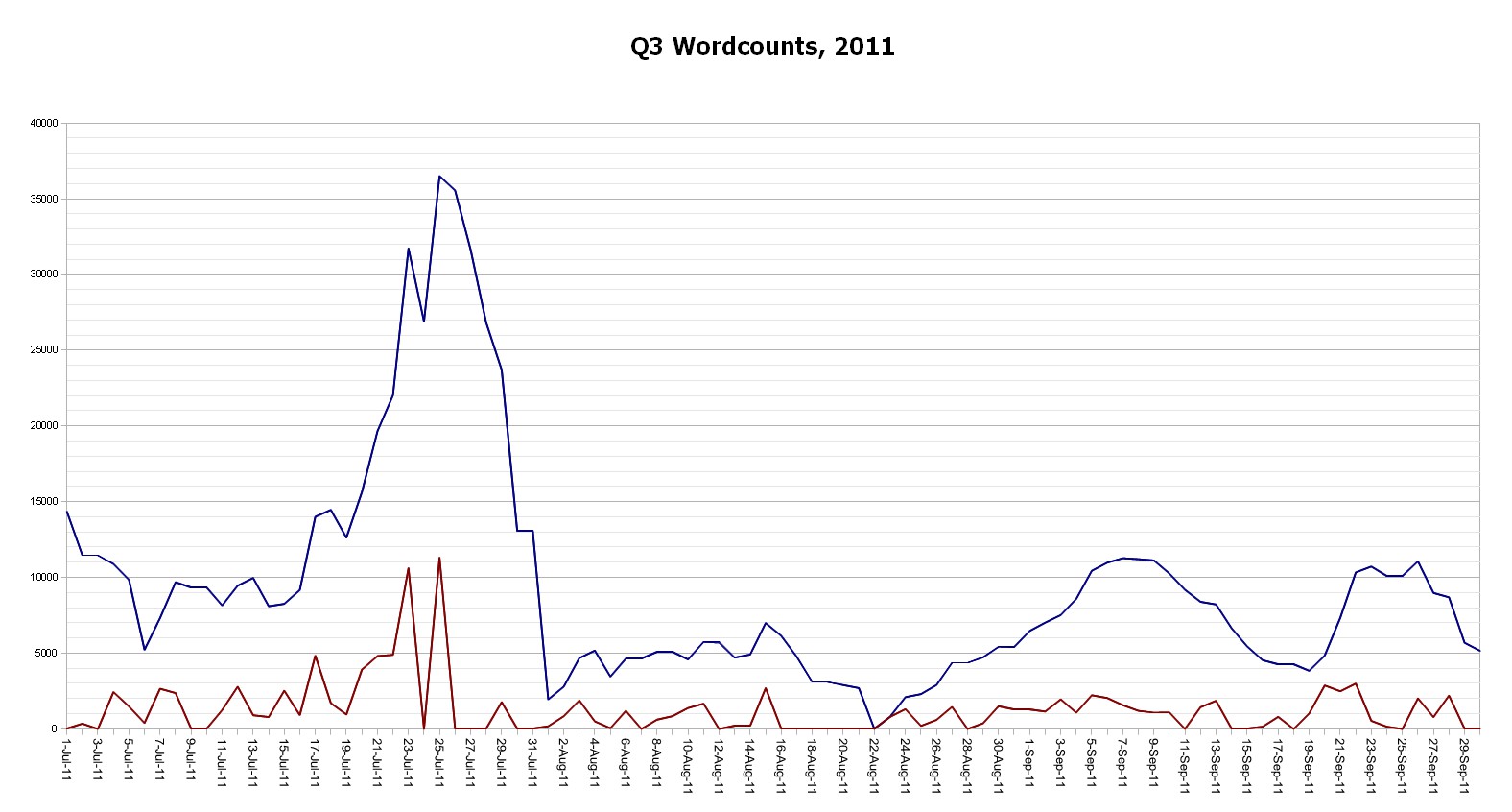
This is a graph of my word count totals for the past quarter.  The red line shows how many words I wrote each day, while the blue line shows a running seven day total.  I include substantive revisions in the totals, but if all I’m doing is proofreading or running through copy edits, I don’t count it.

For the first half of July, I was finishing up the third draft of Desert Stars while working 40 hours per week.  I wasn’t writing as much as I’d have liked, but still managed to keep some good momentum.

The HUGE peak at the end of the month represents my first draft of Sholpan, which I finished in only a week.  I spent the next week in a weird writerly limbo, not sure what else to work on, then picked it up again and made some substantial changes before sending it to my editor in in mid-August.  Then Worldcon happened, and I didn’t get any writing done while I was out at that.  Should have, but oh well.

After Worldcon, I had maybe three or four different projects I wanted to do, but since I wanted to do the final draft of Desert Stars in October, I wasn’t sure which project to pick up.  After several false starts, I ended up writing the first part of Star Wanderers, which is that hump you see at the beginning of September.  The second hump is the second draft; my writing took a dip in between because I didn’t know what else to do with only a couple weeks before October.

Overall, though, my personal word counts were a lot lower than I’d like.  Part of that was due to the effort I put into publishing Sholpan (it takes a lot of time and energy to publish something, which can eat into your writing if you aren’t careful); part of it was because the project I was most excited about was Desert Stars, and I had to wait until October to hear back from my first readers; but another major part was that I was trying to balance a 40 hour job on top of everything.

This is the dilemma: I want to build up my writing career to the point where I can support myself on it, but to do that I have to work a day job to make ends meet, which makes it very difficult to work on the writing career.  When I was in school, I used to think a 9-5 job would make things easy, since I wouldn’t have any homework or papers to bring home.  Now, though, I think school was easier, because I was only in the classroom 15 to 20 hours per week, and could allocate the rest of my time as I saw fit.  Working full time is a lot harder, because half of your waking time doesn’t belong to you.

What I’d really like to find is a part time job, maybe 30 hours per week, where I earn just enough to get by but don’t feel drained when the workday is over.  A lot of TEFL jobs are only about 20 hours or so per week, so I’m thinking very seriously about doing that.  Then again, all the attendant difficulties of adjusting to a new culture might be even more draining than grunt labor.

I guess there’s only one way to find out…

In any case, now that October is here, I’m back to work on Desert Stars, hopefully the final draft before publication.  I know I said I’d finish Star Wanderers, but since I’m going to come back to it anyway after I get the feedback from my first readers, I figure it will be better to finish Desert Stars and move on.  Also, I can revise a lot faster than I can write new material, so it makes a lot more sense to get the revisions out of the way instead of pushing a rough draft harder than it wants to come.

And after that?  Who knows!  I’ve so many half-finished novels and projects I want to start, all I can really say is I’d better throw this up on the blog and get back to writing.  So on that note

Story Notebook #5 (part 1)

Alright, time to revisit my old story notebooks and run through some of the ideas there.  This one starts in fall of 2009, my last semester at BYU,  and ends shortly after my hasty exodus from a miserable internship in Washington DC.

And now, without further ado, here goes:

A super-celibate society that holds that sex is evil and reproduces entirely by artificial insemination.

In other words, what if the Shakers had had our modern reproductive technology?  Weird, but not beyond the realm of plausibility.

I suppose that in such a society, the nuclear family would not exist, and children would instead be raised by the community as a whole–kind of like Plato’s Republic.  Question is, would this be a happy utopia, or a miserable dystopia?  I know how I’d write it…

Shattered glass sparkling in the roadside desert

Okay, that’s less of an idea and more of an experiment with prose.  I suppose I saw broken glass on some dusty asphalt and wanted to capture it with words.

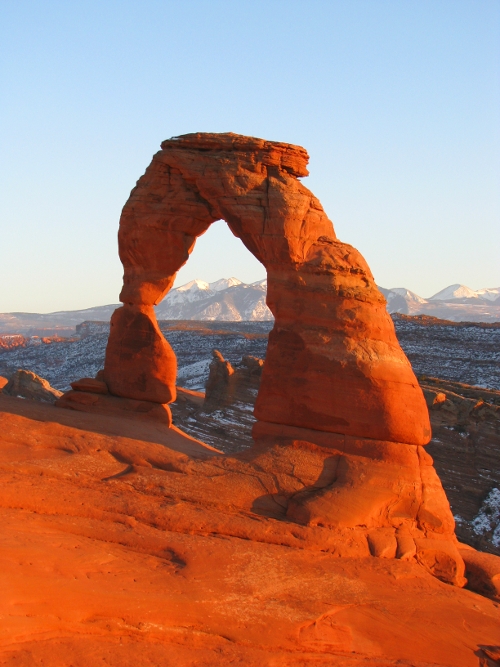
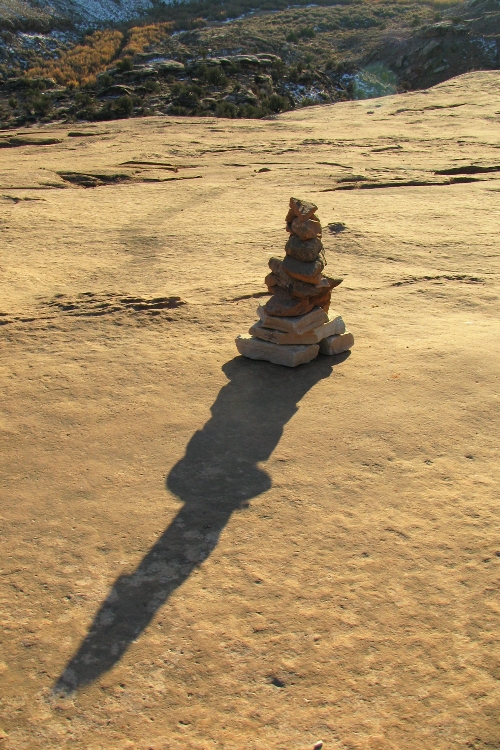
The next passage is from an assignment for the wilderness writing class at BYU.  We went camping in Moab and hiked up to Delicate Arch, perhaps the most iconic natural landform in all of Utah.  Shortly after taking this picture, here is more or less what I wrote:

They say that the arches in this national park are formed by wind erosion.  The funny thing is, so is the slickrock.  The same wind that carved the gravity defying structure of the arches also wore the rock all around them almost perfectly smooth, so smooth that you feel as if you’re about to slip and fall even as you sit on the edge of a relatively flat ledge.

It makes you wonder: what was here before the wind blew it away?  What did the land look like before the wind took out the loose material, leaving behind only the strongest, most resilient bedrock?  How many other arches lie underneath our feet, waiting only for time and the wind to unearth the landscape that hides them?

Awesome class; if you ever get a chance, take it.  Professor Bennion is great.

A boy born without a name.

Not sure where that came from, but it kind of makes me think of this girl in an abusive household, who grew up to age 14 before learning how to speak.  It seriously crippled her intellectual development, so much that she never became fully independent.

Think about it: how would not having a name stunt a person’s growth?

Below them lay the alluvial plains–miles of silt and dirt vomited from the mountains over the passing of countless centuries.

I think I intended this to be a line in the first chapter of Worlds Away from Home…and unless I’m mistaken, something very similar to this passage made it into the book.

The detritus of life from which we extract the fossil record of our memories

Another passage meant to evoke something in the reader.  I think I wrote it when I was cleaning out my apartment shortly before leaving for DC.  It certainly makes me think of a dirty, junk-filled room.

And that’s enough for now.  This basically takes us up to January 2010, when I left for the BYU Washington Seminar program.  All the other ideas in this notebook have a decidedly civic/political bent to them, so stay tuned!

Looking for a life experience

This week, I got hit by some good news and some bad news.

The good news was that I got a short term seasonal job, delivering phone books.  That should keep me solvent for the rest of the month, at least until I can find something slightly more permanent.

The bad news?  I heard back from the company with the wilderness job, and it turns out I didn’t get it.

So now I’ve got to figure out what to do with my life for the next  year.  My writing career, as always, is plan A, but that’s more of a mid- to long-term thing.  And honestly, that’s how I want it.

I feel that I need to do something big–to go on some kind of adventure.  I’ve been working hard to hone my craft, but I feel that I need to acquire some kind of significant life experience, not only to boost my writing, but just to grow as a person.  It’s tempting to look for a comfort zone and camp out in it, but I don’t think that would be the best thing for me to do right now.

Before I graduated, I decided not to go to graduate school yet for a few reasons.  First, I was sick of school, and felt that I needed a break. Second, I didn’t know what to go in for, and didn’t want to go to grad school just to postpone figuring things out.

Third, I wanted to get out of the cloistered halls of the university and gain some real world experience.  I’d spent my whole life up to that point in academia, and was sick and tired of being sheltered from the “real world.” I wanted to get out and see what things were really like on the other side of the ivy.

For the past eight months, I’ve been bouncing around in Utah, working odd jobs to get by.  It’s a different set of stresses and problems, and while I can’t say I’m unhappy, I certainly can’t say that I’m fulfilled.  Being unemployed is about as unfulfilling as you can get and still be breathing.

I could probably find and hold down a graveyard job until my writing career takes off, but somehow that doesn’t seem much better.  I don’t just need a job to facilitate my writing–I need a major life experience to broaden my perspective on things.  I was hoping the wilderness job would provide me with both of those, but unfortunately that’s no longer an option.

So what next?  Here’s an idea: maybe I could go abroad and teach English for a year.

I used to joke with all my friends that if I didn’t get the wilderness job, I’d probably leave the country and go on an adventure–but really, why not?  A chance to see the world, use the teaching and language learning skills from my degree, and acquire new skills that might come in handy later on.  Plus, when I come back, I’ll sure have a lot of interesting things to write about.

The big question in my mind is what I need to do to get ready.  I suppose the best thing would be a TEFL certificate–I could probably get one of those in a month or two through online classes.  But…is that really the best path?  And what is the best program to go through?  A couple of friends of mine who have taught English abroad for the past couple of years say you don’t need a certificate to get a job, but they were working with kids, not adults.  And for the English teaching jobs in the Middle East (especially the gulf), you really do need certification.

So I guess I still need to think it through.  Right now, my top three destinations would probably be Japan/Korea (for the earning potential), Saudi Arabia (for the Middle East experience), or the Czech Republic (for the chance to connect with my roots).

I don’t know, though.  I’ve still got to weigh the pros and cons.  I’ll probably do that in a later post–but for now, that’s what I’m thinking about.  And the more I think about it, the more attractive it becomes…

Graduation!

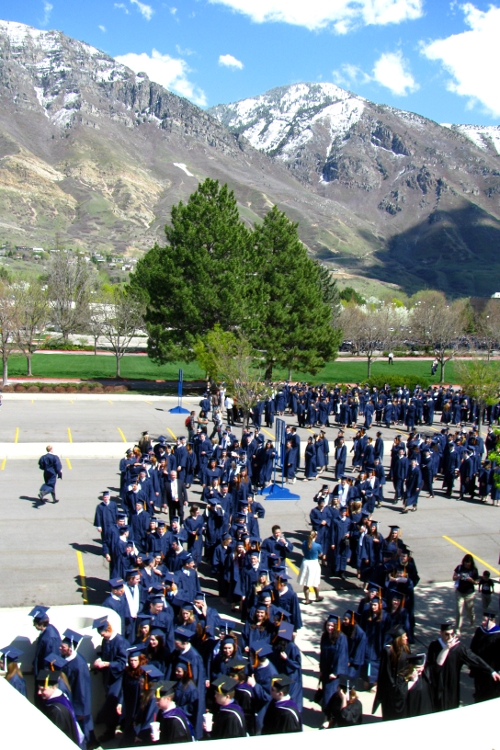
So last week, I graduated from college!  That’s right: college is OVER!  No more papers, no more homework, no more tests or quizzes or theses or final projects…at least until I decide I miss it all and go back to grad school.
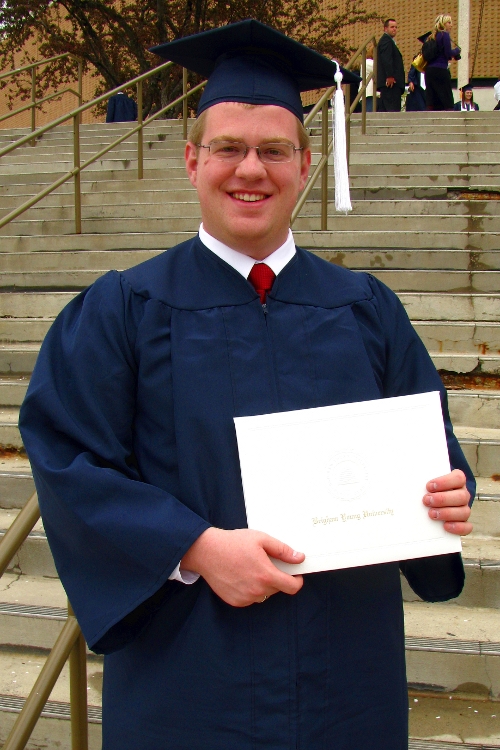
It was a big week, not only because of the ceremonies, but because of all the family that came down for the event.  It was great to see all my sisters, baby Jane, a bunch of my cousins who came down for our Italian barbeque (salad, lasagna, and garlic bread on the porch), and everyone else who came.

The ceremonies were interesting too.  Elder Christofferson gave the commencement speech, and I was very pleased that he referenced Hugh Nibley.  Man, if Nibley were still alive (or maybe if he could come back from the dead), it would be absolutely awesome if he could give the commencement address, but Elder Christofferson was pretty good too.

The convocation Friday was very long, but fortunately I snuck a novel in: Dying of the Light by George R. R. Martin.  Made some decent headway in it, too.  There was a very interesting talk, though.  One of the retiring faculty told a story from when she was a student in a wilderness class.

As they were making their way down a river canyon and came to the end of the bank, she thought to herself “it will be alright if I can just keep my boots dry.” As the water became deeper, that changed to “it will be alright if I can keep my pack dry.” Eventually, however, they had to swim, and everything got wet.  Still, they made a fire, dried everything out, and had a good time.

The story was meant to illustrate that life in the real world is like that.  When you start out, you worry about a lot of things, but when you look back after many years have passed, those small setbacks don’t seem like anything to worry too much about.
Well, that’s where I am right now: unemployed, looking for a plan for the next five years.  My plan A is still to break into publishing, but I’m going to need a secondary career or day job to  get by in the short to medium term.  I have no idea what that entails,  but at least I’m graduating debt free, with money in the bank.  That helps.

Two years ago, I was terrified of graduating and setting out into the “real world.” A year ago, I realized I had grown out of college life and needed to move on.  Now, I have no idea what I’m doing, but life is an adventure and I’m confident things will work out for the best.

Goodbye DC

So I have some crazy, unbelievable news to share: I got fired from my internship, under disputed circumstances.  That’s right: fired from my unpaid internship four weeks before it was scheduled to end.
The exact reasons for the termination were never made completely clear to me, but I suspect politics played a significant role and that’s all I’m going to say about it here.  If you want to know more, please contact me privately.

Fortunately, the Washington Seminar people have agreed to let me get credit for my academic work–which means that I’ll be able to graduate.  I’ve been sent home early, but I can still pass the class with a C/C-.

Oh well.  In some ways, this kind of sucks, but in other ways, it’s a blessing in disguise.  I learned everything that I needed to learn from my internship: that I don’t want to pursue a career in government or policy making.

Government work is long, hard, and very intensive.  It also involves office politics, sitting behind a desk, and fighting entrenched bureaucracies.  It’s not the kind of career that allows time for family, let alone writing.  And the payoff?  The common refrain I heard was that the work was “interesting.” Not “meaningful,” “life-changing,” “personally enriching,” or any of that–just “interesting.”

Nope.  Not for me.

I also learned that the kind of people who are attracted to Washington DC are not the kind of people I feel very comfortable around.  Generally speaking, Washington DC tends to attract people who are ambitious, self-absorbed, arrogant, loud, poor listeners, opinionated, and oblivious of the people around them.  This certainly wasn’t true of everyone, both at the institute and at the Barlow center, but I found they were the exceptions to the rule.

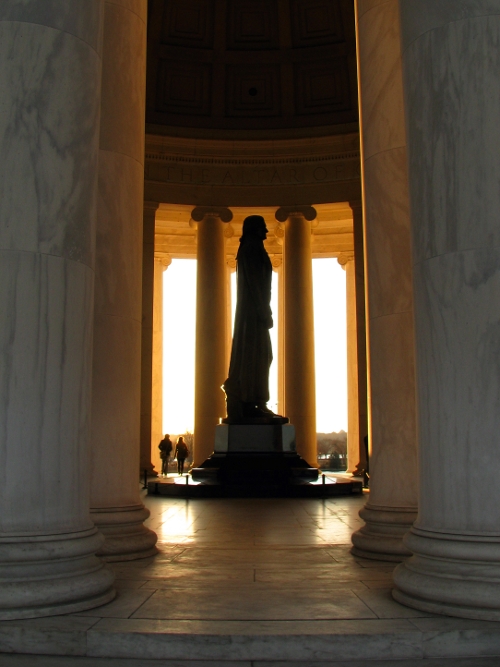
I will say a few positive things, though.  DC has some excellent museums and monuments–the best of any I’ve seen anywhere else.  In particular, I found the FDR memorial, the Portrait Gallery, and the science and innovation exhibit at the American History Museum particularly moving.

In terms of people, ironically, the ones that struck me as most sincere and genuine were all politicians.  In particular, I was struck by Congressman Matheson and Senator Bennett.  I’m not sure if I would vote for either of them–it depends on their stance on the issues–but they both struck me as intelligent, well meaning, good people.

I will also say that my respect for the military went up significantly.  After hearing so many people spout of so much self-important hot air about this or that political issue, it was remarkably refreshing to see people who were willing to put their lives on the line for their country.  To any servicemen reading this, thank you for all you do.  I have nothing but the deepest respect and admiration for you.

My experience in the Barlow center was generally quite positive.  I had an excellent roommate and made quite a few friends.  I’m sorry if I seemed kind of aloof most of the time–it’s probably because I was miserable for other reasons and didn’t realize it.  I’m looking forward to seeing everyone again back in Provo.

So, what’s the plan now?  Finish the academic side of things ASAP, then head back to Utah.  I’ve got a lot of old friends I want to catch up with before the summer, not to mention the last couple English 318 classes.  That’s one thing I sorely missed this semester–English 318.  Beyond that, I don’t quite know–a lot of things are still in the air.  I’m confident, however, that whatever happens, it will be for the best.

Genesis Earth 4.0 is complete!

And it’s about time. I started this back in September, thinking I could easily get it done before World Fantasy 2009. More than a month after the convention, and five days after the last self-imposed deadline, it’s done!

Alright, here are the stats:

ms pages: 270
words: 73,009
file size: 492 KB
chapters: 16, prologue & epilogue
start date: 28 September 2009
end date: 4 December 2009

Wordle: Genesis Earth 4.0

When I finished, I was listening to “To far away times” from the Chrono Trigger soundtrack. It fit the mood perfectly–absolutely perfectly. The epilogue might be a little cheesy (if you were one of my alpha/beta readers, you’ll know why–thanks, Gini!), but in a good way, I think. Anyways, here’s the track:

It took me forever to finish this draft, but that’s what happens when you’re swamped with school, I guess. If this were the summer and I had nothing else on my plate, I probably could have finished it in 17 days (or less) like the 3.0 draft.

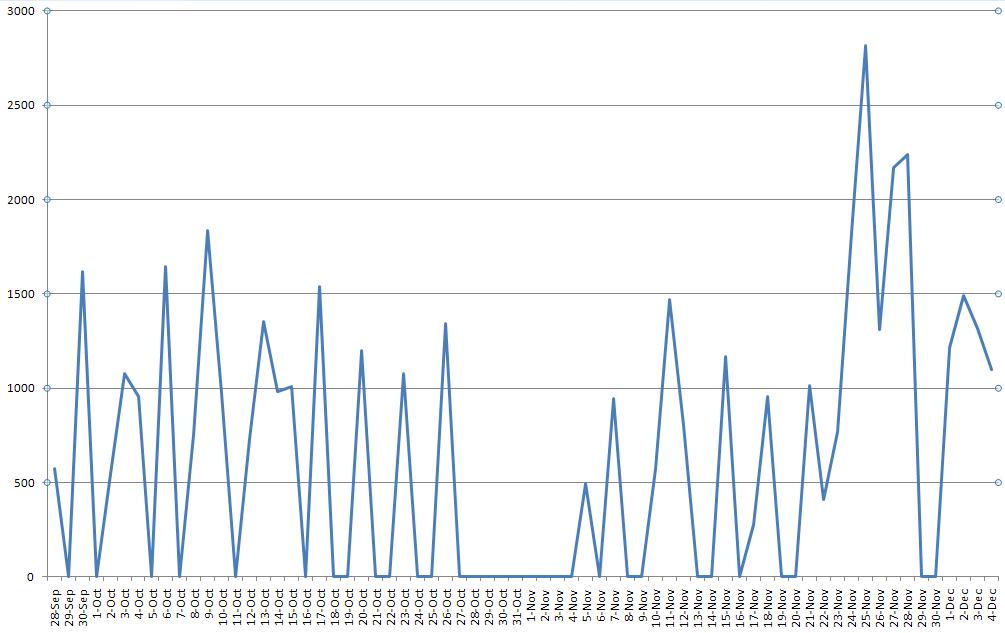
For a more detailed breakdown, here is a graph of my daily wordcount for the project:

Genesis Earth 4.0 daily wordcount

Overall, though, I’m very satisfied with my work.  I’m sure that if/when it gets picked up by a publisher, they will have a multitude of editorial critiques and suggestions, but I can honestly say this draft is as neat and polished as I can make it.

It’s time to send it out!

An existential time of year

School has been kicking my trash this semester. Maybe it’s senioritis or something, but I feel like I’m doing half the work I did as a junior and still, all I can do is put out fires.

I was hoping to be finished with Genesis Earth 4.0 by now, but it’s looking like that won’t happen until the end of this week.  If I really push myself, I could probably get it done tomorrow…in fact, I may just do that.  Schoolwork can wait–this is what I want to do with my life.

Around this time of year, my thoughts tend to become morose and existential.  Maybe it’s the lack of sunlight, or the end-of-semester crunch, but I always wonder why I’m doing what I’m doing, what the point of it is, where I’m headed in my life–that kind of stuff.  For some reason, I get the feeling that my life is empty in some way.

It’s not overwhelming, fortunately.  I don’t have depression or anything like that.  Just…a sense of discontentment.  Maybe it has to do with finals.  I don’t know.

But I do know that it sucks to be pulled in so many different directions all the time.  Classes, work, writing, classes; finals, papers, papers and finals to grade, writing, more papers and finals.  It sucks.  I can’t wait until graduation!

(talk about famous last words o.O )

In any case, Genesis Earth is just about finished.  I’m finding that the closer I get to the end, the more I find that needs to be revised.  I’ll probably have to insert a new scene in the second to last chapter, just to tie them closer together.  For some reason, the last chapter feels too…short.  And disconnected.  Dammit.

And then, sometime between now and my personal exodus from Provo, I need to look up places to submit this thing.  I haven’t even begun to do that.  Crap.  Since this is the most polished draft of anything I’ve done up to this point, I’m going to be pretty hard core about submitting.

And then, somehow, I need to finish the second draft for Bringing Stella Home before New Years.  Holy crap, that novel is so full of holes.  I’m not going to even begin to be able patch them until the third draft, whenever that happens.  Inshallah, I can get that done over Christmas break…inshallah.

And then, something entirely new!  But it’s past 1am, so I’m not going to elaborate.  I’ve got some cool ideas, though–some crazy cool ideas.  Stay tuned.