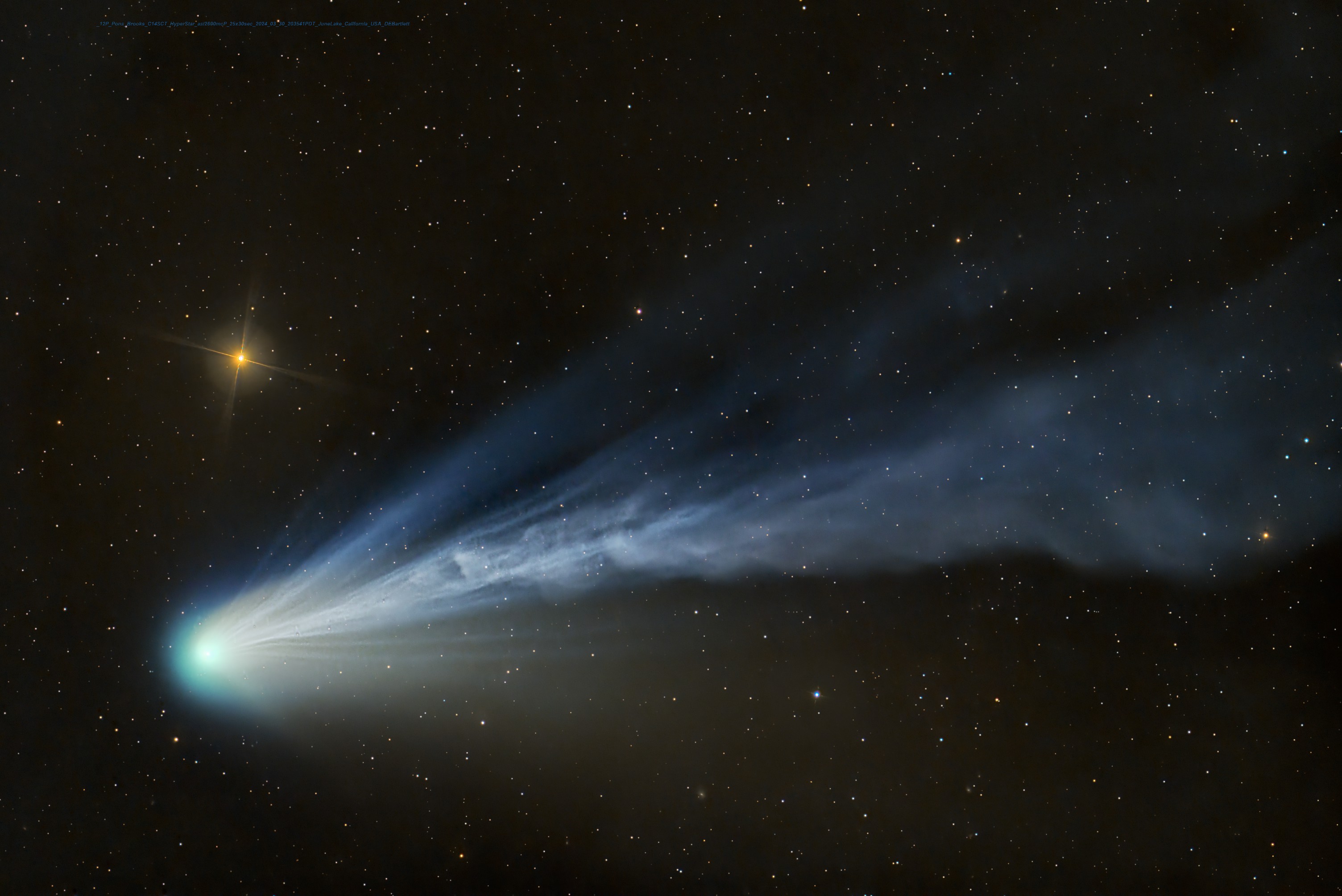
Saw this, had to share it. The way that tail billows out of the nucleus like some sort of celestial contrail is truly breathtaking.
Apparently this comet will be visible with the naked eye during the upcoming solar eclipse!
Saw this, had to share it. The way that tail billows out of the nucleus like some sort of celestial contrail is truly breathtaking.
Apparently this comet will be visible with the naked eye during the upcoming solar eclipse!
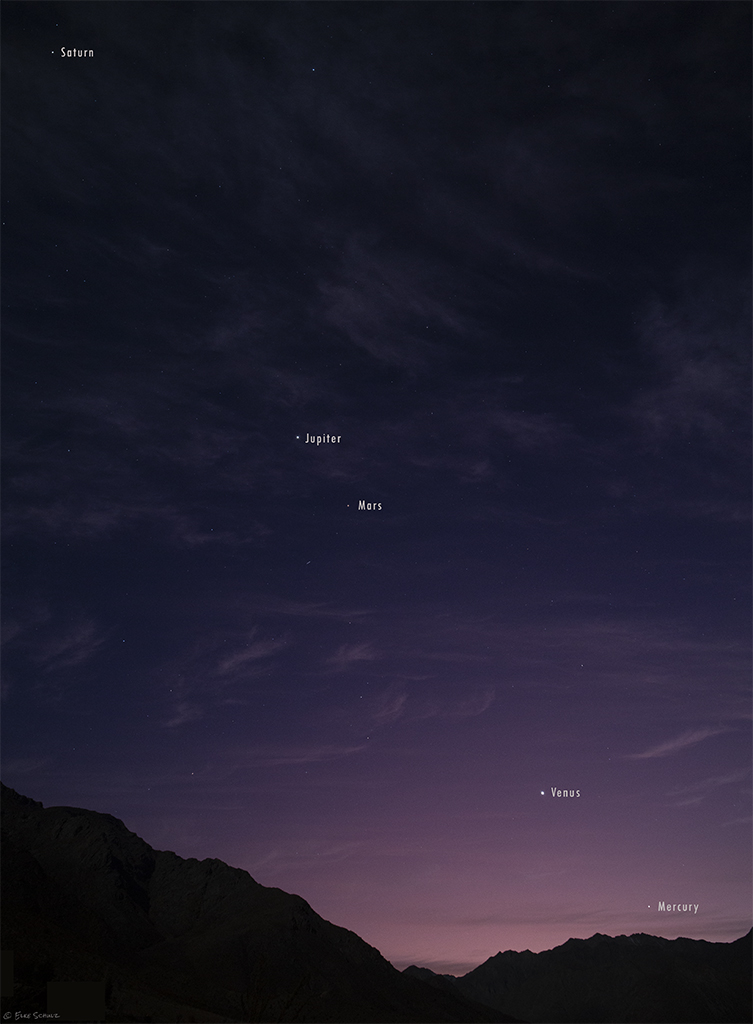
I’ve been following Astronomy Picture of the Day longer than any other blog—since 2006, in fact. Usually, the pictures are okay but not all that memorable. This one, however, is amazing. Planets one through six of our solar system, all captured in one amazing shot. Very well done.
By the way, if you’re looking for something astronomy related that will blow your mind:
The comments section is absolute gold!
This is now the background image for my phone:
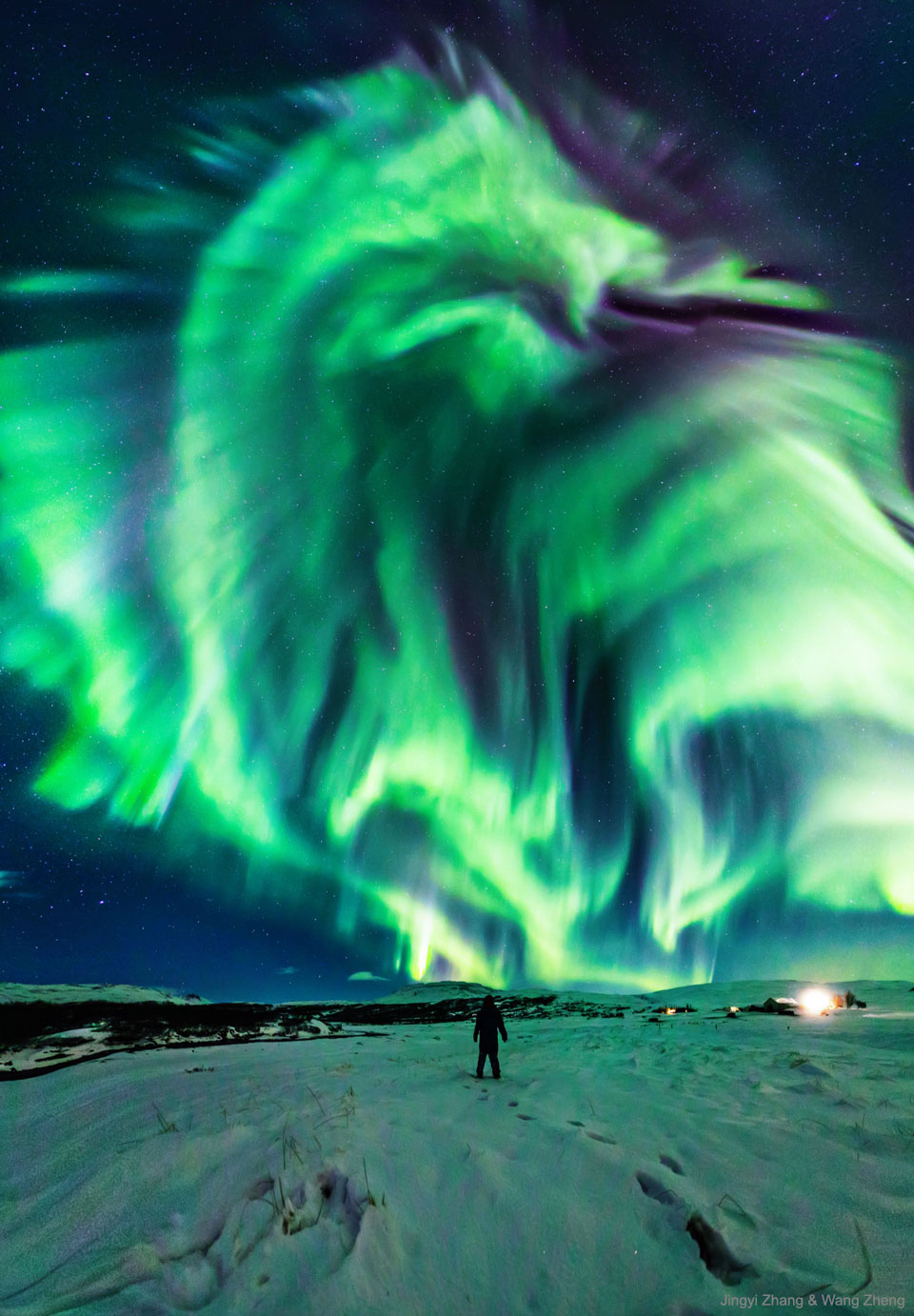
I’ve been following Astronomy Picture of the Day since 2006, which makes it one of the blogs I’ve followed the longest. It’s also one of the first blogs on the internet. Most days, the picture is somewhere between good to okay, but this one was truly exceptional. Excellent work, Jingyi Zhang and Wang Zheng.
You can find it here.
And he always will be.
That is all.
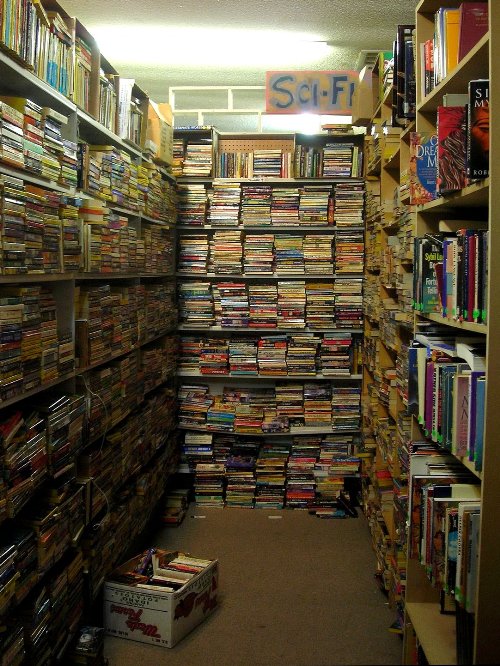 Has space opera passed its zenith?
Sometimes, it certainly looks that way. All the major stuff seems to be reprints of past series and reboots of decades-old franchises. Star Trek, Star Wars, Stargate, Battlestar Galactica, Ender’s Game, Dune, Babylon 5–all the big names seem to have had their start at least a generation ago. At any science fiction convention, you’re likely to see more gray-haired men than kids in their teens and twenties. And if you go to a publishing conference, new adult, urban fantasy, and paranormal romance are ascendant.
I’ve noticed that people are using the term “science fiction” increasingly to describe stories that don’t have anything to do with space. Dystopian, post-apocalyptic, steampunk, even time travel–all of these subgenres are certainly part of the fold, but they’re very different from the stories about starships and alien worlds. And then you have all the markets for short fiction that have been forced out of business–and even a few larger publishers, like Night Shade Books which is now selling off all its assets (read: authors) to avoid bankruptcy.
I remember going to World Fantasy 2010 in Columbus, Ohio, and feeling dismayed at the complete lack of science fiction. World Fantasy is (or was, at least) the premier professional conference for speculative fiction literature, but all of the attention was going to urban fantasy and steampunk. On the freebie table where publishers often dumped ARCs and review copies of their books, the only space opera stuff I really saw were a couple of titles by Glen Cook and one other guy–and I watched that table hawkishly for the full three days of the conference.
Sometimes, it seems as if it would be so much better if I had grown up in the 80s. That’s when science fiction really had its heyday. But all through the 90s, the genre seems to have been on the decline, much like NASA and the US space program.
So is space-centered science fiction on the way out? Have we passed the glory days, and it’s now just a long decline until it becomes an obscure niche, beloved by some, but enigmatic to others?
In spite of everything I said above, I actually don’t think so. In fact, I think we’re on the cusp of a science fiction renaissance, and that sci-fi geeks like myself will look back twenty years from now and wish that they were born in our era. Here’s why:
1) Scientific discoveries are transforming the way we see the universe.
The day I posted P is for Planets, NASA’s Kepler mission announced the discovery of three Earth-like worlds orbiting in the habitable zones of their stars. The existence of alien Earths is not conjecture–it’s a confirmed fact. As our ability to study these worlds improves, it’s only a matter of time, IMO, before we find a world that has life.
We’ve discovered the Higgs-Boson. We’re unraveling the fundamental building blocks of the universe. We’ve built telescopes to look back to the dawn of time itself, and we’re learning more about the cosmology of the universe every year. Perhaps even more remarkably, we understand now how little it is that we actually know–that the entirety of the observable universe is only about 5% of it, and even that’s optimistic.
All of this will take time to trickle down to the popular consciousness, but with all the new discoveries that are happening, I think that’s already in the process of happening. In particular, I think the recent discoveries in the realm of exoplanets and astrobiology are going to shake things up in a major way in the next five or ten years.
2) The privatization of space travel is paving the way for a rapid expansion into space.
The US space program has been plagued with funding problems since at least the end of the Cold War space race. Since the space shuttle program was retired just last year, the only way for our astronauts to get into space is through the Russian Soyuz spacecraft at Baikonur. If NASA had to put a man on the moon, they do not currently have the knowledge or technology necessary to do it.
In the private sector, though, it’s been a very different story. SpaceX has had a number of successful launches recently, most notably sending the first unmanned resupply capsule up to the International Space Station. And just a couple days ago, Virgin Galactic had the first successful test flight of its rocket-powered spacecraft.
It’s sad to see the space shuttle go, but there are a lot of reasons why the program was flawed and inefficient to begin with. By handing things off to the private sector and turning space exploration into a viable business venture, we can hopefully overcome those inefficiencies and eventually make space accessible to the general public.
And then you have the organizations like Mars One that are looking even further ahead to the colonization of Mars. There’s a groundswell of excitement for Martian colonization that is starting to get some real money behind it. Will it go anywhere? It’s hard to say right now, but even if it suffers another decade or two of setbacks, it’s getting public attention, especially from the younger generation.
3) Video games are bringing a fresh new look and feel to the genre.
Not all of the big sci-fi series hail from 70s and 80s. Halo started up as recently as 2001, and it’s a multi-billion dollar franchise with games, books–even Legos. In fact, there are lots of sci-fi video game franchises right now, many of them right on par with other classic space opera. Just look at Starcraft, for example, or Mass Effect, or Eve Online and Sins of a Solar Empire. The number of sci-fi games has been exploding.
In fact, this explosion has been happening for some time. While literary science fiction may have suffered something of a decline back in the 90s, that was the heyday of games like Master of Orion and Sid Meier’s Alpha Centauri. Flight simulators like Flight Commander and X-wing proliferated like crazy, while even some of the classic RPGs like Final Fantasy borrowed heavily from science fiction tropes. And those are just a few of the games that I can list off the top of my head!
Whether or not literary sf is on the decline, a whole new generation has been introduced to the genre through the medium of video gaming. This is not just a small niche audience playing this stuff, either–in the US at least, Halo is as mainstream as Monopoly or Settlers of Catan. In fact, you could say that science fiction is more mainstream now than it ever has been, and a lot of that is due to sci-fi video games.
4) The e-publishing golden age is giving us thousands of new voices.
But what about the world of literary sf? Are we in a decline? Do people just not read science fiction anymore? How bright is the future for science fiction literature?
Actually, this is the area where I’m the most optimistic of all.
The publishing industry is changing at the speed of light, much in the same way that the music industry changed about a decade ago. Just as the MP3 revolution allowed all sorts of eclectic yet entrepreneurial artists to thrive without the oversight of record labels, the epublishing revolution is opening all sorts of doors for the enterprising author. And while the changes are driving publishers (such as NSB) out of business, they are enabling authors who only sell in the mid-list range to make a respectable living.
At Worldcon 2011, Ginger Buchanan (senior editor at Tor) asserted that there has never been a runaway science fiction bestseller. In the eyes of New York publishing, that may be true–but New York has a notorious record for missing the catch in pursuit of one big fish. Because of epublishing, whole new genres like New Adult that publishers thought would never sell are now going mainstream.
And even the niches that stay niches are becoming quite lucrative for the authors who can build a decent following. When author cuts out the middlemen and develops a direct relationship with the readership, it only takes a thousand true fans or so become a financial success. As Kris Rusch pointed out so aptly, those numbers may bring only scorn from New York, but for the writers who actually produce the content, that’s a vein of pure gold.
I can’t tell you how many success stories I’ve heard from fellow sci-fi writers over on the Kindle Boards, who started just for the grocery money and ended up quitting their day jobs. But as Hugh Howey pointed out, the runaway bestsellers are not the true story of the epublishing revolution–it’s the little guys who only sell a few hundred copies a month but are earning enough to support themselves writing what they love.
Indeed, we’re already starting to see an explosion of new science fiction, thanks largely to the ease of electronic self-publishing. I’ve only read a few of them so far, but Nathan Lowell stands out among them, as well as my good friend Kindal Debenham. These guys and so many others are bringing a fresh new voice to space opera, revitalizing the genre in ways that simply weren’t economical back in the days of Big Publishing.
So even if space opera as a literary genre isn’t quite large enough to go mainstream, it is large enough to support a wide range of new voices under the emerging business models. And as the epublishing revolution continues to mature, I think we’re going to see a new golden age comparable to the era of the pulp adventure stories.
I’ve been publishing my own work since 2011, and I can attest that there’s never been a better time to be a writer. I’m not quite making enough to go full-time yet, but at the rate things are going, it will only be a year or two before I realize my dream of making a living telling stories that I love. And if they’re the kind of stories that you love too, then that’s great news for all of us!
So has science fiction reached its zenith? I don’t think so. It went mainstream about a generation ago, which was definitely a huge moment, but for the last few decades it’s been in the process of branching out and rediscovering itself. Right now, I think we’re on the verge of a wonderful new renaissance that is going to blow us all away. As a lifelong reader and writer of science fiction, I certainly hope that’s the case. And because of the reasons listed above, I sincerely believe that it is.
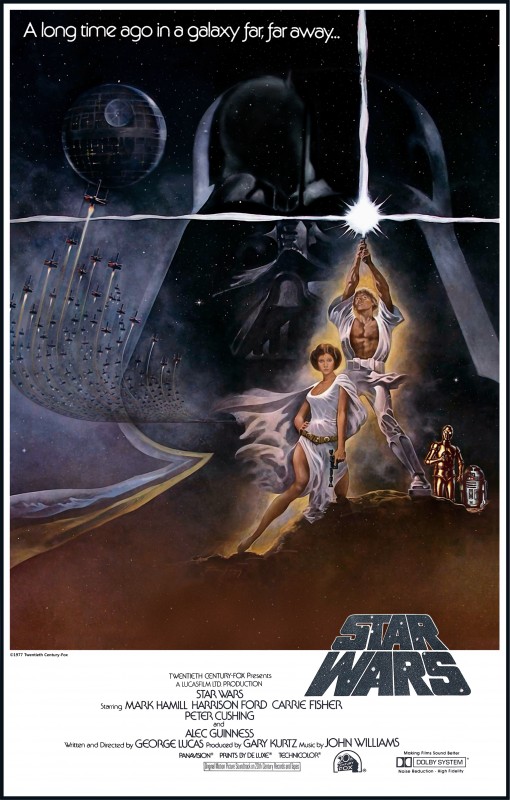 They say that the golden age of science fiction is about twelve years old. That’s definitely true for me.
My first exposure to the genre was Star Wars: A New Hope. I saw it when I was seven, right around the height of my dinosaur phase. Everything about the movie completely blew me away, from the Jawas and Sand People of Tatooine to the stormtrooper gunfights and lightsaber duels. After watching Luke blow up the Death Star, I spent the next few hours running around the yard pretending to fly my own starfighter.
In a lot of ways, I’ve never really stopped.
My parents made me wait until I was nine to watch The Empire Strikes back, because it was rated PG. Without any exaggeration, I can say that those were the longest two years of my life. I was literally counting down days by the end, and to pass the time without going crazy, I read up on all the books about space that I could possibly find.
My father bought the original X-wing flight simulator game somewhere around then, and I soon became totally engrossed in it. Since the 386 was our only entertainment system (no Super Nintendo–I had to visit a friend’s house for that), X-wing became the defining game of my childhood. I spent hours and hours on that game, to the point where I knew exactly which simulated missions the characters from the books were flying and how to complete them faster and easier.
I thought The Empire Strikes Back was a little slow the first time I saw it, but it’s since grown on me, to the point where now it’s my favorite film in the whole series. Thankfully, my parents let me watch Return of the Jedi the next day, and for the next few months my life felt utterly complete.
Around this time I discovered the Star Wars novels and soon immersed myself in them. The Courtship of Princess Leia by Dave Wolverton soon became one of my favorites, as well as the Heir to the Empire trilogy by Timothy Zahn and the X-wing series by Michael A. Stackpole.
But it was Roger Allen McBride who first introduced me to a different flavor of science fiction with his Corellia trilogy. As I mentioned in V is for Vast, those books had just enough of a touch of hard science to intrigue me about the other possibilities of the genre. That was the last Star Wars series that I read before branching out into other works of science fiction.
The Tripod trilogy by John Christopher was my first introduction to the dystopian / post-apocalyptic genre, depicting an enslaved humanity after an alien invasion. Those books really captured my imagination for a while. The Giver was also quite interesting and thought provoking, though since it didn’t involve spaceships or aliens it wasn’t nearly as compelling.
I read a lot of fantasy in my early high school years, including Tracy Hickman, Lloyd Alexander, and (of course) J.R.R. Tolkien. While I enjoyed those books and immersed myself in them for a while, my true love was still science fiction. For almost a year, I watched Star Trek: Voyager religiously with my dad. And every now and again, I’d pick out a science fiction book from the local town library and give it a try. That’s how I discovered Frank Herbert’s Dune.
In eleventh grade, my English teacher had us choose an author and focus our term papers solely on their books for the entire year. She suggested I choose Orson Scott Card, but I chose Cormac McCarthy instead. I’m not sure if that was the worst decision of my high school career, or the best decision, since assigned high school reading tends to make any book feel like it sucks. I discovered Ender’s Game the following summer, and finished it in a delirious rush at 3am the morning after checking it out from the local library.
More than any other book, Ender’s Game cemented my love for the genre, and showed me just how powerful and moving the genre could be. It opened so many insights into the world and human nature, reading that book made me feel like I’d opened a pair of eyes that I didn’t even know I’d had. Looking back, that was probably the moment when I knew I would be a science fiction writer. I’d known I was going to be a writer ever since I read A Wrinkle in Time at age eight, but to be a science fiction writer specifically, that goal was probably cemented by reading Orson Scott Card.
After high school, I served a two year mission for my church, during which I didn’t read any novels or watch any TV or movies. When I came back, though, Orson Scott Card and Madeline L’Engle helped me to ease through the awkwardness of adjusting back to normal civilian life. When I left for college, I expanded my horizons even further, starting with Isaac Asimov’s Foundation series and Edgar Rice Burrough’s Princess of Mars.
When I discovered Pioneer Books in downtown Provo, I knew I’d found my favorite bookstore in Utah Valley. I have so many fond memories sitting cross-legged on the floor in the science fiction section, browsing through the musty used books for hours at a time. That’s where I discovered C.J. Cherryh, Arthur C. Clarke, Robert A. Heinlein, Ursula K. Le Guin, and numerous other authors who are among my favorites today.
When I discovered Spin, Robert Charles Wilson soon became one of my favorites. I picked up that novel as a free PDF from Tor, and read it over the summer while studying abroad in Jordan. Once again, that same hard sf sensibility I’d gotten from Roger Allen McBride touched me in an unforgettable way. But it was the human element of that book that really moved me–in fact, it’s always been about the human element. The world building in Downbelow Station was great and all, but the romance of Merchanter’s Luck had a much more lasting impact. Starship Troopers had some good ideas, but it was Mandella’s personal journey in The Forever War that moved me almost to tears. The intrigue of the Ender’s Shadow series was quite entertaining, but it was Ender’s Game and Speaker for the Dead that really taught me what it means to be human.
I finished my first novel, Genesis Earth, shortly after returning from that study abroad, and tried to capture the same sensibility from Spin as well as the intimately human element. Since then, I’ve written several more sci-fi novels, some of them tragic, some triumphant, but in all of them I’ve tried to get as close as I can to the personal lives of the characters. I don’t know if I’ll ever write a character portrait so intimate as Shevek’s in Ursula K. Le Guin’s The Dispossessed, but I certainly hope to someday.
For me, science fiction started out as a wonderfully exciting entertainment and turned into something much more meaningful. If there’s anything the genre has taught me, though, it’s that the two aren’t mutually exclusive–that you can have your adventure and learn what it means to be human as well. Indeed, the more imaginative the adventure, the greater the truths I’ve taken from it.
Because of that, even though I’m almost in my thirties now, I can’t possibly foresee a time when science fiction isn’t a major part of my life. It’s a love affair that’s grown just as much as I have, and continues to grow with each new author I discover and each new book I write. When I’m old and grizzled and pushing eighty, I’m sure there will still be a part of that twelve year old boy in me, still running around the yard flying his starship.
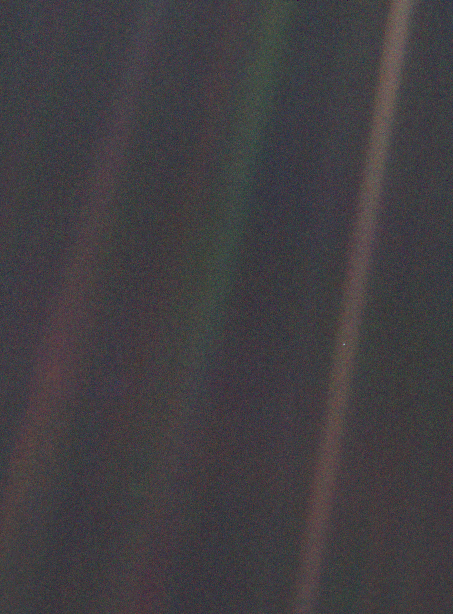
If you don’t know anything else about the universe, you should know this: it’s big. Really, really, REALLY big.
How big, you ask? Well, for starters, take a look at Earth in the picture above. Can you see it? It’s the pale blue dot in the beam of starlight on the right side of the picture. As Carl Sagan so famously put it:
From this distant vantage point, the Earth might not seem of any particular interest. But for us, it’s different. Consider again that dot. That’s here. That’s home. That’s us. On it everyone you love, everyone you know, everyone you ever heard of, every human being who ever was, lived out their lives. The aggregate of our joy and suffering, thousands of confident religions, ideologies, and economic doctrines, every hunter and forager, every hero and coward, every creator and destroyer of civilization, every king and peasant, every young couple in love, every mother and father, hopeful child, inventor and explorer, every teacher of morals, every corrupt politician, every “superstar,” every “supreme leader,” every saint and sinner in the history of our species lived there – on a mote of dust suspended in a sunbeam.
The picture was taken by the Voyager 1 spacecraft more than a decade ago. At the time, the spacecraft was about 6,000,000,000 kilometers from Earth, or 5.56 light-hours. A light-hour is the distance a particle of light can travel in one hour (assuming it’s traveling through a vacuum). To give you some sense of scale, in one light-second, a particle of light can travel around the circumference of the Earth seven and a half times.
And lest you think that’s actually a distance of any cosmic significance, consider this: the nearest star, Proxima Centauri, is about 4.24 light-years away. That’s more than 6,500 times the distance in the photograph above–and that’s just the closest star!
Our galaxy, the Milky Way, is between 100,000 to 120,000 light-years across. If you were on the other side of the galaxy and had a telescope powerful enough to get a good view of Earth, you would see a gigantic ice sheet over both of the poles with no visible sign of humanity whatosever. The light from all our cities, from our prehistoric ancestors’ campfires, has not yet traveled more than a fraction of the distance across this galactic island universe we call home.
Seriously, the universe is huge. If you don’t believe me, download Celestia and take yourself for a spin. In case you haven’t heard of it, Celestia is basically like Google Earth, except for the universe. Everything is to scale, and there are all sorts of plugins and mods for exoplanets, nebulae, space probes, and other fascinating celestial objects.
I remember what it was like when I first tried out Celestia back in 2010. I was at the Barlow Center for the BYU Washington Seminar program, in the little library just below the dorms. I think it was twilight or something, and I hadn’t yet turned on the lights. The building had a bit of that Northeast feel to it, like something old and rickety (though not as old as some of the buildings up here in New England). I turned off the ambient light option to make it look more realistic, and began to zoom out.
Let me tell you, the chills I got as the Milky Way disappeared to blackness were like nothing I’ve felt ever since. So much space, so much emptiness. It’s insane. The vastness between stars is just mind boggling–absolutely mind-boggling.
I got my first introduction to science fiction when I saw Star Wars IV: A New Hope as a seven year old boy. In the next few years, I think I checked out every single Star Wars novel in our local library’s collection. It wasn’t enough. Whenever I was on an errand with my mom, I tried to pick up a new one. I think they even left some copies of the Young Jedi Knight series under my pillow when I lost my last few baby teeth.
One of those summers, we drove down to Texas for a family vacation. I picked up the second Star Wars book in the Corellian trilogy, written by Roger Allen McBride. It was completely unlike any of the other Star Wars books I’d ever read. In it, Han Solo’s brother leads a terrorist organization in the heart of their home system of Corellia. They hijack an ancient alien artifact and use it to set up a force field that makes it impossible for anyone to enter hyperspace within a couple of light hours from the system sun. The part that blew my mind was that without FTL tech, it would take the good guys years to get to the station with the terrorists.
All of a sudden, the Star Wars universe didn’t seem so small anymore. And it only got crazier. Roger Allen McBride did an excellent job getting across the true vastness of space. At one point, Admiral Ackbar mused on just how puny their wars must seem to the stars, which measure their lifespans in the billions of years. For the ten year old me, it was truly mind boggling.
That was my first taste of science fiction that went one step beyond the typical melodrama of most space opera. And once I had that taste, I couldn’t really stop. As much as I love a good space adventure, real-life astronomy offers just as much of a sense of wonder. When a good author combines the classic tropes of science fiction in a space-based setting that captures the true vastness of this universe we live in, it’s as delicious as chocolate cake–more so, even.
I try to capture a bit of that in my own fiction, though I’m not always sure how much I succeed. In Star Wanderers, the vastness of space is especially significant for the characters because their FTL tech is so rudimentary that it still takes months to travel between stars. All of that time out in the void can really make you feel lonely–or, if you have someone to share it with, it can bring you closer together than almost anything else. It’s the same in Genesis Earth, which is also about a boy and a girl who venture into the vastness alone. The Gaia Nova books lean closer to the action/adventure side of space opera, but the same sensibility is still there.
The best science fiction, in my opinion, both deepens and broadens our relationship with this marvelous place we call the universe. It’s not just a fantastic setting for the sake of a fantastic setting–it’s the universe that we actually live in, or at least a plausible version of it set in a parallel or future reality. The universe is an amazing, beautiful place, and my appreciation for it only grows the more science fiction I read. If I can get that across in my own books, then I know that I’ve done something right.
Gliese 581 by ~arisechicken117 on deviantART
One of the best things about a good science fiction story is that it can take you to another world–literally! Well, not in the sense of actually physically taking you there, but if you want to experience the thrills of an alien world from the safety of your favorite chair, the best way to do it is to immerse yourself in a good space adventure story.
Planets are to science fiction what islands and continents are to fantasy. It’s possible to tell a story where no one ever sets foot on one, but then you’ve basically got a sea story (since space is an ocean, at least in most space opera). Even then, your characters are probably going to put into port from time to time, if for nothing else than a change of scenery to make things interesting. And if there’s anything science fiction interesting, it’s the wide variety of possible planet types.
For example, what would a planet be like if it were covered completely by water? If the world-ocean was so deep that there was no visible land? Assuming that the planet orbits within its sun’s habitable zone, where the temperature ranges allow water to exist as a liquid, then you would have a pretty interesting place. What would the hurricanes be like? A lot more intense than the ones here on Earth, that’s for sure.
Then again, suppose that the planet was a bit closer to its sun, and most of that water existed in the atmosphere as a gas. You’d have some pretty intense atmospheric pressures on the surface, but the density of the atmosphere would make it much easier to keep airships and flying castles aloft. In fact, that might be the most practical way to settle that kind of a world.
In our own solar system, there is an incredible amount of variety. On Mars, for example, glaciers of dry ice cover the southern pole, while the sun sets blue in a normally dirty brown sky. The tallest mountain actually summits above the atmosphere, and every few years, dust storms cover the whole world. And believe it or not, Mars is a lot more similar to Earth than anything else in our solar system.
On Titan, rivers of liquid methane flow down mountains of water ice, while black carbon dunes drift across a desert shrouded in orange haze. While the sun rises and sets with predictable regularity, the planet Saturn is suspended at the same point on the horizon and dominates a large portion of the sky. Don’t expect to see any rings, though–Titan orbits along Saturn’s ring plane, so the rings are mostly invisible.
Europa, one of the four Galilean moons of Jupiter, is also dominated by its host planet. Water ice covers the surface, but deep, deep below, there’s a massive liquid ocean that has never seen the light of the sun. What sort of monsters lurk in those depths–an ocean buried beneath a world?
Jupiter itself is pretty intense. A gas giant world with swirling bands of planet-sized clouds, it hosts a monstrous hurricane large enough to swallow at least two Earths. This vortex has been churning across the planet for over 150 years, and possibly as much as 350. I still remember the chills I got when I read 2001: A Space Odyssey, and the scientists’ probe dropped through the haze to a cloud deck as massive as one of our continents here on Earth.
Gas giant planets can be really interesting. They aren’t human habitable, since the gravity and pressure are so intense that anything man-made would be crushed before it could hit the surface, but those same forces can lead to some other interesting things. For example, at the lower levels, you may find storms that rain diamonds. Go further still, and you find an intense magnetic core that’s just on the verge of being able to sustain nuclear fusion. Detonate enough nuclear material down there, like they did in a short story from the Halo universe, and you can turn the planet into a star.
And that’s just our solar system. What about the hundreds of exoplanets that astronomers are now discovering? The first one to be confirmed, believe it or not, was orbiting of all things a pulsar! Imagine that–instead of the life-giving rays of a sun, the planet is bathed in highly lethal X-rays and gamma rays.
Of course, there are plenty of planets orbiting stars like our sun, but most of the ones discovered so far are hot Jupiters–gas giant worlds that orbit so close to their sun that the years are measured in hours. Some of these planets are so close that the sun is actually blasting the atmosphere away. We haven’t discovered the rocky core of a gas giant world that’s been destroyed in this manner, but theoretically it could exist.
Or what about the planets with highly elliptical orbits that traverse the habitable zone of their stars? Imagine: a world where the winters are so cold that the oceans freeze solid. After several of our Earth years, the spring brings a massive thaw. For a few short months the weather is actually quite balmy. Then, as spring turns to summer, the heat grows more and more intense, until the oceans begin to boil! When the summer reaches its zenith, the planet is nothing but a scorched desert wasteland. Soon, though, the autumn cool brings back the rains, with storms so intense that they refill the oceans in just a matter of months! Then, the deep freeze of winter begins, and the world returns to its long icy tomb.
One of my favorites, though, is the ribbon world that Asimov predicted in some of his stories. Worlds like this occur most commonly at class M red dwarf stars, which are so cool compared to our sun that planets within the habitable zone are tidally locked. This means that the sun neither rises nor sets, but remains stationary in the sky. The day side is burning hot, with either a barren desert wasteland or a giant hurricane large enough to cover most of the hemisphere. The night side, on the other hand, is so cold that all the water is completely frozen. The only habitable parts of the planet exist in a ribbon-like swath where the sun is just on the other side of the horizon, casting the land in perpetual twilight.
Believe it or not, we’ve actually discovered a planet like this in the Gliese system. Gliese 581g, or “Zarmina’s World” as the lead astronomer dubbed it, was discovered back in 2010. I was so excited by the discovery that I dedicated a blog post to it. Since then, the findings have not yet been confirmed, so it isn’t safe to call it a planet for sure, but if/when it ever is confirmed, it may be one of the first truly Earth-like planets to be discovered (at least, as Earth-like as a ribbon world can be).
In much of science fiction, there’s a tendency to make planets single biome only. Thus, you have your desert planets (Arrakis, Tatooine, Gunsmoke), your ice planets (Hoth, Gethen), your ocean planets (Calamari, Aqua), your jungle/forest planets (Dagobah, Lusitania, Kashyyyk), and even planets that are nothing but giant cities (Trantor, Coruscant). Some of the more recent series like Halo try to avert this, but even today it’s still fairly common.
If there’s anything that modern astronomy is showing us, though, it’s that the variety of planets and worlds out there is beyond anything we could possibly imagine. This is why I get a bit irked when an otherwise excellent series like Firefly makes out every planet to be like Wyoming. What about Gliese 581g? Kepler 22b? GJ 1214b? Kepler 16b?
As more exoplanets are discovered, I can’t help but believe that science fiction is going to experience a paradigm shift. What was once purely the realm of imagination is now being confirmed as reality. Alien worlds exist–alien Earths, even. And just as our conception of Mars changed from the Sword & Planet tales of Edgar Rice Burroughs’ Princess of Mars to the hard sf epics of Kim Stanley Robinson’s Red Mars, Green Mars, Blue Mars, so will our conception of other alien worlds.
I’ve got a lot of different planets in my own books, some borrowing a lot from the recent exoplanet discoveries, others leaning closer to the single biome worlds of classic space opera. In Desert Stars, Gaia Nova is kind of a cross between Arrakis and Trantor, with giant domed arcologies covering half the planet’s surface while the rest is mostly desert and wasteland. In Bringing Stella Home, Kardunash IV is (or rather, was) an Earth-like world, with forests, mountains, and oceans. In Stars of Blood and Glory, New Rigel is a straight up ocean world, while Ebitha from Star Wanderers is an ocean world tidally locked to its dwarf M class sun. I haven’t yet played with the elliptical planet, but I probably will someday.
One of the things I love most about a good science fiction story is that it takes me out of this world. With all the incredible new discoveries that astronomers are making, that aspect of the genre is only bound to get better. They’ve certainly enriched my own work, and will doubtless continue to do so in the future.