How I would vote now: 2020 Hugo Award (Best Novel)

The Nominees

The City in the Middle of the Night by Charlie Jane Anders

The Ten Thousand Doors of January by Alix E. Harrow
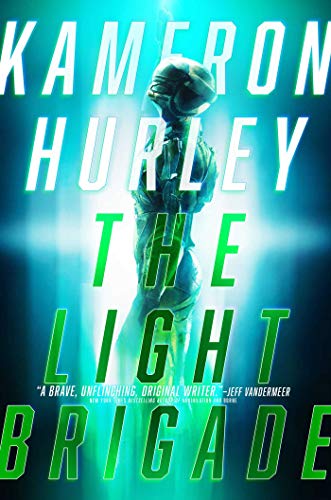
The Light Brigade by Kameron Hurley

A Memory Called Empire by Arkady Martine
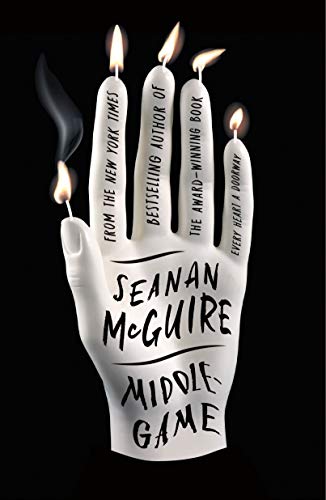
Middlegame by Seanan McGuire
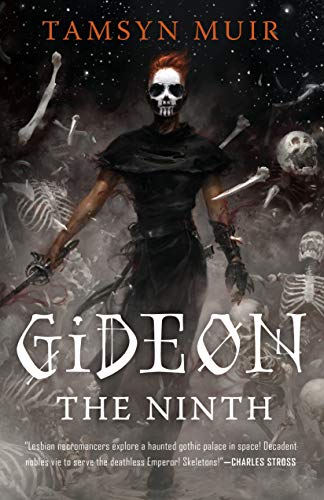
Gideon the Ninth by Tamsyn Muir

The Actual Results

  1. A Memory Called Empire by Arkady Martine
  2. Middlegame by Seanan McGuire
  3. Gideon the Ninth by Tamsyn Muir
  4. The Light Brigade by Kameron Hurley
  5. The City in the Middle of the Night by Charlie Jane Anders
  6. The Ten Thousand Doors of January by Alix E. Harrow

How I Would Have Voted

  1. No Award

Explanation

The wokery was strong this year.

I have a list of tropes that I cannot stand anymore, to the point that I will usually DNF any book that uses them. All of the nominated books this year fell fell into at least one of those tropes, including:

  • All true love is LGBTQ love
  • A profane and vulgar childhood
  • Death is chic
  • Life is not worth saving
  • Badass woman warrior, slay!

One of these days, I’ll write a blog post describing all of these tropes. If they weren’t so common in fiction these days, I would have more tolerance for them, but I’ve seen them all so much that they get an immediate “nope” whenever I see them.

The City in the Middle of the Night was like something written by a mental patient, and not in a good way. If I wrote a parody of a book written by a leftist, it would read no differently than this book.

I forget why I DNFed The Ten Thousand Doors of January, but I think it was because of the trope I call “a profane and vulgar childhood,” where children lose (or are never really allowed to experience) their innocence before they grow up, and the author doesn’t treat this like the tragedy it truly is. There may have also been an anti-racist / anti-colonialist bent that turned me off, if I remember correctly.

I wanted to like The Dark Brigade, because I enjoy reading Kameron Hurley’s op-eds in Locus Magazine, but the book was way too dark and profane. Also, it suffered from “all true love is LGBTQ love” and “badass woman warrior, slay!” which I am just so tired of reading.

A Memory Called Empire is one of those sprawling space operas about a massive galactic empire, but it read too much like something written by an English major with little to no understanding of how geopolitics actually works. Also, the “all true love is LGBTQ love” was strong with this one.

Finally, Middlegame and Gideon the Ninth are both prime examples of “death is chic,” a trope which plays right into the death cult that currently dominates our culture. But even if the macabre obsession with death is just an aesthetic, it’s one that I personally cannot stand. With that said, though, I think it goes beyond the aesthetic for both of these books—but I didn’t stick around long enough to find out.

For all of these books, the characters fell completely flat for me. One of the things I need in order to connect with a character is to get a sense right off the bat that they’re a good person—or, if they’re a bad person, that needs to be lampshaded clearly as a flaw. But in so many books that are published these days, the characters are just downright awful people who care only for themselves, and rarely is this pointed out as a flaw.

Increasingly, it seems that we live in a world where the culture tells us that nothing is true and everything is permitted. Screw that.

How I would vote now: 2022 Hugo Award (Best Novel)

The Nominees

Light from Uncommon Stars by Ryka Aoki

The Galaxy and the Ground Within by Becky Chambers

A Master of Djinn by P. Djeli Clark

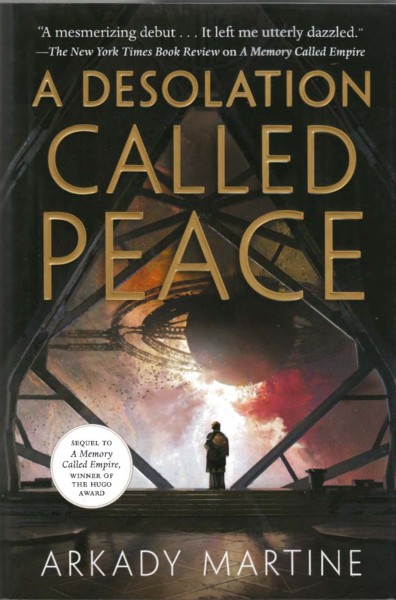
A Desolation Called Peace by Arkady Martine

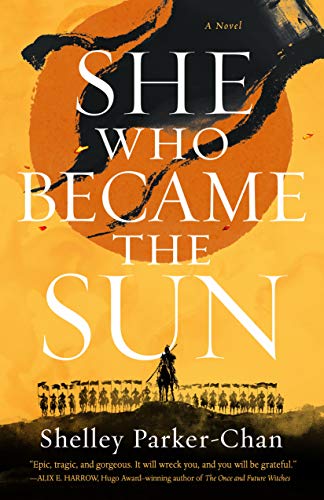
She Who Became the Sun by Shelley Parker-Chan

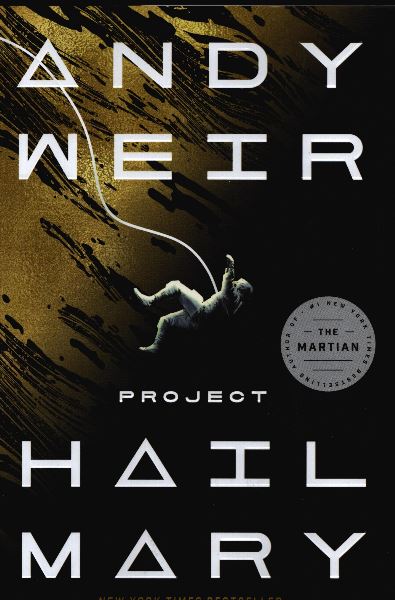
Project Hail Mary by Andy Weir

The Actual Results

  1. A Desolation Called Peace by Arkady Martine
  2. Light from Uncommon Stars by Ryka Aoki
  3. A Master of Djinn by P. Djeli Clark
  4. The Galaxy and the Ground Within by Becky Chambers
  5. She Who Became the Sun by Shelley Parker-Chan
  6. Project Hail Mary by Andy Weir

How I Would Have Voted

  1. Project Hail Mary by Andy Weir
  2. No Award

Explanation

Project Hail Mary was a fun read, and a really good hard SF novel. There were a couple of minor things that made me roll my eyes, but the story itself was solid, and the science was fascinating. Also, the ending really stuck with me for several days. I don’t think it was better than Hyperion or Ender’s Game, but it certainly was deserving of a positive vote for best novel.

I DNFed everything else on the ballot. Normally, that alone wouldn’t be a reason for voting No Award, but some of these books were just insanely woke: in particular, Light from Uncommon Stars was full of transgender madness (and judging from the author bio in the back, the author herself is caught up in the madness as well).

I didn’t read A Desolation Called Peace or The Galaxy, and the Ground Within because I’d already DNFed the first book in the series, mostly for the “all true love is LGBTQ love” trope (I should do a blog post dissecting that particular trope), so I can’t speak to the relative wokeness of either of those titles. But it says something that I tried and DNFed the series.

But the most infuriating read for me was She Who Became the Sun, since by all indications it should have been right up my alley, what with all the steppe nomad warriors and all. The writing was pretty good too, and the setup was fantastic. Yes, there was some gender bending stuff, but for the first half of the book I generally didn’t find it any more offensive than Mulan. I forget why I decided to skip to the last chapter, but the ending was so infuriating that it put this author solidly on my blacklist, just like The Fifth Season did for N.K. Jemison (more on that when we get to 2016’s Hugo ballot). I can’t say much without spoiling the book, but it has to do with what many conservative and alternate media commentators rightly call the death cult. Really infuriating.

As for A Master of Djinn, having traveled across Egypt and the Middle East, the worldbuilding was so fundamentally broken that I just couldn’t swallow it. The author basically created a steampunk Middle East that embraces several tenets of modern wokism. The only alternate reality in which the main character wouldn’t be tossed off of a high building for being a lesbian is a reality where the source code of Islam has been rewritten so entirely that it isn’t really Islam anymore. Which I suppose is fine for a pulpy escapist fantasy, but this one just didn’t appeal to me.

Reading Resolution Update: January

My 2022 reading resolution: Read or DNF every novel that has won a Hugo or a Nebula award, and acquire all the good ones.

I had expected to DNF a lot of these books, but I was a little dismayed at how terrible they are. Or rather, how some of them can be so well-written and yet so idelogically possessed.

For a while, I worried that I was pre-judging some of these books too harshly, based on my opinions of the author. After all, shouldn’t art be treated separately from the artist? But then I decided that it would be better to lean into that bias, and trust my intuition. After all, it’s impossible to approach reading without a personal bias—and even if it were possible, it wouldn’t be advisable.

One of the key things I’m hoping to take away from reading these books is a better understanding of my own personal tastes. Toward that end, it’s much better to DNF early and often, since that tells me something valuable about my own tastes. I’ll get much more out of this exercise if I pay attention to that than whether or not I’m being “fair” to a particular book or author.

As for how my bias against an author might prejudice me against a book, I don’t think that’s too much of a problem so long as I’m aware of those biases. Yes, it makes it more likely that I’ll read a book with a critical eye, and not in the way that I typically read for enjoyment, but that goes both ways, since if I do enjoy a book, that’s going to improve my opinion of the author (or at least make me reconsider my opinion). So long as I’m aware of my biases and make sure that they aren’t set in stone, I think it should be fine

Besides, it’s not like I have anything to prove. Sure, China Mike Glyer might pull out an excerpt from this post to use as content (hi China Mike!), but I couldn’t care less what that particular corner of fandom thinks about my public ruminations. I will know if I’m being too “unfair” to a book or an author, and the only criterion that really matters is whether I have a clear reason for DNFing the book, separate from my biases about the author.

And honestly, what I’ve found so far is that my biases are pretty spot on. Authors who behave insufferably in public or on the internet tend to write some pretty insufferable books, especially if they’re woke.

Fortunately, I have found a few new-to-me books and authors who are really fantastic. And my decision to DNF early and often is helping to keep it from becoming too much of a slog, which is good. It also means that I may complete this resolution a lot sooner than I’d expected, at which point I’ll probably move on to the Dragons or the Prometheus awards.

In any case, here are all the Hugo and Nebula awared-winning novels that I read or DNFed in January 2022:

Books that I read and plan to / have already acquired:

  • Way Station by Clifford D. Simak (1964 Hugo)
  • Foundation’s Edge by Isaac Asimov (1983 Hugo)
  • The Vor Game by Lois McMaster Bujold (1991 Hugo)
  • Annihilation by Jeff VanderMeer (2015 Nebula)

Books that I read and don’t plan to acquire:

  • None

Books that I did not finish:

  • The Big Time by Fritz Leiber (1958 Hugo)
  • A Case of Conscience by James Blish (1959 Hugo)
  • The Wanderer by Fritz Leiber (1965 Hugo)
  • The Einstein Intersection by Samuel R. Delany (1968 Nebula)
  • Stand on Zanzibar by John Brunner (1969 Hugo)
  • Rite of Passage by Alexei Panshin (1969 Nebula)
  • Man Plus by Frederik Pohl (1977 Nebula)
  • Dreamsnake by Vonda N. McIntyre (1979 Hugo and Nebula)
  • A Deepness in the Sky by Vernor Vinge (20000 Hugo) (My wife recommended this one, and I will probably try it again, since I took a break midway through and forgot who all of the characters were. But for now, I’m counting it as a soft DNF.)
  • Camouflage by Joe Haldeman (2006 Nebula)
  • The Windup Girl by Paolo Bacigalupi (2010 Hugo and Nebula)
  • Redshirts by John Scalzi (2013 Hugo)
  • Ancillary Justice by Ann Leckie (2014 Hugo and Nebula)
  • All the Birds in the Sky by Charlie Jane Anders (2017 Nebula)
  • The Calculating Stars by Mary Robinette Kowal (2019 Hugo and Nebula)
  • A Memory Called Empire by Arkady Martine (2020 Hugo)
  • A Song for a New Day by Sarah Pinsker (2021 Nebula)