How I Would Vote: 2025 Hugo Awards

The Nominees

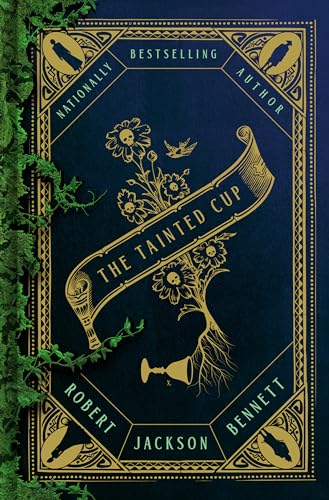
The Tainted Cup by Robert Jackson Bennett

The Ministry of Time by Kaliane Bradley

A Sorceress Comes to Call by T. Kingfisher

Alien Clay by Adrian Tchaikovsky

Service Model by Adrian Tchaikovsky
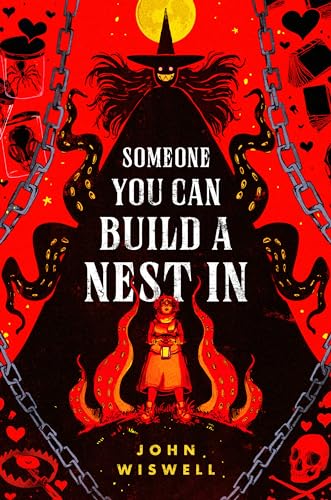
Someone You Can Build a Nest In by John Wiswell

The Actual Results

TO BE DETERMINED

How I Would Vote Now

  1. No Award
  2. Service Model by Adrian Tchaikovsky

Explanation

As if yesterday’s post wasn’t controversial enough, I’ve decided to jump feet-first into this particular tempest (though thankfully, it appears to be a tempest in an ever-shrinking teacup). And I suppose the thing that makes this particular post so interesting is that I could actually cast this vote, if I had no qualms about giving the clowns who run the Hugo Awards any of my hard-earned money. But I do have qualms, so I won’t give them my money, which still makes this a hypothetical exercise, even though I’m posting this three weeks before the 2025 Hugos are awarded.

To be perfectly honest, I have not read any of these books all of the way through. I’ve read enough of two of them to DNF them, and one of them enough (including the epilogue) to know that I will eventually read the whole thing. And I screened all of them first with AI, which told me enough to know that three of them were not worth reading at all.

First, Someone You Can Build a Nest In. According to ChatGPT (and frankly, the back cover description itself), this book is chock full of body horror, trauma, abuse, and sexual depravity. It is also quite possibly the wokest book on the ballot, which means that it probably has the best chance of actually winning. Which also means that you couldn’t pay me enough money to read it. So much for that.

The Ministry of Time also appears to be woke, with anti-colonial and LGBTQ themes. However, the thing that really turned me off were all of the content issues that ChatGPT listed, such as frequent strong language, lots of F-bombs, and several erotic “open-door” sex scenes. So yeah, I’ll give a pass on that one too.

It’s much the same story for The Tainted Cup. A few woke elements, a subtle M/M romance (which I’m sure plays into the “All True Love is LGBTQ Love” trope that I cannot abide), and a lot of explicit profanity, with some prostitution to round it out. Not interested.

I forget why I DNFed A Sorceress Comes to Call. All I remember was that when I tried to read it, I felt repelled from it like a magnet. Since that has been my experience with basically everything else that T. Kingfisher has written, I didn’t feel compelled to try again.

Which brings us to the two books by Tchaikovsky. I really enjoyed his Children of Time, though I didn’t really get into the sequel (just didn’t feel compelled by any of the characters). He is a good writer, and specifically a good science fiction writer, though his scientific materialism strikes me as outdated.

Alien Clay didn’t appeal much to me, though—honestly, I found it difficult to believe that a government that would expend so many resources to transport their prisoners halfway across the galaxy wouldn’t also spend the tiny fractional cost to make sure they all got there alive. So right from the start, it felt like a melodramatic parody of all the left’s fears about “fascism.” And skipping to the end, it basically turns out the way Halo would have ended if the Flood had won. So I decided to DNF it, even though it wasn’t the worst book I’ve ever DNFed. And also, I don’t think that any one author should have more than one book on the ballot in any given year. So that’s why I’d put it under No Award.

Service Model, though, is pretty good. The best way I can describe it is Murderbot meets Kafka. It’s sort of an absurdist comedy in a post-apocalyptic world where the humans have (mostly) vanished, and the robots are malfunctioning in hilarious (and sometimes disturbing) ways. Not my favorite kind of book, and it probably could be improved by ruthlessly editing it to half the length, but I was enjoying it right up to the point where someone else put the library copy on hold, and I had to return it without renewing it. Skipping to the epilogue, I found nothing particularly objectionable, so I will pick it up again, and will likely finish it.

Which is more than I can say of most Hugo-nominated books in the last ten years.

[ETA 23 Feb 2026: I’ve decided to DNF Service Model after all, not because of anything objectionable that I read, but because I just couldn’t bring myself to pick it up again and finish it. It just wasn’t compelling enough for me to want to finish it more than I want to pick up something new. I could be persuaded otherwise if I heard someone really gush about it, but right now, I’m just not going to bother.]

How I would vote now: 2023 Hugo Award (Best Novel)

Alright, let’s tackle the most controversial Hugo awards since Sad Puppies 3—and possibly the most controversial Hugos ever!

The Nominees

Legends & Lattes by Travis Baldree

Nettle & Bone by T. Kingfisher

The Spare Man by Mary Robinette Kowal

The Daughter of Doctor Moreau by Silvia Moreno-Garcia

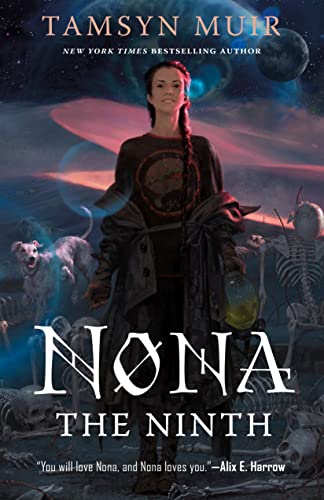
Nona the Ninth by Tamsyn Muir

The Kaiju Preservation Society by John Scalzi

The Actual Results

  1. Nettle & Bone by T. Kingfisher
  2. Legends & Lattes by Travis Baldree
  3. The Kaiju Preservation Society by John Scalzi
  4. The Daughter of Doctor Moreau by Silvia Moreno-Garcia
  5. The Spare Man by Mary Robinette Kowal
  6. Nona the Ninth by Tamsyn Muir

How I Would Have Voted

  1. No Award
  2. The Daughter of Doctor Moreau by Silvia Moreno-Garcia
  3. Legends & Lattes by Travis Baldree

Explanation

The 2023 Hugo Awards were an epic clusterfuck, from which the Hugos might never recover (and honestly, I kind of hope they don’t). Not only did the organizers exclude a bunch of titles like Babel by R.F. Kuang that probably would have placed very high, if not outright won first place—excluded them for no other discernible reason other than that they might have offended the Chinese Communist Party, since China was hosting the awards—but they also disqualified thousands of Chinese ballots for the same reason that they disqualified thousands of Sad Puppy ballots in subsequent years since the big kerfluffle in 2015: namely, that they were Wrongfans having Wrongfun.

Apparently, to get on the Hugo ballot, you have to either 1) pander to or be a member of the SFWA mean girls club (for crying out loud, two of the authors on this year’s ballot were former SFWA presidents), or 2) write a lesbian love story. I suppose you can also get on the ballot if you write a love story that’s gay, transgender, polyamorous, or some other flavor of queer, but lesbians are easier because the male readers are less likely to be grossed out or confused by it.

Anyways, I didn’t enjoy any of these books, though I have to admit that I didn’t even try to read The Kaiju Preservation Society (because I cannot stand Scalzi, either as an author or a human. The Collapsing Empire with its random throwaway sex scene in the second or third chapter was the last straw for me) and The Spare Man (my wife picked it up and was so confused and turned off by the non-gendered pronoun dickery that I knew it was too woke for me). I DNFed Tamsyn Muir’s Locked Tomb series with Gideon the Ninth, for reasons that I detailed in my recap of the 2021 Hugo Awards.

As for Nettle & Bone, I was pleasantly surprised at first, because the love interest was heterosexual—which, for the Hugos, is very unusual these days. But there were other things about the book that turned me off, such as the anachronism of a religious medieval world that’s been gutted of anything religious that might offend a non-religious reader in 2023, and a very anti-natalist bias with some lines that could have come straight from Margaret Sanger. So that’s why I put Nettle & Bone below No Award, and didn’t even bother ranking it anywhere on my ballot.

Legends & Lattes wasn’t terrible, but I got bored after the first couple of chapters, and because of the lesbian love story I’m not too keen to try it again (though I suppose I could be persuaded otherwise). As for The Daughter of Doctor Moreau, I didn’t find anything objectionable with that one, and actually got about halfway through, but… I just didn’t care about any of the characters. Not a terrible book, but it just wasn’t for me.

Of the two, I think I liked The Daughter of Doctor Moreau better, or disliked it less, which is why I put it on the ballot above Legend & Lattes and below No Award. Why include anything on a ballot below No Award? Because the way that ranked choice voting works, you can still influence the outcome that way even if No Award is eliminated during the counting. It’s basically like saying: “I don’t think any of these books deserve an award, but if I had to award one of them, I’d give it to (1) and (2), in that order.”

So that’s my take on the infamous 2023 Hugo Awards. Frankly, I think it would have been much better if the Chinese wrongfans had completely taken it over, and made it so that Worldcon was held in China every other year, with Chinese authors dominating the Hugos from now on. There are certainly enough Chinese sci-fi readers to justify such a move. But alas, it seems that the Trufans are going to keep clutching the Hugos with a deathgrip until 1) they’re all dead (since most of them are boomers anyway), or 2) the Trufans and the Hugos both become culturally irrelevant, if indeed they aren’t already.

(Speaking of China, hi Mike Glyer! Still buying views from Chinese clickfarms to boost your online rankings? It must be a real slow news week if you pick up this blog for your File 770 pixel scroll.)

How I would vote now: 2020 Hugo Award (Best Novel)

The Nominees

The City in the Middle of the Night by Charlie Jane Anders

The Ten Thousand Doors of January by Alix E. Harrow

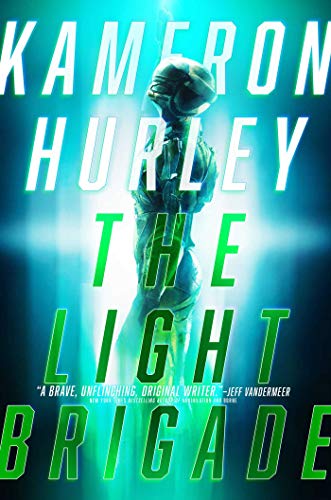
The Light Brigade by Kameron Hurley

A Memory Called Empire by Arkady Martine

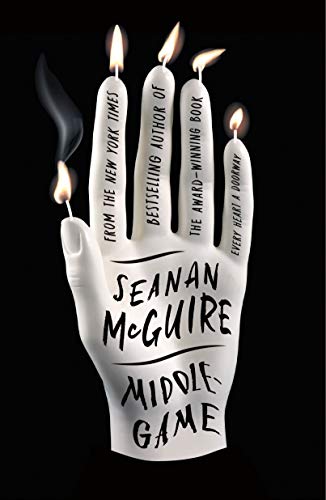
Middlegame by Seanan McGuire

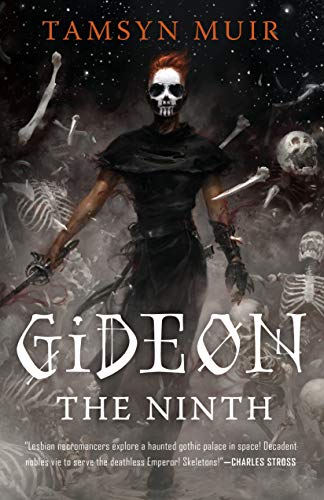
Gideon the Ninth by Tamsyn Muir

The Actual Results

  1. A Memory Called Empire by Arkady Martine
  2. Middlegame by Seanan McGuire
  3. Gideon the Ninth by Tamsyn Muir
  4. The Light Brigade by Kameron Hurley
  5. The City in the Middle of the Night by Charlie Jane Anders
  6. The Ten Thousand Doors of January by Alix E. Harrow

How I Would Have Voted

  1. No Award

Explanation

The wokery was strong this year.

I have a list of tropes that I cannot stand anymore, to the point that I will usually DNF any book that uses them. All of the nominated books this year fell fell into at least one of those tropes, including:

  • All true love is LGBTQ love
  • A profane and vulgar childhood
  • Death is chic
  • Life is not worth saving
  • Badass woman warrior, slay!

One of these days, I’ll write a blog post describing all of these tropes. If they weren’t so common in fiction these days, I would have more tolerance for them, but I’ve seen them all so much that they get an immediate “nope” whenever I see them.

The City in the Middle of the Night was like something written by a mental patient, and not in a good way. If I wrote a parody of a book written by a leftist, it would read no differently than this book.

I forget why I DNFed The Ten Thousand Doors of January, but I think it was because of the trope I call “a profane and vulgar childhood,” where children lose (or are never really allowed to experience) their innocence before they grow up, and the author doesn’t treat this like the tragedy it truly is. There may have also been an anti-racist / anti-colonialist bent that turned me off, if I remember correctly.

I wanted to like The Dark Brigade, because I enjoy reading Kameron Hurley’s op-eds in Locus Magazine, but the book was way too dark and profane. Also, it suffered from “all true love is LGBTQ love” and “badass woman warrior, slay!” which I am just so tired of reading.

A Memory Called Empire is one of those sprawling space operas about a massive galactic empire, but it read too much like something written by an English major with little to no understanding of how geopolitics actually works. Also, the “all true love is LGBTQ love” was strong with this one.

Finally, Middlegame and Gideon the Ninth are both prime examples of “death is chic,” a trope which plays right into the death cult that currently dominates our culture. But even if the macabre obsession with death is just an aesthetic, it’s one that I personally cannot stand. With that said, though, I think it goes beyond the aesthetic for both of these books—but I didn’t stick around long enough to find out.

For all of these books, the characters fell completely flat for me. One of the things I need in order to connect with a character is to get a sense right off the bat that they’re a good person—or, if they’re a bad person, that needs to be lampshaded clearly as a flaw. But in so many books that are published these days, the characters are just downright awful people who care only for themselves, and rarely is this pointed out as a flaw.

Increasingly, it seems that we live in a world where the culture tells us that nothing is true and everything is permitted. Screw that.