- I started and finished the rough AI draft of The Unknown Sea, at 54,330 words (cover reveal forthcoming).
- I published 14 titles from my backlist on Audible using Amazon’s AI narration system.
- I compiled ten years of author’s notes for an upcoming book release.
- I developed a magic system for a new fantasy series, where magical powers can only be unlocked through marriage between a man and a women who both have latent abilities.
- I workshopped the first three chapters of an unpublished WIP through my writing group, and used their feedback to start outlining my next WIP, a fantasy adaptation of David and Goliath (but with 100% more jackalopes).
Late February Update
Wow, it’s been a while since I gave an update on what I’ve been up to. Life has been crazy, but not too crazy. I really ought to get back into the habit of blogging more regularly.
Last week was LTUE here in Utah Valley, and while I didn’t attend the convention, I did stop by the launch party for Ark Press. It looks like it’s going to be an interesting publishing venture, with Tony Daniels, Dave Butler, and David AF heading it out. Their goal is basically to be the MAGA of science fiction and fantasy publishing, though they probably wouldn’t put it quite that way. However, they do want to publish more pro-American, pro-conservative, pro-human fiction, and to fill a gap in the current publishing market that has neglected male readers in recent years.
They’re also running a contest, with the winner receiving a $10,000 publishing contract, to be published on July 4th, 2026. The theme for the contest is America 2076, and it can be any genre (though it sounds like they want it to be a pro-American story). Of all the WIPs I currently have floating around, The Road to New Jerusalem might actually be a good fit for that. I haven’t worked on it for a few months, but I’ll probably dust it off pretty soon here and get it ready to submit.
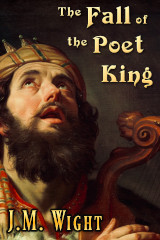
Speaking of my J.M. Wight pen name, I ran the first three chapters of The Fall of the Poet King through my writing group, and I think the best course of action is to rewrite it as a fantasy novel loosely based on the David and Bathsheba story. If I’m going to write it as a straight historical fiction, I need to do a lot more research to firmly ground it in the era, and the trouble with adapting a Bible story (especially a more difficult story like David and Bathsheba) is that everyone brings their own baggage or personal interpretation to it, and is liable to get miffed if your retelling doesn’t exactly match what they’ve got in their own head. Besides, fantasy sells a lot better than religious fiction, so I think this is a much more prudent course to take.
In fact, I’ve recently made an inventory of most of my WIPs, and decided to trunk all of them that don’t explicitly fall in the fantasy genre. I will still finish the Outworld Trilogy and the Falconstar Trilogy, but after that, I’m going to focus a lot more on writing fantasy than on writing science fiction. Also, I’m not going to work on those until after I’ve filled up my writing queue with more fantasy-oriented works. This is a pivot that I’ve been meaning to make for some time now, and I’ve been slowly making that pivot, but now I think I need to speed it up and make it more definitive.
So that’s what I’ve been up to, mostly. I’m currently finishing up the rough AI draft of The Unknown Sea, and plan to pick up the human draft of Bloodfire Legacy, which should be coming out in the Spring. And hopefully I’ll be working on that David and Bathsheba story again soon.
How I Would Vote Now: 1964 Hugo Awards (Best Novel)
The Nominees
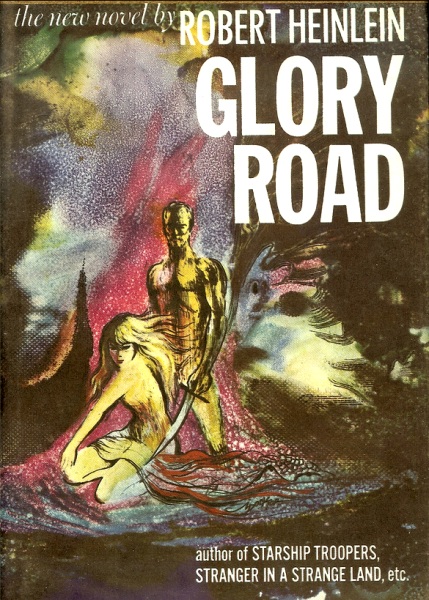
Glory Road by Robert A. Heinlein
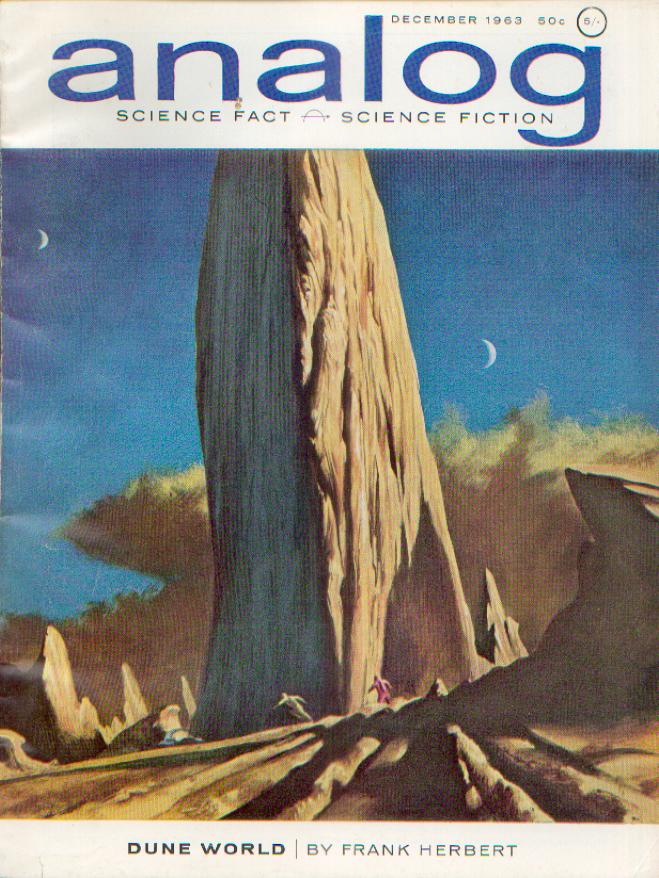
Dune World by Frank Herbert
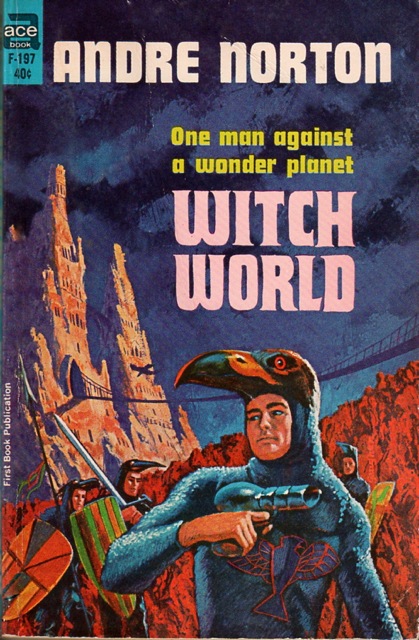
Witch World by Andre Norton
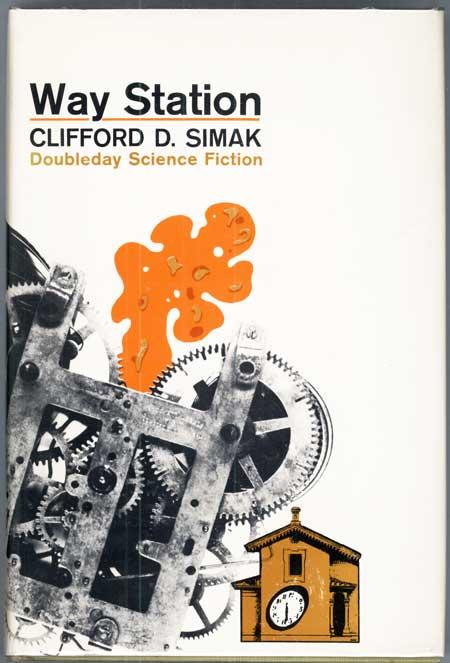
Way Station by Clifford D. Simak

Cat’s Cradle by Kurt Vonnegut, Jr.
The Actual Results
- Way Station by Clifford D. Simak
- Glory Road by Robert A. Heinlein
- Witch World by Andre Norton
- Dune World by Frank Herbert
- Cat’s Cradle by Kurt Vonnegut, Jr.
How I Would Have Voted
- Dune World by Frank Herbert
- Way Station by Clifford D. Simak
- Witch World by Andre Norton
Explanation
This was a pretty decent year, though I didn’t enjoy all of the novels. Still, I thought they were all good, even if not all of them were to my particular taste.
I really enjoyed Way Station by Clifford Simak. It’s about a civil war soldier who has quietly been living in the back country for the last hundred years, right up to the 60s, when someone in the government begins to notice how weird it is that this guy is still around, and still going daily to his mailbox on the country lane, carrying his old musket. When we learn what’s actually going on with the guy, and how he’s connected with the aliens who are deliberately keeping their existence secret from most of humanity, things get really interesting.
The ending could have been stronger, but the novel has a lot of heart, and I really enjoyed reading it. With that said, however, I would still put the serialized early draft of Dune higher, just because Dune is such a well-deserved classic, and the ending to Way Station did feel a little weak. But the ideas in the novel were absolutely fantastic, and very well explored.
I also enjoyed Witch World, though I don’t think I’ll follow up with the rest of the series. It was an interesting portal fantasy / adventure tale, though the fantasy world itself never really held my interest. Maybe it was the weird blend of science fiction with fantasy, or maybe it was Norton’s particular writing style, which almost rose to Shakespearean diction at points. I did like the characters enough to read to the end of the story, but not enough to follow them into the next book.
As for Glory Road and Cat’s Cradle, I DNFed both of them. Cat’s Cradle was just too stylistically dense for me to enjoy—it’s much more of a literary novel, and that’s not really my thing. Glory Road was alright, but it very quickly got explicity with the nudity and sexuality, and I have learned from personal experience that whenever Heinlein goes off about sex, the book is not for me.
Generational Turnings and the Great American Revival
One of the shows that I listen to fairly regularly is Steve Deace, and a couple of days ago he had an interesting discussion about The Fourth Turning and Strauss & Howe’s generational theory. It’s worth giving a listen, if you’re interested in that kind of stuff.
What really interested me, though, is how the theory may (or may not) predict the period of religious revival that we currently appear to be entering. So after listening to the show, I shot Steve an email with my thoughts on the subject. Since this email more or less brings together my recent thoughts on the subject, I thought it was worth sharing on this blog.
Hi Steve. I enjoyed your show today, where you discussed Strauss & Howe’s theory of generational turnings. I’ve been fascinated by this subject for several years now, and have studied The Fourth Turning is Here (published just recently) and Generations (published in the 80s), in addition to The Fourth Turning. Here are some pertinent details that you missed, but may find interesting:
First, of all of Strauss & Howe’s predictions, the optimistic ones always seem laughably wrong in hindsight, whereas the pessimistic predictions are the ones that seem prophetic. I could share examples, but you’re a busy man and I want to keep this email relatively short. Todd will probably back me up on this.
Second, the spiritual foundation of the new societal order which emerges in the first turning is always set by the awakening in the previous second turning. So, for example, the spiritual foundations of the post-Revolutionary War period that gave us the Constitution were set by the First Great Awakening in the first half of the 1700s.
If we follow this pattern to its logical conclusion, then the spiritual foundations of the coming period of national unity in the 2030s and 2040s were set by the counterculture revolution of the 1960s… which is just another way of saying that the woke leftists win and establish their DEI utopia. That is what the “hero” generation of the Millennials will give us, if we follow the pattern.
Third, Howe’s most pessimistic prediction in The Fourth Turning is Here is that our current crisis era spirals so completely out of control that the United States disintegrates into separate waring countries. In other words, we never get a first turning period of national unity because the whole thing breaks apart, and the current “hero” generation never rises to the occasion.
But there is a third option, which Strauss & Howe actually predicted in one of their first books, Generations. This third option is the most pessimistic prediction from that book, but it lines up pretty well with what has actually occured. It is that we skip the first turning altogether and go immediately from a crisis era to an awakening era.
There is a precedent for this. According to the theory, we should have gotten a period of national unity immediately after the Civil War… but of course, we didn’t. Reconstruction was a mess that we muddled through for several decades, giving way to the labor riots, the rise of anarchism, the decadent excesses of the Gilded Age, etc. But we also got things like prohibition, Zionism, premillennial dispensationalism, and movements like the Jehovah’s Witnesses and the Salvation Army.
Point is, it was a period of spiritual awakening that happened immediately after a major crisis. We never got the peace, unity, or prosperity of a first turning period, but jumped immediately from the Civil War to the next Awakening. And it appears that we are following a very similar path right now.
Put another way, our three possible scenarios are:
1) The left wins, and everyone who listens to your show gets shipped off to the rainbow gulag in order to establish their progressive utopia (Strauss & Howe’s optimistic scenario),
2) The cycle breaks, and the United States disintegrates into separate countries, probably with an accompanying civil and/or global war (Howe’s pessimistic scenario), or
3) We skip straight from the current crisis period to a period of spiritual revival, which ultimately saves the country, but never gives us a period of peace, prosperity, or unity–at least not until the next generational cycle.
If the assassin’s bullet had blown Trump’s head off in Butler Pennsylvania, I think we would already be well on our way to either scenario 1 or scenario 2. I think the reason God saved Trump’s life on that day was to move us into scenario 3, and to give us the sort of spiritual revival that will purge our culture of all (or at least most) of the pernicious evils that took root during the counterculture revolution of the 60s, which in many ways was actually an anti-revival. Fifty years from now, I think the world that the Boomers gave us will seem as foreign and strange to our grandchildren as Medieval Christendom seems to us now.
Anyhow, those are some points that I thought you’d find pertinent. It was an interesting discussion on your show.
How I Would Vote Now: 1959 Hugo Awards (Best Novel)
The Nominees

The Enemy Stars by Poul Anderson
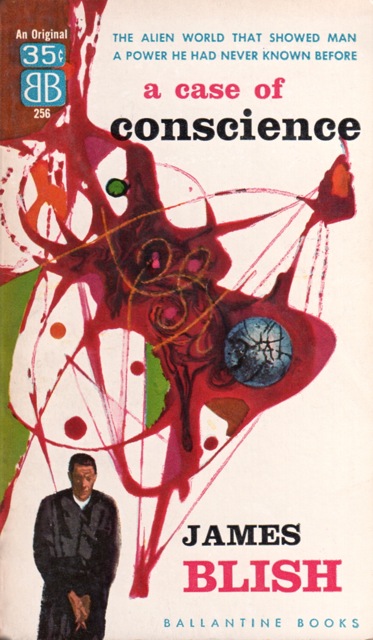
A Case of Conscience by James Blish
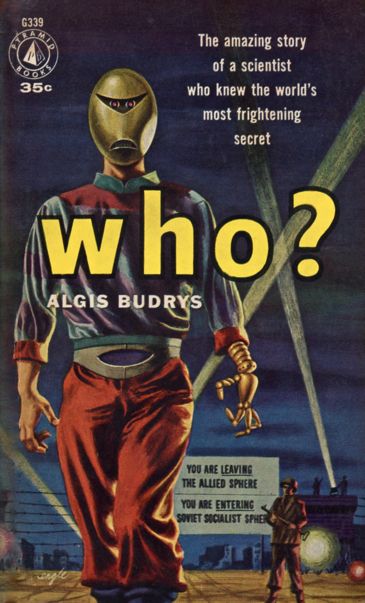
Who? by Algis Budrys
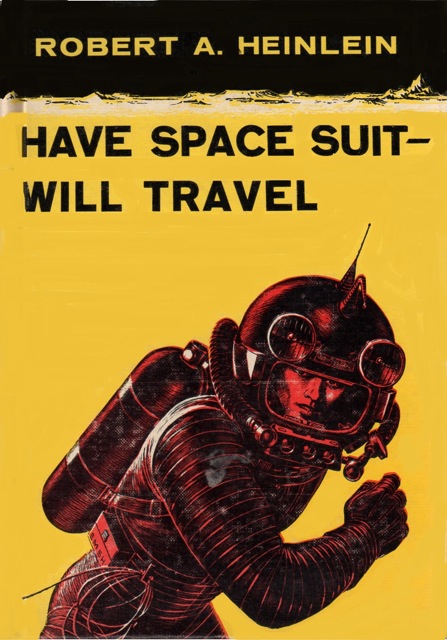
Have Space Suit Will Travel by Robert A. Heinlein

Immortality, Inc. by Robert Sheckley
The Actual Results
- A Case of Conscience by James Blish
- Have Space Suit Will Travel by Robert A. Heinlein
- Immortality, Inc. by Robert Sheckley
- The Enemy Stars by Poul Anderson
- Who? by Algis Budrys
How I Would Have Voted
- Immortality, Inc. by Robert Sheckley
- Have Space Suit Will Travel by Robert A. Heinlein
Explanation
Immortality, Inc. is the first book I’ve read by Robert Sheckley, and while it’s definitely dated, I enjoyed it quite a bit. The premise was fun and interesting, and the writing was fast-paced with a healthy dose of suspense. As for the stuff that felt dated, I actually think that added to the book’s charm, making it feel like a throwback to an earlier (if not quite innocent) time. I’ve often felt like if I’d had a choice in the time in which I’d been born, I would have chosen to be born about a hundred years ago, so I do occasionally like a good throwback to golden age sci fi. I’m definitely interested in reading more Robert Sheckley.
While I’ve enjoyed Algis Budrys in the past, I found it difficult to get into Who? though not due to any fault of the book or the author. The basic premise of the book is that a spy has returned from enemy custody, but he’s recieved so many prosthetics (including a prosthetic head and brain) that he’s practically a machine now, to the point where his handlers can’t tell if he’s the actual spy or someone trying to impersonate him. Back in the 1950s, the premise made sense, but that was before we knew about DNA, which renders the whole thing obsolete since a small blood sample and a DNA test would resolve the main conflict right away. I just couldn’t get over that, and the story itself didn’t really hook me, so I gave up midway through. Perhaps I should try it again, though.
The Enemy Stars was another Poul Anderson book that I just couldn’t get into. The characters weren’t quite as flat as in some of his other books, but they all still tended to blend together, and by about page 50 I still couldn’t tell what the main conflict of the story was. I love sprawling space operas just as much as the next sci fi reader, but the book has to have a plot, too. Less worldbuilding and more actual story, please.
Have Space Suit Will Travel was okay, but I didn’t really love it, and if I hadn’t picked up the audiobook, I probably would have DNFed it. It’s a book for young readers that feels like a book for young readers—in other words, a book that seems to talk down to the reader more than was necessary. It did have a lot of golden-age, 50’s era charm, and I enjoyed the world and the characters. Heinlein can definitely write a fun story. But with all that said, I don’t think this is one of his best—in fact, I wouldn’t even say it’s one of his best juveniles.
It’s been a while since I read A Case of Conscience, but I think the main reason I DNFed it had to do with its Malthusian premise and treatment of religion. Basically, it’s about a Catholic priest who is also an interstellar explorer, and how he wrestles with the question of whether a certain race of intelligent alien beings has souls. One of the aliens comes back to Earth and is instrumental in the complete collapse of society, which somehow ties into the philosophical questions, but that part wasn’t very clear to me. The story was very dry and cerebral, and I was never really sold on the central premise. Also, the religious character felt like he was obviously written by someone who isn’t religious (though I suppose I could be wrong about that—after all, I’m not a Catholic). But perhaps that was just me.
In short, while I wouldn’t say this was one of the best years for the Hugo, it had some good books, and none of the ones that made the ballot were particularly objectionable. With that said, though, I don’t think any of them stand the test of time.
What does it mean that Brandon Sanderson is woke?
I’ve been thinking a lot about Brandon Sanderson lately, and his recent turn toward including more woke content in his books, especially Wind and Truth. I haven’t read it (I’ve only read the first book in the Stormlight Archive), but I have read excerpts from it, and heard from other people that it includes a great deal of woke content, including a gay romance that is central to the story. Most notably, Brandon himself wrote a blog post addressing this, in which he very politely said that his conservative readers are wrong, and that anyone who objects to the gay romance on the basis of Biblical morality is not living up to Christ’s teachings about showing love and compassion. Which is, of course, one hell of a way to gaslight a large chunk of your readership. You can read more of my thoughts on that here.
I really hope Brandon pulls back from the position he’s now staked out for himself, but sadly, I don’t think that he will. From what I can tell, as a local Utah author with several direct (through his class) and indirect (through members of his writing group who are close family friend) connections to Brandon, the roots of this transformation run very deep, possibly before his debut novel, Elantris, was picked up by Tor. After all, Brandon has always surrounded himself with people who are on the extreme left side of the political spectrum, from his early days as an unpublished author working the convention circuit to get picked up by a New York publisher, all through the descent of his Writing Excuses podcast into woke madness, and most recently, to Wind and Truth itself. For a very long time, he has surrounded himself with these people. Clearly, their association has had a deep and lasting impact on him.
So what comes next? Here are some of my thoughts and predictions.
Prediction 1: Brandon will not teach English 318R at BYU after the current academic year.
For the last two decades, Brandon has taught a creative writing class at BYU as a visiting professor. Both my wife and I have taken this class. Ever since the pandemic, he has posted his lectures online on YouTube, and they have become quite popular. His class has become something of an institution at this point.
However, Brigham Young University is a religious institution, and the new president, President Reese, is rumored to have a mandate from the church leadership to clean house. From my vantage point here in Provo, there is a great deal of truth in these rumors. My wife is currently applying to be a professor at BYU, and we were asked some pointed questions about our belief in the teachings of the Family Proclamation in our General Authority interview.
What I suspect will happen is that the university leadership will talk with Brandon privately and inform him that he will not be teaching this class in the future. Brandon, being classy, will not make a big stink out of this, but he will announce at the end of the semester that the time has come for him to “move on,” or something like that, without making a big fuss. It might take another year before he gets the axe, but I will be very surprised if he continues to teach his class at BYU after the ’25-’26 academic year.
Prediction 2: Over the next few years, Brandon will lose a significant portion of his readership.
From what I’ve heard, Brandon Sanderson has somewhere between 800,000 to 900,000 true fans who buy just about every book he puts out. I don’t know what portion of those fans are conservative enough to be bothered by his turn toward the woke, but a large number of his fans do live here in Utah, judging from the massive turnout he gets at local signings and launch parties. In mingling with more conservative readers, I’ve also come to see that he has a large following in things like homeschool circles, where his turn toward wokeness is sure to be viewed with alarm.
Over the next few years, I think that most of these conservative fans are going to quietly stop buying or reading his books. They probably aren’t going to make a lot of noise as they do so—conservatives are very used to keeping their opinions to themselves. But I do think that many of these readers will see Brandon’s embrace of woke ideas and woke stories as a betrayal, and will lose confidence in him generally.
This is not a thing that we can measure very well from the outside, but from the inside, I suspect that Brandon’s publishers will be able to measure a drop in his sales. It may not be more than a dip, and he’ll still sell better than 99.99% of other authors for quite some time, but I suspect that his sales have already hit their high water mark, and we’ve already seen “peak Brandon.” People will deny it, but a large portion of this decline will be from conservative readers quietly deciding not to buy his books.
Prediction 3: Brandon’s fanbase will become increasingly toxic.
I’ve already experienced a degree of this on my other posts, but I expect it will become even more pronounced as time goes on. Brandon already has a rabid online fanbase that can descend like hyenas on anyone who posts something critical of him, especially on places like BookTube. But as more conservative readers start to pull away from his fanbase, the ones who remain will likely become even more toxic, as the remaining fans feel an obligation to defend him.
This is not to say that Brandon will encourage any of this. Brandon himself has always been remarkably classy toward his critics, and I don’t think that will change at all. He may, in fact, find it necessary to reign in his fanbase and ask them not to be so toxic. Whether or not they will listen, however, is something else entirely.
Prediction 4: Large multi-volume epic fantasy will die out with the ending of the Stormlight Archive.
By “large multi-volume epic fantasy,” I mean the kind of fantasy series where each book is upwards of 400k words, and there are at least three volumes—but usually, more like a dozen. Stuff like Wheel of Time, Sword of Shannara, Song of Ice and Fire, etc. I think we’ve already seen the high water mark for these kinds of books, and that they will no longer be considered commercially viable after the Stormlight Archive has finished.
The big trouble is that of the three major authors who are currently known for large multi-volume epic fantasy, two of them (George R.R. Martin and Patrick Rothfuss) have failed to finish their series, and probably never will. The third is Brandon Sanderson, and he became famous for finishing Robert Jordan’s Wheel of Time after the author died… again, leaving the series unfinished.
Many readers feel betrayed by this failure of the author to deliver, and as a result, many readers won’t pick up a new series until it is already complete. But this creates a chicken and egg problem, where new epic fantasy authors find it very difficult to break into the genre, since it takes a lot of time and effort to write even one +400k word epic, let alone a whole series of them.
Because of this, there really aren’t a lot of midlist or up-and-coming authors waiting in the wings to take the baton from Brandon, Martin, or Rothfuss. Also, if you calculated the Gini coefficient for fantasy book sales right now, it would probably be very high, indicating that Brandon has the lion’s share. That’s not a good sign of health for a genre—think of the western, where Louis L’Amour is just about the only author who still sells worth a damn. I love L’Amour and westerns, but it’s not what I’d call a thriving genre.
Brandon will probably never become to fantasy what Louis L’Amour has to westerns, but that’s only because people still read Tolkien, the grandfather of epic fantasy to whom every fantasy author owes an incalculable debt. Also, I’d like to point out that Tolkien didn’t write a multi-volume epic: my copy of Lord of the Rings is in a single volume, as the author originally intended.
There will probably always be a small subset of readers who prefer the sprawling +400k word multi-volume epic fantasy series to everything else, as well as a small subset of independently wealthy authors who can afford to sink their whole lives into writing this sort of thing. But I strongly suspect that the format will morph into something more serialized, along the lines of The Wandering Inn, with shorter individual works (that might not even be “books,” necessarily) released much more frequently. I don’t think this subgenre will be commercially viable after the end of Stormlight Archive—at least, not in the traditional book format.
How to (not) write women (and men)
This guy has an interesting YouTube channel. He does mostly writing videos, and his advice is better than most of the stuff out there. I think he’s a literary agent and a non-fiction author.
Anyways, watching this one was a real throwback to my days as a newbie writer, when I made some of these mistakes and had to work on how I wrote female characters. I agree with most of his advice, especially that you should avoid writing a “strong female character” (my words, not his) that is really just a man with boobs. There is way too much of that these days.
The comments are also really interesting, though apparently the discussion got super heated. Which is typical of course. I miss the internet of 15 years ago. It was a much friendlier place.
By the way, he also did a video for women trying to write men, and the mistakes they often make. It’s hilarious.
Canada is SICK (and so are we)
One of the most fascinating podcast interviews I’ve seen in a long time. Throws me back to A Canticle for Leibowitz, one of the best works of science fiction to come out of the 19th century.
It’s time for a cover reveal!
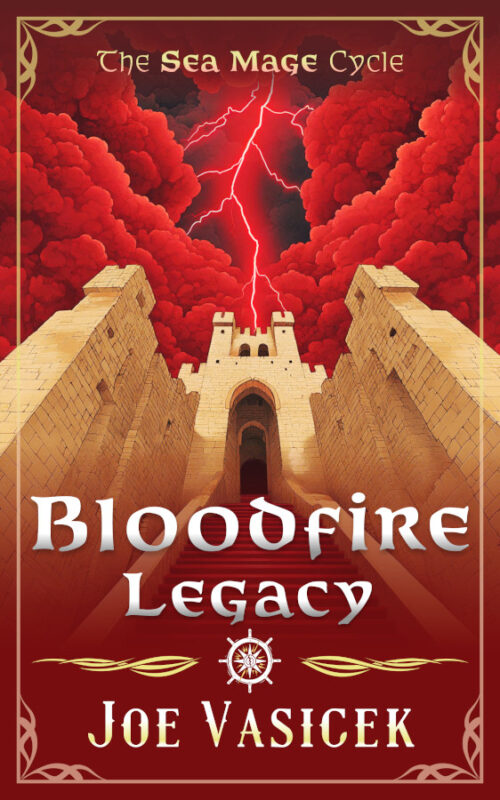
This is another great cover by James, over at GoOnWrite.com. I’m really happy with how it turned out! I’m working on the AI draft right now, but should have it done very soon. If all goes well, I’ll be publishing it either in July or August. Here is the working back cover copy:
Bloodfire Legacy (Sea Mage Cycle #5)
To save his orphaned daughter, the ghost of the greatest wizard must depend on the lowest thief.
Corin has never been more than a street rat and a petty thief. But he can also hear the voices of the dead—whether he wants to or not. Usually, the dead leave him alone after they realize he has no power to help them. But when the former court magician begins to haunt him, nothing that Corin says can convince him to go away.
Lyra, the magician’s daughter, has been delving into the dark arts to find her father’s killers and avenge his grisly death. But the very people who killed him are grooming her for a devious purpose, and the intrigue of the court has put her in more danger than she knows. Her father is the only one who knows enough to warn her, but without Corin’s help, he is powerless to save her.
To save her, Corin must be more than merely a ghost whisperer: he must rise above his circumstances and become a man worthy of trust. But will that be enough to convince Lyra to turn back to the light before her thirst for vengeance consumes her?
I’m not a vet, but this video makes me wish I were…
The sheer level of detail that went into this battle plan is just astounding. Now I really want to watch that movie! Maybe, with AI video, someone will do it justice.