Got a bite!

Just yesterday, I got a response to a query for Genesis Earth that I emailed to an agent at Nelson Literary Agency, LLC.  Apparently, my query piqued their interest and they wanted to see the first 30 pages of my manuscript!

It’s not a huge development, of course–they haven’t requested the full, just a partial–but it’s comforting to know that my query letter is decent.  Enough, at least, to lead to the next step, and that’s all that matters.

Writing query letters is hard. There are so many ways to screw them up.  I queried another agent over the weekend with a similar (but different) letter, and I got a standard rejection…within the hour.  Ouch.  I was kind of worried something was wrong with the pitch, but with the other agency’s response, I’m not quite so worried.

Submitting is something that I have to get better at doing.  I’ve started putting together a personal database of agents and editors, but still, it takes guts to put your stuff out there.  I still get chills whenever I slip that envelope into the mail slot, or hit send on the computer.  It’s hard to say exactly what that thrill is–fear of rejection?  Fear of failure?  I think it’s more complex than that, but I’m not sure exactly what it is, or how to put it.  I’ll let you know when/if I figure it out.

I read an interesting post on agent Nathan Bransford’s blog about sending out queries.  He suggested the best strategy is to submit in little spurts, rather than all at once–that way, if you only get form rejections, you can figure out what’s wrong and fix it while still having places to send it.

That sounds like a good strategy, but to really make it work, I should probably set a goal to send out a certain number of queries a month.  Not sure how many that is, but since my main goal is to have a publishing deal by 2015 (and making a full-time living at this by 2020), it should probably not be a small number.  Maybe eight or ten.

I don’t know.  I’ll figure it out.  In the meantime…here’s to hoping!

Snowmageddon! Hooray!

So for the past week, a series of crazy snowstorms has been pelting the Mid-Atlantic.  President Obama has dubbed it “snowmageddon,” and it’s so bad that all federal government offices have been closed since Friday.  With another storm hitting us tonight, it looks like we’re going to have the whole week off! Yay!!!

So, for the past couple of days, I’ve been hanging out around the Barlow Center, watching movies, doing random stuff with my friends here in the program, taking naps in the middle of the day, and writing.  Lots of writing!  It’s awesome–I haven’t had this much free time since Christmas (which wasn’t all that long ago, but still…)!

Today I didn’t write quite as much.  I got in about 1.1k words, a decent amount, but if I’d pushed myself I could have finished the current chapter.  Monday went much better, because I sat down and forced myself to write in the morning.  Once those initial hundred or so words were out, the rest came much easier.

On the first day of snowmageddon, when we were snowed in at Valley Forge, I got in over 1,000 words before noon.  It was rough going, though–nothing was flowing, and everything took a lot of effort.  I hate it when that happens–blegh.

But I think it was necessary, because now, the scenes are flying by pretty easy.  Sometimes, when I’m struggling with momentum, I find it helps if I take a day to focus and push myself through it.  Get rid of all distractions, put my butt in the chair, close all internet browsers, and just write, no matter how difficult.

My next novel, To Search the Starry Sea, is going to be a lot of fun.  It starts out almost exactly like Homer’s Odyssey, with the same basic conflict and setup.  Beyond that, however, I have nothing solid planned–I’m just following where the story takes me.  And boy, is it taking me to some crazy places!

For example, one of the first places Katriona (the Telemachus character) goes is a nearby world, ruled by a friend of her father’s.  To liven things up, I decided to have him live on a giant rotating space station, where the inside is covered by forests and jungles–scenery that Katriona has never seen.

This got me wondering, however: how did the jungle get there?  The answer: thousands of years ago, before superluminal space travel, a group of colonists set out for this world, freezing themselves in cryo.  When they got there, they found that a solar flare-up had rendered the planet uninhabitable, so instead they built this massive station, hoping that it would serve as a second ark for humanity.

Instead, a raiding party of space barbarians took them over, enslaved the colonists, and built their palace in the midst of the carefully maintained artificial biosphere.

This opened up a series of new possibilities for subplots, which shapes my protagonists interactions with the people here, which points her in new directions for the main plot–the next few places that she’s going to go.

This is discovery writing at its best.  Even though I have no clue where she’s going to go next, things are unfolding very nicely, and I’m excited to find out!

Thoughts on writing characters

A couple months ago, I was listening to one of my personal recordings of Brandon Sanderson’s English 318 lectures from last  year’s class.  The topic was writing characters.

Brandon outlined several techniques for making characters sympathetic.  He also outlined how to round them out: give them flaws and handicaps, as well as little quirks to make them unique and memorable.

However, I couldn’t help thinking that something was missing in his formulation.

Before I continue, let me say that I’m not disparaging or criticizing Brandon Sanderson’s abilities to write compelling, well-rounded characters.  As his novel Mistborn shows, writing characters is one of his strengths.

At the same time, I feel that the “checklist” approach to writing characters can be dangerously counter-productive.  Too often, characters in sub-par novels feel like a patchwork of characteristics and personality traits, not like actual, real people.

When I asked Brandon about this, he said that his techniques should be seen as tools, not as fundamentals.  He then went on to say that the most important thing to keep in mind is the character’s motivations–why they want what they want.  Beyond that, you just have to tweak the character until they fit into their role.

After thinking about it for some time, I came to the conclusion that the best way to write characters is to keep two essential rules in mind:

Rule #1: Every character is the hero of their own story.

Rule #2: Every story is composed of three parts: beginning, middle, and end.

The first rule is straightforward: every character sees their life as a story in which they are the main character.  This is because all of us, as human beings, view our own lives in this way.  We may look at other people and consider them nothing but extras in the story of our life, but they certainly do not think of themselves in this way.

To apply this rule, however, we need to understand what it exactly means to be the hero of one’s own story.  We can only understand this when we realize that a story is composed of three basic parts: beginning, middle, and end (or, as we see ourselves: past, present, and future).

Every hero has an origin and a destiny.  Without these, they don’t have a story; they don’t have a beginning and they can’t have a meaningful end.  This is why the hero cycle begins with the miraculous birth and ends with ascension and apotheosis.

Writers should keep this in mind as they sketch their characters.  If you don’t know where your character came from–who their parents are, where they  grew up, what were their major formative experiences, etc–your characters are going to fall flat because they’re just extras in someone else’s story; they have no story of their own.

Likewise, your characters need to have a destiny.  If you’re a discovery writer (like me), this might be harder because you don’t know, from the outset, where everyone’s going to end up.  Keep in mind, though, that rule #1 applies to the story the characters tell themselves just as much as the story you’re telling the reader.

Each character’s individual story is like a thread, which the writer weaves together with other threads to form a beautiful tapestry.  That tapestry is the novel; without the individual characters’ stories, the work would feel week, shallow–threadbare.

Of course, it’s not always possible (or a good idea) to reveal everything about every character.  It’s also not always possible to outline every character in great depth–not without catching “worldbuilder’s disease.” Instead, the rules of worldbuilding should apply–only use 10% of your worldbuilding in the actual story, no info dumps, etc.

I don’t think that’s a comprehensive theory of character just yet, but I think it’s a step closer to one.  If you have any ideas or suggestions of your own, please do share.

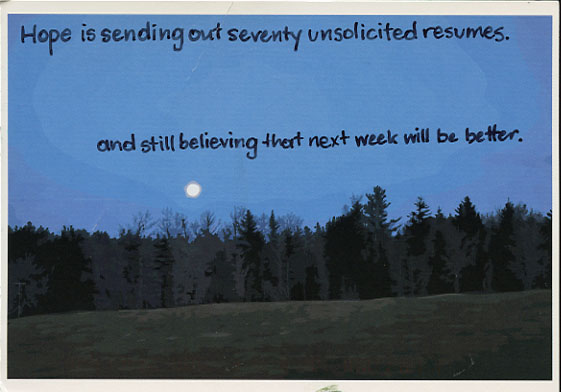
Image courtesy Postsecret

Quest for Lost Heroes by David Gemmell

It has been forever since I read this book.  Still, I really should review it.  Here goes.

At Bel-Azar, four friends held out against hopeless odds, only to be spared by the Nadir Khan.  Known by the Nadir as the “ghosts yet to be,” they enjoyed the fame of heroes for a time, but now live in obscurity in their own kingdom.

When a band of slavers raze a village and carry off the women, however, a young, reckless boy named Kiall calls upon the forgotten heroes to help him free his unrequited love.  And so the “ghosts yet to be” join together for one last quest, only to find that the stakes are much higher than any of them could have forseen…

David Gemmell writes awesome fantasy!  Some of the best I have ever read.  This one, while not quite as deep and meaningful as others like Legend, had its moments.  Let me just say, Gemmell knows how to kill off his characters.

The story started off very well, with some interesting introductions.  It felt a bit like a cowboy movie, where the heroes are all outcasts, unable to find their place in mainstream society.  I immediately took a liking to the main character, Chareos–Gemmell knows how to write heroic characters, even dark heroic characters.

The action began immediately, with blood and battle in every chapter.  As usual, Gemmell did an excellent job getting to the meaning (or lack thereof) of it all, but at times, it felt a little bit superficial.  Not very much, but sometimes, it seemed that he threw the action in just to keep the story interesting.  It didn’t pack quite the same punch as Legend, which was a much superior book.

It took me a few chapters to feel that the story was progressing–Gemmell isn’t always strong on plot–but once I did, it really took off.  I finished the last hundred or so pages at a sprint, and the ending, like all of Gemmell’s endings, did not disappoint.

Overall, I’d say this book is more fan action-adventure story than anything else–light reading, compared to Gemmell’s other work.  Still, it was definitely entertaining, and much deeper and well-written than your typical thriller.  If you like heroic adventure stories with lots of action, you’ll love this book.

It’s full of stars!

I have a confession to make…

I should have been writing these past three hours.  I really should have been writing.  But a couple of days ago, I downloaded this awesome program called Celestia.  And when I say awesome, I mean awesome!

Imagine Google Earth.  Now, imagine Google Earth…for the Universe.

I told you it was awesome.

Anyway, I just downloaded all the messier objects , gps satellites, and some other random addons, and spent the last two hours playing with them when I should have been writing. Gah!

Oh well, I guess you can call it research. 🙂

My goodness–words cannot describe how cool this stuff is.  It’s like…like a planetarium on my computer.  I’ve never felt so small in such an incredibly vast universe!  And oh my heck, do you know what it’s like outside of our galaxy?  No stars–just blackness everywhere!  It’s so freaking scary!  And inside of those massive globular clusters, like M13–holy cow!  What would it be like to live on a planet in one of those clusters??

I should probably stop rambling.  But…but…it’s just so awesome!

This is the kind of stuff I’ve been writing all my life!  Stars and galaxies and planets, other worlds–and now, at last, I can get some kind of a tiny picture of what it all looks like.  I feel like the nexus 6 soldier from Blade Runner: “I’ve seen things…” Seriously, this has the potential to revolutionize my writing.  The things I’ve seen…

But anyway, time to get my mind off the stars (at least temporarily) and write!

Quick worldbuilding question

For To Search the Starry Sea, I’m writing from the point of view of a far future starfaring culture completely independent of Earth. They’ve preserved our concepts of “hour,” “day,” and “year,” but these units of time do not correlate in any way with the revolutions of the worlds on which they live (basically, a set of tidally locked moons orbiting a gas giant planet several AUs from its sun).

The people of this culture use terms like “morning,” “evening,” “day,” and “night” to describe their waking and sleeping cycles, but having been cut off from Earth for so much time, they don’t associate these times with the position of the sun.  In order to convey that this is different, I’m thinking of spelling “afternoon” like “afternune,” to show that there’s been some cultural drift since the migration from Earth.

Does that work?  Or if  you had to read “afternune” instead of “afternoon,” would it completely throw you out of the story?

Or am I just not making any sense at all?

Career chat at high tea

So my Turkish supervisor at WINEP took us new interns (all four of us) out to the Mayflower hotel last week for high tea, where we talked about how things have been going for us at the institute so far.  It was interesting–the first time this Mormon boy has been out to tea, particularly in such an upscale setting.

One of the questions he asked was “what are your long term career goals?” I don’t remember exactly what I said, but I know what I didn’t say–that I wanted to break into publishing and become a novelist.

(Just in cast my supervisor reads this, I want to make it clear I wasn’t uncomfortable talking about my literary aspirations with him; it was just that the conversation at the table seemed to be headed in a very different direction, and I didn’t want to derail it.  Everyone else was talking about grad school, study abroad, government, that sort of thing–and I got the sense that that’s really what my supervisor wanted to talk about.)

My experiences in the past three weeks in Washington DC have only confirmed and strengthened my goals to pursue writing as a full-time career.  At the same time, though, I’m starting to realize that I don’t have to limit myself to one career track; many people in this “town” (as everyone calls it) bounce around in multiple careers, some of them quite different.  It’s not so much about working a “day job” until you get published, so much as doing multiple things and being ambitious.

That said, I don’t see myself pursuing a career in policy-making.  Everyone I see doing that is working overtime, all the time.  Instead, I want to find something that’s going to facilitate and reinforce my writing career.

There are some things I like very much about where I’m working, though. One of those is the emphasis on the Middle East–such a fascinating and dynamic part of the world, rich in history and culture. Another thing I love is how informed I am about current events–never in my life have I been so up to date in what’s going on in the region. The news really comes to life when you’re keeping up with it on an hour by hour basis. And I also enjoy the more academic-ish feel to the place here–the emphasis on research and scholarly pursuits.

Some things, though, I really don’t like. One of those is being stuck in an office all day. The people I work with are great–I couldn’t ask for better. But the office environment, with its dynamics…I don’t enjoy being in an office all day. The same goes for wearing a suit and a tie–I’m not a big fan.

In short, I really don’t know where I’m headed in my non-writing career; nothing has really “clicked” yet (if anything, just the opposite). But whatever I do, it’s probably going to involve something Middle East, and something that helps to facilitate my literary aspirations. That’s all I know for now.

Falling in love: does it actually happen?

I like to tell people that I don’t believe in the concept of “falling in love”–that true love isn’t something you fall into, it’s something you grow into.  The thing you fall into is called “infatuation,” which by itself doesn’t last long.  It’s happened to me many times, and look at how single I am.

However, I was listening to this week’s episode of This American Life, and the first story got me to think about the concept of “falling in love.” The story was about an American exchange student in China who went back a year later in order to chase down this girl he’d met over there.  Miraculously, he found her, and in a short period of time, they married each other.

The story doesn’t end there, though, nor does it gloss over or ignore their struggles since getting married.  In fact, they’re both surprisingly candid.  Even though they could have broken up, though, they said that the incredible story of how they got together kept them going until they worked through the crisis.  The narrator finished:

..Eric and Yuen-Yuen had to make that same transition that all couples do, from the crazy, in-love stage to the other thing—the hard part of love. And it’s when you’re in that struggle that you most need the story of how you’re meant to be, because the alternative–that the person you’re with could be one any one of hundreds or thousands of other people–well, if that’s true, then why even try?

This got me to wondering–is there something besides sentimental hogwash to the notion of falling in love? Is it a necessary myth? Or is it more than a myth? Growth is generally something you control, but if all you can say is that you and your significant other “grew” into where you are today, is that enough to keep you going?

Snarkiness aside, I suppose it’s different for everybody. Some people have to believe they were fated to be together, while others abhor anything but the idea that love is something that grew slowly and steadily, without crazy flashes in the pan.

The important thing, I suppose, is that when it comes to love, we all have to have a story that we tell ourselves. Without a story to help us make sense why we’re with our significant other, it’s possible to think about leaving them.

By definition, every story has a beginning, a middle, and an end. In a love story, I suppose that “falling in love” happens in the beginning, while “growing in love” has to do with the middle, while the end is this hopeful, optimistic future, full of wonderful possibility. No one part makes any sense without the two others, but together they must give a comforting sense of direction, of destiny.

So maybe there is something to the idea of “falling in love.” I don’t think for one second that the initial “falling in love” is the most important part of any functional romance, but I’ll grant that it has its place in the story.

Stuck in a scene

I’ve been stuck in the same scene the whole week, and I really wish I could get it over with so that I could move on to other stuff.  What that other stuff is, exactly, I don’t know, but I’m eager to find out.

I don’t plan things out much when I write.  Usually, when I do think about where I want the story to go, I think ten or twenty steps down the road, painting in broad strokes where things are going to end up.  It’s like Paul Atreides’ foresight in Dune; time is like an ocean where you see a few isolated events like cresting waves, but you can’t see all the stuff in between.

I’m really annoyed because this scene is so long, but in some ways it has to be long.  I’m introducing some of the major characters, the major story conflict, introducing setting and cultural elements, etc etc.  Most of what I’m writing is crap and will probably be significantly edited,  but I’ve got to at least get it out there first.  But it’s hard to do that when you’re only averaging 500 words a day.

I’m going to take advantage of the holiday tomorrow by finishing this scene, no matter what it takes.  Hopefully that will build some momentum that will carry for the rest of the week.

Also, I sent out Bringing Stella Home 2.1 to a bunch of first readers.   I wasn’t originally going to do it, since it’s pretty bad…but Kindal kept begging me to read it, so I figured what the heck and sent it out to half a dozen other people as well.  It’s probably for the best…though, after reading over some of the more violent scenes, I hope the girls I sent it to don’t think less of me after reading it.  Holy crap, it needs a lot of work.

Anyways, in tribute of MLK day, I’ll end with this awesome tribute to Martin Luther King by U2. Happy MLK day!

Thoughts on future career

Just a few quick, scattered thoughts before I run off to work.

Working a desk job has convinced me that if at all possible, I want to make my full time living as a novelist.  I don’t see myself doing what I’m doing in this internship for the rest of my life, or even for a major part of it.

Don’t get me wrong–WINEP is a great place to work.  The people are great, the organization is prestigious and very well run, the public events are fascinating and frequent, and the stuff we produce is good, well-researched material.  I’m not writing this in response to anything specific I’ve encountered at the institute–just a realization after being immersed for two weeks in an office environment.

I’ve only been averaging about 500 words a day since I came here–but I’ve been writing every day, because now, more than ever, I see this as the path I want to take.  The path I need to take.  I don’t want to be stuck in a desk job the rest of my life.