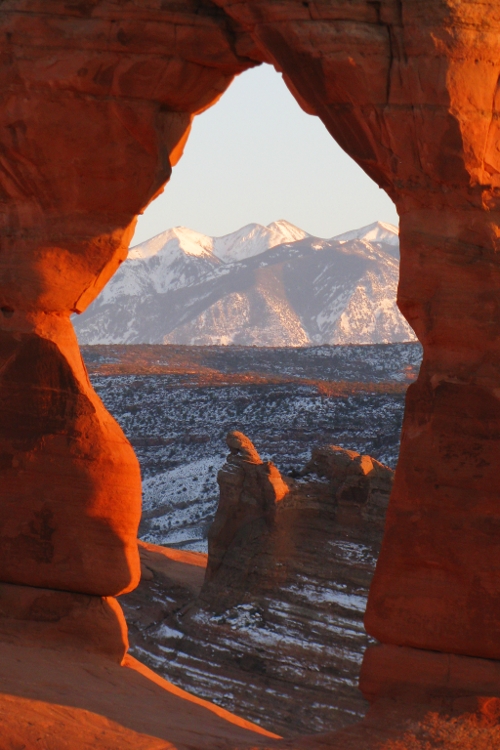
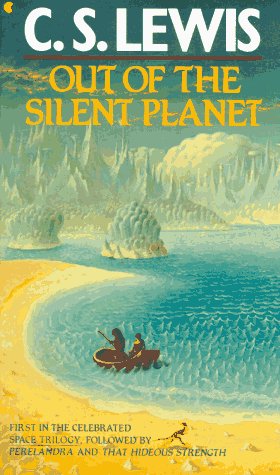
The print edition of Genesis Earth is in!

The proof for the print edition of my first novel, Genesis Earth, just came in the mail–and it looks AWESOME!  Check it out!

Front cover.
Back cover.
Page 1, Chapter 1.

Holy crap, it is so cool to have a book in my hands THAT I ACTUALLY WROTE.  So cool!

I approved the proof a couple of hours ago.  It’s currently up for sale on CreateSpace (where I get a higher royalty), but it should also be up on Amazon in 5-7 business days.  I haven’t opted for the extended distribution, which means that those are the only places where it’s going to be available for a while.  I might opt in a little later, but I haven’t made a decision just yet.

Next step: put out print editions for Bringing Stella Home and Desert Stars.  Those should be coming soon, probably by mid-August.

Man, this is so much fun!

No more word counts and other paradigm shifts

This August, it will be five years since I decided to start writing on a professional level.  A lot of things have changed since then, and in some ways they’re changing even faster now.

For example, in May 2009 I started a spreadsheet to keep track of my daily word counts.  I’ve been keeping it diligently ever since then, with graphs and everything.  But just recently, I’ve decided to stop doing that.  Word count is a very shallow indicator of progress: it only measures quantity, and often leads to unnecessary angst or diverts attention from more important things.

Instead, I’m going to focus more on deadlines and work to develop some other, better indicators.  Number of books published per year is probably a key one, as well as number of manuscripts finished.  But deadlines are probably going to be the most important drivers from here on out: publishing deadlines as well as writing deadlines.

Another thing that’s shifting is my revision process.  I know that a lot of beginning writers hate Heinlein’s rules, but almost all the long-term professionals swear by them–especially the ones with careers that I would like to emulate.  This makes me think that I need to scale back on the revisions and develop more trust in my creative voice.

Just as a point of reference, Heinlein’s rules are:

  1. You must write.
  2. You must finish what you write.
  3. You must refrain from rewriting, except to editorial order.
  4. You must put the work on the market.
  5. You must keep the work on the market until it has sold.

I’m currently on the second draft of Stars of Blood and Glory, and what I’ve found so far is that the overall story is actually pretty good.  Some of the scenes are a little out of order, and some of the plot-lines are missing elements that need to be added in, but aside from a few chapters where I got lost for a couple of pages, not a lot needs to be changed.

Of course, I could spend a draft or two tweaking every other sentence, tossing out most of what I wrote in the heat of my creative passion–but would that really make the story any better?  I recently had Kindal’s writing group critique my first chapter–the one that I revised pretty heavily in April–and they found all sorts of problems that weren’t in the original draft, as I wrote it back in December.

Don’t get me wrong–I do think there is an important place for revision.  But I think it’s best epitomized by Tracy Hickman in this episode of Writing Excuses:

We write from the heat of our passion, but we edit to see the fire through the smoke.

And even Tracy only does three drafts.

The other thing that’s changing is how I look at alpha reading.  I used to have different tiers of alpha and beta readers–most of whom were writers in other genres, and not really fans of  science fiction.  I asked them to give me as much feedback as they could, and bugged them for weeks or months at a time asking if they’d read my story.  I then compiled all their line-by-line comments into one giant master-file, which I kept open on the left side of my screen as I made the changes to my manuscript on the right.

Well, I’ve started to realize that there’s a huge difference between reading for criticism and reading for enjoyment.  Because of that, a lot of the things my alpha and beta readers pointed out were things that most regular readers probably wouldn’t have noticed.  Towards the end, I started to get wise on this, and only followed about a third of the criticism that I received.

Don’t get me wrong–I do appreciate the feedback.  A lot of it helped me to see and fix problems that I’d otherwise missed.  But a lot of it came out in casual conversations with my readers after they’d finished the story–not in the line-by-line comments on the original draft.

For those reasons, I think I’m going to change the way I ask for feedback.  Instead of alpha and beta readers, I’m going to go with a handful of “test readers”–readers who enjoy the kind of science fiction I like to write, but who may or may not be writers themselves.  Instead of asking for a detailed, line-by-line critique, I’m going to ask them three things:

  1. Did you enjoy the story?
  2. If you stopped reading it, where did you stop?
  3. Did you enjoy it enough to pay for it?

I’ll ask them to give it three chances, and if they still can’t finish, that’s okay–just let me know where the hangups were.  And if they do finish it, I might have some questions for them–but then again, I might not.  It all depends on the story.

Compared to where I was when I started out–or even where I was three months ago–those are some pretty huge paradigm shifts.  I have no idea how it’s going to turn out.  I’ve grown a lot as a writer recently, and I hope that this is moving me in the right direction, but I won’t really know until I’ve tried it out for a while.

In any case, this post is long enough.  I’d better get back to writing.

Trope Tuesday: The Hero’s Journey

For the next few Trope Tuesday posts, I’m going to pick apart one of my favorite story patterns, the monomyth or “hero’s journey.” Other tropes come and go, but the hero’s journey is truly timeless.  If you can get it to work for you, it can do wonders for your ability to understand and tell stories.

In many ways, this is the trope to end all tropes. it is the source of almost all the major story archetypes, and can be found in the myths and folklore of almost every human culture–hence the term “monomyth.” It was first formulated by Joseph Campbell, who outlined it in his book The Hero with a Thousand Faces.  He summarized it like this:

A hero ventures forth from the world of common day into a region of supernatural wonder: fabulous forces are there encountered and a decisive victory is won: the hero comes back from this mysterious adventure with the power to bestow boons on his fellow man.

Campbell was an academic who studied mythology and folklore, and his book, though insightful, is pretty friggin dense (not to mention scientifically obsolete–he references a lot of Freud’s theories that have largely been discredited).  Later, writers like  Chris Vogler, Phil Cousineau, and David Adams Leeming analyzed and simplified the monomyth for popular audiences.

Enough background–what is it?  Basically, it’s a story pattern that resonates powerfully with readers across all genres.  In its simplest formulation, it follows three steps:

  1. Departure: The Hero leaves the familiar world.
  2. Initiation: The Hero learns to navigate the unfamiliar world.
  3. Return: The Hero masters  the unfamiliar world and returns to the familiar.

Campbell himself identified 17 stages, some of which are interchangeable:

  1. Call to Adventure: The Hero learns that he must leave the familiar world.
  2. Refusal of the Call: The Hero balks, for any number of reasons.
  3. Supernatural Aid: The Hero receives something to help him on his quest.
  4. Crossing the Threshold: The Hero ventures into the world of adventure.
  5. Belly of the Whale: The Hero passes the point of no return.
  6. The Road of Trials: The Hero’s resolve is tested, and he begins to grow.
  7. The Meeting with the Goddess: The Hero experiences the power of love.
  8. Woman as Temptress: The Hero faces and overcomes temptation.
  9. Atonement with the Father: The Hero passes the final test.
  10. Apotheosis: The Hero dies and is reborn.
  11. The Ultimate Boon: The Hero receives a gift to take home.
  12. Refusal of the Return: The Hero doesn’t want the adventure to end.
  13. The Magic Flight: The Hero uses his newly mastered skills to escape.
  14. Rescue from Without: The Hero is saved by his newfound friends.
  15. The Crossing of the Return Threshold: The Hero leaves his new world.
  16. Master of Two Worlds: The Hero reconciles the old ways with the new.
  17. Freedom to Live: The Hero uses what he has learned to live the rest of his life.

Do any of those sound familiar?  Yeah, I thought so.  It might be hard to think of a story that fits all 17 points at once, but it’s not uncommon to find one that hits seven or eight (or possibly more).

A simpler formulation by Leeming goes like this:

  1. Miraculous conception and birth
  2. Initiation of the hero-child
  3. Withdrawal from family or community for meditation and preparation
  4. Trial and Quest
  5. Death
  6. Descent into the underworld
  7. Resurrection and rebirth
  8. Ascension, apotheosis, and atonement

My personal favorite, though, is Vogler’s:

So how useful is this trope really?  Well, consider this: Orson Scott Card’s Ender’s Game was the first novel to win both the Hugo Award and the Nebula Award in the same year…and it hits up all eight points listed above.  The following year, Card published Speaker for the Dead, which also hit all eight points, and also won both the Hugo and the Nebula award.

The thing that made Star Wars more than just another campy sci-fi b-movie with (let’s face it) terrible acting and hokey dialogue is the fact that George Lucas drew so heavily from Joseph Campbell and the hero’s journey.  Think about it: Luke Skywalker passes through almost every one of the 17 points, right up to the awesome throne room finale at the end.

Well, this guy certainly helped.

Of course, it’s possible to go too far.  Lucas also tried to use the hero’s journey in the prequel trilogies, and failed miserably.  Why?  Many reasons, but mostly because he used it as a rigid checklist rather than a dynamic set of flexible guidelines.  The hero doesn’t have to have a literal miraculous conception; he just needs to be chosen in some way.  The goddess doesn’t have to be literal, and neither does the father–those stages can be represented quite loosely, or merged with others.

In my own writing, I’ve found that the best way to use the hero’s journey is to use it to understand what I’ve already written, and to trust my subconscious to fill in the next step.  In every book I read, or every movie I watch, I constantly pick it apart, looking for each of the steps.  This trains me to recognize the hero’s journey in my own work without having to break out the hammer or force things too much.

So how do you use the hero’s journey in your own work?  Do you find yourself hitting up all the points subconsciously, or do you use some other method?  Or do you hate the hero’s journey and try to avoid it altogether?  If you do hate it, I hope that my next few Trope Tuesday posts will help you to change your mind.

Rivers and orphans and rivers, oh my!

So one of my goals this summer is to release POD (print-on-demand) editions for the three novels I currently have up as ebooks (Genesis Earth, Bringing Stella Home, and Desert Stars).  I started with Genesis Earth a couple of days ago, and wow!  I had no idea that getting a book ready for print could be so much fun!

I just finished formatting and typesetting the interior today, and it looks pretty awesome!  Drop caps, chapter headings, page numbers, a pleasingly arranged text–there’s something immensely satisfying about paper, an experience that ebooks (as awesome as they are) just don’t quite capture.  If I weren’t a writer, I’d be a typesetter–but because I’m an indie, I can be both!

As with ebooks, the learning curve for print formatting is pretty steep, but I think I’ve got the hang of it.  The guys over at Kindle Boards gave me a lot of helpful advice, and sent me a really awesome POD guide that’s been a lifesaver.  My editor (who’s also trained in typesetting) gave it a once over too, so I think we’re in good shape.

Barring any unforeseen complications, the print version of Genesis Earth should be up in a couple of weeks.  The cover art is more or less done–I just need to revise the blurb, send the PDFs out to CreateSpace, and wait for the proof to come in the mail.

One thing I’m wondering is whether to go with the free ISBN (which will list CreateSpace as the publisher) or to spend $10 and go with my own imprint.  My gut tells me to go with the free option–not because it’s cheap so much as because it’s less complicated–but I wonder if there might be some advantages down the road to taking the other.

ISBNs, imprints, and distribution channels, oh my…I’ll have to save that for another post a little later. 🙂

Trope Tuesday: Accidental Marriage

When it comes to weddings, most of us like to plan things out in advance.  It’s not uncommon for couples to spend years figuring each other out before they finally tie the knot.  So what happens when you wake up one morning and find yourself married by accident to a complete and total stranger?

This trope generally comes in two forms:

  1. Situational: Two people from the same culture end up in a comedic situation where, quite unintentionally, they end up marrying each other.  Often takes place in Las Vegas and/or involves some form of intoxication.  Usually, neither of them has a clue what they’re getting into until it’s too late.
  2. Cross-Cultural: While traveling in a foreign land, the hero unwittingly marries the chieftain’s daughter through a hilarious cultural misunderstanding.  Typically, the guy is the oblivious one, while the girl knows exactly what’s she’s doing, though the gender roles do occasionally get reversed.

The characters are never the kind of people who would just up and leave their spouse, though–that would ruin the story.  For that reason, they’re usually both decent, likable people, at least at first.  But even if they decide to stick together, they usually have to work through a ton of (often hilarious) challenges first.

When part of the main storyline, this trope is often used as the setup for a romantic comedy (since the alternative is, well, kind of a downer).  When done well, it combines the awkwardness of a blind date with all of the angst and anticipation that comes along with wedding and marriage.  There’s a variety of ways that the situation can be resolved, and the longer things drag out, the more reasons the couple finds for sticking things out.

That’s not always the case, of course.  In the “Our Mrs. Reynolds” episode of Firefly, what starts out as an accidental marriage between Mal and Saffron turns into…well, something else.

Within science fiction & fantasy, this is probably the most prominent example of this trope.  The first half of the episode plays it straight, with Mal participating in a ceremony that seems innocent enough, but later turns out to be a marriage.  At first, he tries to get out of it, but one thing leads to another, and…well, go rewatch the episode!

Another good example of this is found in the movie Jeremiah Johnson.  The titular character, a former confederate soldier turned mountain man, finds himself a guest of the Flathead Indians.  The chief asks about a number of horses and scalps he acquired, and Jeremiah, who never wanted them in the first place, gives them to the chief as a gift.  Moments later, he realizes his mistake: the Flatheads have a custom of exchanging gifts of equal or greater value, and if they cannot reciprocate, they consider it an insult worthy of death.  Fortunately for Jeremiah, the chief finds a solution: he gives him his daughter.

Both of these examples involve variations of the cross-cultural type.  A good example of a purely situational version of this trope is the webcome Marry Me.  It starts with a philanthropist pop-star who’s suffering from burnout and on the verge of having a mental breakdown.  While putting on a concert, she sees a guy in the front with a sign that says “marry me” and decides, on a whim, to bring him onstage and do just that.

The thing is, he was only holding the sign for a friend, who was taking a bathroom break at the time.  He’s not even a fan of her music.  As you might expect, hilarity ensues.

Finally, this trope plays a major role in my latest title, Star Wanderers.  It starts off with a young single starfarer, who makes his living running the trade routes between stars.  Without realizing it, he visits a station where the food production systems have just recently broken down, condemning everyone to die.

The station master pulls Jeremiah into his private quarters and makes him choose one of his daughters, presumably to save her.  Jeremiah can’t really say no, so he chooses one, only to find himself holding hands with her while her father says a quick prayer.  Moments later, they’re whisked away to his starship, where they have a long voyage alone together to look forward to.

As you might have guessed, I’m a big fan of this trope.  When things work out, it can really make for a heartwarming story.  But whether or not it does, the romantic tension is just delicious.

PS: Be sure to check out the “playing with” page for this trope–there’s a lot of interesting variations on the main theme!  My favorite is the logical extreme, with the fertility dolls and the pie.  Interesting stuff…maybe I’ll use that in a story of my own someday. 😉

Star Wanderers: Part I is now available!

That’s right–the first part of my novel Star Wanderers is now available on Kindle and Smashwords for $2.99!  Barnes & Noble, iTunes, and Kobo editions should be coming out shortly (though I’m waiting for Kobo to launch their direct publishing platform, which may take a while).

This is the first part of a four part novel, but really it’s more of a series of short novellas since each part has its own distinct story arc with a beginning, middle, and end.  This one is about 15,000 words (or 40-60 pages), and takes place in the Gaia Nova universe about a thousand years before the events of Bringing Stella Home.  It’s about a boy and a girl who don’t speak the same language but find themselves alone on a starship together.  Here’s the description:

HE WANDERS THE STARS IN SEARCH OF A HOME. INSTEAD, HE GOT A GIRL WITHOUT ONE.

When Jeremiah arrived at Megiddo Station, all he wanted was to make some trades and resupply his starship. He never thought he’d come away with a wife.

Before he knows it, he’s back on his ship, alone with his accidental bride. Since neither of them speak the same language, he has no way to tell her that there’s been a terrible mistake. And because of the deadly famine ravaging her home, there’s no going back. She’s entirely at his mercy, and that terrifies him more than anything.

Jeremiah isn’t ready to take responsibility for anyone. He’s a star wanderer, roaming the Outworld frontier in search of his fortune. Someday he’ll settle down, but for now, he just wants to drop the girl off at the next port and move on.

As he soon finds out, though, she has other plans.

Also, I’m happy to report that I finished the full-length version of Star Wanderers over the weekend, making it my seventh written novel!  Here are the stats:

words: 68,367
chapters: 20
ms pages: 317
start date: 1 September 2011
end date: 1 July 2012

And some other stats, just for fun:

kilometers traveled: ~32,000
languages encountered: English, Georgian, Russian, Mingrelian, Hebrew, Arabic, Turkish, Farsi, Polish, Slovakian, German, Armenian, Spanish, French, and Australian
other books started before finishing: 4
other books finished before finishing: 2
other books published before finishing: 2

Part II is pretty close to publication, but Parts III and IV still need a bit of work.  Since the rough draft is finished, though, it shouldn’t take too long to get everything else ready.  If all goes well, I’ll publish Part II in August or September, and the other parts in two month intervals.

This novel was a lot of fun to write, in spite of how difficult it sometimes was.  I always knew it was a story worth telling, and that gave me both the motivation to finish it and the courage to send it out into the world.  I think you guys are really going to like it, especially if you’ve enjoyed my other sci fi romance stuff.  As I said on Twitter back in 2011, girl + starship = WIN!

So yeah, check it out!  And be sure to keep an eye out for Part II, which should be coming out in just a month or two!

Back in the States

So I got back to the States last night, after about forty six hours of travel (and only four or five hours of sleep).  It’s good to be back, but I’m already missing Georgia and thinking about all the things I’ll do once I get back.

The weirdest thing about being back home so far is how non-stressful traveling is.  I got to JFK, turned on my American cell phone and found out that the sim card is no longer recognized.  My train ticket needed to be rescheduled, I didn’t know who was picking me up back home or when, didn’t know the New York subway system all that well…and yet instead of freaking out, I just shrugged and figured I’d solve all that later.  Sure enough, Penn Station had wifi, so I instant messaged my brother in law and had him call my mom and work it out.

The lack of beggars in New York City was kind of strange.  There was one kid on the Subway who announced (after apologizing for taking people’s time) that he was trying to make money by selling M&Ms, so I helped him out and bought one.  In Tbilisi, some ten year old gypsy kid would fall on her knees and give a huge sob story, then walk through the car with her tin can (and would get more money from it than this kid did in New York).

So that was the first thing I ate when I got here.  The second thing was a Jamba Juice.  Next was a slice of American pizza–so much better than the stuff in Georgia–and then a bottle of root beer.  Man, the soda over here is so disgustingly sweet!  I was wide awake until the sugar hit my system, and then it was like taking a sledgehammer to the face.

I’m doing pretty well now, even though I woke up at about 3:30 and didn’t really go back to sleep. There’s not much happening this week, so I should be able to get over the jetlag fairly easily.

As far as Star Wanderers goes, I finished everything but the last scene and the epilogue, so I’ll wrap those up today and get ready to publish Part I.  The last few chapters aren’t as awesome as I’d like them to be, but I should be able to work those out in subsequent drafts.

In other news, I recently did an interview on Scifinerdsare.us.  It’s more geared towards writers than readers, but worth checking out.  There seems to be a lot of polarization these days between writers who self publish and writers who follow the more traditional path, which is unfortunate.  That said, indie publishing is definitely the best thing career-wise that’s happened to me.

Finally, I just watched a fascinating lecture by Douglas Rushkoff on the Occupy movement and a new cultural phase that he terms “presentism.” The most interesting thing for me is what he has to say about the way our democracy is evolving–basically, it’s becoming a little  more like The Colony from Bringing Stella Home.  So many story ideas to play with…

To Racha and back

So I just got back from Racha this afternoon.  It was a lot of fun!  Saw Ambrolauri, Oni, and Shovi, only 20 km from the Russian border near Ossetia.  Don’t worry, though, we were safe the whole time–though the home we stayed at had a wolf pelt hanging in the dining room!

This video should give you a pretty good idea what Racha is like.  It’s part of a new ad campaign, and it does a good job capturing the feel of rural life in the region, as well as the blend of modern and traditional that you find throughout Georgia.  The music is a combination of two famous Rachuli songs.

I went with a fellow TLG teacher from Slovakia named Tomas, and together we made a really good travel team.  We met last week on the TLG excursion to Kakheti and hit it off right away, probably because I’m a quarter Czech.  He speaks a bit of Russian, and I speak a bit of Georgian, so between the two of us we were able to manage quite well.

A rickety old bus crawling up the treacherous road from Kutaisi to Ambrolauri.
The Rioni river near the Racha-Imereti border.

We took the Kutaisi-Ambrolauri bus up along the Rioni river.  The road hasn’t been repaved since Soviet times, so it was quite treacherous, especially in places where the cliff had partially eroded. Spectacular views, though, especially once we crossed the border into Racha.

At Ambrolauri, we got out and hitched a ride to Oni.  The local police actually flagged down a passing tour bus full of Israelis and had them take us.  It was awkward at first, until we made friends with the guide–a veteran hitchhiker who has been everywhere from New Zealand to Mongolia to Turkey.  When traveling to a country with a foreign language, the five phrases she always tries to learn are:

  1. Please.
  2. Thank you.
  3. Hello.
  4. I want.
  5. I need.

Pretty sound advice.  The numbers should come pretty soon after that, along with “how much” and “what price.” “No” is definitely important too.

Oni, a beautiful Georgian town nestled inside the Caucasus Mountains.

At Oni, we spent a couple of hours shopping around the local homestays before settling on Family Hostel, a bed-and-breakfast type place with some really nice accommodations.  It was a little pricier than we were hoping, but was definitely worth it.  The food was great, and the dad showed us a bunch of interesting sites the next day.

The Rioni headwaters, up near Shovi. Russian North Ossetia lies on the other side of that mountain.
One of many mineral water springs in Racha.

We headed up to Shovi with another tourist from the hotel: an 80 year old Turkish man named Adnan.  He’s a big time hiker/trekker, and showed us a bunch of photos from his hike up Mount Ararat. He also made us Turkish coffee when we stopped for lunch up in the forest.

Shovi is an awesome rustic resort way up near the Russian border.  It’s on the other side of Mount Shota, which is about as high and as steep as Mount Timpanogos in Utah.  Maybe I’ll come back and hike it sometime.  Anyways, Shovi was pretty cool–definitely worth coming back for a camping trip, or perhaps for a couple of nights in the cabins.

The most interesting thing, though, was how many springs were in the region.  Seriously, we stopped almost half a dozen times at places just like the one pictured above, with so much water bubbling up that it almost seems like someone forgot to turn off the faucet.  It’s all natural, though, and comes out carbonated and infused with all sorts of minerals.  Tastes just like the sparkling mineral water from Borjomi or Nabeghlavi–the locals come up quite frequently to refill their jugs and bottles with the stuff.  You can drink it straight from the spring, without any need for purification.

Back at Oni, we had a fun time hanging out with the family and seeing the dad’s furniture-making shop.  They’re good people, and we were really fortunate to find them.  Showed them some photos of my family, and by the end, I think the mom had half a mind to set me up with a Georgian girl. To be honest, the longer I stay in this country, the more inclined I am to accept…

The next day, we took off with the 19 year-old son on the bus to Tbilisi.  He was heading out for his final exams–he’s hoping to study law and tourism, to come back and help the family business.  We came down past Shaori Lake through Tkbuli.  One of the back tires blew out near the Kutaisi-Tbilisi road, but we made it out in one piece. Tomas continued up toward Zestaponi, while I got out to catch a bus heading back to Kutaisi.

Four months ago, I would have felt totally lost, but I’ve been around Georgia so much by now that it was a piece of cake.  Went into town for some lunch, then came back for a much-needed shower.

So that was the trip!  It was amazing–I definitely recommend heading up that way for anyone who has a chance.  There’s a lot of beautiful country up this way, as well as some genuinely good people.  The best sights in Georgia can be a little hidden, and Racha is full of them.

Form rejection and WOTF closure

So I finally got an email from the Writers of the Future contest.  It reads:

Dear Entrant,

Your story has now been judged and did not win or place in the 1st quarter. Even though you have never had to wait for results in order to submit for the next quarter, this hopefully gives you incentive to submit again. The more often you enter, the better chance you have of winning, and improving  your skills.

I do urge you to join our forum if you have not already, or subscribe to our judge, David Farland’s newsletter. Lots of great tips at both locations to help you.

I do hope you are already working on that next story and do let me know that you did get this e-mail.

Best regards,

Joni Labaqui

I’m not going to lie: it’s a pretty disappointing way to end an 8+ month wait.  But when you’re a writer, rejection is just a normal part of the business.  I was hoping to get at least an honorable mention, but oh well.

Stories are fundamentally subjective: what might work really well for one reader might not for another.   The important thing is to write the best stories that you can, and to send them out into the world until they grow into their audience.  I still feel confident that Star Wanderers represents some of my best work to date, so I plan to make it available as soon as I can.

I’m flying back to the States on Friday, but Part I is already edited and formatted, so I’ll probably publish it over the weekend.  In the meantime, I’ll finish the first draft of the complete novel somewhere between Tbilisi and New York.  That’s one good thing about the long wait–it helped me to finish the story and work out some of the kinks before publishing it.

So yeah, the WOTF rejection is a bit of a setback, but at the same time, it’s also quite liberating.  All I really wanted was to get this story out to the readers, and now I can finally do that!  If you like my other stories, I think this is one you’re really going to enjoy.

Expect to hear more about it soon!

Still traveling

So I think I’ve clocked in about 1,000 kilometers this past week, mostly between Kutaisi and Tbilisi.  Seen some interesting things, met a lot of interesting people, made some good memories, and thought a lot of deep and poignant thoughts.

Unfortunately, all this travel isn’t conducive to blogging.  I’ve got five days before I fly back to the States, and updates are probably going to be sparse until then.  If you were wondering what happened to the Trope Tuesday posts, don’t worry, I plan to get back to them (and hopefully pulling in some guest bloggers) after this week.

Tomorrow, I’ll head out to Racha, one of the more remote areas in Georgia.  It should be interesting.  Here’s a video with some photos of the region (and traditional music):

I have no idea what we’ll find there, but it’s definitely going to be an adventure.

As far as the writing goes, I’ll probably finish Star Wanderers somewhere between here and New York City, and publish part I in July after I’m a little more settled.  Didn’t finish it this weekend, but I’m only two scenes and an epilogue from the end, so if all else fails I’ll just finish it on the airplane.

As for the next project…you know, I’m not even going to try and look that far ahead.  I’ve got plenty of ideas tugging on my brain and I’m sure the next story will more or less write itself, so long as I don’t get in the way.  Instead, I’ll leave you with this:

It’s an interesting piece of Soviet-era art on the side of a factory in Zestaponi.  When I come back in September, I’ll have to do a post on all the crazy-cool Soviet-era stuff that’s still around.  The USA wasn’t the only country that made it into space–or even really the first!

See you on the other side!