Thoughts on writing advice generally

I’m working a swing shift job at a bakery outlet right now, loading and unloading trucks for the next day’s shipment.  It’s a great job because 1) the pay is higher than most warehouse jobs, 2) it’s only 20 hours a week, 3) I’m the only guy there, so there’s lots of autonomy, and 4) I can listen to music and podcasts while I work.

Anyway, I was listening to a panel from this year’s LTUE last night, and at one point I actually got so mad with the panelists that I almost swore.  In particular, there was one panelist who doesn’t really have any books out or any publication credits to speak of, but she was constantly (CONSTANTLY) chiming in with writing rules and writing advice, to the point where she started clashing with some of the big name authors on the panel.

The reason that made me angry is because I’ve been on the receiving end of a lot of bad advice.  Not just advice about the craft of writing, which might be good individually but in the aggregate tends to feed your inner editor and kill your creative drive.  I’ve heard a lot of really bad career advice, both from established professionals who have no clue how the industry is changing, and (more frequently) from unwashed newbies who spend more time promoting their last book than writing their next one.  It’s gotten to the point where whenever anyone starts to give advice, I just roll my eyes and skim over whatever it is they’re trying to say.

This is not to say that I think I know everything and that now I can stop learning.  I have no illusions about that.  Just this past week, for example there was an excellent thread on the KBoards about cover design, with several designers chipping in with their insights.  I admit, I skimmed a lot of the stuff the writers were saying, but the designers I stopped and paid attention to.  There’s still a lot I have to learn when it comes to covers, as well as hiring the right kind of artists to do the job.

When it comes to the craft of writing, I’ve found that the best way to learn is to read a lot of really good books and pay attention to the things the authors do.  For example, Louis McMaster Bujold has some really colorful ways to describe her characters’ mannerisms, such as having Lord Vorkosigan simultaneously smile at one character and frown at another.  Jane Austen is a master of giving the one or two details that you need to feel like you know exactly what kind of a person each character is.  David Drake can write action sequences that really make you feel like you’re there in the character’s head, and Orson Scott Card’s dialog is peerless.

And as for career advice, honestly, the best approach I’ve found is to just say “screw you all–I’m doing it my way!” The industry has changed so much in the past three years that no one–absolutely no one–knows anything.

Four years ago, I snubbed my nose at self-publishers and would have been horrified to learn I’d become one.  Two years ago, I hated the term “self-publishing” and avoided it like the plague, using terms like “indie publishing” instead.  Now, I don’t really care.  I’m reaching readers, growing a fan-base, and making money, and that’s all that really matters.

Everyone seems to have an opinion, but the only way to have an informed opinion is to actually go out there and find out what works for you.  So basically, I treat everyone’s advice with contempt unless they can demonstrate unequivocally that it’s worked for them.  Even then, I pick and choose what I adopt for myself, based on what sits best with my own personal philosophy.  In the end, I learn a lot more by rolling up my sleeves and getting my hands dirty than I do from following someone else.

All of this has combined to make me really loathe to give any advice.  At Leading Edge, I’ve taken recently to reading ARCs and writing book reviews, rather than writing out those scathing story critiques like I used to.  I rarely comment on blogs or message board communities, and when I do, I always feel like I have to include a disclaimer that this is my opinion, or this is what’s worked for me, or this has been my experience (and therefore may not apply generally).  Sometimes, I see writers who are so caught up in stupid myths that I want to reach out and help them, but even then, I feel like there’s something restraining me.

The point is, if/when I succeed in this business, it will be in spite of the advice I’ve received, not because of it.  I’ll consider almost anything, but whether I actually follow it … yeah, don’t hold your breath.

Trope Tuesday: Schrödinger’s Gun

The world of a fictional universe isn’t fixed beyond what the author has revealed to the reader.

This is what happens when Schrödinger’s cat gets hold of Chekhov’s gun.  There are a whole lot of interesting and potentially useful plot points lying around, but the writers are pantsing it as they go, playing a game of Xanatos speed chess with the readers (or the gamers, as the case may be).  Consequently, the story doesn’t actually take shape until it’s been told.

As you can imagine, this trope only really works in a story medium where there’s some degree of interaction between the writer and the audience, such as video games and RPGs.  However, there are some classic examples in more fixed media, such as film and books.  The movie Clue is a good example, where the filmmakers made three separate endings, and secretly showed different ones in different theaters (the DVD has all three).  The Choose Your Own Adventure series is also a classic example.

With the changes brought about by digital media, there are all sorts of possibilities opening up right now for this kind of storytelling.  Besides the Choose Your Own Adventure type stories, there’s also the serial format, where a writer releases a chapter at a time.  This is what a lot of web comics eventually become, especially the ones like Girl Genius, Schlock Mercenary, and Freefall with a HUGE extended story arc.  The same kind of thing is happening in ebooks too, on a spectrum between straight-up serials and series of longer works.

As you can imagine, it can be quite a challenge to keep all the storylines straight.  That’s because the one rule with this trope is that you CANNOT retcon.  Until the story is told, anything can happen–but once it does, the Schrödinger wave equation breaks down, and all the possibilities drop to 0 or 1.  The story becomes fixed, and in all future installments, you have to work with it.

Another interesting thing about this type of storytelling is the possibility for ascended fanon, where fan-created stuff like fanfic or fanart actually gets co-opted into the canon of the story.  The flip side is that it encourages the fans to get together and analyze things so thoroughly that any surprising plot twists get predicted long before they actually happen.  Still, I suppose there’s a special kind of squee in finding out that your predictions were right.

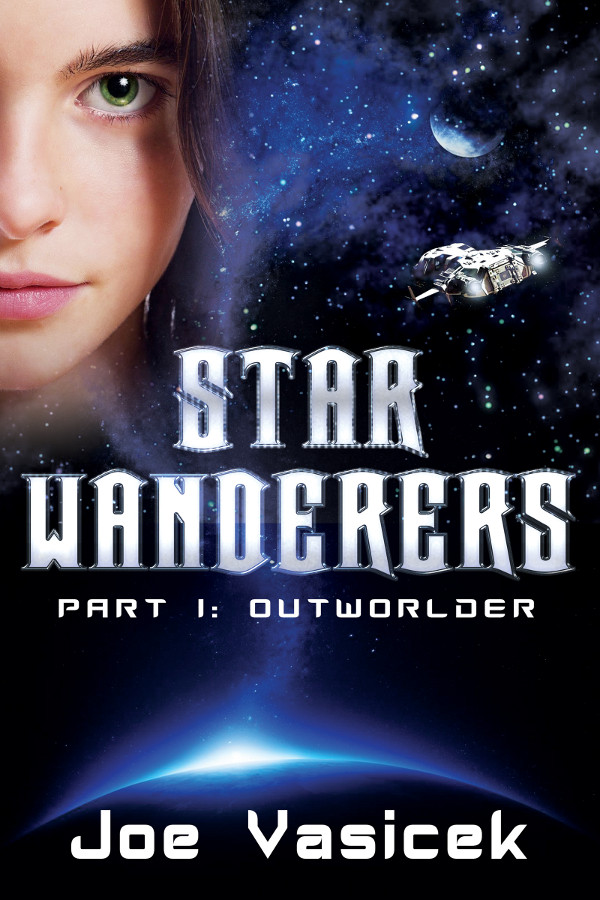
The reason I’m interested in this trope is because I’m more or less doing it with my Star Wanderers series.  It’s not strictly a serial, since each novella is a complete self-contained story, but taken together they sketch out a much larger arc that I’m only starting to discover.  Parts I-IV made a complete story arc in itself, all told from Jeremiah’s point of view, but right now I’m revisiting those stories from the viewpoints of some of the other characters.  That, in turn, is seeding all sorts of other stories, with new characters and wider conflicts.

There are challenges, though.  Today I started Part VIII: Deliverance, (from Lucca and Mariya’s viewpoints) and I got stuck on the second paragraph.  The second freaking paragraph.  It starts in the Zarmina system, but what class of star is it?  Have I mentioned it in any of the previous stories?  Thank goodness for word search functionalities, otherwise I’d be ripping my hair out!

So yeah, I’m going to have to be a lot more diligent about making and keeping a world bible.  I’m usually a pantser, so outlines are kind of anathema to my creative process, but having a solid reference for the stuff that I’ve already written is quite helpful.  Currently, I’m using Wikidpad, which seems to be the perfect tool for this sort of thing.

Fortunately, the challenges are a lot more fun than discouraging.  I had a great time writing Dreamweaver, getting into Noemi’s head and revisiting that story from her point of view.  It sounds so cliché, but that story really did write itself.  I kept a window with Outworlder in the background, and whenever I needed to see what would happen next, I’d just go to it and read the next couple of paragraphs.  Benefactor and Reproach have been much the same way.

Eventually, I plan to branch out a lot further, with other interesting characters and situations.  I have no idea what those will be exactly, but that’s kind of the point.  Until you actually pull the trigger, Schrödinger’s gun can exist in any state, from a musket to an AK-47 to a rocket-propelled grenade.  Whatever form it ends up taking, the important thing is to make sure it goes off with a bang.

It’s finished! Now onto the next thing.

Well, over the weekend, I finished the first draft of Star Wanderers: Reproach (Part VII).  Technically, I finished it at 4:30 am on Saturday, but I’m counting that for the Friday May 31st deadline that I set when I started the project.  I was determined to finish the thing before I went to bed, and nearly pulled an all-nighter.  Still recovering.

Star Wanderers: Benefactor (Part VI) needs some work before I feel it’s ready to be published, but I’m not sure if that’s what I want to move on to next.  From a business standpoint, that would appear to be the most prudent decision, since my Star Wanderers books are selling fairly well and expanding the series while the momentum is still good is probably the surest way to capitalize on that.  However, from a creative standpoint, I think it might be better to give this draft some more time to mull around in the back of my head, like I did for Genesis Earth, Bringing Stella Home, and Desert Stars.

Also, I really want to finish the first draft of Lifewalker.  All of my friends and family who have read bits and pieces of it are raving for me to finish it–literally, every time I talk with my Dad, he asks me when it’s going to be done.  I really do enjoy the voice of the main character in that one, and I stopped it only to finish Reproach, not because it was giving me any troubles.  If I go ahead with that now, I can probably finish it by the end of the month, with time to start work on another project (possibly Benefactor).

It’s difficult for me to talk meaningfully about a project that only I and a couple of other people have seen, so here are the first few paragraphs from the current draft, just to give you a taste of it:

My given name is Isaac Jameson, but most people know me as the Lifewalker. It is a fitting title. I am a stranger and a wanderer; death has cheated me not once, but thrice. For more than three generations, I have wandered the Earth, watching men and women spring up as wheat, bear seed, and pass away with the autumn frost. Yet with each passing generation, I alone remain—with each new crop of humanity, death refuses to harvest me. Some would see this as a blessing, but it is not. It is a curse worse than the fever that steals an infant from its mother, or the blight that takes the mother from her newborn child. It is hard enough to say goodbye to those you have known and loved—those who have shared everything in their lives with you, holding nothing back. But to say goodbye to everyone you have ever known—to find yourself a stranger in your own homeland, a man washed up on the shores of time while the world spins wildly beneath you—yes, that is a fate that can make death seem like a mercy. But I digress.

I suppose I should start this volume with a brief description of the land of my birth. Far to the west, beyond the lakes of the north and the great river of the plains, a series of great, craggy mountain ranges cross the land. In the heart of these mountains, almost a year’s journey by wagon from the eastern coast, lies a great salty sea. It is a desolate and lifeless place, and so far as I can tell, always has been. I only visited it once, but saw no signs of habitation along its briny beaches, ancient or otherwise. However, only a few short miles to the east, the ruins of a once-great city still stands. Its rusting skyscrapers are not as tall or as numerous as those in Boss-town or Old Neyark, but there are enough to show that it was once a place of some importance, before the years of the Blight.

South of these ruins, and beyond the numerous villages and communes that thrive in its shadows, lies a wide mountain valley with a freshwater lake at its center. The lake is extremely shallow, and the reeds grow thick along its southern coasts. It is a good place for catfish and mussels, as well as heron and other waterfowl. The mountains rise sharply all around it, but more especially to the east, though none of them are quite high enough to boast a peak that is snow-capped year round. A monument to the letter Y can still been seen on the face of one of the nearer foothills, though the coloring has long since faded. The northeast border of the valley is guarded by a mountain that looks like a young maiden, sleeping on her back with a hand on her pregnant belly. Some say that the child she carries is the hope of the new world. A narrow river runs just south of this mountain to the lake, through the heart of the land of Provorem.

Just for fun, I posted a longer version on the minecraft server where I currently play.  It’s possible to make books inside of the game, and fill them with a couple thousand words of text.  I’ll probably do a couple more minecraft books with bits and pieces of Lifewalker, and possibly a couple of other projects as well.

At the same time, I’ve got an idea for another project, one that has the potential to turn into a series of heroic fantasy novellas, along the lines of Star Wanderers.  I talked it over with my brother-in-law over the weekend, and while the world and the characters still need fleshing out, I think the core idea is pretty solid.  Part of me wants to drop everything and work on that right now, but the other part feels like a deer in the headlights with a semi full of story ideas bearing down on me…

All good problems to have.  But don’t worry–if I don’t have anything new published before the end of this month, I’ll definitely have something by the end of July.  That’s my unofficial goal now: at least one new published something every two months.

Gotta write.  Later!

Sorry, no Trope Tuesday (again)

Yeah, sorry, no Trope Tuesday this week.  Third week missed in a row!  Not so good.  Thing is, I’m really focused on finishing Star Wanderers: Reproach (Part VII) right now, with a self-imposed deadline of May 31st. I figure that’s more important, and I really don’t want to break my momentum.

I’ve been vacillating a lot about this project.  Sometimes, I think it’s halfway decent, perhaps even good.  Other times, I wonder how the @#$! I came to be trapped in this story and why I’m wasting the best years of my life writing this crap.  The other Star Wanderers stories are selling decently well, but this one is so shite that it’s bound to kill the series and why am I writing this why why WHY??? 

And then I get the chains back on my inner editor and drag him down to the dungeon, where I keep him on a strict diet of bread crusts and rotten cheese.  No wonder he hates me.

I know those trope posts are a popular feature around here, so I’ll get back on top of them once this project is finished (which WILL be this week!  It WILL!!)  In the meantime, if you’re looking for a trope fix, you should check out Anita Sarkeesian’s latest Feminist Frequency video.  She does an awesome job deconstructing feminist video game tropes, in a much more meticulous and thoughtful manner than I have ever achieved here:

Part of me wants her to take my own stories and analyze them for feminist tropes.  The other part shudders in abject horror at what she might possibly find.

Whoops, looks like the inner editor just got loose again.  Better go hang out on the KBoards until I’ve got him back in the dungeon.

Later!

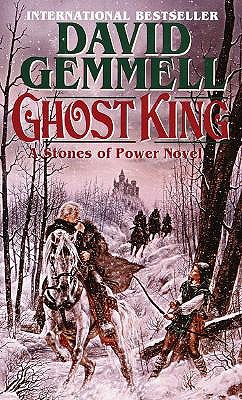
The Legend of Deathwalker by David Gemmell

legend_of_deathwalkerI’m not even going to try to write a synopsis of this story.  It’s just like all the other books in the Drenai series, which is why I love it so much.  Basically, this one gives the story behind the rise of Ulric, khan of the Nadir, and the origin of the Nadir people.  Interestingly enough, Druss the Legend plays a major role.

This was the last book in the Drenai Saga that I hadn’t read, so reading it was a very bittersweet experience.  On the one hand, this one is just as good as all the other books in the series, and made me want to revisit Legend and some of the others.  On the other hand, I knew that once I’d finished it, there wouldn’t be any more Drenai books left.  So I took it slow for the first half, but naturally I finished it at a breathless late-night sprint a day or two later.

I’ve been thinking a lot lately about why I love David Gemmell’s books so much.  There are many reasons, but I think the main reason is that his writing is honest.  He strips away all the incidental stuff and gets right at the heart of the stuff that matters.  He doesn’t pussyfoot around, either–if his characters do something despicable, he doesn’t make any excuses for them.  He tells it like it is.  This can make for a very brutal story, but it also makes for a very cathartic one.

The other reason I love his books so much is because he does such a good job depicting raw, unrepressed manhood–not the stupid stuff like driving big cars and eating meat, but manning up and facing your greatest fears.  It’s about friendship, and honor, and fighting with all of your strength for something you believe in.  It’s about all that raw, pent-up energy we all have, that animal urge that drives us to competitive sports and first person shooters, and channeling it for a heroic cause.

The craziest thing is that the fight itself is actually more important than whatever side the characters are fighting on.  In this book, Druss is actually fighting to help bring about the rise of the Nadir khan who later invades his homeland and kills him on the walls of Dros Delnoch.  None of that matters, though, because Druss doesn’t fight with malice.  For him, it’s all about fighting for something, not against something, and the battle itself is just as important as the victory.  I don’t think I can put it better than this:

“Can we win here?” Sieben asked, as the shaman’s image began to fade.

“Winning and losing are entirely dependent on what you are fighting for,” answered Shaoshad. “All men here could die, yet you could still win. Or all men could live and you could lose. Fare you well, poet.”

The best thing about David Gemmell’s books is the fact that none of the characters–not even the bad guys–are defined by their own evil.  The Nadir are supposed to be the evil chaotic race of the Drenai universe, but when you come to understand what they’re fighting for, their hopes and dreams for a better future, you can really see what’s good in them.  Likewise, the more civilized Gothir are kind of like the evil white men who want to put down the savages and keep them in their place, but there are good and honorable men among them too.

And yet, even though the two sides clash, and good men die on both sides, it somehow isn’t tragic.  That’s the crazy part.  It’s almost like you can feel the characters salute each other as they die in a good cause, the way Ulric gave Druss a proper funeral in Legend, even though the two were blood-sworn enemies.  In David Gemmell’s world, honor and courage are more important than life or money.  Everyone dies; dying well is more important than living without honor.

This book is incredible.  As I was reading it, I decided it was the best David Gemmell book I’ve ever read–which is something I do every time I read one of his books.  I feel like I’m a better man for having read them.  If he had written a hundred books in this series, I would happily read them all.  The fact that there are no more new ones deeply saddens me, but I know I’ll revisit these stories again in the future.

I need to read more. A lot more.

Recently, I’ve come to the conclusion that I need to read a lot more than I have been.  I’ve read a couple of books in the past few months, but to take things to the next level I feel like I should be reading at least one or two novels a week.

I came to this conclusion last week after visiting the Provo Library to pick up a copy of Gettysburg (the movie based on The Killer Angels) that was on hold for me.  Unfortunately, someone had misplaced it, but since I was there I took some time to browse the shelves.

Holy cow, it’s been a while since I was surrounded by actual physical books.  I get about 60% to 70% of my books nowadays on my kindle, so browsing through the shelves, I felt like a kid in a candy shop.  I picked up the last Drenai book that I haven’t yet read (finished it today, actually), a classic by Heinlein, and an Alliance-Union novel by C.J. Cherryh.

The thing about physical library books, though, is that if you don’t read and return them in time, they tend to cost you money.  LOTS of money.  I can’t tell you how much I’ve paid in library fines over the years–it seems like every time I go to check something out, I have to pay a couple of bucks.  What can I say–I’m not a very disciplined reader.  But this time, I figured I would actually go through and do it.  That’s why I limited myself to just three (or was it four?).

If you’re a writer, reading voraciously is essential.  Not only is it a great way to pick up new tricks, it’s absolutely vital in keeping your sense of story honed and sharp.  I wonder how much of what we call “writers block” would actually best be solved, not by just writing through it, but taking some time to just immerse yourself in a good book and recharge your creative batteries by filling your mind with story.

Another reason to read is that it helps to keep you from being stretched too thin by online distractions and obligations.  I picked up this tip from Jeff VanderMeer in his writing book, Booklife.  It’s a good one.  Basically, if you find yourself wasting too much time on the internet, cycling endlessly through your email, your facebook, your twitter, webcomics, message boards, blog aggregator, sales stats etc etc–the best way to break free of that addictive cycle is to sit down and read a book.

A couple of days later, I was at Leading Edge and noticed that they have a whole bunch of unread ARCs in their cabinet.  A couple of small publishers send them stuff every couple of months, and it tends to accumulate, especially in the summer when most of the students are gone.  Well, I ended up coming home with three of them, with a promise that I’d read and review a couple before the next issue goes out in June.

Not that I’m complaining–not at all.  In fact, I’m excited.  I’ve been doing a lot to rework my routine recently, mostly having to do with writing in the mornings and finding a good place outside of my apartment to get stuff done.  I find that it helps to take frequent breaks when writing, so if I can fill those with reading instead of useless internet browsing, I figure I’ll be in good shape.  I’ll let you know in a couple of weeks how that goes.

In the meantime, I’ve got to go, but you can expect another squeeing fanboy review of David Gemmell soon–as in, probably tomorrow.  I just finished the last remaining bok in the Drenai series that I hadn’t yet read, and holy crap, it is AMAZING.  It makes me want to go through and read the whole series all over again!  At the same time, I’m so sad that there aren’t any more of these books left anymoer–if Gemmell had written a hundred Drenai books, I would have read (and gone fanboy crazy over) every last one of them.  Sadly, that is not to be.  But maybe when my soul passes over to the Void, I can sit at his feet and hear them direct from the mouth of the master … okay I’d better end this before I go all fanboy again.  Later.

Author’s Note for THE JEREMIAH CHRONICLES

SW-TJC (thumb)Here’s the author’s note at the end of Star Wanderers: The Jeremiah Chronicles.  It’s the only content in the omnibus that isn’t available anywhere else, and I don’t want my readers to feel like they have to buy something they’ve already read in order to get it.  And if you do want to buy it, there’s a link in the sidebar over there. ———–>

I put an author’s note at the end of every ebook I publish.  It adds a little bit to the progress bar, which can be annoying for readers who expect “the end” to come at 100%, but I think it’s good to briefly tell the story behind the story.  It’s certainly something that I would enjoy reading at the end of some of my favorite books (especially the ones by David Gemmell!).  Whether you read them or whether you skip over them, it’s a feature I plan to keep in every ebook I release.

So, here it is!

==================================================

One of the questions writers get asked the most is ‘where do you come up with your ideas?’ Honestly, that’s probably the hardest question to answer. Orson Scott Card said that everyone runs across at least a thousand story ideas each day, and a good writer will see maybe three. To that, I would add that it might take years before you realize that you’ve seen them.

The idea that eventually grew into Star Wanderers probably came to me the first time I saw Serenity. At the beginning of the movie, there’s this long continuous shot that shows the space ship from the hangar bay doors to the cockpit. I don’t even remember what the characters were talking about, I was just mesmerized by that shot. For weeks, I dreamed about having my own starship like the Serenity, where I could escape the stresses of college and lead an adventurous life out among the stars. I still daydream about it to this day. Having my own starship and piloting it to places where I can be free and independent is one of my greatest recurring fantasies.

Another major catalyst for the idea that became this story was the Lombardo translation of Homer’s Odyssey. The Odyssey is perhaps the most famous epic work of all time, but the Lombardo translation struck a particular chord with me because of how down-to-earth and accessible it is. Instead of some stodgy 19th century translation that passes for cruel and unusual punishment in some high schools, this one made the story come alive. I was first introduced to it in a Western Civ class in college, but enjoyed it so immensely that I picked up a copy over the summer of 2009 and read the whole thing.

As I read it, I couldn’t help but notice the potential for a science fiction crossover. What if the sailing ships were starships, and the oceans the vastness of space? The islands would be like planets, with their strange and exotic cultures, and travel from world to world would be as arduous and difficult as it was for Odysseus to return to Ithaca. A new form of paganism would emerge, one that worshiped the stars and planets just as the Greeks worshiped the rivers and trees. The starfaring people would be as hardy and self-reliant as the ancient Greeks, and as antagonistic toward the more civilized Coreward peoples as the Aegeans to the Trojans. Most importantly, though, the starfarers would feel a sense of powerlessness as they faced the unforgiving vastness of space, just like Odysseus as he braved the wine-dark sea.

I actually started writing that novel in 2010, and got about a hundred pages into it before moving on to the revisions for Bringing Stella Home. Later, I trunked it, but the basic world-building stayed with me as I continued to expand the Gaia Nova universe with Desert Stars and Heart of the Nebula.

The final catalyst for Star Wanderers was the love story from one of my favorite Westerns, Jeremiah Johnson. My college roommates introduced me to that movie my sophomore year, and just like Serenity, I spent the next several days daydreaming what it would be like to be a mountain man. I went to college in Utah, so the frontier landscape where the film was shot is very familiar to me (in fact, I’m writing this author’s note from Slide Canyon just outside of Provo). But the love story—that was the best part. An accidental marriage from a cultural misunderstanding that blossoms into something touching and wonderful, in spite of the language barrier—by far, that was my favorite part of the whole movie.

All of these ideas were bouncing around somewhere in the back of my mind for years, but it wasn’t until 2011 that they all came together. I had graduated about a year and a half before, and was working a number of low-skilled temp jobs, trying to make ends meet as I grew my writing career. I was between projects, trying to work on Edenfall (sequel to Genesis Earth), but nothing was coming together and I just felt very frustrated.

One day, as I was lying on my bed daydreaming for the umptieth time about escaping this planet on my own starship, the thought “what would Jeremiah Johnson look like if it were set in space?” came to me. It was like a supernova exploding in my mind, illuminating my imagination with the power of an exploding star. For the next half hour, I worked through all the details in my head—the famine backstory of Megiddo Station, the Oddysey-like far-future space setting, the wandering lifestyle of the mountain man turned starship pilot. And then, once I’d replayed it half a dozen times in my head and worked myself up to a fever pitch, I rolled out of bed and wrote the first chapter of Outworlder almost exactly as it now stands. The rest of that novelette came just as readily, and in a couple of weeks I had a finished draft.

As a young single guy in my early twenties, I tend to think about love and relationships a lot. I think it’s a myth that women are somehow more interested in romance than men—we just express that interest in different ways. At Worldcon 2011 in Reno, Louis McMaster Bujold said that women tend to write about love and life, whereas men tend to write about love and death, and I’ve found that to hold very true, at least in my own writing. Perhaps that’s why it was so easy and natural to come up with the backstory that put Noemi on Jeremiah’s starship. The rest, with the pregnancy, the polygamy issues, and the baby at the end, all came naturally as I wrote things out. I was originally going to have Noemi miscarry about halfway through Fidelity, but realized almost immediately that that wasn’t going to fly. Once I realized that the natural ending of the story arc would be the birth of their son, everything else just came together.

My goal from the beginning was to write something that I could submit to the Writers of the Future contest. For that reason, I kept Outworlder fairly short. However, when I got to the end, I realized that there was still a lot of story left unwritten, so I decided to follow it out. I’m more of a novel writer than a short story writer, so it was natural to structure the overall story arc in that way. At the same time, I really enjoyed the intimacy of that first novelette, and the way that the shorter structure allowed me to focus on one or two characters and their relationships with each other. Those were all considerations that pushed me into following the novella format, as well as the chance to experiment with publishing a series of shorter works.

Fidelity and Sacrifice were a lot more challenging to write, in particular Sacrifice. Part of this was because I was still trying to figure out where the overall story arc was going, and part of it was because some of the subject matter (such as polygamy) seemed pretty unconventional for a science fiction story. But after taking a couple of short breaks to work on other projects, I managed to push through it, eventually getting to Homeworld which came much more easily. I’ve always been better at endings than at middles, and I went into Homeworld knowing that it would conclude Jeremiah’s main story arc.

As I was working on the later parts to the Star Wanderers series, I moved to the Republic of Georgia to teach English for a year. That had a tremendous impact on how I wrote the language barrier between Jeremiah and Noemi, mostly because my experience was quite similar. I didn’t accidentally marry a Georgian girl (though there are one or two who I still miss sometimes), but when I showed up in the airport in Tbilisi, I didn’t speak a word of Georgian and knew almost nothing about the people or the country. Needless to say, it was quite an adventure. The stresses of living in a foreign culture did slow down my writing a bit, but I managed to get it back by the end and finished Homeworld before coming back to the States for the summer.

When I first started publishing the Star Wanderers series, I saw it as a sort of side project that I would do before getting back to other projects. However, this series has proven to be more popular than any of my other books, so I’ve decided quite happily to expand it. The Jeremiah Chronicles contains the full story arc for Jeremiah, but there are a lot of other characters who I want to explore, and the novella format is perfect for that. If you have any in particular that you’d like to revisit, feel free to shot me an email at joseph [dot] vasicek [at] gmail [dot] com and let me know. I love getting fan mail and do my best to respond to it, so any comments would definitely be appreciated.

If you’ve just discovered Star Wanderers and would like to keep up with the newest books in the series, you can get them for free by signing up for my mailing list. Whenever I release a new Star Wanderers story, I put out a two-week coupon code to get it for free on Smashwords and send the coupon code out to my subscribers via my email newsletter. That way, you don’t have to feel like you’re spending too much once I have fifteen or twenty ebooks out. I figure that if you enjoy these stories enough to sign up for the mailing list, you’ll probably tell a friend or post a favorable review, so I’m happy to make my new Star Wanderers releases available for free.

I hope you enjoyed this omnibus! If you did, please consider posting a review or sharing it with a friend. Every little bit helps, and the more people discover and read this series, the more stories I’ll be able to write. My goal from the beginning has been to make a living telling stories that I love, and it looks like Star Wanderers might actually make that possible.

In the meantime, don’t be a stranger—you can find me on Twitter (@onelowerlight), Goodreads, or Facebook (Joe Vasicek), but the best way to keep up is to follow my blog, One Thousand and One Parsecs. I’ve been blogging since 2007 and plan to keep it up for the foreseeable future. You can also find links to all my books there, on all the major sites where they’re published. And of course, if you want to sign up for my mailing list, you can find the sign-up form on the sidebar.

That’s just about it. Thanks for reading! It’s readers, not writers, who really make a story come alive, and at the end of the day the greatest honor is simply to be read. So thanks for taking a chance on this one, and until next time, I hope to see you around!

STAR WANDERERS: THE JEREMIAH CHRONICLES is now available!

SW-TJC (thumb)Hey guys, exciting news!  I just published Star Wanderers: The Jeremiah Chronicles!   It’s an omnibus that contains Parts I-IV of the series.  You can find it now on Amazon, Barnes & Noble, Kobo, and Smashwords, as well as Omnilit, All Romance eBooks, and Drivethru Fiction.  It should be up on Sony, iTunes, and other eretailers in a week or two.

This omnibus edition doesn’t actually contain any new content, except for the author’s note which I’ll post a little later on the blog.  But if you’re just getting started with the Star Wanderers series, this is a slightly less expensive way to get the first four installments than buying them all individually.  Plus, the cover art is pretty kewl–at least, I think so. 🙂

If you’ve read the series up through Homeworld, I would really appreciate it if you’d take the time to post a review on the omnibus.  There’s no expectation to do so, of course, but it really does help things out a lot.  Also, if you’re a Goodreads user, you can add the omnibus to your library here.

That’s just about it for now.  At some point, I’d like to put out a print version, but I’m not sure whether to do the full omnibus or to do a sort of back-to-back edition, where it’s two novellas with the one printed upside down and on the other side.  What the heck–maybe I’ll do both.  But I still have to format the print version of Stars of Blood and Glory, so it might take a while before I get around to that.

In the meantime, I’d better get back to writing Part VII: Reproach.  This publishing stuff is all good fun, but the important thing is to keep writing.

See you around, and thanks for reading!

Hey! Are you an aspiring writer / artist / creative whatever?

If you are, you really really really need to check out this webcomic about the three jaguars.

It’s about the three main voices in every professional artist’s head, and how they bicker and play off of each other.  As someone whose been in the writing business for a few years, I can say that it’s absolutely spot on (and not just because they’re anthropomorphized jaguars).  Seriously, this webcomic needs to be like a primer for all creative types or something.

The thing I’ve learned the most by following this webcomic has to do with the marketing voice.  I’ve always had it in the back of my mind that marketing is evil.  And if you do it wrong, it really is.  But if you do it right, it’s actually pretty amazing:

…your goal in marketing is to create sustainable relationships with people who want you to succeed; in short, to seek patrons, rather than one-time customers. To do that, you can’t be focused on the money or the one-time sale. You want to inspire customer loyalty. You want people to be invested in your success. You want them to feel special … because they are.

A lot of the stuff I do, like keeping this blog, or putting Author’s Notes at the end of all my books, comes back to this idea of making meaningful connections with people.  I just never saw it as marketing.  But if marketing yourself is really about focusing on people rather than obsessing about sales, that’s totally something that I can do–something that I’m excited to do!

The character I can relate to the most is probably Business Manager.  It’s the entrepreneurial spirit I can trace back to my grandpa, who started his own oil company in West Texas and was successful enough to put all us grandkids through private school.  But Artist is definitely in there as well–it’s why I’m always jumping from project to project, driving my inner business manager crazy.

So yeah, if you’re a creative type, you’ll definitely want to check out this webcomic.  It’s written by the self-published author whose books briefly got pulled from Amazon during the Space Marine controversy (fortunately for all of us, she held out and won).  Lots of good stuff there–she really knows what she’s talking about.

In the meantime, let me leave you with this incredible piece of orchestral trance music.  It’s quite possibly the most epic thing I discovered last week.  The video is pretty good too.

Take care!

Starliner by David Drake

starlinerWelcome to the Empress of Earth, the finest luxury liner in all of settled space.  Whether you’re alien or human, first class or economy, there is a place on the ship for you.  Just watch out for those Grantholmers and Nevassans–those planets are about to go to war, but don’t worry, the Empress is strictly neutral territory.  The envoys from Earth will see to that.  And as for the rumors that one of those sides might try to hijack the ship, I’m sure the crew is capable enough to deal with such threats.  Even if they are unarmed…

I saw this book on my also-boughts on Amazon, so I decided to pick it up.  It was an enjoyable read.  David Drake is very good at showing competent characters dealing with all sorts of complicated problems, operating within a strict chain of command while sometimes bending the rules a bit to get the job done.

The book is really a series of small vignettes, all tied together through the main viewpoint character, Ran Colville.  There is an overarching storyline about the Empress’s role as a coveted pawn in a larger interstellar war, but that only really drives the story at the very end.  Really, it’s more of a slice-of-life story about the crew of the ship, punctuated by all of the strange and exotic stops along the way–and boy, are there plenty of those!

Even though the Empress is neutral, she’s a potentially valuable military asset that both sides in the Grantholm-Nevassan war want to capture.  To complicate matters further, some of the passengers are dignitaries from either side.  At one point, there’s a romance between the peacenik daughter of a Nevassan diplomat and the son of a Grantholmer nobleman who is honor-bound to fight in the war.  That subplot was a lot of fun.

As you can imagine, there’s plenty of violence.  And really, what would you expect from one of the world’s best military science fiction writers?  Drake does a really good job showing the adrenaline-soaked excitement of combat, as well as all the ugliness.  Even the mooks get a viewpoint from time to time, and when they die, it’s messy and traumatic.  For that reason, the violence feels very realistic, especially in how it affects the main characters.

Ran is something of a player, so there is a fair amount of explicit sex (including a bit of inter-species action).  Drake doesn’t mince words or shy away from the gritty details–he puts it all on the page as matter-of-factly as any other aspect of life.  The sex was brief enough that it didn’t really bother me that much, but Ran’s relationship toward one of his coworkers takes a turn at the end that seemed to come completely out of left-field.  I could understand why, for the purposes of the story, it had to happen, but the way it was handled I just didn’t buy it.

That was probably my biggest gripe.  If I had another, it would be that the story seems to meander a bit in the first two-thirds, but the world-building was interesting enough that it didn’t really bother me.  Overall, it was a fun, light read (well, light for military sf).  The ebook version is free on Amazon, so it’s definitely worth picking up.  If you haven’t read any David Drake yet, this isn’t a bad place to start.