GUNSLINGER TO THE STARS now up for pre-order!

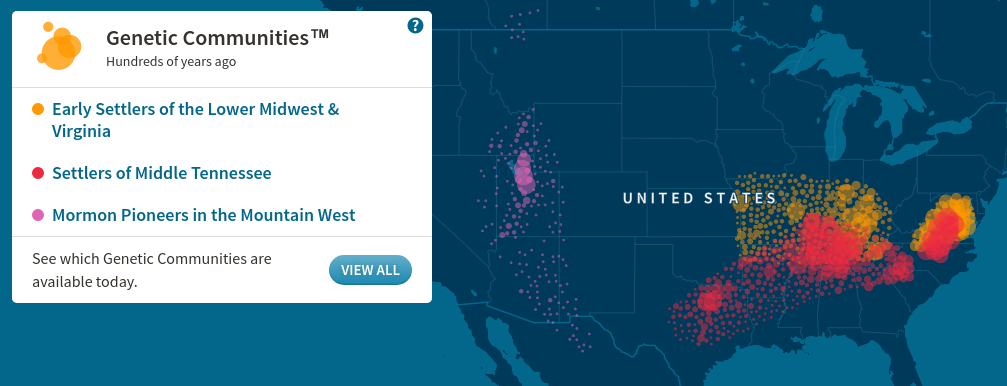
Hi guys! Sorry to be out of the loop for a while. I have just made the pioneer trek of my ancestors, except in the wrong direction (from Utah to Iowa). Still getting settled in, but I should be more active from now on.

That said, I’m happy to report that Gunslinger to the Stars is now available for pre-order! It’s scheduled to release on May 19th, across all ebook platforms. For Kindle, Nook, Kobo, iBooks, and Smashwords, you can pre-order your copy now!

I’m super excited about this book. It’s my first novel since May 2016, and if it does well enough, I’d like to expand it into a trilogy. Either way, it’s definitely taken my writing in a new direction, and I think you’re really going to enjoy it. If I had to pitch it in one sentence, I’d say that it’s Monster Hunter International meets Guardians of the Galaxy.

Just a short post for now, but I’ll be sure to let you guys know what I’m up to as I get back into the swing of things. Thanks for reading!

Gunslinger to the Stars

Gunslinger to the Stars

Not long from now, in our own Milky Way…

Sam Kletchka here, freelance gunslinger and interstellar privateer. This, my friends, is how I went from being stranded in the armpit of the galaxy to becoming the luckiest human being in the universe.

Order Now!
About the Book

The name’s Sam Kletchka. Perhaps you’ve heard of me: captain of the Star Runner, military contractor for Earthfleet, and interstellar privateer. But before all that, I was a hired gun, freelancing across the galaxy one gunslinging job at a time.

This, my friends, is how I went from being stranded in the armpit of the galaxy to becoming the luckiest human being in the universe. Not that it was easy, of course. I’ve looked death in the face so often, he’s practically an old buddy of mine. But when all your worst enemies are immortal, that’s a buddy you want on your side.

Stay frosty, my friends. You never know what you’ll find at the next star.

Details
Author: J.M. Wight
Series: Gunslinger Trilogy, Book 1
Genres: Action & Adventure, Science Fiction, Space Opera
Tag: 2017 Release
Publication Year: May 2017
Length: Novel
List Price: $15.99
eBook Price: free sale!
Audiobook Price: $2.99 sale!
Some of the links in the page above are "affiliate links." This means if you click on the link and purchase the item, I will receive an affiliate commission. You will not receive any additional charge. As an Amazon Associate I earn from qualifying purchases.

A fascinating journey of discovery

I had a really fascinating experience last year that has turned into something of a journey of discovery. It’s still ongoing, and I’m sure it will affect my writing in years to come.

It started with family history. Long time readers of this blog will know that I’ve been interested in family history for some time. My sister is a professional genealogist who specializes in Czech records (she keeps a blog here), and I got started by helping her.

In the United States, the census records are only useful to about 1850. Before that, you have to get into land records, probates and wills, and local courthouse type stuff to really go anywhere. But in the Czech lands, the Catholic Church has kept meticulous parish records going back to the 15th and 16th centuries. They’re handwritten in old German and totally unindexed, but the books are all digitized and available online.

As I worked on this research with my sister, I started to wonder: how far back can we push these lines? What are the limits?

The Czech lands were part of the Holy Roman Empire, under the Austrian Habsbugs. In the 15th century, the Hussite Wars shook things up quite a bit, and that’s about as far back as the Catholic parish records go. But the noble genealogies were very well kept, and go back quite a bit further. If one of your lines connects to the nobility (which is very possible, given how many bastard children were running around), you can push back really far.

But past the 8th century, things start to get sketchy. Most of the nobility in Europe are descended from the barbarian tribes who invaded the Roman Empire: the Goths, the Franks, the Vandals, etc. Same thing with the Slavs and the Byzantine Empire, though the Byzantines held out much better than the Western Roman Empire (it was the Turks, not the barbarians, who eventually did them in).

The trouble is that when these barbarians took over, they tried to establish their legitimacy by fabricating genealogies. Plenty of royal European lines go back all the way to Adam and Eve, but how reliable is that really? As rulers of Christian lands, of course they would try to connect themselves to famous characters from the Bible.

The Dark Ages might not be as dark as we think they are, but in terms of records and record-keeping, they certainly are. The largest and most civilized empire in the world had just collapsed, with barbarians running amok in the countryside and the Persians threatening the last vestiges of the empire in the east. Very few historians have documented this era, and it was a huge dark spot in my own understanding of the world.

So I set out to study it. I scoured Wikipedia, subscribed to the Western Civ podcast, and listened to the entire History of Rome by Mike Duncan (excellent podcast, by the way). The Roman Empire had dominated Europe right up to the early middle ages, and I wanted to learn why it had fallen.

That led to a journey of discovery all in itself. Roman history is a fascinating subject in its own right, and the four or five centuries from the Punic Wars through the reign of Marcus Aurelius are very well documented. Rome faced a lot of challenges, and even a few existential threats, but for more than a thousand years they dominated the known world.

So why did they fall?

The more I studied about the Romans, the heavier this question weighed on me. I learned about Diocletian and the Tetrarchy, the crisis of the third century, and Constantine the Great—a period of Roman history that was much less familiar to me. And then things started to click.

My Czech ancestors were serfs. They emmigrated to Texas shortly after the last vestiges of serfdom were abolished in 1848. Under serfdom, they were little better than slaves. The land they lived and worked on was owned by the Hukvaldy Estate, and they were bound to it by feudal law.

When Diocletian became Augustus, the Roman Empire was reeling from half a dozen existential crises, including an economic collapse. The money was so worthless, most of the empire had resorted to a barter economy. Diocletian established a system of exchange where people could pay their taxes with trade goods rather than money. However, the only way for that system to work was 1) for everyone to take the profession of their parents, and 2) for no one to move without Imperial permission. Otherwise, you might have too many pig farmers in one province and not enough blacksmiths in another.

In other words, the system of feudal serfdom that my ancestors labored under had its roots in the reforms of Diocletian. But it went much deeper than just one man. Diocletian reforms were necessary because the Roman economy had collapsed, and the economy had collapsed because for more than a hundred years, the Empire had been in massive debt, and had serviced its debts by devaluing its currency.

Sound familiar?

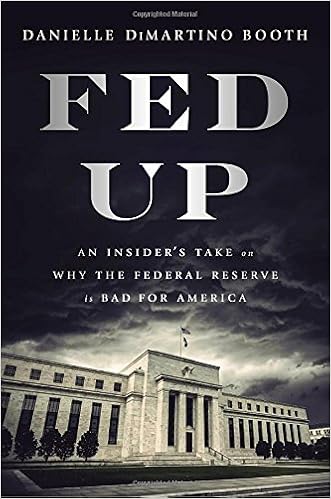
The Roman Empire fell because of deficit spending, government debt, and currency devaluation over the course of several generations. In 1913, the United States established the Federal Reserve, beginning our own process of currency devaluation. Our national debt has doubled every eight years since 2000, when the stock market peaked as measured in gold. Right now, our debt-to-GDP is 104%. One hundred four percent.

And that’s just our sovereign debt. Our household debt is north of $12 trillion, or another 73% of our GDP. The largest portion of that is student loans, which cannot be resolved through bankruptcy.

Seven out of ten Americans have less than $1,000 in savings.

Half of Americans would have to beg, borrow, or steal if slapped with an unexpected $400 expense.

Twenty percent of American households do not have a single person that is working.

Fully one-third of America is in debt collections, meaning that they have an unpaid debt more than 180 days past due.

Is it any wonder that the middle class is shrinking? We’re following the same path that Rome followed, except where they merely walked, we’re running headlong. With our modern communications, the pace of life is so fast that I suspect we’re completing the cycle in a fraction of the time.

And then you realize that what passes for money these days isn’t “money” at all, but government paper backed by government debt. What happens when we default? What happens when the credit markets freeze up and contagion spreads across the global economy? What happens when you wake up one morning, only to find that all the ATMs are down, the banks are all closed, and everyone’s accounts are all frozen?

So what started as an interest in family history took me down a rabbit hole where I learned all about how Rome fell, and how we’re following in the footsteps of Rome. It led to a keen interest in monetary policy and our global monetary system. It also gave me a new hobby: coin hunting.

The Romans devalued their currency by melting down the old gold and silver coins, and minting new ones mixed with copper. Over time, the melt value of the coins went down, and that’s exactly what’s happening to our US currency now.

Before 1965, dimes and quarters were made from 90% silver. After, they were made from copper with a thin nickel coating. Nickels have always been made from a 75/25 copper-nickel alloy, however, and pennies were all 95% copper until 1982. Right now, the melt value of a US penny is actually 1.8¢. At the height of the “jobless recovery” it was closer to 4¢.

Now, it’s illegal to melt down pennies because they are currently legal tender. However, as the currency continues to inflate, the penny will become even more worthless, eventually reaching the point where it doesn’t make sense to make anymore. Right now, the material cost alone of each zinc penny is 70% of the face value. Canada has already discontinued minting pennies, and we aren’t far behind.

I started dabbling in copper hoarding. But as I went through lots of pennies, I started coming across some really old ones. Which got me to wondering if maybe the numismatic value of some of these coins eventually might be more than their melt value. After all, when everyone’s melted down their copper pennies, a complete collection of Lincoln cents is going to be something special.

So I started building a collection of Lincoln cents. Then I got into state quarters, first as a cool Christmas gift for one of my nephews, then for myself. Then I got into Jefferson nickels, and started finding silver.

Right now, I have a complete set of Lincoln Memorial cents. They’re all from circulation, and some of them are pretty beat up, but there are a few really nice ones in there too. My wheat cents collection is much less complete, but the coolest piece is a 1909 VDB in very fine condition, with all the wheat berries still showing. That’s a $10-$15 penny that I found in a normal coin roll.

It’s a fun hobby, and it comes around full circle to what got me started down this rabbit hole in the first place. Each one of these coins is a small piece of history. That 1909 VDB is more than a hundred years old. I’ve got coins that my parents and grandparents would have used, and a penny for every year of my father’s and mother’s lives. With a bit of luck and a lot of patience, I’ll be able to find a penny for every year of my grandparents’ lives as well.

So yeah, it’s been a fascinating journey of discovery, and it’s still ongoing too. I just got started with Roosevelt dimes, and I’m catching up on Mike Duncan’s Revolutions podcast, which is just as interesting as his History of Rome. Turns out that the French Revolution also happened because of deficit spending and a runaway government debt. Surprise, surprise.

Life is a giant rabbit hole when you’re curious about everything!

Thoughts on Genesis Earth

So I finished rereading Genesis Earth, in preparation for writing the sequel, and I have to say it was not what I expected.

It wasn’t disappointing. There were some annoying ticks that I noticed, like too many said bookisms or turns of phrase that I wouldn’t have written today. Also, the book was a little wordy or slow in parts, compared to my more recent writing. But those were relatively minor issues. The story was quite solid. I’d actually forgotten some of the plot twists, so it was fun to watch them unfold. A bit like reading the book for the first time.

But one thing above all else struck home: the person who wrote Genesis Earth is not the person I am today. I doubt that that person would have been able to write Gunslinger to the Stars. And if I were to go back and write Genesis Earth from scratch, it would be a completely different book in every meaningful way.

It’s bizarre. When you’re caught up in day-to-day life, you never really get a sense that you’re changing. And yet, the truth is that we’re always changing, hopefully for the best, but not always. It’s impossible to experience life and still remain unchanged.

I also got a sense of this when I finished the 2.0 draft for The Sword Keeper. Perhaps it was just me reliving my own memories from the times when I wrote it, but the first half of the book seemed very different from the second half. I wrote the first half while living abroad in Georgia, and the second half years later here in Utah.

There’s a couple of things I’ve taken away from this experience.

First, it’s not always a good idea to put a WIP on the back burner. By the time you come back to it, you may not be capable of writing it exactly the way you first envisioned it. Better to push through whatever’s blocking you and strike while the iron is hot.

Second, at anything you want to do well, it’s important to always strive to improve. Even when you’re at the top of your game (and I’m certainly not at the top of mine—not yet anyway), if you’re not always trying to do better, to learn and to grow, you’ll fall off really fast.

In reality, there is no “top,” because nothing is ever static. Improvement is a lifelong process, because the moment you stop improving is the moment you start getting worse.

One thing I really need to work on is writing every day. In the past, when I’ve been working on revisions, or prewriting, or getting a book ready for publication, I’ve slacked off on this. But the truth is that writing new words is the best way to sharpen your writing skills, and that writing every day is the best way to always keep them sharp. And there’s always something to write, even if it’s just a short story. If I could write a short story every week for a year…

So yeah, lots to think on. And I’ve got a few ideas for Edenfall as well. But first, before I move to Iowa next week, I need to get Gunslinger to the Stars ready for publication. Harder, better, faster, stronger—our work is never over!

Recovering…

This sinus infection has really been kicking my butt. I’m running at about 70% right now, which is better than last week, but still sub-optimal.

A lot of stuff is happening in the next couple of weeks. First, I got the edits back for Gunslinger to the Stars, which means that it should go up for pre-order sometime early next month. I’m also rereading Genesis Earth in preparation for writing book two, Edenfall. If things go well, that should be out by the end of the year.

At the same time, I’m moving out of my apartment soon, probably within two weeks. My landlady is selling her house, which means that the mother-in-law apartment where I’m currently living is not the best arrangement. Also, I just discovered some major mold issues. If it weren’t for this sinus infection, I’d already be in process of moving, but the illness has delayed things. Need to work out a plan.

Then there’s the half-foot of snow that just got dumped on us here in Utah. Joy.

Point is, it’s probably going to be a while before you hear from me again. I’ll try to keep you guys updated, but no guarantees. I’m still writing, though, and should have some more stuff coming out soon. Next month’s release will probably be another short story, since they’re easy to put out, but my next novel, Gunslinger to the Stars, will be available soon.

Sick, sick, sick

So Thursday morning, I came back from the gym after running 2.5 miles on the treadmill and promptly fell asleep for half an hour. Later that evening, I went for a walk and found myself out of breath after climbing a flight of stairs. For some reason, I was having difficulty getting air into my lungs. No other symptoms, though, so I chalked it up to the inversion and took an alka seltzer to clear things up.

Friday, I woke up with a complete lack of desire to go anywhere or to do anything. The day was mostly a wash, though I did get up to Salt Lake to see my sister who was attending Rootstech 2017. On the way, I started coming down with a mild headache. Also, minor congestion.

Saturday was when the plague finally struck me.

Congestion, massive headache, unbelievable chills—the whole works. I spent most of the day in bed, with a blanket, a quilt, and a down comforter all piled on top of me, and I still didn’t feel warm enough. Drank lots of water and took a bunch of medicine, but I was still in a pretty bad way through most of Sunday.

As things stand right now, I’ve still got a headache and I’m coughing up all kinds of nastiness, but it seems that the worst has passed. Still popping vitamin Cs and drinking piss-tons of water, which isn’t fun, but at least I’m getting better.

No idea how that’s going to impact things this week. Hopefully, I’m back on my feet and writing again relatively soon, but that may or may not be the case.

Either way, there’s still a lot of prewriting to do before I can start my next WIP, Edenfall. I need to reread Genesis Earth and really immerse myself in that universe. I also plan to look over the reviews and spend a day or two picking over tvtropes like a menu. If I can line everything up the way I want to, I should be able to write a really clean first draft and publish it before the end of the year.

No promises, though. I’m still not sure when this sickness is going to go away. Hopefully soon.

Another one done!

The Sword Keeper
Phase:3.0 Draft
100%

It’s done! Draft 2.0 of The Sword Keeper is finished. Still need to run it by some test readers, but it’s looking very good for a release this year.

In other news, the power cable for my laptop decided to die. I’ll replace it eventually, but in the meantime, I’m going to try turning my phone into a writing device. Just got a K480 bluetooth keyboard and I’m excited to try it out. My phone is a device I’ve always got with me, so adapting it for writing could be really great.

I’m also going to try a new writing technique that should hopefully lead to cleaner (perhaps even publishable) first drafts. If it works, this could significantly increase my writing output. It involves cycling through yesterday’s words before writing any new ones, getting into the flow and making any changes as necessary. This is actually very close to how I used to write back in high school, before all those college English classes. I also get the sense that this is how Dean Wesley Smith writes.

All sorts of experimental new things going on with my next WIP, which is Edenfall. Yes, it’s time to complete the trilogy. But before I jump into it, I’m going to take some time to do some serious prewriting, in the hopes (again) of writing a clean first draft. Which, if it works, means that the book will be published that much sooner.

In the meantime, Gunslinger to the Stars is almost ready for publication. My editor is working on it now, the cover art is just about finished, and besides that all that’s really left is crafting the book description and metadata. If all goes well, it should be up for pre-order on iBooks, Kobo, Smashwords, and Nook before the end of the month.

Also, new short story!

Nothing Found

Is it ever okay to punch a Nazi?

Is the current year between 1939 and 1945?

Are you currently on active duty in the armed forces of one of the Allied nations, or a member of a partisan resistance movement within Nazi occupied territory?

Is the Nazi whom you want to punch currently engaged in combat operations against you?

If you answered “no” to any of these questions, then the answer is:

No, you dumbass.

What do you guys think?

Looking for some feedback here.

I was hoping to do something big and awesome for the cover, but the artist I wanted to do it was too booked, and I’ve been having a hard time finding anyone else who quite fits the bill. And then I realized that since this is the first book in a series, it might be better to do a low-budget cover and upgrade later if the book takes off.

Anyways, what do you think? Like it? Love it? Hate it? Feel it needs work? I’m really hoping to get this book up for pre-order in the next couple of weeks, and to do that I need a cover.

Guest Post by Timothy C. Ward

Hi guys! This is the penultimate week that the Sci-Fi StoryBundle is available, and I have a guest post today from Tim Ward, one of my fellow authors. His book Scavenger: Evolution is one of the bonus books, and it takes place in the universe of Hugh Howey’s Sand. To talk a little bit about that, here’s Tim:


My debut novel, Scavenger: Evolution was inspired by a time in publishing where “fan fiction” evolved into shared world fiction, and the weakening of a stigma that it would be lesser quality than the original source material. Kindle Worlds gained popularity through shared world stories set in famous works, with Hugh Howey’s Wool as one example.

I met Hugh through some podcast interviews I did for my first podcast, AudioTim. I loved his story of long term, overnight success, but more so, I loved his stories. Sand told the tale of a family adrift in a world covered in sand, where sand divers hunt for buried treasure and the lost city of Danvar.

In one scene, after a catastrophe, an unnamed sand diver is noted for scavenging in the rubble of a newly buried location. Knowing that Hugh allowed people to write in his Wool universe, I asked him if I could write a story in his Sand world even though it wasn’t yet open in Kindle Worlds. He gave me permission, and I took off with the idea of who this sand diver was and whom he was searching for.

The characters of Scavenger: Evolution became a former dive master, Rushing Stenson, and his wife Star, who lost their infant to a sand spill two years earlier. Their relationship never recovered, and the story starts with Rush as a custodian at a saloon, struggling with giving up on life and giving in to the temptations that surround him. He is offered a job that could give him the financial freedom to leave, and in the midst of his adventure, he will be forced to examine what life he could have with his wife if he decided to fight instead of giving up.

The story works as a stand alone, with really only the world and the starting point of the sand diving technology as the hooks that keep it in Hugh’s universe. I wrote a sequel, Scavenger: A.I. where I expand on my idea of what caused that portion of a future America to be covered in sand. Our heroes uncover the technological cause of the apocalypse, and then struggle to keep it contained before it makes them pawns in its resurrection.

Joe mentioned earlier posts on his blog that discuss TV tropes that inspired stories. In mine, I’d have to credit Stargate: SG-1 as a main influence in its story threads surrounding the replicators. The tone of my story is more along the lines of Alien, and its trope of terror in entering a lost civilization to discover ancient technology. Anyone who enjoys discovery, pulse pounding action, and a foundation of emotional turmoil between loved ones, should find a solid read in my Scavenger duology.

Scavenger: Evolution is the first book in the series, and is available as a bonus book in the Sci-fi Adventure Bundle.


Not a bad start

So January’s almost over, and I have to say it’s not a bad start to the year. Things are going quite well, both on the writing and publishing end, and on the personal end as well.

Gunslinger to the Stars
Phase:3.0 Draft
100%

First off, I finished draft 3.0 of Gunslinger to the Stars last week. The final draft came in at just under 52k words, which means that I managed to cut a healthy 27% of unnecessary wordage compared to the rough draft. That’s like upgrading from chuck roast to top sirloin, or 80/20 lean ground beef to 93/7 (except I actually prefer 85/15, but you get the point).

The Sci-Fi StoryBundle is doing quite well, enough that it may be a small windfall! That’s always encouraging, especially in today’s publishing climate. I should have some guest posts lined up soon from my fellow authors, which should be fun, so look out for that in the next few days. The bundle is only available for the next ten days, so if you haven’t picked it up yet, now is the time!

With Gunslinger to the Stars 3.0 finished, it’s time to move on to another WIP. The next one lined up is The Sword Keeper 2.0, which should be a lot of fun. This is my first epic fantasy novel, and there’s a bit that still has to be cleaned up, but I can legitimately say that this is one of the best things I’ve written so far. Really excited to get it out, hopfully later this year.

I also wrote a short story last week, and I’m not quite sure what to do with it. It’s so insanely political that it will probably get me blacklisted at half the magazines I submit it to. It’s also insanely short. I’ll probably clean it up a bit, see if I can add anything, and then go straight to self-publishing. Thank goodness that’s an option!

Lots more stuff happening this week. New free books, new release, new WIP, another short story in the works… 2017 is definitely off to a good start! And on that note, I’ll leave you with this awesome Pogo mix: