Some thoughts on internet access, self-discipline, and productivity

As many of you probably know, for the past four months I’ve been living in a small Georgian village in the foothills of the Caucasus Mountains.  It isn’t as remote as some places in this country (like Tusheti, where some people still practice pagan animal sacrifices), but my internet access has been limited, especially compared to the 24/7 access I had back in the States.

I knew that coming in, and was actually looking forward to it.  I had the option to buy a USB stick from the phone company that would give me service, but I wanted to experience living off the grid for a while to see if that would increase my writing productivity.  Long story short: it didn’t.

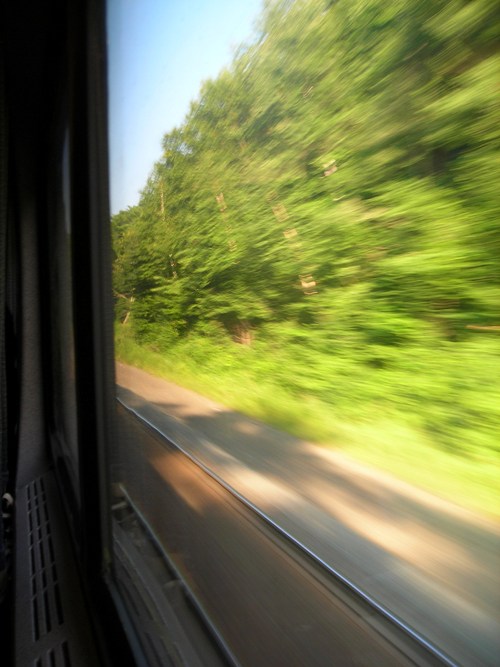
In order to use the internet, I have to take a marshrutka (small passenger bus) about half an hour to Kutaisi, where the most convenient place to get wifi is McDonalds.  I can usually go for two or three days without internet, but so many other things in my life (work, family, publishing) are tied up in it that it’s not a good idea to go much longer.

Since each trip takes a huge chunk out of my day, it’s become a lot harder to keep and maintain any sort of momentum on any of my writing projects.  Also, cutting out the internet hasn’t increased my self-discipline at all, it’s just driven me to find different ways to distract myself.

In the end, I think I actually would have been more productive if I’d ponied up the 70 GEL and bought a USB stick from the phone company.  I certainly would have saved a lot of money, considering all that I’ve spent on these trips to Kutaisi.  But at least I’ve learned a few things from the experience.

First, I’ve learned that all of the high-priority things that I absolutely must do on the internet only amount to an hour or two each week.  And even for most of those things, it isn’t a disaster if I put them off for a day or two.  It’s possible to structure your internet time around everything else in your life, rather than vice versa.  In fact, that’s almost certainly a better way to live.

Second, the enjoyment I get from recreational internet usage maxes out after about two hours.  Anything beyond that, and I become something of a zombie.  It’s a weird feeling when you run out of things to do on the internet, but when you realize that you don’t actually enjoy scrolling down an endless list of photos and status updates, it’s a lot easier to pull back and say “no.”

Third, you don’t need social media to sell books.  I made more in book sales in the first week of this month than I did in the first quarter of this year, and my Facebook and Twitter pages are a wasteland.  It might help you if you already enjoy that sort of thing, but it’s not an absolute requirement for success.  Certainly, you don’t have to open a vein and spill everything.

Fourth, exercising good self-discipline doesn’t mean cutting something completely out of your life, but learning how to properly manage it.  The internet isn’t an either/or thing, it’s a matter of finding and maintaining the proper balance.  In the future, I plan to do what Dean and Kris recommend, which is to have two computers: one for internet usage, and one for writing.

Fifth, for me personally, it’s actually healthy to have a couple of harmless distractions available while I write.  I deleted all of the games off of my computer about a month ago, and I haven’t been able to write more than a thousand words a day ever since–often, much less.  Before, whenever I hit a rough patch, I would play a quick round of super-melee in Star Control II and come back to it with fresh eyes.  Without that, I find myself taking my butt out of the proverbial chair and wandering around until I find something else to do, which inevitably takes more time and energy.  A lot of games (Tetris, Spider Solitaire) are addicting and should be nixed, but for me personally at least, opening up something that isn’t a time-sink can actually help to keep me going.

That’s just about all I can come up with now.  I’m sure there are other lessons to be had, but these are the major ones.  I’m coming back to the States on the 31st, and should be back in Utah in time for LTUE and Conduit.  It’s going to be interesting living with 24/7 internet access again; hopefully, it won’t be too hard to adapt back.

Some new thoughts on productivity

I’ve been thinking a lot about writing and productivity, mostly because I seem to be struggling a lot with it lately. With nanowrimo just starting, this is a pretty topical thing to blog about, but I also want to look at it from a long-term career perspective, since that’s what I’m personally more interested in.

As writers, when we spend all our time procrastinating or fail to meet our word count goals, we tend to beat ourselves up and frame the problem in terms of a lack of self-discipline. If only we had greater will power, we could buckle down and pound out five or ten thousand words a day like those super-prolific authors.

While there’s definitely something to say for raw self-discipline, though, I think there’s another dimension to writing productivity that we tend to miss. Not all writing-related activities are productive–and not all non-writing related activities are totally unproductive. In order to make the most efficient use of our writing time, I think it’s more important to understand and respect our individual creative process than it is to merely force ourselves to produce more words.

To better understand my own creative process, I took a little time to group every writing-related thing I do into four different categories:

  • Writing activities
  • Fill-the-well activities
  • Publishing chores
  • Procrastinating

WRITING ACTIVITIES

This should be pretty self-explanatory. It’s basically all the stuff that leads directly to a finished manuscript. It requires the highest amount of energy and produces the most important content.

Activities in this category include:

  • Writing new material
  • Making substantial revisions (putting in and taking out)
  • Updating chapter and scene outlines

FILL-THE-WELL ACTIVITIES

This is the non-writing stuff I do that helps me to be more productive when I switch back to the writing activities. Basically, it’s the stuff I do before and after I write that helps me to maintain a creative momentum.

Activities in this category include:

  • Reading
  • Blogging
  • Catching up on blogs
  • Listening to podcasts
  • Doing mindles chores
  • Going on walks
  • Exploring new places
  • Watching movies
  • Playing RPGs
  • Talking with friends
  • Reviewing first reader feedback
  • Writing character outlines
  • Making book soundtracks

PUBLISHING CHORES

This is all the professional stuff that I have to do, which may feel productive while I’m doing it, but actually takes time away from the stuff I should be doing. I still have to do it, but I should waste as little time doing it as possible.

Activities in this cateogry include:

  • Ebook formatting
  • Producing cover art
  • Writing blurbs and book descriptions
  • Writing author’s notes
  • POD typesetting
  • Handing financial stuff (royalties, invoices, etc)
  • Researching the publishing industry
  • Processing copy edits
  • Sending out email newsletter

PROCRASTINATION

Again, pretty self-explanatory. This is the stuff I shouldn’t do, but end up doing anyway in order to avoid stuff that feels like work. It’s all the stuff that I need to cut out entirely if I want to maximize my productivity.

Activities in this category include:

  • Minecraft
  • Alpha Centauri
  • Any other game that I can’t stop thinking about
  • Checking ebook sales numbers
  • Dicking around on Facebook and Twitter
  • Browsing the Kindle Boards
  • Watching TV and Youtube
  • Minecraft

So now that that’s done, what next?

I’m still figuring this part out, but I think the best thing to do would be to put as much distance as possible between the stuff that boosts productivity (writing and filling the well) and the stuff that doesn’t (publishing chores and procrastination).

The way I see it, there are basically two ways to do this:

  • Physically separate the activities. Do all your writing on a machine that’s disconnected from the internet and doesn’t have any games installed, and do everything else on a separate computer.
  • Set aside blocks of time specifically for writing. Organize your schedule so that writing is a priority, while acknowledging the need to take breaks and refill the creative well.

I can’t really do the first one while I’m here in Georgia, but I definitely can do the second. So far, I’ve found that waking up early to start the day with an hour of writing helps me a ton to build and keep momentum. However, I need to do a better job setting time aside in the afternoon, both for writing and for refilling the well. If I don’t, I usually end up procrastinating by default without realizing it until it’s too late.

So anyhow, those are some of my latest thoughts on writing and productivity. What are yours? Does this square with your experience, or is there a better way to think about it that I’ve missed?

Still here, wherever that may be

Wow, it’s been forever since I’ve been active on this blog.  I guess living in the developing world will do that to you.

It’s not that I don’t have good internet access, it’s that the places where I can get it are often noisy and crowded, with a fair amount of cigarette smoke.  By the time I’ve checked my email, caught up on all the blogs I follow (or at least the interesting ones), and generally finished screwing around done everything else I need to do on the internet, I’m pretty wiped out.

I’ll try to write my future posts offline, like I did in Jordan, so all I have to do is copy and paste.  I can’t really do that with Trope Tuesday posts, but for everything else, it shouldn’t be a problem.

In any case, I’m still here–wherever “here” is.  Currently, it’s Tbilisi.  I came out for the weekend to pick  up a package from the USA…I was hoping to get the new kindle paperwhite, but instead got the case and adapter.  Turns out the actual device is shipping out next week–I’d say it’s a disappointment, but I’m actually just relieved to know that it wasn’t lost in the mail.

Things are going well out here in Georgia.  The village kids are a lot of fun to teach–I basically feel like a rockstar whenever I’m at the school.  It certainly helps that I give out stickers left and right every time someone actually does their homework.  Whenever I pull them out, the kids say “smiley!” and go crazy.

But yeah, even though I enjoy being out here, I figure it’s time for a change.  Like I mentioned in the last post, I’ve accomplished just about all my goals for coming out to Georgia, which mostly had to do with trying out a TEFL career and seeing if it’s a good fit.  I think it is, so I plan to go out again after a few months, but I want to come back to Utah for a while to see some old friends, spend time with family, and recharge before the next big excursion.  That’s the plan, anyway.

As far as the writing goes, things are going, but slower than I’d like.  I’m only in chapter two of The Sword Keeper, which is kind of frustrating, but I think I’ve overcome most of the hurdles and now it’s just a matter of buckling down and doing it.  I definitely think I can have this novel finished before the end of November, which would make it my second novel for the year (third, if you count Star Wanderers I-IV).

In terms of publishing, though, things are looking great.  I found someone to proofread Star Wanderers: Sacrifice, and she should be getting back in the next few days.  If all goes well, it’ll be up on Amazon and Smashwords by Monday the 29th.  Star Wanderers: Homeworld is also getting close–I just need to get the feedback from my first readers and figure out where to go from there.  If there aren’t any major issues, it should be up by the end of November.

I’m debating whether to splurge on the cover art for the omnibus, and if so, who to ask to do it.  This series have a very different feel from my Gaia Nova series, even though they both take place in the same universe.  Not sure what to do for the illustration, or who to ask to do it, but that’s still a few months down the road.

That’s about it for now.  I’ll end with a few shots that my friend took in Prometheus Cave, one of the coolest sites out here in Imereti province.  Imagine about a mile of caverns, brimming from floor to ceiling with formations like these:

Later!

Updates and a book blurb

So I probably won’t do a Trope Tuesday post this week, just because today is going to be kind of busy.  One of my coworkers in a neighboring village has a birthday, and Georgians tend to go all out with birthday parties.  I’m currently blogging from one of the government offices in the village center, which serves as a sort of free internet cafe for the locals.  Things get busy in the afternoon, though, and I’m teaching a class in a couple of hours, so this is going to be short.

I’ve worked out a tentative book description for Star Wanderers: Sacrifice (Part III).  It’s still about two weeks from publication, give or take a few days, so I’d appreciate any feedback that you can give.  This is the third book in the series, so hopefully most readers will already be hooked by this point, but I still want the description to be as solid as possible:

SHE GAVE UP EVERYTHING TO WANDER THE STARS WITH HIM. NOW, HE MUST TOO.

When Jeremiah found himself alone on his starship with an accidental bride, he had no idea how much his life would soon change. Now, with Noemi’s quiet confidence and a baby on the way, it’s hard to imagine life without her.

But life in the Outworlds isn’t so simple. Good men are hard to come by, and Noemi’s friends expect her to share. As part of a colony mission bound for an unsettled star, Jeremiah can’t say no without alienating them from the rest of the community. But if he says yes, his newfound happiness could soon fall apart.

There is another option, of course: leave the colony mission and strike out on their own. But with Noemi’s pregnancy rapidly approaching the third trimester, that may be too much to ask of her. One way or another, Jeremiah will have to make a sacrifice—one that could tear their starbound family apart.

In other news, I’ve more or less decided to come back to Utah in January, after my current teaching contract is over.  I like it here in Georgia, but I’ve accomplished pretty much all of the goals I had when I first came out, and I don’t think I’m going to get much more from staying.  It’s been a great experience, but things are wrapping up and it will soon be time to move on.

That’s about it for now.  I’ve got to go, but I’ll try to post more later.

Trope Tuesday: Well Done Son Guy

What happens when this trope goes horribly, horribly wrong.

So the hero gets the call to adventure, initially turns it down, meets a mentor figure who gives him some sort of supernatural aid, crosses the threshold of adventure, faces a series of tests and trials, loses his mentor, experiences the power of love…and then what?  Well, if we’re playing the hero’s journey straight, the next step is atonement with the father, also known as well done son guy.

Before passing the ultimate test, the hero must first confront the force that holds the ultimate power in his life.  This is often some sort of father figure, though it can also be a close friend or a rival.  Often, the main reason the hero set out on the journey in the first place was because he felt a need to prove himself and gain the respect of this figure.  For that reason, the climax often involves some sort of reconciliation or closure between these two characters.

In discussing this trope, Joseph Campbell said the following:

Atonement consists in no more than the abandonment of that self-generated double monster—the dragon thought to be God (superego) and the dragon thought to be Sin (repressed id). But this requires an abandonment of the attachment to ego itself, and that is what is difficult. One must have a faith that the father is merciful, and then a reliance on that mercy…

The problem of the hero going to meet the father is to open his soul beyond terror to such a degree that he will be ripe to understand how the sickening and insane tragedies of this vast and ruthless cosmos are completely validated in the majesty of Being. The hero transcends life with its peculiar blind spot and for a moment rises to a glimpse of the source. He beholds the face of the father, understands—and the two are atoned.

While this may, on the surface, seem just like a simple “I’m proud of you” moment, the full significance goes much deeper.  This is the moment where the hero finally receives validation for all his struggles, where he realizes that everything he’s been through has been worth it.  It’s a tremendous moment, and an important element of any story that follows the hero’s journey paradigm.

The reason why the hero’s journey resonates so strongly throughout our culture is because it powerfully and effectively fulfills one of the major purposes of all story–to help us better understand ourselves, the world we live in, and what it means to be human.  For that reason, this trope is one of the things that can either make or break a story.  When done well, it can turn the work into a classic.  When done poorly, it can make us wish we had our money back.

I’d talk about this trope in my own work, but I don’t want to give any spoilers.  In Bringing Stella Home, there’s something of a gender inversion, as the title would imply.  In fact, there’s a gender inversion in Star Wanderers as well, though you’ll have to wait until part IV to read it.  In Desert Stars, it’s more of a personal moment, but the whole novel is a lot more intimate and personal than a save the world type of adventure.

Trope Tuesday: Supernatural Aid

Getting back to our discussion of the Hero’s Journey, I think it’s important to briefly touch on one of the earlier stages: supernatural aid.  At some point between refusal of the call and crossing the threshold of adventure, the hero typically encounters a mentor figure from the unfamiliar world who gives him something supernatural or otherworldly to help him on his quest.  While the mentor often dies (as we saw last week), the supernatural aid that the mentor gives later proves to be a key to defeating the big bad and passing the ultimate test.

Often, this is an actual object.  In Lord of the Rings, for example, Galadriel gives each member of the fellowship a specific object.  She gives Sam a magical vial, which he uses later to defeat Shelob and save Frodo and the ring.  In The Lion, The Witch, and the Warderobe, Aslan gives each of the kids a weapon item specially suited to their characters (except Edmund, who was a prisoner of the queen at the time).  In Star Wars IV: A New Hope, Obi Wan gives Luke his father’s lightsaber–though for the purposes of this trope, we can also count his special training with the force, since Luke doesn’t use the lightsaber until episode V.

In discussing this trope, Joseph Campbell said the following:

Having responded to his own call, and continuing to follow courageously as the consequences unfold, the hero finds all the forces of the unconscious at his side. Mother Nature herself supports the mighty task. And in so far as the hero’s act coincides with that for which his society is ready, he seems to ride on the great rhythm of the historical process.

So if the mentor is supposed to die (or get put on a bus) in order for the hero to stand on his own feet, why does the hero need some kind of supernatural aid?  Isn’t that just cheating?

Not exactly.  Often, the aid is itself part of the ultimate test, and the hero doesn’t figure out how to use it properly until after he’s already experienced everything from the adventure that he needs.  The silver slippers from The Wizard of Oz are a good example of this.  So is AURYN from The Neverending Story.  The hero doesn’t fall back on the supernatural aid until after he’s completed his growth arc.

That’s not the only reason, though.  In order for the adventure to have meaning and impact, the stakes have to be really high.  Having some sort of mysterious character from the outside world grant the hero something supernatural is a great way to do this, especially at the beginning.  If the hero is part of something bigger than himself–saving the world, for example–then it makes sense that he would get some kind of help from the people depending on him, especially if those people have something supernaturally powerful to give.

The Force from Star Wars is one of my favorite examples of supernatural aid.  I hear that when episode IV debuted in the theaters, the crowds jumped up and screamed when Obi Wan said “use the force, Luke!” in the clip at the top of the post.  Just because it’s so awesome, here’s the full scene (more or less):

“Remember–the force will be with you. Always.”

Trope Tuesday: Mentor Occupational Hazard

Being a mentor to the hero can be a pretty tough job.  Don’t believe me?  Check out the tvtropes page:

If you don’t have to convince The Chosen One who just wants to be normal to grow a spine and accept the Call to Adventure, you have to convince your blindly excited and dangerously eager young pupil that You Are Not Ready to learn the Dangerous Forbidden Technique. When you try to protect The Hero from the Awful Truth, you end up facing their Rage Against the Mentor. You have to maintain an ongoing conspiracy to keep The Hero Locked Out of the LoopIf they’re an orphan, you have to find them a set of Muggle Foster Parents while keeping social services in the dark. You have to endure accusations of insanity when you’re trying to teach your charge that Your Eyes Can Deceive You, give them advice on how to tell a love interest “It’s Not You, It’s My Enemies,” and keep a close eye on them 24/7.

And what is your reward for all this patience and effort?

You die.

And that right there is the heart of the matter: mentors tend to die.  And stay dead.  Even if they do figure later in the story, they tend to be spirit advisors from the other side with little or no chance of coming back from the grave–even if everyone else does.

So why does this happen?

The most obvious reason is that if the mentor and the hero are both working toward the same goal, the mentor cannot overshadow the hero–otherwise, why not forget the hero and send the mentor off to save the world?  The hero may start off weak, which is why he needs the mentor in the first place, but at some point in the growth arc, he’s  going to have to stand on his own two feet.  Oftentimes, the most poignant (and convenient) way to mark that transition is to knock the mentor off.

That doesn’t explain everything, though.  If the only reason for killing the mentor is to give the hero a growth arc, you can accomplish that just as well by putting him on a bus.  So why does he have to die?

Lots of reasons!  Character growth, increasing tension, making the story more meaningful–the list goes on and on.  For an in-depth discussion on killing off characters, I’d recommend checking out this last week’s episode of Writing Excuses.  My own personal take is that everyone dies eventually–even the immortal characters have to pass through some sort of transition from this world to the next–so the best thing I can do for a character isn’t to keep them alive, but to make their lives and their deaths actually mean something.

It’s also worth pointing out that in most stories, the mentor isn’t actually fighting against the big bad, but the dragon–the big bad’s lancer.  Again, the main reason for this is to keep him from overshadowing the hero.  But the dragon is a character in his own right, with his own agenda that may run counter to his boss–think Darth Vader from Star Wars.  And in a lot of stories, the dragon actually tries to tempt the hero to come around and join him.

Perhaps that’s another reason why mentors often die–if they didn’t, then the bad guys wouldn’t ever be able to dissuade the hero through temptation.  The hero would be so protected that he’d never have the opportunity to switch sides, or at least he’d never have to face any moral ambiguity because of the guardian mentor constantly guiding him.

So those are some of the reasons why mentors tend to have a short life expectancy.  Can you think of any good ones?

Sairme to Abastumani

So last week was the first week of school here in Georgia, but before I blog about that, I thought I’d do a post on the short backpacking trip I did with a friend of mine the week before.  It was a lot of fun, even if our plans did change about a dozen times along the way.  That tends to happen a lot to plans here in Georgia, but if you’re flexible and can roll with it, you can have a lot of fun anyway.

So our original plan was to go from Baghdati to Sairme, a small resort town in the Lesser Caucasus range just south of Kutaisi, and from there catch a bus over the mountain and hike a few trails out in the western side of Borjomi National Park.

Well, when we got to Sairme, we found that there isn’t a bus that goes over that road, and for good reason.  It isn’t exactly a “road”–more like an unusually wide dirt path.  Farmers sometimes use it, but only because they’re local and it doesn’t make sense to go 80+ kilometers out of the way on the main route from Zestaponi to Surami.

The mountains around Sairme.
The “road” from Sairme to Abastumani.

The locals told us it was about 35 km to walk to Abastumani, so we figured “hey, we have food, sleeping bags, and a tent–why not hike it?”  According to the map, if we left at 1pm and averaged 3 km/hr, we estimated we should reach the pass just around sunset.

Some interesting moss around the 2,000 meter elevation mark.
Mount Didmaghali, just above the treeline. We camped about two kilometers from here.

The calculations were fairly accurate; we hiked for about 6 hours, making about 18 kilometers on  the first day and climbing around 1300 meters.  In all that time, we only passed three vehicles, and they were all heading back to  Sairme.  One of them was carrying a bunch of guys who were so surprised to see us, they gave us a giant wheel of cheese.  We gave half of it to a local farmer who looked like he needed it more than us, and ate most of the rest over the course of the next few days.

One of the farmers’ huts up above the treeline. The guys who farm here are generally seasonal workers, who live in the valley during the winter.
Our campsite, by the side of the road near Mount Didmaghali. It got a little windy at night, but was actually quite comfortable.
That moment when you realize “OMG, those aren’t clouds–those are MOUNTAINS!”

We camped out just above the treeline, next to a hill where a bunch of cows were grazing.  The local ranchers brought the herd back in while we cooked dinner, which was kind of cool.  Imagine a couple hundred cows walking past your tent.  The good thing about being so close to the farmers, of course, was that we didn’t have to worry as much about bears and wolves.

At one moment while we were looking out acros the way we came, the clouds on the horizon began to part somewhat, and I had one of those stomach-dropping moments as I realized that most of those white shapes weren’t clouds, but mountains.  We were looking at the Greater Caucasus range, with Mount Elrus standing above the mountains of Svanetti and a whole bunch of other snow-capped peaks further off to the east.

As the sun sent, the temperature dropped fairly quickly, and the wind picked up a lot.  I wasn’t able to sleep for a few hours, it was so strong.  But the stars were beautiful–at one point, I saw a satellite that was so bright it had to be the ISS.  Cool stuff!

The farmers bringing out the herd in the morning. One of the cows ate some of our bread, which was kind of annoying, but I guess I shouldn’t have left it out. Cows will eat (or try to eat) just about anything!
The view from the top of the first pass, just east of Mount Didmaghali. The little hill on the left is where we spent the night.
Mount Elrus, with several other major Caucasus peaks below it. You can also see Kutaisi and some other settlements in the valley.
The view from Zedeki pass.

The next day, we had a beautiful hike up to the first pass and over the mountains into Samtskhe-Javakheti.  The weather could not have been more perfect–it warmed up as soon as the sun came up, and was pleasant for the rest of the day.  We had some amazing views, too, especially from the top of the pass.

The road on the other side of the pass.
The view on the other side of the pass. Those are the mountains of Samtskhe-Javakheti, with Turkey and Armenia in the distance.

On the way back, we fell behind a bit, so we decided to hitch a ride with a passing farmer’s truck.  The guys were hauling some empty barrels, a bunch of brush, and some calfs, and they put us in the back with the animals.

Wow, was it crazy!  The road was so bumpy, literally every other bounce almost threw us off of the truck.  The cage would pull back branches and snap them back so hard, some of them could have knocked us off as well, and the cows crapped all over the place, including the back of my pants.  For most of the way, we had a sheer cliff on one side, and even though there were lots of trees, it was pretty scary, especially at the switchbacks.

In other words, it was an adventure!

The truck that took us down most of the way. Bumpiest ride of my life!
My pants, after the cows got to them.

I wish I had some pictures from the ride, but it was all I could do to hang on for dear life.  After about 45 minutes, my hiking partner had had enough, and demanded that the guys stop and let us off.  My camera had fallen off in the truck bed, but I didn’t realize that until we were back down. Fortunately, we were only about 5 km from Abastumani, and found the guys just outside the settlement.  The camera was still in good shape, and in typical Georgian fashion, they invited us for bread, cheese, and cha-cha.

So it ended up being an awesome two days of hiking and backpacking.  The views from above the treeline were incredible, and the conditions were absolutely perfect–we could not have asked for better.  We spent the next couple of days exploring Akhaltsikhe, Borjomi, and Bakuriani, but I’ll save that for another post later–this one has gotten long enough.

So yeah, it was definitely worth the trouble bringing out all the backpacking gear from the States.  I hope to have plenty of opportunities to use it again before the end of the season!

Quick update and an awesome photo

I’m currently in Kutaisi, about to catch the night train to Tbilisi for church, but I thought I’d post a quick update just to let you know how I’m doing, and what I’ve been up to.

The last few days have been awesome. I went backpacking with a friend of mine from last semester, and we had a blast.  Hiked the pass near Mount Didmaghali between Sairme and Abastumani, up above the treeline.  I’ll do a big post on it sometime next week, with stories and everything (and boy, are there some stories), but before that, I wanted to share this:

That’s Mount Elbrus, the highest mountain in Europe, with the highlands of Svaneti just below it, and Kutaisi in the foreground down in the valley.  The elevation difference is over 5,500 meters (18,000 feet).  The picture is a bit fuzzy because of the haze, as well as the distance between points and the poor quality of my old camera, but it was an unbelievably beautiful day–as evidenced by the clear view of Elbrus’s summit.

Awesome, awesome stuff.  From Zedeki pass, we could see almost the entire Caucasus range, from Mount Elbrus in the west to Mount Kazbek in the east.  The conditions could not have been more perfect.  Covered between 35-40 km (20-25 m) in two days, in a beautiful, remote region between Imereti and Samtskhe-Javakheti where few people, let alone tourists, ever go.

I’ve got to go now, but expect to see a longer post on the trip soon.  School starts on Monday, so things might be a little crazy for a while, but I’m sure they’ll settle down soon into a comfortable and productive routine.  See you around!

Trope Tuesday: Hero’s Muse

One thing about the hero’s journey is that it tends to be very male-centric.  It’s possible to pull off a gender-swap, or to follow the structure loosely while allowing for substantial variation, but the basic form follows the assumption that the hero is male, and that most of the women he meets fall into one of two basic archetypes: sedductress (as we saw last week) or goddess.

The goddess (or “hero’s muse,” as tvtropes labels this trope) is an idealized woman who often serves to motivate the hero on his quest.  She stands in stark contrast to the sedductress, who works toward the hero’s downfall, and the meeting with her is an important part of the journey.  Speaking of the meeting with the goddess, Joseph Campbell said:

The ultimate adventure, when all the barriers and ogres have been overcome, is commonly represented as a mystical marriage of the triumphant hero-soul with the Queen Goddess of the World. This is the crisis at the nadir, the zenith, or at the uttermost edge of the earth, at the central point of the cosmos, in the tabernacle of the temple, or within the darkness of the deepest chamber of the heart. The meeting with the goddess (who is incarnate in every woman) is the final test of the talent of the hero to win the boon of love (charity: amor fati), which is life itself enjoyed as the encasement of eternity.

In some stories, the goddess figure represents a love interest for the hero.  This is especially the case with stories from the medieval and renaissance periods, such as the protoypical knight errant and his lady, or tales of courtly love.  In most cases, the girl is either faithfully married or a chaste virgin.  In more modern stories, she often takes the form of the manic pixie dream girl.

The goddess doesn’t have to be the love interest, though.  She can also be a motherly figure, such as the Oracle in the Matrix, or she can be an innocent, childlike girl, such as the Childlike Empress from The Neverending Story.  The important thing is that she helps the hero to experience the power of love, whether that love is romantic or platonic.

I’d write more, but my internet time is kind of limited, so this is as much as I can say on this trope for now.  If you have anything to add, feel free to do so in the comments.  I’m traveling to a rather remote part of the Caucasus, but I’ll be back in a few days to chime in.