Space Opera promo for free Kindle

Hey, just a quick post to let you know about a group promotion I’m participating in with a bunch of other science fiction writers.  It’s a rafflecopter give-away, where we all pooled together to get a Kindle Paperwhite as the main prize.

There’s a bunch of things you can do to enter–for example, if you download a copy of Star Wanderers: Outworlder (Part I) (or really, just visit the book’s Amazon page through the rafflecopter link) that will get you an entry from me.  Also, besides the Kindle grand prize, a bunch of us are giving away copies of other books to other winners as well.  I’ll be giving away a few omnibus copies of Star Wanderers, so if you haven’t picked one up yet, here’s an opportunity to get one!

Besides my books, there’s a bunch of other books by science fiction writers as well–specifically, space opera like Star Trek or Firefly.  These days, it seems like dystopian fiction and other Earth-based sci-fi dominates the charts, so if you’re looking for an escape to other stars and planets, here’s a chance to find some of that.

The promo ends this weekend, so you should probably check it out today or tomorrow if you want to pick up some of the free books.  Outworlder will still be free after this promo, but I don’t know about the others.

Take care!

Parents: talk to your kids about Dwarf Fortress

DFSo if you’ve been wondering why I seem to have gone missing from the world of the living lately, it’s because I recently started playing Dwarf Fortress.  Those of you who know what Dwarf Fortress is are probably shaking your heads already, but for the rest of you, I’ll endeavor to explain.

Dwarf Fortress is easily the most detailed and immersive fantasy RPG ever created.  In it, you command a group of dwarves as they seek a new life in an unclaimed territory, designing their new home, seeking all sorts of precious metals, and defending their dwarven hordes from all manner of evil monsters. The graphics (what little there are) are basically ASCII, so you do all this by scrolling through an endless array of text-based menus, which sounds rather tedious but is actually what makes the game so awesome.

For every dwarf in your fortress, there is a detailed list with their personal history, their relationships, their likes/dislikes, their strengths/weaknesses, skills–even their thoughts!  And when there’s combat, the game generates a blow-by-blow where you can read exactly what happened to whom, who got injured, and what those injuries exactly were.  This extends to every part of the game, so that when you’re in overworld mode you can actually look up the histories of every person in every civilization.

What really makes it insane, though, are the crazy, crazy ways in which your fortress can die.  Kobolds, Goblins, vampires, were-creatures, tantrum spirals, catsplosions–the possibilities are endless.  If your dwarves are unhappy, one of them might throw a tantrum that sets everyone off so that they all kill each other.  If they don’t have socks, apparently they’ll riot over that as well.  And heaven help you if a forgotten beast gets loose in your dwarven hall.

The learning curve for this game is ridiculously steep, which is why I haven’t gotten into it before now.  I actually tinkered with it a couple of years ago, but could never get into it because I had no idea what was going on.  Some youtube tutorials and the lazy newb pack helped remedy that, and now, sixty some-odd hours later, I feel like I might have an idea of how it maybe works.

The things that make the game appealing are largely the same things that make fantasy appealing: the chance to build and live in a world full of crazy-awesome fantasy stuff.  The graphics might be horrible, but the level of detail is so incredible that with a bit of imagination, you can really immerse yourself in it.

… which is why I probably went a bit overboard.  That tends to happen with me and games–I tend to binge a lot when I first get started, then go cold turkey for a while, then come back for more before gradually easing into a more healthy level of play.  Right now, I’m just getting over that first binge; I’ll probably go cold turkey for a while, taking care of all the things I’ve neglected before easing back in.

But wow, this game has given me a TON of story ideas.  I really want to write about a band of dwarves now, or reread Lord of the Rings, or get back into classic high fantasy in some way.  It’s too early to say whether it’s just a phase or a genuine shift, but I’m happy to follow it out and see where it leads.

In the meantime, I’ve got a bajillion other things to do, and writing currently tops that list.  Later!

Beware the catsplosion.

3am thoughts, or why everyone says to be an accountant

I’ve been reading in bed on my smart phone recently, which is probably a bad idea because it makes it harder to go asleep.  At the same time, though, it tends to get my mind rolling, and when 3am comes around my thoughts tend to go some really interesting places.  Sharing those thoughts is probably going to get me into trouble, but hey, you might find them interesting, so why not?

When I was eight years old, I knew I was going to be a writer.  There was never any question about that.  I spent all my free time making up stories, and my favorite stories were the ones I found in books.  However, I knew I never wanted writing to be my job, because 1) everyone hates their jobs, and I didn’t want writing to ever become something I hated, and 2) everyone knows that writers can’t make a decent living.  Even at the young age of eight, I had bought into some of society’s most pervasive myths about jobs, careers, and how to make money.

Americans are generally horrible with money–we struggle to keep budgets and put all sorts of things on credit, and pay more than twice what our houses are worth by signing mortgage contracts we barely even read.  Because we’re so horrible with money, we tend to see it as a sort of magical force, something that can solve all our problems and make us happy.  Rich people are like powerful wizards or sorcerers, so far above the rest of us that we can hardly fathom their ways.

Nowhere is our stupidity about money more apparent in the fact that most of us spend our lives acquiring it by working for some sort of hourly or salaried wage.  Wages and salaries are basically the same, in that they convert time into money.  That’s why we all measure income in terms of dollars per hour, or salary per year.  But for anyone who understands how money works, that is stupid, stupid, stupid, stupid.  Money comes and goes, but time?  Time is one of the most finite and precious resources known to man.

All of us are going to die someday.  Most people are scared shitless by that fact, so we try to ignore it or put off thinking about it until some unspecified time in the future, like when we’re retired.  But not all of us get the opportunity to put our affairs in order after retiring comfortably from the workforce.  In fact, any of us could die tomorrow, or the next day, or at any other time.  And even if we do all live to be centenarians, our time on this Earth is still finite.  It’s non-renewable, too–you can’t go back and relive that day or that hour or that minute once it’s passed, no matter how much you regret it.

Converting time into money is basically trading gold for lead, or wine for water.  Yet that’s exactly what we do, because money is this strange, magical force that so few of us understand.  And the machines that do all the converting for us are businesses and corporations.

Questions like “where do you work?” “what is your job?” and “what do you make?” are much more common than “what do you do for a living?” That’s because most of us have bought into this idea that money comes from working for someone else, exchanging your time directly for a salary or paycheck. Sure, we do stuff with that time, but we don’t actually own it–the company does. While we’re on the clock, the company owns us and anything we produce. That’s the pact we make in exchange for this magical substance we call money.

It wasn’t until college that I started to become disabused of the childhood notion that I shouldn’t pursue writing as a career path. For one thing, I came to realize that plenty of people love their work–that just because you do something as a job doesn’t necessarily mean that you’ll come to hate it. But it wasn’t until I graduated unemployed in the middle of a recession that I realized how much of a myth it is that writers can’t make a living.

You see, people say that about every career choice–every career, that is, except accounting. That’s because accountants are the ones who work for the businesses and corporations, counting the magical money. Since we all get our money from businesses and corporations, exchanging our time for money, the only career with complete security is the one that the businesses and corporations will always need. After all, they’re not going to go belly up, are they? Not the big ones, anyway. They can’t–they’re the magical machines where all the money comes from.

Of course, anyone who knows anything about money knows that the only real way to make a lot of it is to produce something of value that can scale. It’s not about time at all–it’s about producing something that people want, and producing it in such a way that the more you sell, the more you make. At no point in that equation does time become a variable. It’s certainly a variable in the production equation, but even there, it’s not necessarily the most important one.

The most important thing, though, is that you have to really own what you produce–and that means owning all the failures as well as the successes. When you work for a corporation, it’s easy to shift the blame. It’s a rare case where one person is solely responsible for bringing down the whole collective enterprise. But when you work for yourself, you can’t blame anyone else when things go wrong. You’ve got to be ready to take the risk, and the bigger the payoff then chances are the bigger the risk.

That’s why everyone says that you can’t make a living as a writer. They say the same thing about making a living as a sports caller, or a musician, or a political activist. I’ve even had people tell me that there’s no money in math or in Arabic. They say that because they think that money is supposed to come from corporations, and corporations only really need people who can count their money. Every other part of the business they can either figure out how to do it with robots or outsource the work to India. They might not outsource all of the jobs, but there’s always a risk that they’ll outsource yours (unless you’re an accountant, of course, because corporations always have money).

In the end, though, it’s all just silly. Money isn’t some sort of vague magical force, and it doesn’t come out of the void from businesses or corporations–it comes from making something that people are willing to pay you for. It comes from producing something of value, or at least convincing people that you have something of value. And you don’t need to sell your time at $7.25 an hour or $24,000 per year to do that. You just need hard work, a great idea, and the opportunity to succeed as well as fail.

So can you make a living as a writer/artist/blogger/activist/global nomad/whatever your dream happens to be? Of course! It won’t be easy–you’ll probably fail a lot, perhaps even spectacularly–but it is possible. So why not give it a try? At the very least, you shouldn’t buy into the myth that accounting is the only career path guaranteed to make you any money.

The Dying Earth by Jack Vance

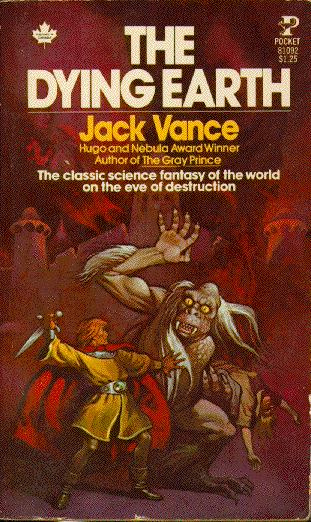
the_dying_earthDo you remember those creepy-weird montages from those old 60s and 70s era Disney movies?  The ones like Dumbo, or The Three Caballeros–or heck, the entire thing of Fantasia–where all these weird kaleidoscopic shapes and psychedelic colors just move in and out of each other in twisted, convulsing ways?  Well, guess what?  Jack Vance’s The Dying Earth is like one of those montages in written form, and I loved it.

I picked up this book in order to familiarize myself a little better with the Sword & Planet subgenre, which I’d like to write in (as you may remember … my WIP is currently on hold, but I’d like to pick it up again soon).  This one is a lot different from the Princess of Mars series, with an eerie apocalyptic feel, arcane magic and forbidden knowledge, weird, monstrous creatures, and above all else, a decidedly un-Disney fairy-tale feel that pervades the book with doom and danger.

If you’re looking for straight-up Science Fiction, you’re better off looking elsewhere.  This book is even more fantastic than Ray Bradbury’s stuff, and while there’s a little bit of a sci-fi dressing thrown in, there really is no scientific justification for anything.  The basic premise is that the Earth is dying, meaning that the sun is growing dimmer and dimmer and will soon go completely out.  The last few people eking out an existence on this planet are mostly wizards and witches, each one intent on building their own little empire and cheating or stealing from everyone else.  There are a few pure-hearted souls, but the world is completely lawless, and the only way to survive is through magic or brute force.

The chapters are really more like interconnected short stories, where each one stands on its own, and yet may feature a recurring character, or be set in the same place as another.  There were only six chapters in the version I read (the 1977 Pocket Book edition), which makes me wonder if I missed any.  If I did, I would definitely like to read them, because the stories were absolutely mesmerizing!

Because I read this book to get a feel for the sub-genre, I’m going to list some of the things I really enjoyed about it.  Here they are:

  • The fairy-tale story structure.  None of the chapters started out with “there once was a …” but it certainly felt like they did.  Each character started off with a quest or dilemma, and then went on a journey of some sort where they faced trials, made friends, and defeated enemies in order to attain some sort of boon at the end.
  • Lots and lots of world-breaking magic.  Seriously.  One of the guys sets out on his journey with a spell that basically keeps him from any danger whatsoever, so long as he stays on “the path.” Since he really has no idea where he’s going, “the path” is basically any path he chooses to travel.  Since all the rest of the magic is just as world-breaking, you have no idea what could happen next.  There’s always a sense that anything could happen.
  • An elevated sense of diction.  The characters don’t speak like we do, they speak like people from the 18th or 19th centuries, with words like “thus,” “whence,” “wherefore,” and grammatical structures like “I know not,” and “half yet remains.” It’s not just the characters, either–the whole book is like that.  It really adds to the fantastic, otherworldly feel.
  • Lots of contrasting extremes.  The demons are truly perverse and sadistic, with death and brutality on every other page.  At the same time, though, the moments of beauty and love are just as great.  My favorite line from the whole book, which practically made me cry, is “My brain is whole! I see–I see the world!” If I explained it any more, it would be a spoiler.
  • High adventure.  LOTS and LOTS of high adventure.  There isn’t a viewpoint character in the book who doesn’t leave home to go on some sort of quest through all sorts of wild and creepy dangers.  Every character is seeking something, and not in a “meh” kind of way–they are so wholly focused on what they’re seeking that they put their very lives in peril just to obtain it.  Almost all the romance is rescue-romance, of the pulpiest possible kind.  It’s awesome.

There are more, but those are the big things.  Overall, I’d say that this book is about 50% Fantasy, 30% Horror, and 20% Science Fiction, with none of the more modern conventions of any of those genres.  It was first published in 1950, but it feels a lot closer to Robert E. Howard and Jules Verne than J.R.R. Tolkien and Arthur C. Clarke.  If you’re looking for a good spec-fic throwback with lots of magic and adventure, this is a great one to check out.

Trope Tuesday: Gone Horribly Wrong

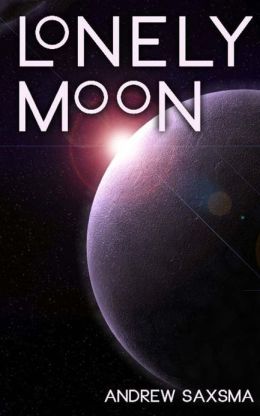
For this week’s Trope Tuesday post, I’ve invited a guest blogger to come on and discuss one of the tropes in his most recent book.  Andrew Saxsma is the author of Lonely Moon, a space opera / horror novel.  I haven’t read it yet so I can’t say much about it, but it looks interesting, and I’m a sucker for space opera.  So without further ado, here we go!

==================================================

saxsmaandrewThis trope is all about Science gone horribly, sometimes violently wrong.  Morality’s been thrown out of the window, compromised in favor of delicious success. Maybe the Mad Scientist played God; maybe mankind has accidentally awakened a Sleeping Giant.

This trope has many faces and masks and plays out in many different ways. In all cases, ethics are thrown to the wolves, and the big payoff is not as much a payoff as it is a new impeding doom the hero must now overcome.

Classically, this trope is mostly derived, if not invented, by Mary Shelley in her novel Frankenstein. Dr. Frankenstein’s obsession leads him to create what would eventually become the bane of his very existence. He unwittingly unleashes the mad dog from its dormant cage and makes it his mission to put it down. You might also recognize this trope from Deep Blue Sea, where scientists genetically enhance sharks for cancer research, but the predators get loose and begin eating their masters.

The key element is the backfire, the unforeseen consequence. It’s born of an innate character flaw, the inability to see beyond one’s good intentions. The character has a vision of a greater good in sight–to cheat death, to cure cancer. They’re so focused they never stop to think: was it worth it? Is this a line we should cross?

To make matters worse, this trope can become complicated when one’s intentions are infused with emotions. A dead loved one, revenge, a preemptive strike. Sometimes the choice is long decided before it is made.

In my book, Lonely Moon, the hero, Captain Hane, has a crisis of the monster. He faces a morally weighted fork in the road. Does he open a forbidden gate, opening our galaxy to a potentially devastating entity in an attempt to save us from an equally evil threat, or does he choose the path of uncertainty in hopes of finding a safer, less dangerous option?

Gone Horribly Wrong is a particularly fun trope to play with from a writer’s aspect, and I’m not sure if it’s a one and done. I plan on playing with this one again in the future.

lonely_moon

==================================================

Thanks, Andrew.  I think the Rule of Drama is one of the keys to doing this trope well.  Never pass up an opportunity to make things go wrong for your characters.  And if the problems are of their own making, that makes it all the juicier, especially when it adds the internal conflict of knowing that they’re the ones to blame.  We all love to watch a train wreck, especially in the world of fiction.

What do you guys think of bringing on more guest bloggers for the Trope Tuesday posts?  It’s something I’ve done occasionally in the past, but I’m thinking of doing it much more in the future.  I think it could be interesting to get some different points of view besides my own, and maybe introduce you guys to some new authors you might like.  Maybe it’s something I could rotate every other week.

Thoughts on the recent drama in the SF&F community

NOTE: I’ve since changed my views and retracted many of the things I said in this blog post. You can find a link to the retraction here.

Oh, boy, has there been a lot of drama in the science fiction & fantasy community recently.  From the trouble with the SFWA bulletin to the revelation of accusations of serial sexual harassment by a senior editor at Tor, it seems like the whole community (or at least, the part that sees itself as part of a wider community) is up in arms.  And while a lot of the response has been balanced and civil, I’ve also seen some things that I find troubling.

For the benefit of the doubt, let me just say that I support the people who are coming forward with stories of harassment and abuse.  It’s clear that this is a problem, and that it needs to be addressed in a way that brings about real change.  Also, I agree that the community has a history of demeaning or undervaluing the women within it, making it a lot more difficult for female writers to earn the same level of respect as their male counterparts.  That, too, needs to change.

But guys … can’t we get along?  Can’t we come together and get back to what this community is really about–sharing and telling good, fun stories?

Don’t get me wrong–I’m not trying to minimize any of the problems causing this drama.  They need to be fixed, and it’s going to take time to do so.  But are they going to become the focus of everything we talk about, or are we going to turn back to the things that unite us, and pull together as a stronger and better community than we were to start out with?

Right now, I get the impression that the majority of members who are active in the SF&F community mean well and want it to be a welcoming space.  They may have their faults, but they’re working on them.  And most of their faults are not causing direct harm to others.

Then there’s a small but outspoken minority who wants change, wants it now, and wants it so badly that they see problems everywhere.  Many of them have legitimate concerns, and people from the less outspoken majority are coming out and confirming that.  But many of them are dangerously overzealous–and since we have in this community some of the most imaginative minds in the world, it doesn’t take much for people to start projecting onto people they disagree with, or reading things into comments that aren’t actually there, or seeing those who question or disagree as The Enemy.

I cannot control how others perceive me.  I cannot speak without risking that someone is going to misconstrue my intent and feel “silenced,” or “afraid,” or whatever.  I can reach out to people privately, though, so if you feel like I’m part of the problem, please contact me and let me know.

This whole thing reminds me of my time from ’03 to ’05 as a Mormon missionary.  Oh boy, was there drama.  Imagine a couple hundred sexually repressed, 19-21 year-old boys (and a couple dozen young women) in a rigidly structured environment, with tremendous emotional pressures and very little direct supervision.  There was drama, and I hated it.  The best times on my mission were when I never saw anyone but my companion (Mormon missionaries live and work together in pairs) and maybe the four or six other members of the district once a week or so.

But the way things are playing out right now, I wonder if the outspoken minority is so determined to reshape the SF&F community in their own image that they’re tearing it apart.  Orson Scott Card, for example, has been tarred and feathered multiple times and thrown out of the community on a rail.  And yet, Ender’s Game is still one of the best (and bestselling) science fiction books ever written.  Mike Resnick, for all his chauvinism, has written a lot of really good books and stories too.  Jim Frenkel, for all his creepiness, has been instrumental in bringing us great books from Tor.

Does this excuse their faults?  Of course not.  But guys, these authors and editors aren’t The Enemy–they’re part of the community just as much as you are.  And you deal with offenders within the community differently than you do with offenders who are not.

A lot of people are congratulating themselves and saying that we’re doing a good job rooting out these problems and dealing with them in an open and reasonable way.  And to an extent, I think that’s true. But if there’s one thing I’ve learned from all this drama, it’s that the SF&F community is a lot more fractious than I’d previously realized, and that the ties that bind us really aren’t that strong at all.  And that makes me wonder if it’s better just to forget the whole thing–forget the conventions, forget SFWA, forget the major blogs–and just do my own thing independently of everyone else.

And honestly, it would appear that a large number (perhaps even a majority) of SF&F writers are doing just that, especially the self-published ones who don’t really care about courting publishers or winning awards.  For these guys, it’s all about the readers–and isn’t that the way it should be?

Trope Tuesday: Sinister Surveillance

secure
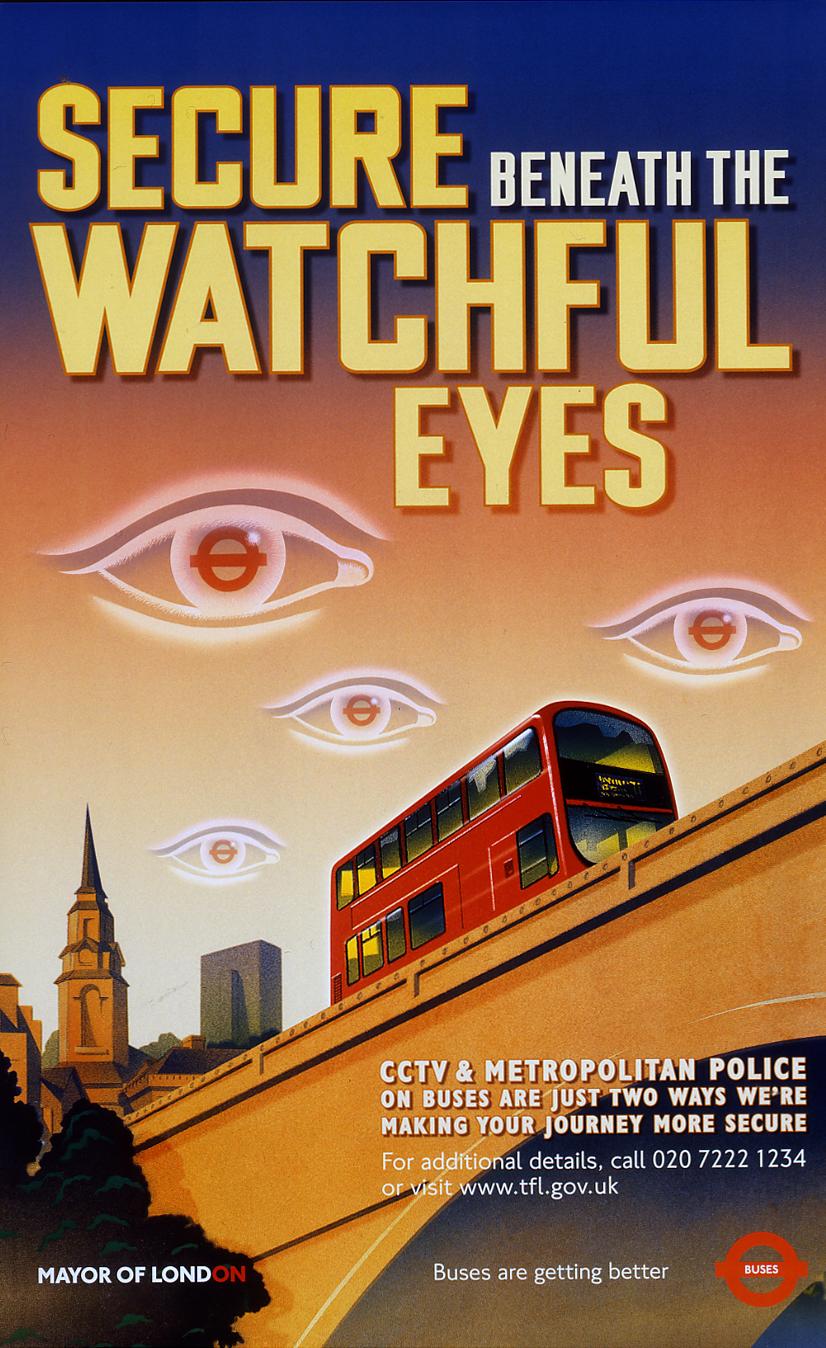
This was actually a real poster.

Someone is watching you.  Their eyes are everywhereEverything you do, everything you say … it’s all being recorded in a giant database.  But don’t worry–you can trust the ones watching youThey have your best interests at heartThey’re only after the bad guys.  You won’t even know that they’re there.

Sinister Surveillance is a hallmark of Dystopia, as essential to the genre as the Crapsack World and the Police Brutality tropes.  Often, you’ll find all three in the same story together.  It’s closely related to Big Brother is Watching, where the government is so powerful, and reaches into so many aspects of everyday life, that they see and record everything you do.  Where Big Brother shapes every aspect of the society, however, down to the language of the citizens and the basic truths accepted as facts, Sinister Surveillance is more about the surveillance itself, and the ulterior motives behind it.

It’s not enough for the government to simply watch you, though.  Even more important in some ways is the idea that you don’t know what they can and can’t see.  The reason for this is the same reason why, in horror stories, we almost never see the monster until the very end–because our imagination makes things a lot scarier than they really are.  If we the bad guys know the limitations of our government surveillance, we they can safeguard our privacy and basic rights game the system.  We’re all afraid of the dark, not because of what’s actually there, but what could be.

The concept behind all this goes back to the Panopticon, a hypothetical prison where the prisoners know that the guards are constantly watching them, but can’t actually see any of the guards themselves.  Proposed by the British philosopher Jeremy Bentham in the 1700s, the idea is to disempower the prisoners and empower the guards simply through the act of surveillance.  If everything you do can be seen, and you don’t know exactly who’s watching, that puts a tremendous amount of social pressure on you to conform.  As Michel Foucault put it:

The Panopticon creates a consciousness of permanent visibility as a form of power, where no bars, chains, and heavy locks are necessary for domination any more.

But if the prisoners are the citizens, and the guards are the government, how can such a system ever be democratic?  How can the citizens of such a society ever give their informed consent?  Well, that’s kind of the point.  The government in dystopian stories is rarely democratic–it’s usually a dictatorship of some kind, or a system that turns well-meaning people into Knights Templar, showing how even the best of us die like animals when the game is rigged.

As benevolent the intentions of the government may initially be, it is nonetheless true that power corrupts, and absolute power corrupts absolutely.  Just as the Panopticon takes power from the prisoners and concentrates it with the guards, so does universal surveillance grant dangerous amounts of power to the government–not because the act of surveillance is dangerous in itself, but because it brings out the worst in the people doing the surveillance.

In The Road to Serfdom, Freidrich Von Hayek pointed out that self-serving, ambitious, power-hungry people tend to rise in government a lot faster than people who have others’ best interests at heart, especially when so much power is concentrated in the government.  That’s one of the biggest dangers of surveillance–and in stories where Sinister Surveillance is in play, the government has already passed that point.

I wish I could say that this trope is limited mostly to the realm of fiction, but unfortunately, that does not appear to be the case.  These days, it’s impossible to talk about surveillance without getting political, even on a blog dedicated to books and writing.  Because everything these days is online, it’s easier now than ever before for our governments to watch us.  And if Edward Snowden’s claims are even partially correct, that’s exactly what they’re trying to do.  Even more worrying are the indicators that they’re trying to do it in secret, such as this recent letter from Senators Wyden and Udall.  The United States government has lied to us in the past about the extent of the PRISM surveillance program, and it would appear that they’re continuing to do just that.

Wherever you fall politically on PRISM or the Edward Snowden case, I think that Sinister Surveillance is a trope that we should all find profoundly disturbing.  When George Orwell took this trope to its extreme logical conclusions in 1984, he did so to prevent that horrific social order from ever coming to pass.  I wonder: only two or three generations after that book came out, have we forgotten its lessons already?  Or do we need a new retelling to remind us?  I fear that that retelling is taking place, not in the pages of a novel, but in real time on the major blogs and news sites.

I need to get out of Provo, but where to live next?

ProvoLogo_FullColor
… yeah, no thanks.  Not yet, anyway.

It’s been almost six months since I moved back out to Provo, and I don’t think I’ll be staying here much longer.  It’s a great place if you’re a Mormon college student in your early twenties, or married with kids and looking for a nice, quiet place to settle down, but for everything in between it’s just not the greatest.

So where am I going to go next?  Honestly, I don’t have a clue.  Probably somewhere in the United States, but I’m not ruling out the possibility of another overseas adventure.  In fact, that’s exactly the sort of thing that I’d love.

But I’ve got to be honest here: I came back to the States mostly to find a girl.  I don’t know about getting married or not–that’s like step twenty-five, while I’m still on step three–but I do know that next time I go overseas, I want to go with someone, preferably someone special.  That’s what I learned while I was living in the Caucasus mountains, that an adventure is like ten times better when you have someone to share it with.

I may be opening up a little bit in this post, and I don’t want to give the wrong impression to the people I know who read it.  It’s not that I’m uninterested in any of my female friends here, but so far, nothing has really worked out.  Some of that is because I’m not as interested as I thought I was, but the reverse is probably just as true.  Nothing wrong with that, and I still value all of my friendships.  And hey, you never know–things can always change.  But when you start to get sick of a place, that’s probably a good time to move on.

So what am I looking for?  Ideally, a place with a lot of Mormons in their late twenties / early thirties, most of them young professionals or recent graduates.  A place with a decent art scene, or that sort of vibe to it, where I can meet up with other artists / entrepreneurs like myself and be a part of that community.  I really want to live in a place with mountains–my sister is moving to a town just out of Des Moines, and omigosh just from looking it up on Google Earth I know I could never live there.  Barring that, I really love deserts, so I wouldn’t mind living in Arizona or New Mexico.

I’ve heard good things about Salt Lake City, so that’s pretty high on the list.  I’ve got a couple of friends up that way, and lots of family as well.  Other than that, I wonder if Saint George or Cedar City might be good places for a guy in my situation to live.  I really love Utah, so if I could find another place out here besides Provo, that would be ideal.  Moab, perhaps?  Seems like a tourist town more than anything.  Though if I could score a job at a hostel out there, that could be a lot of fun.

Texas is also fairly high on the list.  Beautiful place, Texas.  I’ve always loved driving through that country.  Lots of Mormons too, apparently, though where I’d want to go exactly, I have no idea.

One place I absolutely do not want to go is Washington DC.  I HATE that place, especially after my internship experience.  It’s a great place to visit, and the museums and cultural stuff are amazing, but I never want to live there again.

Other than that … I’ve got a couple of friends who suggested Portland, but I dunno.

And honestly, a not insignificant part of me wants to go somewhere crazy, like Mongolia or the Czech Republic, or even back to Georgia.  I’m making enough on my book sales right now that I could probably get a small apartment in Tbilisi and support myself entirely off of my ebook royalties alone.  Better yet, I could arrange a long-term boarding situation back in the village, or out in Kutaisi, or maybe even up in Svaneti … but that’s probably just me missing the place.  I miss it almost every day.

All I know for sure is that I absolutely cannot stay here in Provo much longer.  If I do, I’ll either go crazy or get old and fat and complacent, and I’m not sure which is worse.  I’ll stay here through the summer, just to save up some money, but when September comes around, I am getting out of here.