I is for Indie

I first started self-publishing in 2011, when “self-published” was still a dirty word. Back then, we called ourselves indies in order to escape the stigma–or mitigate it, at least. And that led to a war between us and the publishing establishment over the meaning of the term “indie.”

If it sounds dumb, that’s because it was. “Indie” is short for “independent,” as in an artist who is unaffiliated with a corporation or large commercial organization. Trouble was, the establishment was already using the term “indie” to describe bookstores that weren’t affiliated with the larger chains (Border, Barnes & Noble, etc), or the small presses that hadn’t been gobbled up by the Big 6.

Also, I think the technological disruption of ebooks caught the industry with their pants down. Authors, publishing their books themselves in this newfangled digital form? Diving into the wilds of the marketplace without the nurturing patronage of a publisher? As if ebooks will ever become a thing! Don’t they know that self-publishing is the kiss of death?

And it was, in the old days when publishers held a monopoly over all the important distribution channels. For the greater part of the 20th century, signing with a traditional publisher was the only viable way to have a career. There were a couple of self-publishing success stories, but they were the exceptions that proved the rule. For almost a century, there was no real way to be a writer and go indie.

Because of that, those of us who have chosen this path are largely making it up as we go along. Unlike the film industry, where “indie” has a connotation of artistic purity, or the music industry, where “indie” has a connotation of hip, local, and unique, indie books and indie writers have had to build their own reputations largely from scratch. It has definitely been an uphill battle.

Back when I first started self-publishing, I was very particular about calling myself an “indie writer” and not a “self-published writer.” Now, though, I’m comfortable with either term. The self-publishing stigma is pretty much dead, and “self-published” describes what I’m doing just as well as “indie” does.

That said, I think it was a good thing that we claimed the indie label when we did. Our mode of self-publishing is very different from the modes of self-publishing that came before, and distancing ourselves from the vanity presses and self-publishing scams helped a lot of us to let go of our inhibitions and jump into the new world of publishing with both feet. That certainly was the case with me.

In the future, I hope that indie books gain the same reputation for artistic integrity and creative freedom that indie films and indie music now enjoy. I think we’re definitely on the way. Sure, there are lots of crappy self-published books out there, but there are also a lot of really excellent ones, and those are the ones that readers are going to remember. Hopefully, some of my own books will be among them.


H is for Hybrid Author

Is it worth seeking traditional publication if you’re an indie writer? Are there advantages to going with a legacy publisher after you’ve published yourself?

A lot of writer throw around the word “hybrid” as if that’s their ultimate goal–the thing that’s going to make their career. A hybrid author is an author with their feet in both sides of the publishing world: the legacy world, with corporate publishers or small but reputable houses, and the indie world with their self-published books.

This might be a bit controversial, but I’m going to throw down the gauntlet and argue that most of the praise of the hybrid path is either hype or wishful thinking. From what I’ve seen, most hybrid authors fall into one of three camps:

  • Veteran authors who are disillusioned with the legacy industry and are doing everything they can to self-publish everything. They still have contracts that they can’t get out of, though, so technically they are considered ‘hybrid,’ even though many would rather not be.
  • Indie authors who haven’t been disillusioned about traditional publishing yet and believe that a legacy publisher would carry some of the burden for things like marketing and promotion. In other words, indies who believe that the grass is greener on the other side of the fence.
  • Unpublished writers who have been submitting to traditional publishers for years, and have deer-in-the-headlights syndrome with all the new publishing options available to writers. They’ll dabble with self-publishing, but their heart is still set in the old world.

So would I ever consider signing with a traditional publisher? I’ve thought about it quite a bit over the last few years, and I’ve come up with four conditions that have to be met before I’d do so. Please keep in mind, though, that I am not a contract lawyer, and that the following is my opinion and not legal advice.

Three of them are deal breakers on my side. They are:

1. Non-compete clauses

This is absolutely non-negotiable. In fact, if I see any sort of non-compete clause in a contract sent to me, I’ll pull out of negotiations altogether since it shows to me that the publisher is negotiating in bad faith.

A non-compete clause is a contract clause that says something like “the author shall not publish or cause to be published anything that may compete with the work.” Basically, it’s a publisher’s way of clamping down on you and saying you can’t publish anything without their approval. There is no f****** way I would ever tie myself up like that–not only would it kill the self-publishing side of my career, but it would also be unfair to my readers who have come to expect regular releases from me.

Let’s flip this on its head and say that I put in a non-compete clause for my publisher. For example, suppose I signed a contract with Tor Books that said “the publisher (Tor Books) shall not publish or cause to be published anything that may compete with the author’s work.” Can you see how ridiculous that is? How insanely one-sided it makes the contract out to be?

A publisher would never sign one, and neither will I.

2. Rights reversion clauses

If I’m going to sign a contract with a traditional publisher, I want to know when that contract is going to end. Life of copyright is life of the author plus 70 years, and that is far too long for me. But a lot of traditional publishing contracts contain loopholes that keep the rights from ever reverting back.

There are reasons why a publisher would want to hold onto your rights without actually publishing your book. Copyright is an intellectual property, and shows up on a corporate publisher’s ledger as an asset. Just by sitting on your rights, they’re able to show an accounting gain. So if they can hold onto your rights, they probably will.

I won’t sign a contract unless it includes an explicit date when the rights will revert to me. The length of the term and the options for renewal are open to negotiation, but having an explicit date is not.

3. Any payment terms based on net

Right now, the industry standard for ebooks is 25% of net. What does that mean? It means “we’ll pay you 25% of the revenue from your ebooks, after costs.” What costs, you may ask? There’s the rub–they aren’t specified.

“Net” is how Hollywood screws people over. It’s how a rockstar can go on a multi-million dollar tour and end up owing the record label money. It’s a dirty trick of creative accounting that the large corporate publishers are now starting to employ. In the old days, they used to base royalty payments off of the list price of the book. Now, though, New York is becoming more like Hollywood and less and less author friendly.

The fourth condition is a deal breaker for most publishers, on which I don’t see myself giving any ground. It is:

4. Ebook rights

Ebooks are where the money is. Legacy publishers understand this, and they’re doubling down on them. Hugh Howie, who signed a print-only deal with Simon & Schuster, has since said that the publishers are not open to considering that sort of deal now–not even for a massive bestseller like him.

The thing is, what value does a legacy publisher bring to epublishing? In less than an hour, I can craft an ebook that’s formatted better than most of the ebooks coming out of New York. As an indie, I have access to all the same online bookstores and distribution channels as the big publishers. And by self-publishing, I have control over the critically important metadata–a ball that legacy publishers often drop by relegating it to the lowest employees on the corporate ladder.

When it comes to ebooks, I do not see a single item of value that legacy publishers can bring to the table. Rather, I see a host of liabilities, and for what? With self-publishing, I can earn up to 70%-80% for every ebook I sell. With a publisher, I’d be lucky to get 15%–and that’s if they’re being generous.

For novels and other book-length works, it simply does not make sense to me to sign with a traditional publisher. Not in today’s industry, at least. And with the way legacy publishers are clamping down and making rights grabs, I don’t see it ever making sense in the foreseeable future either.

HOWEVER …

For short stories, the situation for authors is much more favorable. The magazines have no inclination to tie you up with non-compete clauses, the rights to the story revert back to you soon after publication, the payment is usually based on word count and specified in the contract, and the ebook rights stay with you (the magazine might purchase non-exclusive digital rights, but that won’t prevent you from republishing it as an ebook on your own).

I can see myself going hybrid by publishing short stories through the traditional markets. In fact, that’s exactly what I’m trying to do. Besides the chance to refine my craft by working on my short game, I figure that getting picked up by the major magazines will help to draw new readers to my other books. I have no idea how much it will help, but I figure it’s worth trying out. Besides, science fiction is a genre where reputation can make a big difference to your career, and you can build a reputation a lot more effectively through traditional short story markets than through self-publishing.

At the same time, though, that’s more of a side project than anything. My bread and butter is self-publishing, and that’s where my feet are firmly planted. I don’t see that changing anytime soon.

E is for Editing

Does every book need to be professionally edited? Will it be the end of the world if you publish something without running it past an editor?

Short answer: Yes.

Long answer: Yes, but there are different kinds of edits, and different ways to do each one. You don’t have to pay through the nose to create an acceptable product, though in my experience, “you get what you pay for” is more true for editing than it is for cover design.

A well-crafted book that is reasonably free of typos, spelling and grammatical errors, poorly worded phrases, story inconsistencies, and gaping plot holes is a sign of respect to your readers. Every time a reader comes across one of these mistakes, it kicks them out of the story, robbing them of some of the enjoyment that they otherwise would have had. Stories only come to life when someone reads them, so we should do all that we can to remove any obstacles that might get between our readers and the story. That means editing.

There are different levels of editing, though. The broadest kind deals with story level problems–plot holes, character inconsistencies, that sort of thing. Below that, you have stuff like line and copy editing, which deals with inconsistencies in the details of the story–a character who uses an M16 on one page and an AK-47 on the next, for example. Below that, you have proofreading, which deals with the basic rules of spelling and grammar.

For the broadest story-level stuff, I never hire an editor. Instead, I have a group of trusted first readers, some of them writers, some of them avid readers, some of them experts in a particular field, and before I publish something I run it by them. When I first started out, I asked for a line-by-line critique, but nowadays there are only three questions I ask:

  1. Did you like the story?
  2. If you didn’t finish it, where did you stop?
  3. If you did finish it, would you like to read the next one?

I’ve noticed that people approach a story much differently if they’re reading to critique it, rather than if they’re reading it for fun. By taking the pressure off, I know that any other feedback they give me is something that a reader is going to notice too. I make it clear that I’m open to whatever feedback they care to give, but I don’t try to force it out of them–that would interfere with the reading experience.

Also, how a reader reads a story often says more than their actual feedback. If they stop in the middle, I know that something before that point is broken. If it takes them a long time to finish it once they’ve started, then either something is broken or the story just isn’t for them. If they finish it in a couple of days, before I can follow up if they’ve even started, then I know that the story is pretty solid.

After making any story-level changes and cycling it back through different rounds of first readers to green-light it (I never ask a first reader to read a story twice), I move on to the copy editing and proofreading phase. What I do here depends mostly on the length of a story. If it’s a novel-length work, I always hire a copy editor. Always. I don’t trust myself to self-edit those things–I just don’t have the stamina. Better to pay the money and get someone to do it properly.

For novellas and short stories, it depends on the project. I usually try to find another set of eyes to run it past, but if money’s tight I’ll usually barter services or find a college student who’s looking to build their portfolio. And sometimes, yes, I’ll self-edit. BUT (and this is a big but) if I self-edit, I don’t do it halfway. I read the story forwards and backwards, out loud. It’s horribly tedious and I hate doing it, but sometimes you’ve got to do what you’ve got to do.

Then again, my writing tends to be fairly clean, and I did work for a year in a writing lab, and a semester as a TA for a freshman level writing course. I wouldn’t recommend self-editing unless you’re solidly grounded in an English background, and even then, I’d recommend hiring someone if at all possible.

Because here’s the thing: editors and writers are different kinds of people. Writers would rather be so immersed in the story that they lose sight of the words, whereas editors are so turned on by words and the fine points of their usage that they actually enjoy busting out the Chicago Manual of Style. Yes, there are strange hybrid people who somehow do both, but the editing hat is very different from the writing hat, and use very different parts of the brain. Frankly, I don’t know how they do it.

On the subject of style manuals: if you’re going to hire an editor, it will save you both time and hassle if you give them a style guide that’s fitted to your particular way of doing things. This is particularly true if you write speculative fiction and have a whole bunch of made-up words. Just to give you an example of what one looks like, here’s mine: Vasicek style guide.odt

So yeah, your books  are definitely going to need some kind of editing. How you accomplish that depends on the project, your budget, and you. As with everything in the indie author world, you have options.

A is for Advice

For this year’s Blogging from A to Z Challenge, I’m going to write about self-publishing. I’m not a huge bestseller, but I have been a self-published indie author for the past three years, and I’m more or less making a living at it now (it’s still touch and go from month to month, but writing is my primary income now and it looks like it’s going to stay that way for the foreseeable future).

To start off this blogging challenge, I’d like to say something about publishing advice. I’ve heard a lot of it over the years, nearly all of it controversial in some way. The book industry has changed so much over the past few years, with so many publishing paths opening up to writers, that any piece of advice is bound to be contradicted in some way by another that sounds equally valid and well-reasoned.

So how do you know which advice to follow and which to discard? I don’t have easy answers, but I can point to a few things that have helped me to refine my crap-o-meter.

First, if the person offering the advice can’t back it up with a demonstrable level of success, then it’s just their opinion and should only be regarded as such. Good advice is backed by data, especially in today’s digital world.

Second, even if the person offering the advice does have a high level of success, if they present their advice as the Only True Path, they’re probably dead wrong on some level. Every writer is different, every book is different, and every path to success is different. Writers have so many options in this new world of publishing that anyone who takes a binary view is bound to be blindsided.

Third, just because a large number of people believe something doesn’t make it any more valid. This is something to be especially wary about when trolling online communities, since those tend to become echo chambers over time. No matter how many times a piece of advice is repeated, if it’s crap to begin with, it will still be crap when it gets to you.

Ultimately, it’s important to keep in mind that no one in this industry knows anything with any degree of certainty. With the way the book world has changed over the past few years, decades of publishing experience don’t count for much anymore. And even if someone knows what’s worked for them, it’s impossible to know whether it will work for you until you try it.

So how do you know if a piece of advice is good? By trying it, of course! One of the nice things about being an indie writer is the flexibility to reinvent yourself as often as you want. I’ve got twenty books out and I’m still re-inventing myself–still trying out advice and learning new things. There’s a lot of uncertainty, yes, but with uncertainty comes opportunity, as long as you don’t get locked down.

Over the next few blog posts, I’m going to share a lot of my own personal opinions and experiences, with a bit of advice thrown in just to be helpful. None of it should be taken as gospel. For everything that’s worked for me, I’m sure that the opposite has worked just as well for someone else.

Odds and ends

A couple of quick things I neglected to mention in my last post:

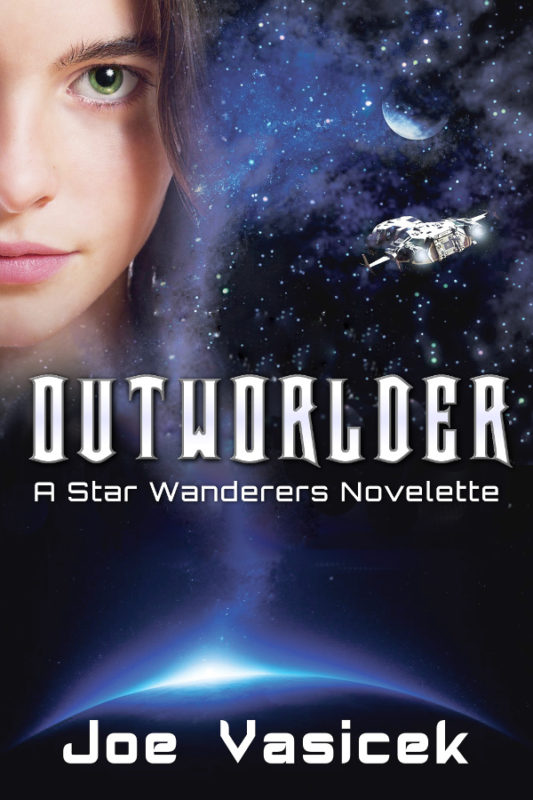
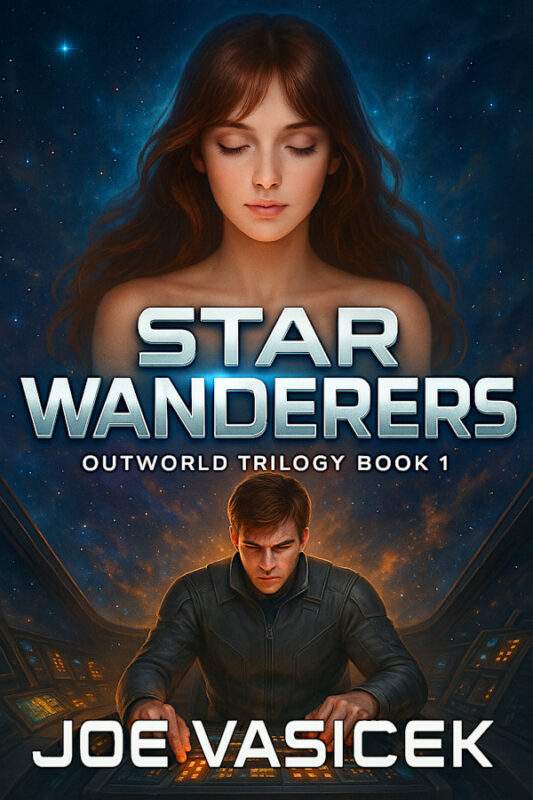
First, I ran a promo for Star Wanderers: Outworlder (Part I) on The Fussy Librarian over the weekend. If you’re looking for a daily newsletter with good book recommendations, you should definitely check them out. The team behind the site puts a lot of effort into making it a quality newsletter, and they tailor your recommendations not only by genre, but by the level of sex, profanity, and violence as well. I’ve subscribed to them for a couple of weeks now, and I’ve already seen some excellent books on their list, including Brandon Sanderson’s The Way of Kings.

SFA-Z (thumb)Second, my latest book, Science Fiction from A to Z, is now up on Amazon, Amazon UK, Barnes & Noble, Smashwords, and Kobo! Feel free to pick up a copy. It’s up just in time for this year’s Blogging from A to Z Challenge, which starts tomorrow! I’ve already got a couple of posts lined up, so it should be just as fun as last year.

When I finished last year’s A to Z challenge, I realized that those blog posts would work well together as a book. You can still find the original posts on my blog, of course, but I’ve collected them here for your convenience. It was a fun side project, and at $2.99 you can consider it like buying me a drink or tossing a couple of bucks into the tip jar.

That just about does it. See you tomorrow for this year’s A to Z challenge!

Further thoughts on the drama in the SF&F community and a rescinding of some previous thoughts

About a year ago, there was a big discussion in the science fiction & fantasy community about sexual harassment and sci-fi conventions. As a result of that discussion, allegations were thrown out about a certain senior editor at Tor, rumors began to fly, and through what some might characterize as popular justice and others might characterize as an internet bullying campaign, the editor was fired.

That disturbed me, so after engaging in a rather heated discussion on Mary Robinette Kowal’s blog about it, I wrote a blog post of my own, which I then took down (though not before it was picked up elsewhere) after some private email correspondences that were rather toxic. Even though I had an opinion, I decided that this wasn’t where I wanted to plant my flag, especially since it looked like I’d be hard-pressed to defend it.

Well, at the risk of taking some rightly earned flak, I want to bring back that post in order to give myself an opportunity to respond to it. My views and opinions have changed since then, and I don’t think I was right.

First of all, it’s come to my attention that this isn’t the first instance of high drama within the SF&F community. In fact, there have been so many inane kerfluffles and genuine spats over the years that for lifelong, hardcore fen, engaging in them is practically a sport. So now, I can see that my concerns about the community “tearing itself apart” were naive at best, and concern trolling at worst.

Second, through the efforts of writers like Jim C. Hines and Cora Buhlert, through following various discussions on Twitter, KBoards, and blogs like The Passive Voice, and through various conversations on-line and off-line with personal friends, I’ve come to realize that bigotry, sexism, and sexual harassment are much bigger problems within the SF&F community than I thought they were. The majority of voices now being raised are not trying to advance some nefarious PC agenda, but are simply pushing back against some very legitimate grievances. If we’re only hearing about those grievances now, it’s because they’ve been swept under the rug for too long.

Whether or not there is a faction in the SF&F community with an overt political agenda, that’s an entirely separate and disconnected issue from sexism, sexual harassment, and the stigmatization of minorities. Just because it’s not as visible to me as a white male author and fan doesn’t mean that there isn’t a major problem. If anything, I’m the least qualified person to make that judgment. The people who are complaining about these issues should be taken entirely at their word.

The science fiction & fantasy community as a whole is maturing and diversifying, and that’s a very good thing. It’s bringing in a rich influx of wildly imaginative stories, which strengthens the genre tremendously. Whatever your worldview, whatever your gender, whatever your preferred fandom, you should feel like there’s a place for you here if that’s what you want to read and write. Anything that makes people feel harassed or unsafe, stigmatized, or unwelcome is a much bigger threat to the genre than anything else.

As the SF&F community continues to mature and epublishing brings in a whole new generation of writers, there’s going to be a lot more drama as issues that have been swept under the rug for years are brought into public view. As this happens, I think it’s important to keep in mind what makes our genre strong: a rich variety of visionary and imaginative voices. The message should always be “there’s a place for you here,” not “you’re only welcome if you look and think like me.”

So yeah, I want to go on the public record and take back what I said in that previous post. There’s a much bigger issue here that should not be overshadowed, and it was wrong for me not to acknowledge it. I hope that no one feels that I’m disparaging of women, minorities, transgendered individuals, or any other group within fandom, because that’s not what I stand for. I may not agree with all of your views–in fact, I expect I’ll disagree with many of them–but that’s what makes the genre strong, and I don’t want anyone to feel like their voice is being silenced.

As for the other issues, I’m not quite so worried about the internet bullying aspect anymore because it’s clear that most of the pushback is not malicious, even if it can become quite vocal and heated at times. I don’t condone internet bullying at all, and I reserve the right to be critical where I believe the intent is malicious. At the same time, I don’t think there can be much credibility when gender-normative white male writers cast themselves as the victims.

If you felt demeaned or angered by what I said, either here on my blog or by my comments somewhere else, I’m sorry. My views on these issues are evolving, so I hope you’ll take that into account. And I hope that we can all keep an eye on what makes the community strong, which is a wide diversity of visionary and imaginative voices.

Idea for a new blog series

So a little background information: about a month ago, I tripped over my brand new laptop’s power cord and broke the DC port, making it impossible to recharge my battery. After sending it in to a local shop to get it worked on, I discovered that the motherboard itself was broken and that the computer was now useless except for parts. Fortunately, I was able to find the exact same model for less than $300. It should arrive on Tuesday.

This whole debacle made me realize how much better I write when I’m somewhere other than where I live. Whenever I sit in front of my desktop machine, it’s like I have this uncanny aversion to doing anything writing related. It’s stupid, and I probably need to get over it, but I am definitely looking forward to having a laptop again so that I can get out and write.

Which made me think: why don’t I do a blog series on interesting places to write? There’s quite a few around here in Provo that I frequent: the city library, the HBLL, Pioneer Book (their new location), the Wash Hut, Slide Canyon. Branching out a bit, there’s Amtrak and the Frontrunner, two places where I’ve done a lot of good writing. Beyond that, I’m sure there are a ton of other places that I’ve never been to, but would be fun to explore and try out.

Besides giving each place a standard 1-5 star rating, I could review it based on how many distractions it has, how comfortable it is, whether it has wi-fi (not always a good thing!), ambient noise, people-watching opportunities, etc. It would be fun to break things down and see what makes a place good for writing, and what makes it not so good.

What do you guys think? If I did this, what sort of criteria would you like me to look at? Are there any places around Provo or Salt Lake that you think I should try out? This new computer cannot come soon enough!

Stray by Andrea K. Höst

Stray (Adrea K Host)So I picked up this book on the Kindle Store shortly before boarding the California Zephyr for a cross-country train trip. For those of you not familiar with Amtrak, the California Zephyr runs from Emeryville to Chicago and is one of the most picturesque train routes in the United States, with some of the best views of the Colorado Rockies that you will ever see.

Well, I wasn’t paying much attention to the scenery this time, since I was way too engrossed in this book! I was more than halfway through by the time we got to Chicago, and finished it somewhere in the northeast corridor. It was an awesome, amazing read, one that I could hardly tear myself away from!

It starts out kind of like Hatchet, with a teenage Australian schoolgirl named Cassandra who suddenly and inexplicably finds herself in an uninhabited wilderness. It’s written in first person as a personal diary, so the first few chapters are all about the things she does to survive, such as finding food, water, and shelter, dealing with the wildlife, and trying to figure out just where she is exactly and how she can get herself rescued.

Eventually, she figures out that she’s on an alien planet. After a long trek in search of civilization, she finds a bunch of white stone ruins inhabited by cats. Then some weird things happen, which she doesn’t really understand (or oddly enough, doesn’t seem to be too bothered about), and shortly after that, she gets rescued–though not by people from our world.

It turns out that there are people living on another planet who have access to these naturally occurring inter-dimensional portals or gates, and use them to travel between real-space and near-space. This enables them to jump between worlds. Their civilization is about a hundred years more advanced than ours, with computers integrated directly into the human brain and other cool stuff like nanotech suits. They also have psychic abilities, like levitation, telekinesis, elemental manipulation of fire, water, lightning, etc, and supernatural sight.

Here’s the thing, though: they’re fighting a war against an infestation of trans-dimensional creatures called Ionoth, which originate in near-space and are creeping more and more into real-space. Some of them are relatively harmless, others are dangerous but unintelligent, and still others–the Cruzatch–are intelligent, highly dangerous, and very, very hostile. A special forces group called the Setari has been organized to fight them off, but the infestation is getting worse, and new gates are opening faster than anyone can close them. If nothing changes, humanity will be overrun in just a few short years.

It doesn’t take long for Cassandra to learn that she has psychic abilities of her own. The strange thing is that her abilities aren’t like any of the others. The people who rescued her soon enlist her into the Setari, where she may prove to be the key to turning the tide of the Ionoth war. But if the people of this dimension need her, how will she ever get back to Earth? Or will she even want to?

What starts off as a simple survival story soon turns into a complicated tale full of lost civilizations, trans-dimensional beings, psychic magic, high-tech, and political intrigue. At the center of it, though, is a very well-developed character who feels both real and authentic. Cassandra isn’t your typical YA heroine or “strong female character”–she doesn’t kick ass, she isn’t particularly attractive or popular, and she doesn’t get involved in any sort of sappy love triangle. But she is intelligent and resourceful, holds together under pressure, and is open and emotionally honest with her friends. She’s a great example of a female character who doesn’t have to be masculine or violent to be strong.

The world of this book is awesome. I was already sold on the ancient ruins and the alien planet wilderness, but the trans-dimensional stuff just takes it to a whole other level. The Taren civilization with their mind computers and neural network is pretty cool, and Andrea Höst very deftly works out the social and cultural implications of that technology. I’m not sure I’d want the government to have access to everything I can see, but this is definitely a world I’d like to explore. Fortunately, Stray is the first book in a trilogy, so it looks like I’ll be able to do just that!

The book ends almost exactly like you’d expect an old stock-bound composition notebook to end–on the last page, with a short entry that reads “sorry, ran out of room, will continue in the next volume.” The first book doesn’t have a clear ending that ties everything together, which is okay, because it fits very well with the overall tone and voice–it’s supposed to be a personal journal, after all. I wasn’t really bothered by it.

In fact, I can’t say that there was anything about this book that really bugged me. It’s a solid, awesome story. It does get a bit complicated by the end, but it’s not hard to follow, and the complications make it all the more engrossing. Reading this review, you probably think I’ve given away the plot of the whole book. Well, let me tell you, this quick synopsis barely scratches the surface! But I’m not a fan of spoilers, so I’ll end it here.

If you’re a fan of speculative fiction in any form–fantasy, science fiction, whatever–you’re probably going to love this book. You’ll especially love it if you’re sick and tired of the stereotypes that usually revolve around YA heroines and “strong female characters.” And if you just want to get lost in an alien world, this is one you won’t find your way out of easily!

Update on 2014 Resolutions

So since it’s February now, I figure it’s worth checking back on my January resolutions to see how horribly I’ve failed how well I’m doing. Here goes!

1. Publish something every 6 weeks.

I’m actually still on track with this one. The next 6 week deadline is February 15, and if all goes well I should be able to publish Star Wanderers: Tales of the Far Outworlds (Omnibus V-VIII) by then. Derek Murphy is working on the cover, and all I have to write for it is the author’s note which shouldn’t take more than a day or two. After that, it’s just a matter of compiling and formatting the thing–shouldn’t take more than two or three hours–then upload it to all the retailers.

So yeah, still on track with this one!

2. Write at least two short stories per month and submit them to traditional markets.

For this one, I’m not doing so well. I did write one story, “The Open Source Time Machine,” and sent it out to Writers of the Future, but that’s about it. I am working on a second story, but I haven’t finished it yet, which is annoying because the whole thing is in my head but not yet on the page. Better get on that. Also, there’s another story that got rejected in January that I still need to send out to the next market.

Well, one out of two isn’t so bad. If I take off the weekends to work on these stories, I can probably get back on track before the end of the month.

3. Read a book every week.

Yeah, about that … I was doing so well the first two weeks, but then things got disorganized and this goal kind of fell through the cracks. It probably didn’t help that I spent upwards of 50 hours on Steam in the last two weeks of January. What can I say–XCOM is an amazing game!

I’ve got a huge TBR pile and the book I’m reading now is really awesome, but I just haven’t been good about making the time to read. That’s gotta change. Evenings are the perfect time to read, when I’m too tired to do much writing but too awake to go to bed. Instead, I usually end up browsing the internet or playing on Steam, neither of which are as fulfilling as reading a book.

So yeah, this is one I’m going to have to work on. Fortunately, it shouldn’t be hard to adjust my habits.

4. Keep a detailed weekly personal journal.

This is one resolution that I have been keeping extremely well. I’ve completely redone the format for my personal journal keeping, and now it’s one of my main Sunday activities. The last month wasn’t very eventful for me, so it wasn’t too hard to keep up, but I’ve solidly gotten back into the habit of journal writing and I’m still quite motivated to keep doing it.

If I only keep one resolution this year, it’s going to be this one. Fortunately, I’m still on top of it 100%. Now that’s satisfying!

5. Get to the point where I can run a mile every day.

AHAHAHAHA!!!! Oh dear. The last time I went running was probably three weeks ago. For a while, I was going on some long daily walks, but then the Google Fiber job landed in my lap and all of that kind of got put to the side.

Fortunately, the job is starting to fall into something of a routine. It’s an on-call thing, which means that if I go running I need to keep my phone on me and a change of clothes in the car, but I can still probably do it. The track at BYU’s Smith Field House is open until 10pm, and the parking lots open up around 6pm or 7pm. I prefer to run in the mornings, but the evenings can work too.

So yeah, this one is definitely a fail, at least for January. But with a bit of work, I can get back on track again soon.

6. Finish hiking the seven peaks.

Because it’s winter, hiking any of the higher mountains around these parts is pretty much impossible (at least without professional equipment). But there’s still a lot I can do to prepare for the spring.

For one thing, I need to get new shoes. My hiking shoes from last year are pretty torn up and definitely not in shape for a big climb. With the Google Fiber job, I now have enough of a discretionary income to spend on things like that. And since I’m going to need new shoes for my next overseas adventure anyway, I don’t feel so bad about taking out from the money I’d be saving for that.

I need to get in shape for hiking, though. That’s probably the biggest thing. Not much I can do with snow on all the peaks, but I can hike the Y, and maybe Squaw Peak as well. One thing I’d like to do this season is go snowshoeing, maybe for a date or something. Definitely need to look into that.

Other than that, all I guess I can really do is make plans and wait for the snow to thaw. When it does, you can bet I’ll be doing some serious hiking!

Conclusion

So out of six resolutions, I’m doing really well at two, doing marginally well at two others, and failing at the last two. Not too bad. It isn’t perfect, but it’s not like it’s fallen apart yet either.

Most of the time, it seems that people drop their resolutions around February/March after failing to keep them perfectly. That’s just silly, though. If you break a resolution one month, why not pick it up again the next? So what if you don’t keep it the whole year? If it takes you until July or August or even October to master it, that’s still a lot more months that you’d be keeping it than if you dropped it in March.

So this year, I’m going to try to revisit my resolutions at the beginning of each month and start over with them as if each month were January. That’s kind of what you’ve got to do when you lead a freelancer’s life–plans always change, routines always fall apart, but if your goals are clearly defined and you keep your eyes on them, you can get back up just as quickly as you get knocked down.


Experimenting with prices

So now that the last Star Wanderers novella is out and I’m hard at work on the next book, I’m thinking very seriously about experimenting with my prices. I haven’t done a lot of price experimentation, especially since writing became my main source of income about six months ago. I just recently landed a job to save up some money, though, so that gives me a little more space to try things out.

Right now, I’ve basically got three pricing tiers for ebooks: novels and omnibuses at $4.95, novellas at $2.99 (especially Star Wanderers), and short stories at $.99. My best sellers by far have been the Star Wanderers novellas. Now that Part VIII is out, though, I’ve noticed that fewer people who start the series are going through and finishing the whole thing. I’ve also got a fair amount of pushback in the reviews, saying that the $2.99 price for the novellas is too high.

The tricky thing is that at any lower price point, my royalties take a huge hit. At $2.99, I get a 70% royalty from Amazon and a 65% royalty from pretty much everywhere else. At anything less, I get a 35% royalty. That means that at $1.99, I have to sell three times as many books to make the same as I would from one $2.99 sale. At $.99, I have to sell six times as much.

But wait, it gets trickier. The general consensus (inasmuch as there is a consensus about any aspect of epublishing) is that $1.99 is a dead price point. In other words, a book priced at $1.99 will sell so many fewer copies than a book priced at $.99 that they earn less revenue. A $2.99 book may also sell less than a $.99 book, but the increased royalty rate makes up for the shortfall.

Up until this point, my pricing strategy has been to maximize revenue, so that I can have more time to write. That worked fairly well: I put out one novel and four novellas in 2013, finished up the Star Wanderers series, and started a number of other projects that will hopefully bear fruit in 2014. But now that Star Wanderers is complete, I think it might be time for a change in strategy.

What I’ve learned in the past month is that readers will drop out of a series early if 1) the series is long, and 2) the individual parts in the series are priced relatively high. A lot of readers either drop out after Part II or pick up the omnibus, but the ratio of sales between Part II + Omnibus I-IV and Part VIII frankly isn’t that great. From Part V to Part VIII, it’s almost 1:1, but a lot of readers are dropping out right at the beginning–a lot more than when there were only four parts.

Part of this may be that the story just isn’t engaging that many people, but another part may be that the price has become something of an obstacle, especially as readers look ahead at all the other books in the series. Length probably also plays a role–my Star Wanderers books are fairly short, leaning more toward the low-end of the novella spectrum. Combined with the fact that many full-length sci-fi novels are now priced at $2.99, that probably only makes readers balk all the more.

I want to see what will happen if I drop the price low enough that it ceases to be an obstacle. Will fewer readers drop out after the first couple of books? Will more of those readers move on to my other books? Exactly how much of a hit will my revenue take?

For all of these reasons, I’m going to drop the price of my individual Star Wanderers novellas to $.99 for a month to see what happens. To keep the omnibus price competitive, I’ll drop it to $3.79 and release the second omnibus at $3.79 as well. I will raise the list price of the print editions, though (mostly to shoot for extended bookstore distribution), and probably raise the price of my novels from $4.95 to $5.99.

I have no idea how this is going to turn out, which makes me kind of nervous. Since I want to move on to other projects, though, including a spinoff series that I hope to launch later this year, I think it’s more important to encourage readers to read through Star Wanderers as a whole without putting any potential obstacles in their way.

So yeah, that’s the plan. We’ll see how it goes. I’m open to any feedback or ideas, so if you have any thoughts to share either as a reader or as a writer, please don’t hesitate.