Looking for a new title

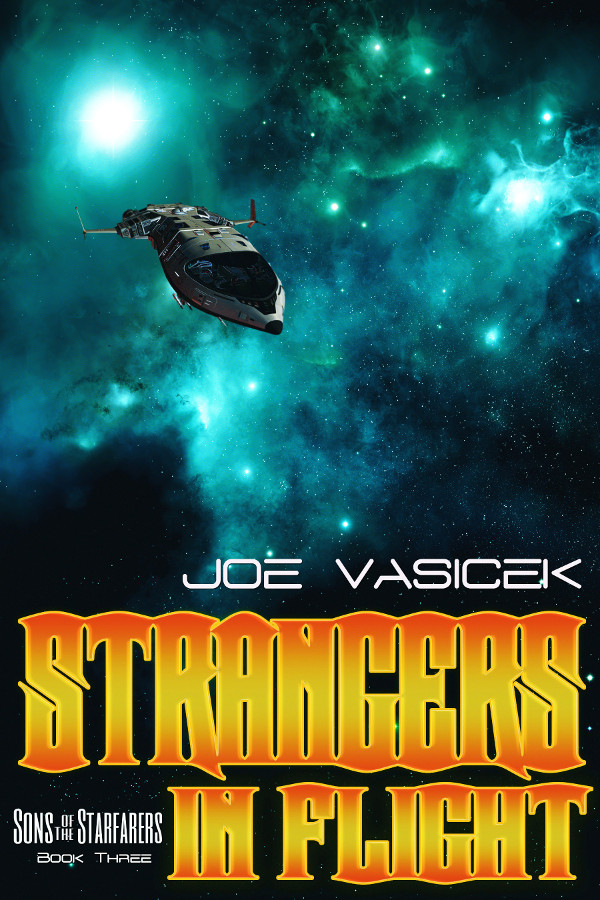
So I’m about a quarter of the way through the revisions for the next Gaia Nova book, currently titled Heart of the Nebula. The thing is, the story is changing a lot in the revision, to the point where that title doesn’t really make sense any more.

This tends to happen with most of my longer books. The original working title for Genesis Earth was THE WORMHOLE PARADIGM. Desert Stars started out as HERO IN EXILE, switched to WORLDS AWAY FROM HOME, then simplified briefly to WORLDS AWAY before finally settling on its current tile. Bringing Stella Home is actually the original working title for that book, but it briefly changed to MERCENARY SAVIOR before switching back again. The only novel of mine that hasn’t had two or three different titles is Stars of Blood and Glory, but that book was unusual in a number of ways.

In fact, Heart of the Nebula has already gone through one title change. It started out as “Into the Nebulous Deep,” not the most inspiring title but definitely accurate (perhaps even mildly spoilerific). I thought about changing it to “Into the Heart of the Nebula” before shortening that to the title it has now.

Anyway. For reasons I don’t really care to get into, I need a new title for this one. Here are some of the ones I’ve come up with so far:

  • STAR WOLF
  • THE LONE WOLF OF THE NEBULA
  • HOPE OF THE FREEDOM STAR
  • LEGEND OF THE FREEDOM STAR
  • EXODUS OF THE FREEDOM STAR
  • LONE WOLF OF THE FREEDOM STAR

I really like the words “wolf,” “legend,” “exodus,” and “freedom star,” but I’m not sure how to combine them in the best way. I’m kind of partial to STAR WOLF, just because it’s shortest, but LONE WOLF OF THE FREEDOM STAR has a ring to it that comes closest to what I’m shooting for.

Those are my thoughts for the moment, anyway. What do you guys think?

Another overseas adventure?

About a year ago, I blogged about how I need to get out of Provo before I went stir-crazy. Well, it’s been a year, and I haven’t gone anywhere yet. My love/hate relationship with Provo has mellowed out a bit–I’m not as anxious to get out as I used to be–but still, it would be good to change things up and go on another adventure.

This time, I’m thinking quite seriously about going to the Czech Republic. My sister is working to become a certified genealogist, and she keeps a fairly intensive blog on Czech family history research. If I were to go over there, I’m sure she would have all sorts of fun places for me to check out–places where our ancestors used to live. She’s already contacted a fifth cousin of ours, descended from the side of the family that didn’t emigrate, and she has a lot of other contacts over there as well. It would be an amazing life experience to live and travel over there.

Until now, every time I’ve gone overseas I’ve been a part of some sort of program. Even in Georgia, where I didn’t speak the language, didn’t know anyone, and barely knew anything about the country at all, the TLG program still had a fair amount of support infrastructure for us to fall back on whenever we ran up against a wall. I suppose I could find a similar sort of program in the Czech Republic, but that’s not what I want to do. This time, if I do go over, I want to go over on my own.

I’m still kind of on the fence about this, because it is kind of a big leap from where I am right now. But I’m earning enough with my book royalties that I could probably support myself on that income alone. From what I’ve heard, living costs in Prague can run as low as 450-600 USD per month, though most expats spend more in the 800-1200 USD range. That’s certainly doable. If I don’t need to take a TEFL job to support myself, why should I? Better to spend that time writing and/or seeing the country.

Of course, without making any concrete plans, this is still just a crazy dream. So here’s what I would need to do to make it happen:

  • Save up for plane tickets and a reasonable cash reserve, at least 150% the cost of a ticket back to the states. It looks like tickets to and from JFK and Prague run about $1,500, so I’d probably have to save up at least $4,000 (not including what it would take to get to New York from Utah).
  • Look up the rules for getting a visa, housing contract, insurance, etc (my Slovakian friend tells me that health insurance in the Czech Republic is mandatory).
  • Connect with the expat community online and figure out what the support network would look like. This would include stuff like couchsurfers, Kate’s contacts, the local church community, etc.
  • Learn some basic Czech, starting with the alphabet.
  • If possible, figure out some sort of housing arrangement in advance. Better yet, find a travel buddy.

I think those are all the big ones. And honestly, they’re all fairly doable. The hardest one would be to save up the money, but if I can find a short-term job on top of my writing that pays fairly well, I could do it in a few months. Since I plan to attend LTUE and Westercon this year, I probably won’t go overseas until mid-July at the earliest.

So yeah, that’s what I’m thinking at this point. It’s definitely something to work toward, and I think it could be another awesome life changing adventure. What do you guys think? Is there anything glaringly obvious that I’m missing? Got any tips or advice? Please share–I’m definitely open to feedback and suggestions!

Midichlorians vs. the Philotic Web, or a new dimension to Brandon Sanderson’s first rule of magic

I got into an interesting discussion today with my brother-in-law about science fiction & fantasy, specifically about whether explaining something too much takes away from the sense of wonder that is so critical to those genres.  It started out with a discussion of Star Wars I: The Phantom Menace, which (surprisingly) he actually kind of likes, and eventually got on to Brandon Sanderson’s first law of magic.

I was trying to explain why The Phantom Menace was so broken, and after hemming and hawing over various things came to the midichlorians.  That, more than anything else, threw me out of the story.  By explaining the Force in such a banal, insipid way, it undid all the magic of the previous trilogy and completely sterilized it.  There was no sense of wonder after that point–explaining the Force completely killed it, just like over-explaining any magic system always kills that sense of wonder.

… or does it?  Because there are quite a few wonder-inducing magic systems that get explained in great detail.  Take the Philotic Web, for example.  In Xenocide, Orson Scott Card explains, in great detail, how the physics behind the ansible system works.  And yet, by doing so, he increases that sense of wonder to the point where Xenocide is one of my favorite of his books.  Why?  Because it introduces a bunch of implications that lead to even more questions, more mysteries.

With The Phantom Menace, of course, that isn’t the case–the midichlorian thing is basically a clumsy ass pull that fails in the magic department just as hard as Jar-Jar Binks does at comic relief.  But it doesn’t fail because it over-explains things, it fails because it explains the magic in a way that doesn’t allow room to explore the implications.  As much as I hate to admit it, Lucas could have pulled off the midichlorian thing if the implications had been relevant to more things in the story than just a simple plot point.

This is where Sanderson’s first law comes in.  Basically, Sanderson’s first law states that there’s an inverse relationship to how well the magic can induce wonder versus how well the magic can advance the plot.  In order to advance the plot through magic, you have to explain how the magic works to some degree, and that’s going to take away from the sense of wonder.

But as we’ve just shown, that isn’t always the case.  Sometimes the sense of wonder gets even stronger the more the magic gets explained.  This is especially true in science fiction that follows the one big lie approach, where one thing (wormholes, reactionless drives, time travel) is truly fantastic and everything else more or less follows the laws of physics as we understand them; in order to maintain the suspension of disbelief, the story is basically forced to explore all the implications of the magic, often to great detail.

In other words, explaining the magic isn’t always like building a wall–sometimes, it’s like building a door.  Yes, it lays down a boundary that closes off the imaginative spaciousness that a story really needs to convey that sense of wonder, but if the explanation leads to new questions–new mysteries–then that sense of wonder can be maintained.  Instead of walling the reader in, it throws the reader into a maze with countless secret chambers to explore.

The relationship between plot-based magic and wonder-based magic is not linear, as Brandon Sanderson’s first law implies.  Rather, there’s a second dimension that has very little to do with his law, and learning how to traverse that dimension is key to maintaining the sense of wonder in any story.

I haven’t figured out a pithy way to explain all this yet, but I’m going to, hopefully within the next few days.  If you guys have any thoughts on the subject, please feel free to share.  I’m definitely interested in hearing your perspectives on it.

Ghost King by David Gemmell

Ghost KingAnother review of a David Gemmell book?  Yes, because I’m just that much of a fanboy.

With the Drenai series finished, I decided to sink my teeth into the Stones of Power series.  This series confuses me, because I’ve read The Jerusalem Man, which was retroactively put in as book three, but that’s a post-apocalyptic tale of the gunslinger Jon Shannow, but the series actually starts in Arthurian England.  As soon as I got a couple chapters into the first book, though, I began to see the connection.

Ghost King is an alternate history tale of King Arthur (Uther, in the book), and how he rises to become the Blood King of Britannia.  His grandfather, Culain, takes him into the mountains after the Brigantes assassinate his father, and there trains him to become a leader and a warrior.

Culain, of course, is one of the immortal Atlantians, just like his friend Maedhlyn (Merlin).  After the fall of Atlantis, they have wandered the Earth as gods, using the powers of the Sipstrassi stones to accomplish wonders.  Worshipped in turn by the Greeks, the Romans, the Hittites, and the Babylonians, Culain has tired of immortality and now wants to live out a mortal life.  But his jilted lover, the Ghost Queen, wants revenge on him for leaving her.  She was the one who killed Uther’s grandmother and mother, and who now wants to kill him and rule all of Brittania.  But her son Gilgamesh has corrupted her, so that in a parallel universe she must kill twenty pregnant woman every month just to replenish the magic of her Sipstrassi …

Okay, I might as well give up trying to explain the plot, because it only gets crazier.  Somewhere in this parallel dimension, a lost Roman legion has been wandering for hundreds of years, consigned to the void by Culain.  Also, Gain Avur (Guenevere) is in there too, as well as the Lance Lord (Lancelot), though he doesn’t come in until the epilogue.  There are also demons and vampyres, all sorts of battles, and lots of other crazy stuff.  It’s pretty freaking dang awesome.

I really enjoyed Uther’s transformation from the weak, bookish boy to the warrior king, as well as the budding of his relationship with Gain Avur (what can I say, I’m a sucker for romance).  My favorite character, though, was Prasamaccus, a crippled Brigante peasant who becomes one of Uther’s close advisors.  He’s basically a regular guy who gets sucked up into the whole adventure, but he’s level-headed and practical enough that he manages pretty well.  He’s also just a good person, which was quite refreshing in a world full of death and drama.

At one point, after rescuing Uther, he’s a guest in Uther’s chief general’s villa.  The general gives him a servant girl for the night, since in this world most men think nothing of bedding a slave.  Prasamaccus is a peasant, though, and he’s kind of shy.  The girl was actually captured in a raid in Germany, where she was raped, and this is her first time bedding someone since those traumati not the monster she’s afraid that he’ll be–they actually share a really tender moment of intimacy that heals much of her trauma and introduces him to the love of his life.c events.  She’s absolutely terrified, but so is Prasamaccus–he’s a cripple, and assumes that women just don’t want him.  He spends the night with the girl but doesn’t force her to sleep with him, and when she realizes how gentle he is–that she holds the power, and that he’s not the monster she’s afraid that he’ll be–they actually share a really tender moment of intimacy that heals much of her trauma and introduces him to the love of his life.

It’s poignant, story-rich moments like that that make me such a David Gemmell fanboy.  Usually they happen in the midst of war, between battle-hardened friends who are forced by circumstance to do something heroic, but they also happen in the quiet moments between characters who carry other scars.  That whole thing in the previous paragraph only happened in three pages or so, but it was still so incredibly powerful and moving.  Every moment of a David Gemmell book is like that, sometimes from the very first paragraph.  It’s awesome.

As far as David Gemmell books go, I’d put this one in about the middle of the pack.  It’s not quite as powerful as Legend or Wolf in Shadow, but it doesn’t meander as much as White Wolf or have such an anti-climactic ending as Ironhand’s Daughter (which was probably split by the publisher–more on that when I review The Hawk Eternal).  The characters aren’t quite as memorable as Druss, Skilgannon, or Waylander, but they are pretty awesome nonetheless.  I’d rate this book a 3 compared to Gemmell’s other books, but a 4.5 out of fantasy overall.  Definitely worth a read.

Why boycotting Ender’s Game is stupid

First of all, let me just say that I don’t think there’s anything wrong with making a personal decision not to read a book or see a movie because you disagree with the views of the author.  We all should be free to consume (or not consume) the media we choose, and if a certain author offends for any reason, I think it’s perfectly fine to cut that author’s work out of your life–as a personal decision.

But with Orson Scott Card and Ender’s Game, there’s a group of people who are taking it a step further and organizing an all-out boycott.  They want the movie to fail, because Orson Scott Card holds some views about morality and homosexuality that they find offensive–views that have nothing to do with the movie at all.  The idea is that Orson Scott Card is a homophobe, and as such everything he creates should automatically be rejected out of hand.

There are a number of reasons why this idea is stupid, many of which have been discussed elsewhere.  There are those who agree with Card’s views and make their arguments on that basis.  I don’t care to go there, because he has been a controversial and divisive figure, and I do think there are legitimate reasons for disagreeing with his views.  There are views he holds that I disagree with very strongly.  However, I do think there is something to be said about the way his opponents have twisted his words.

Laying ideology aside, there are those who say the boycott is stupid because it will send the wrong message.  If the boycott is successful (which I doubt it will be), then all that filmmakers are going to take from it is that the public doesn’t want to see sci-fi movies of this type.  There’s nothing whatsoever in Ender’s Game that has anything to do with Card’s views on homosexuality, so boycotting it isn’t a very effective way to protest his views.

Those are all valid reasons, but none of them are the main reason why I think the idea of this boycott is flawed.  I’m not concerned with the impact this boycott will have on Orson Scott Card, but the impact it will have on the writers who follow after him.

Frankly, Ender’s Game is such a phenomenon, I doubt that this boycott is going to do any real harm, no matter how loudly some corners of the internet rage against him.  If anything, it’s just more publicity, and perhaps an opportunity for him to get back into the public arena to bring attention to some of his views. As of now, it seems he’s content to ignore the boycotters, which he can easily afford to do since he’s successful and well-established.

But the message it sends to budding writers is a lot more powerful, and much more dangerous.  For science fiction writers who are in the early stages of their careers, this boycott sends the message that there is an ideological orthodoxy in the science fiction community that will do everything it can to destroy you if you challenge the beliefs that they hold sacrosanct.  It sends the message that some beliefs should never be challenged, not even in a genre that is famous for challenging beliefs and ideas.  And finally, it sends the message that if you challenge the new orthodoxy, they will not engage your ideas in an intellectually honest debate, but do everything they can to marginalize and dismiss you.

I could understand this boycott if Orson Scott Card had actually done something illegal like committing hate speech–something that clearly crosses a line that we as a society have collectively agreed upon.  But he hasn’t.  He just holds some views that a lot of people, perhaps even a majority, find hateful and offensive.  But if that’s just a way of saying that he opposes the new status quo, how is it not regressive and reactionary to attack him for that?

If you disagree with Card’s views, engage him.  Make him eat his words.  Use the movie as an opportunity to bring up these old debates and point out just how wrong and offensive he was.  Don’t use something he said fifteen years ago to sabotage what is arguably the best sci-fi movie of the year, if not the decade.  And for the sake of all the books that are yet unwritten, don’t threaten the writers who dare to challenge the beliefs you hold sacrosanct.  Don’t replace one rigid orthodoxy with another.

There was a time when science fiction was known as the genre of ideas, where writers were free to question anything, even our most basic assumptions about humanity.  Let’s do what we can to bring those days back, not shut them off forever.

Trope Tuesday: Our Dwarves Are All the Same

Yes, you saw that right: Trope Tuesday is back, at least for the next few weeks.  I dropped out for a number of reasons, most of them having to do with my own interminable disorganization.  I really love writing these posts, though, and you guys seem to love reading them, so I’ll do my best to keep the series alive.  Here goes!

Say the word “troll,” and you could mean one (or more) of a thousand different fantasy creatures.  The things same goes with gods, demons, vampires, fairies, goblins, and to some extent, elves.  But say the word “dwarf” and we all instantly know what you’re talking about.  As tvtropes puts it:

You know them. Gruff, gold-loving, industrious, blunt-speaking, Scottish-accented, practical, Viking-helmed, booze-swilling, Elf-hating, ax-swinging, stout, long-bearded, stolid and unimaginative, boastful of their battle prowess and their vast echoing underground halls and mainly just the fact that they are Dwarves … An entire race of miners and blacksmiths, with names like Dwarfaxe Dwarfbeard and Grimli Stonesack, who are overly sensitive about any perceived slight, always spoiling for a fight, unable to speak two sentences in a row without calling someone “lad” or “lass,” and possessed of a love of gold and jewels that drives them to live in Underground Cities where they dig deep and greedily, (often with catastrophic results).

The defining characteristics of this fantasy race basically include:

  • Short.  Should be self-evident from the name of the race.
  • Expert in smithing, forging, metalworking, and crafting priceless artifacts.
  • Prefer to live underground, mining for ore and precious metals.
  • Bearded to the extreme.  Even their women often have facial hair.
  • Fond of alcohol, and often rowdy or violent when drunk.
  • Weapon of choice is a battle axe (or perhaps a war hammer).

In other words, Tolkien set the standard and everyone since has followed it with little, if any, variation.  Tolkien himself got it from Norse mythology, which had a few key differences (for example, Norse dwarves would turn to stone if they were exposed to sunlight), but once Lord of the Rings hit the bookshelves, all dwarves would ever after be the same.

Why is this?  Well, as fantasy races go, dwarves tend to be more like supporting characters than members of the main cast.  Sure, there are plenty of series that focus on dwarves and dwarven culture, but the cultures that shape world history the most are usually human or elvish.  Dwarves are often content to stay in their dwarven halls and do their own thing, far beneath the surface of the earth.

Brandon Sanderson has an interesting take on this question, which he explains in his famous essay “How Tolkien Ruined Fantasy” (which has since been renamed).  Basically, he argues that the fantasy before Tolkien was all “low” fantasy, or fantasy that loosely uses our own world as a template.  This sort of fantasy may have wizards, or magic, or monsters, but the setting itself looks a lot like something out of the pages of a history book.  Tolkien was the first to really write “high” fantasy, where everything about the world is built from the ground up, and he did such a good job of it that we’ve all been copying him since.  Rather than writing high fantasy in an original vein, most authors have switched out the real world for Tolkien’s and have been writing low fantasy in a Tolkienesque world (at least until the last decade or so).

It’s an interesting argument, but I’m not quite so sure how valid it is.  The process that Sanderson describes basically happens in every genre: someone writes an extremely popular book, and for the next several decades (centuries, in the case of Treasure Island) everyone tries to go back to it in some way.  And yet, how many different kinds of vampires are there?  How many different kinds of cops, or detectives, or spies?

Perhaps Lord of the Rings had a much more overshadowing impact than Dracula or Frankenstein ever did, but consider some of the other fantasy races he basically invented.  Ents never really took off anywhere outside of Tolkien, and trolls never universally became the big, dumb, evil, brutish creatures that they are in The Hobbit.  Elves, which really were popularized in a huge way by Tolkien, have taken on a life of their own, differing fairly significantly from the immortal angel-analogues in Lord of the Rings and The Silmarillion.  Orcs, too, are becoming more like “green klingons” in games like World of Warcraft, with an extensive honor system and intelligence on par with humans and elves.

Is there something about the Tolkienesque dwarf that fulfills a deeper storytelling need, transforming the stereotype into an archetype? Or am I wrong, and dwarves just haven’t had the same makeover as elves and orcs?  I don’t know.  But I like dwarves, and I’m a political nerd, so I’ll leave you with a fascinating Marxist analysis of Dwarf Fortress, and an interesting picture of a female dwarf.


Tarin Portrait by =RachelleFryatt on deviantART

Space Opera promo for free Kindle

Hey, just a quick post to let you know about a group promotion I’m participating in with a bunch of other science fiction writers.  It’s a rafflecopter give-away, where we all pooled together to get a Kindle Paperwhite as the main prize.

There’s a bunch of things you can do to enter–for example, if you download a copy of Star Wanderers: Outworlder (Part I) (or really, just visit the book’s Amazon page through the rafflecopter link) that will get you an entry from me.  Also, besides the Kindle grand prize, a bunch of us are giving away copies of other books to other winners as well.  I’ll be giving away a few omnibus copies of Star Wanderers, so if you haven’t picked one up yet, here’s an opportunity to get one!

Besides my books, there’s a bunch of other books by science fiction writers as well–specifically, space opera like Star Trek or Firefly.  These days, it seems like dystopian fiction and other Earth-based sci-fi dominates the charts, so if you’re looking for an escape to other stars and planets, here’s a chance to find some of that.

The promo ends this weekend, so you should probably check it out today or tomorrow if you want to pick up some of the free books.  Outworlder will still be free after this promo, but I don’t know about the others.

Take care!

Parents: talk to your kids about Dwarf Fortress

DFSo if you’ve been wondering why I seem to have gone missing from the world of the living lately, it’s because I recently started playing Dwarf Fortress.  Those of you who know what Dwarf Fortress is are probably shaking your heads already, but for the rest of you, I’ll endeavor to explain.

Dwarf Fortress is easily the most detailed and immersive fantasy RPG ever created.  In it, you command a group of dwarves as they seek a new life in an unclaimed territory, designing their new home, seeking all sorts of precious metals, and defending their dwarven hordes from all manner of evil monsters. The graphics (what little there are) are basically ASCII, so you do all this by scrolling through an endless array of text-based menus, which sounds rather tedious but is actually what makes the game so awesome.

For every dwarf in your fortress, there is a detailed list with their personal history, their relationships, their likes/dislikes, their strengths/weaknesses, skills–even their thoughts!  And when there’s combat, the game generates a blow-by-blow where you can read exactly what happened to whom, who got injured, and what those injuries exactly were.  This extends to every part of the game, so that when you’re in overworld mode you can actually look up the histories of every person in every civilization.

What really makes it insane, though, are the crazy, crazy ways in which your fortress can die.  Kobolds, Goblins, vampires, were-creatures, tantrum spirals, catsplosions–the possibilities are endless.  If your dwarves are unhappy, one of them might throw a tantrum that sets everyone off so that they all kill each other.  If they don’t have socks, apparently they’ll riot over that as well.  And heaven help you if a forgotten beast gets loose in your dwarven hall.

The learning curve for this game is ridiculously steep, which is why I haven’t gotten into it before now.  I actually tinkered with it a couple of years ago, but could never get into it because I had no idea what was going on.  Some youtube tutorials and the lazy newb pack helped remedy that, and now, sixty some-odd hours later, I feel like I might have an idea of how it maybe works.

The things that make the game appealing are largely the same things that make fantasy appealing: the chance to build and live in a world full of crazy-awesome fantasy stuff.  The graphics might be horrible, but the level of detail is so incredible that with a bit of imagination, you can really immerse yourself in it.

… which is why I probably went a bit overboard.  That tends to happen with me and games–I tend to binge a lot when I first get started, then go cold turkey for a while, then come back for more before gradually easing into a more healthy level of play.  Right now, I’m just getting over that first binge; I’ll probably go cold turkey for a while, taking care of all the things I’ve neglected before easing back in.

But wow, this game has given me a TON of story ideas.  I really want to write about a band of dwarves now, or reread Lord of the Rings, or get back into classic high fantasy in some way.  It’s too early to say whether it’s just a phase or a genuine shift, but I’m happy to follow it out and see where it leads.

In the meantime, I’ve got a bajillion other things to do, and writing currently tops that list.  Later!

Beware the catsplosion.

3am thoughts, or why everyone says to be an accountant

I’ve been reading in bed on my smart phone recently, which is probably a bad idea because it makes it harder to go asleep.  At the same time, though, it tends to get my mind rolling, and when 3am comes around my thoughts tend to go some really interesting places.  Sharing those thoughts is probably going to get me into trouble, but hey, you might find them interesting, so why not?

When I was eight years old, I knew I was going to be a writer.  There was never any question about that.  I spent all my free time making up stories, and my favorite stories were the ones I found in books.  However, I knew I never wanted writing to be my job, because 1) everyone hates their jobs, and I didn’t want writing to ever become something I hated, and 2) everyone knows that writers can’t make a decent living.  Even at the young age of eight, I had bought into some of society’s most pervasive myths about jobs, careers, and how to make money.

Americans are generally horrible with money–we struggle to keep budgets and put all sorts of things on credit, and pay more than twice what our houses are worth by signing mortgage contracts we barely even read.  Because we’re so horrible with money, we tend to see it as a sort of magical force, something that can solve all our problems and make us happy.  Rich people are like powerful wizards or sorcerers, so far above the rest of us that we can hardly fathom their ways.

Nowhere is our stupidity about money more apparent in the fact that most of us spend our lives acquiring it by working for some sort of hourly or salaried wage.  Wages and salaries are basically the same, in that they convert time into money.  That’s why we all measure income in terms of dollars per hour, or salary per year.  But for anyone who understands how money works, that is stupid, stupid, stupid, stupid.  Money comes and goes, but time?  Time is one of the most finite and precious resources known to man.

All of us are going to die someday.  Most people are scared shitless by that fact, so we try to ignore it or put off thinking about it until some unspecified time in the future, like when we’re retired.  But not all of us get the opportunity to put our affairs in order after retiring comfortably from the workforce.  In fact, any of us could die tomorrow, or the next day, or at any other time.  And even if we do all live to be centenarians, our time on this Earth is still finite.  It’s non-renewable, too–you can’t go back and relive that day or that hour or that minute once it’s passed, no matter how much you regret it.

Converting time into money is basically trading gold for lead, or wine for water.  Yet that’s exactly what we do, because money is this strange, magical force that so few of us understand.  And the machines that do all the converting for us are businesses and corporations.

Questions like “where do you work?” “what is your job?” and “what do you make?” are much more common than “what do you do for a living?” That’s because most of us have bought into this idea that money comes from working for someone else, exchanging your time directly for a salary or paycheck. Sure, we do stuff with that time, but we don’t actually own it–the company does. While we’re on the clock, the company owns us and anything we produce. That’s the pact we make in exchange for this magical substance we call money.

It wasn’t until college that I started to become disabused of the childhood notion that I shouldn’t pursue writing as a career path. For one thing, I came to realize that plenty of people love their work–that just because you do something as a job doesn’t necessarily mean that you’ll come to hate it. But it wasn’t until I graduated unemployed in the middle of a recession that I realized how much of a myth it is that writers can’t make a living.

You see, people say that about every career choice–every career, that is, except accounting. That’s because accountants are the ones who work for the businesses and corporations, counting the magical money. Since we all get our money from businesses and corporations, exchanging our time for money, the only career with complete security is the one that the businesses and corporations will always need. After all, they’re not going to go belly up, are they? Not the big ones, anyway. They can’t–they’re the magical machines where all the money comes from.

Of course, anyone who knows anything about money knows that the only real way to make a lot of it is to produce something of value that can scale. It’s not about time at all–it’s about producing something that people want, and producing it in such a way that the more you sell, the more you make. At no point in that equation does time become a variable. It’s certainly a variable in the production equation, but even there, it’s not necessarily the most important one.

The most important thing, though, is that you have to really own what you produce–and that means owning all the failures as well as the successes. When you work for a corporation, it’s easy to shift the blame. It’s a rare case where one person is solely responsible for bringing down the whole collective enterprise. But when you work for yourself, you can’t blame anyone else when things go wrong. You’ve got to be ready to take the risk, and the bigger the payoff then chances are the bigger the risk.

That’s why everyone says that you can’t make a living as a writer. They say the same thing about making a living as a sports caller, or a musician, or a political activist. I’ve even had people tell me that there’s no money in math or in Arabic. They say that because they think that money is supposed to come from corporations, and corporations only really need people who can count their money. Every other part of the business they can either figure out how to do it with robots or outsource the work to India. They might not outsource all of the jobs, but there’s always a risk that they’ll outsource yours (unless you’re an accountant, of course, because corporations always have money).

In the end, though, it’s all just silly. Money isn’t some sort of vague magical force, and it doesn’t come out of the void from businesses or corporations–it comes from making something that people are willing to pay you for. It comes from producing something of value, or at least convincing people that you have something of value. And you don’t need to sell your time at $7.25 an hour or $24,000 per year to do that. You just need hard work, a great idea, and the opportunity to succeed as well as fail.

So can you make a living as a writer/artist/blogger/activist/global nomad/whatever your dream happens to be? Of course! It won’t be easy–you’ll probably fail a lot, perhaps even spectacularly–but it is possible. So why not give it a try? At the very least, you shouldn’t buy into the myth that accounting is the only career path guaranteed to make you any money.

The Dying Earth by Jack Vance

the_dying_earthDo you remember those creepy-weird montages from those old 60s and 70s era Disney movies?  The ones like Dumbo, or The Three Caballeros–or heck, the entire thing of Fantasia–where all these weird kaleidoscopic shapes and psychedelic colors just move in and out of each other in twisted, convulsing ways?  Well, guess what?  Jack Vance’s The Dying Earth is like one of those montages in written form, and I loved it.

I picked up this book in order to familiarize myself a little better with the Sword & Planet subgenre, which I’d like to write in (as you may remember … my WIP is currently on hold, but I’d like to pick it up again soon).  This one is a lot different from the Princess of Mars series, with an eerie apocalyptic feel, arcane magic and forbidden knowledge, weird, monstrous creatures, and above all else, a decidedly un-Disney fairy-tale feel that pervades the book with doom and danger.

If you’re looking for straight-up Science Fiction, you’re better off looking elsewhere.  This book is even more fantastic than Ray Bradbury’s stuff, and while there’s a little bit of a sci-fi dressing thrown in, there really is no scientific justification for anything.  The basic premise is that the Earth is dying, meaning that the sun is growing dimmer and dimmer and will soon go completely out.  The last few people eking out an existence on this planet are mostly wizards and witches, each one intent on building their own little empire and cheating or stealing from everyone else.  There are a few pure-hearted souls, but the world is completely lawless, and the only way to survive is through magic or brute force.

The chapters are really more like interconnected short stories, where each one stands on its own, and yet may feature a recurring character, or be set in the same place as another.  There were only six chapters in the version I read (the 1977 Pocket Book edition), which makes me wonder if I missed any.  If I did, I would definitely like to read them, because the stories were absolutely mesmerizing!

Because I read this book to get a feel for the sub-genre, I’m going to list some of the things I really enjoyed about it.  Here they are:

  • The fairy-tale story structure.  None of the chapters started out with “there once was a …” but it certainly felt like they did.  Each character started off with a quest or dilemma, and then went on a journey of some sort where they faced trials, made friends, and defeated enemies in order to attain some sort of boon at the end.
  • Lots and lots of world-breaking magic.  Seriously.  One of the guys sets out on his journey with a spell that basically keeps him from any danger whatsoever, so long as he stays on “the path.” Since he really has no idea where he’s going, “the path” is basically any path he chooses to travel.  Since all the rest of the magic is just as world-breaking, you have no idea what could happen next.  There’s always a sense that anything could happen.
  • An elevated sense of diction.  The characters don’t speak like we do, they speak like people from the 18th or 19th centuries, with words like “thus,” “whence,” “wherefore,” and grammatical structures like “I know not,” and “half yet remains.” It’s not just the characters, either–the whole book is like that.  It really adds to the fantastic, otherworldly feel.
  • Lots of contrasting extremes.  The demons are truly perverse and sadistic, with death and brutality on every other page.  At the same time, though, the moments of beauty and love are just as great.  My favorite line from the whole book, which practically made me cry, is “My brain is whole! I see–I see the world!” If I explained it any more, it would be a spoiler.
  • High adventure.  LOTS and LOTS of high adventure.  There isn’t a viewpoint character in the book who doesn’t leave home to go on some sort of quest through all sorts of wild and creepy dangers.  Every character is seeking something, and not in a “meh” kind of way–they are so wholly focused on what they’re seeking that they put their very lives in peril just to obtain it.  Almost all the romance is rescue-romance, of the pulpiest possible kind.  It’s awesome.

There are more, but those are the big things.  Overall, I’d say that this book is about 50% Fantasy, 30% Horror, and 20% Science Fiction, with none of the more modern conventions of any of those genres.  It was first published in 1950, but it feels a lot closer to Robert E. Howard and Jules Verne than J.R.R. Tolkien and Arthur C. Clarke.  If you’re looking for a good spec-fic throwback with lots of magic and adventure, this is a great one to check out.